Chlidonias presents: Bustralia

Not as far as I would attest to.


That's awesome! Are the pins all the places you went? What do the fire symbols mean?
Yup, well since it's a trip report for the 2 of us some of those pins would be me or my friends address :p the 'fire' = eBird hotspots, blue pins = eBird personal locations (eg when you see a bird and can't really place it on a hotspot, want to give an exact pin drop, incidental, etc)
 
Back in Broome


I had booked the Broome section of the trip while in Alice Springs, starting with the room at the Bird Observatory because that was the most important one to get booked, and then the hostel for one night either side. When that was done I went to book the bus to Darwin and discovered that the Greyhound buses from Broome to Darwin don’t run on the weekend. I thought I’d checked that the buses were daily but obviously was mistaken. The weird thing is that I was catching the bus from Pine Creek to Broome on a Saturday and it arrived there on Sunday, so I guess they run into Broome on weekends but not out of Broome. I therefore booked another two nights in the Travellers Lodge, giving me three nights in Broome, which was just easier than trying to reschedule the accommodation bookings.

The good thing with this sort of travelling is you have the freedom of time to wait an extra couple of days if necessary, although I did need to be in Darwin for the flight to East Timor on the 8th October (I would get into Darwin on the 7th so long as nothing went wrong).

The guys from the Observatory dropped me at the Travellers Lodge at 9am where, to my surprise, I could check in immediately because the bed was already free. I was in a three-bed dorm, the same one I’d stayed in a few days previously, and there was only one other person in it.


I didn’t get up to much in Broome because it was just too hot and there weren’t enough birds left for me to see to make it worth going out much. I hadn’t seen the Snubfin Dolphins from the Observatory and so looked at the tours which go out from Broome. However I only had the two weekend days and they were fully booked. I’ll have to try in Darwin instead.

Otherwise, there were still some mangrove birds to find which I tried to do in the late afternoons and early mornings before it got too stifling, and I had to try and see Little Curlews.

If you’re familiar with either a Eurasian Curlew or a Far-Eastern Curlew (depending on which part of the world you’re in) a Little Curlew is a much smaller relative, and they like fields rather than beaches. I knew they were being seen at the moment at the BRC fields by the Woolworths in town and I wanted to make sure I saw them – with spare days up my sleeve in case I failed today - so even though it was getting towards midday I went in search. The fields were much further away than it looked on the map, but I saw the Little Curlews (five of them) so that was all good. On the way back I saw more on the field of the local High School amongst the Straw-necked Ibises.

full


full


At the end of day when it was (slightly) cooler I went to Streeters Jetty, which is in the mangroves not far away from the hostel. One of the caretakers at the Observatory had told me where to see Red-headed Myzomela here. I think this must be a regular spot – probably a well-known one – because it is where water dribbles from a pipe in the wall below the hotels above. When you’re at the jetty you go down the steps on the left, cut underneath the jetty, follow the wall along a few metres, and then just wait for the birds to visit the pipe to drink and bathe.

There were several Red-headed Myzomelas, Brown Honeyeaters, and Yellow White-eyes visiting this afternoon. I think it is just an afternoon thing as well, when it is hot, because I was there the next morning and while I did see the same birds amongst the trees they weren’t visiting the pipe.


full

A male Red-headed Myzomela and two females. I had to sharpen up the image because it was somehow both extremely bright and in shadow at the same time, which is why the result looks a bit like a photoshop job!


full

Yellow White-eye. A lot of these birds I saw around Broome had black feathering on the head.


Bird total for today was 29 species: Spur-winged Plover, Whimbrel, Little Curlew, Silver Gull, Australian White Ibis, Straw-necked Ibis, Osprey, Black Kite, Brown Goshawk, Bar-shouldered Dove, Peaceful Dove, Diamond Dove, Red-collared Lorikeet, Blue-winged Kookaburra, Dollarbird, Rainbow Bee-eater, Black-faced Cuckoo-Shrike, Northern Fantail, Magpie-Lark, Australian Yellow White-eye, Brown Honeyeater, White-gaped Honeyeater, Singing Honeyeater, Red-headed Myzomela, Little Friarbird, Owl (Double-barred) Finch, Great Bowerbird, Pied Butcherbird, Torresian Crow.
 
Broome: second day


It gets light at 5am in Broome. The Travellers Lodge has free breakfast included, which is bread and various cereals, and they put it out the night before so no matter what time you are leaving you can still eat. I got up at 4am, had breakfast, saw a Black Flying Fox winging overhead as the mammal of the day, and then went back to Streeters Jetty to look for other mangrove birds.

The myzomelas weren’t at the pipe, but I located them foraging in the trees a bit further along (with the same Brown Honeyeaters and Yellow White-eyes as yesterday). I kept heading in that direction, walking along the sand beach which runs alongside the edge of the mangroves.

There was a Mangrove Gerygone calling in the trees. I kept only getting glimpses, but it finally made a brief appearance in full before flying off. There was still some other bird making strange noises, which turned out to be a Pheasant Coucal. These were common here and I saw several, usually as they flew away.

It was really muggy this morning but the sun wasn’t showing which made things nicer. The air instead was filled with what seemed to be smoke but was actually a weird fog.


I walked a few kilometres I think, finding some small tracks into the mangroves as I went, but mostly just walking along the edges. There were a lot of the birds I’d already seen but neither of the remaining two mangrove birds, the Mangrove Golden Whistler and Mangrove Robin (which will also be around Darwin’s mangroves if I missed them here, which I did). I hung around on Streeters Jetty for a while afterwards where there were more Red-headed Myzomelas and a Northern Fantail. Then I went back to the hostel before it got too hot, and had second breakfast.

I tried again in the late afternoon, and didn’t see anything new.


full

Australian White Ibis – these are typically not white in Broome because the red soil stains the feathers.


Bird total for today was 22 species: Great Egret, Spur-winged Plover, Silver Gull, Australian White Ibis, Straw-necked Ibis, Brahminy Kite, Whistling Kite, Black Kite, Bar-shouldered Dove, Peaceful Dove, Red-collared Lorikeet, Pheasant Coucal, Rainbow Bee-eater, Mangrove Gerygone, Northern Fantail, Australian Yellow White-eye, Brown Honeyeater, White-gaped Honeyeater, Singing Honeyeater, Red-headed Myzomela, Little Friarbird, Torresian Crow.
 
Broome: third day


In a change from the mangroves, this morning I tried the local sewage ponds. There are two treatment plants in Broome. The northern one is marked on eBird as being restricted access, so I walked to the south plant. It took an hour, with quite a lot of birds on the way including a large group of Blue-winged Kookaburras in chorus.

full

Red-collared Lorikeet


The trip to the ponds was not a great success - they were all empty!

What appear to be the main ponds are surrounded by huge red dirt banks, and that is the only view you can get as you walk around the fenceline. There was a flock of Royal Spoonbills roosting inside the fence when I arrived so I thought there must be water beyond those banks. All the trucks and diggers parked inside the fence maybe should have been a sign that was not the case.

full

Royal Spoonbills


I saw there was a smaller fenced area to my right as I walked along the larger fenced perimeter, which had those circular domed structures which I guess house the pumping equipment, so after giving up on the larger area I went over there. For this one I could see into the pond and it was definitely empty.

I had a wander around the adjoining golf course and the sand tracks which ran through the area of woodland which is there, but the only things of note were an Agile Wallaby, some Red-winged Parrots, and a White-throated Gerygone. That last one was a life-bird, although I didn’t realise this until later, and it was also the third Gerygone I’d seen in Broome (after the Dusky Gerygone at the Observatory a few days earlier, and the Mangrove Gerygone yesterday).

full

White-throated Gerygone


I figured I should complete the circuit of the main fenced pond area, just in case, and on the far side I found a spot which gave a view into the ponds which were indeed just totally empty pits. No water anywhere.


Bird total for today was 27 species: Royal Spoonbill, Spur-winged Plover, Silver Gull, Australian White Ibis, Straw-necked Ibis, Osprey, Black Kite, Brown Goshawk, Bar-shouldered Dove, Peaceful Dove, Diamond Dove, Crested Pigeon, Red-winged Parrot, Red-collared Lorikeet, Blue-winged Kookaburra, Rainbow Bee-eater, Black-faced Cuckoo-Shrike, White-throated Gerygone, Magpie-Lark, Mistletoebird, Brown Honeyeater, Singing Honeyeater, Little Friarbird, Owl (Double-barred) Finch, Great Bowerbird, Pied Butcherbird, Torresian Crow.
 
If you wanted to see crocodiles in this area, how would you do it? Is there a way to safely do crocodile viewing?
I don’t know if it still counts as “that area” but you can just go to the Jetty in Derby and they’ll be swimming there.
 
If you wanted to see crocodiles in this area, how would you do it? Is there a way to safely do crocodile viewing?
If you walk along the edge of the water, especially if it is deep water, you'll see a crocodile for sure. The only caveat is that you'll only see it very briefly, and you won't be able to tell anyone about it afterwards.


I'm not sure of the veracity, but when I was at the Observatory I met these people (I think it might have been the ones who had seen the Long-tailed Finches) who said that in Broome the beaches are "safe" to swim at because they are "managed" to be crocodile-free. I have no idea how that could be accomplished. But they were really surprised because anywhere else in tropical Australia people are encouraged to stay out of the water but in Broome they are encouraged to enter.

Elsewhere there are crocodile tours in north Queensland (e.g. in the Daintree area, where I did one years ago), and of course there are all sorts of tours in Northern Territory wetlands.
 
Broome to Darwin


The bus from Broome to Darwin leaves at 6am. I didn’t mind this, because even though it was already an hour after sunrise it wasn’t yet baking hot when walking over to the stop from the hostel.

In contrast to the other buses this one wasn’t freezing cold inside. The air-con was working – I could feel the air coming out if I held my hand up to it – but I think that as the day got started the sun coming in the windows was just so intense that it was cancelling out the cold air. It wasn’t “too hot” inside, but it was “a bit too warm”. I can’t imagine what it would be like if the air-con failed.

There was a quick pick-up stop in Derby at 8.30am where it was blisteringly hot, and then a half-hour meal-break at Fitzroy Crossing at 11.50am where it was not only 44 degrees but also really windy – not a cooling wind, but a “standing in front of a furnace” wind. I pity the fools who live there.

I’d had free breakfast at the hostel before leaving, so didn’t need to eat again until reaching the next meal-break stop at Halls Creek where it was also over 40 degrees. A coffee here cost $5, mid-way between the $6 and $4 of other stops. I fed chips to Magpie-Larks which was more interesting than to gulls.

On the way to Broome the stop at Kununurra had been after midnight where we were left standing in the dark for an hour outside a locked-up roadhouse. On this return route the bus stopped here at 7.30pm and the roadhouse was open so the passengers could wait inside, giving a much less “waiting to be stabbed” vibe to the place. A coffee here was $5.50.

It was still dark at the next meal-break as well, at Katherine at about 4am, where their coffee machine was broken. There had been quite a lot of Agile Wallabies and maybe some other kangaroos seen through the night (several had been hit by the bus) but in the long stretch before Katherine there were also quite a number of road-kill bodies of what looked like bettong-sized macropods. I’m not sure which species are here.

There were lots of raptors seen from Adelaide River onwards. The problem I have with birds of prey from buses is that most of them have to remain unidentified. I can tell the Wedge-tailed Eagles because they are huge with wedge tails, and the Black Kites are the only ones with forked tails (lots of Australians call them Fork-tailed Kites, which is a better name in an Australian context), but otherwise it’s more a case of “that looked like X” and I have to leave it because the view was too brief to be sure.


Generally the birds on this leg had been the ordinary bus-birds (kites, corellas, etc), although there was a Rufous-throated Honeyeater at Fitzroy Crossing which was different, but coming into Darwin I spotted a Spangled Drongo and a Torresian Imperial Pigeon on powerlines. The pigeon was a lifer and I hadn’t expected it to be a street bird, but I saw several more the next day on the way to the airport.

Next was a pair of Radjah Shelducks as the bus neared the interchange. When I saw the ones at Pine Creek I knew I “should” be seeing more in the Darwin area later, but (again) I hadn’t expected them to be street birds. This pair was bathing in a little ditch beside the road. I guess I shouldn’t have been surprised because they are just shelducks, but as a tropical duck I hadn’t seen before I’d had more magical ideas on how difficult they would have been to see!

It was only 8.15am when the bus reached the terminus, much too early to check into my hotel (The Cavenagh, which was just around the corner). I left my pack in their luggage room, went and had an expensive breakfast at a Singaporean cafe, got a stack of US Dollars from an exchange kiosk in a mall (this is the currency which East Timor uses, and I would be going there tomorrow), bought a new memory card for my camera, and then went to Crocosaurus Cove.

full

Here’s one I prepared earlier: a Northern Water Dragon seen in the street before visiting Crocosaurus Cove.


Crocosaurus is right in the main city area of Darwin, maybe five minutes walk from The Cavenagh. My next hotel (when I come back from East Timor) is at Coconut Grove, up by Nightcliff and quite near the airport, so visiting Crocosaurus Cove today would save having to come all the way down here later just for that.

The entry is AU$40, which had given me pause. I didn’t really want to pay that much for what seemed to be mostly reptiles I’d seen before, but then I thought I’d likely not be in Darwin again after this trip and would regret not doing it.

The reptile collection there was good, worth seeing, and included a handful I hadn’t seen before, but $40 is definitely way too much, probably twice what the entry fee should be. I’ve put a review and species list here: Crocosaurus Cove (Darwin), 07 October 2025 [Crocosaurus Cove]


full

Long-nosed Dragon

full

The intriguingly-named Swamplands Lashtail (which as it turns out is the same species as the Northern Water Dragon pictured earlier)

full

Mitchell’s Water Goanna


I had things I needed to do on the internet, with regards to East Timor, but there was still time to kill before the 2pm hotel check-in so I walked a street over to the Esplanade where Bicentennial Park is. This is a small stretch of grass and trees. Continuing with the “not expecting that as a street bird” theme of the day, there were Orange-footed Scrubfowl – a species of megapode – just wandering about in pairs on the lawns! Brush-Turkeys are a well-known Australian megapode which is a street bird in eastern Australia, but I’d thought the Orange-footed Scrubfowl would be more secretive.

full
 
Last edited:
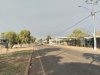
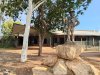
If you want to know what an Outback town looks like, I present Halls Creek. It has a street and a statue of a man protecting a pile of rocks.

IMG20251006151950.jpg IMG20251006152513.jpg
 

Attachments

  • IMG20251006151950.jpg
    IMG20251006151950.jpg
    157.1 KB · Views: 59
  • IMG20251006152513.jpg
    IMG20251006152513.jpg
    287.3 KB · Views: 49
IMG20251006120737.jpg IMG20251006120744.jpg IMG20251006120805.jpg

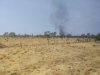
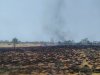
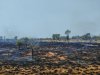
The bus passed lots of fires. Some were small, like in these photos, but others were large stretches – kilometres even – of blackened ground. This is totally normal though. In the desert there isn’t much in the way of debris on the ground so the fires sweep quickly across the ground, eating up the grass but leaving the trees largely untouched. The ground may be black ash but the trees are still fully-clothed in green leaves. That’s what they evolved with.

In eastern Australia it’s different, with the big eucalyptus forests. The fires used to behave the same way over there, but Europeans have an aversion to wildfires and keep them at bay, so the oil-filled leaves and branches build up on the ground year after year, and then when fires do get started they just explode with all the combustible fuel piled everywhere.
 

Attachments

  • IMG20251006120737.jpg
    IMG20251006120737.jpg
    116.2 KB · Views: 57
  • IMG20251006120744.jpg
    IMG20251006120744.jpg
    119.2 KB · Views: 63
  • IMG20251006120805.jpg
    IMG20251006120805.jpg
    129.9 KB · Views: 54
Darwin to East Timor


There is no direct airport bus from the centre of Darwin. Instead you catch a bus to the Casuarina Interchange, and then catch the #3 which stops close to the airport (about five minutes walk). All the buses in Darwin are free at the moment, but the problem with the #3 is that it only runs every few hours. My flight to Dili was at 1.25pm but the only #3 buses in the morning were at 8.02am and 12.30pm. I wasn’t going to pay for a taxi when there is a free bus, obviously, so I caught the earlier bus which got me to the airport at about 8.20am and then waited for five hours. There is free Wifi at the airport though.


When I return to Darwin my flight lands at 5.25pm which is too late for the #3 bus. It is still running but the section of the route which passes the airport isn’t covered on the later runs, so I’m going to have to either walk a lot further or get a taxi. I’ll be in a different hotel, though, which is only five minutes away by car in Nightcliff (or over an hour by bus!) rather than in the main part of town so I’ll probably just use a taxi.


I have done the East Timor part of the trip as a separate thread, for which one may take oneself to this location if one wishes to read it: Chlidonias Goes To Asia, part eight: East Timor 2025
 
East Timor to Darwin


I’ll be keeping the East Timor thread running in the background while continuing with this one because otherwise this one will end up being weeks behind again and nobody wants that. Suffice to say I spent two weeks in East Timor and then flew back to Darwin where it turned out they’d decided to have a heat-wave. I don’t know why they couldn’t have done that last week when I wasn’t here. It was hot enough in Dili and Atauro without bringing it to Australia!

I didn’t actually realise there was a heat-wave when I got back but then the next morning I saw there was a little fire triangle on my laptop’s taskbar with an “extreme heat” warning. Apparently the temperatures in the Northern Territory and Queensland are up to ten degrees hotter than normal for October and people were being advised to stay indoors. It wasn’t just the actual temperature but the “feels like” temperature – where the forecast says “36 degrees, feels like 43 degrees”, that sort of thing. And in Darwin you also have to factor in the humidity which makes it worse.

My flight came in at around 5.30pm. I took a taxi from the airport for AU$22 because the #3 bus wasn’t going past the airport that late. My hotel is the Coconut Grove Holiday Apartments which is about five minutes driving time away.

A lot of the hostels in Darwin stipulate on the booking sites that they only serve younger age ranges (e.g. “18 to 35”) and I didn’t want to stay in a dorm in Darwin anyway, so I’d chosen the cheapest hotel for a week which happened to be the Coconut Grove Holiday Apartments.

I’d booked their cheapest room which was AU$74 a night after conversion, but when I got there I saw that I was in a great big apartment with its own kitchen. I didn’t remember what I’d actually booked so was suitably impressed with the price, but then the next morning when I went to officially check in (I’d arrived after the reception had closed the night before) found that they had upgraded me for free to a more expensive room because they didn’t think a guest would like staying in the cheaper room for a week. Just on that alone I would recommend this hotel!

I like staying here a lot. It’s well outside the main city area but the #4 bus goes past right outside and it’s about halfway between the Darwin city bus interchange and the Casuarina bus interchange which makes it kind of handy because several of the birdy places require bus transfers at Casuarina. There’s also a Woolworths five minutes walk away so I went there when I arrived and bought groceries.


The only birds seen on arrival day were Orange-footed Scrubfowl (a pair at the airport), Magpie-Larks and Spur-winged Plovers on the ride to the hotel, and Blue-faced Honeyeaters and Torresian Imperial Pigeons by the hotel.

I’d mentioned in an earlier post how I’d been surprised to see the imperial pigeons as street birds when I first came into Darwin. They are everywhere! It’s crazy. I doubt there is any imperial pigeon which is easier to see than Torresian Imperial Pigeons in Darwin. I see them literally every day just perched on the powerlines all over town.


The photo below is of Torresian Imperial Pigeons at the Darwin Botanic Gardens:

full
 
Darwin: Darwin Botanic Gardens


My first full day in Darwin was not a full birding day. Actually none of my days in Darwin have been full birding days because it has been so hot. I’ll go out somewhere in the morning and then spend the afternoon trying to recover back in my air-conditioned apartment. It’s good having a kitchen because I don’t need to leave once I’m back in there.

For today specifically I had to wait until 8am when the reception opens so I could check in, and then I washed my clothes. In East Timor I had been hand-washing everything but it was all so sweat-drenched every day that hand-washing merely made them “not stinky” rather than properly clean. A washing machine with actual washing powder did the trick.

Even mid-morning in Darwin at the moment was so hot it felt like I was in an invisible methanol fire. I stayed in most of the day catching up on Zoochat stuff (uploading photos etc). In the late afternoon I thought I better do something, so I caught the #4 bus from outside the hotel to the Botanic Gardens.


I was at the gardens by 5pm and saw 25 bird species while there, which seems to be quite high for October looking at the recent checklists on eBird. There is a checklist of 32 and one of 42, but most from this month are below 20. September has higher lists than October, and August has loads of much-higher lists, so it is either season-related or maybe it’s just this October individually has been too hot for the birds.

I was extremely uncomfortable, drenched in sweat just from walking the few minutes between the bus stop and the gardens, and I was not prepared for the number of mosquitoes!

On a sports oval by the bus stop there was a nice flock of Magpie Geese, stained red as are many white birds in northern Australia. I was sure I’d seen these earlier in the year already but I hadn’t.

full


The gardens are smaller than I’d thought, and some paths were blocked off. It looked like there might have been a storm recently which knocked down some of the bigger trees in the rainforest area. This wasn’t good for my hope of seeing Rufous Owls which are said to be reliably found in that section. I tried looking in every big tree along those paths but came up empty. While checking the trees I did see a Forest Kingfisher which was new for the year.


Orange-footed Scrubfowl are very common. The gardeners must hate them though!

full


full


I also took time trying to photograph honeyeaters. The one below is a Dusky Myzomela.

full


I’d thought I would only have an hour at the gardens but dusk was at 7pm not 6pm, so I had two hours. I had my torch with me because the gardens are home to Northern Brush-tailed Possums.

While waiting for the last bit of daylight to disappear a flock of Crimson Finches went past. I had made sure I saw these at Pine Creek, but they are common around Darwin as I found out.

I saw three species of mammals at the gardens. Before dark a Little Red Flying Fox had already come out and started feeding in a palm tree. As dusk fell more fruit bats were flying around, some of which were clearly bigger, and when one landed in a nearby tree I could see it was a Black Flying Fox.

Predictably enough the mosquitoes got much worse as the sun went down. I didn’t want to be there any more, but I scooted round the paths shining my torch up into the trees until I found a possum. Then I got out of there!


I saw 25 species of birds today:

Magpie Goose, Radjah Shelduck, Orange-footed Scrubfowl, Spur-winged Plover, Australian White Ibis, Black Kite, Brahminy Kite, Torresian Imperial Pigeon, Peaceful Dove, Greater Sulphur-crested Cockatoo, Red-collared Lorikeet, Dollarbird, Forest Kingfisher, Rainbow Bee-eater, Magpie-Lark, White-breasted Woodswallow, White-gaped Honeyeater, Brown Honeyeater, Dusky Myzomela, Little Friarbird, Double-barred (Owl) Finch, Crimson Finch, Australian Figbird, Yellow Oriole, Spangled Drongo.


full

Spangled Drongo
 
Darwin: Nightcliff


One of my pre-trip notes I had written down for bird sites in Darwin says “mangroves at the end of Ostermann Street, Nightcliff, for all the mangrove specialities”. Nightcliff is the suburb my hotel is in – technically it should be in Coconut Grove given the name is Coconut Grove Holiday Apartments, but all the signs around say Nightcliff and I think it is in a position where it could be in either suburb. Anyway, I had a look on Google Maps to see how far a bus ride it was to Ostermann Street and discovered that it was close. Very close. Literally right outside the hotel close. Ostermann Street is almost directly on the other side of the road from the hotel.

I had already seen most of the “mangrove specialities” while in Broome (Red-headed Myzomela, Mangrove and Dusky Gerygones, and White-breasted Whistler). I think the only two left are the Mangrove Robin and the Mangrove Golden Whistler, and of those I have seen the Mangrove Robin in Cairns many years ago.

This should be easy. Early in the morning I crossed the road and headed down Ostermann Street. It’s just a short street and appeared to be a dead end, but when you get to the end you see a little foot-track going off to the side which leads to the edge of the mangroves.

Just as a side-note, whoever buys or builds houses on the edge of mangroves needs their head read. Anyone living there must be under constant onslaught from mosquitoes day and night!

Did I see any of the “mangrove specialities”? No, I did not. There was not a sound or movement from anywhere within the mangroves.

After half an hour of seeing nothing I gave up on it and went back up the street to Dick Ward Drive (not sure if that’s a Batman reference or not) intending to take the #4 bus to the Nightcliff Jetty which I had been told was a really good wader site by the Darwin ladies I’d met on the ferry to Atauro island in East Timor.

The bus went by just as I neared the end of the street. This didn’t really matter, it’s only half an hour to walk it, I was just trying to save on lost sweat. In fact it was better because there is a shared cycle/walking path all the way to Sunset Park where the jetty is, which runs alongside the mangroves for most of the way – not that I saw any mangrove-dwelling birds while walking it.

The seashore at Sunset Park is a rocky shelf which seemed barren, but looking closer I saw there were birds scattered all over it amongst the rocks. Most of the waders were Great Knots and Greater Sand Plovers, with Tereks, Turnstones, Grey-tailed Tattlers, Pacific Golden Plovers, and Red-necked Stints dotted through them, as well as several terns (Greater and Lesser Crested Terns, and Australian Gull-billed Terns).

The park itself is very small, just grass and trees. I got some photos of Galahs there.

full


full


I almost got a photo of three Rainbow Lorikeets amongst a flock of seagulls but disappointingly they flew into a tree before I could get the camera on them. I was just left wishing if I had a photograph of you.


The night before when I had been checking the map for where Ostermann Street and the Nightcliff Jetty were, I had also seen that the #4 bus went by the Jingili Water Garden further along its route. That had sounded like it might be worthwhile, so after visiting Sunset Park I continued walking to the nearest bus stop and caught a ride to Jingili.

This is a reasonably big park but it should be called the Jingili Lawn Garden. There is a pond there but it isn’t very big and isn’t really a main feature. Much more interesting was that I found the park was edged with mangroves along a small creek.

There were a couple of Northern Fantails, Dusky and Red-headed Myzomelas, a Nankeen Night Heron, and then two other species which were new ones for the trip.

full

This is a Northern Fantail, although the photo is from Lee Point the next day rather than Jingili.


I had heard a lot of bird-squawking going on and tracked it down to a pair of Shining Flycatchers, the male pure black and the female brown with white underparts, which were attacking a Black Butcherbird, endeavouring to drive the much-bigger bird away from their home. It’s always interesting how successful little birds are at seeing off big birds. The bigger birds don’t attack back, they just act aggrieved and then slink away.

full

Black Butcherbird, and the male Shining Flycatcher taking a rest-break during his attack.


I saw 39 species of birds today:

Striated Heron, Nankeen Night Heron, Orange-footed Scrubfowl, Spur-winged Plover, Pacific Golden Plover, Greater Sand Plover, Great Knot, Terek Sandpiper, Grey-tailed Tattler, Ruddy Turnstone, Red-necked Stint, Silver Gull, Greater Crested Tern, Lesser Crested Tern, Australian Gull-billed Tern, Australian White Ibis, Straw-necked Ibis, Black Kite, Brahminy Kite, Torresian Imperial Pigeon, Bar-shouldered Dove, Peaceful Dove, Red-tailed Black Cockatoo, Galah, Greater Sulphur-crested Cockatoo, Australian Red-winged Parrot, Red-collared Lorikeet, Northern Fantail, Shining Flycatcher, Magpie-Lark, White-breasted Woodswallow, White-gaped Honeyeater, Brown Honeyeater, Dusky Myzomela, Red-headed Myzomela, Little Friarbird, Australian Figbird, Spangled Drongo, Black Butcherbird.
 
Darwin: Lee Point Dam


One of the birds I hadn’t seen at Pine Creek a few weeks back was the Gouldian Finch. I had been told by someone I met that Wyndham in WA was a guaranteed place to see them but it’s not possible to get there without a car. When I was coming to Darwin I googled if there was anywhere in Darwin where they are seen and Lee Point Dam came up.

It’s not a guaranteed site by any means. Gouldians were first seen in the surrounding area in 2019 and in 2022 there were as many as 150 being seen at the site. In the following years the numbers have been minimal (as in, individual birds being seen). As of right now the last record on eBird was in August 2025. So the chances of seeing a Gouldian Finch here are really small but it’s still worth a shot, and obviously there are other birds to see here even if there are no Gouldians about.

Getting to Lee Point Dam requires two buses. From where I am I took the #4 to the Casuarina interchange and then the #24 to Fuhrmann Street from where it is a short walk. Today was a Sunday, but even on weekdays the #24 runs less than hourly so you need to get your times right or you’ll be in for a long wait.

I’ve mentioned before how all the local buses in the Northern Territory are free at the moment. This saves money on getting around, but it’s a little disconcerting how all the buses are plastered with notices about respecting the driver and other passengers, with anti-violence messages, and with phone numbers for the police. I’ve never seen anything like it on buses before. I haven’t seen any issues myself – maybe it is more of a night-time thing. When I got to the Casuarina interchange I saw there were notices that this interchange and the one in the main city area were being permanently closed on October 27 (the next day) due to “anti-social behaviour”, and buses would be moved to street-side stops instead.

The dam (more of a lagoon or waterhole) and the whole surrounding area is at the centre of the Save Lee Point campaign, because the woodlands here are currently being destroyed to make way for housing projects. Most of the wooded areas are blocked by fencing and “no trespassing” signs, on which the campaigners have hung their own signs emblazoned with Gouldian Finches saying things like “We need a home too”.

When I reached the dirt road which runs beside the Lee Point Village Resort to the dam I saw a big official sign saying entry was forbidden. There were two birders walking out right then, so I asked them what the deal was and they said to ignore it. Done, and done.


This is a great little site. You’ve basically got a short entry road and then a small lagoon with a track encircling it entirely, it’s all woodland and grassland, and there are birds everywhere. There are other tracks running off as well, and if it hadn’t been so unbearably hot I would have stayed there exploring further for several hours. If this all gets destroyed it would be terrible.

There was another birder couple at the lagoon, and they asked me if I knew what the birds they were looking at were. The birds were zipping back and forth between the trees on both sides of the track. I could see they were honeyeaters but I had to wait for one to pause for more than half a second to see what it was. And what it was, was a Rufous-banded Honeyeater, the honeyeater I had most wanted to see while up here.

The Rufous-banded Honeyeater is largely a New Guinea bird, in Australia being found only at the very top of the Northern Territory and on Cape York Peninsula. I think they now have to be my favourite honeyeater in Australia. I had thought that they were probably going to be one of those birds which you really want to see but then end up only seeing for brief glimpses, but instead they were very common at the dam. I couldn’t manage any photos here, but below is one I took the next day at the Holmes Jungle Nature Reserve where they were also very common.

full


The trees around the lagoon were good for all sorts of honeyeaters as it turned out. As well as the Rufous-banded Honeyeaters there were White-throated, White-gaped, Bar-breasted and Brown Honeyeaters, Dusky and Red-headed Myzomelas, and Little Friarbirds.


I had seen some Crimson Finches on my way around the lagoon so I asked the other birders if they had already seen them, and they said yes, and just then a bunch of Crimson Finches flew across the track. We started watching them, and trying to get photos, when I noticed some different finches joining in. They were Chestnut-breasted Mannikins, which weren’t a lifer for me but were for the other guys.

full

Chestnut-breasted Mannikins

full

Crimson Finch


I spent about two hours here I guess and saw somewhere close to 35 species, none of which were Gouldian Finches. The birders I’d been talking to had headed off soon after seeing the mannikins, and had offered me a lift back to my hotel but I’d only just arrived so I declined, but they had said that anywhere along the Casuarina coast nearby was good birding and on their phone we saw that there was a road through there almost opposite the entry road for the dam.

Even though it was much too hot I was going to have a wander through that area before heading “home”. On the way back to the main road I saw another lifer, with a trio of Lemon-bellied Flycatchers.

full


Lemon-bellied Flycatchers are classed as Australasian robins now rather than flycatchers - just another one of those quirky Australian things where animals look like totally unrelated animals which confused earlier taxonomists. On eBird they have been rebranded as “Lemon-bellied Flyrobins”, which is an atrocious name. The name flycatcher is given because they catch flies. What does “flyrobin” mean? It’s nonsensical. If they’d called them “flycatcher-robins” sure, maybe. But “flyrobins”?

The side-road from Lee Point Road to the Casuarina coast was blocked by more fencing from Defence Housing, which stretched all the way down Lee Point Road as far as I could tell. I walked along the road for a bit to see if there was another way but it was too hot and I decided to just go catch a bus back to the hotel.


I saw 37 species of birds today:

Little Black Cormorant, Australian Darter, Spur-winged Plover, Bush Stone-Curlew, Silver Gull, Australian White Ibis, Straw-necked Ibis, Black Kite, Whistling Kite, Torresian Imperial Pigeon, Bar-shouldered Dove, Peaceful Dove, Red-tailed Black Cockatoo, Galah, Greater Sulphur-crested Cockatoo, Red-collared Lorikeet, Forest Kingfisher, White-bellied Cuckoo-Shrike, Tawny Grassbird, Northern Fantail, Lemon-bellied Flycatcher, Paperbark Flycatcher, Magpie-Lark, White-throated Honeyeater, Rufous-banded Honeyeater, Bar-breasted Honeyeater, White-gaped Honeyeater, Brown Honeyeater, Dusky Myzomela, Red-headed Myzomela, Little Friarbird, Double-barred (Owl) Finch, Crimson Finch, Chestnut-breasted Mannikin, Australian Figbird, Spangled Drongo, Great Bowerbird.


full

Greater Sulphur-crested Cockatoo. This is the northern subspecies fitzroyi.
 
Last edited:
I stayed at Lee Point at the Club Tropical Resort when we visited Darwin, and absolutely loved the area, and saw heaps of birds. Did you see any other "sights" at Casaurina beach? I could make any number of jokes about the birds that might be seen at the clothing optional section of that beach!
 
Back
Top