Colchester Zoo Colchester Zoo - past, present and future

I have a copy of the 1967/68 guidebook with lists of species held,under predators there are
African Lion
Tigers
Caracal Lynx
Cheetahs
Black Panthers
Pumas
Leopards
Small Predators
White Tailed Mongoose
Indian Mongoose
Red Fox ...European
Kinkajous
Genets
Russian Pine Marten
Coati mandi
Binturong
Indian Otters
Skunks
Palm Civets
Grisons
Civet Cats
Raccoons
I hope that this is of interest, if it is I can same for other groups. Really interesting thread
More information regarding cats in 1967/68
Leopards have had cubs (doesn't say how many)
Trio of Royal Bengal Tigers
Plus other carnivores...Russian Bears which arrived from Whipsnade ,referred to as cubs, a photo confirming this

Himalayan bears,again cubs, photo confirming this
Two toed Sloth
Hyenas the text doesn't say what but implied more than one species plus further text about Striped hyaena and photo
 
Last edited:
Just for interest's sake, although it doesn't really add anything new, these are the animal mentioned in Geoffrey Schomberg's Penguin Guide to British Zoos (1970) and Anthony Smith's Animals On View (1977).


Schomberg writes that the zoo "exhibits all the main groups of animals. The cat family - especially lions, tigers and leopards - are a speciality and there is a good representative group of these, including black panthers and cheetahs which are now rare and seldom seen in zoos. There is also a fine group of young orang-utans, and chimpanzees, elephants and a good collection of bears."

He then goes on to say "Do not miss the Nocturnal House, the Aquarium, the Tropical Bird House, the Monkey House, the Giraffe House, the Gibbon House, the Penguin Pool and the giant tortoises." Pony rides are also mentioned in the "Pets' Corner".


Smith writes that the zoo has "a comprehensive community, with about 450 mammals, 300 birds, 200 reptiles, 150 amphibia, 200 fish and 100 invertebrates" and continues with "there is a particularly large assortment of primates (Chimpanzees, Orang-utans, Gibbons, Mandrills, Spider Monkeys, Lemurs, Woolly Monkeys) and Big Cats (Siberian and Bengal Tigers, Cheetahs, Pumas, Panthers)."

The only further animals noted are where he lists some breeding successes with "Owls, Camels, Bison, Panthers, Caracals, Llamas and Zeedonks" and then notes that "Particularly rare animals ... are the Giant Tortoises, White Rhinos and Giant Condors."
 
Just for interest's sake, although it doesn't really add anything new, these are the animal mentioned in Geoffrey Schomberg's Penguin Guide to British Zoos (1970) and Anthony Smith's Animals On View (1977).

Schomberg writes that the zoo "exhibits all the main groups of animals. The cat family - especially lions, tigers and leopards - are a speciality and there is a good representative group of these, including black panthers and cheetahs which are now rare and seldom seen in zoos. There is also a fine group of young orang-utans, and chimpanzees, elephants and a good collection of bears."

He then goes on to say "Do not miss the Nocturnal House, the Aquarium, the Tropical Bird House, the Monkey House, the Giraffe House, the Gibbon House, the Penguin Pool and the giant tortoises." Pony rides are also mentioned in the "Pets' Corner".

Smith writes that the zoo has "a comprehensive community, with about 450 mammals, 300 birds, 200 reptiles, 150 amphibia, 200 fish and 100 invertebrates" and continues with "there is a particularly large assortment of primates (Chimpanzees, Orang-utans, Gibbons, Mandrills, Spider Monkeys, Lemurs, Woolly Monkeys) and Big Cats (Siberian and Bengal Tigers, Cheetahs, Pumas, Panthers)."

The only further animals noted are where he lists some breeding successes with "Owls, Camels, Bison, Panthers, Caracals, Llamas and Zeedonks" and then notes that "Particularly rare animals ... are the Giant Tortoises, White Rhinos and Giant Condors."

Thanks for the additional information - it is especially eye-opening seeing just how many individuals of the different animal groups were present in Smith's account. The idea of Colchester having 300 birds, 200 reptiles, 150 amphibians and 100 invertebrates is incredible, if the current numbers of animals are taken into account.
 
Himalayan red panda, Ailurus fulgens

The earliest reference I can find to red pandas being kept at Colchester Zoo is from 1994. The red pandas lived in the Wilds of Asia section, in a small enclosure at the bottom of a very steep hill. The enclosure still exists, and can be viewed from the Lemur Island bridge, but is only used as a temporary home for a variety of animals. They moved to their new home in Rivers Edge in about 2011. Throughout their time at the zoo, there have been nine red panda cubs born at Colchester Zoo.
I've seen that enclosure from Gelada bridge many times over the past few years, and questioned its purpose to myself, but how was it accessed when it was fully on show?
 
More information regarding cats in 1967/68
Leopards have had cubs (doesn't say how many)
Trio of Royal Bengal Tigers
Plus other carnivores...Russian Bears which arrived from Whipsnade ,referred to as cubs, a photo confirming this

Himalayan bears,again cubs, photo confirming this
Two toed Sloth
Hyenas the text doesn't say what but implied more than one species plus further text about Striped hyaena and photo
Some more information from the 1967/68 guidebook
Monkeys
Chimpanzees, 2 young, according to the information Chimpanzees are the smallest of the apes
Talapoins
Gibbons...number and species?
Baboons...number and species?
Moustached Guenon
Moor Macaques
Celebs Ape...Stump Tail Ape?
Sykes Monkeys
DeBrazzas Monkey
Lion Tailed Wanderoo
Woolly Monkeys
Mandrill...pair
Spider Monkeys...species?
Owl Faced Monkey
Ringtail lemurs
From the information available and the zoo map it seems that all of the above were housed in a series of new Monkey enclosures
REPTILES
Indian Python
Royal Python
The Chameleons....species?
Boa constrictor
Monitor Lizard...species?
Snapping. Turtle
Terrapins...species?
Giant Tortoise...from the Seychelles and probably 100 years old
Crocodile...species?
More animal groupings soon
 
Last edited:
I've seen that enclosure from Gelada bridge many times over the past few years, and questioned its purpose to myself, but how was it accessed when it was fully on show?

The former Red Panda enclosure used to be accessible through a former part of the Wild of Asia exhibit. If you picture the current Gibbon enclosure, the split in the middle of the enclosure where the land rover currently resides used to be a path way leading all the way to Red Panda exhibit. Used to be highlight of my visit with Fishing Cats, Pallas Cats, Chevrotain and Binturong part of this exhibit at various different times.
 
Bush Dog could have been there in the mid to late 1970s, as the map in the guidebook (1980 +/-3 years) shows them next to the Pumas by the church. But there is no entry for them in the book, and I certainly don't remember them from my regular visits 1981 to 1985.

I didn't appreciate until this thread what an amazing collection of South American mammals Colchester had in its early days.
 
I've seen that enclosure from Gelada bridge many times over the past few years, and questioned its purpose to myself, but how was it accessed when it was fully on show?

As mentioned above by speedychase, it was down a very steep slope through what is now the gibbon enclosure. As well as the four species mentioned, at different times there were also the lion-tailed macaques visible from a different angle on this slope, and the old binturong enclosure also had silvery leaf monkeys and a leopard at different times. I think some of the buildings may still remain there - if you look across the lion-tailed macaque outdoor enclosure, you can see a whole jumble of buildings between the macaques and gibbons.
 
ODD-TOED UNGULATES

This fairly small group of ungulates, containing the equids, rhinos and tapirs, has a long and colourful history at Colchester Zoo. The equids contain a mixture of unusual subspecies, short-term holdings, domestic breeds and experimental hybrids, only a single species of rhinoceros has been kept but more recently has become one of the zoo’s most successful breeding groups of large mammals, while the tapirs had a long stint at the zoo in olden times but disappeared just before the current millennium.

Past holdings:

Grevy’s zebra, Equus grevyi

A male Grevy’s zebra moved from Bristol Zoo to Colchester on 21st May 1975, where he remained until his death on 14th April 1977. It is not clear whereabouts this animal was kept in the zoo.

Przewalski’s wild horse, Equus ferus

According to The Story of Colchester Zoo, the zoo held animals for John Knowles in the early 1970s as they passed through en-route to the then-new Marwell. The book specifically references the Przewalski’s horse as one of those species.

Domestic horse, Equus caballus

It is difficult to tell exactly when domestic horses have been kept at Colchester Zoo, as the zoo’s owners have always had interests in horses but may have kept them as pets rather than as display animals. In the zoo’s opening year of 1963, there were Shetland ponies present in a paddock roughly where the Elephant Kingdom house now stands. The 1972 guidebook also includes a photo of a Shetland pony, while the map from that year mentions exotic horses living in the paddocks where the Amur tigers now live. The Familiar Friends barn long included horses as one of the animals, but there is not much information as to when they were exactly housed in these areas. From 2012 to around 2021, a series of heavy horse breeds such as shire, Clydesdale and Suffolk punch were brought over from a nearby field to a stable in the Familiar Friends section. This has now been replaced by the guinea pig enclosure.

Zeedonk, Equus quagga x asinus

The earliest record I can find for a zeedonk at Colchester Zoo is the 1972 zoo map, which shows them in a paddock roughly where the Kingdom of the Wild house now stands, sharing with the zebras. Three were born with the last-surviving individual, named Shadow, born in 1975. By the 1980s, they had moved to their own paddock where the Amur tigers now live. They remained here until around 2002, when they moved into the Kingdom of the Wild paddock. Shadow lived in this paddock until her death in 2009.

Malayan tapir, Tapirus indicus

I am not entirely certain when this species arrived at Colchester Zoo, but Zootierliste records them breeding there in 1972. The zoo map from this time doesn’t actually include their enclosure (even though they are on the legend, as ‘Himalayan tapir’), but it was quite possibly near where the lemur walkthrough now stands. Zootierliste records this species leaving the collection in 1975, although an illustrated welcome guide map from 1986 shows this species in an area just down from the wolves, now no longer housing animals.

Lowland tapir, Tapirus terrestris

This species has a surprisingly long history at Colchester Zoo – a pair of them were apparently present on the zoo’s opening in 1963, although it is not clear where they were kept. In 1972, a map shows them probably living on the hillside where the spider monkey enclosure now stands. Between 1984 and 1998, every single map shows this species at the zoo. These include the former paddock alongside the lowest lake that is now a garden and goldfish pond, a paddock along the zoo’s leftmost boundary and latterly in an enclosure where the Komodo dragon house now stands. A 1998 map claimed that the old elephant paddock, now home to the sea lions, would be a new enclosure for this species. They may have occupied the enclosure but for whatever reason did not last long – the tapirs left the collection and the elephant paddock became home to camels instead.

Uncertain holdings:

Domestic donkey, Equus asinus

The Story of Colchester Zoo records miniature donkeys as being one of the animals present in the petting zoo that opened sometime between 1966 and 1968. There were definitely donkeys around in the early 1970s, as a black donkey was the mother of the zoo’s three zeedonks. When the current enlarged Familiar Friends section opened around 1998, donkeys were originally kept in the paddock now home to the llamas and alpacas. They were later one of the animals that would be walked from off-show accommodation to the temporary stables, which remained until 2021. A social media post by the zoo from 2022 shows they definitely remained at the zoo after their on-show space was removed, but I do not have any indication if the species is still present.

Present holdings:

Plains zebra, Equus quagga

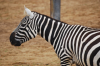
Zebras were present at the zoo’s opening in 1963, with two animals that arrived in the summer of that year being described as Grant’s zebras in The Story of Colchester Zoo. These animals seem to have been kept continuously ever since, although the subspecies have sometimes changed. International Zoo News reports the arrival of two Chapman’s zebras sometime from January to April in 1986. At some point they were replaced by Burchell’s zebras, which became the first subspecies to be housed in the Kingdom of the Wild paddock until they left in 2014. Finally, they were replaced by the maneless zebras later that year, which remain at the zoo to this day. Zebras have lived in several places in the zoo – from the zoo’s opening to sometime after 1972, they lived in the paddocks where the Elephant Kingdom and Kingdom of the Wild houses now stand, from at the least the mid-1980s to 2002 they lived where the lion is currently kept and since then they have lived in the Kingdom of the Wild mixed paddock.

Southern white rhinoceros, Ceratotherium simum

The first white rhinoceroses arrived at Colchester Zoo in 1972. Of a herd of fifteen imported from South Africa by Colchester Zoo’s then owner Frank Farrar, at least two came to Colchester itself – they were a bull named Gigantus and a cow named Malinda. The Story of Colchester Zoo suggests there could have been a third rhino, possibly even the female Flossy, who lived at Colchester until her death in 2018. They lived in a quite odd steep enclosure that is now home to the geladas. In 2002 Flossy, together with bull Simba, moved over to the new Kingdom of the Wild mixed paddock. Over time, the zoo went from holding a pair of rhinos to a small herd, with a group of six as of 2024. Since the rhinoceroses moved to Kingdom of the Wild they have been very successful, with seven calves having been born there.

upload_2024-2-17_12-42-16.png
Colchester has had a long history with keeping equids, but nowadays only two of the odd-looking maneless zebra remain for certain.
 

Attachments

  • upload_2024-2-17_12-42-16.png
    upload_2024-2-17_12-42-16.png
    929.2 KB · Views: 92
Zeedonk, Equus quagga x asinus

The earliest record I can find for a zeedonk at Colchester Zoo is the 1972 zoo map, which shows them in a paddock roughly where the Kingdom of the Wild house now stands, sharing with the zebras. Three were born with the last-surviving individual, named Shadow, born in 1975.
It's interesting to note that a photograph depicting one of Colchester’s zebra x donkey hybrids features on the dust jacket of Annie P. Gray’s book “Mammalian Hybrids”.
 
With regards to the zeedonk, I have just found this image from 1971, which shows a young foal born in that year together with both its mother and father:

They live at Colchester Zoo Where the zedonk was born in April, 1971.... News Photo - Getty Images

I guess a foal was born every two years so the first was in 1971, second in 1973(?) and third in 1975. I remember them well. All three were female. All very similar in the striping but the overall ground colour/shade was different in each- one was grey, one pinky/peach, one browny/fawn(?) . I have a postcard of the parents too in a/the then grassy paddock but with none of the hybrids are present so presumably its from before they were born. I never saw the zebra father/stallion.
 
Grevy’s zebra, Equus grevyi

A male Grevy’s zebra moved from Bristol Zoo to Colchester on 21st May 1975, where he remained until his death on 14th April 1977. It is not clear whereabouts this animal was kept in the zoo.

Bristol had two stallions and one mare around this time. I'm wondering which stallion Colchester got and whether it was Bristol's last Grevy zebra. The younger stallion( originally one of the pair) was quiet, the older one- Rastus -was one of their previous pair and he was very lively and even pugnacious. Would love to see a photo of the one at Colchester if one came to light as I think I could identify which it was- possibly. If it was the old one Colchester would have needed a pretty substantial enclosure for him. It sounds like whichever one it was it was Bristol's final one as they replaced them with a small group of Damara Zebra.
 
Last edited:
'Shadow' was the Zeedonk with the grey background colour. The other two were lighter than her but had similar striping patterns. In all three the stripes were thinner than a Grants zebra, which gave rise to some discussion I've seen somewhere that the father was a Grevy, but its clear from the photos he was a Grants. Plus the only Grevy they had arrived too late to be involved anyway.
 
Bristol had two stallions and one mare around this time. I'm wondering which stallion Colchester got and whether it was Bristol's last Grevy zebra. The younger stallion( originally one of the pair) was quiet, the older one- Rastus -was one of their previous pair and he was very lively and even pugnacious. Would love to see a photo of the one at Colchester if one came to light as I think I could identify which it was- possibly. If it was the old one Colchester would have needed a pretty substantial enclosure for him. It sounds like whichever one it was it was Bristol's final one as they replaced them with a small group of Damara Zebra.

Looking at the information on the Grevy's zebra studbook, the animal that moved to Colchester was born on 11th September 1971. Its father was a wild-born animal that arrived in Bristol in 1953 and died in 1973, while the mother was also a wild-born animal that arrived in Bristol from Copenhagen in 1968 and left for Chester in 1975.
 
It's interesting to note that a photograph depicting one of Colchester’s zebra x donkey hybrids features on the dust jacket of Annie P. Gray’s book “Mammalian Hybrids”.
With regards to the zeedonk, I have just found this image from 1971, which shows a young foal born in that year together with both its mother and father:

They live at Colchester Zoo Where the zedonk was born in April, 1971.... News Photo - Getty Images
There is also a really good photo of father, mother, offspring lined up in Animals On View.
 
Malayan tapir, Tapirus indicus

I am not entirely certain when this species arrived at Colchester Zoo, but Zootierliste records them breeding there in 1972. The zoo map from this time doesn’t actually include their enclosure (even though they are on the legend, as ‘Himalayan tapir’)...
With "Himalayan Otters" and "Himalayan Tapirs" at the zoo, I wonder if they actually just thought that Malayan and Himalayan were the same word.
 
With "Himalayan Otters" and "Himalayan Tapirs" at the zoo, I wonder if they actually just thought that Malayan and Himalayan were the same word.

I suspect the Himalayan tapir on the 1972 map might be some kind of typo, as the guidebook itself briefly mentions it as the Malayan tapir.
 
The first white rhinoceroses arrived at Colchester Zoo in 1972. Of a herd of fifteen imported from South Africa by Colchester Zoo’s then owner Frank Farrar, at least two came to Colchester itself – they were a bull named Gigantus and a cow named Malinda. The Story of Colchester Zoo suggests there could have been a third rhino, possibly even the female Flossy
According to the excellent book "The Rhinoceros in Captivity" (Rookmaaker; 1998) the zoo imported six white rhinos, two males and four females, between 1961 and 1972. Three of these, one male and two females, were sent to Blackpool soon after arrival in 1972.
Rookmaaker comments that "the old records are not available" and, disappointingly, he only provides details of two of Colchester's white rhinos: the female "Flossy", imported from Umfolozi, who arrived 1st April 1972 and the male "Simba", who arrived from Whipsnade, on 3rd March 1974.
 
Back
Top