Colchester Zoo Colchester Zoo - past, present and future

LANDFOWL

A large group of impressive, often colourful and easily-kept birds, it is perhaps of little surprise that landfowl, or galliforms, have been kept at Colchester Zoo. Perhaps more surprising is how rare they have been in more recent times – almost all of the pheasants disappeared by the late 1980s. For a time between 2014 and 2021, there were no wild galliforms at all at Colchester Zoo, with only a handful of domestic species present during that time. Today, there is a single species kept at the zoo.

Past holdings:

Chaco chachalaca, Ortalis canicollis

A pair of this species arrived in 2010 and left the collection in 2014. Over their time at the zoo, they lived in both the Rainforest Walkthrough and the Worlds Apart walkthrough enclosures.

Helmeted guineafowl, Numida meleagris

While I cannot find an exact year of arrival, there were definitely guineafowl around in the 1980s – The Story of Colchester Zoo recounts a story, either from 1984 or 1985, of visitors being shut inside the guineafowl’s hut for safety during a chimpanzee escape. While I cannot find if they disappeared in the intervening time, domestic helmeted guineafowl were around at least from 2012 – between that time and their departure in around 2022, they appeared in the bird show and lived free-roaming in the Familiar Friends section, mixed with dik-diks and crowned cranes in Edge of Africa and also briefly mixed with the elephants.

Domestic turkey, Meleagris gallopavo

There is a photograph online of this species dating back to 1964, although I do not know where in the zoo they lived. In more modern times, a pair of bronze turkeys lived in the same enclosure as the llamas and alpacas, but these birds left in around 2022.

Indian peafowl, Pavo cristatus

An aviary of peafowl existed when the zoo first opened in 1963, and a photograph from the following year shows this species. The aviary was roughly where Billie-Joe’s Walk now stands, to the front and left of Stanway Hall. The 1972 guidebook mentions the species, but it is not shown on the zoo’s map. A photograph of a peacock on Flickr, possibly taken at Colchester Zoo, dates from 1988. It is not known when peafowl finally left the collection.

Blue eared-pheasant, Crossoptilon auritum

International Zoo News reported the arrival of a pair of these pheasants at Colchester Zoo between the September and December of 1986. It is unknown how long the species was kept for, or where they lived in the zoo.

Himalayan monal, Lophophorus impejanus

An annual report from Jersey Zoo confirms that a Himalayan monal was moved to Colchester Zoo in 1976. It is not known where in the zoo it was kept or when the species went out of the collection.

Silver pheasant, Lophura nycthemera

While it is not exactly known when the species arrived, silver pheasants were definitely seen at Colchester Zoo in the 1960s. They persisted at the collection for a while and even bred, with IZN reporting the successful breeding of six silver pheasant chicks sometime between May and August 1986. It is not certain when these birds left the collection.

Lady Amherst’s pheasant, Chrysolophus amherstiae

This species is mentioned as being present in the 1967 to 1968 guidebook, but I do not know when it arrived at or departed from the zoo, nor whereabouts it lived in the zoo.

Golden pheasant, Chrysolophus pictus

An account from the 1970s, recounted in The Story of Colchester Zoo, describes a bird of this species being caught by one of the zoo’s cheetahs. This suggests that the species was probably free-roaming in the zoo at the time. There is also a stock photograph on Alamy from 1977 that appears to show a hen of this species living alongside a demoiselle crane. They were definitely still present at least as late as 1983.

Domestic chicken, Gallus gallus

While I cannot find exact years that these most abundant of birds arrived at or left the collection, the last record I have personally found is from 2019. Several recognisable breeds have been kept in this time – a photograph of a silkie exists from 1973, in August 2007 a pair of light Sussex and a trio of Transylvanian naked-necked chickens arrived at the zoo and in 2018 and 2019 breeds included the buff Orpington and white-faced black Spanish chicken. They mainly lived in the Familiar Friends section, but in the 1970s lived in the petting zoo on the site of Rajang’s Forest.

Present holdings:

Crested wood partridge, Rollulus rouloul

Two females of this species arrived in January 2021, with a male following in the December of that year – all three birds came from the Living Rainforest. They live in the Feathers of the Forest display, and have successfully bred once.

upload_2024-2-20_12-0-20.png
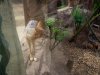
The understated elegance of the Chaco chachalaca made them a pleasant sight at Colchester in the early 2010s, but like many birds they are now absent from the zoo’s collection.
 

Attachments

  • upload_2024-2-20_12-0-20.png
    upload_2024-2-20_12-0-20.png
    934.9 KB · Views: 122
WATERFOWL

Determining what waterfowl have been kept at Colchester Zoo is challenging, as very few records exist from earlier in the zoo’s history. There are many references to ducks being kept, but it is not certain how many exotic species were among them – the 1972 guidebook mentions a duck pond in the petting zoo, which may indicate they were domestic mallards or muscovy ducks, but without images I would not be comfortable including species. There are currently no captive waterfowl at Colchester Zoo – the only waterfowl visible at the zoo are wild mallards and, sometimes, wintering Eurasian teal on the lowest of the zoo’s lakes.

Past holdings:

Black swan, Cygnus atratus

This species was definitely kept in the 1960s. The 1972 guidebook mentions that a pair of black swans could freely wander the zoo, and the map showed them living on the zoo’s lakes. The 2003 map mentions black swans living on the lakes as well, which is corroborated by a photograph from 2004 that shows this species. I do not know exactly when this species left the collection, but I imagine it was not long after this time.

Mute swan, Cygnus olor

The 1967 to 1968 guidebook mentions this species. The 2003 map also records ‘white swans’, presumably this species, living on the zoo’s lakes.

Black-necked swan, Cygnus melancoryphus

While it is not certain when they left the collection, this species was definitely seen at Colchester Zoo in the 1960s.

Domestic greylag goose, Anser anser

I have found photographs on Flickr of the heavy-bodied Toulouse goose dating from 1966 to 1969. Online photographs show there were also standard white domestic geese living on the zoo’s lake until at least 2014.

Chinese goose, Anser cygnoides

There are photographs of this domesticated form of the swan goose taken at Colchester Zoo on Flickr, at least dating between 2007 to 2008.

Egyptian goose, Alopochen aegyptiaca

A visit report from 2009 noted a pair of pinioned birds of this species living on the zoo’s lake – it is not certain when they arrived at or departed from the collection, as I cannot find any records before or after that year.

Common shelduck, Tadorna tadorna

This species of duck was definitely present in the zoo’s collection in 1983, although I do not know when it arrived or departed from the collection.

Wood duck, Aix sponsa

While it is not certain when it arrived at or left the collection, this species was definitely seen at Colchester Zoo in the time around 1967 to 1968, with them appearing in the guidebook of that year.

Mandarin duck, Aix galericulata

This species definitely lived at Colchester Zoo in around 1967 to 1968, when they are mentioned in the guidebook from that time. Later photographs from Flickr show a drake of this species by the zoo’s lake from 2005 to 2007. This could well be a captive bird, as at the time this duck was considered to be rare as a naturalised bird in Essex. However, one of the two main breeding sites in the county, at Great Braxted, is only about eight miles from the zoo and by 2003 there was already a population in the double digits.

Common pochard, Aythya ferina

While it is not certain when it arrived at or left the collection, this species was definitely present at the zoo in 1967 to 1968, as the guidebook mentions them.

Eurasian teal, Anas crecca

The 1967 to 1968 guidebook mentions this native duck being kept. I do not know when it arrived or left the collection as a captive bird, but during winter wild examples of this species can sometimes be seen on the lowest of the three lakes in the zoo.

Domestic mallard, Anas platyrhynchos

While I am not certain when mallards arrived at or left the zoo, they are mentioned in the 1967 to 1968 guidebook. There is a photograph of several standard white ducks being kept in an enclosure in Familiar Friends in 2009, with another source reporting the hatching of several ducklings in the April of that year in the Familiar Friends section.
 
A useless but fun side note - as mentioned I have been adding past holdings to ZTL, and the addition of the Mute Swan brings Colchester's all time total of species held (former + current) to 500, which is quite the milestone. And naturally the real number, as this thread will shortly reveal, is no doubt far greater than that due to many missing additions with ZTL's former inventory!
 
FLAMINGOS

These leggy pink waterbirds are a quintessential zoo species, and one of the few bird groups that Colchester Zoo has persisted with. Five out of the six living species have been kept throughout the zoo’s history, although only one remains at the moment. The zoo’s masterplan does show a new covered aviary for flamingos. While it remains to be seen if the current species is the one planned for this aviary, the development is still overall a positive one – not only would the flamingos benefit, but there may be the potential for other waterbirds to join them (several of the now-absentee groups, such as waterfowl, ibises, pelicans and storks, have been successfully kept in flamingo aviaries).

Past holdings:

American flamingo, Phoenicopterus ruber

American flamingos were recorded arriving at Colchester Zoo sometime between 1966 and 1968 in The Story of Colchester Zoo. There is an undated postcard from Colchester Zoo showing an individual of this species, which was also used in the 1998 guidebook, but I do not know if they were actually kept at this time. I am not certain when they left the collection.

Andean flamingo, Phoenicoparrus andinus

Zootierliste mentions Colchester as being a former holder of the Andean flamingo, but does not include any further information including arrival or departure years.

Greater flamingo, Phoenicopterus roseus

I cannot find any mention of when greater flamingos arrived at or departed from Colchester, but a photograph from 1969 shows a pair of greater flamingos alongside a Chilean flamingo. The Birds of Essex book also records a sighting of a greater flamingo in 1972 as being an escapee from Colchester Zoo.

Lesser flamingo, Phoeniconaias minor

Although it is not certain exactly when this species arrived at or left the zoo, it was seen at Colchester sometime in the 1960s.

Present holdings:

Chilean flamingo, Phoenicopterus chilensis

I have found photographs of these flamingos at Colchester Zoo dating back to at least 1969. In 1972 they are pictured in the guidebook. It seems that, from their arrival right through to the present day, they have always lived on the upper part of the zoo’s lakes. These birds have bred just once in the history of the zoo, with a single chick hatched in 2014.

upload_2024-2-22_11-58-11.png
It will be interesting to see if the planned flamingo aviary will display the existing Chilean flamingos or replace them with an African species that ties in better with the theme of the surrounding area.
 

Attachments

  • upload_2024-2-22_11-58-11.png
    upload_2024-2-22_11-58-11.png
    846.9 KB · Views: 109
PIGEONS

In the past, Colchester has had a fairly small but attractive selection of pigeons, including two domesticated species. There is scant evidence for pigeons being kept much beyond the 1970s, with the possible presence of one lasting to 1990, until the welcome return of the one current species of pigeon in 2010. It is fortunate, I think, that Colchester Zoo really invested in keeping and breeding their crowned pigeons, as that was probably what encouraged the later acquisition of the crested wood partridges.

Past holdings:

Western crowned pigeon, Goura cristata

A pair of photographs from Flickr taken at Colchester Zoo in 1973 show this species, and another photograph from the 1972 guidebook shows that at least a pair were kept.

Emerald dove, Chalcophaps indica

While it is not clear when they arrived at or left the collection, this species was seen at Colchester Zoo sometime during the 1960s.

European turtle dove, Streptopelia turtur

While it is not clear when they arrived at or left the collection, the European turtle dove was seen at Colchester Zoo sometime during the 1960s.

Barbary dove, Streptopelia risoria

Similarly, this species was seen at Colchester Zoo sometime during the 1960s, although it is not clear exactly when they arrived at or left the collection.

Speckled pigeon, Columba guinea

A comment here on Zoochat suggests that this species was kept at Colchester, possibly around 1990. I do not know when this species arrived at or left the collection, nor exactly where they were kept in the zoo.

Domestic pigeon, Columba livia

The 1972 guidebook includes a photograph of white domestic doves that were allowed to fly freely around the zoo. It is not certain when the species returned to the zoo (I have a photo dating from 2014, but they were probably around prior to that), but there was a flock of fantail pigeons kept in a dovecote in the roof of the stable in the Familiar Friends section; most left in around 2021, before the stable was renovated for the guinea pigs, but at least one bird remained in the African livestock walkthrough until 2022.

Present holdings:

Victoria crowned pigeon, Goura victoria

This species first arrived sometimes between 1966 and 1968, according to The Story of Colchester Zoo. It is not certain when these individuals left the collection. Victoria crowned pigeons returned in August 2010 from the Rare Species Conservation Centre, at first living in the indoor aviary opposite the Penguin Shores underwater viewing area. The main group now live in Feathers of the Forest, having bred successfully on eight occasions.

upload_2024-2-23_11-53-41.png
While the variety of pigeons has gone from Colchester Zoo, the breeding success of the Victoria crowned pigeon flock has encouraged the zoo to bring in other birds to join them.
 

Attachments

  • upload_2024-2-23_11-53-41.png
    upload_2024-2-23_11-53-41.png
    754 KB · Views: 105
TURACOS

This group of African birds has been kept on-and-off during the history of the zoo. Neither of the two species kept has persisted to the present day, with the last turacos going off-display in the mid to late 2000s and possibly remaining as a show bird until a later date. Without some resurgence of aviaries, this charming group of birds has little chance of returning to the zoo.

Past holdings:

Red-crested turaco, Tauraco erythrolophus

According to The Story of Colchester Zoo, a red-crested turaco arrived at Colchester Zoo in 1970. It is not clear where it lived or how long it was present for.

White-cheeked turaco, Menelikornis leucotis

It is not certain when this species arrived at the zoo, with a possible record from 1983, but they were definitely there from 1999 to around 2007 in the aviary row near the zoo’s entrance. It possibly remained at the zoo until a later date, as a vacancy on Zoo Jobs for an animal display position from 2012 noted a turaco as one of the display animals. It likely appeared in the indoor Wild Theatre, which was closed and turned into the lorikeet walkthrough by 2014.
 
CRANES, RAILS AND BUSTARDS

Comprising both the Gruidae and Otididae, this group of birds have appeared frequently at Colchester Zoo. The most common family of birds within this group, and the only ones still kept at Colchester, are the cranes. Single species of both the rails and bustards have also been kept here in the past. There may be a fourth group of these birds that belongs on the past holdings list – the 1972 guidebook mentions trumpeter birds in a paragraph about the cranes – this probably refers to the grey-winged trumpeter, but without actual confirmation I will leave it off the official list.

Past holdings:

White-naped crane, Antigone vipio

While I am sure they were around earlier, the only confirmed record I can find for this species of crane is from the 2003 map. This shows them living in one of the Wilds of Asia paddocks, next to the babirusa, on the site of what is now the Komodo dragon enclosure.

Sarus crane, Antigone antigone

These tallest of flying birds were kept at Colchester Zoo when it first opened in 1963, with the map showing them living in an enclosure roughly where the capuchin monkeys now live. They definitely remained at the zoo until 1986, as the International Zoo News issue from that year records the arrival of a pair sometime between the January and April of that year. I do not know where these later birds were kept, or when the species left the collection.

Demoiselle crane, Anthropoides virgo

This species was recorded during a visit to Colchester Zoo in the 1960s, is subsequently mentioned in the 1972 guidebook and, according to Zootierliste, left in 1992. A group of four demoiselle cranes returned to the zoo in 2012, living in with the dik-diks in Edge of Africa, before leaving again in around 2016.

Black crowned crane, Balearica pavonina

The IZN issue from 1986 records the arrival of three black crowned cranes, a male and two females, between September and December of that year. Zootierliste records that one female and two unsexed birds were present in 1992, with the species leaving the zoo in 1995. The image in the 1998 guidebook is probably in error, as the picture does not seem to have been taken at Colchester.

Grey-headed swamphen, Porphyrio poliocephalus (?)

This species was kept from 2000 to 2011, with the final holding location being a mixed aviary on the site of the current rufous hornbill aviary. The species has been mistaken for African swamphen, but images of the Colchester Zoo birds show a weak similarity to African swamphens and look much more like the grey-headed.

Kori bustard, Ardeotis kori

Two females of this species arrived in 1986 from South Africa and were followed by a male in 1987. The species remained at Colchester Zoo until 1998. I do not know whereabouts in the zoo they were kept.

Present holdings:

Blue crane, Anthropoides paradisea

This species arrived at the zoo sometime between 2003 and 2007, when the first images of these birds at Colchester Zoo appear online. Since they have arrived, they have moved between the two crane enclosures in Edge of Africa, often mixed with the blue duikers. The species has bred multiple times at the zoo, but there is currently just a single male left.

Grey crowned crane, Balearica regulorum

I am not entirely certain when this species arrived at Colchester Zoo – the 1972 guidebook confusingly includes a picture of a pair of grey crowned cranes, but then in the accompanying text describes them as originating from West Africa, which corresponds better with the black crowned crane. Whichever species it was, the crowned cranes lived on the top of the hill, roughly where the golden lion tamarins now live. The 1998 lists crowned cranes living on the site of the Kingdom of the Wild house. By 2003, the species was already kept in two enclosures in the African zone – some lived in what is now the blue crane enclosure in Edge of Africa while others lived mixed on the Kingdom of the Wild savannah. Sometime later, the Edge of Africa cranes got a new enclosure, which they share with the dik-diks.

upload_2024-2-24_12-15-27.png
Although not as boldly coloured as the African swamphen, this grey-headed swamphen kept at Colchester Zoo could not be accused of being dull.
 

Attachments

  • upload_2024-2-24_12-15-27.png
    upload_2024-2-24_12-15-27.png
    988.6 KB · Views: 106
SHOREBIRDS

This is a rather strange set of birds in the history of Colchester Zoo, as all of the eight species kept are natives to the British Isles. Lovely as it might have been to see a collection of native wading birds at Colchester, it was not to be and the last species disappeared from the collection in around 2013. For those who really need to see wading birds, I recommend any of the good nature reserves on the nearby Essex coast – at least six of the eight formerly-kept species are pretty regular at some time of the year.

Past holdings:

Eurasian curlew, Numenius arquata

This species of bird is recorded on the 2003 zoo map, living in the former Ibis Walk aviary behind the vultures in Kingdom of the Wild. They remained at the zoo until 2013 – sometime between those years, the pair of curlews moved from the Ibis Walk aviary to a mixed walk-in display on the site of the current rufous hornbill aviary.

Pied avocet, Recurvirostra avosetta

I have found a photograph online from 2002 showing avocets in the Ibis Walk aviary alongside spoonbills and sacred ibises; they are also mentioned on the 2003 zoo map in the same location. I imagine they arrived in 2002, when the aviary first opened, but do not know when they left the collection.

Northern lapwing, Vanellus vanellus

The only reference I can find for this species is from Zootierliste, which says the species was no longer present by 2013. I do not know exactly when they arrived at or left the zoo, nor where they were kept.

Ruff, Calidris pugnax

The only evidence I can find for this species being kept at Colchester Zoo is from the 2003 map, which shows they were kept in the Ibis Walk aviary. I do not know when they arrived at or left the collection.

Common redshank, Tringa totanus

This species is mentioned on the 2003 map, again living in the Ibis Walk aviary with the other waders. I do not know exactly when they left the zoo, but Zootierliste records them as definitely gone by 2013.

Dunlin, Calidris alpina

According to Zootierliste, this wading bird was kept at Colchester Zoo from 2002 to 2003 – I do not know exactly where they were kept, if they went on-display.

Common sandpiper, Actitis hypoleucos

Again, Zootierliste reports that this species was present from 2002 to 2003, with a single individual kept. Again, I do not know whereabouts in the zoo this bird lived.

European stone-curlew, Burhinus oedicnemus

According to the 1986 issue of International Zoo News, two pairs of European stone curlews arrived at Colchester between January and April of that year. The 1986 map also references the species, but the quality of the map is so poor I cannot determine where they were kept. I do not know when this species left the zoo.

upload_2024-2-25_11-59-41.png
Given their increasing rarity in the wild, it would have been lovely to see Colchester try and persist with native waders such as the Eurasian curlew.
 

Attachments

  • upload_2024-2-25_11-59-41.png
    upload_2024-2-25_11-59-41.png
    1 MB · Views: 90
CANIFORMS

Past holdings:

Black-backed jackal, Lupulella mesomelas

The earliest records I can find of the black-backed jackal are photographs from 2005. For many years this group of jackals were only visible from the road train. The last individual from this group died in 2018. Back when they arrived, this species may have been much easier to see – photographs on Flickr seem to show these animals were living in what was possibly the current giant anteater enclosure.

I have a photo from April 2004 of two black-backed jackals, in what was in the 90s the maned wolf enclosure (is that the current giant anteater enclosure?).
 

Attachments

  • 05_black-backed jackals at Colchester zoo.JPG
    05_black-backed jackals at Colchester zoo.JPG
    184.4 KB · Views: 10
I have a photo from April 2004 of two black-backed jackals, in what was in the 90s the maned wolf enclosure (is that the current giant anteater enclosure?).

Yes, the old maned wolf enclosure is the site of the current giant anteaters. I personally cannot say I ever recalled seeing the jackals in there - lovely to get further confirmation, and also something of a shame that the species didn't remain in an enclosure where they could be easily seen.
 
Yes, the old maned wolf enclosure is the site of the current giant anteaters. I personally cannot say I ever recalled seeing the jackals in there - lovely to get further confirmation, and also something of a shame that the species didn't remain in an enclosure where they could be easily seen.

It's been lovely reminiscing about my first visits to Colchester as a child in the mid 90s through this thread. I can recall, with my love of Carnivora growing at the time, being amazed to see four different mongoose species in one day (dwarf, marsh, yellow, and meerkat) at the age of around 12. But my biggest thrill was seeing maned wolves for the first time, I was in absolute awe of them. I remember a picture my mum or dad took of one of the wolves from the upper viewing area with me visible in the background watching in the lower area, roughly where the black-backed jackals above were taken. As much as I'd enjoyed my till-then childhood visits to London Zoo and Paradise Wildlife Park, Colchester was my new favourite zoo for some years to come.
 
PENGUINS

Penguins are among the most familiar and beloved of all birds, and Colchester Zoo has had a long history of working with them. There have been some changes with regards to the species kept, but today there is a large breeding flock of one of the more commonly-kept penguins at the zoo. For a while, they were kept across two enclosures but currently they are all being kept in the Inca Trail exhibit while their old Penguin Shores display dating back to 1994 is being redeveloped.

Past holdings:

King penguin, Aptenodytes patagonicus

There is some suggestion that this species was kept at the zoo in the 1960s, but a trio of king penguins definitely also arrived at Colchester Zoo in 1970, according to The Story of Colchester Zoo. They lived in a mixed enclosure with the other penguins, but it is not known how long they were at the zoo for.

African penguin, Spheniscus demersus

Four birds of this species arrived 1965, and were the first penguins kept at Colchester Zoo. The zoo’s anniversary guide, published in 2023, says that these birds then left prior to the arrival of the Humboldt penguins in 1968.

Magellanic penguin, Spheniscus magellanicus (?)

This one is based purely off two photographs, one from The Story of Colchester Zoo and the other from the 1972 guidebook – in the pictures, a Spheniscus penguin with very distinctive markings compared to a Humboldt penguin can be seen. In one picture this bird can be seen alongside a king penguin and two Humboldt penguins, while the other shows it next to a larger group of Humboldt penguins. Looking around online, the bird in the picture seems to correspond with a Magellanic penguin.

upload_2024-2-26_11-56-28.png
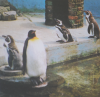
This picture from the 1972 guidebook shows Colchester Zoo's old penguin pool, featuring a king penguin, two Humboldt penguins and, in the middle, what I think is a Magellanic penguin.

Present holdings:

Humboldt penguin, Spheniscus humboldti

This species first arrived at Colchester Zoo in 1968, and has remained at the zoo ever since. As recently as 2020 there were thirty-eight individual penguins, although there have definitely been new chicks hatched in the intervening years, so the number may well be higher.

upload_2024-2-26_11-55-58.png
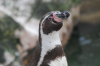
Of all the birds, the Humboldt penguin is perhaps the bird species with the most secure future at Colchester Zoo; I cannot imagine the zoo going out of this engaging and popular animal.
 

Attachments

  • upload_2024-2-26_11-55-58.png
    upload_2024-2-26_11-55-58.png
    907.1 KB · Views: 80
  • upload_2024-2-26_11-56-28.png
    upload_2024-2-26_11-56-28.png
    1.1 MB · Views: 83
Magellanic penguin, Spheniscus magellanicus (?)

This one is based purely off two photographs, one from The Story of Colchester Zoo and the other from the 1972 guidebook – in the pictures, a Spheniscus penguin with very distinctive markings compared to a Humboldt penguin can be seen. In one picture this bird can be seen alongside a king penguin and two Humboldt penguins, while the other shows it next to a larger group of Humboldt penguins. Looking around online, the bird in the picture seems to correspond with a Magellanic penguin.
Yes, that is a Magellanic Penguin.
 
STORKS

The storks are just one of several groups of mostly aquatic or wading birds to have been completely lost from Colchester Zoo. At times there were multiple species kept at the zoo, and one even had its breeding programme coordinated from Colchester during the early 2000s, but post-2010 the only stork at the zoo was a bird kept off-show as part of the bird display team with no indication as to when it departed.

Past holdings:

Saddle-billed stork, Ephippiorhynchus senegalensis

A photograph shows a pair of these birds being kept in 1990, with Zootierliste reporting that only the male remained by 1992. It is still shown in the 1998 guidebook. I do not know when they arrived at or left the collection, or exactly where they lived – the photograph seems to show them in a fenced enclosure.

Yellow-billed stork, Mycteria ibis

These birds have lived at Colchester Zoo probably at least since 1999 or 2000, as they moved into the old mandrill enclosure roughly where the meerkats now live. In the early 2000s, the EAZA studbook for these storks was coordinated from Colchester Zoo, who first bred the species themselves in 2003. In 2008 they moved into what is now the capuchin monkey enclosure, where they remained until their departure in around 2010.

Painted stork, Mycteria leucocephala

There is not a lot of information about these birds – they are listed on Zootierliste as being formerly held at Colchester Zoo, without any further information. They have been mentioned on Zoochat as a former Colchester species, and a report mentions the species from 2009, although I cannot find anything to corroborate this – as mentioned above, there were definitely yellow-billed storks around at that time.

White stork, Ciconia ciconia

This species has been kept since at least 1989 when they were a free-roaming species, albeit one based entirely around the zoo’s lakes. They seem to have remained here until at least 2008, when they moved into the small paddock where the wreathed hornbills now live. They subsequently moved into what is now the capuchin enclosure, with the last pair leaving in 2010 for Newquay Zoo.

Marabou stork, Leptoptilos crumenifer

Marabou storks, referred to as adjutants, were present at Colchester Zoo when it first opened in 1963, living in an aviary above from the lake roughly where the geladas now live. They are mentioned in the 1972 guidebook, but the attached map only mentions ‘storks’ in general, living roughly where the chimpanzees and the neighbouring catering area now stand. The 1998 zoo map shows these birds living with crowned cranes on the site of the Kingdom of the Wild house, while photos from as late as 2004 show a marabou stork mixed with ground hornbills in an area I cannot identify. The species made a return in 2011 as a display bird, but has since subsequently left the collection again.

upload_2024-2-27_12-15-22.png
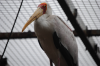
ZooLeopard Even though Colchester coordinated their breeding programme, the yellow-billed stork has joined the rest of its family in falling by the wayside at the modern zoo.
 

Attachments

  • upload_2024-2-27_12-15-22.png
    upload_2024-2-27_12-15-22.png
    648.4 KB · Views: 92
CORMORANTS

A couple of species of cormorant have been kept at Colchester Zoo over the years, with one briefly kept in the 1990s and the other later into the 2010s. This latter species, the native great cormorant, is a potential confusion species – while there were apparently some flight-restricted individuals kept they can still be seen on the lake, as birds from the famous Abberton Reservoir rookery have managed to discover the zoo lakes, which are only around five miles away.

Past holdings:

Great cormorant, Phalacrocorax carbo

Photographs from 2004 at the zoo show at least of these cormorants on the zoo’s upper lake, both perching on now-removed fallen trees near to the pelicans. Obviously, it is difficult to tell exactly if one or both of these birds were captive or local wild birds, but the presence of multiple birds suggests the former to me (the lakes contain few if any fish, so would probably be of little attraction to wild cormorants). Zootierliste records that the species was no longer listed by the zoo as of 2013.

Guanay cormorant, Leucocarbo bougainvilliorum

In 1995, the BIAZA Bird Inventory recorded four of this species of cormorant being kept at Colchester. It is not known when they arrived or departed from the collection, but Zootierliste suggests that the species was kept in several UK collections in that year. I also do not know whereabouts they lived in the zoo.
 
CORMORANTS

A couple of species of cormorant have been kept at Colchester Zoo over the years, with one briefly kept in the 1990s and the other later into the 2010s. This latter species, the native great cormorant, is a potential confusion species – while there were apparently some flight-restricted individuals kept they can still be seen on the lake, as birds from the famous Abberton Reservoir rookery have managed to discover the zoo lakes, which are only around five miles away.

Past holdings:

Great cormorant, Phalacrocorax carbo

Photographs from 2004 at the zoo show at least of these cormorants on the zoo’s upper lake, both perching on now-removed fallen trees near to the pelicans. Obviously, it is difficult to tell exactly if one or both of these birds were captive or local wild birds, but the presence of multiple birds suggests the former to me (the lakes contain few if any fish, so would probably be of little attraction to wild cormorants). Zootierliste records that the species was no longer listed by the zoo as of 2013.

Guanay cormorant, Leucocarbo bougainvilliorum

In 1995, the BIAZA Bird Inventory recorded four of this species of cormorant being kept at Colchester. It is not known when they arrived or departed from the collection, but Zootierliste suggests that the species was kept in several UK collections in that year. I also do not know whereabouts they lived in the zoo.

I do like seeing the wild ones on the lake (May last year for this one). Didn't realise there had been captive ones.

colchestercorm.jpg
 

Attachments

  • colchestercorm.jpg
    colchestercorm.jpg
    176.8 KB · Views: 83
PELICANS, HERONS AND IBISES

This group of birds has fared even worse than the storks, with no fewer than eight species in the zoo in the early 2000s whose keeping was gradually discontinued until the last species disappeared from the zoo by about 2017. Throughout the zoo’s history, at least eleven different species have been kept – some of them, such as the pelicans, are among the most charismatic of the birds, and others, like the successfully breeding flock of bald ibises, being highly threatened in the wild. Unfortunately, the masterplan gives no indication if this group of birds will be making a return to Colchester.

Past holdings:

African sacred ibis, Threskiornis aethiopicus

I cannot be certain if this species had been kept prior to this date, but the 1986 issue of International Zoo News records a group of four sacred ibises arriving sometime between September and December of that year. I am not clear exactly when these birds left or exactly when the species returned to the zoo, but they arrived in the former Ibis Walk aviary behind the vultures sometime in 2002, even though the 2003 map does not mention them. They remained here and bred before leaving soon after 2008.

Northern bald ibis, Geronticus eremita

I do not know exactly when this species arrived, but I suspect it was soon after the last Amur leopard cats left the collection, as the ibises moved into their former enclosure at the bottom of Hornbill Hill – an area now part of the sun bear enclosure. They are shown in this enclosure on the 2003 map. They moved into a smaller aviary where the standalone reptile house just along from the chimps now stands, and left the collection completely in around 2011.

Scarlet ibis, Eudocimus ruber

While they may well have been present earlier, the first record I can find is from the 2003 zoo map, which shows them living at the top of the hill in an area now used for the rufous hornbill aviary. At least in 2010, they lived in the old lar gibbon cage by the zoo’s entrance. They were the last of the Pelecaniformes to leave the zoo, with the species leaving in 2017. In this later period, the scarlet ibises lived in the aviary along the Inca Trail now home to the rock hyraxes.

African spoonbill, Platalea alba (?)

This is one of the true unknowns – the zoo map from 2003 mentions African spoonbills in the legend, living in the Ibis Walk aviary. However, all the photographs I can find, including some from that year, only show Eurasian spoonbills. Zootierliste also mentions this species, but gives no further information.

Eurasian spoonbill, Platalea leucorodia

The 1986 issue of IZN records the arrival of two pairs of this species of spoonbill sometime between September and December of that year. Later photographs on Flickr show that, from 2002 to 2008, this species lived in the Ibis Walk aviary.

Black-crowned night heron, Nycticorax nycticorax

The aforementioned 1986 IZN issue also mentions the arrival of three pairs of this widespread heron species sometime between January and April of that year. They may well have been a new species, as their aviary was constructed at around the same time.

Little egret, Egretta garzetta

The zoo map from 2003 mentions this species living in the Ibis Walk aviary. They were definitely still present in 2007, but may have remained until the aviary was closed in 2008.

Western cattle egret, Bubulcus ibis

While they may well have been present earlier, the first record I can find is from the 2003 map. There was a large breeding colony, but the species left in 2013. Throughout that time, they lived in the Inca Trail aviary where the rock hyraxes now live.

Hamerkop, Scopus umbretta

The 2003 zoo map shows this species living in two enclosures – one in the aviary row later demolished for the Rainforest Walkthrough and in one of the former enclosures where the Barbary macaques currently live. The species bred regularly in their time at the zoo, with at least five chicks fledged in 2008. The last records I can find suggest the species may have left in around 2011.

Dalmatian pelican, Pelecanus crispus

These large birds were at least present at Colchester Zoo in 1966, with an online photograph showing a group of three on an open pond. Another photo, this time from 1973, shows a Dalmatian pelican being kept in an aviary. By 1988, they were freely roaming in the zoo again, and the species remained on the zoo’s larger uppermost lake until the last birds left sometime between 2010 and 2012. Despite their long time at the zoo, the species never bred at Colchester.

White pelican, Pelecanus onocrotalus

The white pelican is recorded as being present at the zoo in 1983. I do not know when they arrived at or left the collection, but I am confident that this species lived on one of the zoo’s lakes.

Brown pelican, Pelecanus occidentalis

The Story of Colchester Zoo reports that a single brown pelican, sourced from Brazil, was present at the zoo on its 1963 opening day. It is not clear when the species left the zoo, but it more than likely lived on the zoo’s lakes.

upload_2024-2-28_12-1-44.png
The incredible colours of this scarlet ibis are matched by the incredible rate at which the group of birds their species belongs to have vanished from Colchester Zoo.
 

Attachments

  • upload_2024-2-28_12-1-44.png
    upload_2024-2-28_12-1-44.png
    900.3 KB · Views: 81
RAPTORS

Birds of prey are among the most impressive birds in the world, so Colchester Zoo has of course kept several species throughout its history. Vultures predominate among these birds, with over half of all birds of prey kept at Colchester throughout its history being either a New or Old World vulture. Today, only vultures remain among the birds of prey, following the decommissioning of the bird flight display in 2019. Fortunately, the zoo’s masterplan does include a new vulture aviary among the developments, which hopefully shows a commitment to these impressive and rather rare birds, which Colchester has done a lot of conservation work with in South Africa.

Past holdings:

American black vulture, Coragyps atratus

This species is shown on the 2003 map, living in what is now the lion enclosure. The latest images I can find are from 2007, showing this species living in the World of Wings section. They presumably left the collection soon after this.

Turkey vulture, Cathartes aura

This species was definitely kept at the zoo in 1990, as a photograph in the Zoochat gallery shows one mixed with a ground hornbill – I don’t know where it lived, or when it arrived at the zoo. The 2003 map shows this species in the same space as the black vultures, now used for lions. The next and last evidence I can find is from 2007, where online pictures show this species mixed with the king vultures in World of Wings. They seem to have left the collection soon after this.

Black kite, Milvus migrans

The first record I can find of the black kite is from the 1998 guidebook. The 2003 map lists it as one of the performers in the bird display. In 2006, the Birds of Essex book records a black kite that escaped from Colchester Zoo which was successfully recaptured. The species remained at the bird show until around 2017, after which I can find no further evidence for its presence.

Harris’s hawk, Parabuteo unicinctus

The Harris’s hawk has been kept since at least 2003, where they are shown on the map as being part of the bird display. They remained at the zoo until 2018 or 2019.

Ferruginous hawk, Buteo regalis

This species was definitely kept in 1998, as the zoo’s guidebook includes a picture of one. Presumably, it was part of the bird display.

Eurasian buzzard, Buteo buteo

The first record of this native raptor that can be confirmed is from 1983. The 2003 map shows this species as part of the bird display. The species remained part of the shows until they were ended in 2019.

Bateleur eagle, Terathopius ecaudatus

The Story of Colchester Zoo records the arrival of the bateleur eagle sometime between 1966 to 1968, with a photograph from 1973 on Flickr showing this species being kept in an aviary. They were also definitely present in 1983. This species later went off permanent display and became one of the birds for the falconry display, with the 2003 map and a 2005 online photograph showing bateleur eagles. Presumably, the species left not long after this period.

Steppe eagle, Aquila nipalensis

Another bird that wasn’t kept in a public aviary to my knowledge, the first record I can find for this species are photographs taken in 2010. In 2019 this bird, named Attila, left for Dudley Zoo when the bird show finished.

African fish eagle, Haliaeetus vocifer

A pair of African fish eagles were present at Colchester Zoo at its opening in 1963, living in an aviary to the north of the lakes, roughly where the geladas now live. The guidebook from 1972 also mentions the species, with the map showing they lived in the same location. I am not sure when the fish eagles were last kept at Colchester Zoo.

Palm-nut vulture, Gypohierax angolensis

These vultures were present at Colchester Zoo for at least a couple of years. The zoo map from 2003 places them in the Vulture Valley aviary, while an online photograph of the species from Colchester dates back to 2005. It seems likely that the species left soon after.

Eurasian griffon vulture, Gyps fulvus

While I am very sure they were around previously, the first record I can find for these vultures from Colchester Zoo is the 2003 map, which shows them living in both the Vulture Valley aviary in Kingdom of the Wild and the World of Wings aviary now home to the king vultures. In more recent times there were just two birds – one in Vulture Valley and the other in the bird display. The display bird died in 2018 following an accident where it fell into the neighbouring lion enclosure. The last individual, from Vulture Valley, left the zoo in 2020.

Hooded vulture, Necrosyrtes monachus

The only reference I can find for this vulture species being kept at Colchester Zoo is from the 2003 map, which mentions them being both part of the bird display and also living in the Vulture Valley aviary. I am not certain when they arrived at or departed the collection.

Present holdings:

King vulture, Sarcoramphus papa

The Story of Colchester Zoo records the king vulture as one of the species that arrived at the zoo in the summer of 1963. They are pictured in the 1998 guidebook and map, both suggesting that the species was part of the falconry display. From around 1999 to 2000, the species was present in one of the World of Wings aviaries. The species is difficult to breed in captivity, and it is no exception at Colchester – three fertile eggs laid between 2019 and 2022 failed to survive, and a chick that hatched in July 2022 also died at three months of age.

Andean condor, Vultur gryphus

Andean condors are perhaps the single most important bird species in Colchester Zoo’s history, as they seem to have been kept throughout the time the zoo has been open. They were present at the zoo’s opening in 1963, living in an aviary on the site of the entrance building. The 1972 map shows they had moved to an aviary on the hilltop, roughly where the Amur leopards now live. The maps from 1984 through to around 1994 show them living in an aviary on the site of the current orangutan enclosure. Sometime after that, they moved to the World of Wings aviary where a pair remains to this day. Despite this long history, I do not know if condors have ever successfully bred at the zoo.

Ruppell’s griffon vulture, Gyps rueppelli

The earliest record I can find of this species is an online photograph from 2003. They almost certainly have lived in the Vulture Valley aviary from their arrival right up to the present day. Today there are seven individuals at the zoo, and five chicks have hatched in their time here.

African white-backed vulture, Gyps africanus

While I don’t know if the species was present before, two males arrived in 2005 from Linton Zoo that appeared as display birds. In 2019, the two males moved to Vulture Valley in the Kingdom of the Wild section following the ending of the displays. In 2020 a female arrived, followed by the departure of one of the males, leaving the pair currently at the zoo.

upload_2024-2-29_11-57-15.png
Andean condors are the one species of bird that was present when the zoo first opened that has remained there right through to the present day. Whether they stay in the future remains to be seen.
 

Attachments

  • upload_2024-2-29_11-57-15.png
    upload_2024-2-29_11-57-15.png
    1.1 MB · Views: 75
Back
Top