Create an Exhibit Shining New Light on Common Species

The Turtle Tank

In this exhibit, visitors are introduced to the common yet fascinating turtle - the red-eared slider. There are many dimensions to this popular creature; and this small exhibit will therefore be split into three sections - Red-eared sliders in the wild, Red-eared sliders as pets, and Red-eared sliders as invasive species.

The first section contains multiple Red-eared sliders in a naturalistic tank; full of smaller fish that hail from the Mississippi. It's large; but the sheer number of turtles means that at least one is always sure to be visible. Full of basking spots and lush with plants; it simulates a riverbank. The sliders share this tank with:
Black Crappie
White Crappie
Bluegill
Common Shiner

The second section is all about slider care. Sliders are some of the most abused pets out there; and the tank here will portray a proper tank setup, diet, and temperature range.

The third section is about the slider as an invasive species. Signs will show the areas that sliders have colonized; from India to Australia; and detail the ecological impact that this creature has had. They will be kept in a tank with:
Western Swamp Turtle
Irwin's Turtle
to show the differences between them and Australian natives that they have started outcompeting, for assorted reasons.
 
The Turtle Tank

In this exhibit, visitors are introduced to the common yet fascinating turtle - the red-eared slider. There are many dimensions to this popular creature; and this small exhibit will therefore be split into three sections - Red-eared sliders in the wild, Red-eared sliders as pets, and Red-eared sliders as invasive species.

The first section contains multiple Red-eared sliders in a naturalistic tank; full of smaller fish that hail from the Mississippi. It's large; but the sheer number of turtles means that at least one is always sure to be visible. Full of basking spots and lush with plants; it simulates a riverbank. The sliders share this tank with:
Black Crappie
White Crappie
Bluegill
Common Shiner

The second section is all about slider care. Sliders are some of the most abused pets out there; and the tank here will portray a proper tank setup, diet, and temperature range.

The third section is about the slider as an invasive species. Signs will show the areas that sliders have colonized; from India to Australia; and detail the ecological impact that this creature has had. They will be kept in a tank with:
Western Swamp Turtle
Irwin's Turtle
to show the differences between them and Australian natives that they have started outcompeting, for assorted reasons.

Absolutely outstanding. I love the three part idea and educating the guests on how to properly care for these animals. Some VERY good educational opportunities in here and it truly shines the spotlight on this species. I would be thrilled to go through this exhibit.
 
I figured this may be a little bit of a challenge. I read somewhere about a zoo wanting to build a new exhibit and they couldn't do anything like elephants or the like, so they decided to go with the common bullfrog. They built an entire exhibit around the North American bullfrog, with different species, wetlands exhibits and the like. Each tying into the story of the bullfrog.

The purpose of this exercise is that, if you are interested, I give you a common animal and you must build an interactive and engaging exhibit complex around that species. You can have other species, gift shops, food vendors, educational areas...whatever you like. The main focus MUST be on the common species and allow the visitor to be able to get a newfound appreciation for it.
Could I have one please.
Since I’m from the UK would I be able to have an animal native to here?
 
I would also like to participate in this thread as well, if that is alright with you. And if possible, I would like to start myself off with a species of mammal native to North America if that is again alright with you.
 
Last edited:
I would also like to participate in this thread as well, if that is alright with you. And if possible, I would like to start myself off with a species of mammal native to North America if that is again alright with you.

Sure thing. I'll give you the White-Tailed Deer (Odocoileus virginianus).
 
Sure thing! I'll give you the Brown (Common) Rat (Rattus norvegicus). I can't wait to see how this turns out!

This enclosure is set in a museum

000.png

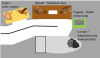
The "history of the rat" exhibit features four enclosures:

- The origin (a naturalistic habitat, holding a smaller group of sand-coloured variants with rougher hair)

- The spread (A habitat designed after a storage area in a medieval ship, including crates and barrels, a hammock, and a ladder to "the deck" (which actually goes nowhere))

- Adaptation (A (nocturnal) habitat designed after a trash-filled New York alleyway, including "scary" (thinner, black-furred) variants)

- Domestication (Next to the adaptation exhibit, one of the alleyway houses has a window you can look into from the adaptation exhibit (as well as from the path), the interior of a small room with a larger at-home style pet rat cage, holding white and brown spotted variants)

There's also an in-between display "death of the dodo", talking about how rats play a large part in island animal extinction

All enclosures also have a lot of information signs, of course. Such as the "spread" enclosure also having an information panel on how it's still happening with stowaways on modern ships, as well as a sign on rats on the Galapagos next to the "death of the dodo" display

I'll gladly take another one!
 

Attachments

  • 000.png
    000.png
    275.8 KB · Views: 31
Last edited:
This enclosure is set in a museum

View attachment 497692

The "history of the rat" exhibit features four enclosures:

- The origin (a naturalistic habitat, holding a smaller group of sand-coloured variants with rougher hair)

- The spread (A habitat designed after a storage area in a medieval ship, including crates and barrels, a hammock, and a ladder to "the deck" (which actually goes nowhere))

- Adaptation (A (nocturnal) habitat designed after a trash-filled New York alleyway, including "scary" (thinner, black-furred) variants)

- Domestication (Next to the adaptation exhibit, one of the alleyway houses has a window you can look into from the adaptation exhibit (as well as from the path), the interior of a small room with a larger at-home style pet rat cage, holding white and brown spotted variants)

There's also an in-between display "death of the dodo", talking about how rats play a large part in island animal extinction

All enclosures also have a lot of information signs, of course. Such as the "spread" enclosure also having an information panel on how it's still happening with stowaways on modern ships, as well as a sign on rats on the galapagos

I'll gladly take another one!

This is amazing. I like that you included everything from their origins to where they are today and how they can effect local ecosystems. This would be a wonderful exhibit to go through in any museum, zoo or nature facility. A lot of opportunity for education on a common classroom pet that may not otherwise have been dispensed. Wonderful job! I also love the design you made! Thank you so much!
 
This is amazing. I like that you included everything from their origins to where they are today and how they can effect local ecosystems. This would be a wonderful exhibit to go through in any museum, zoo or nature facility. A lot of opportunity for education on a common classroom pet that may not otherwise have been dispensed. Wonderful job! I also love the design you made! Thank you so much!

Well, I enjoyed making it. I knew rats had an interesting history so I decided to capitalize on that. And I always make a little blueprint of it, helps everyone with visualization! (Also: props to you if you find the hidden detail!)

Could I have another one?
 
Certainly! And now I am looking for the hidden detail! How about...the House Wren Troglodytes aedon.
 
Certainly! And now I am looking for the hidden detail! How about...the House Wren Troglodytes aedon.

Since you haven't found it yet: The little tombstone says "Here lies the dodo, ???-1693, Death by invasive species"

000.png

This exhibit is in a smaller zoo, based around education and fun facts. The fun fact about the house wren is that it occurs all the way from Canada to the Southernmost tip of Argentina.

This row of five aviaries and four greenhouses shows all sorts of climates and ecosystems. All the exhibits have a separate groups of house wrens, though they are cycled every two weeks to give them some variety.

All exhibits also house a few different species

Aviary 1: Canadian Tiaga
An aviary with pine and fir trees, holding Snowy owls, Great grey owls, Canadian geese, Common eiders and Spruce grouses

Aviary 2: East American forest
An aviary with Birch and Maple trees, holding North American porcupines, Eastern grey squirrels, Wild turkeys, Blue jays, Northern cardinals and American goldfinches

Aviary 3: Great plains
A more open aviary with a few dead trees and smaller conifers, holding Black-tailed prairie dogs, Greater prairie chickens, Inca doves and Scarlet tanagers

Greenhouse 4: American desert
A small greenhouse with lots of rockwork, Succulents and cacti, holding Eastern collared lizards, Chuckwallas, Lawrence goldfinches, Yellow grosbeak, Gambel's quails and Scaled quails

Greenhouse 5: Central America
A small greenhouse with mainly volcanic rockwork and palm trees, as well as a replicated salt marsh. Holding Black-tailed spiny iguanas, Great curassows, Keel-billed toucans, Blue-black grassquits, red-legged honeycreepers, Roseate spoonbills and American flamingos

Greenhouse 6: Amazon
A larger greenhouse with thick vegetation and all sorts of plants, holding Two-toed sloths, Common squirrel monkeys, Capybaras, Green iguanas, red-footed tortoises, Yellow-spotted amazon river turtles, Whooping motmots, Spangled cotingas, Grey-winged trumpeters, Orinoco geese, Paradise tanagers, Purple honeycreepers, Scarlet ibis, Sunbitterns, Yellow orioles, Screaming pihas and Amazonian motmot

Aviary 7: Pampas
A large aviary with mainly open grass, holding Guanacos, Greater rheas, Toco toucans, Back-crested finches, White monjitas and Surucua trogons

Aviary 8: Patagonia
The final aviary, with mainly grass and rockwork, holding Patagonian maras, Southern screamers, Maroon-bellied parakeets and Yellow-billed cardinals

Greenhouse 9: The final edge
A cooled greenhouse, with no foliage, only rocks, grass and moss. Holding Chinstrap penguins, Northern rockhopper penguins and black-faced ibises

All exhibits have signage about the different climates and the adaptations they require
 

Attachments

  • 000.png
    000.png
    355.1 KB · Views: 32
Since you haven't found it yet: The little tombstone says "Here lies the dodo, ???-1693, Death by invasive species"

View attachment 497744

This exhibit is in a smaller zoo, based around education and fun facts. The fun fact about the house wren is that it occurs all the way from Canada to the Southernmost tip of Argentina.

This row of five aviaries and four greenhouses shows all sorts of climates and ecosystems. All the exhibits have a separate groups of house wrens, though they are cycled every two weeks to give them some variety.

All exhibits also house a few different species

Aviary 1: Canadian Tiaga
An aviary with pine and fir trees, holding Snowy owls, Great grey owls, Canadian geese, Common eiders and Spruce grouses

Aviary 2: East American forest
An aviary with Birch and Maple trees, holding North American porcupines, Eastern grey squirrels, Wild turkeys, Blue jays, Northern cardinals and American goldfinches

Aviary 3: Great plains
A more open aviary with a few dead trees and smaller conifers, holding Black-tailed prairie dogs, Greater prairie chickens, Inca doves and Scarlet tanagers

Greenhouse 4: American desert
A small greenhouse with lots of rockwork, Succulents and cacti, holding Eastern collared lizards, Chuckwallas, Lawrence goldfinches, Yellow grosbeak, Gambel's quails and Scaled quails

Greenhouse 5: Central America
A small greenhouse with mainly volcanic rockwork and palm trees, as well as a replicated salt marsh. Holding Black-tailed spiny iguanas, Great curassows, Keel-billed toucans, Blue-black grassquits, red-legged honeycreepers, Roseate spoonbills and American flamingos

Greenhouse 6: Amazon
A larger greenhouse with thick vegetation and all sorts of plants, holding Two-toed sloths, Common squirrel monkeys, Capybaras, Green iguanas, red-footed tortoises, Yellow-spotted amazon river turtles, Whooping motmots, Spangled cotingas, Grey-winged trumpeters, Orinoco geese, Paradise tanagers, Purple honeycreepers, Scarlet ibis, Sunbitterns, Yellow orioles, Screaming pihas and Amazonian motmot

Aviary 7: Pampas
A large aviary with mainly open grass, holding Guanacos, Greater rheas, Toco toucans, Back-crested finches, White monjitas and Surucua trogons

Aviary 8: Patagonia
The final aviary, with mainly grass and rockwork, holding Patagonian maras, Southern screamers, Maroon-bellied parakeets and Yellow-billed cardinals

Greenhouse 9: The final edge
A cooled greenhouse, with no foliage, only rocks, grass and moss. Holding Chinstrap penguins, Northern rockhopper penguins and black-faced ibises

All exhibits have signage about the different climates and the adaptations they require

What a fun idea and a great variety of species on display! A great way to show the varied habitats this species inhabits. Really enjoyed this one.

I got called away last night, so I didn't get a chance to reexamine your previous post, but I like the tombstone. I have often thought how interesting it would be from a conservation standpoint to display a cemetery in a zoo with all the species that have been made extinct due to human influence. It may be a little grim, but I think showing just what an impact we can have hopefully reach SOME people.
 
What a fun idea and a great variety of species on display! A great way to show the varied habitats this species inhabits. Really enjoyed this one.

I may have gone a little overboard. But hey, that's what fantasy zoos is all about!

Could I have another one please?
 
Back
Top