They keep the golden jackel (Canis aureus). Who live from France to Vietnam, including most of the indian sub-continentYeah, I just meant the Black-back species. Guess it works though.
They keep the golden jackel (Canis aureus). Who live from France to Vietnam, including most of the indian sub-continentYeah, I just meant the Black-back species. Guess it works though.

Yeah, I know.They keep the golden jackel (Canis aureus). Who live from France to Vietnam, including most of the indian sub-continent

As a person living close to the Zoo, yes. The enclosure has a breeding pair of golden jackals together with a breeding pair of sloth bears. The exhibit can be sepereted in to 2 parts. mostly to seperate the 2 species when they have young and the male slot bear, if hte female has you. It is a very succefull mix, with no problems so far and both species breeding. Espicially for the jackels, a species who sadly have often very smal exhibits. Even in great zoos like the Burgers zoo are smaler carnivores often in to smal exhibits. The Zoo keept in the begginning phase of the exhibit a African Golden Wolf, before it was seen as a seperate species aswell (no breeding with golden jackel happened)


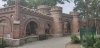
Wroclaw's Old Bear Castle is good example for such an enclosure.
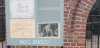
Build just before the zoo opening in 1864,It is hard to imagine, that it was once home of Brown and Polar Bears. It was renovated in1986 and housing interesting collection of Owls nowadays.
View attachment 469694
View attachment 469695

And its a fine piece of architecture too, so I'm glad it wasn't demolished.Thanks for sharing @twilighter !
I really like the way that they have kept this historic building, documented its history in educational displays and repurposed it for a much more suitable animal, the owl.
The two that come to mind at the Detroit Zoo elephant house and the London Zoo’s Casson Pavilion


Do I want to eat food while I watch gibbons?The Memphis Zoo’s old Carnivora building was converted into a restaurant, with viewing windows into the white-cheeked gibbon enclosure.


Thank you for sharing @The Cassowary.The Memphis Zoo’s old Carnivora building was converted into a restaurant, with viewing windows into the white-cheeked gibbon enclosure.

Would the Swamp at Brookfield count for this? That used to be their primate house didn't it


The Swamp used to be Brookfield's primate house, now it's a building themed around wooded wetlands across the world. Most of the animals there are birds and herps but also has some cool mammals, fish and arthropods.I don't know, what is "the swamp" ?
In this thread it is mainly about old historic enclosures that have been repurposed for either art / museums / educational displays or recreational facilities.
The Swamp used to be Brookfield's primate house, now it's a building themed around wooded wetlands across the world. Most of the animals there are birds and herps but also has some cool mammals, fish and arthropods.
At the Henry Doorly zoo you can also go in their jungle cafe that overlooks the Lied Jungle's Gibbon Habitat, Last year It was very cool to see the gibbon mother and baby swing through the trees while I ate my sandwich.Thank you for sharing @The Cassowary.
Now that is a really elegant looking cafe / restaurant
I would really like to have a coffee there and watch the gibbons.

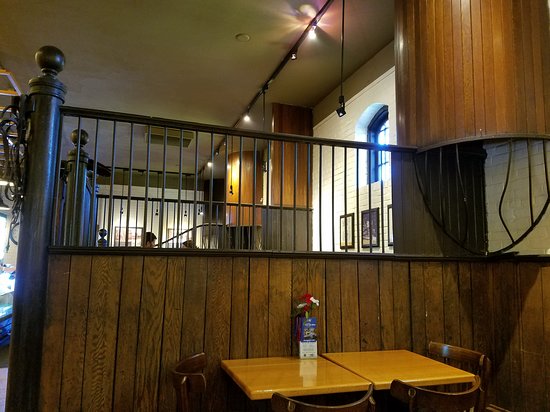
It's not in a zoo, but Stan Hywet Hall & Gardens in Akron, OH turned their stables in the old carriage house into a sit down restaurant called Molly's Cafe named after one of the horses that lived there back in the day. I've been there, really nice place to visit!
Lincoln Park Zoo's old Reptile House was closed in the early-90s and converted into a food court. There's actually still historic remnants on the outside, like a fish design on the building's exterior (prior to the Shedd Aquarium being built, the Reptile House was the city's first aquarium).
Their carousel actually used to be an old gift shop that housed koalas (and later lovebirds) around the exterior of the building.
The Primate House used to have an old cage on one side of the building that was originally meant for gorillas. After they moved to the Great Ape House, the cage was converted into an educational piece about what zoos used to be like and how far they'd come. But when the Great Ape House was rebuilt in 2003-2004, the cage was demolished and the area it's in is now for employees only. I've heard that path also leads to an off-exhibit outdoor habitat for the zoo's geriatric chimp troop that lives behind the scenes, but I can't confirm that.