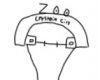
Today we will be exploring the other half of the Sands Of Time with the aquarium. The area opened in 2013 along with the Herptarium and this area, along with the Herptarium was a replacement for the old Primate House, which closed in 2011 for its replacement in Vanishing Habitats Rainforest which we will explore on a later date. This area is dedicated to various marine and freshwater fish, mollusks, and arthropods, lots of which are commonly dubbed living fossils, the area is vastly different to the Herptarium, with the idea you are in more of a museum type setting. The walls of the area are filled with many murals of creatures, from tetras to even the famous megalodon. With the background out of the way let us begin the tour.
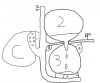
The entrance allows you to go either the salt or freshwater first but to save the best for last we will take the left path. The area starts with a large tank in the middle of the road splitting the area into two paths this tank is filled with a large rock wall on the back with a roaring waterfall which leads into a large Everglades tank for a bowfin, Florida gar, and brown bullheads (Labeled I). The previously mentioned wall slowly falls into another tank on the other side, this large space continues the ancient American fish theme with lake sturgeon, (J) which normally would have stations for visitors to touch them. The same rock wall is mirrored on the other side with the waterfall this time heading into a large group of (Tank K) American Paddlefish which the end of would head us into the marine part of the aquarium. This area would also feature a mural diagram comparing the American Paddlefish to it’s extinct Chinese counterpart. Despite this the freshwater area is not over just yet as depending on the path you take you will see different freshwater fish.
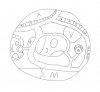
The Right path starts off with row of tanks referred to as Southeast Asia, The Palace Of Gourami’s which features three small tanks for in order (A To C) Contain Kuhli Loach and Licorice Gourami, Spotfin Betta, and finally Pearl Danio and Pearl Gourami.
Up a bit from the Gourami is another small tank for a blue crayfish (Tank D) in an area showing various illustrations of freshwater life of the Everglades, along with the dangers facing this unique environment.
Next up is a tank showing the famous life forms of the Amazon River (E). With murals around it showing a beautiful rainforest environment, and a map of the Earth showing the various species of arowana. Showing off the South American Silver and Black, the African, the Asian, and the Australian Saratoga. The tank itself not surprisingly makes its main focus of the beautiful silver arowanas, but also contains Ripsaw Catfish, Butterfly Peacock Bass, Banded Leporinus, and Black Pacu.
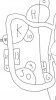
The next area follows the Saratoga mural into Oceania Of which first up contains Barred Galaxias, (F) a small mountain fish that almost went extinct due to invasive trout. The next tank shows off beautiful Rainbowfish, (G) more specifically red and boseman's. The final larger tank shows of the unique Australian lungfish in a beautiful large tank where you will hopefully get a close up look this at this prehistoric fish if you can see them in their log leaning right up against the glass.
The Left Path contains less fish as it mostly contains murals and information of fish, but towards the end of the walk does contain some African fish, starting with a larger tank (L) for another lungfish species, this time the west African, along with some elephantnose and African knifefish. The next four tanks are reserved for Bichir (M To P) which in order are Nile, Ornate, Barred, And Saddled. The back wall also here also shows a large mural of a hippopotamus.
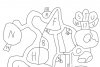
Finally the Marine section begins. The area starts with you heading into the abyss to see rarely seen creatures of the deep, showing murals of many deep sea creatures, such as oarfish, Anglers, Giant Squid, and coelacanth. The first tank settled into a corner contains the chambered nautilus, a unique cephalopod and a member of the only remaining family of the Nautilodia, a group of animals that has been around since the Cambrian. Staying in the deep on the left side you can find another cephalopod, this time the famous Giant Pacific Octopus. The theme of inverts stay a across from a sunken ship we will look at soon, there is a tank for the moon jellyfish, jellyfish are also some of the oldest multicellular life on the planet, existing even before the aforementioned Nautilodia. Finally we get back to a fish the next tank is another larger tank for some spotted ratfish, a member of the chimera family, meaning the odd fish is a deep sea relative of sharks an rays, the bottom of this tank also contains some unique crustaceans with Giant Isopods and Japanese Spider Crabs. The Final Tank in the gallery is another touch tank, (Tank X) but this time instead of sturgeons you are touching various species of animals found in tidal pools such as leather and ocre stars, California Sea Cucumber, and the ancient Atlantic Horseshoe Crab, an animal that despise its name is not a crab at all.
Of Course This is not the end as I saved the best for last. (Tank R) The entirety of the marine section is facing a huge tank compared to the rest, Shark Reef is a Giant shark tank that contains four shark species, blacktip, sandtiger, tasseled wobbegong, and zebra. The sharks are also accompanied by a green sea turtle, tarpons, and bluefin trevally.
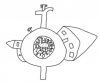
The main attraction for his tank of course is the Giant shipwreck which allows you to go into a giant glass bubble to see into the tank from a 360 degree view of the sharks. The ship is also named the S.S Clark After the Ichthyologist Eugenie Clark, who was well known for her study on sharks.
With that the Sands Of Time is officially complete, the next tour will be on Giraffe Canyon. Which will release next Wednesday, and of course most importantly, feel free to leave your comments, criticism, and suggestions below. With that I will leave you until the next art post.
View attachment 527414