Most subspecies described in historic times have been described from single specimens which had slight phenotypic variations from a previously described specimen and determined a new "type" based on a single animal and from that animal the whole population would be categorised as such; sometimes these differences are coherent and can be seen in the whole population, other times you really have to squeeze your eyes and thus you start doubting if such a classification is valid.
However with the evolution of scientific subjects we can now be much more precise and discrimatory of what is a valid species and subspecies - ironic since the rise of subspecies was due to a mixture of racism and rigid classification of what was slightly more different, as well as a huge ego by biologists to have their name close to an animal and/or probably a pressure by the higher ups in the Athenaeums to have publications and status correlated to those, as it is the case today.
Molecular evidence is rightfully leading the definition these days, - given it is interfecudity the core of the definition of biological species and genetic diversity it's strength - so if little molecular evidence is found it is probably just a regional variation found in probably most specimens, but it is also true that phenotype can have repercussion on fitness and ecological interactions of the animals and that regional variation and uniqueness should be preserved.
If these were the 1600s or 1700s where man is starting to do heavy damage the environment, there would still be lots of natural or wild untouched land, so it would not be too daunting to preserve 30 subspecies of ring-necked pheasant with a reasonable amount of founders, but it is the 21st century, lots of land and animals have been lost, to preserve the animals and their adaptability one has to question: do we lose part of the uniqueness found in the subspecies, so that after release that very uniqueness can be hopefully selected again by the environment, or do we keep rigid boundaries and hope that inbreeding depression does not get too deleterious?
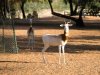
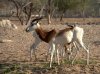
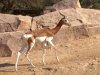
It is a case-by-case scenario: considering the dama Gazelle case, after reading all of the material people have posted here, I have my own opinion that Nanger dama ruficollis and N. d. dama have very little unique variation and should thus be merged and considered conspecifics, while N. d. mhorr has a more pronounced phenotypic variation which should be prioritised and purposefully selected when reintroduction occurs, but as of now, given it's subspecies and species status (IUCN report says mhorr is Extinct in the Wild) it would be better to let it mix with the other subspecies to boost it's genetic variation.
I am no authority or person with the power of doing anything in this instance, so this is purely a statement for me and anyone who reads it.