Darling Downs Zoo Darling Downs Zoo Species List

WhistlingKite24

Well-Known Member
10+ year member
Darling Downs Zoo is one of Queensland’s largest regional zoos and is located two hours from Brisbane. The zoo itself is divided into four main geographical zones; Australia, South-east Asia, Africa and South America. The zoo generally groups their animals in accordance to this geographical layout however there are exceptions. In recent times, the zoo has been increasingly and consistently adding new species to diversify and broaden their mammal, bird and reptile collections. Several of the species below represent the only place you can see them in a Queensland zoo and the zoo(in my opinion) is a refreshing change from the often limited and repetitive nature of exotic animal collections here in Australia.

Like the other species lists I have made for my other local zoos – Wildlife HQ and Australia Zoo – this species list will be improved and updated based on future visits to have a working resource that responds to the zoo's growth and development over the coming years. For those who aren’t familiar with the zoo, I have written up a brief timeline to outline Darling Downs Zoo’s key events and milestones over the years to better provide context for this species list I will post below.


2012: Black-capped Capuchin arrived, the zoo’s first White Lion was born, Pygmy Marmoset [0.6 from Perth Zoo] arrived

2013: Rhinoceros Iguana arrived, the zoo’s first Serval arrived, a new waterfowl habitat was opened for the zoo’s pelicans, swans and native ducks, ten Aldabra Giant Tortoises were imported from Mauritius – they arrived between the ages of 3 to 5

2014: ten (5.5) Zebras were imported from USA – all of them arrived under the age of seven months.

2015: 1.2 White Lion cubs were born in January, Mahogany Glider [0.2 from Gold Coast] and Bilby [1.1] arrived, Queensland’s first Meerkats arrived, Emperor Tamarin arrived [1.1 imported from Belfast and Jersey], Capybara arrived [3.0 from Adelaide Zoo]

2016: a new waterbird aviary was constructed, Common Wombat and Emperor Tamarin bred at the zoo for the first time, two species of exotic rodent arrived in 2016: Patagonian Mara [4.0 from Adelaide] and Brazilian Agouti [2.2 imported from USA – which first bred soon after arrival], Giraffe arrived [0.2 from Australia Zoo, followed by 1.0 from Dubbo], a second import of Aldabra Giant Tortoises occurred [0.0.22 from Mauritius]

2017: Cheetah arrived [3.1 from Hamerton Zoo, UK], Siamang arrived [2.1 from Adelaide Zoo], two Queensland firsts occurred in 2017 – the first ever Addax (November) and Zebra (September) were born in the state

2018: the zoo announced the importation of Red-handed Tamarins in March [3.3] which later bred during the year, the first female Zebra at the zoo was born, the zoo bred Australian Grass Owl for the first time, Pygmy Hippopotamus arrived [0.1 from Taronga Zoo]

2019: Cape Porcupine arrived [0.1 from Perth Zoo who was joined by a sibling], 0.2 Servals arrived from Hunter Valley Zoo, Emperor Tamarins bred for the third time, the zoo bred Short-beaked Echidna for the first time

2020: construction commenced for the Sri Lankan leopard enclosures, Maned Wolves arrived [1.1 from Altina Wildlife Park], Bolivian Squirrel Monkeys arrived [3.0], Komodo Dragon arrived [1.0 from Prague via Adelaide Zoo], a pair of Golden Lion Tamarins arrived, five Radiated Tortoises were added to the zoo’s existing group from a joint import, the zoo successfully bred Giraffe and Rhinoceros Iguana for the first time, a male Sumatran Tiger arrived from Tasmania Zoo

Note: The zoo seems to be in the process of reshuffling some of their species at the moment (especially the carnivores) so I am sure there will be further moves and adjustments to accommodate new arrivals.

* = species was signed either on the map or at the enclosure but wasn’t seen

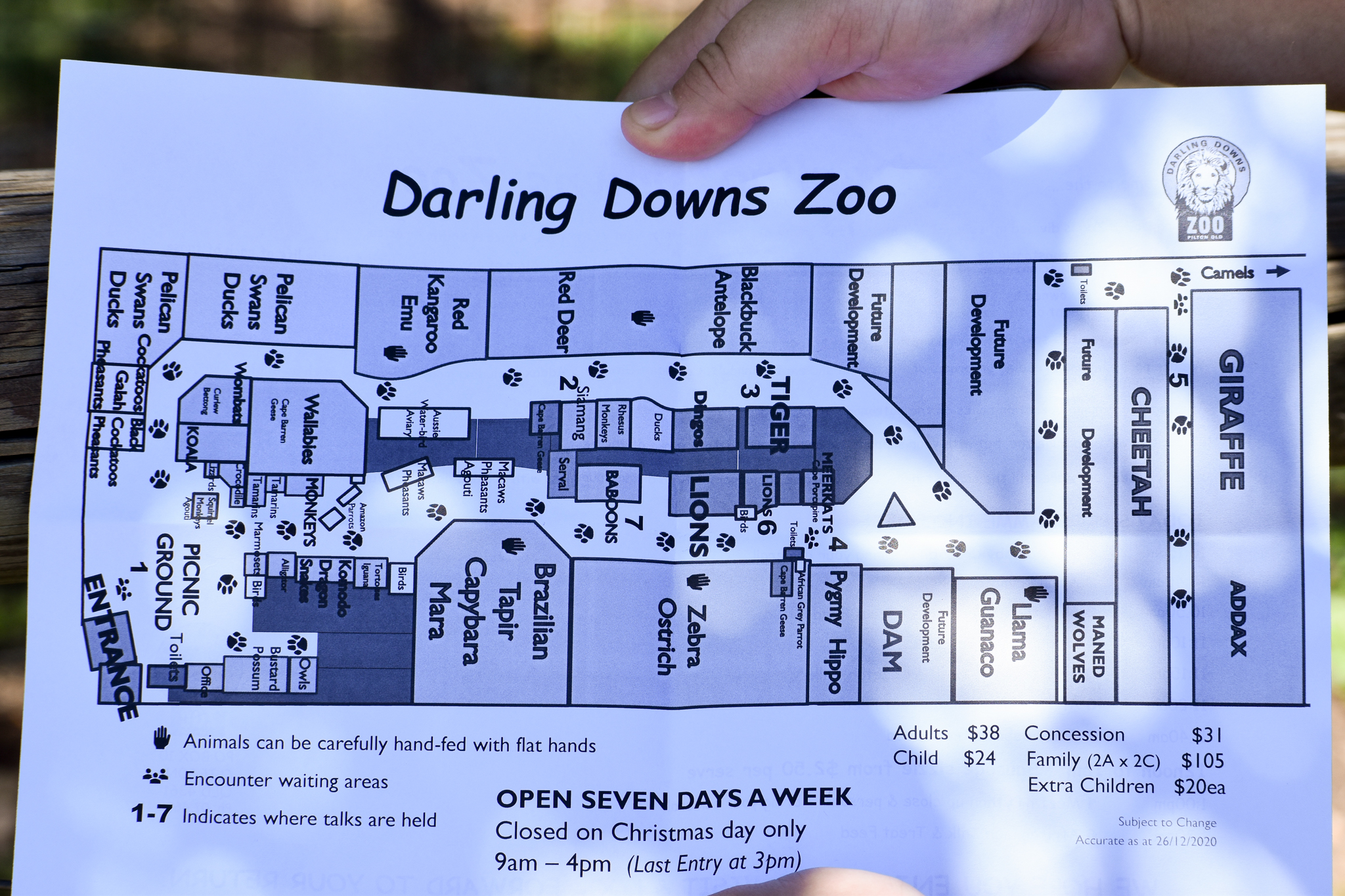
Map to follow along:


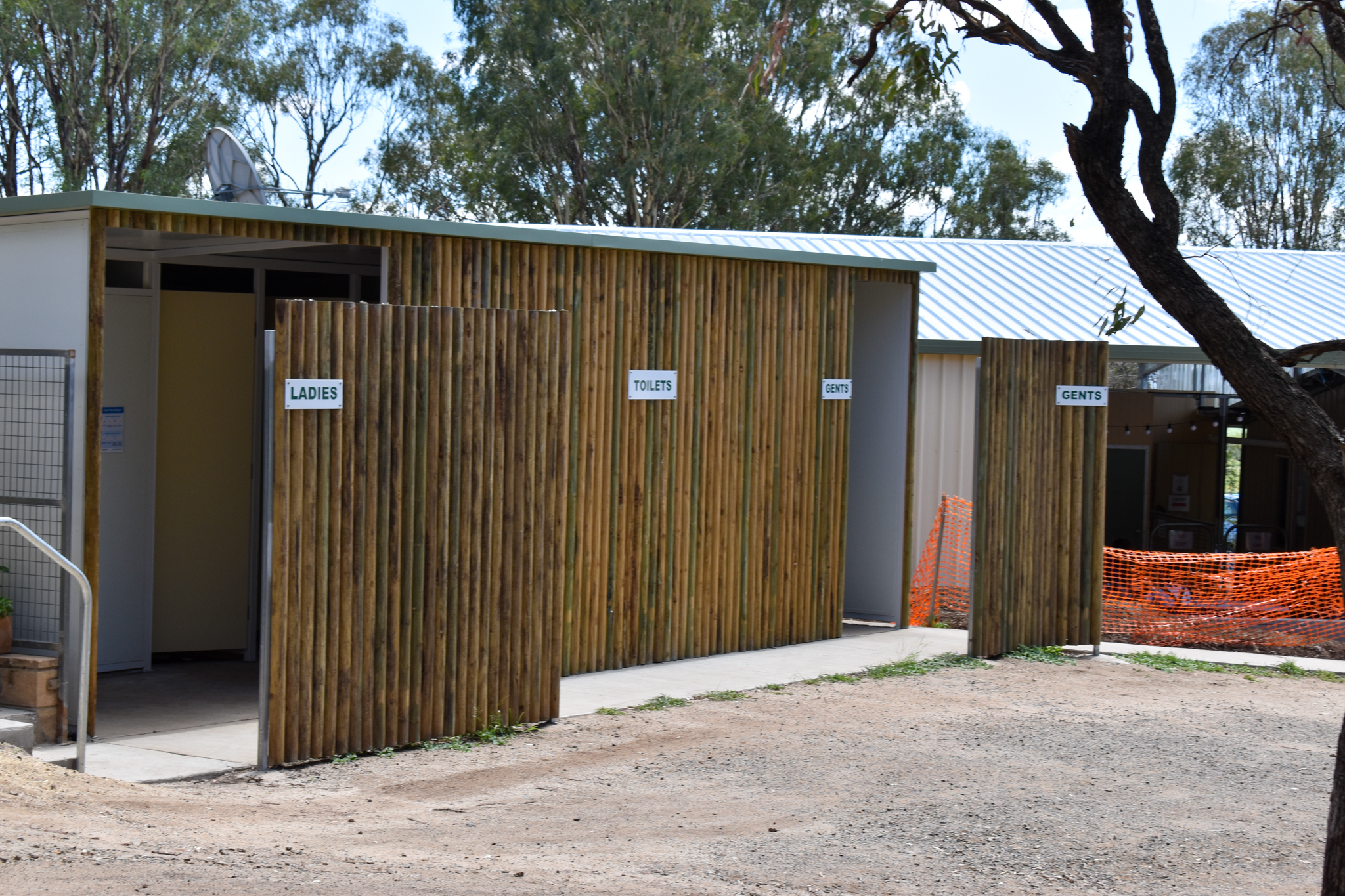
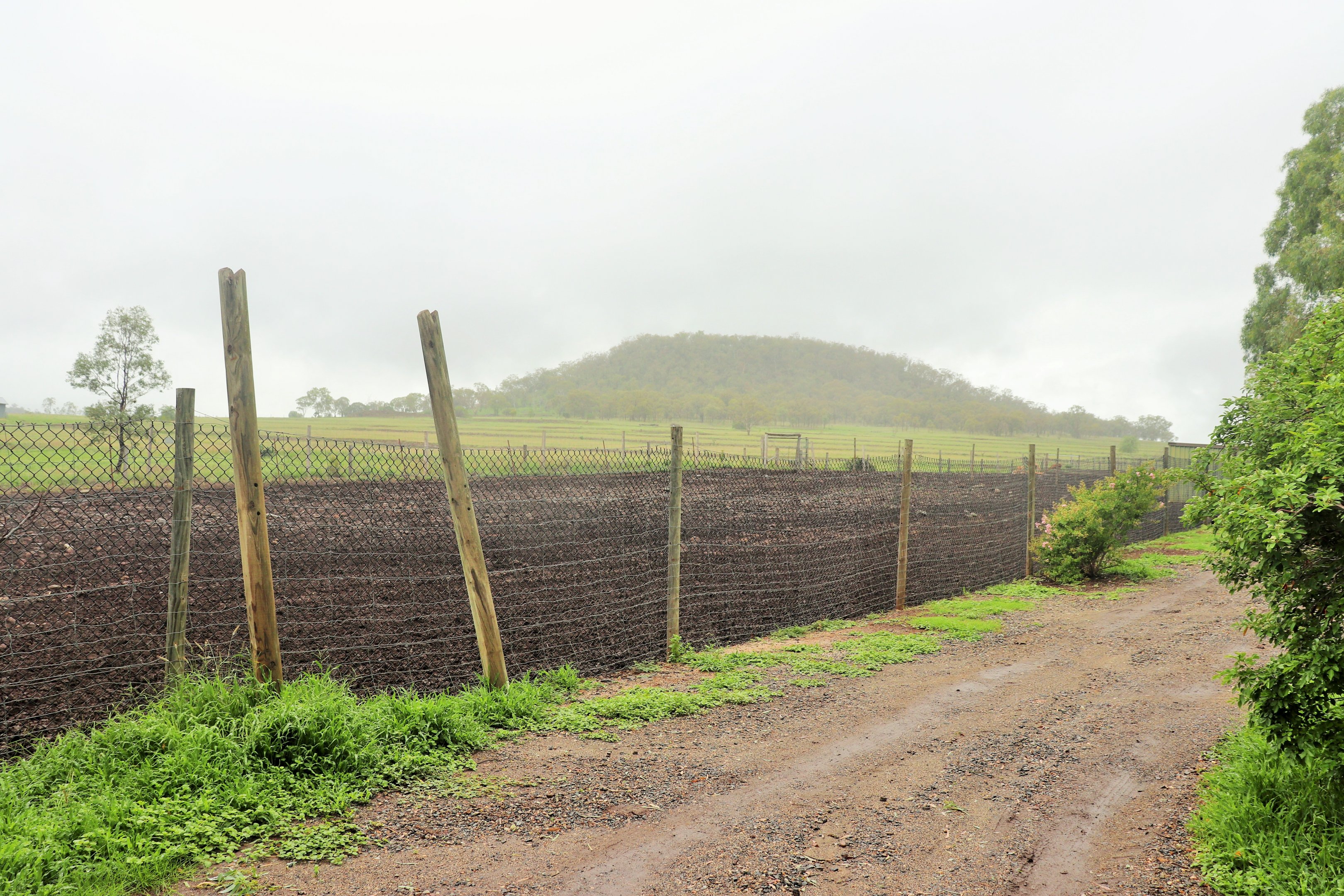
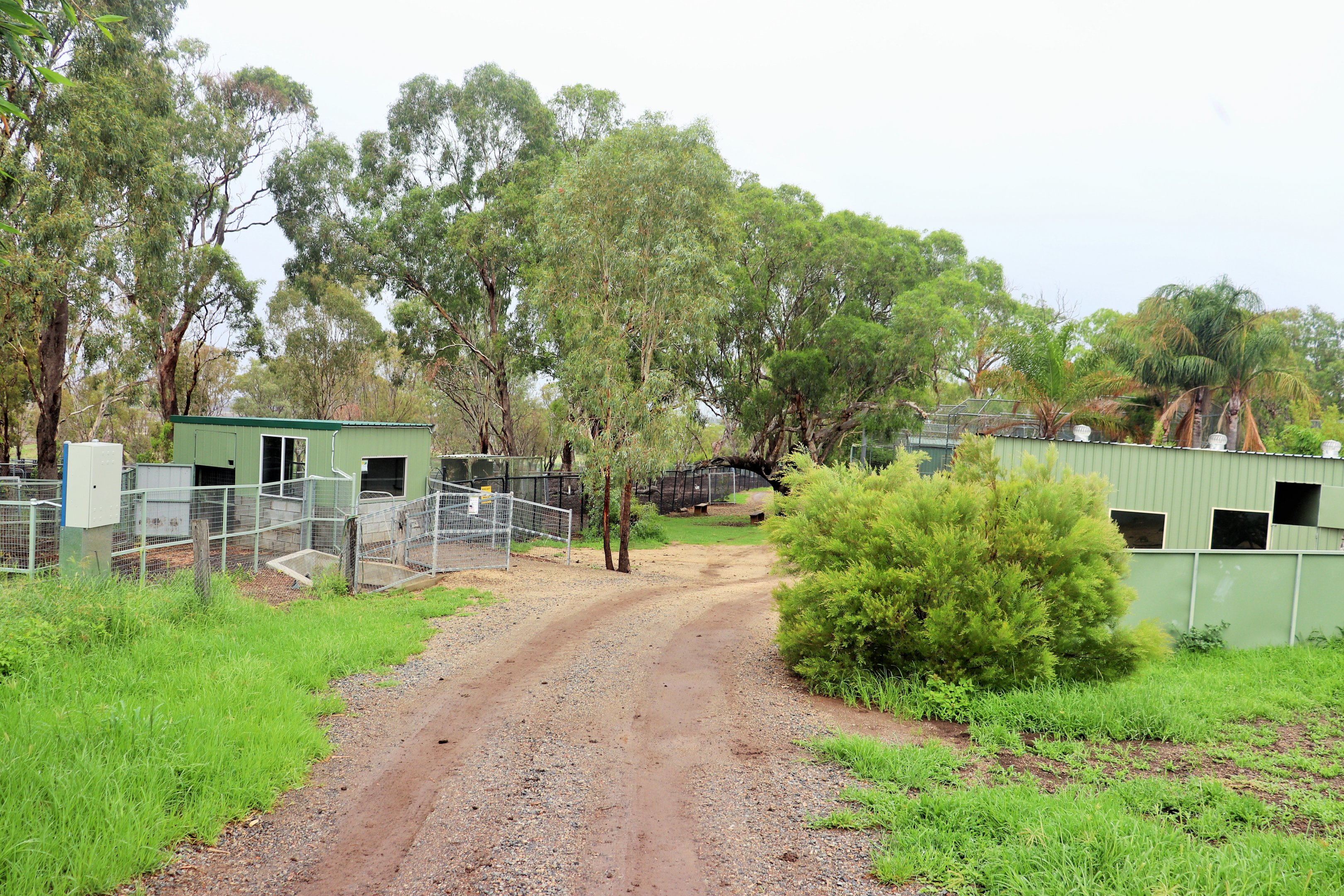
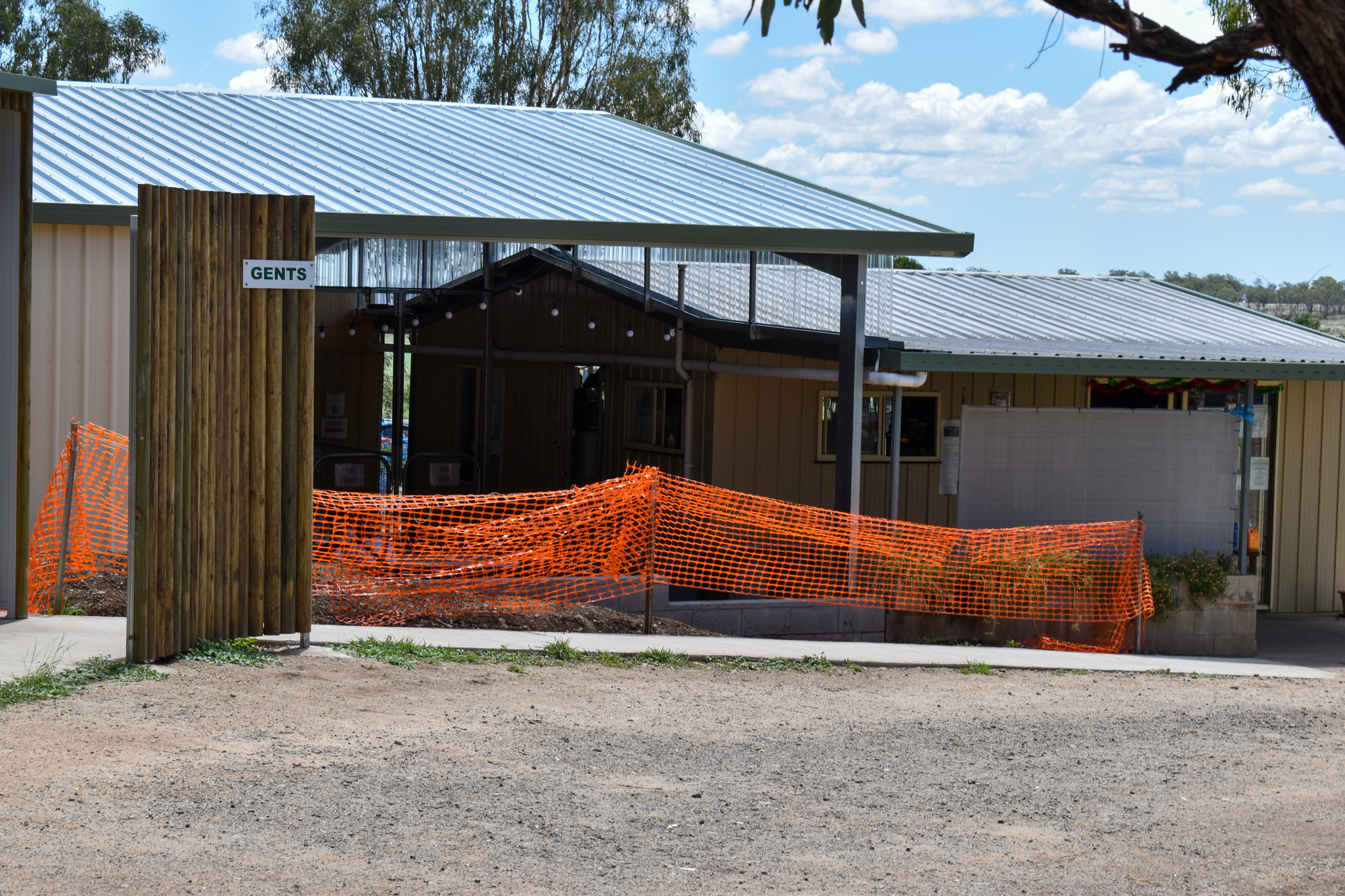
New Entry Development/Toilets (December 2020):
 
AUSTRALIAN PRECINCT – Part 1 (10 Exhibits):
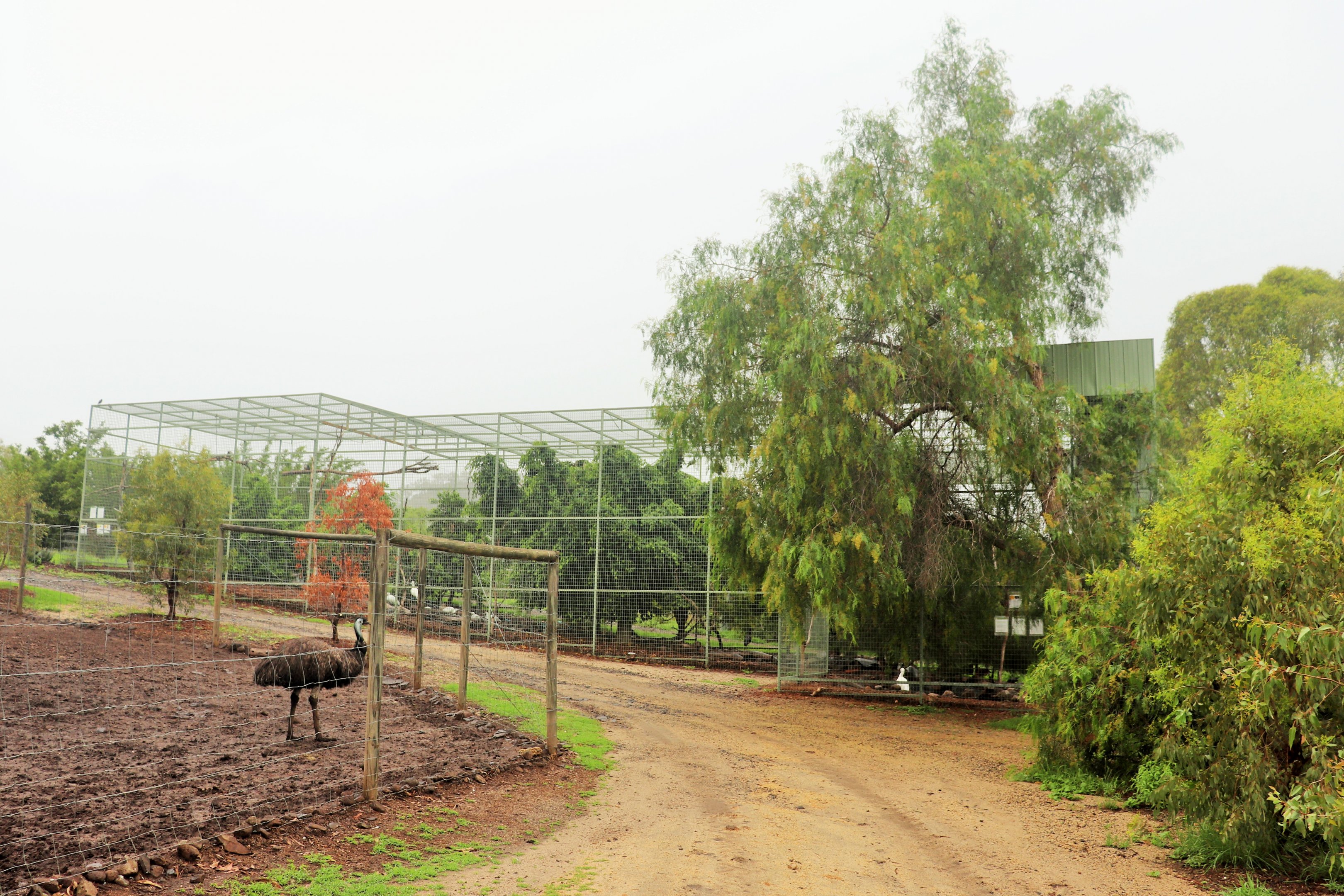
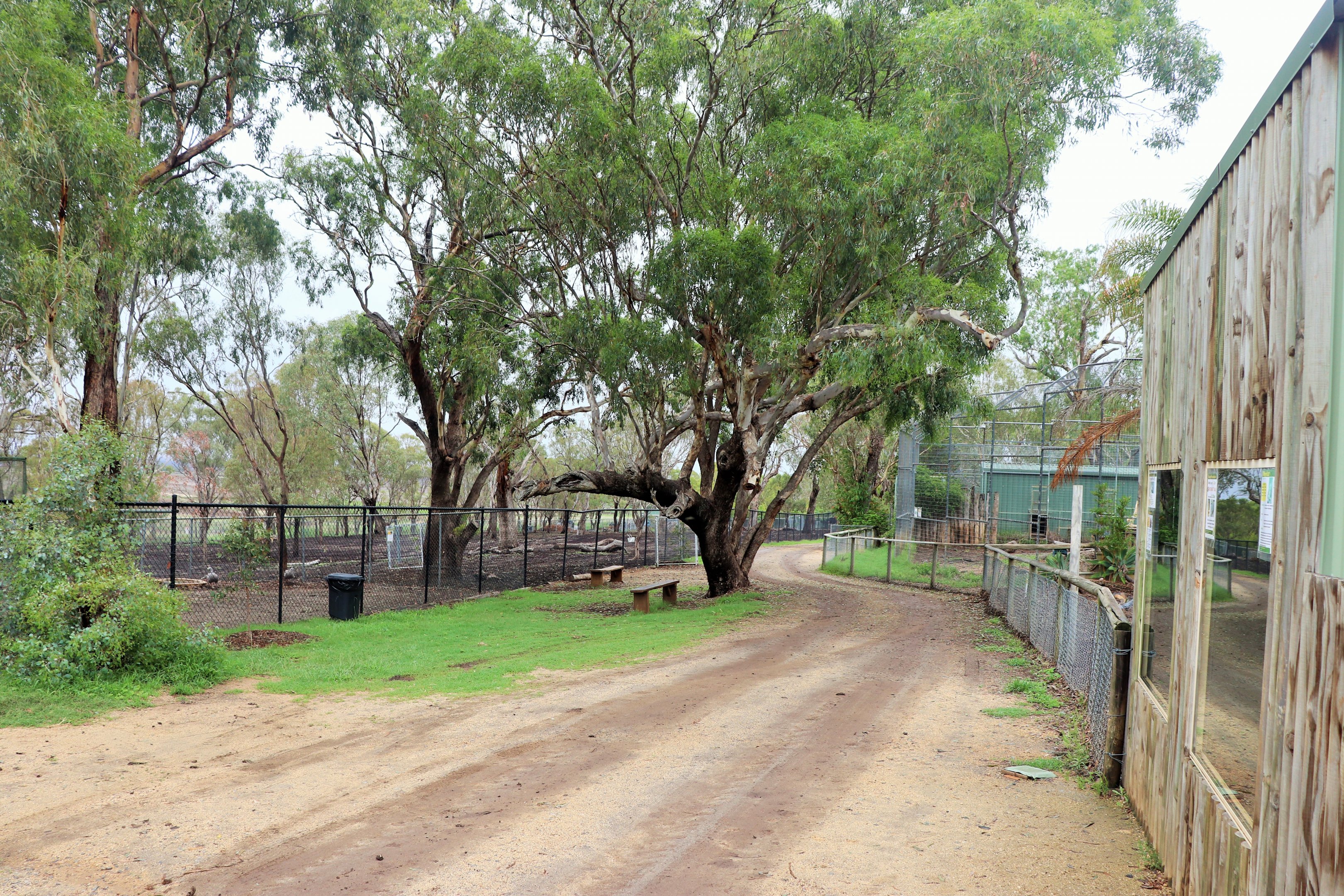
The entire section of natives at the zoo can be divided into two sections; the first area is situated along a straight path before the Asian precinct and the latter portion can be found further towards the zoo’s admission area near the South American section. This first section houses the native crowd-pullers and a good assortment of birds. The open-topped waterfowl enclosure runs along the majority of this precinct creating an effective continuity with the native plantings, and the series of ponds and small streams. One of the last exhibits this precinct finishes with is a tall waterfowl aviary containing Australian and Asian species, which I think serves a good transition into the next area.

A meshed aviary with a few branches:
Red-tailed Black Cockatoo (Calyptorhynchus banksii)

A similarly-designed aviary:
Yellow-tailed Black Cockatoo (Calyptorhynchus funereus)

A larger aviary with more furnishings:
Galah (Eolophus roseicapilla)
Sulphur-crested Cockatoo (Cacatua galerita)
Long-billed Corella (Cacatua tenuirostris)
Australian Brush-turkey (Alectura lathami)

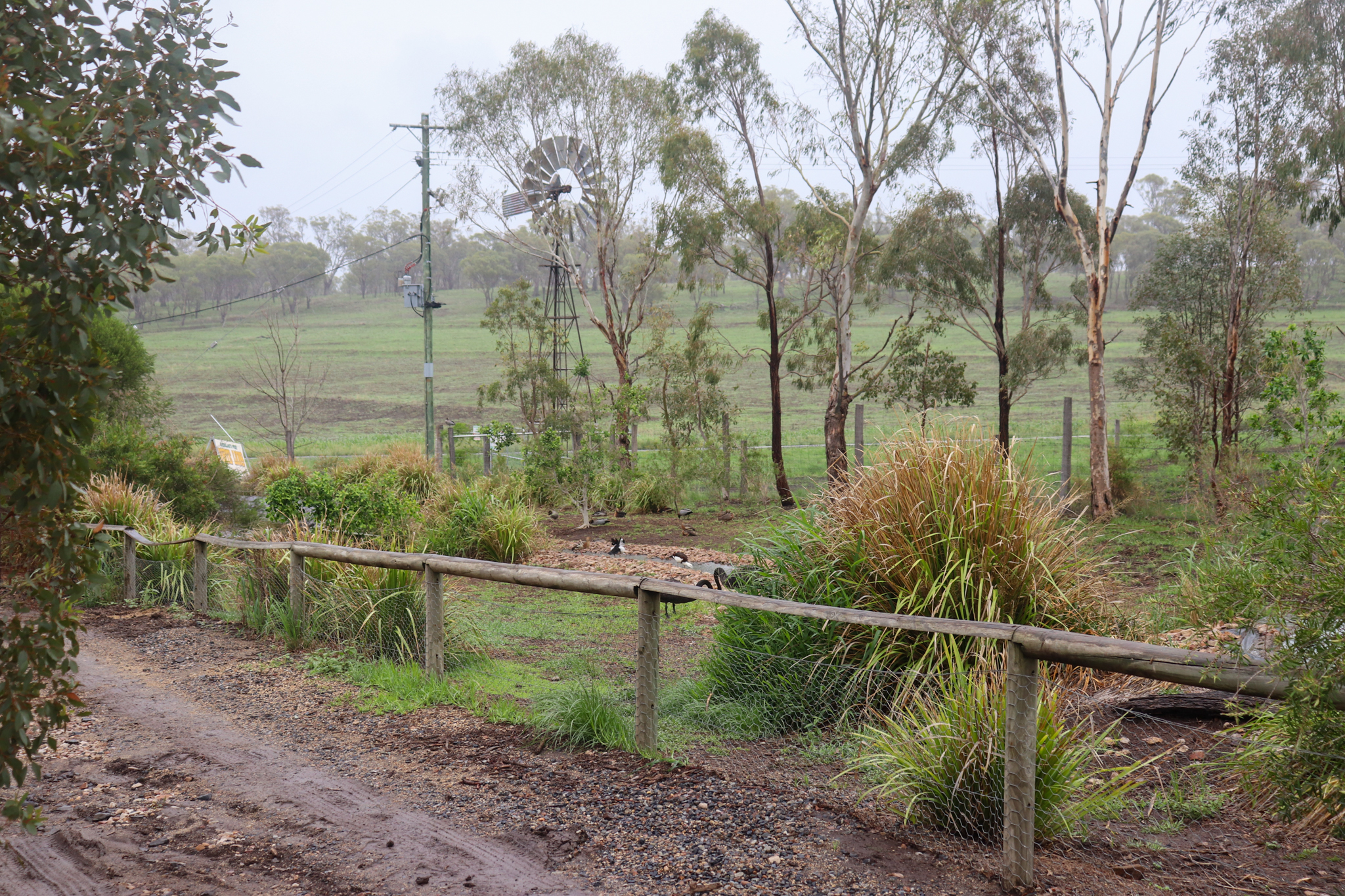
An open-topped complex containing a series of small streams and ponds. The area is planted with native plants and shrubs. There are a few wild species (Australian Wood Duck, Pacific Black Duck and Plumed Whistling Duck) of waterfowl that also inhabit the area with the captive birds:
Australian Pelican (Pelecanus conspicillatus)
Black Swan (Cygnus atratus)
Cape Barren Goose (Cereopsis novaehollandiae)
Wandering Whistling Duck (Dendrocygna arcuata)
Radjah Shelduck (Radjah radjah)

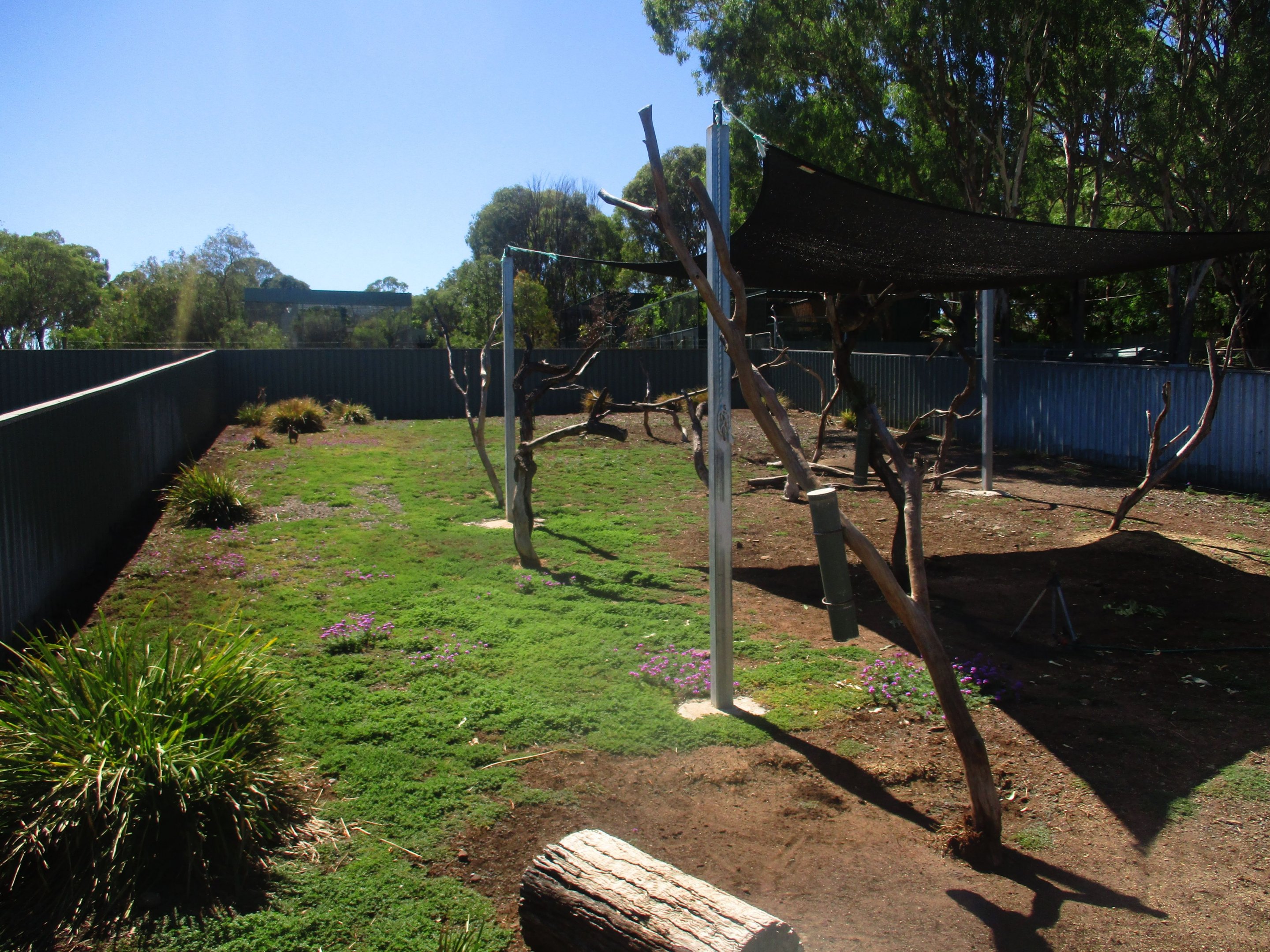
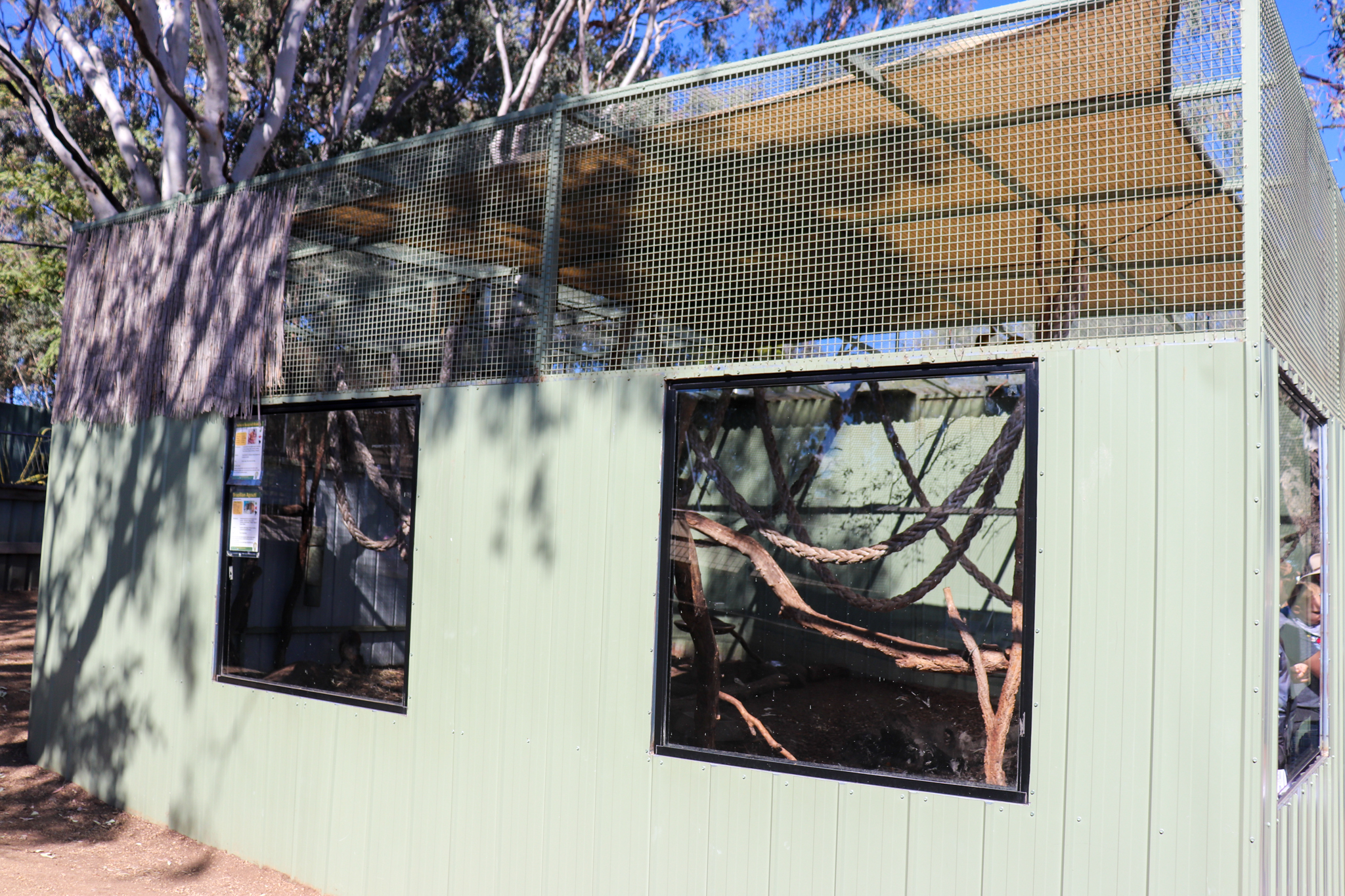
A large open-topped enclosure accessed via a ramp. This exhibit has a series of large branches and shady spots for the koalas:
Koala (Phascolarctos cinereus)

An open-topped enclosure with a meshed front enabling visitors to view the species from their sleeping dens. This map also signs Bush Stone-curlew and Rufous Bettong on the map but there was no sign of them nor any signage for these species I don’t believe:
Common Wombat (Vombatus ursinus)

A fenced grassy paddock. The map also signed Cape Barren Goose but there was no sign of them:
Whiptail Wallaby (Notamacropus parryi)

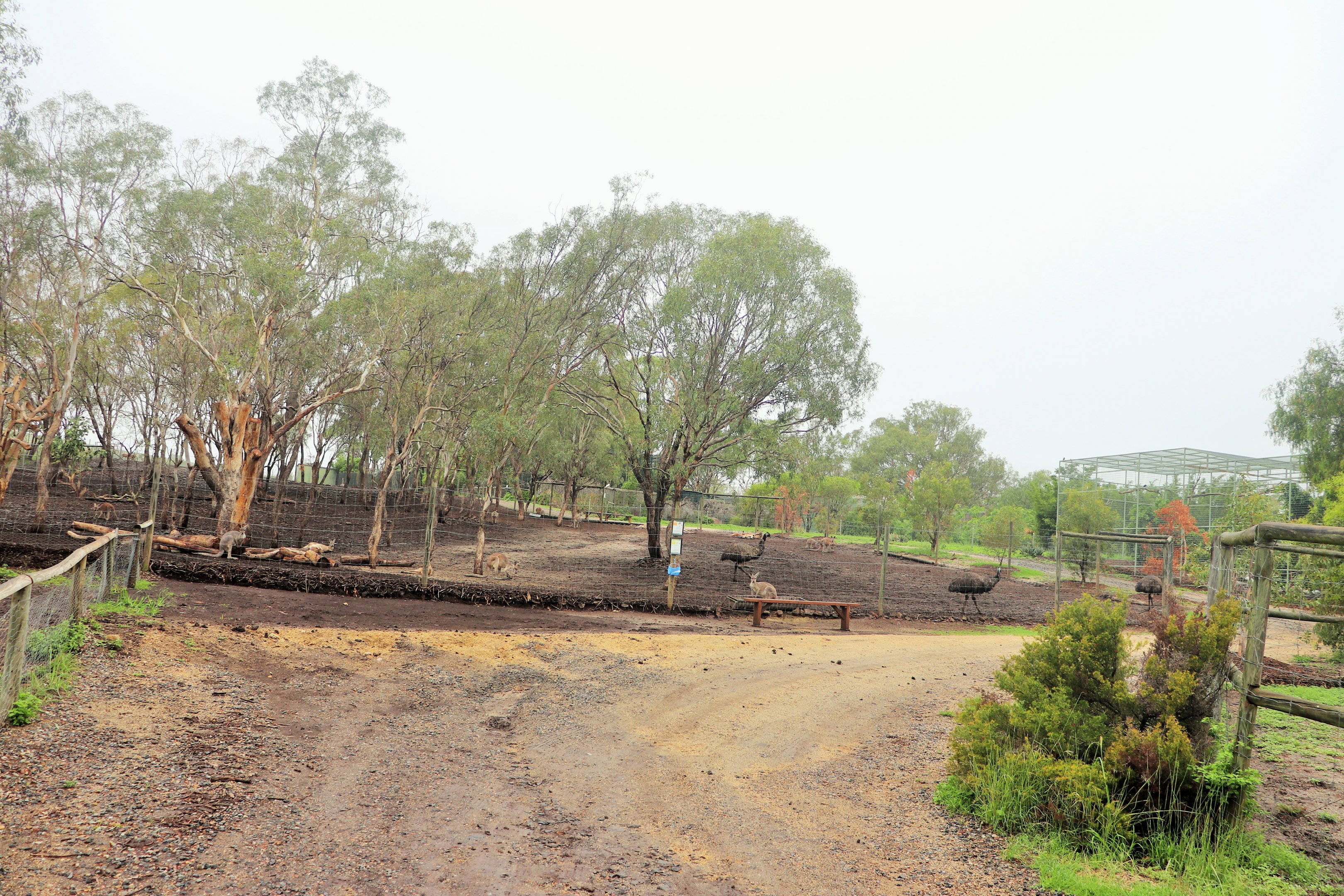
A large fenced enclosure with eucalyptus trees:
Red Kangaroo (Osphranter rufus)
Emu (Dromaius novaehollandiae)

A very large and tall meshed aviary with thick plantings and a small body of water that runs throughout the aviary:
Ruddy Shelduck (Tadorna ferruginea)
Mandarin Duck (Aix galericulata)
Hardhead (Aythya australis)
Lady Amherst’s Pheasant (Chrysolophus amherstiae)
Australasian Swamphen (Porphyrio melanotus)
Pied Stilt (Himantopus leucocephalus)
Glossy Ibis (Plegadis falcinellus)
Royal Spoonbill (Platalea regia)
Nankeen Night Heron (Nycticorax caledonicus) *
Wonga Pigeon (Leucosarcia melanoleuca)
White-headed Pigeon (Columba leucomela)*
Topknot Pigeon (Lopholaimus antarcticus)
Torresian Imperial Pigeon (Ducula spilorrhoa)
Broad-shelled River Turtle (Chelodina expansa)

A small open-topped enclosure:
Cape Barren Goose (Cereopsis novaehollandiae)


SOUTH-EAST ASIAN PRECINCT (9 Exhibits)
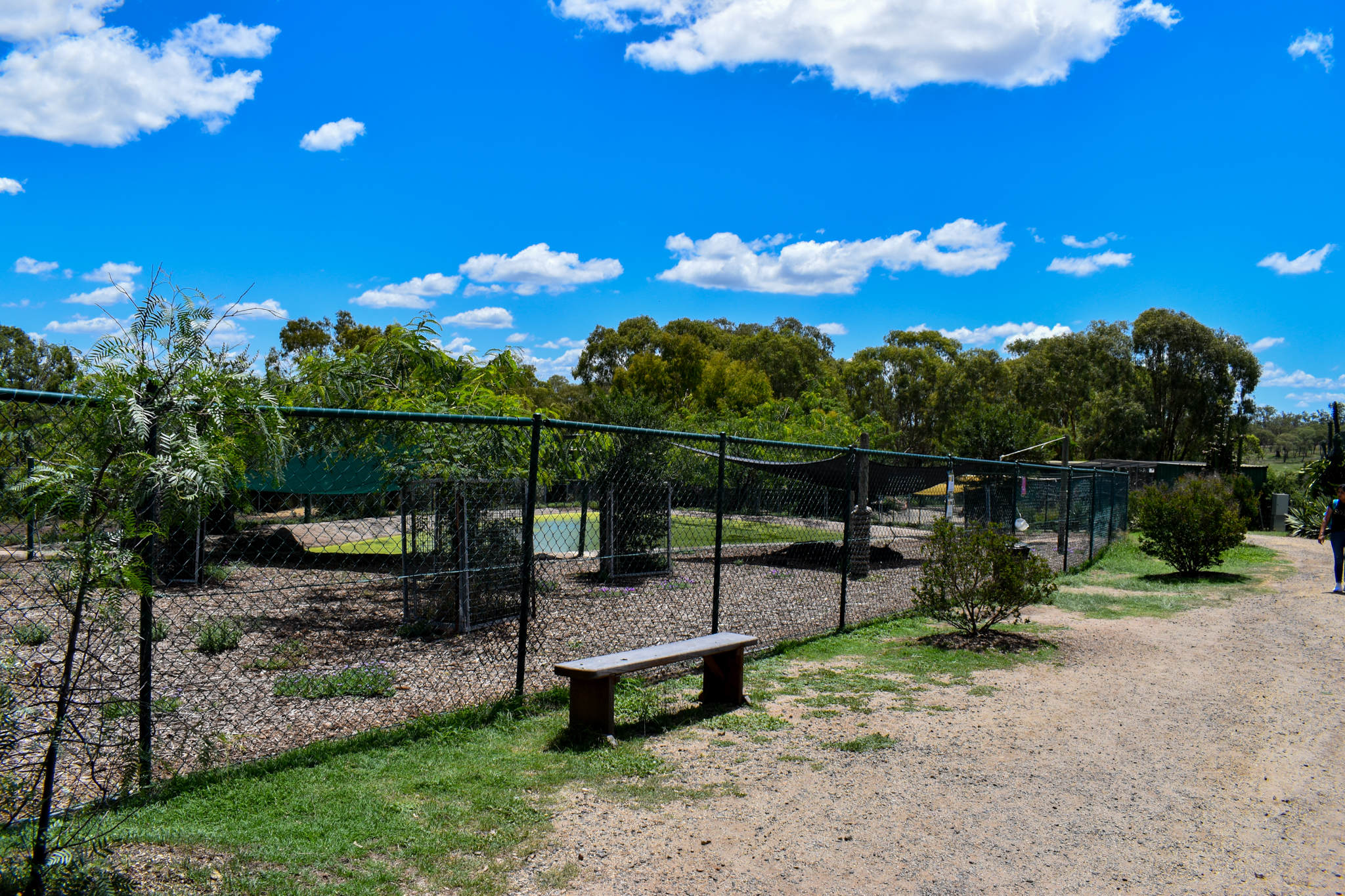
Directly continuing on the main pathway begins the area where the majority of the Asian species are located. The large paddock for the blackbuck/deer runs opposite the other exhibits present in this area (as you can see on the map). The final pair of enclosures was only opened this year and have already housed maned wolves and tigers in a short period of time. The small aviary situated between the dingoes and tigers was also opened in this year.

A large aviary-style enclosure with a series of branches. This exhibit houses a family trio (2.1) that came from Adelaide Zoo:
Siamang (Symphalangus syndactylus)

A smaller aviary-style enclosure with a series of branches and logs. This enclosure houses a 1.1 pair currently:
Rhesus Macaque (Macaca mulatta)

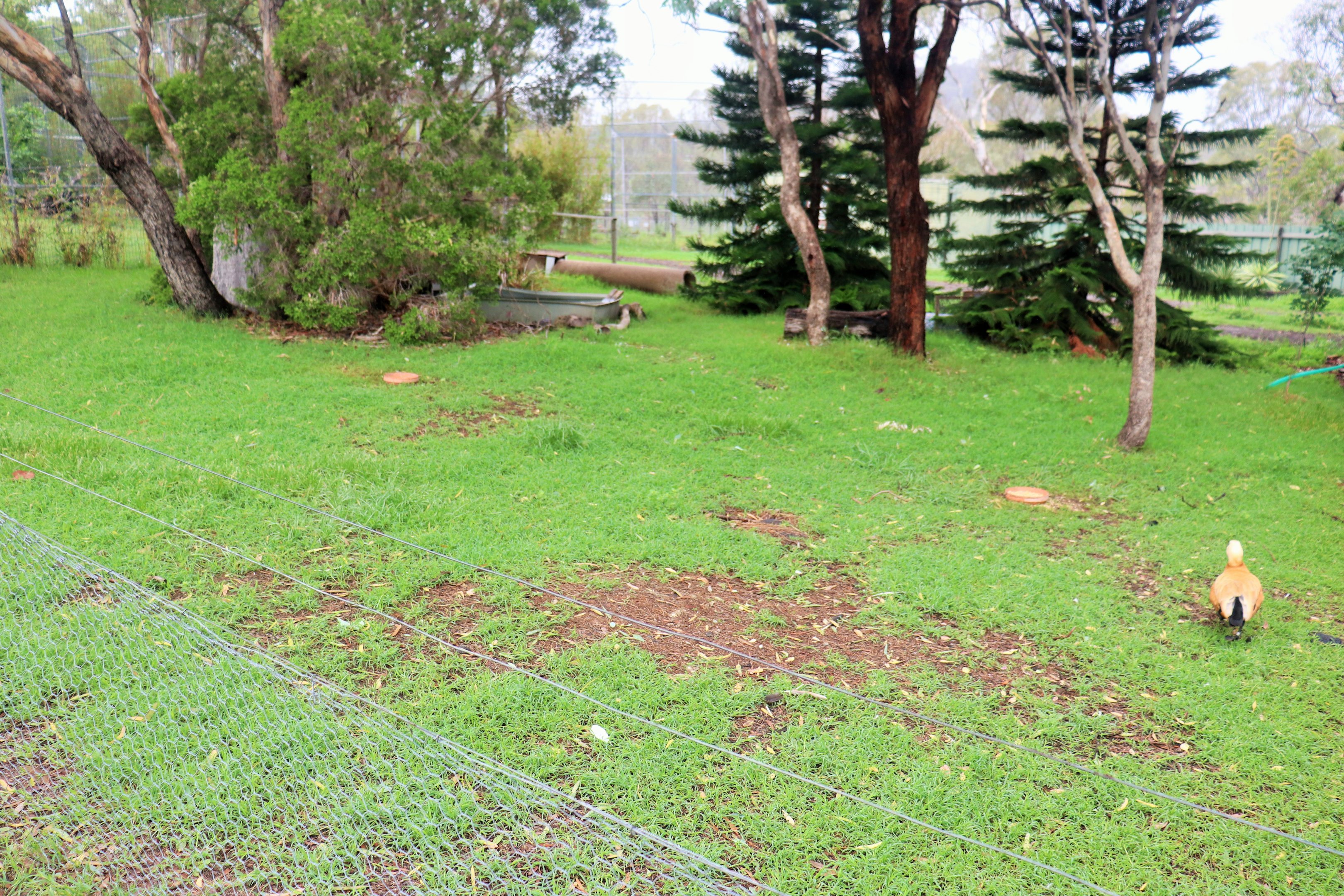
An open-topped grassy yard:
Vacant – usually houses Ruddy Shelduck (Tadorna ferruginea)

An open-topped grassy yard of a similar design:
Ruddy Shelduck (Tadorna ferruginea)

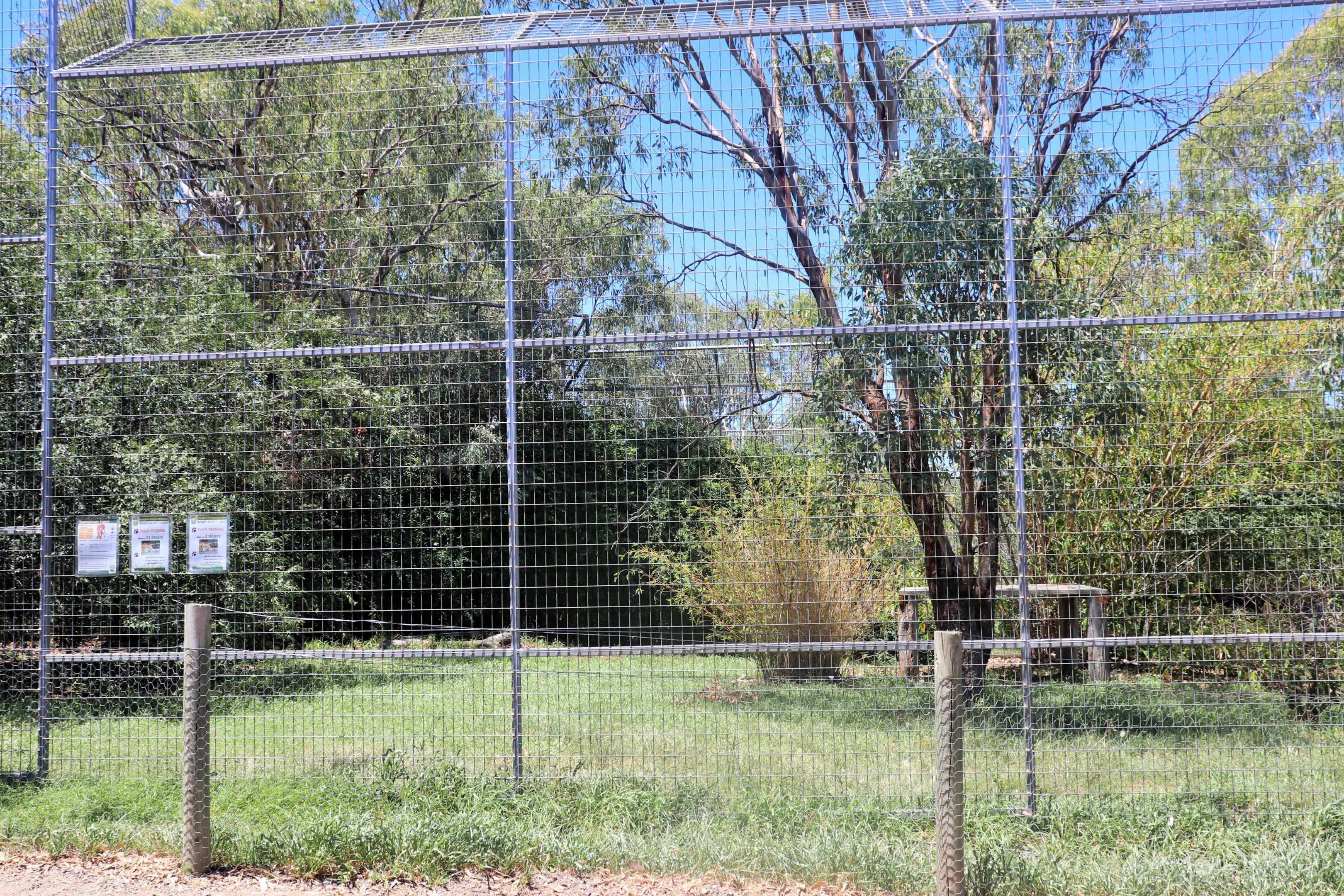
A large, well-furnished enclosure with a small pool, bamboo and sturdy plantings along the back perimeter of the fence. This enclosure traditionally houses a tiger but, on my visit, contained:
Dingo (Canis dingo)

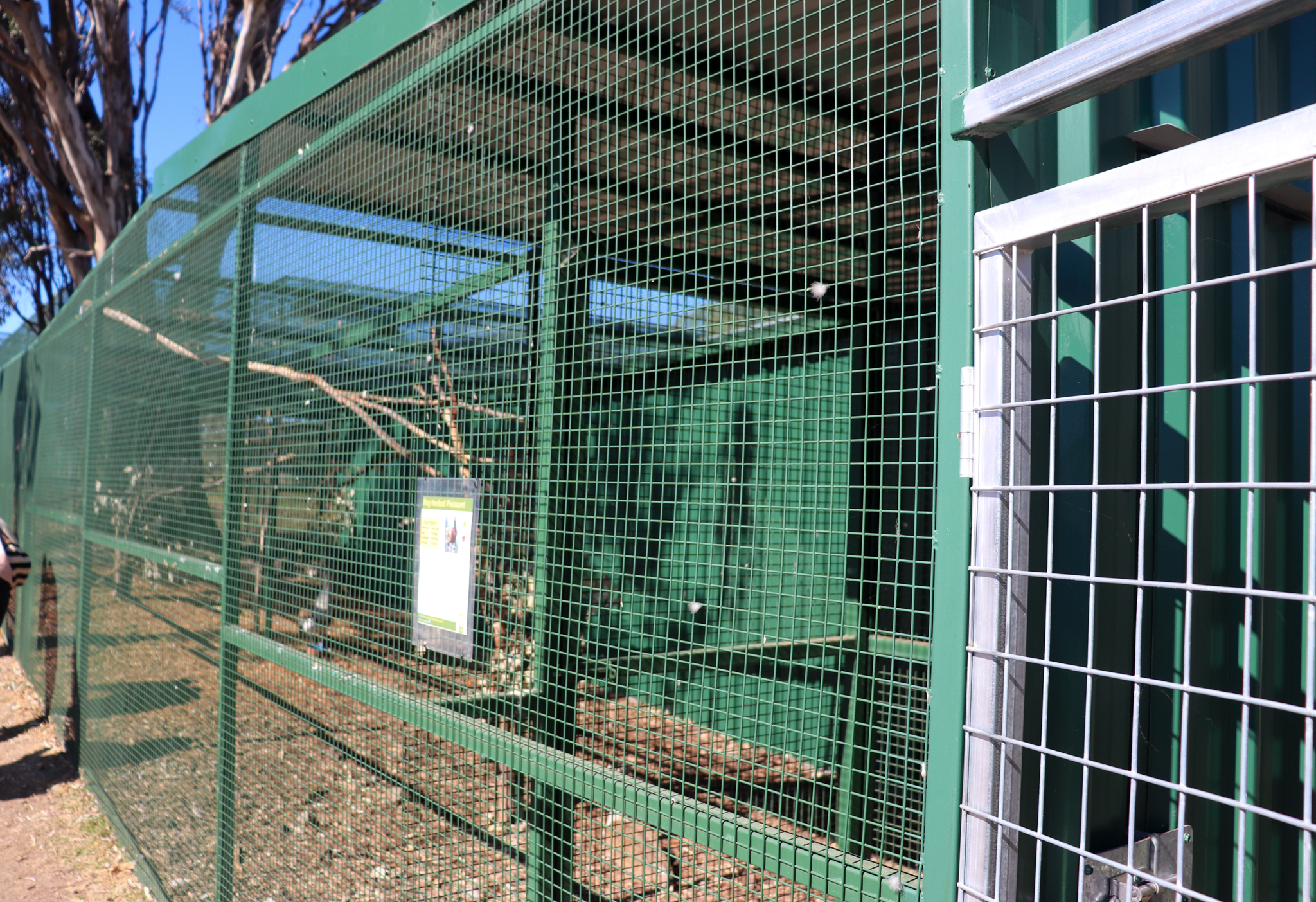
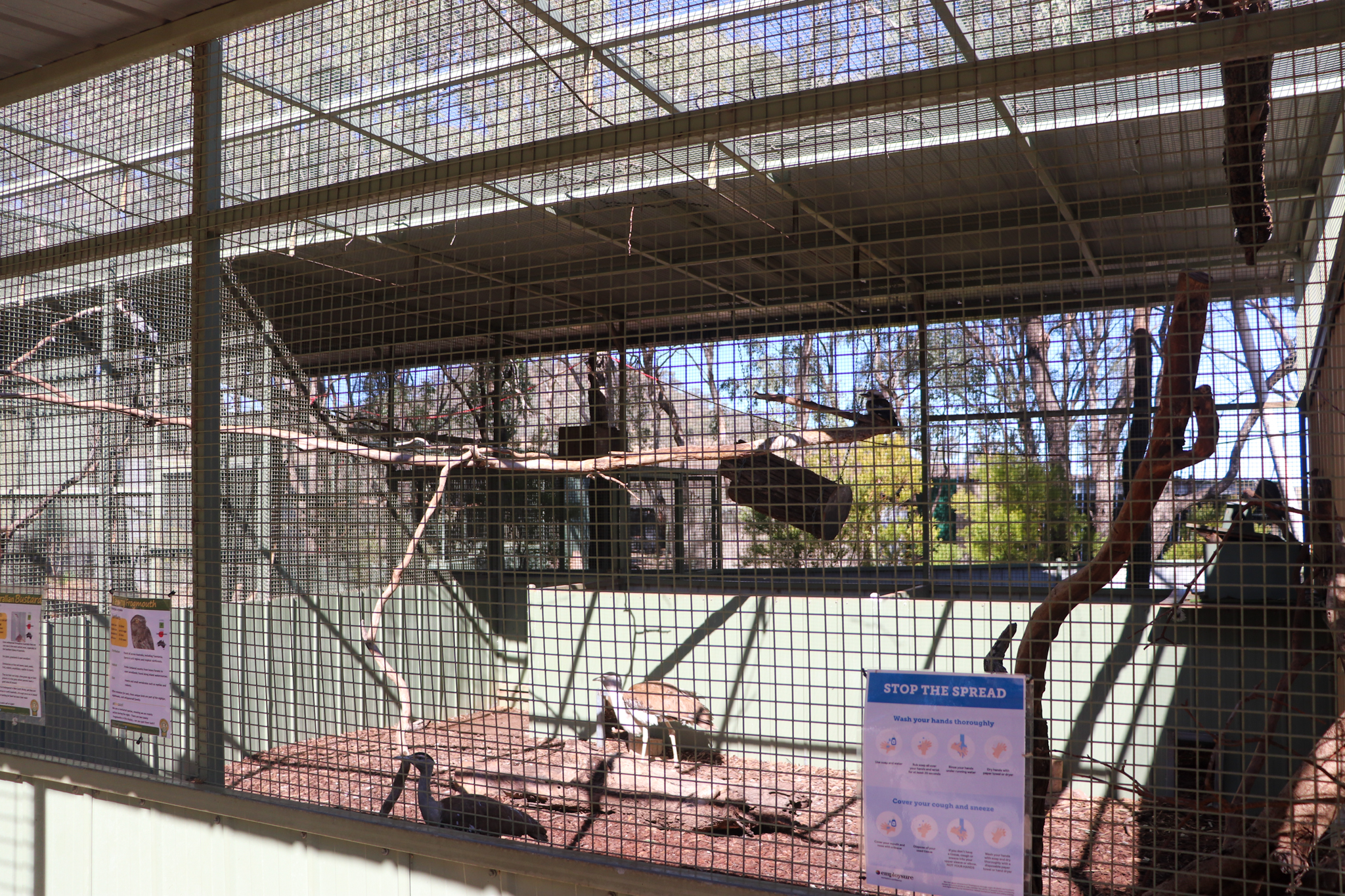
A new aviary with a simple yet pleasant design. It is located between the dingoes and tigers:
Ring-necked Pheasant (Phasianus colchicus)
Australian Bustard (Ardeotis australis)
Bush Budgerigar (Melopsittacus undulatus)
Cockatiel (Nymphicus hollandicus)

A pair of large enclosures with climbing platforms and new plantings. The future home of the Sri Lankan leopards but on my visit, it housed a newly-introduced pair of:
Sumatran Tiger (Panthera tigris sumatrae)

A large open paddock that runs opposite for the majority of this area:
Blackbuck (Antilope cervicapra)
Red Deer (Cervus elaphus)


currently home to dingoes:


AFRICAN PRECINCT – Part 1 (7 Exhibits):
This portion of the African section (and now a bit of South America) is located up a hill away from the core collection. The majority of the zoo’s future expansion will occur in this area with exhibit upgrades and new species. This particular area is more open to the elements than the majority of the zoo and features views of the surrounding farmland. The zoo has also been busily constructing new shaded seating areas for visitors.

A large paddock next to the dam:
Guanaco (Lama guanicoe)
Llama (Lama glama)

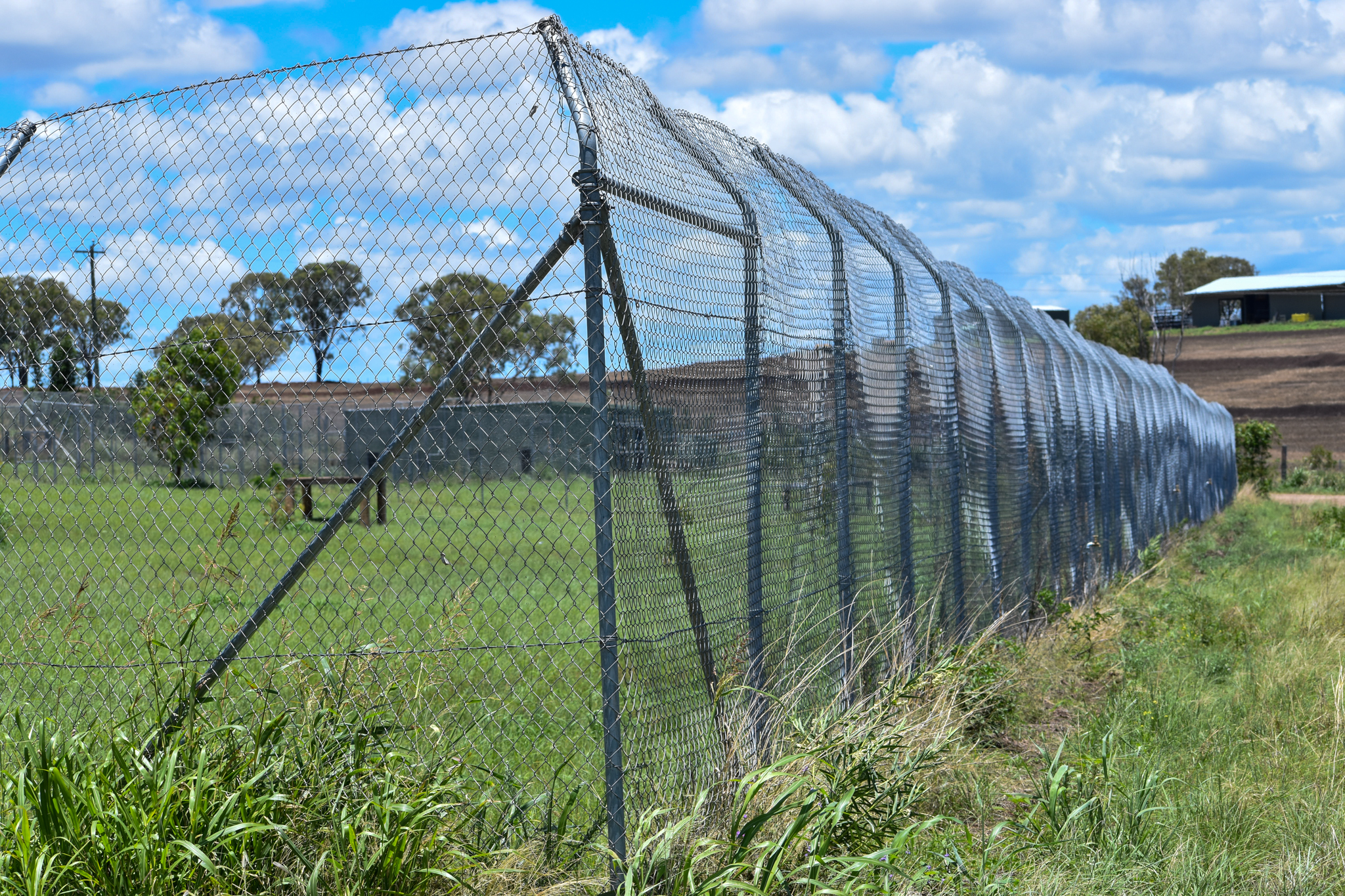
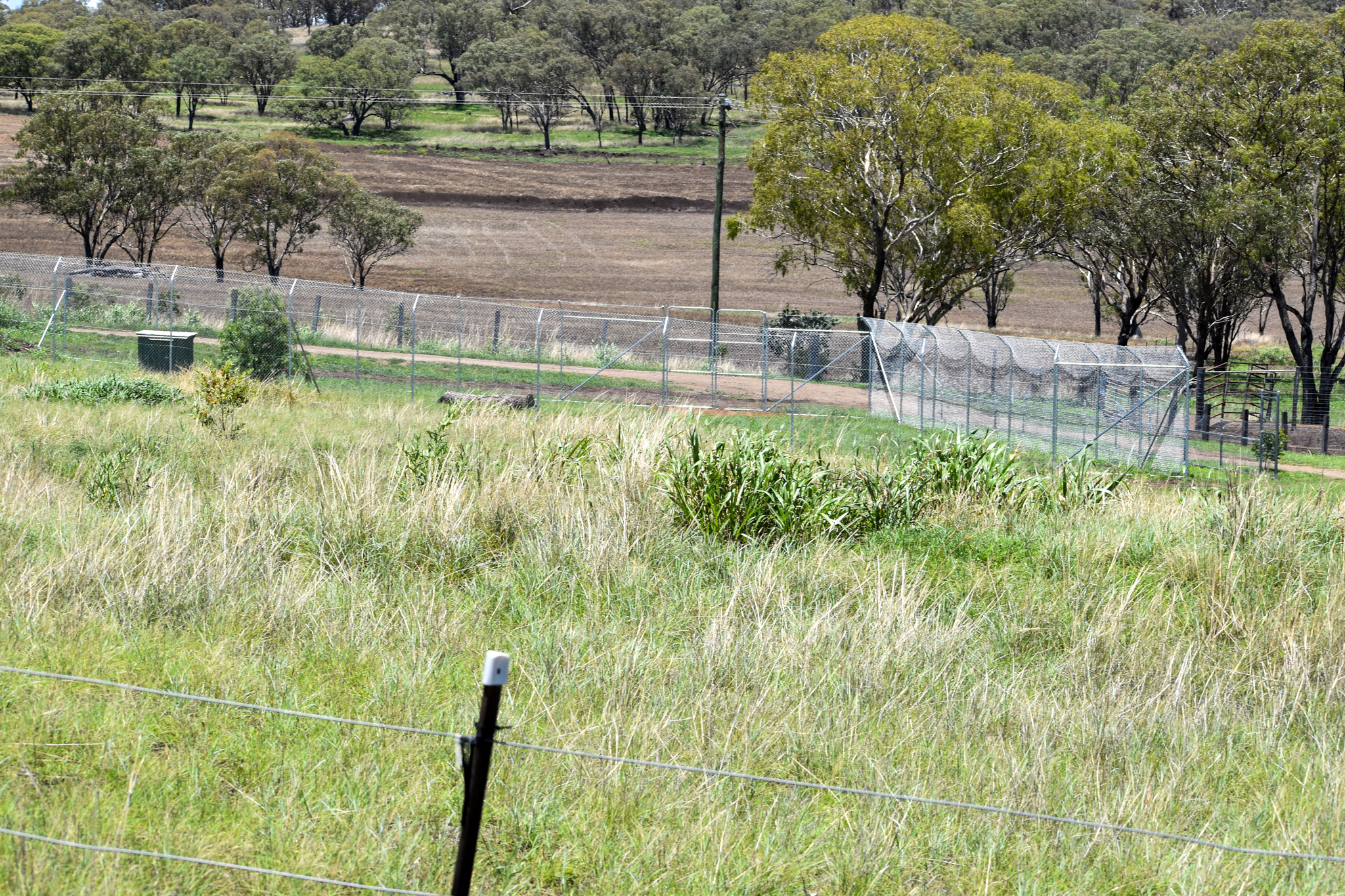
A new set of chain-link enclosures located behind the cheetah enclosure. The map indicates that it will be home to Maned Wolves:
Maned Wolf (Chrysocyon brachyurus)*

A pair of large chain-link enclosures with night houses and a shaded area:
Cheetah (Acinonyx jubatus)

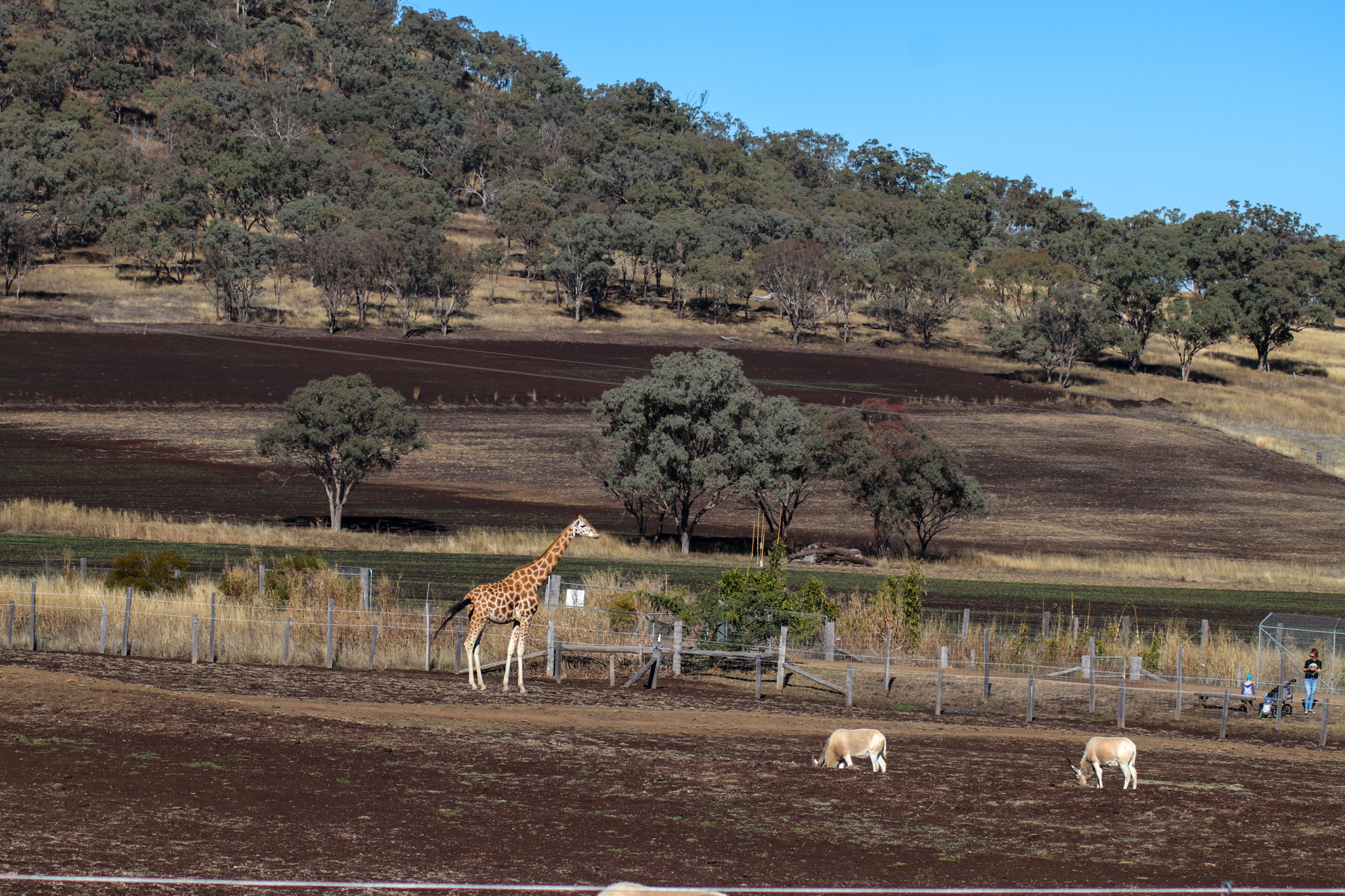
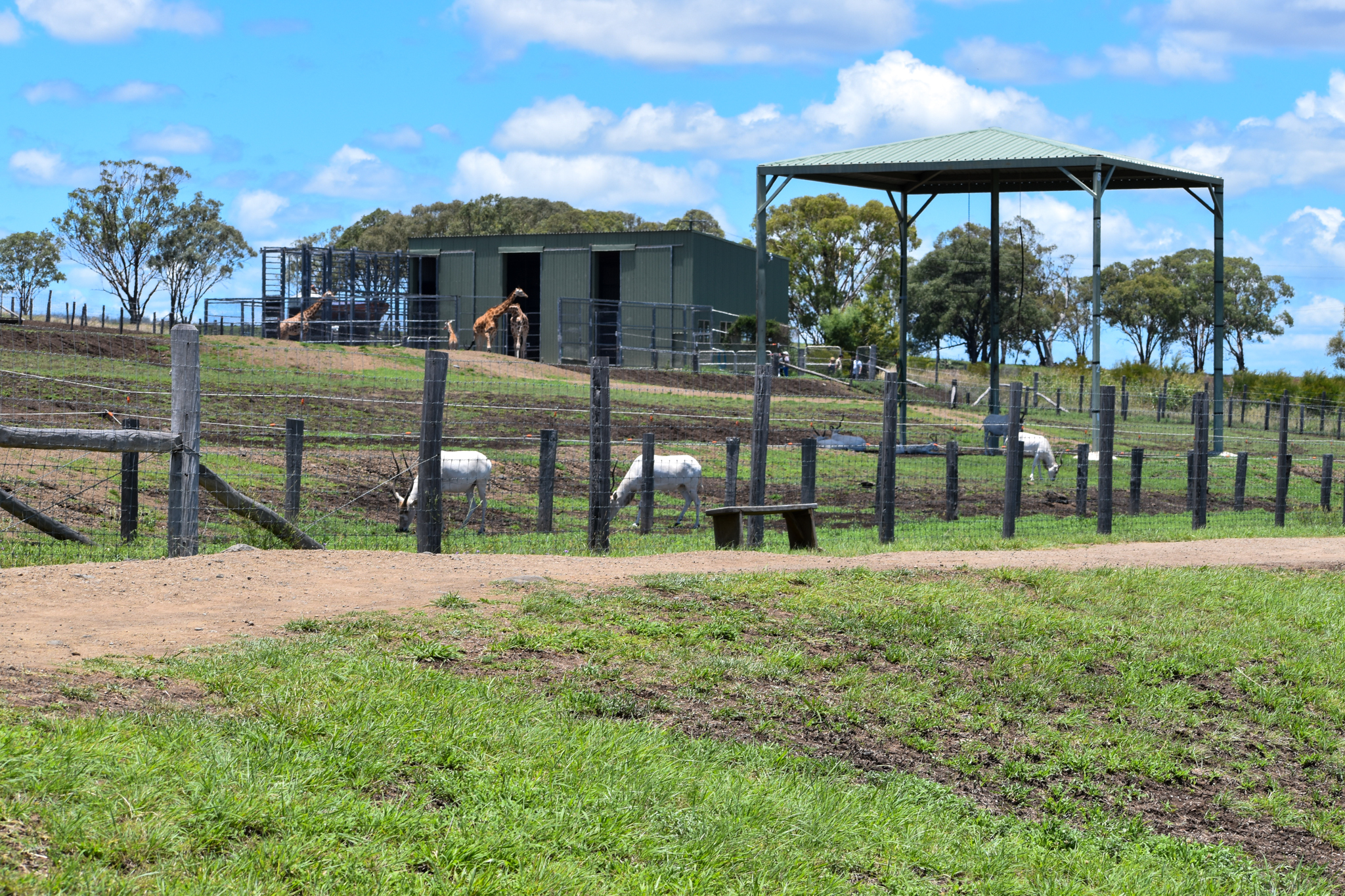
A large main paddock with a shade area and barn. It contains a group of 1.3 Giraffe and at least twelve Addax:
Giraffe (Giraffa)
Addax (Addax nasomaculatus)

A large paddock situated behind the giraffe/addax enclosure:
Dromedary (Camelus dromedarius)


AFRICAN PRECINCT – Part 2 (11 Exhibits):
This second part of the African animal collection leads on from down the hill along a straight path with exhibits positioned along either side. The zebra exhibit runs opposite the lion enclosures and smaller enclosures punctuate the space around them. The serval and baboon enclosure finish off this area leading into the South American-based portion of the zoo. Note: the Cape Barren Geese enclosures formerly housed pairs of Egyptian Geese.

A well-shaded fenced paddock with a glass-fronted building with a small pool. This enclosure also has a smaller body of water outdoors. It is also has a good tree coverage. It houses one of five pygmy hippos remaining in Australia:
Pygmy Hippopotamus (Choeropsis liberiensis)

A small aviary situated near the pygmy hippo enclosure:
African Grey Parrot (Psittacus erithacus)

An open-topped enclosure with an outdoor and glass-fronted indoor portion. This exhibit has a series of complex logs and branches:
Meerkat (Suricata suricatta)
Cape Porcupine (Hystrix africaeaustralis)

An open-topped enclosure with a chain-link fence positioned next to the pygmy hippo:
Cape Barren Goose (Cereopsis novaehollandiae)

Opposite the first goose enclosure and next to the lions, is a fenced open-topped exhibit:
Vacant – usually houses Cape Barren Goose (Cereopsis novaehollandiae)

An enclosure with wooden platforms and a night den:
Lion (Panthera leo)

A small aviary located between the lion enclosures:
Crimson-winged Parrot (Aprosmictus erythropterus)
Noisy Pitta (Pitta versicolor)

An enclosure that was sectioned off due to lion introductions to create a new pride:
Lion (Panthera leo)

A treed paddock that runs opposite of the lions. Visitors are able to hand feed the zebra/ostrich and it is one of the most popular areas in the zoo:
Plains Zebra (Equus quagga)
Ostrich (Struthio camelus)

An aviary-style enclosure with rocky piles:
Hamadryas Baboon (Papio hamadryas)

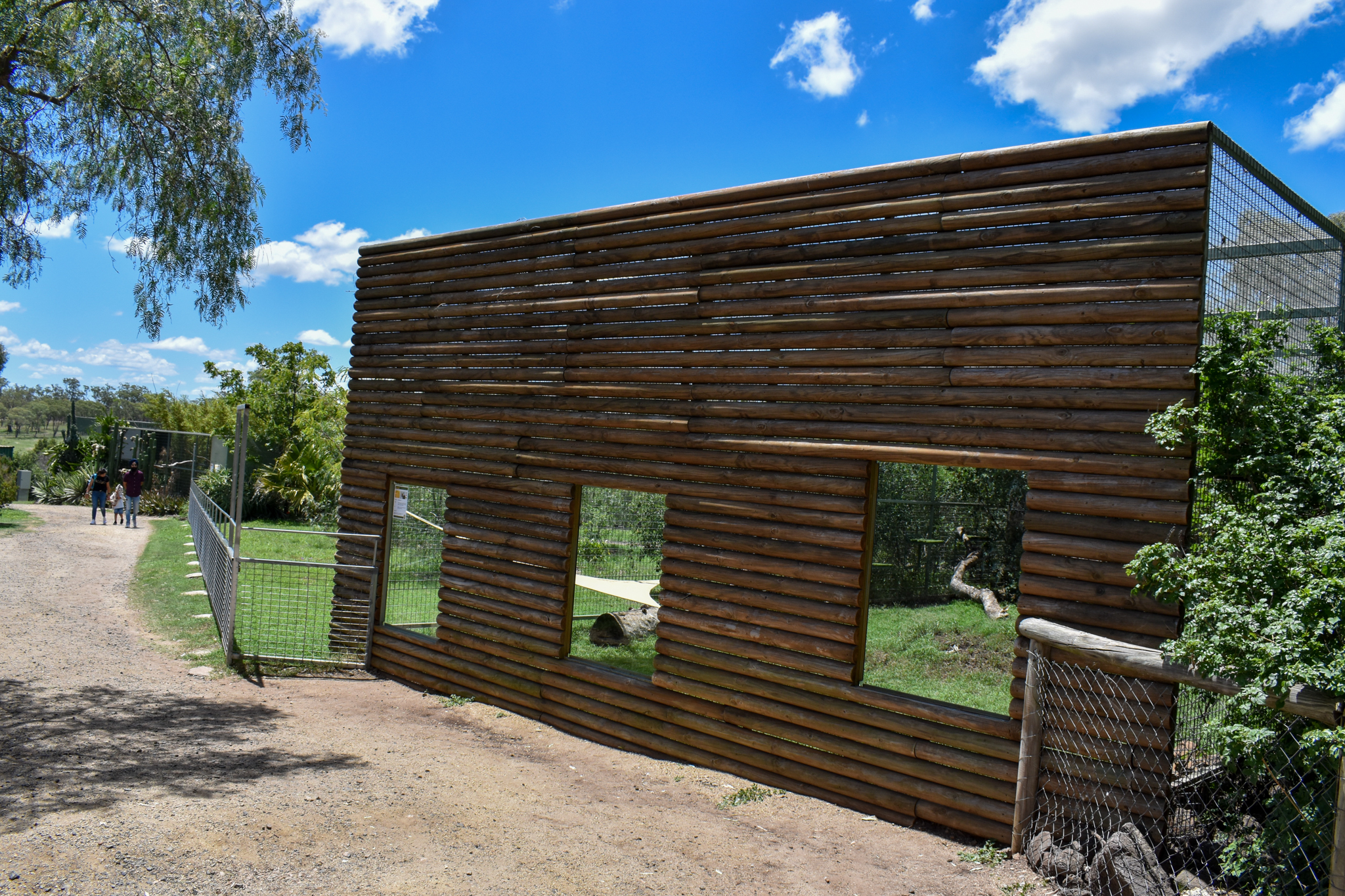
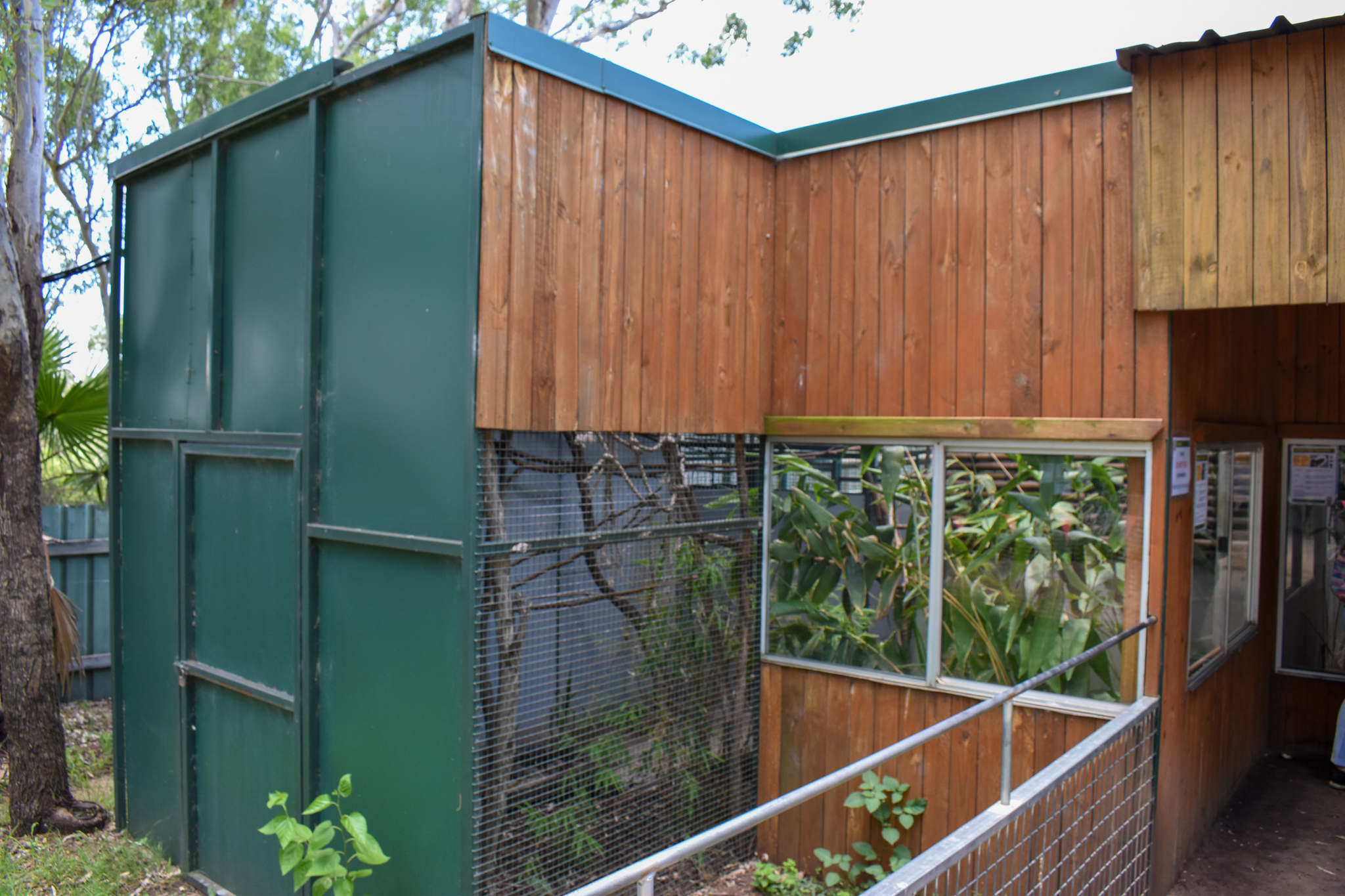
An aviary-style enclosure with wooden panelling along the front and a set of glass viewing windows:
Serval (Leptailurus serval)


SOUTH AMERICAN PRECINCT – (14 Exhibits):
The South American area begins with the larger South American mammals followed by a few aviaries, the exotic reptiles (which will be covered in a separate post below) and the majority of the zoo’s primate collection.

A large paddock with a shaded pool. This enclosure currently contains two of the five Brazilian Tapir left in Australia:
Brazilian Tapir (Tapirus terrestris)
Capybara (Hydrochoerus hydrochaeris)
Patagonian Mara (Dolichotis patagonum)

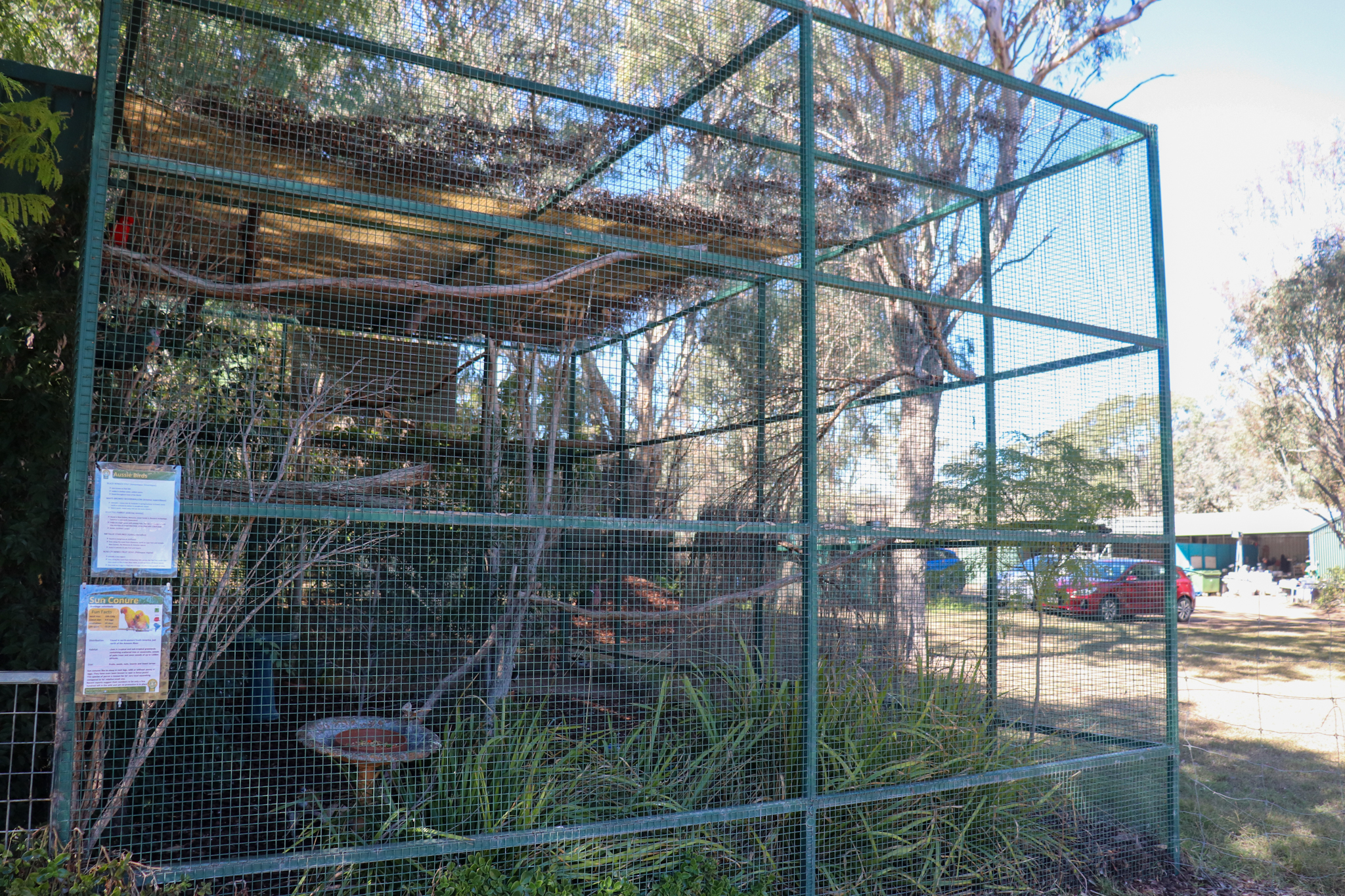
A medium-sized aviary located near the tapir/mara enclosure:
Banded Lapwing (Vanellus tricolor)
Pied Stilt (Himantopus leucocephalus)*
Luzon Bleeding-heart (Gallicolumba luzonica)
Nicobar Pigeon (Caloenas nicobarica)
Sun Conure (Aratinga solstitialis)
Crimson-winged Parrot (Aprosmictus erythropterus)
Noisy Pitta (Pitta versicolor)
Regent Bowerbird (Sericulus chrysocephalus)

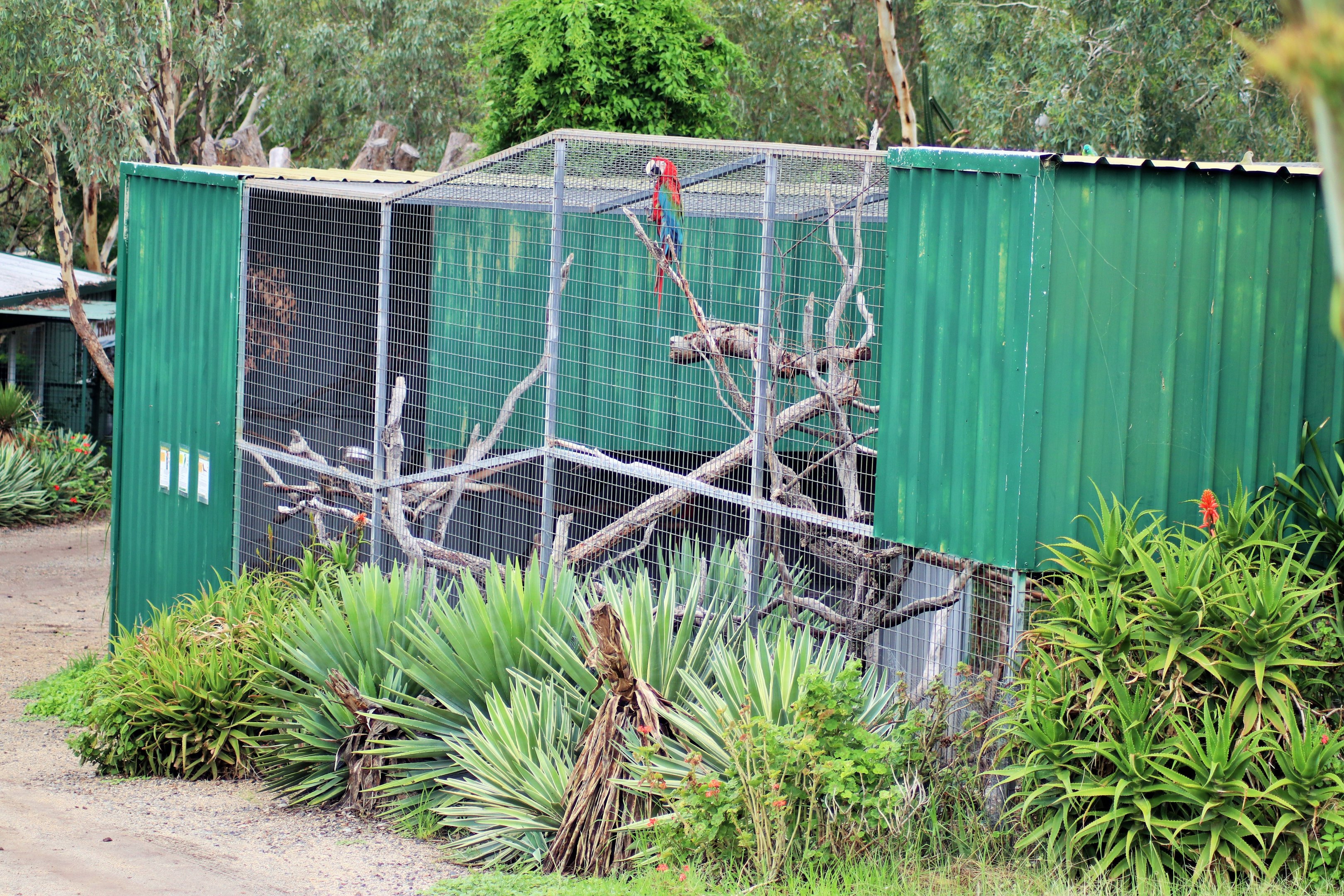
A pair of large aviaries. These usually house more macaw species but across both aviaries I saw yesterday:
Brazilian Agouti (Dasyprocta leporina)
Scarlet Macaw (Ara macao)
Golden Pheasant (Chrysolophus pictus)

A small aviary:
Blue-fronted Amazon (Amazona aestiva)

A small aviary:
Blue-fronted Amazon (Amazona aestiva)

A small aviary:
Yellow-crowned Amazon (Amazona ochrocephala)

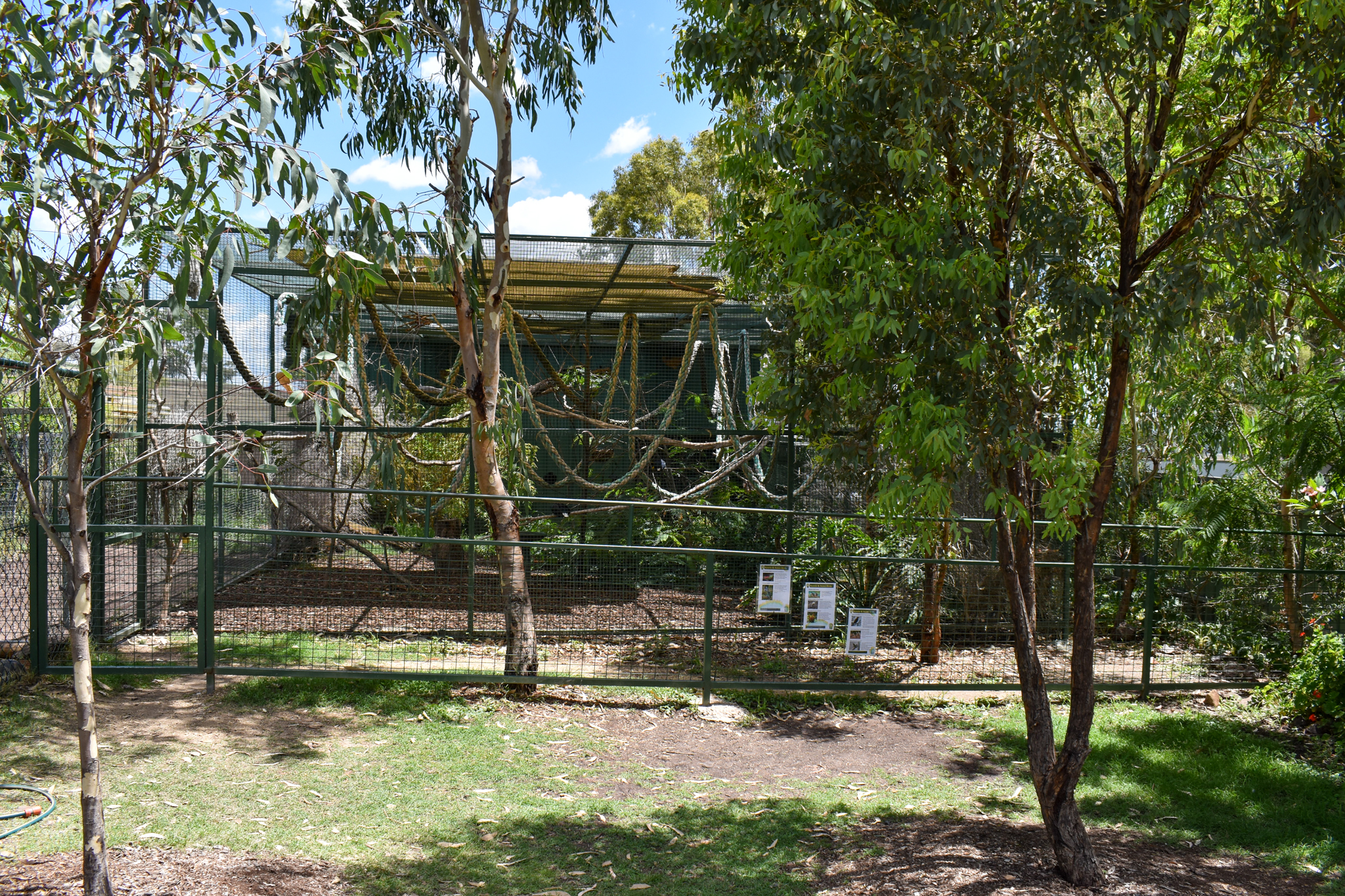
An aviary-style enclosure with ropes and a connected aerial walkway:
Black-capped Capuchin (Sapajus apella)

Tamarin Complex:
A glass-fronted enclosure with thick plantings:
Red-handed Tamarin (Saguinus midas)

A glass-fronted enclosure of a similar design:
Cotton-top Tamarin (Saguinus oedipus)

A glass-fronted enclosure with a meshed side:
Emperor Tamarin (Saguinus imperator)

A larger aviary-style enclosure situated opposite the tamarins:
Common Marmoset (Callithrix jacchus)
Brazilian Agouti (Dasyprocta leporina)

A glass-fronted enclosure which is actually positioned more towards the entrance and is one of the first exhibits visitors come across:
Bolivian Squirrel Monkey (Saimiri boliviensis)*
Brazilian Agouti (Dasyprocta leporina)

A glass-fronted enclosure attached to the side of the squirrel monkey/agouti exhibit:
Lace Monitor (Varanus varius)


EXOTIC REPTILES – (7 Exhibits):
I thought I would include the exotic reptiles all together in one post as they are all situated near each other. This area comprises of a small reptile building and three outdoor exhibits for the larger reptiles.

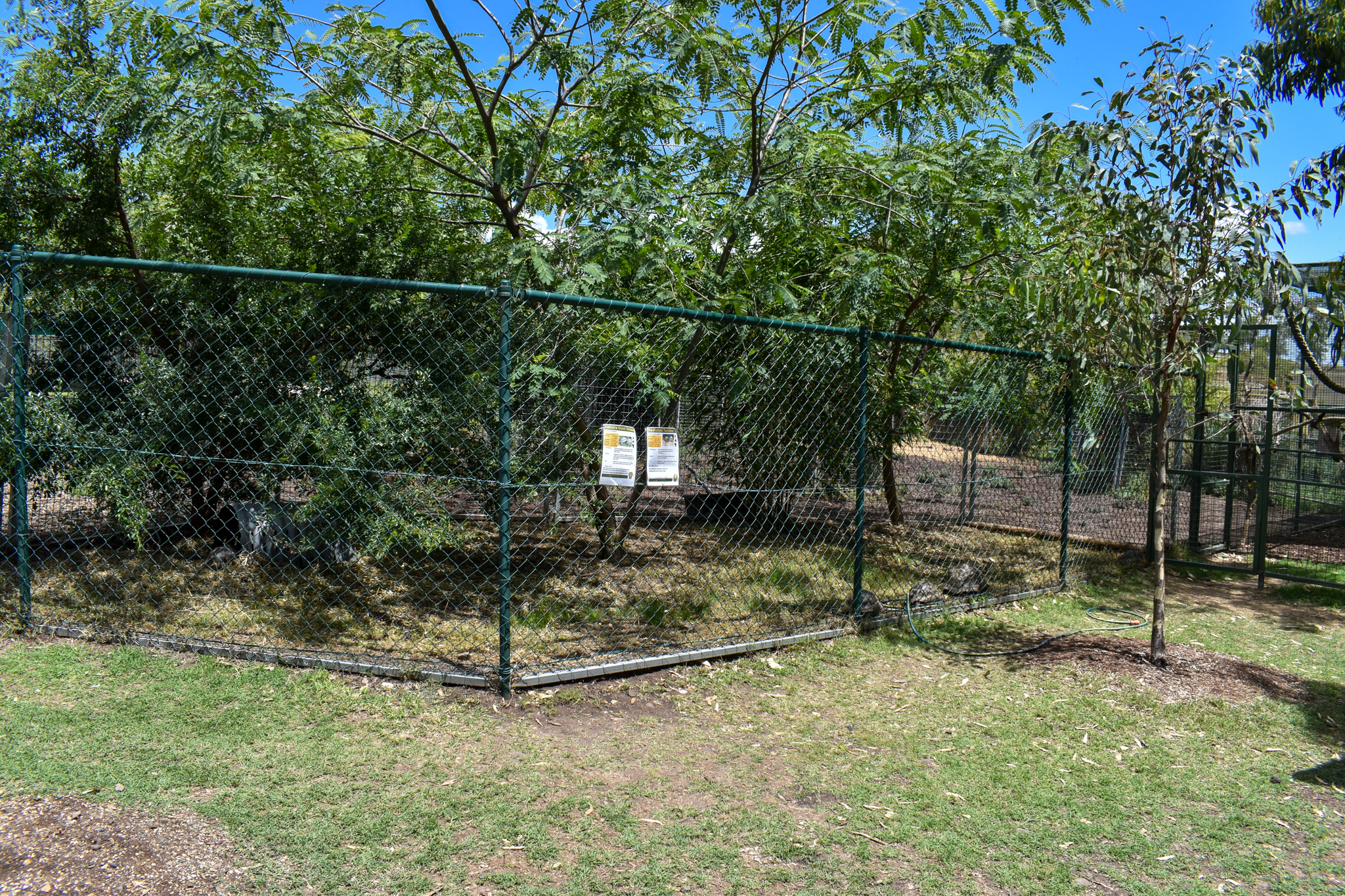
A newly-constructed enclosure positioned near the tapirs. The exhibit is well covered with trees:
Aldabra Giant Tortoise (Aldabrachelys gigantea)
Radiated Tortoise (Astrochelys radiata)

A larger open yard with glass-fronted viewing:
Aldabra Giant Tortoise (Aldabrachelys gigantea)
Rhinoceros Iguana (Cyclura cornuta)

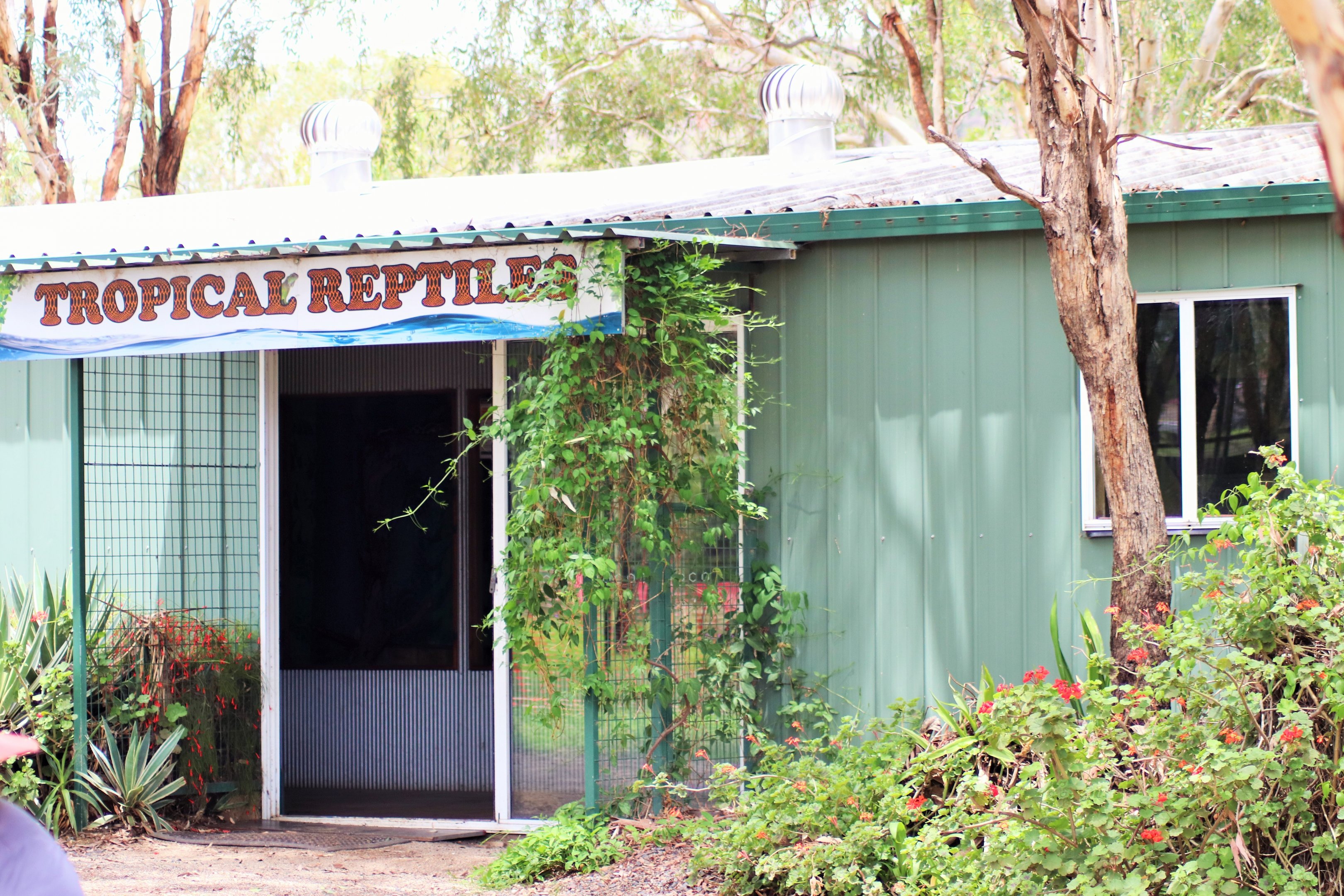
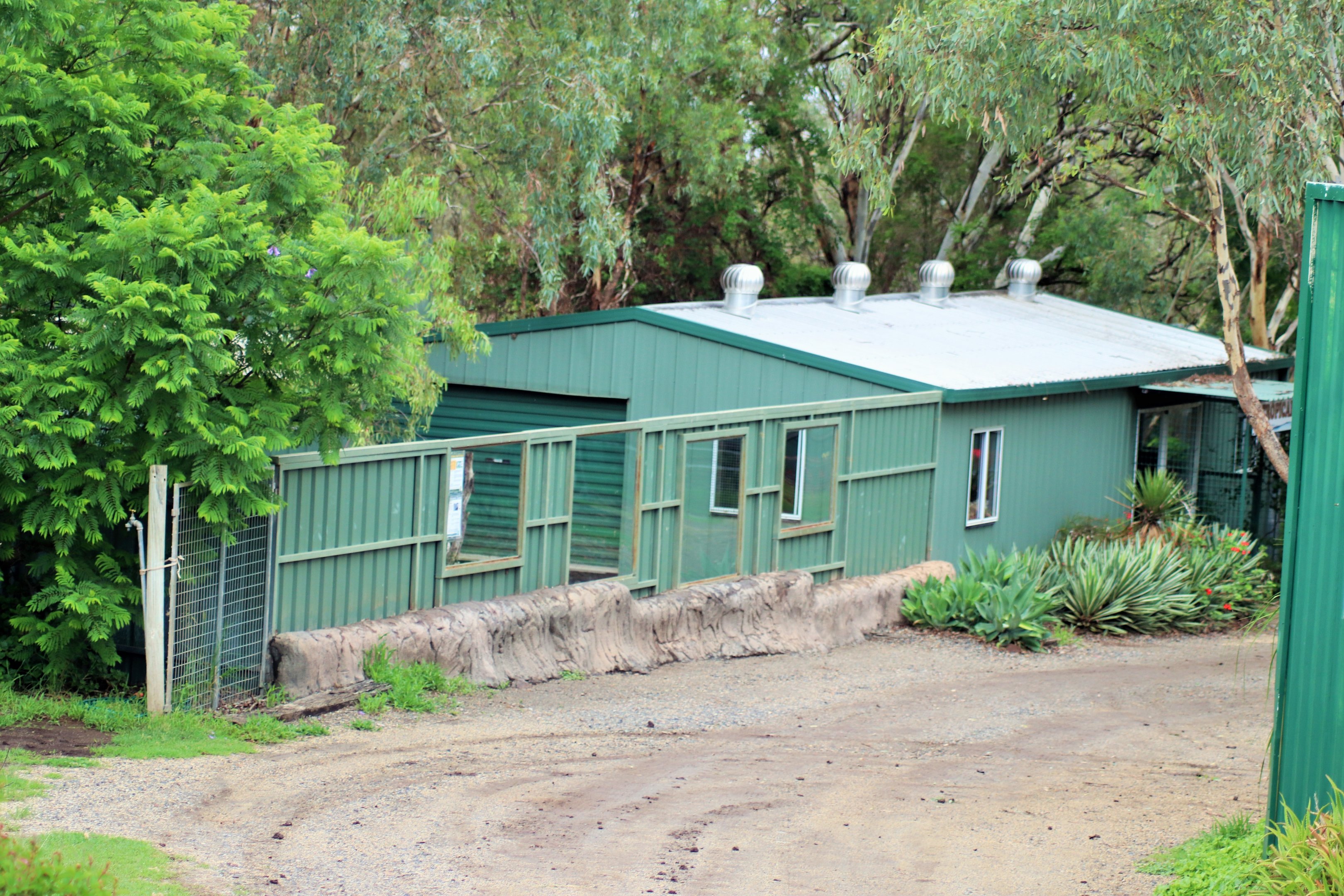
Tropical Reptile House:
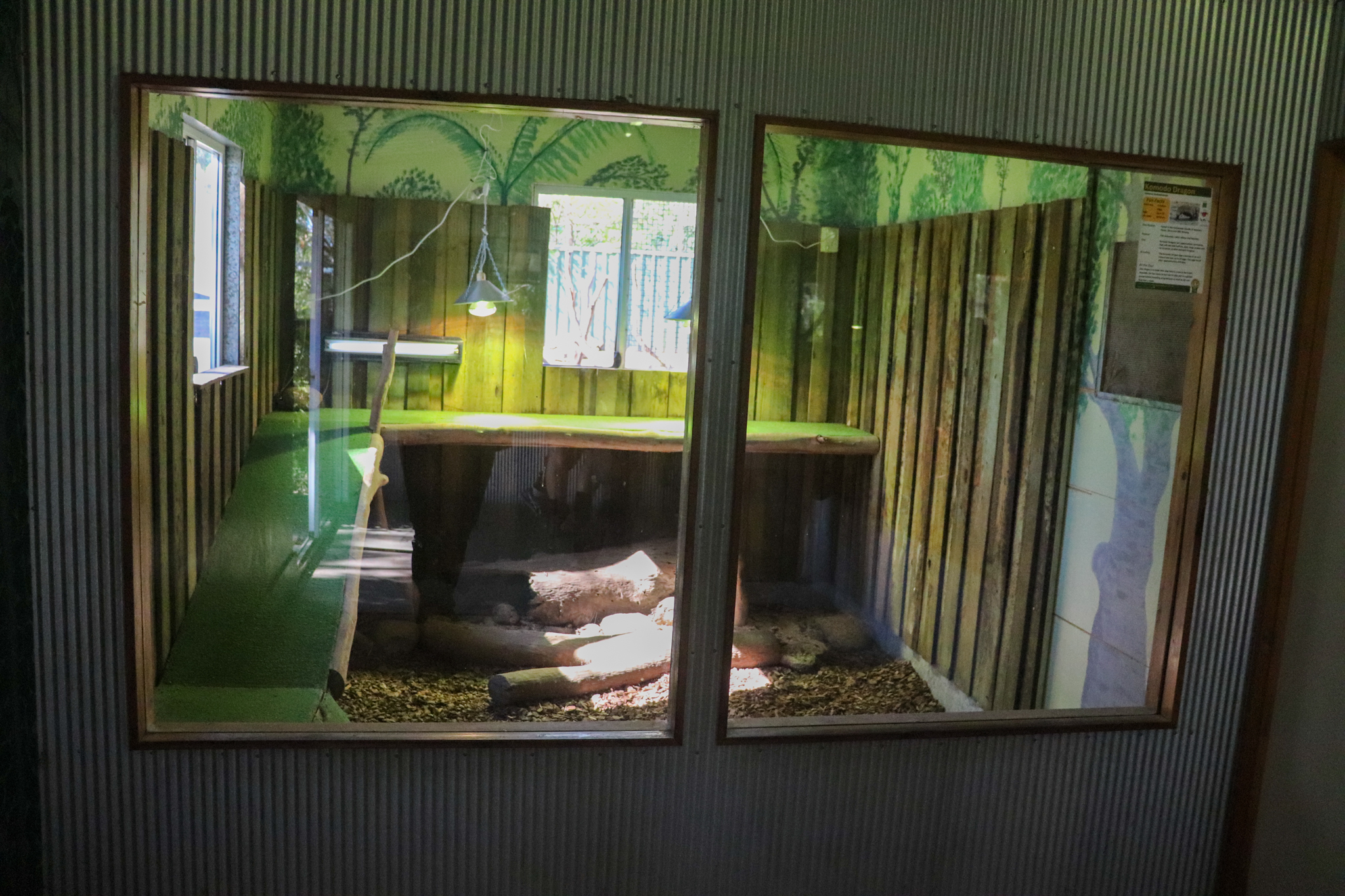
A small indoor room with four glass-fronted enclosure all of a similar size. They are furnished depending on the species (e.g. anaconda has a pool). The four exhibits contained:
Komodo Drago (Varanus komodoensis)
Boa Constrictor (Boa constrictor)
Yellow Anaconda (Eunectes notaeus)
Burmese Python (Python bivittatus)

An outdoor enclosure with a pool and a fence covered in vines:
American Alligator (Alligator mississippiensis)


AUSTRALIAN PRECINCT – Part 2 (10 Exhibits):
The final section of the zoo I have yet to cover includes the area near the entrance which includes a series of aviaries and a few open-topped exhibits for reptiles.

A small aviary located near the picnic area:
Pied Stilt (Himantopus leucocephalus)
Rose-crowned Fruit Dove (Ptilinopus regina)
Pacific Emerald Dove (Chalcophaps longirostris)
Spinifex Pigeon (Geophaps plumifera)
Australian King Parrot (Alisterus scapularis)
Eclectus Parrot (Eclectus roratus)
Eastern Whipbird (Psophodes olivaceus)
Australasian Figbird (Sphecotheres vieilloti)
White-breasted Woodswallow (Artamus leucorynchus)

A large open-topped enclosure:
Eastern Bearded Dragon (Pogona barbata)
Central Bearded Dragon (Pogona vitticeps)
Shingleback (Tiliqua rugosa)
Eastern Bluetongue (Tiliqua scincoides)

A pair of open-topped enclosure with tubs of water:
Freshwater Crocodile (Crocodylus johnstoni)

A slightly larger open-topped enclosure with a body of water:
Saltwater Crocodile (Crocodylus porosus)*

Aviary Complex:
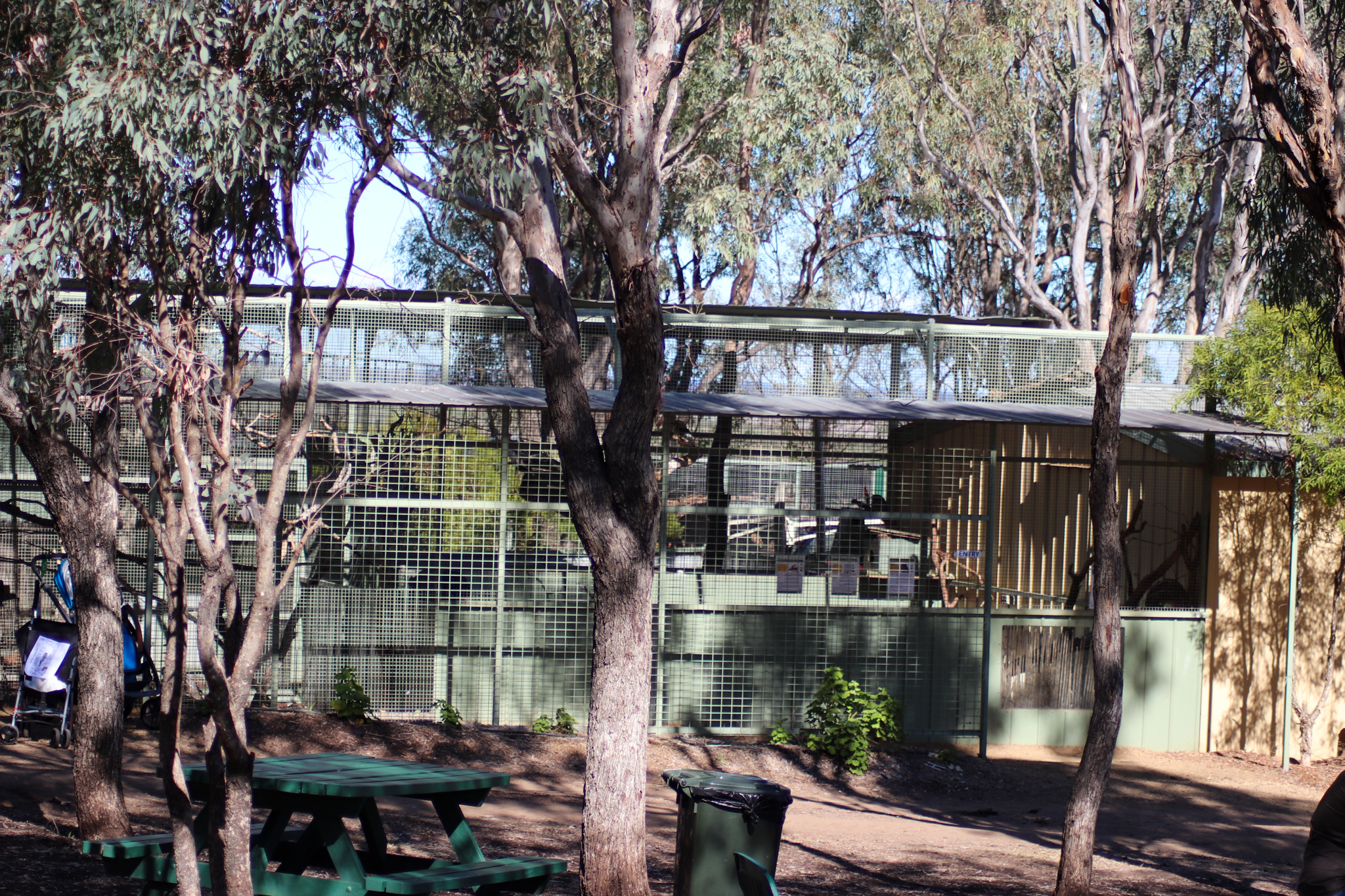
A row of four aviaries with an additional fifth aviary located behind the main row for the third owl species housing the majority of the zoo’s larger native birds.

A medium-sized aviary:
Common Ringtail Possum (Pseudocheirus peregrinus)
Australian Bustard (Ardeotis australis)
Tawny Frogmouth (Podargus strigoides)
Laughing Kookaburra (Dacelo novaeguineae)

A small aviary:
Gang-gang Cockatoo (Callocephalon fimbriatum)
Bush Stone Curlew (Burhinus grallarius)

A small aviary:
Australian Grass Owl (Tyto longimembris)

A small aviary:
Eastern Barn Owl (Tyto delicatula)
Nankeen Kestrel (Falco cenchroides)

An aviary positioned behind the main row of four:
Barking Owl (Ninox connivens)


Steve Robinson has long left ZooChat behind as an active member (though I reckon he might still lurk - hi Steve!). It’s wonderful for us ZC veterans to see the vision being so fully realised.

He’ll get those rhinos yet, I reckon.
 
And with that, concludes my species list for Darling Downs Zoo. By my count, there are approximately 68 exhibits with a very impressive 109 species. Please note this does not include the species that are currently off-display. If we break this down further, we get the following:

*35 species of mammal (29 exotics; 6 native species)
Exotics: Plains Zebra, Brazilian Tapir, Pygmy Hippopotamus, Dromedary, Guanaco, Llama, Red Deer, Giraffe, Blackbuck, Addax, Emperor Tamarin, Cottontop Tamarin, Red-handed Tamarin, Common Marmoset, Bolivian Squirrel Monkey*, Black-capped Capuchin, Hamadryas Baboon, Rhesus Macaque, Siamang, Lion, Sumatran Tiger, Cheetah, Serval, Maned Wolf*, Meerkat, Cape Porcupine, Mara, Capybara, Red-rumped Agouti

Natives: Koala, Common Wombat, Common Ringtail Possum, Whiptail Wallaby, Red Kangaroo, Dingo

*58 species of birds (13 exotic species; 45 native species)
Exotics: Ostrich, Lady Amherst’s Pheasant, Golden Pheasant, Ring-necked Pheasant, Mandarin Duck, Ruddy Shelduck, Scarlet Macaw, Blue-fronted Amazon, Yellow-crowned Amazon, Sun Conure, African Grey Parrot, Nicobar Pigeon, Luzon Bleeding-heart

Natives: Emu, Australian Brush-turkey, Black Swan, Cape Barren Geese, Wandering Whistling Duck, Radjah Shelduck, Hardhead, Australasian Swamphen, Australian Pelican, Royal Spoonbill, Glossy Ibis, Nankeen Night Heron*, Pied Stilt, Banded Lapwing, Bush-stone Curlew, Australian Bustard, Laughing Kookaburra, Tawny Frogmouth, Barking Owl, Barn Owl, Australian Grass Owl, Nankeen Kestrel, Torresian Imperial Pigeon, White-headed Pigeon*, Topknot Pigeon, Wonga Pigeon, Emerald Dove, Rose-crowned Fruit Dove, Spinifex Pigeon, Red-tailed Black Cockatoo, Yellow-tailed Black Cockatoo, Gang-gang Cockatoo, Sulphur-crested Cockatoo, Long-billed Corella, Galah, Cockatiel, Crimson-winged Parrot, Australian King Parrot, Eclectus Parrot, Bush Budgerigar, Regent Bowerbird, Noisy Pitta, White-breasted Woodswallow, Australasian Figbird, Eastern Whipbird

*16 reptiles (8 exotic species; 8 native species)
Exotics: American Alligator, Aldabra Giant Tortoise, Radiated Tortoise, Rhinoceros Iguana, Komodo Dragon, Boa Constrictor, Yellow Anaconda, Burmese Python

Natives: Saltwater Crocodile*, Freshwater Crocodile, Broad-shelled River Turtle, Lace Monitor, Eastern Bearded Dragon, Central Bearded Dragon, Shingleback, Eastern Bluetongue
 
Steve Robinson has long left ZooChat behind as an active member (though I reckon he might still lurk - hi Steve!). It’s wonderful for us ZC veterans to see the vision being so fully realised.

He’ll get those rhinos yet, I reckon.
I believe that any regional zoo that has possibly the most valuable Pygmy Hippo in the region has to say something about this zoo. :)
 
Back
Top