Desert Houses in Zoos

The 7500 m² Burgers' Desert (an imitation of a Mojave / Sonora desert ecosystem) is simply brilliant. It's large with extremely detailed landscaping. It's built on a slope so it has lots of depth perception. It's attractive to visitors with its winding paths through grottoes and along mammals exhibits. It has a great botanical collection. But above all, it's animal collection is very diverse, with many, for Europeans, rarities.
It is for me the best Burger's ecodisplay but it has a major problem : the mammals enclosures are way too small.
 
Pairi Daiza is currently in the process of gradually transforming the Oasis greenhouse into a desert greenhouse. Some examples: otters are being replaced by meerkats, addition and replacement of other species to prairie dogs, armadillos, turtles and other animals, among others sloths are leaving the hall. This is because a large rainforest greenhouse (which will be the largest in the world) will be opened in the future on the location of the former parking lot.
 
No mention of Omaha's famous Desert Dome? I would call it among the best zoo exhibits I have ever seen - probably the best if you include Kingdoms of the Night as part of it.

Brookfield also has a desert house called Desert's Edge.
 
No mention of Omaha's famous Desert Dome? I would call it among the best zoo exhibits I have ever seen - probably the best if you include Kingdoms of the Night as part of it.

Brookfield also has a desert house called Desert's Edge.
It was mentioned in the original post, no question it’s great but Batto already talked about it.
 
The best desert house would be actually dry shrubland. They are deserts for geographers and locals but not biologists: Sonora desert, Mojave Desert, Kalahari desert, Australian deserts etc. They have very catchy succulent plants: saguaros and other cacti, baobabs, giant euphorbias, ocotillos etc. True desert should be little except sand.

Perhaps their problem is that zoo people automatically think about big ungulates, and overlook that smaller animals and succulents could make a very good exhibit of its own.

I once imagined an exhibit based on Madagascar spiny forests:
If I Had My Own Zoo

PS. About Desert Dome in Omaha - this one has much too small exhibits and little natural substrate for digging animals like meerkats. Although it could be wonderful if remodelled as a pure reptile house with large monitor lizards, large teids and agamids, large tortoises, further venomous snakes, maybe desert / sacred crocodiles etc.
 
The only desert exhibit I've ever seen is the one at ZooAmerica. It has burrowing owls, gambel's quails, desert tortoises, greater roadrunner, nine-banded armadillos, a few reptiles, and a nocturnal section. It's a really cool exhibit, albeit not very large, and something I wish more zoos would replicate. Deserts is a theme that I think a lot of small zoos could do well with, as most of the charismatic desert animals aren't very big. Think ocelots, meerkats, aardvark, wallabies, burrowing owls, sand cats, even koalas may be a possibility. It's an area that could seem complete even without any large megafauna.
No, koalas are not desert animals, far from it. Neither for that matter are common zoo wallabies.
 
The best desert house would be actually dry shrubland. They are deserts for geographers and locals but not biologists: Sonora desert, Mojave Desert, Kalahari desert, Australian deserts etc. They have very catchy succulent plants: saguaros and other cacti, baobabs, giant euphorbias, ocotillos etc. True desert should be little except sand.

Perhaps their problem is that zoo people automatically think about big ungulates, and overlook that smaller animals and succulents could make a very good exhibit of its own.

I once imagined an exhibit based on Madagascar spiny forests:
If I Had My Own Zoo

PS. About Desert Dome in Omaha - this one has much too small exhibits and little natural substrate for digging animals like meerkats. Although it could be wonderful if remodelled as a pure reptile house with large monitor lizards, large teids and agamids, large tortoises, further venomous snakes, maybe desert / sacred crocodiles etc.
There are no Meerkats in the Desert Dome.
 
The Los Angeles Zoo has a dedicated building within the LAIR complex for desert herps and invertebrates, so that qualifies as a desert house I guess.

In the U.S., several zoos with bird houses and reptile houses have desert-themed exhibits with clusters of species from desert regions. Desert antelopes, cats, meerkats, etc. tend to be exhibited in African savanna complexes and North America themed exhibit complexes. My guess is that we don't have many desert-specific houses because the component species that would go in them are spread throughout other types of exhibits.
 
. True desert should be little except sand.
Said by someone who clearly does not understand what a desert is. Antarctica is a desert though it’s cold and icy, Los Angeles is all grassland and marsh and is still defined as a coastal desert; you see a desert is classified as a large area of dry patch usually with little fresh water. Dry patches of sand can be considered more extreme parts of the desert but shrub land is still desert, and a large area of sand is not the true definition of a desert nor is it any more desert then other areas. A large patch of sand is not the true definition of a desert, that is an extremely foolish myth.
Also Biologists do not have definitions of deserts. By definition biologists do not classify deserts Geographers do. Biologists simply classify the living aspects of the areas defined by Geographers.
And there is no debate all those places you mentioned are deserts. I’ve camped in the Mojave and hiked through the Sonora and I will tell you right now they are dry as hell but also support lots of plant and wildlife while being true deserts.
 
Said by someone who clearly does not understand what a desert is.
No need to be snappy; I understand what @Jurek7 meant, but I also agree that deserts aren’t just a pile of sand.
I thought about adding my idea of a decent desert house to "If I had my own zoo".
Then I realized that I actually have a zoo :pand that I have to prepare for the upcoming UK zoo import on the 22nd of September, which, by sheer accident, also includes a desert species. ^^
 
To throw in another perspective: desert houses are super difficult in terms of a "natural look". You have little structure to hide your building behind, even less vegetation to hide doors, lamps, cable and so on. But at the same time you need an abundance of technical equipment to create the right climatic conditions for your animals.
I'm not saying that it's impossible, BUT it's probably one of the arguments that goes through a zoo's mind when they decide against them.
 
To throw in another perspective: desert houses are super difficult in terms of a "natural look". You have little structure to hide your building behind, even less vegetation to hide doors, lamps, cable and so on. But at the same time you need an abundance of technical equipment to create the right climatic conditions for your animals.
I'm not saying that it's impossible, BUT it's probably one of the arguments that goes through a zoo's mind when they decide against them.
Yet it can be done, as illustrated by the positive examples. And many of the far more common rainforest houses suck at camouflaging the necessary equipment just as well.
 
Last edited:
even less vegetation to hide doors, lamps, cable and so on
Why do people think deserts have very little to no vegetation?
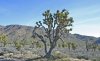
Joshua Trees of the Mojave
973602AD-4559-4317-84F0-05AEAB6C1F62.jpeg
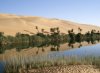
Oasis’s in the Sahara
8881C385-4BE8-4F9F-B971-749ED439A88F.jpeg
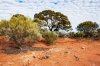
and North Australia
BD486780-4900-43B4-9D84-B314D97BE5C6.jpeg
sorry if I’m coming off as rude about this but I don’t like the myth that deserts are just big piles of sand. The whole point of building these desert houses is to show the many fauna and flora that line the desert. To show that with the barren parts of the desert there are also towering cliffs and large rock formations all around. So claiming deserts have nothing goes completely against the point of a desert house.
 

Attachments

  • 973602AD-4559-4317-84F0-05AEAB6C1F62.jpeg
    973602AD-4559-4317-84F0-05AEAB6C1F62.jpeg
    487.9 KB · Views: 96
  • 8881C385-4BE8-4F9F-B971-749ED439A88F.jpeg
    8881C385-4BE8-4F9F-B971-749ED439A88F.jpeg
    419.5 KB · Views: 94
  • BD486780-4900-43B4-9D84-B314D97BE5C6.jpeg
    BD486780-4900-43B4-9D84-B314D97BE5C6.jpeg
    684.6 KB · Views: 93
Why do people think deserts have very little to no vegetation?

sorry if I’m coming off as rude about this but I don’t like the myth that deserts are just big piles of sand. The whole point of building these desert houses is to show the many fauna and flora that line the desert. To show that with the barren parts of the desert there are also towering cliffs and large rock formations all around. So claiming deserts have nothing goes completely against the point of a desert house.
The post you were quoting was not saying that deserts have no plants. It was making a comparison with rainforest halls, where it is very easy (theoretically) to hide artificial structures due to the volume of vegetation.
 
Why do people think deserts have very little to no vegetation?
Joshua Trees of the Mojave
View attachment 507526
Oasis’s in the Sahara
View attachment 507527
and North Australia
View attachment 507528
sorry if I’m coming off as rude about this but I don’t like the myth that deserts are just big piles of sand. The whole point of building these desert houses is to show the many fauna and flora that line the desert. To show that with the barren parts of the desert there are also towering cliffs and large rock formations all around. So claiming deserts have nothing goes completely against the point of a desert house.

Actually, you have kind of proven my point. If we just take the easiest example of desert dweller - a bearded dragon - you would need at least two lamps, three thermometers, a water dish and a food dish. You also need to put your plants in extra pots so that you can regulate the water supply without the replies having a wet and cold belly. Try that if you have that spare and open vegetation as in the pictures.

Also, I didn't say it's impossible. I said it's more difficult.
Even in Burger's desert (which I absolutely love) it's often not the same level of immersive feeling, because you can see the structure of the surrounding hall. And most zoos don't have the budget, employee training level and number of employees per exhibit that Burgers Zoo has.
 
Actually, you have kind of proven my point. If we just take the easiest example of desert dweller - a bearded dragon - you would need at least two lamps, three thermometers, a water dish and a food dish. You also need to put your plants in extra pots so that you can regulate the water supply without the replies having a wet and cold belly. Try that if you have that spare and open vegetation as in the pictures.

Also, I didn't say it's impossible. I said it's more difficult.
Even in Burger's desert (which I absolutely love) it's often not the same level of immersive feeling, because you can see the structure of the surrounding hall. And most zoos don't have the budget, employee training level and number of employees per exhibit that Burgers Zoo has.
If you're talking about Pogona vitticeps - they are mostly inhabitants of (semi) arid woodland, and to a lesser extent, rocky areas near to deserts. And given how few private pet owners (and even zoos) get their husbandry right, they're certainly not the "easiest desert dwellers". Why would you need three thermometers? Depending on the plants and the soil, you don't need to put them in extra pots and if so, there are ways to hide that.
 
Okay, sorry, super busy right now. So, just a quick explanation: when you deal with big halls you can't just generate one suiting climate for the whole hall. That would cause too many problems with the visitors and is an energetic nightmare. Therefore you work with gradients of abiotic parameters. Most important is temperature. You basically want to create a horizontal and a vertical temperature gradient within the animals comfort range. Through that the animal can choose where to be. That's why I plan with three thermometers. One in the hottest spot on the ground, one on the coldest spot on the ground, one in the air in the maximum height that the animal uses.

Watering plants in buildings like that is a science in itself. The substrate that the plants need is often very sandy, which means that it doesn't hold water. So you either need to let lots of water flow through the soil (natural condition) or you need another method to make the water stay around the roots for longer periods of time.
Option number 1 ist a huge issue for many animals from Arid climates. While they can often deal with extreme temperatures, the constant moisture will cause fungi and pneumonia. Especially in reptiles.
 
Back
Top