Design a Zoo

Status
Not open for further replies.
My Zoo

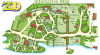
My zoo would be the Lorain County Farm & Zoo located near or in Wellington, Ohio (southwest of Cleveland)
Admission- adults (18-59) $9, teens (13-17) $8, seniors (60+) $7, children (3-12) $5, infants 0-2 free, LoTrain ride $1, carousel $1
The largest part would be the Farm Zoo with 2.2 Barbados sheep, 5.5 Navajo-Churro sheep, 3.3 pygmy goats, 1.1 Toggenburg goats, 1.1 Alpine goats, 1.6 Holstein cattle, 1.5 Jersey cattle, 1.4 Vietnamese potbellied pigs, 1.1 miniature horses, 10.10 domestic rabbits, 10.10 guinea pigs, and various chickens, ducks, and turkeys. The animals can be fed with cones filled with Cheerios (50c) or carrots (25c), similar to working farm Stearns Homestead in Parma, Ohio, west of Cleveland. Visitors would be able to pet the rabbits, guinea pigs, sheep, and goats. The sheep and goats could go in and out of a petting pen, a non-contact paddock, and the barn. The rabbits and guinea pigs would be in a shed painted to look like a red barn. In the big red barn would be milking displays for the cows and goats, as well as a chick hatchery. Also in the barn would be exhibits for 1.0 barn owl, 1.0 black rat snake, assorted white-footed mice, and a hive of bees. In the Family Pets Yard would be 1.1 domestic dogs and 2.2 domestic cats.
Expedition Australia would be smaller but have more exotic animals than the animals at the Farm Zoo. 10.10 rainbow lorikeets, 3.3 budgies, and 5.5 keas would live in a walk-through exhibit where the birds could be fed with seed sticks ($1) or nectar ($1). Emus and malleefowl would have large, dusty, grassy yards followed by a large flight cage for kookaburras and a walk-through exhibit for 3.3 of the following- red kangaroo, gray kangaroo, Parma wallaby, Bennett's wallaby, swamp wallaby, tammar wallaby, yellow-footed rock wallaby, red-necked wallaby, and wallaroo. Koala Town would have indoor and outdoor viewing for 2.2 koalas.
Native exhibits- Black Bear and Deer Woods would be at the northwest corner of the zoo, with 2.2 American black bear and 3.3 white-tailed deer. Skunk and Raccoon Trail would be south of the black bears and deer, with 2.2 striped skunk and 3.3 raccoon. Next to Skunk and Raccoon Trail would be the Ohio Herpetarium and Aquarium, with various reptiles, amphibians, and fish native to Ohio. 1.1 wild turkeys, 2.2 red foxes, 1.1 coyotes, and 0.1 groundhog would live in a row of naturalistic forest habitats near the Herpetarium and Aquarium. The Hawk and Owl Flyway would exhibit 1.1 each of the following- great horned owl, barred owl, screech owl, peregrine falcon, merlin, American kestrel, broad-winged hawk, and red-tailed hawk.
The LoTrain would start and end at the train station north of the entrance, between the entrance and the Farm Zoo. The carousel would be southeast of the entrance near Expedition Australia.
 
I plan on designing an extra large zoo in Zoo Tycoon 2, and I have downloaded too many mods to count.

It will have a lot of typical themed areas, all are currently unnamed and are under construction as a whole.

1. Farm
2. Western North America
3. Tropical Rainforest
4. Safari Zone
5. Australia and New Zealand
6. Eastern Asia
7. Coastal
8. Deserts of the World
9. India
10. Frozen Tundra

And a few random filler enclosures that don't seem to fit in any specific area.
 
Last edited:
My zoo would start with Elephant Reserve, an area for a herd of African elephants. Visitors would first see gelada baboons, rock hyrax and Nubian ibex in a mountainside exhibit with stream and rocky outcroppings. A similar enclosure, but smaller, would be for klipspringer, meerkats, and more hyrax. Visitors would then go down stairs past an African marsh with flamingos, shoebills and other waterfowl of east Africa. The trail turns nito a dark tunnel, which leads into a bright building. One side of this building is an aquarium, for turtles, Malawi cichlids, and more. Another side is the reptile and amphibian gallery for African bullfrogs, pancake tortoises, agama lizards, snakes, and more. The last side is the small mammals of East Africa area, with naked mole rats, various other rodents, aardvarks, and others. Visitors would exit the building and then see the minuscule Kirk's dik-dik antelope, as well as aardwolves from below a rope bridge. Similar exhibits would have brown hyenas and African wild dogs. A rocky stream would run into an enclosure (with dens) for African lions, followed by another similar enclosure for cheetahs. Servals and bat-eared foxes would live in enclosures viewed by a glass cubbyhole in a cave. Visitors would then come to an African village called Tembo (elephant in Swahili), with gift shop, cafe, ATM and restrooms. Educational shows would be at the Tembo Primary School building, an "African village school". A massive (150 acre) savanna would have-
Masai giraffe, Selous zebra, reticulated giraffe, Grevy's zebra, ostrich, impala, springbok, nyala, sitatunga, Thomson's gazelle, bontebok, blesbok, East African crowned crane, white-backed vultures, and a separate pool and fenced space for Nile crocodiles. Views of the savanna continue down a dusty path to the first view of black rhinos up an elevated boardwalk. The rhino exhibit with pool and waterfall would be viewed on a high boardwalk, followed by Nile hippos in a similar enclosure, and Cape buffalo in a similar enclosure. The boardwalk continues and visitors then see the African bird aviary and the 50-acre African elephant habitat. After views of the elephant habitat, the massive (1500?) acre African plains area is done.
 
MalagasyTrek

I've been toying with the idea of designing a zoo focused mainly on reptiles that would be completely contained within a series of huge glass greenhouses. The first is one that I'm calling MalagasyTrek which will include both free ranging and caged Madagascan native animals as well as a few nonnative animals representing some of Madagascar's extinct wildlife. So without further ado, MalagasyTrek.

The MalagasyTrek greenhouse is the largest in the zoo. It is a perfect representation of a Madagascan rain forest. As you walk in you'll immediately be greeted by a towering Grandidier's baobab. Of course it is only a replica and it has been scaled down a bit to allow it to actually fit inside the building. There is information on the various free ranging birds and reptiles carved into the bottom of the trunk for visitors to read as well as a map. To your left is the food court and vivariums, and to your right are exhibits. You decide to take a left and start your journey through the rainforest. Along the way you encounter a beautiful Nosy Be Panther Chameleon slowly making it's way across the path. After observing it for a while you continue on your way. Eventually you will come to a rocky outcropping with a set of wooden stairs leading to the top. At the top you can see that there is a food court and a gift shop. The rocky outcrop has a tunnel leading into it's interior. As you walk in there is a set of vivariums on the right containing Madagascan leaf nosed snakes, Madagascan tree boas, Pygmy chameleons, Satanic leaf tailed geckos, Mossy leaf tailed geckos, Lesser Tenrec and Golden mantellas. To the left, directly across from the vivariums is an opening with a waterfall pouring over it. On the opposite side you can see a pond that is home to Madagascan big headed turtles through breaks in the watefall. There is also a Hammerkop Stork and a pair of African Jacana along the waters edge. You continue on and exit the cave and return back to the jungle. You pass another wetland area, this time home to a large colony of Nile Crocodiles. There is special bird netting used to keep the birds and lemurs out of the enclosure, but there are a few Cattle Egrets that are in there with them. Continuing on through the forest you see a few more free ranging animals including a Giant Day gecko and a Malagasy paradise fly-catcher. You also encounter the first lemur species, which are the Red ruffed lemurs. We have a troop of 7 and they're allowed to free roam the entire building. Continuing on you come to an fairly open area, where the Double wattled cassowary is housed. Although not found in Madagascar, the park has housed it here in addition to information on Madagascar's extinct elephant bird. Further on you come to another rather large wetland area. This time it houses 1.1 pygmy hippopotamus which are used to represent Madagascar's extinct pygmy hippo species as well as Lesser flamingos, white faced whistling ducks, hamerkop, jacana, knob billed duck, hottentot teal and Malagasy kingfishers. While the smaller birds are able to free roam between the pygmy hippo and flamingo areas, the flamingos and hippos are separated by hidden barriers. Continuing on a bit more you will come to the Aldabra tortoise enclosure. Madagascar had a species similar to this, however that species is now extinct. For a small fee visitors can feed these gentle giants and even give them a scratch. You keep following the train and eventually run into our group of 5 brown lemurs, however they are more shy than our red ruffeds and retreated into the forest. Up ahead you can see a rocky outcrop jutting out from the forest, and wonder if its the food area, but it's actually another exhibit. There are two aviaries extending from the rocks. One is home to the infamous fossa while the other is home to a pair of pied crows. You follow around the outside of the rock until you find a built in exhibit. The sign says that it is home to Madagascan giant rats, but you can't find any. There is, however, a few Madagascan plated lizards basking on the path. The final exhibit before circling back to the entrance is a drier habitat which is home to radiated tortoises and Madagascan plated lizards. Leaving the area you find yourself back at the baobab, this time there are around 15 amazing Madagascan flying foxes roosting at the top.

*Not all free roaming bird, insect, or reptile species were seen.
 
I have been redesigning my fantasy zoo. Disregard my previous entries. This is the first of my new complexes.

PLEISTOCENE PREDATORS

The Pleistocene Predators complex is made up of three different enclosure elements and houses over twenty species. The majority are predatory species but the one thing they all have in common is that they all do, or did, live in Europe during the Pleistocene era.

Prehistoric Plain
This is the simplest of the enclosures and is the only one to house exclusively vegetarian animals. It establishes the setting through signage - the continent of Europe was once a patchwork of open grasslands and forests home to an array of herbivores that helped support the large number of predators. The three species that live here are all threatened worldwide and were once very important keystone species in the European ecosystem. A herd of seven European bison dominate the scene, while six Persian onager add to the prehistoric vista. Both species maintained grassland and encouraged a diverse habitat through their grazing and trampling. Scurrying about the feet of these giants is a colony of thirty European souslik. The enclosure can be viewed from the main pathway behind a ha-ha, while the entry to the complex goes up onto a realistic granite plateau where visitors spy the herbivores over parapets of stone or from between blackthorn shrubs. The enclosure itself is mostly flat and grassy, with a couple of fallen trees for the animals to investigate, rub against or rest in the shade of, a pool for drinking and wallowing in and several hawthorn shrubs that can be replaced as they are browsed. All three of these species are being bred for reintroduction across Europe. A large sign board features pictures of the different Pleistocene herbivores and how they fed - from browsing species such as moose, roe deer and narrow-nosed rhinoceros through intermediate feeders such as wisent, red deer, ibex, mouflon and straight-tusked elephant to grazers such as water buffalo, saiga, wild horses and woolly mammoth and rhinoceros (1). The recreated skull of a straight-tusked elephant lodged in the rocks allows visitors to interact with the fossil of one of Europe's most impressive mammals. They are then led up the smooth, rock-hewn path towards the next section...

Forest Edge
Forest Edge is a very different habitat. It is dominated by trees such as birch, hazel, Scots pine and some ancient oaks that were incorporated into the exhibit. The first two netted-over enclosures are viewed through an elevated glass window and house a breeding pair of North Persian leopards. As with all carnivores shown here, their ecology in the European ice age is shown through signage. A viewing area covered by fake granite, mimicking a shallow cave (these viewing areas are dotted throughout the exhibit), features the information about these cats. A restoration of the Chauvet Cave painting of a leopard is on the wall of this cave and signage indicates how the European leopard once prowled the mountains and alpine forests and hunted ibex, red deer and wild boar.
Visitors then have the option to head down into a deeper cave, following a flowing stream that falls through a pothole into the darkness beyond. Down here, faint orange lighting illuminates cave paintings of mammoths, aurochs, horses and woolly rhinoceros. The stream ends in a cave pool where, perched on rocks and swimming through the frigid waters, are a colony of olm. Although they are now only found by the Adriatic, there was at least one other species of European cave salamander that occupied caves in Germany. There is also a one-way viewing window into a narrow, netted-over outdoor enclosure housing a pair of Scottish wildcats. The enclosure features loose boulders as a substrate with holly, birch and hazel saplings and fallen pine trunks acting as bridges across the gully the animals are exhibited in. There are three hidden off-show dens where the cats can retreat to if they desire. These cats are part of the programme that intends to reintroduce the offspring of these animals to Britain, including not only Scotland but also possibly restored habitats in Wales (2). Just before the exit to the cave is a small interior cave with a glass viewing window. Nothing appears to be in there, so the visitors now head out of the indoor cave.
Immediately to the left of the cave exit is a large aviary housing two familiar British scavenging birds - the common raven and the European magpie. The ravens are a breeding captive-bred flock while the magpies are all unreleasable rescue birds. Signage shows how both species have a vital role as scavengers and how the magpie is being unfairly demonised as a killer of songbirds - the damage is mostly being done by human activity. The small outdoor enclosure is linked to the small indoor viewing cave and houses a pair of European marbled polecats. These small carnivores are fairly recent arrivals to Europe - the modern species was only found in Russia during the Pleistocene although an earlier species got as far as Poland and Hungary. The enclosure has several boulders for climbing on, a couple of birch saplings, a hollow oak branch to sleep in and a sand bath made to mimic a wild horse rolling spot. Regular natural enrichments are given to the polecats to make them more active during visitor hours.
The next exhibit is by far the largest in Forest Edge. It features a large, clear pool of water with another stone-lined stream, several ancient live oaks along with birch, hazel, holly and crab apple trees as well as shrubs such as brambles, redcurrants, bluebells, wild daffodils and wild strawberries, several granite cliffs and large boulders and even piles of dead pine needles to recreate wood ant nests - all creating a lush and diverse habitat for two species. One, the European red fox, is a familiar animal with the zoo's pair of males being unreleasable rescues. As they snooze and play in this large enclosure they are overshadowed, literally, by a far larger predator. The pair of Asiatic black bears come from a rescue centre in Vietnam and now have a full one and a half acre enclosure to use. It is the zoo's aim to breed these bears. Signage in the indoor cave shows how the Asiatic black bear was once a fairly common European species, with a unique subspecies occurring in the Mediterranean. The signage indicates how they probably fed on many familiar European plants such as blackberries, acorns, crab apples and redcurrants along with wood ants, mice and sometimes even large herbivores. The bear's indoor area is lined with fine sand, is dimly lit with orange light and has floor-to-ceiling glass windows that are well hidden so it appears, at first, that you are sharing a space with the bears. The main viewing window to the outdoor area overlooks the pool where the bears can swim and receive enrichment feeding.
Upon leaving the bear's cave, visitors are now on the final three enclosures for Forest Edge, all housing smaller predators. The first enclosure is an open-topped, glass-fronted exhibit housing a small breeding group of four-lined snakes. These are the largest nonvenomous snake in Europe and easily capable of living outdoors during the spring and summer. Off season, they are taken into an off-show area to spend the winter and their enclosure is then netted over to provide a exhibit for a pair of least weasels. They are the smallest true carnivores in the world and here at the zoo they are normally used in the 'Predators of Europe' show. The enclosure in question is furnished with gorse bushes, dead birch and pine trunks, loose rocks and boulders for climbing on and a small pool for drinking and bathing. The next exhibit is a large aviary, roughly equal in size to the raven/magpie aviary. This one houses three bird species that are now all found in Europe. A pair of common kestrels and long-eared owls perch in live trees and on a scraggly looking dead pine with lots of branches for perching on. Pecking around in the pond, preening on the cliff face and flying around the aviary are a flock of four Northern bald ibis - these birds once lived as far north as Germany and migrated across continental Europe. The zoo keeps the bald ibises as part of a breeding programme, while the kestrels and owls are both ambassadors for the zoo's native conservation programmes aiming to find the causes for the declines of both species. The final enclosure in Forest Edge is a small netted enclosure with elder, redcurrant and wild strawberry plants as well as hazel branches spanning the exhibit. There is also an indoor viewing window into a small cave crevice. This is an enclosure for the garden dormouse. They are one of the largest European dormouse species and the most predatory, capable of killing wood mice, birds up to the size of an adult starling and even young rabbits. Above the indoor area, invisible to visitors, is a solar panel that stores energy over the spring and summer. Come winter, when the dormice go into hibernation, this energy is used to refrigerate the indoor area to ensure the dormice hibernate for an appropriate length of time. This cave, with the dormouse nest chamber, is the introductory area to...

Vallescure Carnivores
Named after the Vallescure Cave in Provence, this is the realm of the truly massive carnivores of the late Pleistocene. All the enclosures are viewed from indoors and behind floor-to-ceiling glass. This series of dark, winding caverns also have mock cave art and fake fossils dotted around to add interest for visitors. Immediately after entering the Vallescure Carnivores cave, there are visitor toilets and baby changing facilities. The first exhibit houses a pair of European wolverines, the only one of the four large predators here to have survived in Europe. In the Pleistocene, wolverines were much more widespread and preyed upon reindeer, hares and foxes as well as scavenging the remains left behind by other large predators. Their enclosure features a relatively shallow pool, several live holly, hazel and birch trees and a series of hillocks and gullies for the wolverines to climb on and explore, hopefully satisfying the curiosity of these boundlessly energetic animals. After passing the fossil remains of an arctic fox, a leopard, a cave bear and a brown bear, visitors reach the next live animal exhibit. This one houses another large scavenger, the Arabian striped hyena. They mostly fed on carrion and lived in the gullies and open woodlands south of the mammoth steppe, although they were probably capable of killing live prey such as onager, tortoises and crested porcupines that also lived in this region. In the atrium where the hyena viewing window is, there are also skeletons of striped and cave hyenas as well as mock cave paintings of cave hyenas and a snowy owl. The hyena enclosure is flatter than most of the others but still includes a waterhole, two underground dens, several birch trees, gorse and bramble bushes and rocks where food can be hidden for enrichment purposes. Visitors then leave the hyena area, passing through another narrow cave corridor covered with pictures of mammoth, Irish elk, reindeer and bison before entering the viewing atrium for the penultimate exhibit. This houses a breeding pack of Chinese dhole, the subspecies closest in resemblance to the extinct European form. The dhole were able to live on both grassland and forest habitats, and hunted fallow deer, red deer and saiga. The enclosure has a large pool, several redcurrant, bramble and hawthorn bushes, live oak, Scots pine and birch trees, three off-show underground dens that will encourage successful breeding and patches of tall grass where the dhole can sunbathe on warm days. On the wall of the atrium here is a mock-up of the cave painting of a wolf, the other large canid that inhabited Europe in the Pleistocene. Upon leaving this area, the visitors enter a long corridor towards the final main enclosure. This overlooks the Prehistoric Plain, and houses a small breeding pride of Asiatic lions. The atrium is filled with overlapping cave paintings of cave lions and has an alcove with the fake fossil remains of cave lions that died in caves throughout Europe thousands of years ago. The signage shows how European lions looked, how they thrived on the mammoth steppe and hunted bison, reindeer and wild horse. The enclosure has a pool they can drink from, a granite outcrop they can climb and bask on in order to overlook the Pleistocene Plain and several blackthorn, hawthorn and hazel shrubs - there are no large trees as these could potentially blow down in a storm and make the lions difficult to contain. After leaving the lion cave, there is a final chamber, about the conservation of these carnivores. Human hunting has pushed many of the animals in this complex to the brink of extinction and this room details the zoo's mission to protect these last bastions for the Pleistocene predators and, maybe, help them reclaim lost ground. As part of this, visitors are encouraged to leave a 'handprint for predators' using a red dye to make a hand stencil, similar to those left by cave-dwelling humans thousands of years ago (3). Upon leaving the cave altogether, visitors get the opportunity to see the lions and dhole from open-air viewing areas, as well as get a second view of the Prehistoric Plain exhibit.

Overlooking the lion enclosure is a small, wooden seated amphitheatre where some smaller ambassador species and free-flying birds can be displayed. Animals included here will be red kites, European griffon vultures, snowy owl, European golden eagle, saker falcon, Aesculapian snake, least weasel, edible dormouse and Western polecat. Visitors then head down the path and end up at the exit to the complex.

Exhibit, Species and Conservation details
Signage - All signage shows the species former Pleistocene range (in blue) and their modern range (in red); there is a detailed black and white drawing of each species, with small boxes showing what habitats they occupied in the past and where they live now. For the larger predators there are also silhouettes of their three most important food items. All species will have information on their habits posted around their exhibit.

The species were all chosen very carefully. Some are EEP or ESB species while others are chosen for local or wider European conservation purposes. A few are chosen purely for educational reasons:

EEP - European bison, Persian onager, Persian leopard, Northern bald ibis, wolverine, Chinese dhole, Asiatic lion
ESB - European marbled polecat, Asiatic black bear, Arabian striped hyena, European griffon vulture
Local conservation - Scottish wildcat, common raven, common kestrel, long-eared owl, European golden eagle
European conservation - European souslik, olm, four-lined snake, garden dormouse, saker falcon
Educational - European magpie, European red fox, least weasel, red kite, snowy owl, Aesculapian snake, edible dormouse, Western polecat

According to the IUCN Red List, the number of threatened species are as follows: Critically Endangered (1), Endangered (5), Vulnerable (5), Near Threatened (4) and Least Concern (14).

The zoo runs or supports several conservation projects linked to this project, including:
1. Reintroduction of European bison, Persian onager and souslik to the wild (with support from Rewilding Europe)
2. Native Raptor Project - Looking to research and conserve hen harrier, kestrel and long-eared owl in Britain
3. Potential for reintroducing captive-bred Scottish wildcats, Northern bald ibis, marbled polecats and olm to new sites
4. Pleistocene Predators Fund - Supports and collects money for worldwide conservation projects including wolverine conservation (Sweden), investigating potential and readying new habitat for Asiatic lions (India), striped hyena research (Kenya), dhole conservation and research (Cambodia), supporting Free the Bears orphanages (Vietnam) and community conservation work for Persian leopards and Asiatic black bears (Southern Iran).

Notes
1 - Board will be similar to the table in this leaflet with some animals added (such as elephants, rhinos, hippos and possibly rodents/lagomorphs): http://www.freenature.nl/free/download/documenten/natuurlijke-begrazing_uk.pdf
2 - This project aims to reintroduce wildcats, among other animals, to a restored forest in Wales: Cambrian Wildwood - Rewilding
3 - Imagine something similar to this picture: http://upload.wikimedia.org/wikipedia/commons/f/f4/SantaCruz-CuevaManos-P2210651b.jpg
 
Last edited:
Land of the Lemurs

A boat ride with lemurs, fossas and tortoises painted on it would take visitors around Land of the Lemurs (LoTL) from the boat station (Antananarivo) to the Fanaloka boat station. Visitors could also take a bridge around the islands, but the boat ride would be free. The first island would have a pair of golden bamboo lemurs on it. The lemurs would have trees and boxes to "hide" in. The boat ride would continue past black lemurs. Signage would be visible about the sexual dimorphism of the black lemurs. Indri would be next on a large (10-acre) island, and then there would be islands for red ruffed, black and white ruffed, ring-tailed, and red-fronted brown. Verreaux's sifakas would be the last lemur on an island. Each lemur island would be around 10 acres. The boat would pull up to the "mainland". Visitors would first see outdoor exhibits for fossa and falanoka (falanouc). A large building, called the Wonders of Madagascar Bldg, would have indoor viewing for fossa and falanoka, as well as aye-aye, Hubbard's sportive lemur, dwarf lemur, and various mouse lemurs in a nocturnal section. Radiated tortoises, Nile crocodiles, northern spider tortoises, leaftailed geckos and panther chameleons would make up be the reptile section. Lesser hedgehog tenrecs would have an enclosure. Fish tanks and invertebrates would round out the Wonders of Madagascar Bldg. Seaport Plaza would round out LotL, with gift shop, restaurant, ATM and restrooms.
 
Something I did while bored earlier. All species are animals I have seen for sale to the public before excluding the dragons and red wolves, and not everything is pictured. A few species that are in the small animal house include Egyptian fruit bats, sugar gliders, prehensile tailed porcupine, meerkat, fennec fox, pygmy marmoset, and tenrec. Reptile house is 3 stories tall and houses a large venomous collection including Mangshan vipers, black-headed bushmasters, king cobras, etc. as well as many nonvenomous snakes, monitors, rhinoceros iguanas, geckos, and other lizards; fly river turles, alligator snapping turtles, matamata, snake neck turtles, and Cuvier's dwarf caiman. The aviary houses a wide array of birds including blue and gold macaw, sun conure, umbrella cockatoo, Von der Decken's horbills, waterfowl, etc. Throughout the zoo are smaller aviaries an outdoor enclosures for the rhinoceros iguanas, radiated tortoises, Eurasian eagle owls, burrowing owl bald eagle, griphin vultures, kookaburra and others. There is a kayak rental station where visitors can rent a kayak and go up and down our man made creek to see antelope, gaunaco, ring tailed lemurs, birds and native wildlife. Also, the zoo does bird and reptile shows everyday and there is a rainbow lorikeet feeding station being built in the grassy area near the amphitheater. The zoo boosts a rather large and diverse collection for being a private facility.
 

Attachments

  • 2.PNG
    2.PNG
    1.5 MB · Views: 52
Mine would be a safari park called World Safari Park- Animals from A-Z. Some of the animals are the animals exhibited at Arbuckle Wilderness in OK. I used their website for a guide to the animals at my fictional safari park. The drive-through safari concept is kind of like OR's Wildlife Safari, Arbuckle, OH's African Safari (near Cedar Point), and Florida's Lion Country Safari.
North America- Home on the Range- American bison, elk, mule deer, wild turkey, white-tailed deer
South America- ¡Ay!- Rhea, llama, alpaca, guanaco, Brazilian tapir
North Africa- Land of the Sand- Addax, aoudad, dromedary camel, scimitar-horned oryx
East Africa- Savanna Safari- gemsbok, giraffe, impala, kudu (greater), nyala, ostrich, waterbuck, white rhino, zebra
South Asia- Treasures from the Far East- Axis deer, barasingha, blackbuck, nilgai, peafowl, Persian onager, water buffalo, zebu
Northern Asia- Bactrian camel, markhor, Pere David's deer, Przewalski's horse, white-lipped deer
Europe- the Old Country- Fallow deer, European bison, mouflon, chamois, Alpine ibex
Australia- Wild Walkabout- Bennett's wallaby, emu, gray kangaroo, red kangaroo, swamp wallaby
Farmyard- Old McDonald's Farm- cow, donkey, goat, horse, pig, sheep
 
Untitled Wild Animal Park

Decided to write up a list of what I would truly consider a "fantasy zoo" out of boredom. Yes, I realize many of these species aren't/haven't been kept in captivity. I apologize if lists aren't allowed. I'd love to see someone take these species and actually write up exhibits for them though.

Morocco:
Barbary Lion
Barbary Leopard
Serval
Scimitar Oryx
Addax

China:
Giant Panda
Red Panda
Golden Takin
Prezwalski's Horse
Golden Snubnosed Monkey
Chinese Alligator
Mangshan Viper
Chinese Giant Salamander

Madagascar - Land of the Lemur:
Silky Sifaka
Diademed Sifaka
Indri
Black and White Ruffed Lemur
Mongoose Lemur
Aye-Aye
Grey Mouse Lemur
Giant Madagascan Rat
Fossa
Radiated Tortoise
Spider Tortoise

Sunda:
Borneo Elephant
Sumatran Orangutan
Proboscis Monkey
Black Crested Macaque
Sumatran Rhinoceros
Sumatran Tiger
Sunda Clouded Leopard
Babirusa
Slow Loris
Tarsier
False Gharial
Komodo Dragon

Congo Village:
Bonobo
Pygmy Hippo
Pygmy Antelope
Red River Hog
Mantled Guerza
Mandrill
Secretary Bird
Congo Peacock
Dwarf Crocodile

The Impenetrable Forest - Realm of the Gorilla:
Mountain Gorilla
Okapi

Amazonia:
Amazonian Manatee
Giant River Otter
Saki Monkey
Red Howler Monkey
Golden Lion Tamarin
Pygmy Marmoset
Owl Monkey
Bald Ukari
Maned Wolf
Ocelot
Black Headed Bushmaster
Urutu
Green Anaconda
Amazon Basin Emerald Tree Boa
Caiman Lizard
Waxy Monkey Treefrog
Red Eyed Treefrog
Bothriopsis species
Oophaga species

Andes:
Spectacled Bear
Mountain Tapir
Andean Condor

Gir:
Asiatic Lion
Sloth Bear
Lion Tailed Macaque
King Cobra
Spectacled Cobra

Namibia:
African Cheetah
African Wild Dog
Brown Hyena
Black Rhinoceros
Black Mamba
Cape Cobra
Twig Snake
Armadillo Lizard
Namaqua Chameleon

Ethiopia:
Ethiopian Wolf
Gelada Baboon
Grevy's Zebra
Gerenuk
Speke's Gazelle
Mountain Nyala
Naked Mole Rat
Bearded Vulture

NA Wolf Center:
Red Wolf
Mexican Grey Wolf
Black Footed Ferret
California Condor

Endangered NA Reptile House:
Eastern Indigo Snake
Louisiana Pine Snake
Narrowheaded Garter Snake
San Fransisco Garter Snake
Eastern Massasauga Rattlesnake
Eastern Diamondback Rattlesnake
New Mexican Ridgenose Rattlesnake
Timber Rattlesnake
Bog Turtle
Spotted Turtle
Ringed Map Turtle
Alligator Snapping Turtle
Gopher Tortoise
Gila Monster
Ozark Hellbender
Texas Blind Salamander
California Tiger Salamander

Oceania:
New Guinea Singing Dog
Koala
Matschie's Tree-Kangaroo
Spotted Cuscus
Tasmanian Devil
Tiger Quoll
Numbat
Platypus
Long Beaked Echidna
Spectacled Flying Fox
Southern Cassowary
Birds of Paradise
Hornbills
Kagu
Kakapo
Brown Kiwi
Little Blue Penguin
Lorikeet Aviary
Crocodile Monitor
New Guinea Crocodile
New Caledonian Giant Gecko
Northland Green Gecko
Tuatara

Reptile Trail:
Aldabra Tortoise
Galapagos Tortoise
Indian Star Tortoise
Cayman Blue Iguana
Jamaican Iguana
Cuban Crocodile

Birds of Prey Walk:
Phillipine Eagle
Harpy Eagle
Golden Eagle
Eurasian Eagle Owl
Great Horned Owl
Burrowing Owl
Griphin Vulture
Egyptian Vulture
Giant Golden-Crowned Flying Fox
 
Last edited:
Safari Park

Thanks, elefante, for suggesting the Wyoming idea and some animals on the "you might belong or be on zoochat when..." thread.
Wyoming Safari Park- Asian Adventures-
The drive-through portion is divided into seven sections-
Simba Savanna- African lion, cheetah
Twiga Reserve- reticulated giraffe, Masai giraffe, Grevy's zbera, ostrich, greater kudu, gemsbok, giant eland
Las Pampas- Galapagos giant tortoise, guanaco, rhea, llama, alpaca, capybara, Brazilian tapir
Home on the Range- bison, elk, white-tailed deer, mule deer
Eurasia- Central Chinese goral, Sichuan and Mishmi takin, Przewalski's horse, Bactrian camel, reindeer, fallow deer, wisent
Land of the Maharajah- nilgai, chital, chousingha, sloth bear, blackbuck, Indian peafowl, Indian elephant, Indian rhino
Down Under- emu, red kangaroo, gray kangaroo
Walk-Through-
Mini Africa- nyala, sitatunga, lesser flamingo, Kirk's dik-dik, Gambian pouched rat, Nile crocodile
Fauna Forest- skunk, raccoon, gray squirrel, beaver, river otter, alligator snapping turtle
Small South America- boa constrictor, Chilean pudu, tamandua, two-toed sloth
Prairie Dwarfs- 9-banded armadillo, black-tailed prairie dog, thick-billed parrot, burrowing owl
Minuscule Orient- red panda, Chinese crocodile lizard, Asian leopard cat
Littles Down Under- magpie goose, swamp wallaby, agile wallaby, red-necked wallaby, Parma wallaby, Bennett's wallabies, YFR wallaby, budgerigar, rainbow lorikeet
Mini Farm- miniature horse, miniature cow, pygmy goat, chicken
 
Thanks, elefante, for suggesting the Wyoming idea and some animals on the "you might belong or be on zoochat when..." thread.
Wyoming Safari Park- Asian Adventures-
The drive-through portion is divided into seven sections-
Simba Savanna- African lion, cheetah
Twiga Reserve- reticulated giraffe, Masai giraffe, Grevy's zbera, ostrich, greater kudu, gemsbok, giant eland
Las Pampas- Galapagos giant tortoise, guanaco, rhea, llama, alpaca, capybara, Brazilian tapir
Home on the Range- bison, elk, white-tailed deer, mule deer
Eurasia- Central Chinese goral, Sichuan and Mishmi takin, Przewalski's horse, Bactrian camel, reindeer, fallow deer, wisent
Land of the Maharajah- nilgai, chital, chousingha, sloth bear, blackbuck, Indian peafowl, Indian elephant, Indian rhino
Down Under- emu, red kangaroo, gray kangaroo
Walk-Through-
Mini Africa- nyala, sitatunga, lesser flamingo, Kirk's dik-dik, Gambian pouched rat, Nile crocodile
Fauna Forest- skunk, raccoon, gray squirrel, beaver, river otter, alligator snapping turtle
Small South America- boa constrictor, Chilean pudu, tamandua, two-toed sloth
Prairie Dwarfs- 9-banded armadillo, black-tailed prairie dog, thick-billed parrot, burrowing owl
Minuscule Orient- red panda, Chinese crocodile lizard, Asian leopard cat
Littles Down Under- magpie goose, swamp wallaby, agile wallaby, red-necked wallaby, Parma wallaby, Bennett's wallabies, YFR wallaby, budgerigar, rainbow lorikeet
Mini Farm- miniature horse, miniature cow, pygmy goat, chicken

Depending on where this was set up, you could get some pretty nice backdrops. Definitely would needs plenty of barn space for the long cold winters.
 
My zoo would be called Animals from Above and be viewed by sky ride/cable cars. The main station would give way to a vast prairie on both sides of the ride. The prairie, Home on the Range, would be a 100-acre "home" where the (bison) roam, and the (white-tailed and mule) deer and the (pronghorn) antelope play. Cheesy, I know! :D Next, visitors would encounter Las Pampas, two 100-acre savannas. The first would have giant anteaters, capybaras, and Brazilian tapirs, as well as a 5-acre fenced pen for maned wolf. The second would have rheas, guanacos, alpacas, llamas, and pampas deer. The Old Country would be for Europe and have 100 acres of chamois, Alpine ibex, wisent, red deer, and fallow deer. Africa- the Dark Continent- would be two paddocks- one 500 acres and the other 100.
The 500-acre paddock, Savanna Safari, would be around exhibits for hippos, black rhinos and African elephants, 50 acres each but 100 for the elephants. It would have reticulated giraffes, springbok, nyalas, bontebok, Masai giraffe, ostriches, Grevy's zebras, Hartmann's mountain zebras, impalas, greater and lesser kudu, Thomson's and slender-horned gazelles, and Vaal rhebok. A flamingo pond would give way to the 100-acre Congo Bongo paddock, for bongos, black duikers, okapis, red river hogs, and mandrills and pygmy hippos in separate enclosures. A gorilla troop and lemurs would lead to Asia!
Treasures of the Orient would start with Gir Forest, a 100-acre paddock for chinkara, gaur, chital, barasingha deer, blackbuck antelope, nilgai, and Indian peafowl. Asiatic lions and water buffalo would be nearby. Indonesia would have a Lar gibbon island, anoa, babirusa and Malayan tapirs in 80 acres. China- Xiongmao Reserve would have Central Chinese gorals, white-naped cranes, Reeves' muntjac, and Mishmi takins in 80 acres, followed by a 60-acre habitat with grass, mud, trees, waterfalls, and bamboo for giant pandas. The Steppes would start with Bactrian camels (Mongolia) followed by
Land Down Under would start with a koala exhibit, and lorikeet and budgie aviaries (all 10 acres and lush). Red kangaroos, gray kangaroos, swamp wallabies, Parma wallabies, YFR, agile, and Bennett's wallabies would have an 100-acre paddock. Nearby would be Matschie's tree kangaroos, cassowaries, and emus.
 
My zoo would be called Animals from Above and be viewed by sky ride/cable cars. The main station would give way to a vast prairie on both sides of the ride. The prairie, Home on the Range, would be a 100-acre "home" where the (bison) roam, and the (white-tailed and mule) deer and the (pronghorn) antelope play. Cheesy, I know! :D Next, visitors would encounter Las Pampas, two 100-acre savannas. The first would have giant anteaters, capybaras, and Brazilian tapirs, as well as a 5-acre fenced pen for maned wolf. The second would have rheas, guanacos, alpacas, llamas, and pampas deer. The Old Country would be for Europe and have 100 acres of chamois, Alpine ibex, wisent, red deer, and fallow deer. Africa- the Dark Continent- would be two paddocks- one 500 acres and the other 100.
The 500-acre paddock, Savanna Safari, would be around exhibits for hippos, black rhinos and African elephants, 50 acres each but 100 for the elephants. It would have reticulated giraffes, springbok, nyalas, bontebok, Masai giraffe, ostriches, Grevy's zebras, Hartmann's mountain zebras, impalas, greater and lesser kudu, Thomson's and slender-horned gazelles, and Vaal rhebok. A flamingo pond would give way to the 100-acre Congo Bongo paddock, for bongos, black duikers, okapis, red river hogs, and mandrills and pygmy hippos in separate enclosures. A gorilla troop and lemurs would lead to Asia!
Treasures of the Orient would start with Gir Forest, a 100-acre paddock for chinkara, gaur, chital, barasingha deer, blackbuck antelope, nilgai, and Indian peafowl. Asiatic lions and water buffalo would be nearby. Indonesia would have a Lar gibbon island, anoa, babirusa and Malayan tapirs in 80 acres. China- Xiongmao Reserve would have Central Chinese gorals, white-naped cranes, Reeves' muntjac, and Mishmi takins in 80 acres, followed by a 60-acre habitat with grass, mud, trees, waterfalls, and bamboo for giant pandas. The Steppes would start with Bactrian camels (Mongolia) followed by
Land Down Under would start with a koala exhibit, and lorikeet and budgie aviaries (all 10 acres and lush). Red kangaroos, gray kangaroos, swamp wallabies, Parma wallabies, YFR, agile, and Bennett's wallabies would have an 100-acre paddock. Nearby would be Matschie's tree kangaroos, cassowaries, and emus.
That's a huge amount of acres. Unfortunately, it's going to be hard to spot a lot of your animals in massive enclosures such as those.
 
My Zoo

Name: Pine Grove Zoo
Location: Somewhere in the Northeast US

Exhibits and Animals

Bear Country

Grizzly Bear
Black Bear
Andean Bear
Sloth Bear
Asiatic Black Bear
Sun Bear
Red Fox
Swift Fox
Gray Fox
Moose
Roosevelt Elk
Wolverine
Raccoon
North American Porcupine
Gray Wolf
Golden Eagle
Bald Eagle
Red Tailed Hawk
Turkey Vulture
Raccoon Dog

Reptile House

Central Bearded Dragon
Leopard Gecko
Tokay Gecko
Crested Gecko
Chinese Water Dragon
Green Iguana
Blue Tounged Skink
Five Lined Skink
Eastern Fence Lizard
Horned Wood Lizard
Parson's Chameleon
Nosy Be Panther Chameleon
Nile Monitor
Emerald Tree Monitor
Brother's Island Tuatara
Yellow Monitor Lizard
Argentine Black and White Tegu
Gold Dust Day Gecko
Satanic Leaf Tailed Gecko
Velvet Gecko
Mwanza Flat Headed Rock Agama
Fiji Banded Iguana
Fiji Crested Iguana
Collared Lizard
Zebra Tailed Lizard
Gila Monster
Common Chuckwalla
Regal Horned Lizard
Indian Python
Reticulated Python
California Kingsnake
Eastern Coral Snake
Scarlet Kingsnake
Red Milksnake
Corn Snake
Western Diamondback Rattlesnake
Timber Rattlesnake
Querétaro Dusky Rattlesnake
Pygmy Rattlesnake
Boa Constrictor
Pacific Ground Boa
Rubber Boa
Black Mamba
Emerald Tree Boa
Rough Green Snake
Adder
Gaboon Viper
Green Anaconda
Yellow Anaconda
Bamboo Pit Viper
Mangrove Pit Viper
Yellow Bellied Sea Snake
Caspian Whipsnake
Common Snake Necked Turtle
Alligator Snapping Turtle
Red Eared Slider
Striped Mud Turtle
Matamata
Daimondback Terrapin
False Map Turtle
Missisippi Map Turtle
Texas Map Turtle
Japanese Pond Turtle
Fly River Turtle
Giant Asian Pond Turtle
Eastern Box Turtle
Painted Turtle
Chinese Softshell Turtle
American Alligator
Cuvier's Dwarf Camain
Yacare Camain
Dwarf Crocodile
American Crocodile
Axolotl
Posion Dart Frogs
American Bullfrog
Japanese Giant Salamander
Waxy Monkey Tree Frog
Pine Barrens Tree Frog
Amazon Milk Frog
Goliath Frog
Emperor Newt
Mississipi Gopher Frog
Pacman Frog

Tortoise Trails

Aldabra Giant Tortoise
Galapagos Giant Tortoise
Sulcata Tortoise
Spur Thighed Tortoise
Red Footed Tortoise
Russian Tortoise
Leopard Tortoise
Desert Tortoise
Pancake Tortoise
Radiated Tortoise
Spider Tortoise
Ploughshare Tortoise
Yellow Footed Tortoise
Speckled Cape Tortoise
Asian Forest Tortoise
Impressed Tortoise
Egyptian Tortoise
Indian Star Tortoise
Burmese Star Tortoise
Gopher Tortoise
Grand Cayman Blue Iguana
Rhinoceros Iguana
Turks and Caicos Rock Iguana
Northern Bahamian Rock Iguana
Lesser Antillean Iguana
Mexican Spiny Tailed Iguana

Indoor Tortoise Pavillion
Where the Animals in Tortoise Trails would go in the winter

African Savanna

Grevy's Zebra
Masai Giraffe
African Elephant
Giant Eland
Gemsbok
African Savanna Hare
Ostrich
Gray Crowned Crane
Ostrich
Impala
Bushbuck
Common Duiker
Kirk's Dik Dik
Grant's Gazelle
Greater Kudu
Hartebeest
Blue Wildebeest
Klipspringer
Springbok
Somali Wild Ass
Lesser Kudu
Roan Antelope
Sable Antelope
Steenbok
Thomson's Gazelle
Waterbuck

Africa

Southern White Rhinoceros
South Western Black Rhinoceros
Hippopotamus
Nile Crocodile
Southern Ground Hornbill
Meetkat
African Penguin
Cape Fur Seal
Dama Gazelle
Scimitar Horned Oryx
Barbary Sheep
Barbary Stag
African Lion
African Leopard
Serval
Cheetah
African Cichlids
Gelada
Barbary Macaque
Vervet Monkey
Fossa
Aye-Aye
Mongoose Lemur
Black and White Ruffed Lemur
Red Ruffed Lemur
Ring Tailed Lemur
Blue Eyed Black Lemur
Pygmy Mouse Lemur
Golden Bamboo Lemur
Coquerel's Sifaka
Diademed Sifaka
Sengal Bushbaby
Naked Mole Rat
Aardvark
Aardwolf
Fennec Fox
Ethiopian Wolf
Ground Pangolin
Black and Rufous Giant Elephant Shrew

Home On The Range

American Bison
Pronghorn
White Tailed Deer
Mule Deer
Gunnison's Sage Grouse
Greater Prarie Chicken
Coyote
Black Tailed Prarie Dog
Utah Prarie Dog

Cat Pavillion

Eurasian Lynx
Canada Lynx
Caracal
Sand Cat
Jungle Cat
Wildcat
Ocelot
Jaguarundi
Cougar
Flat Headed Cat
Rusty Spotted Cat
Fishing Cat
Leopard Cat
Bobcat
Kodkod
Margay
African Golden Cat
Asian Golden Cat
Bay Cat
Black Footed Cat
Clouded Leopard
Sunda Clouded Leopard
Persian Leopard

Asian Trek

Giant Panda
Red Panda
Bengal Tiger
Sumatran Tiger
Siberian Tiger
Pere David's Deer
Axis Deer
Blackbuck
Indian Muntjac
Indian Rhinoceros
Asiatic Lion
Snow Leopard
Amur Leopard
Gaur
Sambar Deer
Bharal
Tibetan Antelope
Four Horned Antelope
Asian Elephant
Malayan Tapir
Wild Water Buffalo
Asian Elephant
Sumatran Orangutan
Bornean Orangutan
Lar Gibbon
Müller's Bornean Gibbon
Silvery Gibbon
Northern White Cheeked Gibbon
Yellow Cheeked Gibbon
Siamang
Sunda Flying Lemur
Binturong
Sumatran Serow
Japanese Macaque
Japanese Serow
Gray Slender Loris
Mugger Crocodile
Chinese Alligator
Gharial
Gray Slender Loris
Sunda Slow Loris
Rhesus Macaque
Red Shanked Douc
Proboscis Monkey
Indian Peafowl
Indian Cobra

Waters of The World

Sea Otter
Giant Otter
Marine Otter
North American River Otter
Eurasian River Otter
Smooth Coated Otter
Spot Necked Otter
Neotropical River Otter
Hairy Nosed Otter
African Clawless Otter
Oriental Small Clawed Otter
Mandarin Duck
Mallard Duck
Sandhill Crane
Greater Flamingo
Carribbean Flamingo
Mute Swan
Cinnamon Teal
Wandering Albatross
Ring Billed Gull
Inca Tern
Humbolt Penguin
Silver Gull
Sabine's Gull
American Herring Gull
Sooty Gull
Dolphin Gull
Laughing Gull
Ross's Gull
Swallow Tailed Gull
Ivory Gull
Brown Pelican
Dalmatian Pelican
Shoebill
Marabou Stork
Pink Backed Pelican
Emperor Penguin
King Penguin
Gentoo Penguin
Aedelie Penguin
Chinstrap Penguin
Yellow Eyed Penguin
Little Blue Penguin
Rockhopper Penguin
Sooty Tern
Little Tern
Caspian Tern
Osprey
Pacific White Sided Dolphin
Common Dolphin
Commerson's Dolphin
Atlantic Bottlenose Dolphin
California Sea Lion
Steller's Sea Lion
Australian Sea Lion
Gray Seal
Hooded Seal
Harbor Seal
Caspian Seal
Baikal Seal
Spotted Seal
Hawaiian Monk Seal
Leopard Seal
Ringed Seal
Ribbon Seal
Subantarctic Fur Seal
Northern Fur Seal
Walrus
Northern Elephant Seal
Polar Bear
Loggerhead Sea Turtle
Green Sea Turtle
Hawksbill Sea Turtle
Olive Ridley Sea Turtle
Banded Sea Krait
Cuban Crocodile
Saltwater Crocodile
Arapaima
Black Pacu
Red Bellied Piranha
Redtail Catfish
Firemouth Cichlid
Green Severum
Occelaris Clownfish
Blue Tang
Clark's Anemonefish
Tomato Clownfish
Maroon Clownfish
Orange Skunk Clownfish
Powder Blue Tang
Yellow Tang
Sohal Tang
Achilles Tang
Purple Tang
Ribbon Eel
Harlequin Tuskfish
Moorish Idol
Blackspot Chromis
Humbug Dascyllus
King Damselfish
Wells Catfish
Mekong Giant Catfish
Cownose Stingray
Caribbean Whiptail Ray
Mahi Mahi
Yellowtail Snapper
Blacktip Reef Shark
Great Hammerhead Shark
Goliath Grouper
Tiger Grouper
Nassau Grouper
Smalltooth Sawfish
 
Last edited:
Hello everyone! I see everyone post their fantasy zoo ideas constantly, and think, "Goodness me! I'd like to take a crack at it!" but I never do! Well, today, my friends, I shall. Please keep in mind that I am already aware some of these species would probably never be seen in captivity. A girl can dream, can't she?

Anyway, I thought I would start my first exhibit with an idea I've had for a little while called The Brink of Extinction. The area would include a variety of enclosures for species that are were either once in danger of extinction, are currently extinct in the wild, or are currently on the verge of extinction.

After walking down a small path filled with plenty of signage about the threats many animals experience in the wild (e.g., deforestation, introduced species, hunting, the pet trade, etc.), the visitor would come to the first section. This section would include enclosures for species that humans have helped a great deal to save from extinction, even if their current conservation status is not Least Concern. Every enclosure would include signage that contains the animal's current conservation status, how humans have helped them regain much of their population, and the threats still facing them in their natural habitat.

The first enclosure would be a large, netted one for a troop of golden lion tamarins, Leontopithecus rosalia. The exhibit would extend overhead and continue on the other side of the path, so visitors could watch the small monkeys scurry over them to connect to the other side. I felt that these would be a good choice for the first species to be shown in this part of the zoo because they are so cute and charismatic, so visitors are more likely to be drawn to wanting to help save this species - especially if they read the signage that explains their numbers in the wild were once lower than 200 - but let's face it, what casual visitor reads the signage anyway? It's worth a shot!

Further up the path is a glass-fronted exhibit for a breeding pair of black-footed ferrets, Mustela nigripes. These adorable critters were declared extinct mere decades ago, and their conservation status has since been elevated to Endangered. Across the path, an enormous and tall exhibit for two peregrine falcons, Falco peregrinus, would stretch both above and below the path. There would be plenty of perching space for the attractive birds, but also plenty of space allowing them to stretch their wings and fly. There would be a telescope for visitors to look into in case the birds were very far away.

Meanwhile, the left side of the path would start to curve around, and visitors would come to a large enclosure for four Przewalski's horses, Equus ferus (subspecies?). This field would be adjacent to another large, open field for Formosan sika deer, Cervus nippon taiouanus. Both of these beautiful ungulate species have had their numbers drastically reduced and then bounced back, with the wild horses having once been extinct in the wild!

By the time the sika deer enclosure ends and the path straightens out again, the visitor encounters the next section of the exhibit complex, which includes species that currently only exist in captivity. Rockwork on the left would contain fairly sized enclosures for Wyoming toads, Anaxyrus baxteri, and Kihansi spray toads, Nectophrynoides asperginis. On the opposite side of the path close ahead would be an aviary for Socorro doves, Zenaida graysoni. Visitors would be able to read signage nearby about the now-extinct passenger pigeon, whose flocks once flew together by the billions, and how humans knowingly murdered the last wild flock. The path for the second section would be somewhat narrower up to this point, before opening up to an enormous African desert-themed mixed-species exhibit on the left for scimitar oryxes, Oryx dammah; Addra gazelles, Nanger dama ruficollis; and addax, Addax nasomaculatus. The gazelles and addax are, of course, not extinct in the wild, but are critically endangered and their populations are being assisted by conservationists.

Further along on the right-hand side, a sign would explain the purpose of the next section: species that are currently on the brink of extinction. Here, admittedly, is where I become most fantastical with my species. No, there is nothing like the Javan rhino, but several of these animals would still not be found in captivity in real life. Nonetheless, we keep truckin' to see a large exhibit for two California condors, Gymnogyps californianus. It would be similar in largeness to the aforementioned peregrine falcon enclosure, but would feature more cliffwork. Signage would explain that we have already come a long way in helping these special birds of prey, but that there is much more work to be done, as they are still critically endangered.

The path would now veer off to the left, where the path would lead exhibits in a circular pattern to see four exhibits and then rejoin the current path. The first exhibit would be a large, naturalistic and forested enclosure for the very rare Spix's macaw, Cyanopsitta spixii. A fairly large glass-fronted exhibit with a smaller viewing window would follow for Darwin's fox, Pseudalopex fulvipes, with signage explaining that these gorgeous canids have been mercilessly persecuted because they are believed to kill domestic fowl, even though that is not a usual activity for them at all. The next exhibit would be a spacious wetlands enclosure for a small family of Cozumel raccoons, Procyon pygmaeus. To finish off this little walkabout would be a very large, somewhat hilly enclosure for the world's most endangered cat, Iberian lynx, Lynx pardinus. Enrichment for all of these species would occur on a regular basis (at least daily), and signage would explain the kinds of ways we try to keep these highly endangered species active and simulating wild behavior.

When the visitor returns to the main path, they are led to the final section, a graveyard-esque area with large tombstones containing carved pictures of animals humans have hunted to extinction. Species would include the dodo bird, thylacine, passenger pigeon, quagga, Falkland Island wolf, great auk, Carolina parakeet, Steller's sea cow, and more. In the middle of this cemetery would be some ghastly rockwork with a large terrarium containing the stunning peacock tarantula,Poecilotheria metallica, a critically endangered invertebrate that, as an arachnid, fits in with the graveyard theme.

To end the exhibit area, a narrow path would lead from the graveyard back to the rest of the zoo, with signs detailing the accomplishments of several famous and successful conservation programs, as well as the various conservation efforts in which our zoo is heavily involved. As a final message of hope, from the end of the path one can see across to the first enclosure of the zoo's North American area entitled Home on the Range which contains a few more species that humans have also helped save from extinction, American bison, Bison bison, and pronghorn, Antilocapra americana.

------------------------------------------------------------------------------
Please tell me your opinions! This was my first ever zoo design so I'm kind of nervous to post it...I figure at least one person will chastise me for including Darwin's fox and the like. :P Hope you enjoyed reading!

- Bedilda Sue
 
Status
Not open for further replies.
Back
Top