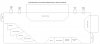
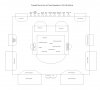
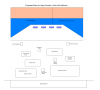
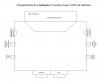
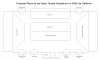
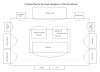
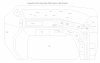
Well, after much planning and writing, here is my next exhibit (warning- it will be unbelievably long)!
Æg Áncorlíf
Æg Áncorlíf is Old English and roughly translates to ‘Islands of Life’. This exhibit is based completely on the wildlife of Great Britain from the past, present and future. In this first instalment we shall look at just the present day section of this impressive exhibit.
The exhibit starts at the most wild and untouched habitat in Britain- the Oceans. Visitors enter via a sloping ramp that tells the prehistoric story of these islands, with details such as the flooding of the English channel, the ice age and the various tectonic movements before finally reaching the bottom of the first tank, easily the single largest marine display in Europe. It houses a wide range of fish and is a similar vein to the open ocean tank at Monterey Bay Aquarium, but only with fish known from British waters. Sharks are the chief species in this aquarium, with permanent residents made up of bluntnose sixgill sharks, starry smooth-hounds, bull huss, the venomous spiny dogfish and a young female common thresher shark rescued from a fishing net. Just as Monterey Bay aquarium does research on the captive care on great white sharks, the aquarium here works with British pelagic sharks. Young sharks accidentally captured in fisherman’s nets are kept temporarily in sea enclosures before being brought into the aquarium temporarily, before it is released with a transmitter that allows the movements of the shark to be tracked. The main focus species is the blue shark, although there is potential for the research to be extended to both the porbeagle and shortfin mako shark. The final programme is a rescue and rehabilitation programme for the basking shark, helping those that have been struck by boats or tangled in fisherman’s nets. Once the shark shows signs of being in peak health and able to survive by itself it is immediately released- only sharks unable to survive in the wild could be considered as long-term residents. As well as the sharks there are five species of ray in the ocean enclosure- loafing on the bottom of this twelve meter deep tank, there are common stingray, thornback ray and undulate ray while swimming freely in the water column are a shoal of common eagle rays and a pair of devil rays, the latter of which are intended to be part of a captive breeding programme. Eighteen species of other fish occupy this aquarium, and this bonanza of marine species consist of the conger and Mediterranean moray eels, Atlantic bluefin tuna, ocean sunfish, yellowmouth barracuda, common remora, grey triggerfish, the bizarre oceanic pufferfish, ballan wrasse, Atlantic wreckfish, dusky grouper, greater amberjack, pilot fish, European ratfish, Atlantic pomfret, common ling, Atlantic wolf fish and European sea bass. As with all the animals in Æg Áncorlíf the fish have signage that provides not only the pictures and important information, but also shows the current or former distribution in Britain. The only non-fish species in the main aquarium is a pair of rescued and unreleasable loggerhead sea turtles. Around the different viewing areas for this main tank there is information about all the species of sea turtle, cetacean and shark found in British waters, as well as a short film about the marine life research team attempting to track down two species of shark reputed to occur in British waters, namely the great white and goblin sharks. Having seen the first viewing area for the main aquarium, visitors head down onto the bottom level and enter the dark abyssal zone, where there are two displays along with a view of the bottom of the main aquarium where the rays and ratfish often forage. The first and largest display houses a series of deep-water creatures made up of the red bandfish, blackbelly rosefish, spotted lanternfish and deep sea crabs- there is faint red lighting to allow visitors to see these sensitive and rarely-kept fish. The neighbouring small aquarium houses a colony of sea spiders. Having encountered the deep sea denizens, visitors head back up onto the ground floor, where as well as the view into the cave part of the main aquarium where the eels, triggerfish and grouper are most commonly seen there is the opportunity to see another aquarium that houses a trio of broad-billed swordfish, a group of large Atlantic halibut and a pair of slender sunfish. This aquarium has an educator nearby who talks about the effects on overfishing and promotes guides for which fish to avoid eating and which species are suitable replacements. Heading up another level, visitors get a view of the open water where the tuna, pelagic sharks and sunfish congregate and also are able to look into the sunlight zone, where light streaming in through a glass ceiling allows for giant kelp to be successfully cultured. This separate aquarium is based on the kelp forests of Britain- this country is not well known for such a habitat. Eight species of invertebrate live amongst the kelp in this aquarium, namely the edible crab, European spiny lobster, blue-rayed limpet, sun star, common sea urchin, dead man’s fingers and dalia and jewel anemones, while cruising amongst the fronds of the giant algae are several species of fish- giant gobies, lumpsuckers and European plaice all sit on the bottom, the gilt-head bream, bogue, Mediterranean rainbow wrasse, whiting and flying gurnards all cruise around the lower levels of the kelp and swimming freely among the fronds are shoals of thick-lipped grey mullet, Atlantic sardines and Mediterranean flying fish. Having finally explored the oceans of Britain, the visitors move on to the next section.
Closer to land than the Ocean are the Coasts, a series of both indoor and outdoor enclosures for a collection of several intriguing species. Visitors start off at the world’s largest rock pool display, that reaches five meters deep in places and covers over twenty five square meters. Near the beginning of the display is the highest area with the smallest pools that resembles the top end of a rocky shore, with the water deepening and pools getting larger as visitors continue around this largely circular exhibit. As well as lush growths of algae and seaweeds, a whole collection of marine fish and invertebrates inhabit this enclosure. Unlike most rock pool displays, visitors do not have the option to handle the animals from the main exhibit, but every day at specific times a keeper catches up a small collection of rock pool animals such as crabs and starfish from the tank to allow people to stroke and feel them as well as providing education on how to rock pool without harming the animals. The nineteen species of invertebrate included in this display are common shore, common hermit and short-legged spider crabs, brown shrimp, common prawns, acorn barnacles, common limpets, common mussels, candy stripe flatworms, flat periwinkles, the predatory dog whelk, common winkles, common squat lobster, beadlet and snakelocks anemones, common and Bloody Henry starfish, cushion stars and brittle stars, while swimming in the water column and hiding amongst the seaweed are thirteen species of small fish. Rock gobies, common shannies and black-faced blennies all perch on rocks or hide in crevices, shore clingfish, butterfish and Montagu’s sea-snails live among the rocks in deeper water, greater pipefish hang among the seaweed, on the bottom of the sandier parts of the display are common dragonets and common sole, a school of sand smelts cluster in the deeper water, small groups of goldsinny wrasse and fifteen-spined sticklebacks can be seen and hiding among the mussel beds are a pair of long-spined sea scorpions, the top predators of this rock pool environment. Fluttering between exposed rocks at the top of the display are a pair of seashore-dwelling rock pipits, that pick out food morsels from between rocky crevices. Surrounding the rock pool display are six other smaller aquariums, each housing a range of unusual or beautiful British marine animals. The first aquarium is by the entrance, at the high tide point and houses terrestrial invertebrates from the coastal environment- namely the maritime centipede, coastal pseudoscorpion, marine springtail and bristletail. The four larger aquariums are all sunken into the surrounding wall and house knobbed triton with velvet swimming crabs, common cuttlefish with goose barnacles, Desmarest’s mantis shrimps and Norway lobsters with the symbiotic Fries’s goby. The final small aquarium, opposite the deep end of the rock pool display houses a small breeding group of Tompot blennies, which are simply too aggressive to house in the main aquarium. Having encountered the diverse life that thrives in the shallow, sunlit coastal waters, visitors move onto the last section of the indoor Coasts- an exhibit based upon the tidal saltmarshes that are found all along the British coastline. The main enclosure here is a walk-through indoor wader estuary, featuring resident breeders and winter visitors in the form of common redshanks, ringed plovers, pied avocet, red knot and Eurasian curlew and occasional vagrants are represented by a pair of black-winged stilts. The only other birds living in this aviary are a pair of Britain’s smallest resident duck, the European teal. As visitors wander along the boardwalk while the birds fly and walk amongst them, they also pass a large aquarium sunken into the wall, housing a large shoal of greater sand eels and a small group of masked crabs, with movable magnifying glasses on the tank viewing areas to help visitors to spot the elusive crustaceans.
Visitors now head into the outdoor part of Æg Áncorlíf for the first time, observing the coastal boundaries between sea and land and the animals that thrive in this environment. The first enclosure represents a rare vagrant pinniped, in the form of a trio of harp seals. These animals were rescued as pups from Canada and now have a large cold pool with a pebble beach, large grassy banks for sunning on, artificial kelp fronds in the water and for hot summer days the seals also have hidden sprayers to shoot out chilled water to keep them cool. A display disguised as a run-aground ship has information on all the vagrant British seal species as well as details about global warming affecting arctic seals, oil disasters and their affects on marine life. Having encountered the vagrant species, visitors then head on to encounter a whole set of resident breeding seabirds. This is one of the largest aviaries in the zoo, with several tall cliffs accompanied by grassy banks with gorse bushes and artificial burrows, a series of rocky crags protruding from the cold water and a wave machine that pumps the clear water over a large forest of fake kelp fronds. In here, thirteen cliff and coastal birds live together in relative harmony. A small group of unreleasable Northern gannets and a single Northern fulmar represent rescued seabirds while all the others come from captive-bred sources. Groups of Atlantic puffins cluster around their nesting burrows, on the narrow cliff-side crags are groups of common guillemot, banded razorbill and black-legged kittiwake, basking on the shoreline rocks are a pair of great cormorants, foraging in the fake kelp are small flocks of Eurasian oystercatchers and ruddy turnstones, several common eider ducks dive for molluscs in the deep water and feeding on the grassy banks and among the gorse bushes are several more unexpected cliffside birds including the red-billed chough, rock dove and black redstarts. Although this exhibit is netted over, the next two are not. The first of these two enclosures houses a breeding group of five Atlantic grey seals, among the largest native mammal species in Britain and an animal that Britain hosts internationally important numbers of. There is a high glass window along with a wooden boardwalk around the enclosure, allowing for extremely close-up views of the seals basking on their rocky beach or swimming in their large and deep pool. Above the seal pool, behind a steep cliff is an enclosure for a pair of Eurasian otters that occur along the coasts of the Scottish islands. This exhibit is one of the biggest known for this species, featuring a large saltwater pool that mimics the gentle inlets of the Scottish sea lochs, large piles of artificial seaweed both in the water and adorning the rocks, two hidden holts to encourage breeding in these animals and a small freshwater pool up on the grassy bank, so the otters can wash the salt from their fur. A small information hut shows visitors how in Britain the otter declined dramatically through hunting and water pollution but through the efforts of breeding programmes and legislation it has now recovered and colonised much of Britain’s waterways. Having seen the coasts from above the surface, visitors now head under the waves and get amazing views of the otters, both species of seal and seabirds diving among seaweed and rocks in search of food. By one of the grey seal viewing windows there is a large aquarium that houses small-spotted dogfish, Atlantic cod, edible crabs, spiny spider crabs and a common lobster. Now visitors completely leave the marine environment, and begin their journey inland.
The Wetlands section is one of the most interesting in Æg Áncorlíf, with a sleuth of animals that visitors may not expect are found in our waterways. The first exhibit is a tranquil walk-through aviary filled with shady willow trees, gently flowing streams, a large pond in the middle and dense banks of vegetation for the shyer animals to secrete themselves in. Feeding in the water are a small group of Northern shoveler and common pochard, little egrets stand motionlessly in the shallow water while looking for small fish to catch, hiding in the shadows of the willow branches are a pair of common kingfishers, the water rails and bearded reedlings hide among stems of bulrush and reeds, great crested grebes preen in the deep water and perched on streamside rocks are small families of common moorhen and common sandpiper. The only non-bird in this exhibit is the highly-threatened and elusive Northern water vole, with a small seating area accompanied by boards featuring extracts from the Wind in the Willows, a book featuring a water vole as a prominent character. A loud call from behind a screen of vegetation attracts the visitors onwards, and they find themselves at the largest of the outdoor lakes in Æg Áncorlíf. On an island in the lake, foraging for seeds and insects is the species that made the call- a small breeding group of common cranes. Less noisy but far more easily recognisable are the pair of European beavers, that have an artificial lodge that allows visitors to look into the life inside a beaver lodge. Information boards show visitors how both these species have recently been reintroduced to Britain, and how their presence influenced the naming of some British towns- Cranford and Beverley for instance, were named after cranes and beavers respectively. Having seen the world above the water, visitors now enter a large, thatched building that holds a great diversity of British freshwater wildlife. The first aquarium is a small one, housing three species of predatory invertebrate- namely the great diving beetle, an emperor dragonfly larva and common water boatmen. Following on from this is a U-shaped corridor that features the introduced and native species from British waterways, with three tanks for both these groups of animals. In the introduced species corridor, visitors start off by passing an open-air aquarium housing common carp, rainbow trout, bitterling, wild-morph goldfish, Asian grass carp and a trio of red-eared terrapins, then a large ‘super predator’ aquarium home to a pair of Danubian wels catfish and finally a smaller aquarium featuring American signal crayfish, zebra mussels and killer shrimp. Accompanying these exhibits are signs showing where these species occur, the damage they cause and how they originally came to be loose in the British waterways. Also included in here are a couple of signs detailing the stories of species that are not included in this display such as the marsh frog and zander. The native species corridor has three almost identical aquariums, featuring (in order) the small tank for white-clawed crayfish, swan mussels and water beetles, the large predator aquarium for Northern pike and the open-air aquarium housing Crucian carp, common tench, European perch, barbel and common roach. Included in here are signs detailing the cultural and legendary importance of some of our native fish, such as the pike. Now, having encountered the wildlife of the flowing rivers and streams, guests filter through into the area housing creatures from our ponds. The starting enclosure is open to the air, and features a large pool, several exposed rocks and dense surrounding vegetation. In here live a group of four grass snakes, the largest species of snake native to the British isles. Normally they can be spotted basking on the rocks or slithering through the plants but at feeding time they come down into the pond to accept pre-killed fish or rodents from their keepers. The largest display in here is a large sunlit pond exhibit, housing a total of eleven small creatures that call these still waters home. A shoal of European minnow and a pair of three-spined sticklebacks dominate the open waters, while loafing on the pond edge is a European common frog. The invertebrate species found in this exhibit are made up of water hog lice, whirligig beetles, great pond snails, pond skaters, lesser water boatmen, caddisfly larvae, freshwater shrimps and water scorpions. Opposite this display are five small jewel-box style tanks holding small pond invertebrates- the first has a microscope to enable visitors to see the water fleas and cyclops swimming in the clear water, while the others house medicinal leeches, tubifex worms, water spiders and a temporary pool display housing European triops. The final two pond displays are larger and house both our largest and rarest species of newt, the great crested newt and also the largest and least-known of the shrews, the Eurasian water shrew. Information here tells visitors of our conservation work with cataloguing the individual newts in all the ponds covering the zoo grounds. The final indoor freshwater display is a fast-flowing stream display, housing mixed shoals of grayling and brown trout while among the rocks live colonies of the European bullhead. Finally, visitors venture outside into the final (seasonal) outdoor display- namely the world’s only walk-through dragonfly exhibit. Seven species of dragon and damselfly live in this enclosure, and are composed of common blue damselflies, large red damselflies and beautiful demoiselle damselflies and emperor dragonflies, broad-bodied chaser dragonflies, four-spotted chaser dragonflies and scarlet darter dragonflies. In late spring and summer, these beautiful insects hover over the heads of visitors and patrol their netted aviary, where several times daily a keeper releases small flies for them to hunt and also once a day will also throw crickets for the dragonflies to snag out of the air. In autumn and winter, a viewing area into one of the ponds is opened, so that the larvae can be watched as they undergo the underwater stage of their life-cycle.
The next section is by far the smallest, but also includes both some almost unknown and some much-loved species. Visitors enter the Nocturnal Forest, and immediately are confronted with a several narrow glass windows that look into an enclosure filled with artificial trees with silk leaves. This large indoor enclosure houses a single male tawny owl (a female lives in an outdoor off-show enclosure, and is only in the indoor area during the breeding season), that flies silently over the forest floor, only descending to the ground at feeding time. The pre-recorded sounds of the owls echo through the small building as visitors move over to the other large display. In here, a small group of West European hedgehogs snuffle among the ground vegetation and leaf litter in search of invertebrates while hanging to the tree trunks and flying among the leaves are several rescued and otherwise unreleasable bats- five common noctule bats, three common pipistrelle bats and a single brown long-eared bat. As well as these permanent residents, there is also an on-show bat rehabilitation centre by the crane lake where rescued bats are exercised, develop their flight muscles and are then released into safe habitats. After the owl and bat/hedgehog exhibits, there are three terrariums along the main corridor and one other exhibit just before the exit to the nocturnal house. The three wall-set terrariums house, in order, a single large European common toad, a small breeding group of glow worms and a pair of active yellow-necked mice. The final exhibit just before exiting the Nocturnal Forest is home to a small group of leopard slugs and a colony of the large, introduced edible snail.
Having exited the small Nocturnal Forest, visitors now enter one of Britain’s best-known habitats, the Broadleaf Woodland. In here the visitors can find among the most famous British animals. The journey starts in a large, walk-through aviary that houses a range of small bird species. Also included within this enclosure is the bird breeding centre- a series of four aviaries housing three species that are either too rare or too aggressive to keep in the main aviary. As visitors walk down a gravel path among the old oak trees, they are bombarded by the sounds of small songbirds, namely blue tits, long-tailed tits, European bullfinches, willow warblers, common robins, European blackbirds, pied flycatchers and common redstarts. Creeping around on the trunks of the trees are European nuthatches and common treecreepers and completing the ancient oak woodland experience, a pair of stock doves call from among the leaves. In the winter the migratory birds are moved into the rare bird row, where the heated indoor quarters allow them to mimic their African wintering grounds. The four main aviaries are viewed from within the walk-through aviary- the first three house a mix consisting of a pair of European golden orioles and a single woodcock. The male woodcock in the central aviary can be mixed with each female during the breeding season, and each spring the oriole aviaries are lined with tightly-woven birch fences to prevent aggression between the breeding males. The fourth aviary is home to a pair of great spotted woodpeckers, which would be too great a risk to the other birds for inclusion in the walk-through. Having seen the exotic-looking bird fauna of these woodland habitats, visitors now roam down a woodland trail, planted with bluebells, wild garlic and snowdrops and with numerous nesting boxes to attract wild breeding birds. Having walked the thirty metre woodland walk, visitors are confronted by a large forest glade separated from the large grassy viewing area by a small ha-ha moat. This is one of the largest enclosures in Æg Áncorlíf, and houses four British ungulates. A small number of European roe deer graze at the woodland edge while keeping an eye open for danger, a pair of female Central European wild boar can root through the woodland in search of food and are mated by a male boar that comes from a local boar farm each year, there is a herd of around seven European red deer that also graze alongside their smaller relatives. Finally, the largest and most impressive of the ungulates, the Chillingham wild cattle, can be observed lazing in the grass and chewing their cuds. Information signs show how these cattle live in a fenced reserve and previously migrated across the north of England, how they do not accept feed provided by humans, that they have become so genetically distinct from other domestic cattle that they do not suffer from bovine TB and how they have retained behaviours from other wild cattle, such as defensive circles and bouts of aggression. Following on from this magnificent set of mammals, visitors then find themselves walking through a tunnel that appears to burrow through an earth bank. In here there is a viewing window into a single netted enclosure housing a breeding pair of hazel dormice- their nesting chamber inside a hollow tree has a small opening window flap that allows visitors to look into the world of this tiny rodent. An off-show breeding centre for both these dormice and the similarly rare European harvest mouse are hidden behind a nearby screen of vegetation. Visitors are then confronted with a hollow log display with several lifting flaps to allow visitors to look in at the small invertebrates that rely on rotting wood. The first exhibit is of a standard size, and holds a pair of stag beetles. The second, larger exhibit holds a total of seven smaller invertebrates- namely the brown centipede, wolf spider, common woodlouse, flat-backed and snake millipedes, common earwigs and ground beetles. Finally, visitors come to the main attraction in this earth bank display- a viewing window into an enclosure housing a breeding group of Eurasian badgers. These animals are all rescued individuals that could not be released for various reasons and have been mixed with several captive-bred badgers to create a cohesive breeding family. The surrounding trees and the bracken that fill the enclosure complete a feeling of the badgers being able to roam through a large area of woodland. There is a single viewing window into one of the badger’s sleeping chambers, as well as a screen showing CCTV images from the other badger dens. Accompanying this exhibit are displays regarding the importance of the badger in the British countryside, with boards about their role with bovine TB, their cultural significance, their total ecological difference to badgers in the Mediterranean and the threats posed by illegal badger baiting. With the final views of the badgers, visitors resurface in the next of modern Britain’s habitats.
The Grasslands display may strike some visitors as a surprise, but while Britain has nothing on the scale of savannahs, prairies or steppes elsewhere in the world, there are still vast areas of land occupied by grassland. As with several previous sections, the exhibit begins with a walk-through aviary, although this one is one of the most important with well over half the birds threatened in Britain. A hedgerow along one side of the aviary has song thrushes, yellowhammers and Eurasian tree sparrows singing from it, the patches of low grass are foraging areas for the common starlings, Northern lapwings, yellow wagtails and skylarks, a large tree in one of the corners of the aviary has two pairs of European turtle doves calling and nesting together and the tall grass at the back of the exhibit is home to small families of both grey partridges and common quail. Having seen these birds up-close, visitors move onto the enclosure for one of Britain’s best-known mammals, the red fox. A breeding pair of these canines have a large enclosure with a fallen tree, patches of tall and short grass and both an off-display and on-display earth so the foxes can choose where to sleep. Having wandered past this large enclosure, you then encounter a large burrow that immediately heads down underground. At the lower level, visitors have a ground-level view into the fox enclosure as well as two other exhibits. The first is a small netted exhibit housing a small breeding group of the small copper butterfly and the other is a large aviary home to a single great bustard and a pair of corncrakes- if they wish to, the corncrakes can move into another small separate enclosure. This enclosure is designed to show the great difference in size between two closely-related birds and also enable the visitors to see the great size of the bustards, which have only recently begun breeding again in Britain following their reintroduction. Having seen these above-ground animals, visitors now enter the true underground world, where there are a large number of burrows to look into. The first of these is the on-show red fox earth but is then followed by a series of large burrows that look like they are interconnected but are actually separate. The larger burrows link to three above-ground enclosures and house European rabbits and two of their predators- the Western polecat that has begun to spread back to its former haunts following many years of relentless persecution and the British stoat- a subspecies unique to the British isles. As well as these three animals, the burrows also feature another five burrowing animals. One small display is home to a large group of common earthworms which are by far the most important grassland animals in Æg Áncorlíf, with signage indicating the fact that worms aerate the soil and break down organic matter. The other burrows are all home to animals that rely on underground habitats including the most well-known of these animals, the European mole. As well as this single animal (a breeding pair lives off-show), there is also a small breeding group of the short-tailed field vole, a display for several European mole crickets and a view into the tunnels of a colony of European red ants. If visitors look closely into the ant chambers, there could be the small caterpillars of Adonis blue butterflies which are naturally looked after by the ants until they reach the stage of metamorphosing into an adult butterfly. Viewing windows into the upper enclosures provide glimpses of the voles, polecats, stoats and butterflies, while a large upper viewing platform overlooking the rabbit enclosure also reveals that they are sharing their meadow enclosure with a pair of green woodpeckers that feed on the ground and have occupied an ecological niche taken elsewhere in the world by anteaters. Having learnt about this incredible and underrated environment, visitors move on to the next habitat.
The Heathland is one of the smaller habitats in Æg Áncorlíf, although it is still perhaps the most threatened British environment, with fires regularly devastating it and the unique wildlife that occupies it. The first enclosure is a single large aviary filled with gorse bushes, heather and a hawthorn bush, acting as an ideal habitat for a pair of birds that are normally winter vagrants but have bred once or twice- great grey shrikes. These predatory songbirds are famed for impaling dead (and sometimes live) prey on thorns and barbed wire fencing, and their enclosure features lots of thorns and spikes for prey storage. Also included on the signage near this aviary is information regarding Britain’s other shrike, the red-backed shrike. It has recently begun breeding again in Dartmoor but has had a history of decline due to pesticides, a reduction in the natural prey of bumblebees, illegal egg collecting and general disturbance. Following the shrike aviary is a large heath exhibit home to three species of herptile that occupy these sandy environments. Basking on the gorse and open sandy patches are groups of the viviparous lizard and slow worm, with information regarding these species as well as all of Britain’s three other native lizard species (including the green and wall lizards of Jersey). Hiding in burrows around the enclosure are a group of highly threatened natterjack toads- some of the enclosure signage mentions how they need temporary pools for breeding, as the tadpoles lack the toxins to discourage predators such as fish. There is a burrow by one of the viewing areas with a small lifting viewing window so visitors can see the toads huddled out of the sun. The following enclosures are all clustered around a basic wooden building and include three small indoor terrariums and a view into a large outdoor enclosure. The three terrariums house, in order, a mix of green tiger beetles and bloody-nosed beetles, a mix of field digger wasps and tawny mining bees and finally an enclosure housing a pair of the beautiful and extremely rare ladybird spider. The outdoor enclosure is a large breeding enclosure made specifically for the conservation of smooth snakes, by providing a complex environment with lots of hiding places for the snakes to escape each other’s attention. Visitors are then confronted by what appears to be a plantation of Scots pine trees and follow the path into the next habitat representation.
The Caledonian Forest is one of Britain’s last great wildernesses, and is also among the last of the modern habitats left for visitors to explore. They wander down a gravel pathway until a small netted-over lake is reached. This particular aviary has several large trees and islands in it, that encourage the breeding of both its inhabitants, namely the common goldeneye and the Slavonian grebe- beautiful birds that breed almost exclusively in the Caledonian pine forest. Also included in this enclosure is an underwater viewing area that allow visitors to see both the grebes and ducks diving for food in their lake. The next enclosure houses one of Britain’s worst cases of wildlife persecution, the European pine marten. There are two large enclosures similar in style to several red panda exhibits- large trees surrounded by a large wall and connected by a rope bridge high above the visitor walkway. Signage indicates how the pine marten was once the second most abundant carnivore in Britain (after the weasel) but following hundreds of years of persecution only the wildcat is rarer. There is also information about how the pine marten could potentially be a natural means to controlling the spread of introduced grey squirrels, as these surprisingly terrestrial predators are more likely to encounter the grey squirrel instead of its more arboreal and endangered red cousin. Having observed the breeding pair of martens racing through the tops of the pine trees, visitors then encounter the next aviary. It features several of the birds largely restricted to this forest in breeding range, namely the Western capercaillie, Western siskin, firecrest, Scottish crossbill and crested tit. There is some information about how the capercaillie is well on its way to becoming the first bird to become extinct in Britain twice. Having watched these exotic looking and beautiful birds, visitors then move on to see one of the most endangered and enigmatic British mammals. The pair of Scottish wildcats live in large aviary-style exhibits that allow them to climb off the ground without the risk of them escaping from their enclosures. There is a viewing hut with glass windows allowing the visitors to watch these cats up close, and this hut also features ways to tell a pure wildcat from a feral cat, as well as stating the threats of hybridisation and road kill. The final exhibit is one that will appeal to all ages- being a walk-through enclosure that features an elevated walkway among the pine trees that are included in this large aviary. The only birds in this walk-through aviary are a trio of black grouse- a threatened species in Britain with small populations dotted through highland conifer forests. The other species, also very rare in Britain that is included in this enclosure is a colony of over twenty European red squirrels. A couple of these charismatic rodents have been hand-reared and therefore are very accommodating of people, allowing for great views of them. Included in the walk-through is information regarding the zoo’s conservation projects involving the red squirrel and black grouse in the Caledonian pine forest. Having seen the last of the Caledonian exhibits, visitors head on to the penultimate modern Æg Áncorlíf habitat.
The High Mountains are a rare habitat in Britain, as there are not many areas that produce tall mountain regions. The mountain area in Æg Áncorlíf is among the largest man-made mountains in Europe, and houses several species that are extremely rare in the country. There are only four exhibits in this complex, three of them in the form of aviaries. The first aviary houses a breeding pair of common ravens, perhaps the most important bird in British legend and folklore. Signage indicates the rich cultural significance of the raven, along with its ecological niche as an ultimate opportunist. As part of the visitor experience and animal enrichment programme, a keeper will provide a small and novel puzzle for the birds every day in order to keep the two ravens active and mentally stimulated. Hidden behind a rocky wall is the next aviary, housing a pair of European golden eagles. These are among the largest predators in the British Isles, and have become an important heraldic bird in many parts of the country. The eagles have a large aviary that allows them to exercise their flight muscles properly and are also taken out of their aviary for frequent flying displays over the mountain area. The final aviary is home to smaller, less predatory species. Snow buntings, ring ouzels and Northern wheatear sing from exposed rocks, dotterel feed among the low plants and scratching among the boulders are a small group of rock ptarmigan. The only mammal in the High Mountains also lives in this aviary, in the form of a trio of mountain hares, one of the few British mammals that can change the colour of their coat in the winter. Visitors then enter an indoor area with a large waterfall enclosure. In the pool at the base of the waterfall lives a group of Atlantic salmon, which move upstream to spawn. Meanwhile, sitting on the rocks protruding from the rapids are a pair of white-throated dippers, small semi-aquatic songbirds that feed by diving into the water and walking along the bottom. This indoor area marks the end of the High Mountains zone, and moves on to the final display of the present-day part of Æg Áncorlíf.
The Time Cave is a spacious cavern based upon the Wookey Hole caves in Cheddar Gorge. In the present-day end there is a single large display based on the barely-known cave fauna of Britain. The main focus in this display is the large pool of water- in the shallows there are great swarms of cave water lice while the deeper water is occupied by a small group of brown trout and a pair of large European eels. As well as these aquatic inhabitants, other species on display in the enclosure are cave spiders and herald moths clinging to the walls and rosy woodlice and eyed flat-backed millipedes on the damp cave floor. Having seen this display, visitors then head on towards the Time Tunnel, that aims to take the visitors to both the past and the future, showing what the wildlife was like and could be like respectively.
Next time- Æg Áncorlíf PART 2 (the next section won’t be anywhere near as long)!

 That was great!


 )- it has happened twice to me so far trying to get the next part done, so I may well spend the rest of today doing it on word and try to upload it tomorrow.