Destination Sunshine: Pachy' Pro Goes to Florida

Day 2: Zoo Experiences in Tampa - Part lll

Now that I've finally mustered up enough energy to finally finish this review...

It was at this point where my camera battery was at the verge of dying, so sorry no more pictures. Continuing on into Walkabout Australia I was met with an exciting surprise. A pair of active koalas munching on some eucalyptus right by the glass. The habitat itself is about what has been come to expect with US koala exhibits, a pair of sterile indoor boxes with about a half a dozen trees in the middle and some leaves on the ground. There is supposedly an off exhibit outdoor yard behind the structure, but why not have it on view so the koalas can soak up the Florida sunshine even more? Adjacent to the koalas is a standard, really quite uninspiring red necked wallaby walkthrough. Compared to Brookfield's massive grassy space with a double dozen wallabies as well as emus where visitors can pet both species, Tampa's walkabout is weak. I only found a single wallaby within a small loop where only one group of visitors is allowed in at a time, yawn. Marsupial digressions aside, other highlights of the Australian zone includes the small but heavily planted Australasian aviary, the children's zoo with your typical affair of goats, sheep and ponies that give rides, and the Australian boardwalk. The boardwalk is the highlight (In my opinion) of the zone though even it has gone down hill. Interests of note is that previously there were about 5 or 6 cockatoo cages surrounding the boardwalk. This time however, they have vanished without a trace no apparent reason. Something else that may interest people, the pair of New Guinea singing dogs have left as well. And their former exhibit has gone through one of the most lame transformations I have ever seen. It is now a "retirement home" for animals in the children's zoo. So now, a pair of elderly goats takes up the space. Woo Hoo! The final exhibit in the zone is very nice however. Another aviary that contains plenty of birds as well as fruit bats. It has nice furnishings and gets the job done, a strong habitat indeed.

After being underwhelmed by Australia, I went across the path to the only zone in the zoo that is not geographically based, Primate World. It's undoubtedly somewhat of a weak area as it simply seems misplaced from the rest of the zoo. The smallest exhibits are for small South American primates such as golden lion tamarins and goldie's marmoset by the entrance to the area, and squirrel monkeys by the bathrooms. They are incased within mock rock and mesh as well as sharing the already too small exhibits with bin chickens. Up next is a trio of average islands for siamangs, colubus monkeys and lemurs. Siamangs have the best of the bunch and were a joy to watch as they could branchiate around 50 ft into the air, and it was brilliant to see such a display of the gibbons vocalizing and making huge leaps in the air. Colobus and lemur islands struggle from being far too narrow for their inhabitants. The last two habitats are the ape exhibits. The weakest of the bunch is the chimp yard. It's a small barren moated yard that has about two climbing structures and a laughably fake termite mound. It is undoubtedly the worst I have ever seen in person (Though there are some far nastier ones out there. The orangutan exhibit, is actually not that bad at all, quite the contrast to the chimp exhibit. The family red apes were all utilizing the massive climbing beams and I believe that they could overlook most of the zoo from how high they can get. For orangs, there aren't many exhibits out there that can give them what they need - naturalistic tropical space and plenty of climbing opportunities. Tampa isn't perfect either, but it most certainly beats man other exhibits for the species out there.

So that's it, that's the zoo. Wait, not quite actually. The real final exhibit is actually the closest to the entrance and that is the main aviary. A massive structure that can be seen with a massive flock of pink ibis that ruled the top of the netted over exhibit. It's large with a walkthrough section as well as some side aviaries for hornbills, kookaburra and such. There really isn't a whole lot to say about this one other than the fact that it has huge vertical height and is filled with tropical plantings, gets the thumbs up from me.

So Zoo Tampa is interesting. It's a really nice zoo, up there as some of the best in Florida. However, it lacks a truly superstar complex, something that really takes your breath away, it lacks a Congo Gorilla Forest or Arctic Ring of Life. However, I have high hopes for it's future with the new master plan on the horizon and all the construction projects going on, it's going to be a very busy few years for this slowly improving mid sized zoo. This was my fifth and certainly not last visit to this establishment.

Well it took me long enough to get that done, just take my word when I say the next reviews will be far, far less spaced out than this one.
 
Day 1: My Most Bearable Flight
...However, I did not hate my flight from Chicago Florida, which was half the time of my Californian flight only being 2 hours and some minutes. Why exactly was able to manage this time around.

Well I finally caved in a bought an album on ITunes...
You know some people read books on planes. :p
 
Day 2: Zoo Experiences in Tampa - Part l

Well this is long overdue. Sorry for the delay on the trip report, I've been pretty busy since I returned from my trip and have not had the time to wright - or type I suppose - much. Anyways, on the second day of my Floridian excursion, I found myself at the newly renamed Zoo Tampa. This was my fifth visit to this facility (twice in 2014, once in 2015, once in 2017), however I think this time around it was the lest enjoyable for myself. That's not at all to say Zoo Tampa is bad, because it most certainly is not, far from it actually. However, because of recent redevelopments that were announced mere weeks ahead of my visit, much of the zoo was plagued by closures. Tigers were off exhibit due to pool cleaning, the discovery center is being refurbished (And was last closed on my last visit in 2017), half of Ituri Forest is being revamped, the Expedition Africa tram tour was undergoing maintenance and perhaps worst of all the manatee center is being renovated meaning that the sea cows were not present during my visit. I think it's great the zoo is making some great improvements, but still was disappointing done the less.

Despite the many unfortunate closures, I still had a very nice visit to the mid sized park. I began in the Asian Gardens section of the park. It's one of, if not the oldest section of the park reaming and it definitely shows. Barriers are blatantly obvious and all the exhibits are on the small side. The first habitats consist of a mediocre narrow ditch for a pair visayan warty pigs, and a medium sized Malayan tapir yard. Viewing is rather awkward on both yards, as there are multiple vantage points but parts of the yard are blocked my some unattractive fake rock that also lines the barn. A decent Komodo dragon exhibit is nearby. For a juvenile, its a nice exhibit, but for an adult It's just a little to small. The outdoor exhibit is fine, but the adjacent indoor exhibit is a small dark box with some really awful glare. I question why it's even on show in the first place. Across from the komodos is a solid lorikeet walkthrough aviary featuring rainbow lories, dusky lories, blue-faced honeyeaters, bantam chickens, Kenyan crested guinea fowl and helmeted guinea fowl. I believe there was also a teal in there as well. After reentering the boardwalk you come across the two predator habitats. An average yard for Malayan tigers (Which again, were off exhibit for me) and an above average yard for sloth bears. Both habitats have grass, pools and climbing structures but the bear exhibit is bigger and has far more diverse landscaping. Though the viewing is mediocre, as your looking down on the animals through wire fencing, the exhibits are still nice.

So nothing too grand yet, but things soon picked up with the hidden gem that is the Sulawesi aviary. It's small but has diverse species list, containing Javen pond heron, domestic geese, nene geese, masked lapwing, silkie chicken, Sulawesi tarictic hornbill, mandarin duck, spotted whistling duck, and demoiselle crane among others that were unlisted or I missed the signs of. Asian pond turtles and reeves muntjac are also present in the lush temple environment. Continuing on, there is an unspectacular small dirt yard for a pair of lowland anoa. Next door was an Indian rhino yard that was much two small and with mesh that made awkward viewing. There is also a second yard behind it that can be seen from another trail, but that one isn't much better. Luckily the last habitats in the Asian section make up for it. An excellent lush Indian gharial pool is home two about a half a dozen specimens. Then right next door is an above average tropical clouded leopard exhibit that is viewed through harp wire. The plantings are well done and it is one of my favorite cat exhibits at the zoo. The final two yards are simple, a larger lush yard for Burmese mountain tortoises, and an average dirt yard for a small family of babirusa. Overall all the Asian section is decent but not particularity noteworthy.

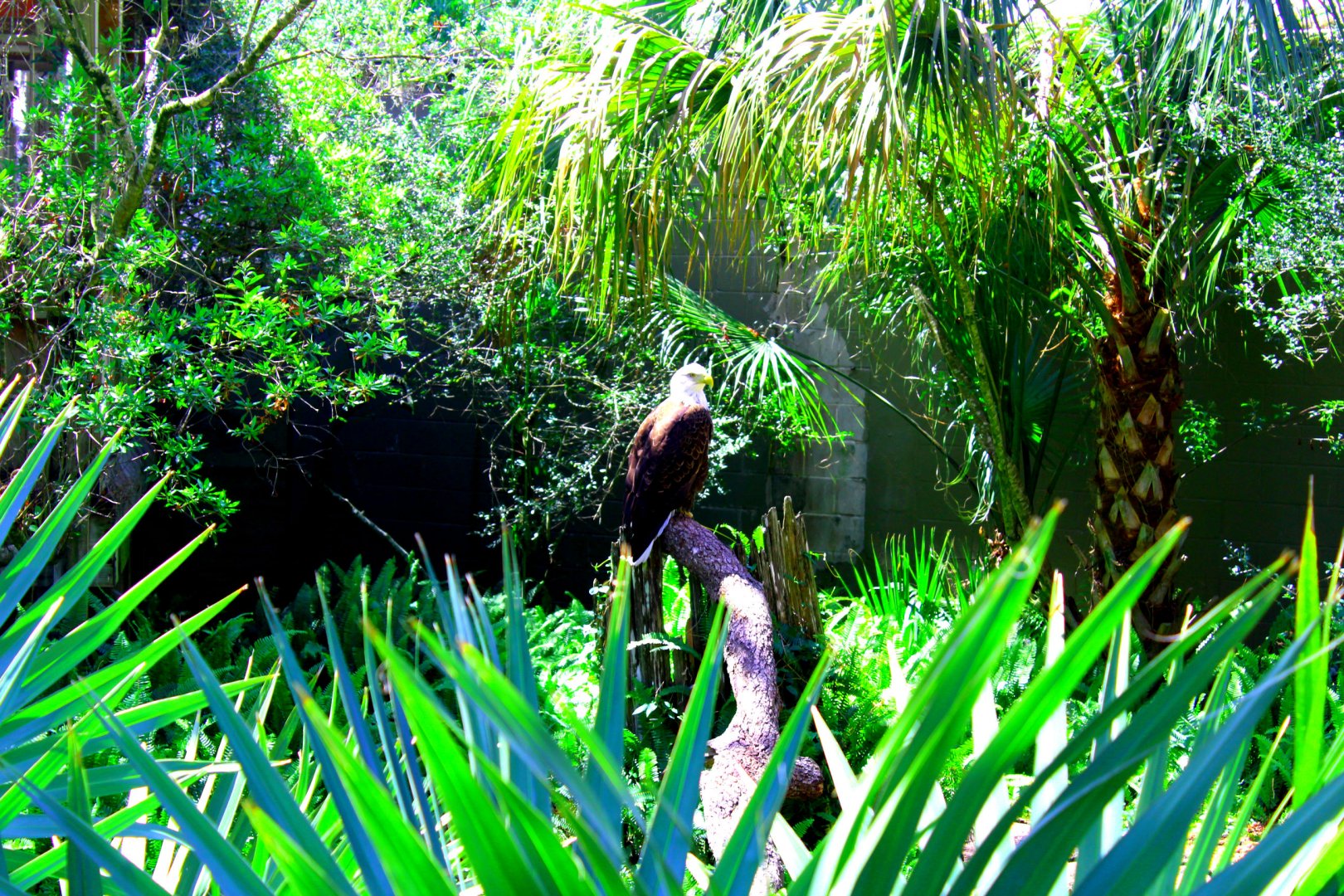
Continuing down the path I arrive at the Florid Wildlife center. First thing I notice, the key deer exhibit is gone. A new exhibit for red wolves has been built in it's place, and I thinks it's actually a downgrade from their previous exhibit. It may only be temporary, a large new water ride is being built by their previous exhibit, but it's still strange to me. Going up the boardwalk, their was a then empty exhibit that usually contains a few pelicans. Before entering the main center visitors are greeted with a stingray touch tank (which I did not attend) and a large open air bald eagle exhibit. Like most zoo eagles, these birds are injured and cannot fly. The exhibit almost looks like a small garden, but needs more climbing branches and logs. And right across from the eagles there is a very small gopher tortoise exhibit that is unshowy and easy to miss.

Somewhat confused that they have domestic poultry in with proper wild species.
 
Day 2: Zoo Experiences in Tampa - Part lll

Now that I've finally mustered up enough energy to finally finish this review...

It was at this point where my camera battery was at the verge of dying, so sorry no more pictures. Continuing on into Walkabout Australia I was met with an exciting surprise. A pair of active koalas munching on some eucalyptus right by the glass. The habitat itself is about what has been come to expect with US koala exhibits, a pair of sterile indoor boxes with about a half a dozen trees in the middle and some leaves on the ground. There is supposedly an off exhibit outdoor yard behind the structure, but why not have it on view so the koalas can soak up the Florida sunshine even more? Adjacent to the koalas is a standard, really quite uninspiring red necked wallaby walkthrough. Compared to Brookfield's massive grassy space with a double dozen wallabies as well as emus where visitors can pet both species, Tampa's walkabout is weak. I only found a single wallaby within a small loop where only one group of visitors is allowed in at a time, yawn. Marsupial digressions aside, other highlights of the Australian zone includes the small but heavily planted Australasian aviary, the children's zoo with your typical affair of goats, sheep and ponies that give rides, and the Australian boardwalk. The boardwalk is the highlight (In my opinion) of the zone though even it has gone down hill. Interests of note is that previously there were about 5 or 6 cockatoo cages surrounding the boardwalk. This time however, they have vanished without a trace no apparent reason. Something else that may interest people, the pair of New Guinea singing dogs have left as well. And their former exhibit has gone through one of the most lame transformations I have ever seen. It is now a "retirement home" for animals in the children's zoo. So now, a pair of elderly goats takes up the space. Woo Hoo! The final exhibit in the zone is very nice however. Another aviary that contains plenty of birds as well as fruit bats. It has nice furnishings and gets the job done, a strong habitat indeed.

After being underwhelmed by Australia, I went across the path to the only zone in the zoo that is not geographically based, Primate World. It's undoubtedly somewhat of a weak area as it simply seems misplaced from the rest of the zoo. The smallest exhibits are for small South American primates such as golden lion tamarins and goldie's marmoset by the entrance to the area, and squirrel monkeys by the bathrooms. They are incased within mock rock and mesh as well as sharing the already too small exhibits with bin chickens. Up next is a trio of average islands for siamangs, colubus monkeys and lemurs. Siamangs have the best of the bunch and were a joy to watch as they could branchiate around 50 ft into the air, and it was brilliant to see such a display of the gibbons vocalizing and making huge leaps in the air. Colobus and lemur islands struggle from being far too narrow for their inhabitants. The last two habitats are the ape exhibits. The weakest of the bunch is the chimp yard. It's a small barren moated yard that has about two climbing structures and a laughably fake termite mound. It is undoubtedly the worst I have ever seen in person (Though there are some far nastier ones out there. The orangutan exhibit, is actually not that bad at all, quite the contrast to the chimp exhibit. The family red apes were all utilizing the massive climbing beams and I believe that they could overlook most of the zoo from how high they can get. For orangs, there aren't many exhibits out there that can give them what they need - naturalistic tropical space and plenty of climbing opportunities. Tampa isn't perfect either, but it most certainly beats man other exhibits for the species out there.

So that's it, that's the zoo. Wait, not quite actually. The real final exhibit is actually the closest to the entrance and that is the main aviary. A massive structure that can be seen with a massive flock of pink ibis that ruled the top of the netted over exhibit. It's large with a walkthrough section as well as some side aviaries for hornbills, kookaburra and such. There really isn't a whole lot to say about this one other than the fact that it has huge vertical height and is filled with tropical plantings, gets the thumbs up from me.

So Zoo Tampa is interesting. It's a really nice zoo, up there as some of the best in Florida. However, it lacks a truly superstar complex, something that really takes your breath away, it lacks a Congo Gorilla Forest or Arctic Ring of Life. However, I have high hopes for it's future with the new master plan on the horizon and all the construction projects going on, it's going to be a very busy few years for this slowly improving mid sized zoo. This was my fifth and certainly not last visit to this establishment.

Well it took me long enough to get that done, just take my word when I say the next reviews will be far, far less spaced out than this one.
'Bin chickens' might be an appropriate nickname for Eastern White Ibis wild in Australia, but doesn't really fit in a zoo review. Was it that species of Ibis?
Otherwise an excellent and apparently thorough review. I enjoyed it, despite my birdnerdy nitpicking. And why have Seriemas in an African section?
 
'Bin chickens' might be an appropriate nickname for Eastern White Ibis wild in Australia, but doesn't really fit in a zoo review. Was it that species of Ibis?
It actually wasn't an ibis at all. When I said "bin chicken" I was actually referring to a literal chicken that shared the enclosure, but I have since forgot the species.
EDIT: It was another bantam chicken just like in the lorikeet aviary.
Otherwise an excellent and apparently thorough review. I enjoyed it, despite my birdnerdy nitpicking. And why have Seriemas in an African section?
Thank you for kind words. As far as the seriemas go, there savannah animals so that of course means they are African animals because that is the only place in the world that is a savannah ;):p.
 
Last edited:
So this is how @TZDugong feels...

Perhaps its time to continue this thread as I have written a grand total of one review within three months. Busch Gradens and Tarpon Springs Aqaurium reviews should be up by the weeks end. As far as those other Florida places, my original trip got delayed from late June to mid August so look out for that. Zoos that are a possibility for visiting include Pam Beach Zoo, South Florida Science Center and Aquarium, McCarthy Wildlife Sanctuary and Zoo Miami.
 
Day 3: SeaWorld's Better Half - Part l

The day after visiting the mid sized zoo, I was just twenty minutes North from zoo Tampa to head to the second most visited AZA institution in America, Busch Gardens Tampa. This was my second visit to the Florida theme park and I enjoyed it much more this time around. The sightlines are clunky in places and theming is incredibly extensive, but animal habitats are for the most part rather nice and far more thoughtfully constructed than those at the far more commercial SeaWorld. Yes, there are plenty of roller coasters and rides that dot the park, but again unlike SeaWorld the animals don't seem like nearly as much as an afterthought. I entered the park at 12 and stayed for 7 hours until the park closed. Needless to say by the end of the evening I was sweating bullets and my feet were dragging as the place is huge. A tram ride takes you across the street to the main entrance and we you enter you greeted by a heavily themed Moroccan village. Gift shops and eateries in all directions and the place makes a grand attempt to wow the visitors as soon as they walk in. Massive rides with screaming participants can be found and firstly heard around just about every nook and cranny of the park, blaring music coming from all directions, and medley of sugary sweets and carnival sized food offerings at all of the cafes and snack shops. Yep, sounds, smells and tastes like a real theme park to me!

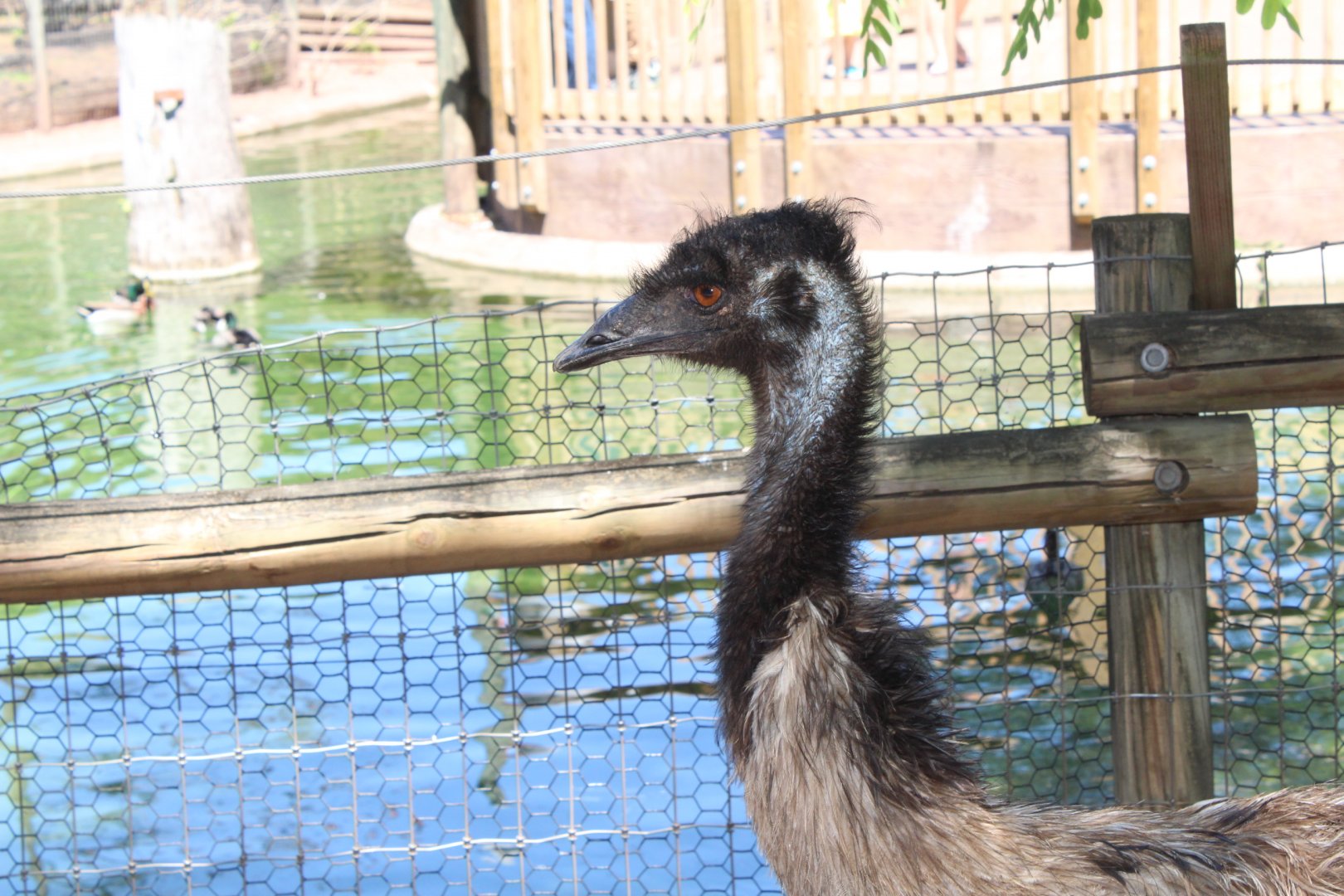
The first animal habitat I made it to was the Walkabout, a small, interesting little Australian area. The entire loop is netted over for whatever reason and contains your usual assortment of Aussie critters. Most kangaroo walkabout exhibits are almost always to same in the majority of zoos, a large grassy field with the ability for the roos to come up to you (though rarely does it ever actually happen). However, Busch Gardens takes a very different approach and instead has fences that split the area into four. The red kangaroo space is an incredibly long but narrow yard that loops around area. There had to be at least 30 to 40 of the animals present, they could be found through the entirety of the loop. If one comes during a feeding time that can receive the opportunity the feed the animals. There are also three center habitats, a small grassy space for a single wallaby and a cape barren goose, a pond with a black swan and what appeared to be a selection of wild, native ducks and one last yard that was home to a single emu, that was close enough to the point were it could have been touched. All these yards are perfectly acceptable if just a bit too bland for my taste.


Just hop, skip and a jump away was the Kookaburras Nest, an walkthrough Australasian aviary. However, it certainly does not stick to that theme as one can find species such as north American ruddy ducks, puna teals, ringed teals and the most predominate species in the aviary, dozens of scarlet ibises are present. A unique feature of this space is that a guide can be picked up listing every species that can found within the aviaries walls, though I never actually saw the namesake kookaburra among them. Reeve's muntjac can also be found if ones looks hard enough. The aviary itself is about everything a tropical bird could need, perfectly fine space for the species present.

Continuing up the hill there are plenty of additional habitats present. A small aviary features a piar of red-knobbed hornbills, and right nextdoor was an enclosure that on my last visit in 2017 contained a komodo dragon. However, the dragon is gone and the exhibit is now a mixed species south American habitat containing red-footed tortoises, two-toed sloths and a parrot species which is escaping my mind at the moment. The final animal habitats on the hillside were all under one "roof" the form of the Lory Landing. The entire structure is quite large in vertical height. I walk in and am greeted by a tiki bar style stand with three juice mixers in the back that were all at work making nectar for the paying massive to feed the colorful birds. Surrounding it, there were around a half a dozen mettle cages that contained an assortment of cockatoos and parrots of all different sizes and colors. The sizes were minimalistic but the constant noise of the area was the real turnoff, with so many large birds in close proximity the squeaking and squawking was constant. Things certainly picked up a bit in the main free flight room, as everything was very nicely done with lorikeets coming overhead.

To end off this part, I will say that I have made it very clear that I take issue with the majority of zoo food out there, but this place is an exception. Last year I ate at the Zambia Smokehouse, an excellent ruined temple themed restaurant serving a variety of meats. It also doubles as a support structure for the Skeikra roller coaster which goes right overt he building than crashes down into the water splashing all of the bystanders However, it became clear I am not the only one to think highly of the place, as when I walked in this time and line happened to be exceptionally along. So instead I headed for a small food cart at settled on one, massive turkey leg. Yup, I meant it when I said this is some carnival sized food were talking about here. Same goes for its aquatic sister locations, though to a less successful degree.
 
Day 3: SeaWorld's Better Half - Part ll

Up next, Jungala. Jungala is an Asian rainforest themed attraction that contains just four main species present. You walk in greeted by statues of tigers and orangs with the ever present blaring music in the background. The first habitat is for Sumatran orangutans and I found this to be a very mixed bag. It is very sizeable and viewing for visitors is nicely done, but the whole area is out in the blistering Florida sunshine year round, with no trees or additional vegetation blocking it out or at least trying to actually create a jungle atmosphere. Actual climbing structures were minimal, an issue that is shared by many American zoos. Plus only a single female red ape and her infant were present in the entire space adding to the very empty and bland feel to the yard. Though a nice touch is the café that features an elevated overview into the space.

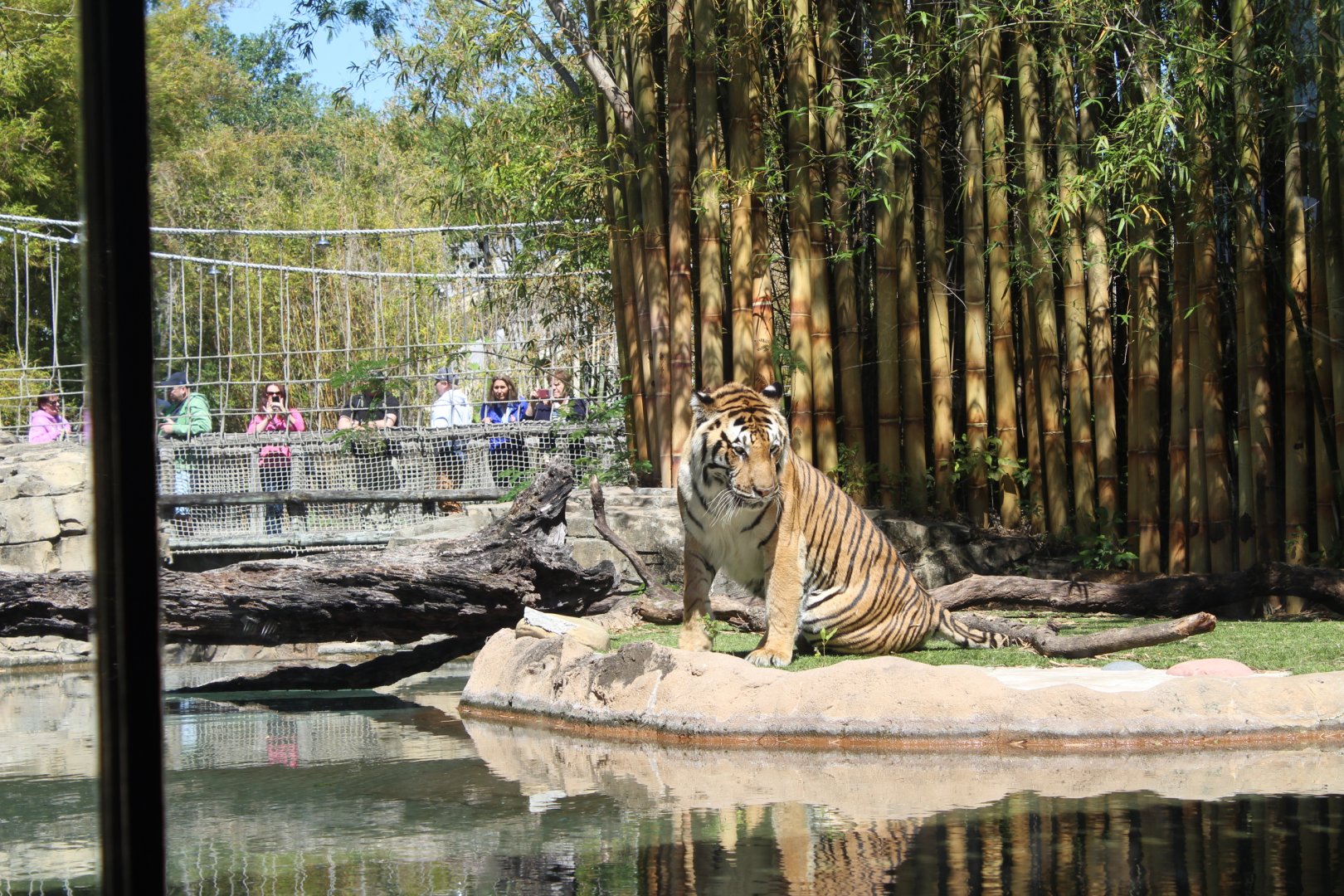
Across from the red apes are the main draw to the area, a pair of tiger habitats that rotate between your usual cats and some of infamous white tigers are present as well. The habitats themselves are nicely done. There is a large building that one has to enter that contains massive glass viewing windows that look into the first habitat, with several education graphics and a small gift shop as well. The first exhibit is almost like a mini canyon, as there is a larger grassy overlook point, which as it goes down leads to a large pool. The other habitat is smaller but from the visitor perspective it is the more impressive of the two. There is a underwater viewing area that includes a look into the clear blue water that the cats swim in, but the real kicker is the pop up bubble that visitors look into, and on my 2017 visit a cat was directly on top of the bubble. No takers this time around but while I was in the area a presentation was happening so I did get a decent shot of the animal. This habitat is also in a similar multi leveled style as the first one, and the tigers actually had the ability to cross under a visitor bridge that goes through the middle of the yard. This exhibit certainly benefits from its several unique viewing angels but if you want to be nick picky cross views were a slight problem but one that could be overlooked as the exhibits themselves were nicely put together.


To reach the last two animal habitats in the area you must pass through the large kids play area with bridges and overhead fun zones present. These final two areas feature white-cheeked gibbons and the former gharial habitat, now home to a variety of fish and a couple flying foxes. The gibbon space is smallish but quite nicely planted and who doesn't like to watch a duo of active swinging primates? The gharials being removed is very unfortunate as the space feels very empty with out the large crocodilians present. It wouldn't have been very cool to see these species mixed with the fruit bats (were they ever in the past?) and the fish, but until then will feel like a waste of space.

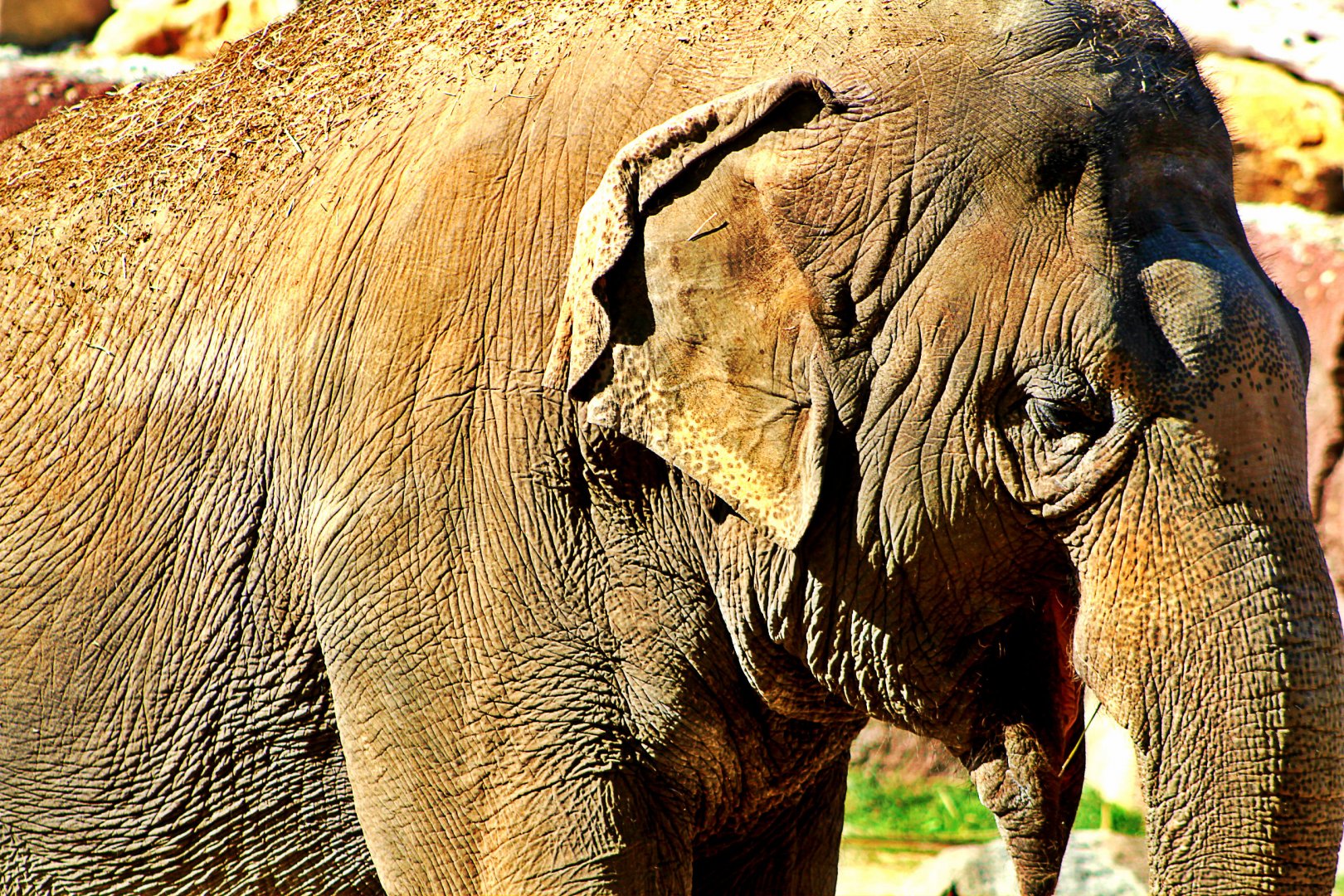
What followed after Jungala was a series a carnival games and smaller kiddie rides. Through the "Pantopia" and "Congo" sections of the park these types of attractions can be found within every nook and cranny of the area, and of course I did not take part in any carnival shenanigans kids could spend hours traversing through the maze of different activities. However right outside Pantopia contains two notable things. First was the animal care center, the central hub for where the show "The Wildlife Docs" is filmed and everything about the building is sleek and stylish. No major animal attractions inside baring the occasional ambassador (I remember seeing an armadillo here before), however there are a pair of medial rooms were guests can peer in and see if any critters are getting surgery or the like. Though I was a bit more intrigued by what's directly across from the center, the Asian elephant yard. On the surface, the yard is smallish, narrow but long. There is a moat separating the pachyderms from visitors and I did feel a little uneasy as one tried to peer over the moat as there have been at least several cases, including at one of my home zoos, of the animal falling into the moat. The London incident comes to mind. So on the surface is certainly does not look too great, however if one takes the skytram (which I did do later in the evening) they can catch a glimpse at the larger off exhibit yard which features a pool. While I was a bit disappointed that big bull Spike was shifted to the national zoo right before my visit, I did get my new profile avatar out of the area ;).


Up next was the Animal Connections zone, a random slathering of smaller mammals, birds and herps in some rather uninspiring areas. The herp exhibits are fine but nothing to right home about. I believe a single raven, a flamingo flamboyance and a parrot or two made up the entire bird selection. Small mammals consisted of ambassador animals such as couple two toed sloths, an echidna, southern tamandua, red-ruffed lemurs, and the biggest draw for a zoo nerd, a ground cuscus. The latter was asleep during my viewing, but I can't complain, as I did pet a critter of the same species during my 2015 visit to San Diego (That should make a few people jealous ;)). The area as a whole is just a bit of a mess with some outdoor crib cages, a line of indoor spaces with some really awful glare, and a few outdoor pens for flamingos and larger tortoises.
 
So...

Since I lasted posted on this thread I had visited three zoos in Florida that I had planned on giving my thoughts on. I only got around to finishing a review and a half.

A year later, I have visited an additional eight institutions across the state plus the ones I mentioned above. This means over the past year or so I have seen eleven zoological parks in Florida, including four revisits and seven brand new facilities. I'll be going back to Florida at the end of the month to add another handful of parks to my ever growing zoo tally. I figured I should probably complete this thread, especially with so much good stuff to write about. However, ill be keeping these upcoming posts much shorter than before but will still be giving my opinions of the parks.

Let me begin again by finishing my review of Busch Gardens, which I will likely revisit for a third time in a matter of weeks.

When it comes to purely animal attractions, the final exhibit areas are where Bush Gardens peaks in quality. The rainforest area for gorillas and chimps is wonderful. The exhibits were a bit open for their respective species but are incredibly natural. The glare on the windows was a bit obnoxious but the exhibits themselves were quite good.

I stopped at the cheetah exhibit next and couldn't help but notice the massive roller coaster across from them. I can imagine at times the crashing roller coasters and other rides can get quite bothersome for many of the parks animals. Luckily most of the time the rides are kept a fair distance from the animals themselves and while they may be eyesores in the background, I found very few instances where they come close to the animal habitats. The cheetah exhibit itself was a long and narrow space and was void of animals similar to my visit the year previous.

The Edge of Africa section wraps things up and was quite the sight. Besides the lemur island which was lacking any sort of vegetation at all really, the area was quite good. The best experience I have had with hippos was here and the massive glass viewing are sure to impress guests. It was also cool to see my first Nile crocodile in a much smaller exhibit adjacent to the river horses. The pair of rotational habitats for lions and hyenas was also well done though couldn't help but avoid Busch Gardens typical commersialism with a jeep halfway through the glass of one of the yards. However Busch Gardens greatest spectacle is the giant savannah yard. Most of it can only be seen by the train or a caravan truck through the yard, but a breathtaking view of the space was a true sight to behold. Something around a dozen hoofstock and bird species reside here, all in the same space - something like 60 acres from what I remember. A truly phenomenal finish to Tampa's premier attraction. This time I actually enjoyed Busch Gardens more than the zoo - and while that may be because much of the zoo was closed for renovations - I still think that is a testamate that despite the places cheesiness and loud rides scattered throughout they do not compromise animal exhibit quality and I early awaiting my next visit very soon.
 
So after doing the big two Tampa parks right away, I expected that my zoo travels through Tampa were done. And they were, until while walking with family through the sponge docks I saw a sign for live alligators. I look up and what do you know, I found myself at the almost unheard of Tarpon Springs Aquarium. After paying my seven dollar fee, I was immediately greeted with a young volunteer holding a baby alligator which visitors could get a photo with. The aquarium is just two rooms large and blended in with several other gift shops and tourist stops. It was a really pleasant location though the inside of the place was a bit dark and deteriorated, as are most small aquariums. The worst enclosure was certainly the disastrous square box home to a single American alligator (not the juvenile being presented to visitors, rather a near fully grown individual) and an alligator snapping turtle that are stuck in a nasty tank separated by concrete bricks. In total I doubt that snapping turtle had anymore than a few feet of space. Luckily things picked up after there and the remained of the aquarium was relatively simple but effective. A touch tank for horseshoe crabs, two smaller saltwater fish tanks, and a collection of pythons and boas of varying sizes in a half dozen terrariums. The highlight of the place however was the large and impressive saltwater tank home to the famous tarpons. I don't believe I have the notes for the rest of the species in the tank, but it was nothing particularly note worthy from what I can remember. There is one last room connected to the aquarium that is your typical stingray and nurse shark touch tank, which I believe was free with admission.

The Tarpon Springs Aquarium was a surprise for sure, but a welcome one. It was great to get one more new facility checked off before leaving Tampa, though I doubt I'll be coming back any time soon.
 
Ok, but for real this time.

Palm Beach Zoo

Travel Reports from here on out are going to be a lot shorter, but better than nothing I suppose.

This is an interesting place. I have visited at least five or six times as a result of family living only about 15 minutes away. It's no more than 20 or so acres in size and divided into four zones. Asia, Florida, South America and a generic "Islands" zone (they play very fast and loose with the definition of the islands).

Tropics of the Americas - the South American zone - is the zoos magnum opus and clearly outshines everything else here. There is a very impressive collection all in above average exhibits. Jaguars have probably the best exhibit I've seen for the species (not that the bar is very high) which accompanied a very active cat. There is a small nocturnal room with an armadillo and some herps, a large bridge with anteaters and tapirs on opposite ends, and a really great caiman pond. The newest exhibits for squirrel monkeys and ocelots are both good, but both suffer from intrusive fencing and awkward viewing. I was also incredibly disappointed to see that the bush dogs are gone - despite never seeing them once during any of my visits here - and have been replaced by a komodo dragon. A good exhibit for the worlds largest lizard, but it really breaks the theming of the area and I can only hope it was a temporary move. There are also two excellent islands for capuchins and Mexican spider monkeys and the zoos only eatery, which happens to overlook a waterfowl/capybara exhibit. At one point this was my favorite South American complex that I have seen, but that was soon beaten out by the zoos significantly better counterpart and hour and a half south.

The rest of the zoo is all nicely done. The tiger exhibits are surprisingly good, the Australian house (koala, kookaburra, singing dog) is a pleasant little area, there is a great large rhinoceros hornbill aviary, the lemur and siamang islands were beautiful. The zoo as a whole feels a bit thrown together in places and just slightly shabby. The Florida area I found to be very hit or miss, with a shockingly poor otter accommodation and lackluster bird of prey aviaries being low points. To end on a good note, the Florida panther exhibit(s) were very nice and may be a slightly more recent addition than some of the other exhibits in the Florida zone.

Palm Beach is a nice zoo. Tropics of the Americas is a fantastic complex and there are several other things scattered around the park that are nice. However, when compared to other zoos I have visited, many on this trip, Palm Beach is a bit insignificant and could really do with some touching up.
 
Thanks for the interesting review. I assume the zoo "an hour and a half south" is Miami, I'm interested to hear your thoughts on that place.
 
Lion Country Safari

The other major zoological attraction in West Palm Beach was... meh.

Lion Country Safari is a drive through "Safari Park" style experience. There are about a half a dozen multi acre pens mostly representing African environments. It became famous for its large pride of lions that were once in a completely open environment same as the cars that pass through the exhibit. The drive through portion of the park is enjoyable enough, but the walkthrough sections were, well, you'll see.

This place is your typical touristy attraction. It opens with a pampas yard with your typical lineup (tapir, capybara, tortoise, rhea, alpaca) and as your traverse through a series of African yards everything does start to blend together. As I mentioned, the famous lion pride no longer share the same space with visitor vehicles and are now behind an obstructive mesh fence. For the lions, the exhibit is great. Its large, at least an acre or two in size, and its always great to see a group with such large numbers. For the visitors however, the mesh makes it virtually impossible to photograph the animals and makes trying to get a decent view a real hassle.

The last field exhibit was the largest and certainly the highlight of my visit. For one, there a great large group of white rhinos, zebras, and giraffes that call the space home. Unless there is some sort of hidden barrier I missed, I remember the rhinos having the full ability to come right up to the visitor vehicles (I feel like they would be far more destructive than lions, so maybe its my faulty memory) though one of them was segregated to the former elephant exhibit separated by a water moat. Two rhinos began sparring right by my vehicle and it was one of my favorite experiences watching rhinos so far. The real highlight of the area though wasn't any of these, rather something a little more special to zoo nerds. A Jackson's hartebeest, the last one in America I believe. It was a bit tucked away between all of the white rhinos, but seeing such a unique ungulate was one of my main motivations for checking this place out. The last sections of the drive through portion were a series of islands for chimps and gibbons which suffer from virtually no shade of any kind.

Then there was the walkthrough section dubbed "SafariWorld" and... this was bad.

Like really, really bad.

Certainly not the worst zoo in the world, but come on. This place is so tacky and commercialized in makes SeaWorld feel like a breath of fresh air. The animal habitats themselves are also lackluster and clustered together. Macaws and sloths in crib cages, alligators in a dirty pond, a depressing, unkept area for camel rides, multiple primate islands that are so far away from the visitor viewing area that they make you question why they bothered in the first place. Its all capped off by a separate pen for giraffes (plus a single donkey, for some reason) with a generic feeding platform.

Its always great to see ungulates in large herds, a rare species that can't be found anywhere else in the country, large exhibits in general. But Lion Country Safari is perhaps the most commercialized, shabby zoo I have seen so far (although far from the worst). I certainly prefer seeing things on foot than the drive-through approach, so maybe this place was doomed for me from the get go, but there really isn't much this place can provide that you can't see done significantly better at dozens of other zoos. At the end of the day, this a theme park more than a zoo.
 
McCarthy's Wildlife Sanctuary

Over in rural west palm beach is this small, virtually unheard of facility. As far was i'm aware, no other zoo chatter has visited this place, at least there is no evidence of it (photos, reviews, etc.). I can assure you that this was a very, very odd place. I almost missed the entrance the first time down the dirt road that led to it. This sanctuary is only open by guided tour that must be booked in advance, and it was certainly an interesting experience.

The whole place was rather shabby, homemade, clearly built for cheap. Plenty of wood and wire enclosures for just about every animal there. The sanctuary specializes in rescued animals, mainly cats and reptiles. The cat collection consists of lions, tigers (plus white variants of both), jaguars (including one melanistic variant), an Amur leopard, snow leopards, a Florida panther (off exhibit) and a Siberian lynx. Additionally, there was also an animal that I had never seen previously, a liger. A truly impressive specimen, even if it's existence is unfortunate. I am sad to report that the conditions for the cats were - to put it lightly - less than ideal. I actually thought the lion and tiger pens were a pretty decently sized, especially compared to the rest of the cat conditions which - to put it bluntly this time - borderline deplorable. These cages would be a disgrace in any modern zoo, yet it seems the standards for sanctuaries like these are significantly lower. Why is this the case? I can think of dozens of zoos where the snow leopards for example would have lives a million times more enriching than the dark, cramped cage they were shoved in, literally inches away from two black jaguars (why even keep snow leopards in Florida in the first place?).

It doesn't get too much better from there. Lemurs, marmosets and macaws have even worse conditions, all in concrete crib cages. It's not hard to build a decent lemur exhibit, there is no excuse for this. A real surprise of the visit was one of the last stops on the tour, the reptile house. There had to have been at least 100 or so terrariums in whats a relatively small building. A few tubs for small tortoises in the middle, with a massive collection of whats mostly snakes lining the walls. The rest of the reptile collection is dispersed around the rest of the park. There are two relatively nice outdoor tortoise yards for African-spur thighed and Galapagos tortoises, a functional if extremely ugly cage for rhinoceros iguanas, and a truly head scratching nile crocodile exhibit that is a decent size, but with a pool only slightly larger than it's single inhabitant.

I know I sound mostly negative so far, but I really did enjoy my time here. I did like how smaller animals were brought out - juvenile American alligator, tarantula, kinkajou - to get up close with guests. I will reiterate that I did think the lion and tiger enclosures were pretty good, and seeing a liger is definitley something I can check off my zoo bucket list. However, I don't think this place warrants much of a reason to return. Not to mention that later in the trip I encountered a much better guided tour cat facility.
 
Zoo Miami

What a fantastic place!

If the last couple facilities were underwhelming, Miami more than made up for it. The two San Diego parks are still my favorite zoos to date as cliche as that may sound, but Miami sits comfortably in third and is by far Florida's greatest zoo. In many ways Miami could actually be compared to San Diego. Great weather year round, tropical environment, few indoor buildings, a lack of history, but many truly spectacular animal habitats.

I’d go as far to say Miami has no truly awful areas. There are definitely certain things that could use a touch up - the ape exhibits are a good size but suffer from the lack of shade, the cassowary exhibit was pretty poor, and I found the pygmy hippo pool to be a really quite ugly looking - but there isn't anything that is in immediate need of being fixed.

A real highlight here is the ungulate collection. Two species of elephant, two species of rhino, what had to have been at least 20 or so species of hoofstock all in simple but large paddocks. These include some real rarities like Javan bentangs, Indian gaur, arabian oryx and somali wild asses. I hate to keep making the San Diego comparisons, but I’d say the Safari Park is the only other major zoo in the United States with a more impressive collection of hoofstock. The entire collection is displayed between two massive loops that represent Asia and Africa respectively, though there is plenty of overlap in places. I must account that these sections of the zoo were exhausting to get through, and even though this amount of ungulates is fantastic, I wouldn't mind seeing a handful leave and seeing these areas better themed to Asia and Africa respectively.

Outside of the big Africa/Asia loops, the rest of the zoo is divided into themed exhibit complexes. First I want to talk about Amazon & Beyond, what I believe to be America's greatest South American complex. The plantings here are absolutely beautiful thanks to the tropical climate and there is a lot to love here. The harpy eagle aviary that goes over the head of visitors, that massive tank inside one of the buildings, the bat tunnels and my first giant otters! Truly an incredible species that I would love to see more of. I will say there are a few enclosures that are a bit on the small side. The jaguar exhibit(s) was good, but again a bit cramped. The orinoco crocodile and giant anteater exhibits were also tiny. Otherwise, all great stuff. I would really love to see more Amazon complexes of this magnitude, as I feel there is plenty of untapped potential in an exhibit like this. Perhaps once a zoo imports some giant armadillos, they may have an edge over this exhibit.

The newest major development - Florida: Mission Everglades - is simply superb. It does something that I believe should be done more often in other new zoo exhibit complexes. Every exhibit has some sort of unique element to it that separates it from other others. There are rope bridges that go over the alligator exhibit, underwater tunnels and slides that go through the otter and American crocodile pools, a tree trunk with glass viewing windows in the middle of the black bear yard etc. By adding these extra qualities, it will help the public become more engaged with the animals at hand, not to mention they will make for a great source of entertainment. Of course the exhibits in this area are also phenomenal for the animals as well. My favorite was probably the beautiful wading bird pond that is one of the first exhibits people will see when entering the zoo.

I absolutely loved Wings of Asia. Now my new favorite aviary in any zoo, dethroning the San Diego parks here. In particular, I loved the air conditioned building with underwater viewing for a pond with tropical turtles and fish. The next real highlight of the aviary was seeing two massive sarus cranes just feet away from where I was standing. All the birds have free access to the aviary except for a side aviary for rhinoceros hornbills. What I really loved about this place were all the different vantage points. You start at ground level and slowly climb up further and further. There are views from treetops, the canopy, from under a crashing waterfall. There’s plenty of theming here, but something about it just works. Perhaps one of my favorite zoo exhibits of all time.

Something I will note is that this zoo is big, like really big. My first time visiting, I completely missed the Australian Center (it may have been under construction), the children’s zoo and the swine exhibits (a hidden row of grassy paddocks for warthogs, red river hogs, babirusa and visayan warty pigs). I rushed Wings of Asia, didn't even realise the cassowary exhibit was a thing. I love big zoos - more to see of course - but an issue with Miami as that there are periods were you will go quite a long while without seeing much of anything (the stretch between the orangutans and Amazon & Beyond, and parts of the Asia/Africa loops are the biggest offenders).

(looking back at the map I think I may have missed a south american tapir enclosure if there is one. A testament to how ridiculously massive this place is.)

Zoo Miami was simply wonderful. It has to be one of America’s top 10 zoos, and for me it currently sits at number three (however, assuming the coronavirus doesn't force me to throw my plans out the window, it may be dethroned soon). This was hands down the greatest zoo I visited on this trip. Those unknown, rural places have a certain charm to them, but nothing beats visiting a major, all day zoo for the first time.
 
Gumbo Limbo Nature Center

This small little center in Boca Raton it a very small, but pleasant place. It takes no more than a half an hour to get through, but pretty much everything is nicely done. There honestly isn't a whole lot to say about this facility. A highlight for me was the excellent gopher tortoise complex viewed from multiple levels via boardwalk. I always love when a more niche species like this has so much attention given to them. The rest of the center is composed of some large outdoor aquariums (that suffer from terrible glare), a sea turtle rehab center, a really nice mangrove tank, a butterfly garden with a view into an intercostal waterway, and some herps in the main building. There is also a nature trail with no animal exhibits, rather a collection of some nice native plants. A perfectly nice free "zoo" but nothing much to say about it.
 
Last edited:
Loggerhead Marinelife Center

Yet another tiny facility that had previously not been represented on this site. Loggerhead Marinelife Center is basically a sea turtle rehab center. The entrance building has about a half dozen saltwater tanks and plenty of educational graphics, including a massive sea turtle skeleton. The entire outdoor portion is a collection of about 20 or so rehabilitation pools for injured sea turtles of varying sizes. Honestly, that's really all I can find to say about this place. Pleasant enough, but nothing really noteworthy.
 
Back
Top