Does anyone else get annoyed when people refer to apes as monkeys or peahens as female peacocks?

I consider the following statements to be either overly pedantic or just wrong:
Apes are not monkeys
The Bobcat is not a lynx
The Brook Trout and other chars are not trout
Humans did not evolve from monkeys or apes (see here)
Tortoises are not turtles (see here)

On the “peacock/peafowl” matter, most authorities recognize the species Afropavo congensis by the common name of “Congo Peacock” and not “Congo Peafowl” presumably as it is not a member of the genus Pavo as the “true” peafowls of the Indomalayan realm. As calling this entire species a term traditionally only used for males of two related species can cause confusion, perhaps a unique indigenous name is in order.
 
On the “peacock/peafowl” matter, most authorities recognize the species Afropavo congensis by the common name of “Congo Peacock” and not “Congo Peafowl” presumably as it is not a member of the genus Pavo as the “true” peafowls of the Indomalayan realm. As calling this entire species a term traditionally only used for males of two related species can cause confusion, perhaps a unique indigenous name is in order.
I guess it is a case of whether peafowl should refer to Pavo (thus including the Indian and green peafowl but excluding Congo) or to Pavonini (which would include all three species mentioned prior as well as the two argus genera and Tropicoperdix)
 
I am actually more annoyed from the annoyance towards apes being called monkeys. Apes are monkeys and to refuse to say so is like refusing to say birds are dinosaurs (which, as far as I know, would be considered heresy in most biological circles).

Rather than saying that "apes are not monkeys" the right thing to tell people "not all monkeys are apes". It is a bigger error to call a non-ape monkey an ape than an ape a monkey.

I could say the same about toads and tortoises. Toads are frogs but not all frogs are toads. Tortoises are turtles but not all tortoises are toads.

I do agree with the annoyance with all peafowl being refered as peacock. That's like refering "people" as "men" or "woman" as "female man"
 
Fun fact, in Dutch the word 'ape' is called mensaap. If you would translate this, it means 'human monkey'. A lemur is called a halfaap, translated as 'half monkey'.
And I guess “aap” means monkey.
Along those lines, it appears that in English, the word “ape” (related to the Dutch term) did originally refer to what would now be called Old World monkeys.
 
New World and Old World monkeys were thought to be more closely related to each other than either were to apes. Now, Old World monkeys are far more closely related to apes than they are to New World monkeys.
 
In Chinese there's no distinction between crocodile and alligator, both are 鱷魚/鳄鱼 (èyú). However, for turtles, 龜/龟 (guī) refers to all hard-shelled turtles, including tortoises, and 鱉/鳖 (biē) means soft-shelled turtle.
 
Fun fact, in Dutch the word 'ape' is called mensaap. If you would translate this, it means 'human monkey'. A lemur is called a halfaap, translated as 'half monkey'.

Very similar to German, where "lemurs", "monkeys" and "apes" are "halbaffen", "affen" and "menschaffen" respectively.
 
I I could say the same about toads and tortoises. Toads are frogs but not all frogs are toads. Tortoises are turtles but not all tortoises are toads"
Sorry, PossumRoach. I can make similar unintentional mistakes. No tortoises are toads.
 
New I am actually more annoyed from the annoyance towards apes being called monkeys. Apes are monkeys and to refuse to say so is like refusing to say birds are dinosaurs (which, as far as I know, would be considered heresy in most biological circles).

Rather than saying that "apes are not monkeys" the right thing to tell people "not all monkeys are apes". It is a bigger error to call a non-ape monkey an ape than an ape a monkey.
This is only if you use the assumption that all valid groupings have to be monophyletic. While you are correct that a monophyletic grouping of monkeys would have to include apes, one could make a valid argument that "monkey" is a term used in reference to the paraphyletic group of Afro-Eurasian Monkeys and Neotropical Monkeys. Seeing that "simians" or "anthropoids" are the biological terms for the clade including apes and both monkey lineages, I'd be inclined to say that the term "monkey" is in fact a term used in reference to the paraphyletic grouping that excludes apes.

Humans did not evolve from monkeys or apes (see here)
I'd need some more context into where you hear this statement to know whether I'd consider it "overly pedantic or wrong". If it was being said by an evolution denier, then it's certainly an incorrect statement, however there are versions of that statement that would be scientifically accurate. For instance, "Humans and monkeys share a recent common ancestor, however that ancestor looks different from both humans and modern-day monkeys".

One common misconception about evolution is that humans are at the highest point of evolution, and everything else is evolving towards being human. If addressing this misconception, it does make sense to say that while we share a common ancestor, we did not evolve from an extant species of primate, and that we share a recent common ancestor with the other species of primates. So basically the statement is one word off from being a correct statement: "Humans did not evolve from extant monkeys or apes".

For what it's worth, I'd also say that humans are in fact apes, so it's not something we evolved from as much as something we still are.
 
@Neil chace The link is to a video lecture by none other than the world-famous paleontologist Thomas Holtz, and in it, he explains all of what you just said.

…the term "monkey" is in fact a term used in reference to the paraphyletic grouping that excludes apes.
In the paraphyletic case, humans and (other) apes would still have evolved from “monkeys” despite not being “monkeys”; the paraphyletic group includes the concestor of New World and Old World monkeys, which was also an ancestor to humans. For humans to have not came from monkeys, “monkeys” need to be an polyphyletic group of living species with no basis in ancestry whatsoever.

"Humans did not evolve from extant monkeys or apes".
That is usually what teachers mean when making the “we didn’t evolve from apes” statement.
 
Last edited:
In the paraphyletic case, humans and (other) apes would still have evolved from “monkeys” despite not being “monkeys”; the paraphyletic group includes the concestor of New World and Old World monkeys, which was also an ancestor to humans. For humans to have not came from monkeys, “monkeys” need to be an polyphyletic group of living species with no basis in ancestry whatsoever.
You are 100% correct that we still evolved from a monkey, I'm not disputing that fact, just making the acknowledgement that our monkey ancestor is distinct from any species of monkey still extant.
 
In Chinese there's no distinction between crocodile and alligator, both are 鱷魚/鳄鱼 (èyú). However, for turtles, 龜/龟 (guī) refers to all hard-shelled turtles, including tortoises, and 鱉/鳖 (biē) means soft-shelled turtle.
technically 鼉 mean (chinese)alligator, but no one use that unless you're trying to sound smart or you're 300 years old.
 
I'd be inclined to say that the term "monkey" is in fact a term used in reference to the paraphyletic grouping that excludes apes
Not by the average Joe who calls gibbons monkeys.

I’d argue that term “ape” excludes Hominids from other monkeys, and that the fact that other languages already refer apes as monkeys (while still acknowledging that there is some difference) makes the “it’s not a monkey it’s an ape” pedantic seem silly.

If apes are in fact not monkeys then I hope you don’t get your encyclopedias in a twist when some people say that birds are not dinosaurs.
 
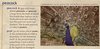
The “peacock” entry in the Macmillan Fully Illustrated Dictionary for Children:
12592B5C-8831-4BB6-9EC6-08F4286774B3.jpeg
 

Attachments

  • 12592B5C-8831-4BB6-9EC6-08F4286774B3.jpeg
    12592B5C-8831-4BB6-9EC6-08F4286774B3.jpeg
    135.3 KB · Views: 12
The peacock one bothers me a bit. I'm actually not as bothered by the monkey one. Cladistically, apes are monkeys. Lemurs are definitely still not monkeys though and it enrages me like the fury of a thousand suns! OK not really. I'm an educator and I use it as a learning opportunity for those that want to listen.
im literally the exact opposite. i dont see the problem with it, the peafowl thing. the apes being called monkeys make me want to scream tho
 
Back
Top