Does "compassionate conservation" work?

Indeed, Tsuki has made numerous videos about introduced species and their negative impacts.

However, he also made two videos about “beneficial” non-indigenous species.
Yellow-crowned night heron's introduction to Bermuda has not been as clear-cut beneficial as this video suggests- it is now the main predator of neonates of the very rare indigenous population of diamondback terrapins on the island, as well as a significant predator of the Critically Endangered Bermuda skink.
 
The "compassionate conservation" movement, is relatively new. From my understanding, the whole thing started in 2010. Personally, I only learned of it less than 3 years ago. When I did first learn about it, I got in contact with Erick Lundgren.

Erick Lundgren can be best described as one of the leading "compassionate conservationists" and has been an author of papers arguing for the practice, or at least, not killing invasive species, such as the paper claiming hippos have replaced extinct camelids in Colombia.

For example, here's a quote from the guy in a Guardian article.

"Erick Lundgren, lead author and PhD student at the University of Technology Sydney, told the Guardian: “The word ‘invasive’ doesn’t really leave any room for organisms that do something that’s beneficial for another species. ‘Invaders’ don’t really help anything. And with that kind of anthropomorphic branding, you end up with a very limited range of research questions that are usually asked.” "

"The researchers give the example of wild pigs, which are widely disliked by farmers across the southern United States for destroying crops when large groups are “rooting” for food. But Lundgren said the behaviour is an ecosystem service that had been performed by other large herbivores that have since become extinct.

“There are many species that did what pigs do: just turning over soil. In North America, there were these giant peccaries. There were all these species that did the same thing in the late Pleistocene. For millions of years, everything evolved with this kind of rooting behaviour,” he explained.

“If you actually look at what that rooting behaviour does, it is of course density dependent. So if you have 10bn pigs rooting over every inch of soil, there are species that are going to lose their preferred habitats, 100%. But rooting actually does some interesting things. In Tennessee, they’ve found that trees actually grow faster because of the rooting of wild boar because they’re incorporating leaf litter in the soil, increasing decomposition rates and more nutrients become available quicker for trees.”

Pablo Escobar's 'cocaine hippos' show how invasive species can restore a lost world

Yeah...

Now moving on, this is an email he sent me during the conversation we had all that long ago, regarding the python issue in Florida. Just to give you an idea of how ridiculous people like this are.

Screenshot 2023-02-04 8.31.52 AM.png

Oh yeah...definitely not like the Florida Peninsula already had a decent-sized predator guild doing that or anything.
 

Attachments

  • Screenshot 2023-02-04 8.31.52 AM.png
    Screenshot 2023-02-04 8.31.52 AM.png
    48.2 KB · Views: 195
Give Invasive Species a Job

"“There’s a huge amount of stigma toward wild and introduced organisms in general,” Lundgren said. He pointed out that a lot of research on these species still looks at how bad they are for the environment. But that’s not the only possibility. “We’re changing the planet quickly and then refusing to let the living beings on it change with it,” Lundgren said. Avoiding this impulse might mean not killing barred owls just because they are outcompeting threatened spotted owls. Or it might mean allowing opossums to move northward out of their native range, into Canada. It might mean realizing that feral or invasive animals—which are next to impossible to remove once established—could fill an important ecological niche."

That's it. These people are highly indefensible.
 
Give Invasive Species a Job

"“There’s a huge amount of stigma toward wild and introduced organisms in general,” Lundgren said. He pointed out that a lot of research on these species still looks at how bad they are for the environment. But that’s not the only possibility. “We’re changing the planet quickly and then refusing to let the living beings on it change with it,” Lundgren said. Avoiding this impulse might mean not killing barred owls just because they are outcompeting threatened spotted owls. Or it might mean allowing opossums to move northward out of their native range, into Canada. It might mean realizing that feral or invasive animals—which are next to impossible to remove once established—could fill an important ecological niche."

That's it. These people are highly indefensible.
To some extent I agree, non-native species are here to stay, and we do have to accept that. In some cases (certainly a minority, but still) are doing good in their ecosystems. Letting opossums go into Canada? That really can't be that bad, right?

That being said, this thinking can easily go too far.
 
I just want to say first - I don't like the term. I value compassion greatly, but any time I see "compassionate" as an adjective for an ideology, it feels like a sly way of suggesting those who don't conform are lacking in it, which is a horrible way to start any argument.

That's completely aside any meaning to what it represents. I'd love if we could find an alternative to culling invasive species that was effective, but there is not one at this time, and if culling as a successful strategy as I think these people fear, there would be no invasive species to worry about.
 
While compassionate conservationists themselves are thankfully very much a minority in the scientific community, there is one situation where they'll be more listened to by a group of people. That situation is the issue with wild horses in Western North America. Contrary to other introduced species, these horses are given protection by the federal government via a bill signed into law in 1971. So in this situation, culling isn't used; instead, the horses are rounded up to control their numbers.

Since then when you think about it, feral horses are the perfect symbol for the compassionate conservation movement, as you constantly hear horse advocates say they're replacing extinct horses and bring ecological benefits. And to tell the truth, I bought into this idea. I used to be on the Mustang's side, and I think this was in part influenced by the fact that I grew up watching Spirit: Stallion of the Cimmaron.

And I'll admit, it's only recently that I've learned how wrong I was.

Here I'll make a list of abstracts for studies on feral horse interactions with native ungulates.

1.) Interactions between Feral Horses and Desert Bighorn Sheep at Water

"We studied sympatric populations of native bighorn sheep (Ovis canadensis) and feral horses (Equus caballus) to quantify their spatial and temporal overlap and to determine whether horses interfered with use of water by bighorn sheep. We observed no evidence of direct competition, but our field experiment, which involved placing desert-acclimated domestic horses near watering sites used by bighorn sheep, demonstrated that bighorn sheep avoided sites with horses nearby. The presence of domestic horses near a watering site preferred by bighorn sheep resulted in a 76% reduction in the number of groups of bighorn sheep coming to water at that location and a concomitant increase in the number of bighorn sheep watering at other sites. An experimental approach to studying competition between large mammals has been problematic and to our knowledge this study constitutes the 1st manipulative field experiment to test for competitive interactions between feral horses and native ungulates."

2.) https://esajournals.onlinelibrary.wiley.com/doi/full/10.1002/ecs2.2096

"The horse (Equus caballus) is a feral ungulate that currently exceeds target population sizes in many areas of western North America. Horses are behaviorally dominant over native ungulates and outcompete the latter for access to water sources. However, a better understanding of the broader spatial and temporal implications of horse-induced competition on access to water by native ungulates will enable better conservation and management of native species. Our objective was to determine whether pronghorn (Antilocapra americana) and mule deer (Odocoileus hemionus) spatially or temporally altered their use of water to minimize interactions with horses. From 2010 to 2014, we used remote cameras to monitor ungulates at 32 water sources in the Great Basin Desert. We evaluated spatial and temporal partitioning by these species at water sources using generalized linear models, mixed-effects models, and Mann–Whitney U tests. We found that both native ungulates used water sources less often where horse activity at water sources was high, indicating that spatial avoidance occurred. Further, we observed significant differences in peak arrival time for pronghorn, but not mule deer at horse-occupied sites versus sites where horses were absent or uncommon, indicating that temporal avoidance may be more important for pronghorn than mule deer. Because mule deer are primarily crepuscular and nocturnal whereas horses are largely diurnal, we did not expect to observe a temporal shift for mule deer. We also found strong support for the interactive negative effect of elevated temperature and subsequent increased activity of horses at water sources on drinking patterns of pronghorn and mule deer. Our findings indicate that feral horses further constrain access to an already limited resource for native species in a semi-arid environment."

3.) https://bioone.org/journals/the-sou...Feral-Horses/10.1894/0038-4909-60.4.390.short

"We used a motion-triggered camera to document and qualify the nature of interspecific interactions between elk (Cervus elaphus) and feral horses (Equus caballus) at an isolated, natural water source in Mesa Verde National Park, Colorado. The camera was active for at least 110 of 145 potential trap-nights between 24 April 2012 and 16 September 2012. Elk and horse interactions were observed 51 times, and elk were averted from accessing water 42 times (82%). Feral horses exhibited dominant behavior over native elk during the driest time of the year (May–June), often preventing acquisition of water by elk."

4.) https://www.researchgate.net/public...horses_on_pronghorn_behavior_at_water_sources

"Feral horses (Equus callabus) occur throughout the world on all continents except Antarctica. In North America, feral horses occupy 31.6 million acres throughout western North America. Throughout their range, feral horses often share habitat with American pronghorn (Antilocapra americana). Since horses are larger and more aggressive than pronghorn, they are considered socially dominant. In the Great Basin of western North America, pronghorn often access water sources where horses occur since habitat preferences are similar. If pronghorn are excluded where water is used by both species, pronghorn fitness may be impaired, especially during dry or droughty periods. The purpose of this study was to investigate interference competition between pronghorn and feral horses at water sources within the Great Basin. We observed horses and pronghorn at high-use water sources and recorded all occurrences and outcomes of pronghorn/horse interactions. We assessed differences in pronghorn behavior in the presence or absence of horses. Pronghorn invested more time on vigilance behavior and less time foraging or drinking in the presence of horses than in their absence. Nearly half of pronghorn/horse interactions resulted in pronghorn exclusion from water. We conclude that as feral horse numbers increase, competition for water will subsequently increase."

5.) https://www.sciencedirect.com/science/article/pii/S014019631530094X

"Introduced species can impact native communities by altering competition dynamics. Large exotic species, such as the horse (Equus caballus), may have a competitive advantage over smaller native species and could exclude them from access to limited resources. Our objective was to determine the influence of the exotic horse on the use of water by native species in a semi-arid environment where availability of water is limited. From July 2010 to August 2011, we used remote cameras to monitor water sources in the Great Basin Desert where horses had drinking access and where horses were excluded (with fencing) to compare 1) composition of native communities and 2) water usage by native species. We captured 96,601 images representing 40 species of birds (29,396 images) and 13 species of mammals (67,205 images). Of the 67,205 images of mammals, 79% contained horses. Horses were associated with decreased richness and diversity of native species at water sources. Furthermore, native species had fewer visits and spent less time at water sources frequented by horses. Our results indicated that horses displaced other species at water sources providing evidence of a negative influence on how communities of native wildlife access a limited resource in an arid environment."


From these studies, it's very clear that mustangs are an invasive species. And the worst part about this? This is something people have allowed to happen. Horse advocates complain that holding so many horses in the pens is cruel, but this wouldn't be an issue if conservationists were able to control the horse population. The entire reason the dumb law protecting them exists was due to pressure from people who were angry about wild horse management. And now both the native wildlife and the horses themselves are paying the price for it.
 
While compassionate conservationists themselves are thankfully very much a minority in the scientific community, there is one situation where they'll be more listened to by a group of people. That situation is the issue with wild horses in Western North America. Contrary to other introduced species, these horses are given protection by the federal government via a bill signed into law in 1971. So in this situation, culling isn't used; instead, the horses are rounded up to control their numbers.

Since then when you think about it, feral horses are the perfect symbol for the compassionate conservation movement, as you constantly hear horse advocates say they're replacing extinct horses and bring ecological benefits. And to tell the truth, I bought into this idea. I used to be on the Mustang's side, and I think this was in part influenced by the fact that I grew up watching Spirit: Stallion of the Cimmaron.

And I'll admit, it's only recently that I've learned how wrong I was.

Here I'll make a list of abstracts for studies on feral horse interactions with native ungulates.

1.) Interactions between Feral Horses and Desert Bighorn Sheep at Water

"We studied sympatric populations of native bighorn sheep (Ovis canadensis) and feral horses (Equus caballus) to quantify their spatial and temporal overlap and to determine whether horses interfered with use of water by bighorn sheep. We observed no evidence of direct competition, but our field experiment, which involved placing desert-acclimated domestic horses near watering sites used by bighorn sheep, demonstrated that bighorn sheep avoided sites with horses nearby. The presence of domestic horses near a watering site preferred by bighorn sheep resulted in a 76% reduction in the number of groups of bighorn sheep coming to water at that location and a concomitant increase in the number of bighorn sheep watering at other sites. An experimental approach to studying competition between large mammals has been problematic and to our knowledge this study constitutes the 1st manipulative field experiment to test for competitive interactions between feral horses and native ungulates."

2.) https://esajournals.onlinelibrary.wiley.com/doi/full/10.1002/ecs2.2096

"The horse (Equus caballus) is a feral ungulate that currently exceeds target population sizes in many areas of western North America. Horses are behaviorally dominant over native ungulates and outcompete the latter for access to water sources. However, a better understanding of the broader spatial and temporal implications of horse-induced competition on access to water by native ungulates will enable better conservation and management of native species. Our objective was to determine whether pronghorn (Antilocapra americana) and mule deer (Odocoileus hemionus) spatially or temporally altered their use of water to minimize interactions with horses. From 2010 to 2014, we used remote cameras to monitor ungulates at 32 water sources in the Great Basin Desert. We evaluated spatial and temporal partitioning by these species at water sources using generalized linear models, mixed-effects models, and Mann–Whitney U tests. We found that both native ungulates used water sources less often where horse activity at water sources was high, indicating that spatial avoidance occurred. Further, we observed significant differences in peak arrival time for pronghorn, but not mule deer at horse-occupied sites versus sites where horses were absent or uncommon, indicating that temporal avoidance may be more important for pronghorn than mule deer. Because mule deer are primarily crepuscular and nocturnal whereas horses are largely diurnal, we did not expect to observe a temporal shift for mule deer. We also found strong support for the interactive negative effect of elevated temperature and subsequent increased activity of horses at water sources on drinking patterns of pronghorn and mule deer. Our findings indicate that feral horses further constrain access to an already limited resource for native species in a semi-arid environment."

3.) https://bioone.org/journals/the-sou...Feral-Horses/10.1894/0038-4909-60.4.390.short

"We used a motion-triggered camera to document and qualify the nature of interspecific interactions between elk (Cervus elaphus) and feral horses (Equus caballus) at an isolated, natural water source in Mesa Verde National Park, Colorado. The camera was active for at least 110 of 145 potential trap-nights between 24 April 2012 and 16 September 2012. Elk and horse interactions were observed 51 times, and elk were averted from accessing water 42 times (82%). Feral horses exhibited dominant behavior over native elk during the driest time of the year (May–June), often preventing acquisition of water by elk."

4.) https://www.researchgate.net/public...horses_on_pronghorn_behavior_at_water_sources

"Feral horses (Equus callabus) occur throughout the world on all continents except Antarctica. In North America, feral horses occupy 31.6 million acres throughout western North America. Throughout their range, feral horses often share habitat with American pronghorn (Antilocapra americana). Since horses are larger and more aggressive than pronghorn, they are considered socially dominant. In the Great Basin of western North America, pronghorn often access water sources where horses occur since habitat preferences are similar. If pronghorn are excluded where water is used by both species, pronghorn fitness may be impaired, especially during dry or droughty periods. The purpose of this study was to investigate interference competition between pronghorn and feral horses at water sources within the Great Basin. We observed horses and pronghorn at high-use water sources and recorded all occurrences and outcomes of pronghorn/horse interactions. We assessed differences in pronghorn behavior in the presence or absence of horses. Pronghorn invested more time on vigilance behavior and less time foraging or drinking in the presence of horses than in their absence. Nearly half of pronghorn/horse interactions resulted in pronghorn exclusion from water. We conclude that as feral horse numbers increase, competition for water will subsequently increase."

5.) https://www.sciencedirect.com/science/article/pii/S014019631530094X

"Introduced species can impact native communities by altering competition dynamics. Large exotic species, such as the horse (Equus caballus), may have a competitive advantage over smaller native species and could exclude them from access to limited resources. Our objective was to determine the influence of the exotic horse on the use of water by native species in a semi-arid environment where availability of water is limited. From July 2010 to August 2011, we used remote cameras to monitor water sources in the Great Basin Desert where horses had drinking access and where horses were excluded (with fencing) to compare 1) composition of native communities and 2) water usage by native species. We captured 96,601 images representing 40 species of birds (29,396 images) and 13 species of mammals (67,205 images). Of the 67,205 images of mammals, 79% contained horses. Horses were associated with decreased richness and diversity of native species at water sources. Furthermore, native species had fewer visits and spent less time at water sources frequented by horses. Our results indicated that horses displaced other species at water sources providing evidence of a negative influence on how communities of native wildlife access a limited resource in an arid environment."


From these studies, it's very clear that mustangs are an invasive species. And the worst part about this? This is something people have allowed to happen. Horse advocates complain that holding so many horses in the pens is cruel, but this wouldn't be an issue if conservationists were able to control the horse population. The entire reason the dumb law protecting them exists was due to pressure from people who were angry about wild horse management. And now both the native wildlife and the horses themselves are paying the price for it.
A similar situation exists with brumbies (feral horses) in Australia.
 
Hear me out, what if there was a horse disease that was released to cut down mustang herds similar to what Australians have used on rabbits. You can keep it fairly secret, just "accidentally" let loose a Judas horse with a contagious virus and ski-doosh, taken care of.

I know this comes off as quite underhanded, some would say mafia-like, but IMO, there are times in life you gotta go Machiavellian.

I think this was in part influenced by the fact that I grew up watching Spirit: Stallion of the Cimmaron.

If you're interested, I found a Damonless version of the movie
 
Why Feral Horses Might be Bad for Cougars

Why Feral Horses Might be Bad for Cougars
The controversy surrounding America's feral horses is not a new one and is one that's guaranteed to stir up strong emotions on both sides of the argument. With one side fighting for either greater control or elimination of feral horse populations, and the other advocating for the continued protection of feral horses. From the side of horse advocates, one rather common argument in favor of protecting them is that the idea of feral horses having no natural predators is false, and if they weren't persecuted like they are, they would control feral horse populations.

To their credit, it is actually true that cougars, bears, and wolves will prey on feral horses. However, while they can limit their numbers, their predation on feral horses is unlikely to cause the reduction in numbers the land needs, for the simple reason that even cougars, an animal that has evolved to kill more prey meat than what's actually required to survive due to being a subordinate apex predator, simply don't kill enough horses to decrease their numbers.

However, when any cougar advocate sees this argument from feral horse groups, they might see them as allies because from the sounds of it, horse advocates are on their side.

Or are they?

In recent times, there has been a rise in less strict regulations for hunting cougars in some western states, with the state of Utah just recently creating an open season for the big cats. This is part of a wildlife bill that's mostly good for wildlife, however, the proposal of an open cougar season was essentially snuck onto the bill at the very last minute, with little opportunity for public comment on the issue. (Hunting mountain lions is now legal year-round without a permit )

And the entire reason for the state loosening cougar hunting restrictions is to cater to the big game hunting industry due to a declining mule deer population. Which, in truth, was caused by a drought, not predation.

A decline in mule deer populations isn't a new phenomenon and isn't restricted to Utah. It's happening across the Rocky Mountain West. And there are multiple factors causing the decline such as habitat loss, severe weather, disease, and competition with large numbers of elk. But I think there's another factor at play here: interference competition with feral horses.

To sum up the relationship between feral horses and mule deer:

"Feral horses (Equus caballus) occur in portions of mule deer range in eastern Oregon. Populations of feral horses have increased over time and may be increasing at rates of up to 20% annually (Garrott et al. 1991, National Research Council 2013). Horses generally have lower quality forage in their diets and there is little evidence to suggest dietary overlap with mule deer (Richard and Hansen 1976, Hansen et al. 1977, Scasta et al. 2016) reducing the potential for exploitation competition between the species (Duncan et al. 1990, Illius and Gordon 1992). Despite this, there is strong evidence for interference competition, where horses can exclude mule deer from critical resources, particularly in arid and semi-arid environments where horses may limit access to water (Hall et al. 2018). Further, where the two species overlap, horses change space use of mule deer which can contribute to local declines in mule deer abundance (Perry et al. 2015, Hall et al. 2016, Hall et al. 2018). Feral horses may also alter forage availability for mule deer due to soil trampling and disturbance, which alters soil processes and ultimately forage species abundance and diversity (Beever et al. 2018, Davies and Boyd 2019). As feral horse populations continue to increase, competition with mule deer is likely to increase and have negative effects on mule deer populations, at least locally where the species co-occur."

https://www.dfw.state.or.us/wildlif...Chapter_6_Mule_Deer_Nutrition_and_Habitat.pdf

That said, I believe feral horse are another factor contributing to the decline in mule deer numbers on a local scale. Mule deer themselves are by no means endangered, but when an ungulate population declines in the US, the game agencies get worried because big game animals attract hunters who fund the agencies. As a result, the game agencies try to do what they can to boost the numbers of declining game animals. And because the hunting community wrongfully views cougars as competition for game, there's a greater incentive to kill more cougars.

In short, when people advocate for feral horses, they advocate for something that's probably one more factor that's causing mule deer declines, which in turn gives either the agencies or state governments or both a greater incentive to let hunters who aren't willing to share game animals with other predators kill more cougars.

Or if you want, feral horse advocates help give more cougars a death sentence.
 
Symbolism is Not an Excuse to Protect Feral Horses

When it comes to the protection of feral horses in North America, likely the most common reason given by horse advocates for their continued protection and against roundups is symbolism. The argument itself goes that feral horses should be protected because they're a symbol of freedom or they're a symbol of the West and as such, they need to be protected. Unfortunately for horse advocates, when one looks at the Western landscape, this argument falls short for three reasons.

The first reason the symbolism argument falls short is the sheer irrelevance of it. The idea of feral horses being symbols sounds great, but it has nothing to do with ecology whatsoever. It's merely an arrogant human idea forced upon the animals with little consideration for the ecosystem. The second reason the argument doesn't hold up is that when one thinks about it, horses aren't actually symbols. If they were, we all would've been taught they are when we learned about American symbols in kindergarten or the 1st grade. Either the president would've made them a national symbol, or a state governor would've made them a state symbol. Since neither has happened, feral horses aren't symbols.

And lastly, the argument itself is outright hypocritical.

Years ago, former president Barack Obama made the American Bison the National Mammal of the United States, so the bison is a symbol. This, however, does not stop national park staff from managing bison herds to control their numbers for ecological balance. Every year in Yellowstone National Park, the park staff manages the bison population with both state and tribal hunts outside the park, catching and transferring bison to either slaughter or tribes and catching bison to test for brucellosis and giving them to tribes so they can start their own bison herds.

While the bison hunts themselves will generate controversy, people don't get into nearly as big of a ruckus over it as they do over feral horse management, despite the fact that bison are actual symbols of America.. I would even go as far as to say that people don't value bison as much as feral horses. In Theodore Roosevelt National Park, North Dakota, the park staff plan on reducing their bison population of 700 down to 400 by sending them to tribes. The same park staff in this same national park also considered removing the feral horse population from the park. But the reaction to both plans has been different.

For the bison, nobody has batted an eye to it. Yet for the feral horses, the park staff actually needed to have a public comment period to get public approval for their removal. And on top of that, a piece of legislation was drafted called the "North Dakota Wild Horse Prevention Act" to literally keep the park staff from doing their duty with the horses. And apparently, both Arizona and New Mexico passed similar legislation.

I am in no way saying bison don't need to be managed, of course they do. But so do feral horses, and for any laymen, someone needs to ask this question.

Why do people hold a bunch of feral livestock in a higher regard than our national mammal?
 
Symbolism...........

I recall hearing a lecture once about how the human perception of animals has changed over the course of human history; and heard how the Ancient Greeks and other such societies didn't see animals strictly through a scientific lens... rather; they saw them as 'symbols'; beings of which morals could be learnt.

I recall sometimes when seeing how ChatGPT does stuff, when it talks about animals it tends to have quite a bit of fluff. 'Majestic'. 'Fascinating'. 'A symbol of...' bla bla. But...
ChatGPT as we all know was not built in a vacuum. It copies what was written by humans beforehand... and so it generates what it thinks a paragraph on the given subject will look like.
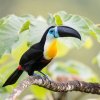
One particularly funny example was when I saw a small zoo's facebook page talk about some of its animals... and I figured it must've been made using ChatGPT... as it talked about the zoo's resident Channel-Billed Toucan; a 'vibrant symbol of the rainforest's beauty' .... with a 'colourful beak'.
upload_2023-11-12_16-44-33.jpeg
I mean, I guess if you looked at that under a microscope of some kind you'd find some good colours.... but as it is it is nothing to write home about...
When ChatGPT talks about animals, it tends to talk about how they 'embody' things, how they 'remind' us of other things... as if humans are centric; and animals are merely entities from which to serve as reminders and embodiments and so on... not unlike the Greeks. And given that it was based off what humans had written... maybe that's how it is with people too.
 

Attachments

  • upload_2023-11-12_16-44-33.jpeg
    upload_2023-11-12_16-44-33.jpeg
    26.2 KB · Views: 179
I wonder why Heather Hall thought the blue-gray tanager is the most beautiful bird in the world (10 Most Beautiful Birds In The World).
Sometimes I'm conflicted how to feel about these websites...
on one hand they are not major organisations like say the BBC. The people who are paid to write for them usually do not have much more research than say a quick google's search.. and so of course there will be errata and peculiarity.
But on the other hand, sometimes content farms such as these can get audiences that rival or even exceed such major organisations. And so more people are exposed and misled...
 
The Natural Predator Solution


Within the movement of compassionate conservation, the idea that we shouldn’t cull non-native ungulates to reduce their impact or, better yet, eradicate them to remove their negative impacts, there’s one big argument that they often use: give native predators greater protections so they can control non-native ungulates.


The idea sounds great—another reason to protect native predator species and a potential solution to the invasive species issue. Some native predators will prey on invasive ungulates. Cougars prey on feral hogs, feral equids, gemsbok in New Mexico, and aoudads. American Alligators prey on feral hogs and so do American Black Bears. Grizzlies and Wolves occasionally prey on feral horses in Canada, and Dingoes will prey on feral deer, feral pigs, feral cats, and foxes. So to their point, native predators can help control some invasive species.


But we cannot kids ourselves: Giving native predators more protection, while that’s a great thing, isn’t the answer to the invasive ungulate problem. At least not to the entire problem.


Let me explain.


First, we once again need to ask ourselves what the goal is of invasive species management. The ultimate goal of it is eradication. Not keeping their numbers in check or maintaining them for recreational purposes or keeping them around due to “symbolism” or “cultural” nonsense. The real goal is eradication. But of course, this isn’t going to happen because you have people who like introduced ungulates way too much. And because of that, conservationists I believe have shown too much restraint in reaching that goal.


The second reason it isn’t the solution is that native predators aren’t going to be helpful in controlling every single invasive ungulate. Sure, cougars prey on feral horses, but they don’t kill enough of them to cause the needed decline in numbers. And dingoes aren’t going to help control feral horse, camel, and buffalo numbers. Yes, I’m very well aware of the video of a dingo pack going after a herd of buffalo. But predation on buffalo will be occasional, not common. While wolves in Yellowstone prey on bison, they haven’t prevented them from increasing their numbers to the point now where they’re causing damage to the park. And out of all canids, wolves are the best suited to hunt large game. So there’s no reason to think dingoes will control buffalo numbers or keep them on the move through fear. And no native predators in Columbia are going to even think of preying on hippos. Heck, even in their native range they don’t experience much predation period. So yes, native predators could help control some invasive ungulates, but there are the species that humans would still have to control.
 
I do think there's another thing - the conservation of things we would like to conserve.
In particular, the idea of engineering 'natural' landscapes for ourselves. We take patches of land to put to use, say to turn into a playing field, and then we hastily again plant a patch of woodland which works to look like a woodland - not so much to fulfill what a natural forest could provide. It could provide some degree of shelter for nesting birds and maybe some mammals - but it's a bit useless in comparison.
And certainly the jaguar's attitude towards the Columbia hippos shows one thing to myself - hippos have not very much established themselves as part of the ecosystem. They fulfill some niche in a given area, but they do not experience population control, nor is there any pressure for them to be protective of their young or move to other areas periodically. And there is almost certainly no reason to have horses on the plains of North America - for there pronghorn have established themselves as the grazing herbivore - but alas, people like to look at horses.
 

Am I the only one watching this thinking "Ya know, these supposed ecological benefits would be replicated by American Bison. So maybe instead of releasing feral horses, maybe you should focus on helping restore bison to parts of their former range."

As far as I'm aware, no studies document these supposed benefits. But what has been well-documented in the scientific literature is the negative impacts of these horses.
 

Am I the only one watching this thinking "Ya know, these supposed ecological benefits would be replicated by American Bison. So maybe instead of releasing feral horses, maybe you should focus on helping restore bison to parts of their former range."

As far as I'm aware, no studies document these supposed benefits. But what has been well-documented in the scientific literature is the negative impacts of these horses.
Yes, it seemed the video was largely about how horses make good habitat for horses.
 
Back
Top