
I'm going to force myself to try and finish this this week before I write anything on the German zoos I visited, here's hoping anyway!
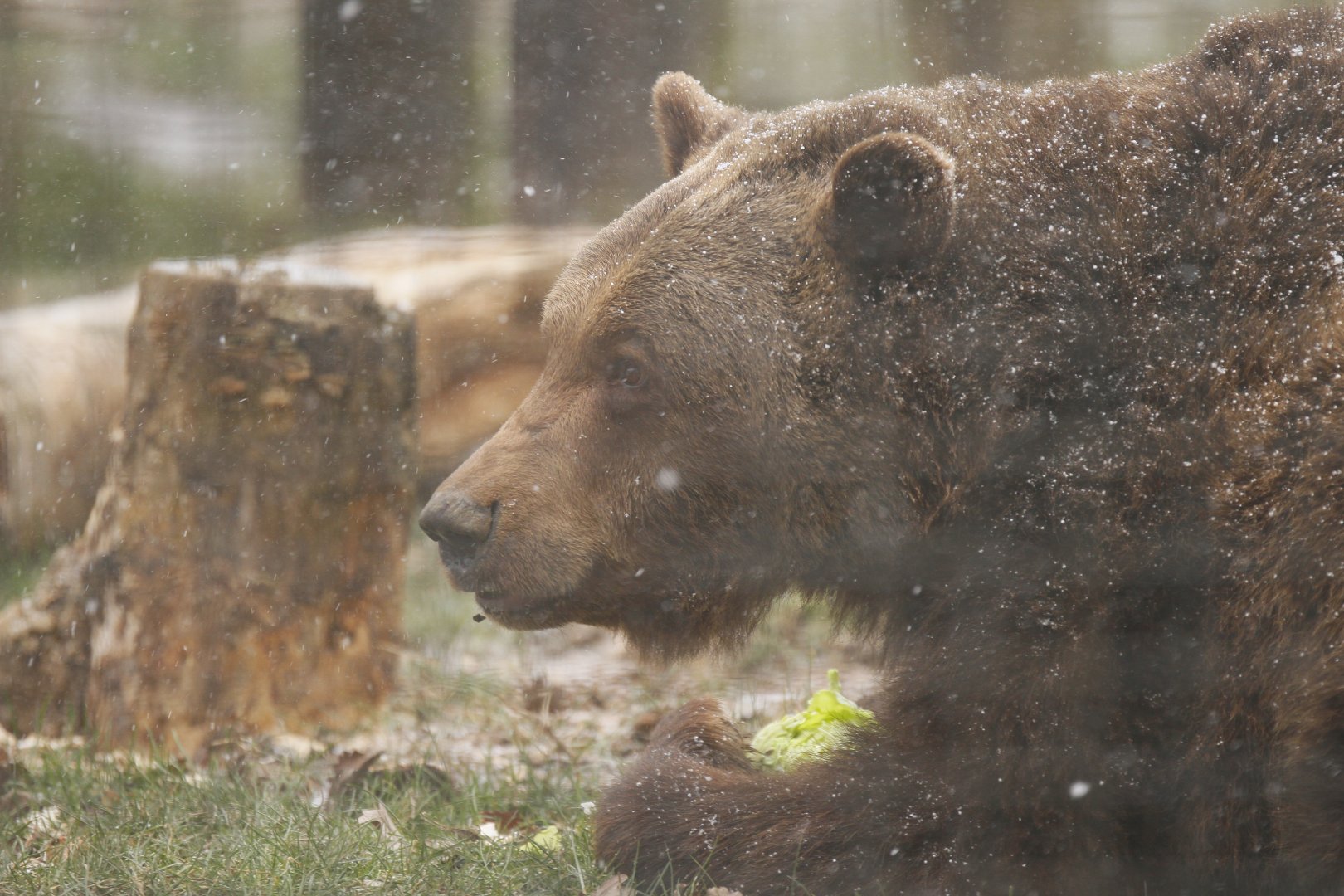
From the large hoofstock area, and after passing the small carnivores in the centre, the wood opens out a bit into the large bear enclosure. Though the high walkway was closed due to there being ice everywhere, you can still get good views of the enclosure from the ground, which thanks to the space and enrichment within was certainly one of the best bear exhibits I've seen. The bears themselves were at the far end of the enclosure, in a seperate area which was specifically for them to hibernate in. They had just begun to emerge for the year, but due to the cold snap the keeper I got talking to was concerned that they were going to go back into hibernation so they were trying to encourage them to remain as active as possible by feeding them low-calorie foods (cabbage in this case) to keep them active. As we were chatting the first snow flurry passed though which brightened the place up somewhat, as well as providing some nice photo opportunities.
The wolf enclosure was undergoing repairs/refurbishment in time for spring, so unfortunately they were being held in the smaller section at the back. I wasn't entirely sure what was happening with the maintenance, but it appeared to be aimed at improving the viewing opportunities for the public with new glass windows under cover.
Near the wolves were a couple of small enclosures for carnivores, red squirrels, and owls. The carnivore enclosures were particularly interesting, usually providing a mixture of indoor and outdoor viewing opportunities, the former often being themed to represent an underground tunnel which was pretty neat. This area (which has a lot more paths through it than the big loop past the bison and deer) held a lot of smaller species, including the rat barn, corvid aviary and two of my favourite areas, the bat care centre, and the nocturnal house. Granted, I didn't actually see anything in either exhibit, but that didn't stop them from being enjoyable. ZTL shows that they have previously housed common and soprano pipistrelles, though nothing at the moment.
In the corner of the park is the beaver exhibit, which looked pretty good. Though it decided not to come out and play, fortunately the exhibit allows for a good look into the sleeping quarters through some glass which was very much appreciated. I followed the loops back round, finding my way to the honeybee area (which was really nicely done, with plenty of interp) and watching the foxes romping around. All in all I spent a very enjoyable two hours at Wildwood, I'd love to try and return one summer when things aren't hibernating!
Howletts 26.02.2018
I left Wildwood straight for Howletts which happens to only be a short distance away. Though the park was open, and preparing for the forecasted snow, I was pretty much the only visitor there, which was pleasant, but did leave to a rather dead atmosphere, especially with the lack of animals out braving the cold. I know it's difficult to make a solid impression about a zoo in winter, so I tried to stay positive, even with the no-shows, the same distant 'impossible to photograph through' enclosures, and the fact that I'm not really that bothered about primates. Why I chose to go to one of the most primate-focused zoos in the UK in winter then I'm not so sure, but I did.
However, the park won big points almost immediately for having a large group of dhole near the entrance, a fantastic species I rarely get a chance to watch. They weren't too bothered about the cold, and were quite happily running around and socialising.
Following the trail north I headed for the black rhinos and outdoor elephant paddocks, nearly missing the bongo to the right. 4 of the rhinos were out and about which was great to see, especially with one of the females sporting some of the finest horns I've seen on a black rhino, which really was quite impressive. Unsurprisingly the elephants weren't around on the pastures, presumably out of choice alongside safety concerns with the ice. I left the viewpoint, and wandered through the main cat section, punctuated with the occasional primate exhibit, though unsurprisingly if I did see any of these species it was when I caught a glimpse of one in the indoor areas.
I carried on over the bridge, enjoying the red river hog exhibit as I went. One of the really nice things about Howletts and Port Lympne is the often large numbers of individuals that they have on display with their herbivores, I don't think I've seen quite so many RRHs in one place before. from here I walked past the completely empty elephant stalls and up toward another of the elephant sections. Sadly they all proved to be tucked up inside, with only some semi-fresh dung on the floor to indicate that they were actually around. Various other species were also no shows, though the Javan lutung of all things were apparently unconcerned by the weather, as were the clouded leopards.
I finally found my way to the ratels, another awesome taxon that I rarely get to see. Though he was stereotyping a bit, it was still very nice to watch the male romping, though the female and her young didn't show up. From here I wandered around the rest of the deer paddock and past the bison, though the number of no shows did really impact my enjoyment of this side of the park. However, as I finished my first loop, and headed for the entrance to start again things began to warm up a little bit, which seemingly encouraged a few things to poke their noses out.
On the second run through, I managed to find a number of species now actually out and about, including the serval, greater kudu, fishing cat, and finally, right when I was giving up hope about seeing them, the elephants. Despite passing the stalls a number of times through the afternoon, it was only a big truckfuil of branches that encouraged them outside, for about 5 minutes. It was great to watch them devour entire branches up close, though they were clearly not happy about being outside.
And with that, I headed for the exit. Though my write-up is fairly short, I ended up spending nearly 4 hours at Howletts, much of it staring into empty enclosures (I really wanted to see that margay) and walking around. I came away rather glad that I'd done, seeing as I'd really enjoyed watching the ratel, dhole and clouded leopards, but I think Howletts really suffers from its lack of taxonomic diversity. I know that's not the foundation's aim, but as a zoological attraction, in my eyes it pales in comparison to other places which offer similar large enclosures rich in stimulation for the mammalian inhabitants, but with other enclosures for smaller species interspersed throughout. I know it's somewhat like judging a toaster on its ability to be a microwave, but I think large zoos should be promoting a balanced conservation message for all taxa (see Bristol and ZSL in particular), but still leaving space for their particular taxonomic specialities.
Though I very much enjoyed portions of my time at Howletts, and can really appreciate the high enclosure quality and interesting inhabitants, I don't think it's ever a place that would be high up on my list of zoos to visit again.
And with that, I finished my trip to Kent. I'd enjoyed my time in the county, and I'll definitely be back to Wingham in a year or so to see how things have developed. Preferably in the summer...
From the large hoofstock area, and after passing the small carnivores in the centre, the wood opens out a bit into the large bear enclosure. Though the high walkway was closed due to there being ice everywhere, you can still get good views of the enclosure from the ground, which thanks to the space and enrichment within was certainly one of the best bear exhibits I've seen. The bears themselves were at the far end of the enclosure, in a seperate area which was specifically for them to hibernate in. They had just begun to emerge for the year, but due to the cold snap the keeper I got talking to was concerned that they were going to go back into hibernation so they were trying to encourage them to remain as active as possible by feeding them low-calorie foods (cabbage in this case) to keep them active. As we were chatting the first snow flurry passed though which brightened the place up somewhat, as well as providing some nice photo opportunities.
The wolf enclosure was undergoing repairs/refurbishment in time for spring, so unfortunately they were being held in the smaller section at the back. I wasn't entirely sure what was happening with the maintenance, but it appeared to be aimed at improving the viewing opportunities for the public with new glass windows under cover.
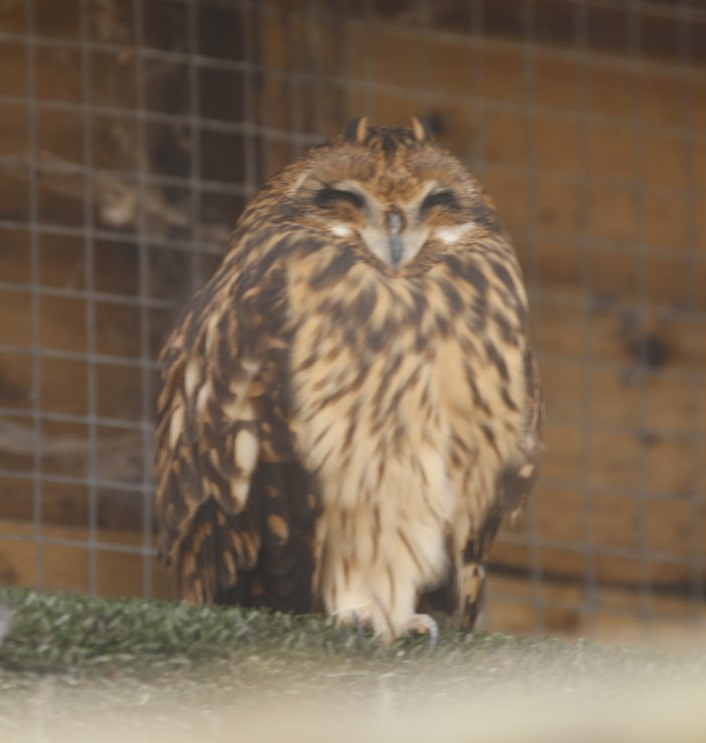
Near the wolves were a couple of small enclosures for carnivores, red squirrels, and owls. The carnivore enclosures were particularly interesting, usually providing a mixture of indoor and outdoor viewing opportunities, the former often being themed to represent an underground tunnel which was pretty neat. This area (which has a lot more paths through it than the big loop past the bison and deer) held a lot of smaller species, including the rat barn, corvid aviary and two of my favourite areas, the bat care centre, and the nocturnal house. Granted, I didn't actually see anything in either exhibit, but that didn't stop them from being enjoyable. ZTL shows that they have previously housed common and soprano pipistrelles, though nothing at the moment.
In the corner of the park is the beaver exhibit, which looked pretty good. Though it decided not to come out and play, fortunately the exhibit allows for a good look into the sleeping quarters through some glass which was very much appreciated. I followed the loops back round, finding my way to the honeybee area (which was really nicely done, with plenty of interp) and watching the foxes romping around. All in all I spent a very enjoyable two hours at Wildwood, I'd love to try and return one summer when things aren't hibernating!
Howletts 26.02.2018
I left Wildwood straight for Howletts which happens to only be a short distance away. Though the park was open, and preparing for the forecasted snow, I was pretty much the only visitor there, which was pleasant, but did leave to a rather dead atmosphere, especially with the lack of animals out braving the cold. I know it's difficult to make a solid impression about a zoo in winter, so I tried to stay positive, even with the no-shows, the same distant 'impossible to photograph through' enclosures, and the fact that I'm not really that bothered about primates. Why I chose to go to one of the most primate-focused zoos in the UK in winter then I'm not so sure, but I did.
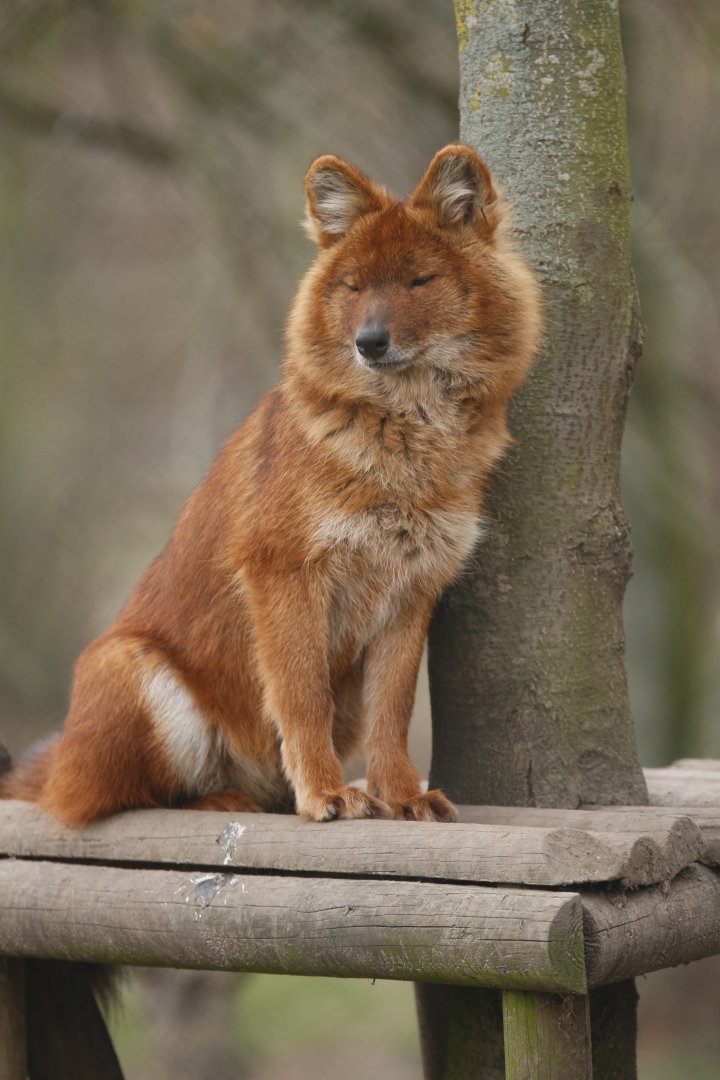
However, the park won big points almost immediately for having a large group of dhole near the entrance, a fantastic species I rarely get a chance to watch. They weren't too bothered about the cold, and were quite happily running around and socialising.
Following the trail north I headed for the black rhinos and outdoor elephant paddocks, nearly missing the bongo to the right. 4 of the rhinos were out and about which was great to see, especially with one of the females sporting some of the finest horns I've seen on a black rhino, which really was quite impressive. Unsurprisingly the elephants weren't around on the pastures, presumably out of choice alongside safety concerns with the ice. I left the viewpoint, and wandered through the main cat section, punctuated with the occasional primate exhibit, though unsurprisingly if I did see any of these species it was when I caught a glimpse of one in the indoor areas.
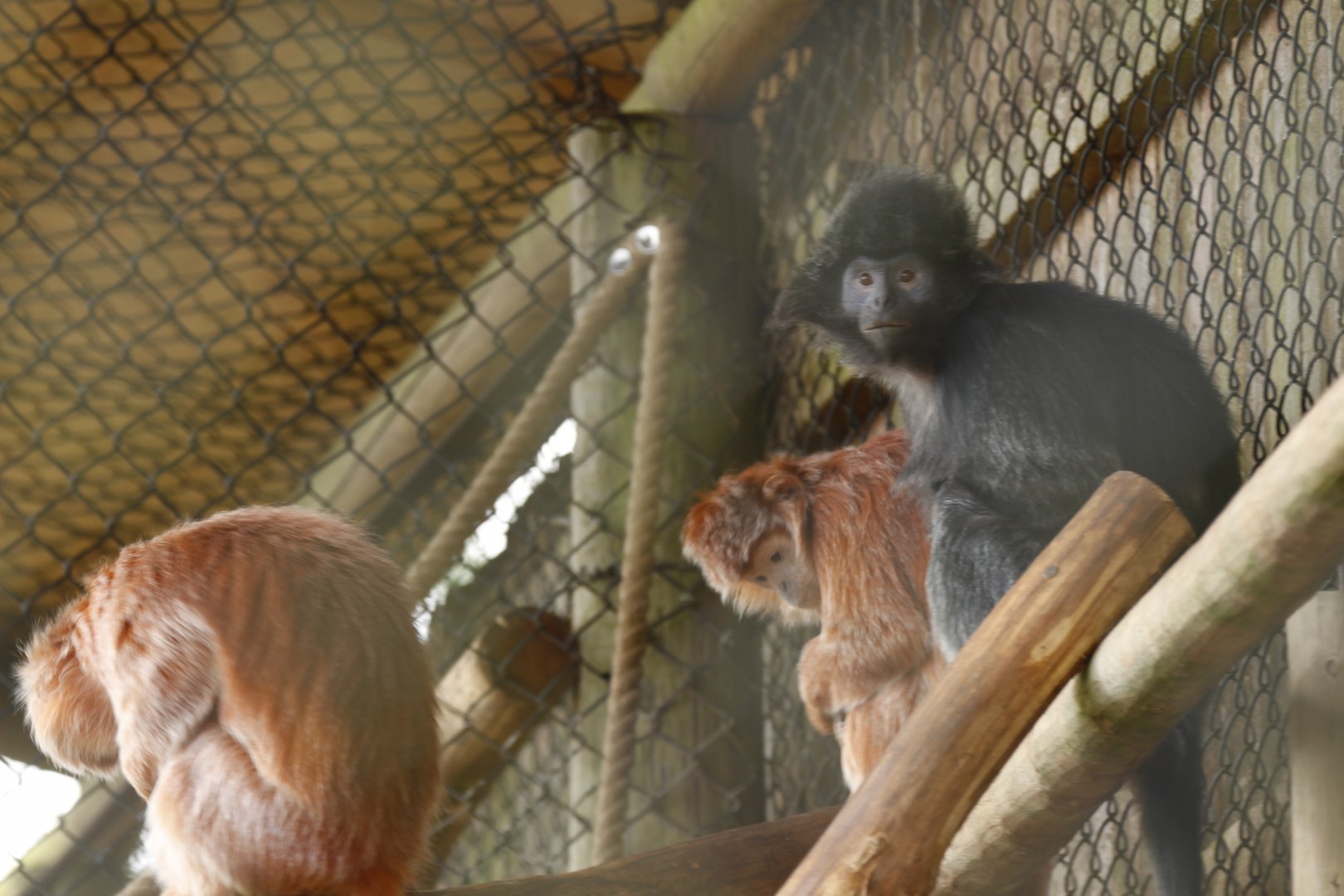
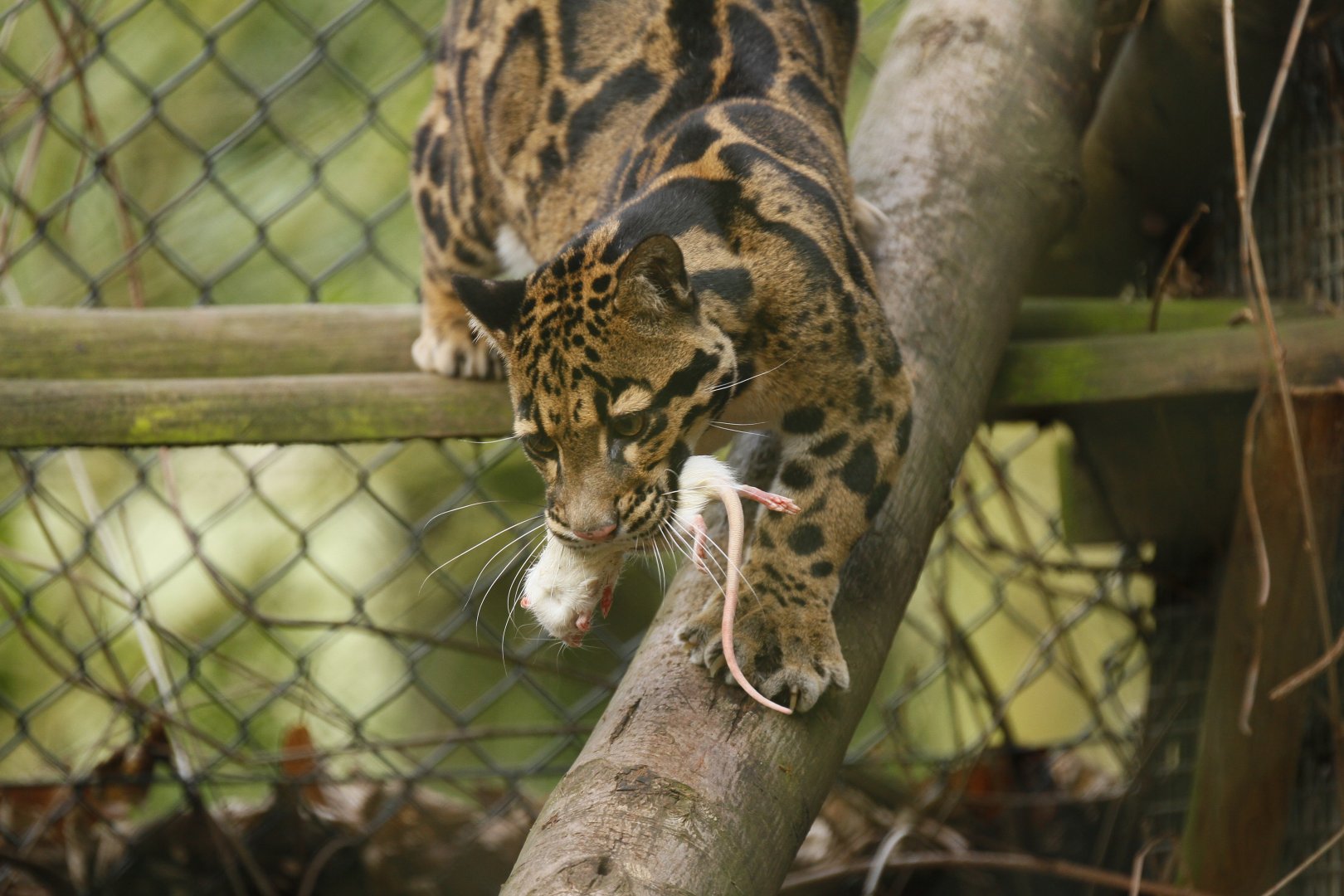
I carried on over the bridge, enjoying the red river hog exhibit as I went. One of the really nice things about Howletts and Port Lympne is the often large numbers of individuals that they have on display with their herbivores, I don't think I've seen quite so many RRHs in one place before. from here I walked past the completely empty elephant stalls and up toward another of the elephant sections. Sadly they all proved to be tucked up inside, with only some semi-fresh dung on the floor to indicate that they were actually around. Various other species were also no shows, though the Javan lutung of all things were apparently unconcerned by the weather, as were the clouded leopards.
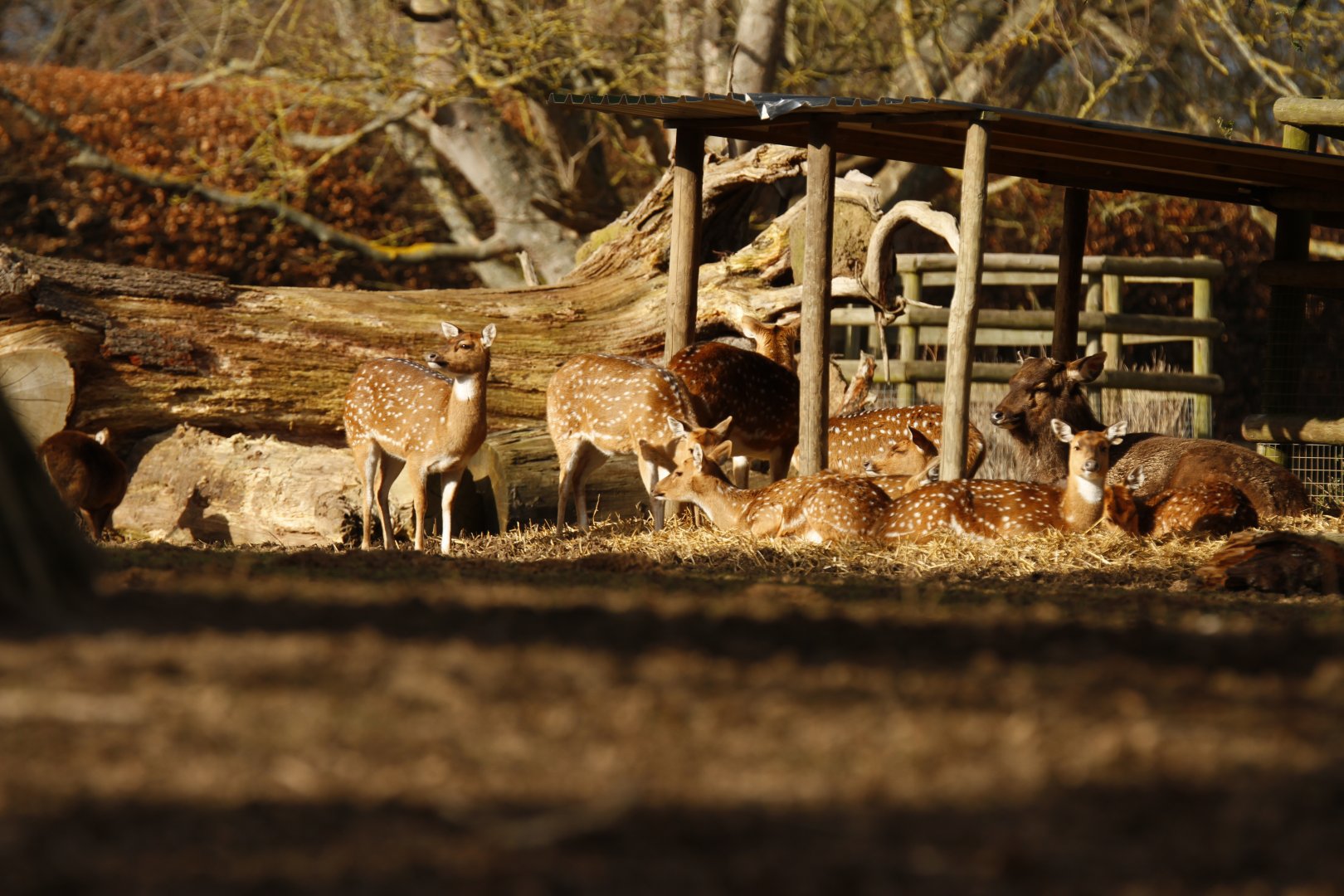
I finally found my way to the ratels, another awesome taxon that I rarely get to see. Though he was stereotyping a bit, it was still very nice to watch the male romping, though the female and her young didn't show up. From here I wandered around the rest of the deer paddock and past the bison, though the number of no shows did really impact my enjoyment of this side of the park. However, as I finished my first loop, and headed for the entrance to start again things began to warm up a little bit, which seemingly encouraged a few things to poke their noses out.
On the second run through, I managed to find a number of species now actually out and about, including the serval, greater kudu, fishing cat, and finally, right when I was giving up hope about seeing them, the elephants. Despite passing the stalls a number of times through the afternoon, it was only a big truckfuil of branches that encouraged them outside, for about 5 minutes. It was great to watch them devour entire branches up close, though they were clearly not happy about being outside.
And with that, I headed for the exit. Though my write-up is fairly short, I ended up spending nearly 4 hours at Howletts, much of it staring into empty enclosures (I really wanted to see that margay) and walking around. I came away rather glad that I'd done, seeing as I'd really enjoyed watching the ratel, dhole and clouded leopards, but I think Howletts really suffers from its lack of taxonomic diversity. I know that's not the foundation's aim, but as a zoological attraction, in my eyes it pales in comparison to other places which offer similar large enclosures rich in stimulation for the mammalian inhabitants, but with other enclosures for smaller species interspersed throughout. I know it's somewhat like judging a toaster on its ability to be a microwave, but I think large zoos should be promoting a balanced conservation message for all taxa (see Bristol and ZSL in particular), but still leaving space for their particular taxonomic specialities.
Though I very much enjoyed portions of my time at Howletts, and can really appreciate the high enclosure quality and interesting inhabitants, I don't think it's ever a place that would be high up on my list of zoos to visit again.
And with that, I finished my trip to Kent. I'd enjoyed my time in the county, and I'll definitely be back to Wingham in a year or so to see how things have developed. Preferably in the summer...