Summary of Dudley Zoo and Castle in 2020
Well, here we are, it’s that time of year again already and gladly so. Although no one really wants to look back on anything to do with 2020, we shall, with inexorable intransigence, retain some normality and analyse all the things that happened at Dudley Zoo and Castle over the
previous year before we optimistically continue with 2021.
Upgraded, refurbished, new, and future exhibits.
- The orangutan enclosure (future upgraded exhibit), African wild dogs, and the impact of Covid-19 on the zoo.
To start off with a bit of background, in 2019 the zoo passed the £500,000 mark of their aim to raise £800,000 by the year 2020 to build a desperately needed brand-new additional Bornean orangutan outdoor enclosure. In 2019 the zoo said that fundraising was right on track for work to begin in the winter of 2020, because in 2020 they would be able to put in the rest of the funds that were still needed.
We knew from when the project was first announced in 2017 that the new outdoor orangutan enclosure will be constructed on the site of the African wild dog enclosure. Five dogs (four brothers called Diallo, Azizi, Ochi and Gamba, and their sister called Subira) joined Dudley zoo from Chester zoo in June 2016. At the start of 2020, I believe that Dudley had four African wild dogs; all aged at least 10 years old (I think Azizi died some years ago or perhaps moved to another collection at some point). So, with their enclosure being prime real-estate, the ongoing question was: to make way for the orangs would the remaining wild dogs be leaving the zoo, or would they be rehoused elsewhere on site, and if so, where?
It felt more likely that the pack of four would leave the zoo as there weren’t any existing empty enclosures, that also had appropriate housing, within the zoo that seemed anywhere near suitable for them to move into. Neither was there any obvious empty space large enough on the zoo premises to build a brand-new enclosure for them. On top of that, with the zoo planning to spend enough money building the new orang enclosure, it felt unlikely that the zoo would want to spend money building a new enclosure for a small, elderly, related pack that were being phased out. The question lingered on for most of 2020.
In early January, the zoo restated that work on the new outdoor orang enclosure should start by the end of 2020.
In late January, the Express and Star published an online article discussing the increase in visitors to the zoo in 2019 as a result of improvements to the site. In the final few paragraphs, the article went on to mention the zoo’s plans for further major improvements in 2020; notably building a new outdoor enclosure for the zoo’s Bornean orangutans as well as creating a new brown bear enclosure in the bear ravine. Towards the very end of the article was the line;
‘
A few animals will also be moved around the site, including the African wild dogs, as their current enclosure will become the new orang enclosure. A new enclosure will be built for our four wild dogs’.
So, part of the question had now been answered; we now knew the wild dogs would be staying at the zoo. However, this statement still came as a surprise because, unless there was going to be an upcoming major announcement, like the reindeer and peccaries leaving and their enclosures being merged into one, or the giraffes or lions leaving, then no one had any idea where a new African wild dog enclosure could go. The current bush dog enclosure was suggested by a zoochatter as a possible location, but I think most people agreed that that enclosure would be far too small, and the current housing wouldn't be suitable for the African wild dogs either and there wasn’t nearly enough room to build any that would be.
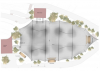
In March it was noticed that the planning documents for the new orangutan outdoor enclosure had been uploaded to the planning application area of the Dudley MBC website. The plans showed that, instead of the enclosure being covered over with steel mesh, supported by 10-metre-high pillars, as was originally proposed, the zoo were now going with an open-topped enclosure with Monkey World style perimeter fencing. Although, most importantly, the plan for the new orangutan outdoor enclosure to encompass the entirety of the existing African wild dog exhibit remained intact (see
Figure 1).
View attachment 473963
Figure 1: An up-to-date digital plan of the proposed new orang enclosure.
To be honest I prefer this change to an open topped enclosure. Whilst great for brachiation, I think overhead netting doesn’t look great once it starts to sag and feel ‘oppressive’ (see Twycross’s snow leopard enclosure). Hopefully an open-topped enclosure will also mean they can install taller climbing structures. On top of that, I imagine the planned new fencing will need far less maintenance and cost much less; hopefully leaving more funds left over to extensively furnish the new enclosure.
Another observation: when the orang project was first announced, the zoo stated that the orangutans would be sharing their new outdoor area with gibbons; the new gibbon house would be located on the site of the African wild dog dens (see
Figure 2). However, in addition to the change in fencing, the online planning documents included no mention of gibbons and the new digital plan did not show the gibbon house (see
Figure 1). I think some people were pleased to see this change too, as the current gibbon enclosure, albeit with some minor negatives, is fairly decent (presuming it was the zoo’s current gibbons that were planned to move in and not a different species joining from another collection) and a particular favourite with visitors. I think including the gibbons, although a nice idea, would have just been needlessly overcomplicating the project and unnecessarily adding to the cost. All that needs to be achieved is a top-draw new outdoor area for the orangs, nothing more, nothing less.
View attachment 473964
Figure 2: The previous plans for new orang enclosure showing gibbon house and overhead netting.
However, after all the fundraising and planning over the past few years, there was something on the horizon which nobody expected. It was in March that the pandemic began to take a serious foothold in the UK and on 23rd March, Dudley, like other zoos and animal parks across the United Kingdom, closed their gates to the public for the first national lockdown, which lasted for nearly 3 months until 15th June. Due to there being no visitors during this period, Dudley like every other closed attraction in the UK had its income slashed to almost zero during what would normally be one of the busiest times of the year, while still coping with large financial outgoings. During the first lockdown the zoo was closed for the school Easter holidays, and Summer half-term, and May Day; all vitally important peak times of year when zoos would normally recoup their losses from the meagre Autumn and Winter months. Even though back at the start of January the zoo said that they intended to start work on the orangutan enclosure at the end of the year, the world had changed significantly since then and there was no way of knowing how soon normality would return. Post-lockdown 1, it looked certain that the long closure, and uncertain outlook, would result in a severe delay to the start date of the project or possibly result in its cancellation altogether. This is because the zoo’s original statement that in 2020 they would be able to put in the rest of the funds, seemed no longer feasible, since no funds were being made and the site would need to go into survival mode, thus using up any funds they had in reserve.
On a visit to the zoo on 19th March, just before lockdown 1, the counter for the running total of funds raised for the orangutan project showed that, as of 29th February 2020, a total of £616,380 had been accumulated; roughly 75% of their goal. On a visit on 13th August the total was still the same. This is because, after the closing for the first lockdown, the zoo switched focus and were no longer asking if the public could donate towards the orang project but instead asking if the public would kindly donate to the zoo’s JustGiving page in order to support the zoo as a whole.
In April, the zoo was featured on local lunchtime news. The zoo director was interviewed, who said;
"The majority of our income comes from people paying to come onto the site. We're at a period now where we are having to live off the reserves that we build up. These reserves were set aside for the development programme for some of the animal exhibits, we're doing a big extension to the tiger exhibit (for example)
, so these plans are going to have to be, not shelved, but they will have to be delayed."
In May, there was an online article published by the Shropshire Star in which the zoo director was interviewed again. It was revealed that, at that point in time, the zoo was losing around £50,000 a week while they were closed. Being a zoo, they were also unable to furlough all their staff due to keepers needing to be on site daily to care for the animals. Importantly, it was also confirmed in the article that work on the orangutan project would likely be postponed rather than cancelled. However, it wasn’t known when work would be postponed to, because at that point, as the warm sunny days frustratingly ticked by, the zoo had been given no indication from the government of when they would be allowed to reopen. On top of that, when zoos would finally be allowed to reopen after lockdown, they knew they would have to seriously restrict the number of visitors permitted on site at any one time. These were certainly worrying times for everyone.
The completion of a new outdoor orangutan enclosure would be a huge turning point for the zoo and vital for its future progress. The orangutans have needed a new outdoor area for decades and it has no doubt been a barrier that has held the zoo back with their visitor numbers and overall public perception. Whilst the animals are very well cared for, they have one of the worst outdoor enclosures for orangutans in Europe, let alone the UK. However, whilst over the years they have made small improvements to the indoor and outdoor areas on a shoestring budget, the zoo has been unable to do anything substantial about it until now. Around twelve years ago, the zoo was seeing annual visitor numbers of approximately 160,000 people and needing to rely on help from the local authority, but over the past few years they have been getting nearly double that figure; in 2019 they saw their highest visitor numbers in more than 30 years. The zoo has worked very hard at steadily improving the site to get to where they are now, and it is only recently that they have been making a surplus and hence been able to invest in larger, more expensive, and much more needed improvements like the orang project. This is why is it all the crueller that, after so many years of hard work and waiting, just as the zoo was finally in a position to start the orang project, the pandemic hits and they have had to instead dig into their cash reserves that they had saved up, in order to survive the losses incurred in lockdown. That being said, the zoo fully acknowledged that lockdown was a completely necessary measure to keep people safe which is of course the top priority; the issue was the lack of support and communication from the government (many zoos were frustrated at having to stay closed, despite being large open-air sites where it is easy to socially distance, whilst non-essential indoor shops etc. were allowed to reopen first).
Some other things of note regarding the impact of Covid-19 on the zoo:
- The zoo set up a JustGiving page at the start of lockdown 1, so the public could still support the zoo whilst they were closed. By the end of 2020 the public had donated over £40,000 to the zoo.
- When zoos finally reopened after the first lockdown, Dudley released a superbly done video welcoming people back to the zoo and explaining all the reassuring safety measures that they had put in place. These safety measures included:
- Entering the zoo via the old Tecton turnstile entrance (going through the normal entrance would have meant going indoors).
- A new one-way system throughout the entire site, which was indicated via a white line dividing the footpath as well as arrows showing which direction to take.
- All zoo staff wearing facemasks.
- Land-train and chairlift not in operation.
- Fun fair closed.
- No daily feeding time talks or birds of prey display.
- Closing access to the castle keep, however the castle courtyard stayed open as it formed part of the one-way route.
- Closure of all indoor areas, walkthrough exhibits and the gift shop (the gift shop was allowed to open post lockdown 2). The toilets remained open but with a one-in one-out system in place.
- Food outlets were open, closed or offering a takeaway service only depending on current Government legislation at the time.
- Members of staff stationed at key points around the zoo to marshal anyone not obeying social distancing etc.
- Hand-sanitiser stations situated at numerous locations across the site.
- Stickers on viewing windows reminding visitors not to touch the glass.
- Strictly admission via pre-booked online tickets (for a specific date and time slot) only.
- Providing all visitors with a new revised map showing the one-way route, closed indoor areas, and locations of hand sanitisers etc.
- Exiting the zoo via a large gate, next to the chimp house, that leads straight into the car park (at some point the exit was changed to be the same as the turnstile entrance).
- Capping the number of visitors allowed on site at any one time (post-lockdown 1 it was only 300 per day to start with).
- All safety measures remained in place throughout 2020 and will likely continue to some extent throughout 2021 and beyond.
- There was massively positive feedback from members of the public, as well as several zoochatters, who visited the zoo after lockdown 1 regarding how effective and reassuring the new safety measures were.
- The annual Under Five’s days in June were cancelled.
- The zoo’s popular ‘film nights’ in the castle courtyard were cancelled.
- On Saturday 31st October, a second lockdown in England was announced, which would last for 4 weeks from Thursday 5th November to Wednesday 2nd December; zoos were again forced to close.
- The zoo was unable to access the government’s £100m Zoo Animals Fund.
- Following the 2nd lockdown, the zoo offered 25% discount on all full-priced adult and child tickets throughout December. All indoor areas within the zoo remained closed, apart from the Gift Shop.
- Santa’s grotto was cancelled in 2020 too. In 2018 and 2019 the Santa’s grotto brought in over £100,000 of income for the zoo.
- On 31st December, the borough of Dudley, along with the majority of the West Midlands was placed into Tier 4. However, the zoo was quick to confirm that they were still able to stay open. All indoor areas remained closed, including the gift shop.
Anyway, back to the wild dog situation. In August, two months since reopening after lockdown 1, the zoo again said that some of their major developments would be put on hold, but they also stated they were going to try to persevere with the orang project. A basic plan of action was revealed. The African wild dogs were to be rehoused in the bush dog enclosure. Huzzah! The question had finally been answered, however personally I thought it a little disappointing since, as mentioned above, the bush dog enclosure seemed far too small for the wild dogs. To make way for the wild dogs, the bush dogs would be moving into a new enclosure built for them on the site of the small primate enclosures behind the old Discovery Centre. The zoo then went on to say that, to make way for the bush dogs, they had already started rehousing several of their small primate species across the zoo. All this needed to happen before construction of the new orang enclosure could begin – more delay and more expense! The zoo then explained:
"We forecast the funding for each stage will be achievable as we work through the 12-month programme of construction, but this dependent on the site remaining open to visitors and that we’re not affected by any potential localised spike in covid infections."
(Since that quote, in 2020, there was a 2nd lockdown and the subsequent introduction of the tier system, which has its own restrictions).
However, after all of the above, on 29th December, the zoo announced that their two remaining African wild dogs, 12-year-old Subira and 10-year-old Ochi, had been euthanised on health and welfare grounds. Subira was PTS after suddenly deteriorating and Ochi was PTS because he would not have been able to integrate into a new pack and would not cope living on his own. The zoo did not say when or how Gamba or Diallo died, both of whom I am fairly confident were alive at the start of the year. This unexpectedly and abruptly brought an end to the African wild dog situation and meant the wild dogs would no longer end up in what I think would have been a substandard exhibit. It also means that the bush dogs no longer need to move, and hence neither will the small primates, unless they are already part way through construction or committed to do the work. On the positive side, hopefully the break in the upward chain for space will result in the start date for the orang project being brought forward, that’s if of course they are still in a position to do it.
So, to conclude the above paragraphs with very little in the way of actual conclusion, who knows if the plans for a new bush dog enclosure behind the old Discovery Centre and relocation of all the small primates around the zoo will go ahead, and who knows when the orang project will finally start, your guess is as good as mine. Something to keep a close eye on the horizon for.
- Tortoises (new exhibit)
After a large new sloth and small monkey enclosure was built in 2019 on the site of what was once the African-spurred tortoise exhibit, which was located between the Barbary sheep and Asiatic short-clawed otter exhibits, it was wondered whether the four mobile boulders would be leaving the zoo or were going to be rehomed elsewhere on site. After a visit to the zoo in March it was seen that a new enclosure for them had been built on the grass opposite the Colombian black spider monkey enclosure.
In all honesty I think it would have been better if the new exhibit, although well-built, was a little larger as it feels rather squeezed into its location. There doesn’t appear to be that much grass or space to roam for such large animals. I think a much better location could have been found, for example:
- by demolishing the boring farmyard,
- by placing the enclosure to the right of the wild bat cavern,
- by building it on the site of the children’s playground to the right of the camels (although I’d prefer it if the camel enclosure was extended into this space).
- Bear enclosure (future new exhibit)
In January 2019, the zoo announced that the bear project was the winner of the ‘2018 public token vote’, and that work on constructing a new ~£250,000 enclosure for brown bears in what is currently a large grass paddock below the bear ravine Tecton would begin in Winter 2019, with the bears hopefully in situ before the end of Spring 2020.
In February 2020, it was noticed that planning documents for the new bear enclosure had been uploaded to the planning application area of the Dudley council website. Even though at that stage we did not yet know if they had been approved, the plans for the outdoor area looked very impressive, especially with the fence going right to the top of the wooded hillside, although the housing seemed somewhat basic.
At this point we still didn’t know exactly where these bears would be coming from or how many, but that changed thanks to the keen eye of a zoochatter from the Czech Republic, who had seen an article in their local media. Zoo Bojnice in Slovakia would be sending 3.1 wild born brown bears to Dudley. Zoo Bojnice serves as a refuge station for injured and orphaned bears across the whole of Slovakia. However, the bear enclosure at Bojnice is apparently substandard and the zoo are actively looking for other collections willing to give some of their bears a new home. The individual bears planned to join Dudley zoo were named in the article as Žofia (f, b.2017), Fedor (m, b.2017), Kubo (m, b.2017) and Šimon (m, b.????); none of whom can be released back into the wild.
In March of 2020, it was seen that heritage organisation Historic England had finally replied to the zoo's planning application for the new bear enclosure and had stated they had no objections to the application, although personally I’m still not exactly sure what the eventual size and shape of the outdoor area will be.
Sadly, due to the zoo having to live off their cash reserves to survive being closed during multiple lockdowns as well as reduced visitor numbers throughout 2020, the bear project will be delayed until further notice. The zoo will focus on completing the orang project first. It isn’t known whether it is still the plan for the individual bears named above to eventually move to Dudley.
- Reindeer paddock (upgraded exhibit).
The reindeer enclosure was extended to incorporate the small woodland bank at the rear of the existing, entirely gravel, paddock. The original dividing fence between the two areas was kept intact apart from a new access gate. This is so that the bank may be closed to the reindeer during the winter months.
- Ibis aviary (new exhibit).
The 1950s Queen Mary aviary, opposite the Patagonian sea lion enclosure, was demolished to make way for a brand-new, slightly larger, timber-framed aviary for the zoo's Puna ibis and ringed teals. The Queen Mary aviary, despite its grandiose name, wasn’t very impressive and contained a random assortment of different species (lories, cockatoos, amazon parrots, various pheasants, agouti etc.) over recent years and so never really appealed that much. In 2017 it was apparently going to be turned into a breeding facility for rainbow lorikeets, but that never happened.
Anyway, after the ibis had moved into the newly built aviary, the zoo also said that their former home, the large aviary next to the otters, would then be demolished to make way for a small picnic area. This came as a surprise, as the ibis’s former aviary is one of the zoo’s largest and arguably best aviaries, and, at least from a visitor’s perspective, there doesn’t seem to be much wrong with it. On top of that, it did not become an empty enclosure once the ibis moved out, as it is also home to a pair of Demoiselle cranes, several little egrets and I think a few teals as well.
So, it’s safe to say that the zoo’s plan to demolish the former ibis aviary definitely raised a few eyebrows. However, the news that it would be replaced with a picnic area and kiosk was more of a cause for concern. This is because, for many people, that area stands out as being a particularly pleasant part of the zoo. It’s a nice quiet area and the surrounding topography makes you feel like you’re standing in a ‘bowl’, with interesting little exhibits on all sides. Demolishing the aviary and replacing it with a picnic area would spoil all that. I think a zoo’s ‘feel’ and ‘personality’ are very important aspects and should not be undervalued. It’s a big part of the reason why we enjoy visiting certain zoos.
It’s peculiar that the zoo would feel they need another picnic area, as just around the corner from the former ibis aviary is the Queen Mary ‘restaurant’, which has plenty of picnic benches and regular benches outside (and approximately 30 tables inside). There’s also the entire acre or so of castle courtyard that visitors can use as a picnic area. Furthermore, the floorspace of the old ibis aviary would only provide room for maybe three or four picnic benches, so it seems a completely gratuitous thing to do, unless of course the plan is for this tiny picnic area to be a stopgap until there is a further development in that area in the future.
As far as I know, by the end of 2020 the aviary which used to house the ibis remained unchanged.
- Tiger project (future upgraded exhibit)
The tiger project was first revealed in the summer of 2017, alongside the bear project and the chimpanzee project, as part of the ‘2017 public token vote’ and ended up as the eventual winner. The project involves extending the outdoor area of the current tiger enclosure, constructing additional climbing platforms, and building brand new modern housing with indoor viewing.
In the summer of 2020, after several attempts, the zoo was finally granted planning permission for the tiger project to go ahead. However, the zoo then had to explain that the project will sadly have to be put on hold for the foreseeable future. This is because of the zoo likely needing to use cash reserves, that they had saved up for the tiger project, to cover the long amount of time they were forced to close for the two national lockdowns in the UK during the year (and possibly more during 2021).
____________________________________________________________________________
Despite there being seemingly very little noteworthy news in the second half of the year (which was completely understandable given the circumstances), at the end of December a zoochatter visited the zoo and returned with news of some interesting and previously unknown developments…
- Cassowary enclosure (future new exhibit).
Work was almost complete on converting the old kangaroo enclosure, located to the right of the giant anteaters, into a new enclosure for a pair of Southern cassowaries. The new paddock is divided into 2 halves and has been extended from the original enclosure further towards the main pathway in front of the Barbary sheep enclosure. A large wooden public viewing gallery has been constructed in front of the enclosure. The exhibit is due to open with the Cassowaries in situ by Easter 2021.
Dudley zoo have held Southern cassowary in the past, in the same area as the new enclosure, with their last bird apparently dying in 2009 (although the zoo states 2007 according to signage outside the enclosure, but this could have been when the animal was taken off show).
The news of cassowaries returning to the collection came as a big surprise, as I had presumed, now that the last of the kangaroos has passed away, that the space would eventually be merged with the adjacent giant anteater enclosure. Southern cassowaries are yet another exciting species to either join or re-join the zoo in recent years.
- Black-and-white-ruffed lemur enclosure (future new exhibit).
A new enclosure was being constructed next to the chimpanzee enclosure to house the zoo’s group of black-and-white-ruffed lemurs that currently reside in the lemur walkthrough. Apparently, the reason for the new enclosure is because of large fights breaking out in the lemur walkthrough and it is hoped that a new home will provide better welfare for the lemurs. These fights could be territorial conflict with the ring-tailed lemurs or between their own species, perhaps because the size of the overnight housing in the walkthrough may be too small for the number of black-and-white-ruffed lemurs in the walkthrough group.
The reason for this new enclosure may also be so that the zoo’s smaller group of black-and-white ruffed lemurs (which I think is a breeding group), that live in an enclosure behind the old discovery centre, can then be rehomed in the lemur walkthrough. This would then create space for the new bush dog enclosure to be built (if that is still going ahead).
The precise location of the new lemur enclosure is either side of the path that leads to the main chimpanzee outdoor viewing area; to the right as you exit the lorikeet walkthrough. The new indoor housing is located on the grass bank on the left-hand side of the path. A new path runs down to the house, from the main path by the bear ravine, to allow viewing inside. The outdoor area is located on the right-hand side of the chimp path. The two sides, i.e. the housing and the outdoor area, are connected by overhead tunnels.
____________________________________________________________________________
Conservation token vote
Just like the previous year, in 2020 the zoo had another ‘conservation vote’. This was a vote for visitors, who added the voluntary 10% Gift Aid donation to their entrance fee, to decide which one of three worthy in-situ animal conservation projects the zoo should support.
The three candidates were:
Option 1: PROYECTO TITI
Option 2: SAVING VIETNAM’S WILDLIFE
Option 3: PROJETO BANDEIRAS E RODOVIAS – ANTEATERS AND HIGHWAYS PROJECT
The conservation project with the most tokens at the end of 2020 will receive £10,000 (made up of £2,000 each year for five years) and the two runners up will both receive a one-off payment of £1,000.
The winner has yet to be announced (that’s if they are still able to do it).
Visitor numbers
- Over the month of January 2020, the zoo saw a record breaking 11,688 visitors, which is a 47% increase on January 2019.
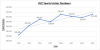
- The zoo revealed they welcomed 311,303 visitors over the previous year (2019), which is the highest number for more than 30 years:
Notable arrivals
- Male
Victoria crowned pigeon from Frankfurt Zoo, Germany, to partner the zoo's resident female in the lorikeet walkthrough. The pair have already produced a chick.
- Male
snow leopard, called Makalu (b. 29/05/2015), from Jardin de Plantes, France.
- Female
Asian palm civet, called Connie, from Askham Bryan Wildlife and Conservation Park near York. It is a new species for the zoo and shares an enclosure with the zoo’s binturongs.
- Two female
six-banded armadillos (sisters), called Becca and Lana, from Bristol zoo. They occupy the floor area of the howler monkey house.
- Female
Linne’s two-toed sloth, called Flo, from Dierenpark Amersfoort in the Netherlands to partner the zoo’s resident male Linne’s two-toed sloth.
Notable departures
(none reported)
Notable births and hatchings
• 0.1 gelada.
• 0.1 Sulawesi crested macaque.
• 1.4.1 Barbary sheep.
• 0.0.1 Ring-tailed lemur.
• 0.0.3 pygmy marmosets.
• 0.1 Colombian black spider monkey.
• 0.0.1 Victoria crowned pigeon.
Note: These are the births/hatchings in 2020 that were announced by the zoo. There may have been many more births/hatchings in 2020 that went unannounced.
Notable deaths
- Male Western-grey kangaroo, called Harold. He was quite elderly and the last of his species at the zoo. He and another male, called Lou, both arrived at Dudley from Chester Zoo in April 2006.
- 25-year-old breeding male Bornean orangutan, called Jorong. This was awful news and felt like a really significant loss, similar to when London lost their silverback gorilla Kumbuka; a very impressive breeding male, with so much potential, who passed away in his prime. Dudley stated that Jorong died in the presence of the zoo’s veterinary team and his keepers while undergoing treatment for a long-term illness. The zoo said a post-mortem would be carried out, but no results have been shared with the public. Jorong had been at Dudley zoo since 2008 after relocating from Dublin zoo. It’s incredibly sad that he never got to go into the zoo’s planned new orang enclosure or sire any more offspring.
- 3.1 African wild dogs.
Tectons
Dudley zoo contains 12 surviving Tecton buildings, which is the world’s largest single collection of these grade II listed structures.
In July, it was announced that the zoo had been awarded a grant of £120,000 from the Getty Foundation to allow them to begin developing plans to eventually renovate four of the zoo's 1930s Tecton buildings. These four Tectons are the discovery centre (the former moat café), Queen Mary restaurant, tropical birdhouse (i.e., the one above the lion enclosure), and the elephant house (currently used as off-show aviaries). Further funding would still be required to actually do the renovations.
In November, Dudley Council launched a public consultation to investigate ways of improving the centre of Dudley town. Three projects were being considered to regenerate the area. One of these projects was to redevelop the four Tecton buildings listed above at Dudley zoo for other uses (once they had been renovated of course).
The proposals would see:
1.) The old discovery centre turned into a catering facility.
2.) The elephant house turned into an enclosure for primates.
3.) The Queen Mary ballroom's function as a restaurant extended to have an outside dining area.
4.) Turning the tropical birdhouse into an education facility.
Castle
The grade I listed scheduled monument, Dudley castle, turned 950 years old in 2020. It was also added to the Heritage at Risk register which will open up new funding opportunities to secure the historic site for future generations.
Other things of note
• The zoo changed its name from ‘Dudley Zoological Gardens’ to 'Dudley Zoo and Castle'; a name it last used almost twenty years ago.
• A unique 30ft metal sculpture of a ring-tailed lemur was installed in the lemur walkthrough. Upon seeing the first few photos there were quite a few negative opinions of it, including from myself, but to be fair it wasn’t finished then. Upon seeing it in person, once it had been finished and properly positioned in the walkthrough, and reading the meaning behind it and the important conservation message it holds… I actually quite like it. On top of that I do think that for some reason quirky statues/sculptures and zoos do go hand in hand.
• An ultrasound 'pod' was built in the sea lion enclosure. In basic terms, it’s a small wooden hut with a platform on the side for the sea lions to stand on. In the side of the hut are two slats where vets can pass the ultrasound scanner through in order to scan the animals. The idea is that the vets are hidden out of sight in the hut, so that the sea lions don’t become too stressed, and the hut itself provides a dark area to allow vets to better visualise what’s on the monitor.
• The two Colombian black spider monkeys from Birmingham Wildlife Conservation Park that Dudley were temporarily caring for, after their enclosure at BWCP was burned down by arsonists, returned to Birmingham to be housed in a brand-new enclosure. The spider monkeys were being housed in the black lemur enclosure at Dudley zoo. For this to happen the black lemurs were moved into the lemur walkthrough, but since the spider monkeys have left the black lemurs have now moved back into their enclosure.
• The non-breeding group of Sulawesi crested macaques, that were housed in the same Tecton enclosure used by the Howler monkeys, moved into the hillside enclosure, to the left of the spider monkeys, that used to hold the bachelor group of Geladas.
• Just 9 days after zoos across the country had closed for the first lockdown, Dudley zoo got broken into. Police were alerted when the zoo alarm went off and, when officers arrived, they found a man helping himself to beers and wine in the Queen Mary restaurant. The person was arrested and subsequently charged. None of us zoo-starved Zoochatters were involved, but one Zoochatter was very quick to deny it was him

.
• A flamingo managed to escape the zoo on a rather blustery day in April. According to the zoo, a gust of wind carried the bird up into the air before it glided outside of its enclosure. The bird was seen walking down the main road outside the zoo by members of the public. The flamingo somehow made its own way back inside the zoo (possibly through the turnstiles by following the sounds of its flock?). A phone call from a member of the public led keepers to discover it on a grass lawn within zoo grounds, whereupon it was found to be unharmed and was quickly returned to its enclosure. Since this event the zoo has significantly raised the fence height of the flamingo enclosure and are considering netting it over completely.
• At least two agouti moved into the sloth and small monkey enclosure.
• Work continued on building (not by the zoo of course!) the new metro station adjacent to the zoo’s carpark, a short walk from the zoo’s entrance. Once finished, this will be a fantastic asset to the zoo as the increased accessibility should help bring in many more visitors.
• At least 3 red-breasted geese were added to the flamingo enclosure.
• The ring-tailed lemur house in the lemur walkthrough was extended slightly.
• A new enclosure was seen under construction near the capuchin enclosure, although we don’t know exactly what it will contain yet.
• An article in May, by the Shropshire Star, contained the line;
‘
Plans to extend the giraffe and tiger enclosures are also likely to be delayed, while the setback could also throw doubt on plans to reintroduce brown bears for the first time in 40 years’.
I think this is the first time the zoo has mentioned anything about eventual plans to extend the giraffe enclosure. Although personally I think the zoo should phase out their giraffes (all they breed are hybrids anyway) and then downsize by replacing them with Okapi (or even turn it into an additional tiger outdoor area). This is because, due to space constraints, I believe whatever could be done to the current giraffe enclosure would never be enough to raise it to modern standards and therefore not make it in any way future-proof, so they’d just be delaying the inevitable and would be in the same situation a few years down the line. Additionally, an okapi house would surely be much cheaper to build than a new giraffe house and the current giraffe paddock would probably not need to be extended. I imagine okapi are also much cheaper to keep than giraffe.
In summary
So, understandably 2020 did not turn out to be the great year for Dudley zoo that we expected, which was the case not just for all zoos but for all aspects of life. It became more about surviving rather than thriving, but even so the zoo did not stand still, they adapted. Despite everything they managed to continue and take small steps forward, which are just as important as the big steps right now. There are still many exciting things to look forward to on the horizon, which isn’t as far away as is looks…
“Those are dark clouds,”
said the boy.
“Yes, but they will move on,”
said the horse. “The blue sky above never leaves.”
- Charlie Mackesy
Zoos have been a welcome distraction for many people over 2020, long may they continue.
Things to look out for in 2021
- Any further mention that a new giraffe house and extended paddock are in the zoo’s very far future plans.
- Any mention of when work will start on the new orangutan enclosure.
- Will the gelada family group and Sulawesi macaques be swapping enclosures again?
- Will anything new occupy the former gelada bachelor group enclosure or will it continue to be home to the secondary group of Sulawesi macaques?
- Will there be tiger cubs this year?
- Any estimate of when, after being put on hold due to lockdown, work on the tiger project is likely to start.
- Any mention of when, after also being put on hold due to lockdown, work on a new brown bear enclosure in the bear ravine is likely to begin.
- Will there be any other improvements to visitor facilities? (In my opinion a new toilet block needs to be built somewhere on the zoo’s middle level. A children’s play barn, which they submitted extensive plans for but hit a wall for some reason, would also be hugely beneficial to the zoo).
- Will Sprout (nine-year old female Bornean orangutan) be leaving the zoo?
- Will a new breeding male Bornean orangutan join the zoo, either on a long or short-term basis?
- Completion of the new cassowary enclosure and the arrival of 1 or 2 Southern cassowary.
- Completion of the new black-and-white-ruffed lemur enclosure next to the main chimpanzee outdoor viewing area. Also, will the other group of black-and-white-ruffed lemurs, that live in an enclosure behind the old discovery centre, then move into the lemur walkthrough?
- Will the bush dogs stay where they are or move into a new enclosure behind the old discovery centre?
- Will the male and female snow leopards be properly introduced to each other (i.e. without a barrier between them) if they haven’t been already?
- The various small monkeys from behind the old discovery centre being rehoused across the site.
- What is the tall new enclosure by the capuchins for?
- Further progress on construction of the new metro station outside the zoo.
- Will the former ibis aviary be demolished and replaced with a small picnic area?
Useful/interesting links:
• A wishlist/ideas for the future thread can be found
here.
• The gallery can be found
here.
• To learn more about the history of the Tecton structures at Dudley Zoo, as well as the work that went into restoring some of them, a superb talk hosted by The Twentieth Century Society can be found
here.
• A thread about the history of some of the iconic animals at the zoo can be found
here.
• The zoo’s JustGiving page can be found
here.