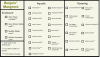
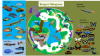
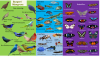
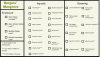
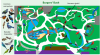
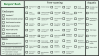
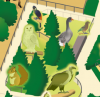
The Burgers' zoo guides have a different format from the other ones, separated into three guides. I made these to make it a challenge to spot them all (personally, I saw almost all the free-roamers in Mangrove and Desert)


The purple honeycreepers don't live in the mangrove anymore, do they?Burgers' zoo - Mangrove
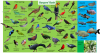
Species guide (Species names with pictures, to help identify the species)
View attachment 502010
The purple honeycreepers don't live in the mangrove anymore, do they?


Strange. Burgers' Zoo have said a while ago that when the red-legged honeycreeper was introduced in the mangrove, the purple honeycreepers were moved to the bush because the latter one does not occur in Belize.I have pictures from my last visit (28th of June) of both the Red-legged and the purple honeycreepers in Mangrove, so unless they were removed since then they're both still there
View attachment 502073 View attachment 502074

This is true and will happen slowly to all species that don't occure there but don't have a replacement for (yet). This one purple honeycreeper must've been a stay-behind they can't seem to catch.Strange. Burgers' Zoo have said a while ago that when the red-legged honeycreeper was introduced in the mangrove, the purple honeycreepers were moved to the bush because the latter one does not occur in Belize.

Gaiazoo - Monkey forest
View attachment 500823
(There's some free-roaming animals, and some in enclosures. The enclosure animals are boxed in)
Were the red howler monkeys free roaming during your visit? When I visited the zoo they only had access to an enclosure left from the main entrance of the monkey forest. Did you also see the red-legged seriema and lesser rhea?
The Red howler monkeys were indeed in an enclosure outside of the monkey forest. Sadly, the monkey forest was closed on my visit and I wasn't able to see the seriema's or rheas
Also sadly, the rheas have since moved to the new pampas enclosure (I was really hoping to walk among them on my most recent visit, according to my cousins (Who came there regularly for a while) they came really close)
Aah okay, I didn't see both the rheas and the seriemas during my visit. So maybe the seriemas have also been moved to the pampa?
No, they're usually found in a separated aviary in the monkey forest according to ZC. Of course, I wouldn't know
Would you mind if I made these guides for Zie Zoo?
Here you go:
* Wetlands aviary:
Greater flamingo
White-faced whistling-duck
Hamerkop
Western cattle egret
Eurasian spoonbill
Violet turaco
Black-crowned night heron
Trumpeter hornbill
Blue-beleid roller
Glossy ibis
*Pampa:
Patagonian mara
Lesser rhea
Vicuña
Black-necked swan
Wood duck
Cumberland slider
Red-eared slider
*South-America house:
Blue-headed macaw
Plains viscacha
Sun parakeet
Orange-winged amazon
Red-lored amazon
White-nosed coati
Blue-and-yellow-macaw
Bare-faced curassow
Azara’s agouti
Giant anteater
*Seagull aviary:
Black-tailed gull
Red-crowned crane
Lesser black-backed gull
Purple swamphen
*European aviary:
European turtle dove
Common hoopoe
European quail
European goldfinch
*African aviary:
European white stork
Eastern grey-crowned crane
Grey partridge
*Asian aviary:
Eclectus parrot
Golden pheasant
(Malacca’s) prevost squirrel
*Duckpond:
Mandarin duck
Toulouse goose
Red-breasted goose
*Rock hyrax-enclosure:
Yellow-spotted rock hyrax
White-browed coucal
Grey partridge
Black-cheeked lovebird
*Reptile attic:
Emperor scorpion
Mexican redknee tarantula
Sun Beetle
Giant African millipede
(Some kind of unsigned stick insect)
Gila monster
Mexican beaded lizard
Greek tortoise
Round-eared elephant shrew
(Eastern) Ring-tailed mongoose
Green anaconda
Cuvier’s dwarf caiman
*Zoo-college:
Eyed dabb lizard
European legless lizard
Vietnamese crocodile lizard
Blue poison dart frog
Fantastic poison dart frog
Golden poison frog
Anguilla bank bush anole

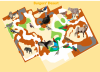
Blue= wetlands aviary
Brown= pampa
Green = South-America House
Dark blue= sea gull aviary
Dark green = European aviary
Yellow= hyrax enclosure (the tortoises left)
Orange= African aviary
Olive green= Asian aviary
Light blue = duckpond
Red= Reptile attic
Pink= Zoo college