Eden In the Emerald City: Reimaging Woodland Park Zoo

Komodo Dragon

Well-Known Member
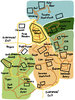
This thread will detail a reimagining of Seattle’s Woodland Park Zoo. The purpose of this exercise is to explore a fanciful, though realistic “what-if” scenario, speculating upon a version of the zoo with a different roster of biomes and species.

Woodland Park Zoo in its current state is doubtlessly a great zoo in many regards, being a trailblazer in the field of immersion exhibits since the 1970s. While many of these enclosures still hold up to this day, others are lacking, sometimes severely, compared to what has been inspired by them in decades since. The zoo has been in a recent era of stagnation. The most recent large expansion, 2015’s Banyan Wilds area in the Tropic Asia zone has been criticized on this very forum as a missed opportunity, containing exhibits for tigers and sloth bears that are arguably worse than what preceded them.

The simple fact is that Woodland Park Zoo doesn’t have much unused land to easily develop upon as one might like, which greatly slows modernization. Unlike Nashville or North Carolina, the days of building vast exhibit complexes from scratch seem to be over for WPZ. I don’t want to be entirely negative though. Their next project, while at the cost of the old, vacant nocturnal/reptile house, will provide vital upgrades for red pandas, keas, and tree kangaroos. These species currently have some of the most outdated homes of all the zoo’s inhabitants.

Through this exercise, I’ve attempted to envision some grander concept of what currently exists. There’s a great emphasis on representing species and biomes not currently at the zoo, with one finding deserts, tundras, and temperate rainforests receiving the representation they deserve. You’ll also find improvements, both major and minor, on existing exhibit complexes that have shown their age in some ways. Due to space limitations, not every idea I or others had will be represented. Thus some species in the zoo’s history won’t be represented in this thread. I hope that the absence of animals such as lemurs, rhinos, and snow leopards doesn't result in the umbrage of readers.

This project is heavily inspired by unused concepts proposed in the 1976, 1986, and 2004 long-range plans, alongside a few impressive exhibits located in different zoos in North America and Europe. Rest assured WPZ fans, that I have kept several existing ideas largely untouched. Overall, I hope that my fantasy vision uplifts this B+ zoo to a solid A.

Over the course of ten or so posts, we’ll explore six biomes: Tropical Rainforest, Savanna, Desert, Temperate Rainforest, Taiga, and Tundra, in addition to a Nocturnal House. Comments, suggestions, and critiques are, of course, welcome! If you spot any errors (I’m sure there are some), please don’t be shy to point them out.
 
The Temperate Rainforest

This section of the zoo is focused on the Temperate Rainforests of the Pacific Coast that stretch from Alaska to Northern California. Brackens, lungworts, and sword ferns are plentiful, as are fungi, feathermoss, and salal. As for trees, you will find Sitka Spruce, Red Alder, Douglas Fir, Western Hemlock, Oregon Maple, Vine Maple, Western Red Cedar, and Black Cottonwood. The atmosphere across these 3.5 acres of land is very serene, wet, and quiet, apart from the calls of the animals.

The first exhibit we find is that of the Cougar (Puma concolor). These big cats are given 8,400 sq. ft. of land divided into three separate enclosures to allow the cougars their space when needed. The felines are regularly rotated between these enclosures. The best viewing opportunity comes from entering a themed log cabin to find an indoor viewing area with the cougars right behind glass. Tall trees let the animals climb high, letting the excited visitors eyewitness their incredible arboreal prowess. Further viewing is from outside the cabin, behind the mesh.

The next exhibit of the Temperate Rainforest is by far the largest, being home to a herd of Roosevelt Elk (Cervus canadensis roosevelti). These cervids are free to wander through a large 69,200 sq. ft. plot of land, split between a grassy pasture and thick forest. There are many viewpoints to watch the wapiti among the trail at varying angles and proximity to the animals.

Beyond the charismatic megafauna, we locate the Temperate Rainforest Interpretive Center Building, one of the largest of the six such buildings on zoo grounds. The displays here are focused on this unique biome and its various incarnations across the globe, but the real highlight is the Pacific Northwest Rainforest Walkthrough, allowing guests to get up close to birds, amphibians, and more.

The first part of the Interpretive Center is a room featuring many displays on the Pacific Northwest Rainforests alongside temperate rainforests of other parts of the world, including Patagonia, Australia, and New Zealand. The natural heritage of these important old-grown forests and the wildlife they host are elucidated through interactive displays that teach about the water cycle and the rainshadow effect. The threats these habitats face from a warmer, drier world is also revealed.

The next and largest part of the building is a unique indoor woodland carefully designed to replicate the precise atmospheric conditions of the coastal rainforests. The skylight roof is green to best simulate the canopy, and it rains as much as it does in a true forest, an impressive 12 feet a year! Nurse logs as long as thirty feet are laid down, allowing mushrooms and saplings to grow as they do in the wild. The mature trees are blanketed with epiphytes, which dangle above the heads of those who enter. Signage abounds on the flora and fauna, showing the species’ interactions on display. Eleven species of passerines are found here.

They are:

Brown Creeper (Certhia americana)

Cedar Waxwing (Bombycilla cedrorum)

Dark-eyed Junco (Junco hyemalis)

Evening Grosbeak (Hesperiphona vespertina)

Pacific Wren (Troglodytes pacificus)

Pine Siskin (Spinus pinus)

Purple Finch (Haemorhous purpureus)

Red-breasted Nuthatch (Sitta canadensis)

Varied Thrush (Ixoreus naevius)

White-crowned Sparrow (Zonotrichia leucophrys)

Yellow-rumped Warbler (Setophaga coronate)


Birds are not the only animals found here though, as a few terrariums are scattered throughout the small looping trail. The following species can be found in them:

Pacific Banana Slug (Ariolimax columbianus)

Northern Alligator Lizard (Elgaria coerulea)

Coastal Rubber Boa (Charina bottae)

Northwestern Salamander (Ambystoma gracile)

Rough-Skinned Newt (Taricha granulosa)

Boreal Toad (Anaxyrus boreas boreas)

Pacific Tree Frog (Pseudacris regilla)


Exiting the building we round out our tour of the biome with a smaller but very important exhibit, housing Northern Spotted Owl (Strix occidentalis caurina) in a (3,300 sq ft) meshed enclosure. This endangered subspecies, endemic to the Pacific Northwest, faces great conservation challenges related to the invasive Barred Owl purloining critical habitat, which is spotlighted through the exhibit’s messaging. Woodland Park Zoo works with other local avian preservationist organizations through captive breeding, rehabilitation, and rerelease.
 
I really like this idea but In my opinion there should be a regional section for creatures that guests really don’t get to ecounter and what I mean by creatures that guests don’t get to ecounter are the creatures of Europe like the wild boar, Chamois, Desmen, Wisent, Red Deer, Capercaillie, White Tailed Sea Eagle, European Lynx, Iberian Lynx, Nightingale, Saiga antelope, Alpine Ibex, Barbary Macaque, Scottish Wildcat and pine marten because like some of these animals live in the taiga or coniferous forests like the wildcat and Capercaillie and the pine marten but I really like how you have salamanders from the pacific coast because I know very little about those kinds and just saying but this is just my opinion but I think that their should be a terrarium for the Pacific coast Rattlesnake and that’s just my opinion because I live in temperate rainforests.
 
The Desert

Out of all terrestrial biomes, perhaps none are harder to do well in an immersive exhibit than the tropic and subtropic desert. An exceptional outdoor desert exhibit almost always requires a zoo located in a warm, xeric environment, locations where zoos are rarely built in the first place. For zoos in temperate climates, an indoor desert house is the next best thing, though these are expensive to build and maintain.

Deserts have always been a biome that Woodland Park Zoo has wanted to do, being featured in their 1976, 1986, and 2004 plans. However, they’ve sadly never attempted to construct a desert complex and may never get one.

The cool, rainy environment of Western Washington ensures that an outdoor exhibit isn’t the way to best recreate the Sonoran Desert of Arizona. Rather I’ve gone all out with a truly extraordinary indoor desert biome, the Living Desert of Sonora Building. It’s similar to that of the domes at Indianapolis and Omaha, however, the nearest comparison, in both size, shape, and design is that of the Desert building at Burgers’ Zoo in the Netherlands.

The WPZ’s enormous desert building would technically be the largest indoor desert in the United States, at an impressive 64,000 sq. ft., nearly 1.5 acres! The interior is well-heated and dry, providing relief to guests during wintery days. Flora is composed of natives of the Sonora, including ephedra, ocotillo, and greasewood. Of course, there are also cacti galore such as prickly pears, chollas, saguaro, and barrel cacti.

Entering through the southern doorway, the first section is the Desert Interpretation Center which provides a primer on the deserts of the world, how they form, and the adaptations organisms undergo to survive, such as water retention measures. Ecological threats to deserts, from mining to climate change, are shown, reminding us that even these harsh, remote landscapes are affected by mankind’s actions. Finally, we are introduced to the Sonoran Desert and guests enter the desert proper. Heated up during the colder months, the indoor drylands have several branching pathways that encourage and reward exploration.

As is stated by signs on the trail, there are a few freeflying birds in the desert, who make their homes in the vegetation and live off what is provided by the keepers in scattered feeding stations. Patience is rewarded, as these birds are easy to spy if one takes the time to. The following species can be found throughout the entire building:

Gambel's Quail (Callipepla gambelii)

Scaled Quail (Callipepla squamata)

Inca Dove (Columbina inca)

White-winged Dove (Zenaida asiatica)

Northern Cardinal (Cardinalis cardinalis)

Vermilion Flycatcher (Pyrocephalus obscurus)

Curve-billed Thrasher (Toxostoma curvirostre)

Welcoming us as we enter the desert are a series of larger enclosures for medium-sized animals. Taking the earliest left on the main path we find the first exhibit that most people see. Here is the abode for one of the most critically endangered of all America’s reptiles, the Desert Tortoise (Gopherus agassizii). Woodland Park Zoo is working to breed future generations of these chelonians.

Past the tortoises is a gravelly exhibit of a small herd of Collared Peccary (Dicotyles tajacu) who also have an offview barn. The piglike animals are among the most popular attractions of the Desert House.

Returning to the main path and taking the first right gives us a good viewing of the enclosure for another Sonoaran ungulate, the Bighorn Sheep (Ovis canadensis). The hilly area allows the bovids to climb up high on the artificial rocks and cliffs, amazing guests with their ability to tackle steep heights.

Walking around the sheep hills takes us to the exhibits for two small cats. The first of these is often displayed in jungle exhibits, but the Ocelot (Leopardus pardalis) is just as perfectly at home in the deserts of Arizona. Signage here explains how these winsome felines are threatened by habitat loss, hunting, and the pet trade.

Right next door is another felid, the Bobcat (Lynx rufus). Both species are kept in exhibits with stronger barriers than some of the other mammals in the Desert biome, due to their agile abilities. Thus, they are seen through mesh and glass, depending on the location of the viewer, rather than across the dry moat barriers of the hoofstock. Of course, both cat exhibits have climbing and hiding opportunities.

Now looping back to the main path, a brief turn left takes us to the last of the “outdoor” mammal exhibits. Here are two smaller exhibits for a pair of leporid species. First is the Antelope Jackrabbit (Lepus alleni), right next to it is the Desert Cottontail (Sylvilagus audubonii). Juxtaposing the two next to each other allows the zoo-goer to appreciate the diversity of rabbits and hares, of which, as a nearby sign points out, there are over seventy species.

That’s not all though, as past the lagomorphs is the home of some White-Nosed Coati (Nasua narica). A distant, diurnal relative of the familiar raccoon, displays here educate on the social life and omnivorous diet of the coatimundi, including how it’s an unlikely pollinator of the balsa tree.

Now it’s time to visit reptiles, rodents, and more! Back on the main trail is the entrance to a long, though optional, tunnel. Themed after an abandoned mineshaft, here we find terrariums and exhibits of varying sizes for many of the smaller inhabitants of the Sonora. The following animals are present:

Desert Pupfish (Cyprinodon macularius)

Colorado River Toad (Incilius alvarius)

Great Plains Toad (Anaxyrus cognatus)

Desert Box Turtle (Terrapene ornata luteola)

Arizona Blonde Tarantula (Aphonopelma chalcodes)

Giant Hairy Scorpion (Hadrurus arizonensis)

Desert Ironclad Beetle (Asbolus verrucosus)

Cactus Mouse (Peromyscus eremicus)

White-Throated Woodrat (Neotoma albigula)

Desert Kangaroo Rat (Dipodomys deserti)

Merriam's Kangaroo Rat (Dipodomys merriami)

Round-tailed Ground Squirrel (Xerospermophilus tereticaudus)

Arizona Black Rattlesnake (Crotalus cerberus)

Black-Tailed Rattlesnake (Crotalus molossus)

Mojave Rattlesnake (Crotalus scutulatus)

Long-Nosed Snake (Rhinocheilus lecontei)

Sonoran Gopher Snake (Pituophis catenifer affinis)

Ringtail (Bassariscus astutus)

Desert Grassland Whiptail Lizard (Aspidoscelis uniparens)

Gila Monster (Heloderma suspectum)

Common Chuckwalla (Sauromalus ater)

Desert Horned Lizard (Phrynosoma platyrhinos)

Common Collared Lizard (Crotaphytus collaris)

Desert Iguana (Dipsosaurus dorsalis)


Concluding the biome are a few exhibits for avifauna. A highlight of the entire zoo is the walkthrough hummingbird aviary. The following species, native to the American Southwest, can be seen here flying through a section that blooms with wildflowers in the spring:

Anna's Hummingbird (Calypte anna)

Costa's Hummingbird (Calypte costae)

Black-chinned Hummingbird (Archilochus alexandri)


Leaving the hummingbirds is the last exhibit, being an enclosure for two mostly terrestrial bird species that make up some of the most interesting of the desert’s occupants. These are the Burrowing Owl (Athene cunicularia) and the Greater Roadrunner (Geococcyx californianus).

Exiting the Desert Building places you at the north section of the zoo, directly in front of the entrance to the Tundra.
 
The Tundra

This is a large section of the zoo that is around eight acres in area. The tundra complex has some minimal cultural theming to Inuit people, done by indigenous artists. There are almost no trees here, rather the plant life is made up of fields of cotton-grass, Arctic poppy, creeping juniper, Draba, Rhododendron tomentosumm, Salix arctica, saxifrages, and other grasses, forbs, and shrubs of the far north. There are also lichens and mosses growing on the rocks. All the animal species you will find here are natives of the Arctic, and a major theme of the complex is educating on climate change and how it threatens this untamed, yet vulnerable land.

The first exhibit we encounter is the Tundra Interpretive Center Building. Inside we find viewing windows to the outdoor exhibit for both Nearctic Brown Lemming (Dicrostonyx groenlandicus) and Northern Collared Lemming (Dicrostonyx groenlandicus). Each species has a separate enclosure of 500 sq. ft. These habitats provide opportunities to see the rodents both in subterranean windows where the lemmings tunnel through soil and snow, and to view them above ground among the rocks and tundra plants. This exhibit is one of very few in the world dedicated to lemmings and is surprisingly popular with guests. Educational displays and video screens are present, teaching guests about the importance of lemmings to the Arctic food chain and debunking some misconceptions about these muroids.

Also at the Interpretive Center is information about other aspects of tundra ecology and preservation, some indigenous art pieces depicting wildlife, and a handsomely painted cyclorama mural of the summer tundra. Interactive displays showcase anthropogenic climate change, greenhouse gasses, and the loss of Arctic Sea ice. These teach the importance of the elimination of fossil fuels. We also see educational content and models on Arctic animals not present at the zoo, such as walrus, narwhals, and likely defunct Esikmo curlew.

Once you leave the Interpretive Center, your next stop will be the Snowy Owl (Bubo scandiacus) exhibit. This 3,100 sq. ft. mesh-covered aviary has a tiny shelter from which to view the birds through glass, though one can also watch them through the mesh. The owls have been given a few stumps and large roast rocks, one of which obscures an area intended for a ground nest.

Continuing down the tundra biome is an exhibit much larger than the previous ones, perhaps the biggest draw in the entire zoo. The largest terrestrial carnivoran, the Polar Bear (Ursus maritimus) is represented well in this massive (57,500 sq. ft.) exhibit. Large enough to hold a maximum of six bears, it is considered one of the best in the United States. Extensive, informative signage and displays are abundant. The ratio to land and water is fair, with lots of tundra and coast for the bears to walk on, and two sizable bodies of cold water for them to swim in, one of which is off-view. This “ocean” region is not just a standard chilled tank, but a rocky beach that leads into a pool with a wave machine that can be turned on to let small waves crash upon the shore. The best way to experience this area is through the open-air viewing shelter, the water’s surface lined up to the visitor floor. One can also watch the bears dive into the deepest region of this saltwater pool by going down a ramp to a shelter with underwater viewing in front and above.

Mostly though, the bears stay on dry land and can be watched from along the pathways or the ground floor of the shelter. The exhibit largely lacks visible barriers, and the bears are treated to daily enrichment to ensure they remain mentally and physically healthy. Live prey fish are a common sight. Spacey, air-conditioned dens are located off-view, and several bears have been successfully birthed throughout the years.

The final part of the Tundra is also the biggest. The Tundra Plains feature herbivores living in a vast exhibit with several small hills and valleys. A few swallow pools exist, serving as watering holes for the animals to drink from and cool down in on hot summer days. This enclosure is 122,000 sq. ft .in size. Three species live here:

Arctic Hare (Lepus arcticus)

Barren-Ground Caribou (Rangifer tarandus groenlandicus)

Muskox (Ovibos moschatus)


The ungulates are the star attraction of this great plain and their small herds have successfully bred. However, the husk of hares are not to be overlooked. The animals are viewed from the main tundra pathway with the hills providing breaks, there is also a small open-air shelter near the front of the Tundra biome for the visitors, providing much closer views. Along the path, there are many educational displays on the abilities of the featured species, such as the hares’ seasonal colors. Ha-has form the main barrier separating the animals from visitors. There's also a large barn for the animals, off-view, in the far corner of the tundra.


The Taiga

The Taiga biome is sandwiched between the Tundra and Temperate Rainforest. This complex is around 2.5 acres in size. Through immersive landscaping, it feels as though you are deep in the thick woods of Alaska, surrounded by towering firs, hemlocks, larches, pines, spruces, aspens, and birches. Shrubs like Alnus alnobetula complete the flora.

The taiga only showcases three species, two of which are smaller mammals.

The first exhibit we’ll talk about is the Wolverine (Gulo gulo). Their exhibit is a suitable 2,100 sq. ft. and is viewed through a chain-link fence. In the lower 48 states, wolverines were decimated by trappers, and the population in Washington numbers is merely a few dozen. Woodland Park Zoo is a strong supporter of helping wolverines return to the Evergreen State. This exhibit educates visitors on these hardy, elusive mustelids which are rare in captivity.

Now we’ll talk about the exhibit of the Grizzly Bear (Ursus arctos horribilis) which is 30,500 sq. ft. including den sections that are off-view. Like many zoos, this exhibit is home to rescued bears who cannot live in the wild. The grizzly bear exhibit is similar to the superb one currently at the Woodland Park Zoo though larger. It’s complete with a cave for the animals to shelter and snooze, and a meadow of cinquefoils, fireweeds, and other flowering plants. Besides the standard fences and plants obstructing people from entering the enclosure, there is also a large deep dry moat present that cannot be seen by visitors. The liveliness of the bears in addition to the stunning vistas of the recreated Alaskan wilderness make this one of the most popular stops at the zoo.

Next door is the Taiga Interpretive Center Building, which has displays on the taigas of the world and their conservation, with an emphasis on wildfires, acid rain, pollution, and climate change. Inside the interpretive center, there’s underwater viewing of the bears’ fishing pond.

Also here are North American River Otters (Lontra canadensis). Their enclosure is a capacious 4,100 sq. ft. in total area, 820 sq. ft. of which is water and the rest dry land. Otter dens are off-view from the prying eyes of visitors. A major feature here is a large pond of varying depths with underwater viewing chances. Not so different from WPZ’s actual otter exhibit, apart from tall trees in the background rather than the view of mountain goats. Leaving the interpretive center, one finds an outdoor section where one can view the otters play and run around on dry land along the bank and through the trees, or see them swim from above in a pond.

Further expansion of the Taiga, with exhibits for lynx, fisher, porcupine, and/or beaver is being considered by the zoo.


That continues the sprawling “North American” section of the zoo. The Savanna and Tropical Rainforest complexes remain, though they will be broken up into multiple posts due to the large number of exhibits and species each has.
 
The Savanna (Part 1)

The Savanna biome is one of the zoo’s most revolutionary complexes and has greatly expanded and modernized over the years since its opening. The great diversity of the African grasslands is on full display here, going beyond just the ABCs. Fans of birds, reptiles, and fishes will enjoy how they are represented in the complex. Over the next few posts, we’ll trek through the veldt. But first a look at the composition of the land.

The Savanna alternates between grassy plains, wooded groves, wetlands, and kopje depending upon the exhibit. Simulated latosols give the soils the red tinge associated with the earth of this region. Plant life is mostly composed of short grasses that are grazed on by the herbivores, though there are also a variety of trees and shrubs. The acacias and other trees not only provide habitats for birds and baboons but also barriers preventing views of the surrounding biomes. They are also used to place food dispensers for the giraffes.

Accounting for the frequent Seattle rain, along with the cool winters and warm summers, there are a fair amount of partly or entirely indoor exhibit and viewing areas. A few artificial termite mounds are scattered throughout the land.

I’ll describe the Savanna and its exhibits over the following three posts:

South Section: Reptile House, Hoofstock, Baboons, Leopards

East Section: Wetlands Aviary, Hippos, Cichlids

North Section: Lions, Warthogs, Forest Aviary, Kopje


Entering the Savanna biome on the south side, you are greeted by a small “village” containing two buildings of note. The theming here is very detailed and accurate. In comparison to the actual WPZ’s now defunct and culturally appropriative theming, it was instead decided to update the buildings under the guidance of East African designers as an opportunity to best teach guests about the complex relationships between tribal peoples and the savanna animals.

To your left is the Savanna Herp House, while in front is the Schoolhouse Outlook. The warm, dry Herp House shows visitors the important ecological roles and natural histories of the amphibians and reptiles of the African Savanna, something that is overlooked by most zoos’ Savanna areas.

Separated into well-designed, spacey terrariums we find the following:

African Bullfrog (Pyxicephalus adspersus)

Central African Rock Python (Python sebae)

Black Mamba (Dendroaspis polylepis)

Puff Adder (Bitis arietans)

Flap-necked Chameleon (Chamaeleo dilepis)

Meller's Chameleon (Trioceros melleri)

Nile Monitor (Varanus niloticus)

Leopard Tortoise (Stigmochelys pardalis)

Pancake Tortoise (Malacochersus tornieri)

Exiting the building, we can now enter the recreation of a schoolhouse complete with rows of desks and a teacher’s blackboards covered with drawings and facts about the savanna. The flashier purpose of this building, however, is giving a vast window to the main savanna enclosure, a 124,000 sq ft grassland that’s home to the following:

Common Ostrich (Struthio camelus)

Plains Zebra (Equus quagga)

Reticulated Giraffe (Giraffa camelopardalis reticulata)

Lesser Kudu (Tragelaphus imberbis)

Fringe-Eared Oryx (Oryx callotis)

Sable Antelope (Hippotragus niger)

Despite being larger and having more species than the true zoo’s Savanna plains, this is still in many ways a fairly standard “older” savanna hoofstock exhibit, limited by available size. Yet it makes do with what it has and the animals remain sociable and content. One follows a winding path complete with more views of the veldt as they head for the other exhibits.

We soon meet up with a troop of Olive Baboon (Papio anubis). These Old-World monkeys have been provided with a roomy habitat of 8300 sq ft, with lots of large, naturalistic appearing rockwork for the simians to climb upon. Vegetation is plentiful. Beyond the tropical grasses and rushes, thorny trees and shrubs are present making one feel as though they are in a grove of acacias. Like many of the zoo’s primates, the baboon troop is a favorite among visitors, being a lively bunch who have successfully sired and reared several “zoo-borns” over the decades. A dry moat surrounds the monkey island, and the animals are viewed from the outside by exposed breaks in the foliage along the path. Important is that the views are from angles that make it impossible to see the entire exhibit at once, making it look as though the baboons have an even larger area than in actuality. This is an inversion tactic used in many of Woodland Park Zoo’s exhibits. The indoor holding area, only accessible to zoo staff, is located inside one of the large artificial rocks in the background of the enclosure.

Immediately past the baboons, we find the Savanna Interpretive Center Building, which is themed after a safari lodge. Not only does this building provide indoor views of both the baboon and leopard exhibits, but there are also numerous educational displays to teach about the unique animals that thrive in savannas and the threats, both natural and manmade, they face daily. The importance of ecotourism and the role of indigenous African communities in wildlife conservation are both emphasized by displays here.

Now we move on to the African Leopard (Panthera pardus pardus) exhibit. Yes, actual African Leopards as opposed to the Amur Leopards that often stand in for them! These big spotted cats live in a series of enclosures that total 3100 sq ft, including two outdoor meshed exhibits, holding areas, and a maternity area. One of the mesh exhibits is viewed through the Interpretive Center Building, letting guests get a terrific nose-to-nose view of the spotted felids. The other one is viewed on a brief path to the direct north of the building. The design of the leopard exhibit, like that of the baboons, is again based upon an acacia copse, with the rocks and trees providing the opportunity for these predators to reign high above their human viewers.

Heading west, one walks down a path that provides the northern barrier for the hoofstock field. A station where you can feed giraffes for a small fee is located here. At the end of this detour from the main savanna path are Barns and Padlocks for the giraffes and other animals. One can enter for a closer encounter with these magnetic creatures.
 
The Savanna (Part 2)

East of the baboons and leopards is a marshy section of the Savanna, focusing on freshwater life. In a sense the Savanna Swamp Aviary serves as my replacement for both Woodland Park Zoo’s Temperate Swamp Aviary and their rather substandard Chilean Flamingo exhibit. Through this exhibit, the wading birds and waterfowl now have some proper representation. The aviary is an indoor building, not unlike a tropical house, around an acre (43,560 sq. ft.) in total size, a larger more diverse version of an unbuilt exhibit that existed in the 1976 masterplan. It contains more than twenty species of freeflying aquatic birds, from ducks and herons to storks and ibises.

The following species are found here:

African Pygmy Goose (Nettapus auritus)

Egyptian Goose (Alopochen aegyptiaca)

Blue-billed Teal (Spatula hottentota)

Fulvous Whistling Duck (Dendrocygna bicolor)

White-faced Whistling Duck (Dendrocygna viduata)

Knob-billed Duck (Sarkidiornis melanotos)

Lesser Flamingo (Phoeniconaias minor)

African Spoonbill (Platalea alba)

African Sacred Ibis (Threskiornis aethiopicus)

Glossy Ibis (Plegadis falcinellus)

Hadeda Ibis (Bostrychia hagedash)

Hamerkop (Scopus umbretta)

African Darter (Anhinga rufa)

African Openbill (Anastomus lamelligerus)

Saddle-billed Stork (Ephippiorhynchus senegalensis)

Yellow-billed Stork (Mycteria ibis)

Little Egret (Egretta garzetta)

Black-crowned Night Heron (Nycticorax nycticorax)

Black-headed Heron (Ardea melanocephala)

Goliath Heron (Ardea goliath)

Purple Heron (Ardea purpurea)


Exiting the massive aviary, we continue on our wetlands theme with the Common Hippopotamus (Hippopotamus amphibius) exhibit. This is one of the highlights of my entire zoo. The shabby, old hippo enclosure was one of the weakest of Woodland Park Zoo’s exhibits. It was woefully inadequate, small enough to house only two hippos, and lacking many important amenities including outdoor heating and a water filtration system. Now these threatened river titans live in a large habitat designed to best serve both the animals and visitors. My model for this is based on Zoo Berlin’s Hippo House, with some changes to better suit the animals.

The total hippo complex is one the largest single species exhibit at the zoo, being a total of 65,000 sq. ft., more than a one and a half acres. 14,000 sq. ft. here are devoted to a domed indoor enclosure that serves both as quarters for cold weather and underwater viewing opportunities. The rest (51,000 sq ft) of the exhibit is outdoors and is spread between a grassy pasture, mud and sand wallows, an outdoor pool, and a barn adjacent to the dome. Most of the time, the hippos are free to roam all these areas whenever they please.

A problem with many hippo exhibits is that they don’t provide enough land for the animals. However, even in the domes, the hippos have access to an appropriate balance between their two realms, best reflecting their riparian nature. The short grass foliage is somewhat sparse due to the destructive ways of the hippos. But sedges, reeds, wetland grasses, and even water lilies can be spied in corners of the exhibit that the behemoths can’t reach. Viewing of the hippos is done both along the paths by the outdoor exhibits and through the tanks in the dome.

Additionally in the Hippo dome are aquarium displays that showcase some of the beautiful cichlids of the African Great Lakes. The following species are accounted for here:

Lake Malawi Tank:

Blue Dolphin Cichlid (Cyrtocara moorii)

Eureka Red Peacock (Aulonocara jacobfreibergi)

Kenyi Cichlid (Maylandia lombardoi)


Lake Tanganyika Tank:

Blunthead Cichlid (Tropheus moorii)

Convict Julie (Julidochromis regani)

Frontosa Cichlid (Cyphotilapia frontosa)

Princess Cichlid (Neolamprologus brichardi)
 
Last edited:
The Savanna (Part 3)

Now we conclude the Savanna by looking at its northern section.

The next two exhibits aren’t really that different from some fine enclosures which are currently at the zoo.

Making use of some of the former bear grottos, is a habitat for that of the most famous of cats: the Southern African Lion (Panthera leo melanochaita). The small pride thrives in this 31,200 sq. ft. exhibit, which has excellent viewing opportunities from an indoor shelter.

Adjacent to the lions is a sizable valley-type enclosure for Common Warthog (Phacochoerus africanus) which is 5,400 sq. ft. and has viewing opportunities from the same building as the lions do. Entering the shelter from the south, you can exit through the north which takes you to another walkthrough aviary and the kopje exhibit.

The Savanna Forest Aviary is one of several outstanding aviaries at this reimagined fantasy zoo. There are a few that currently exist at the real zoo, but these older walkthroughs, while enjoyable and great for the animals, are rather small and outdated compared to what other places have built in the decades hence. Having some huge modern aviaries has been one of my major aspirations for this project.

Entering the greenhouse style aviary, which is 13,000 sq. ft. one is greeted by warm dry air, authentic foliage of East Africa, and the sights and sounds of seemingly countless birds thriving in the bush. The many nests of the weavers are impossible to miss. The following species are seen here:

Golden-breasted Starling (Lamprotornis regius)

Violet-backed Starling (Cinnyricinclus leucogaster)

Superb Starling (Lamprotornis superbus)

African Grey Hornbill (Lophoceros nasutus)

Little Bee-eater (Merops pusillus)

Scarlet-chested Sunbird (Chalcomitra senegalensis)

Red-billed Quelea (Quelea quelea)

Southern Masked Weaver (Ploceus velatus)

Taveta Weaver (Ploceus castaneiceps)

White-headed Buffalo Weaver (Dinemellia dinemelli)

Cut-throat Finch (Amadina fasciata)

Green Wood Hoopoe (Phoeniculus purpureus)

Snowy-crowned Robin-chat (Cossypha niveicapilla)

Speckled Mousebird (Colius striatus)

White-Bellied Go-Away-Bird (Crinifer leucogaster)


Past the aviary, we reach a kopje subzone, making use of the current bear grottos. The rocky hills where one should find sloth bears have now been replaced with a large exhibit for Rock Hyrax (Procavia capensis) and Klipspringer (Oreotragus oreotragus), well foliaged with tamarisk and other savanna plants. Signage emphasizes the unique rock-climbing abilities of these critters, alongside their phylogenetic relations to larger and more familiar savanna species. The enclosure is around 7,000 sq. ft. in total, allowing enough room for both species to have breeding populations.

Thus end our journey through the Savanna Complex, the largest of the zoo's biomes. At over 12.5 acres, it features exhibits for two different species of big cats, an ungulate field, a world-class hippo enclosure, a pair of walkthrough aviaries, a baboon troop, a small reptile house, warthogs, and a kopje. Not bad for a medium-sized zoo in the heart of a city!

In the coming update, we'll venture into the wonders of the dark in the Nocturnal House.
 
Last edited:
In my opinion it may be hard to keep Arctic hares in a 122000 sq.ft. enclosure. They wouldn't be seen by the visitors, and they may be eaten by foxes, crows or other predators.

Yes, I might place them in a smaller enclosure, complete with a hutch, should I revise this idea.
 
Last edited:
The Tundra

This is a large section of the zoo that is around eight acres in area. The tundra complex has some minimal cultural theming to Inuit people, done by indigenous artists. There are almost no trees here, rather the plant life is made up of fields of cotton-grass, Arctic poppy, creeping juniper, Draba, Rhododendron tomentosumm, Salix arctica, saxifrages, and other grasses, forbs, and shrubs of the far north. There are also lichens and mosses growing on the rocks. All the animal species you will find here are natives of the Arctic, and a major theme of the complex is educating on climate change and how it threatens this untamed, yet vulnerable land.

The first exhibit we encounter is the Tundra Interpretive Center Building. Inside we find viewing windows to the outdoor exhibit for both Nearctic Brown Lemming (Dicrostonyx groenlandicus) and Northern Collared Lemming (Dicrostonyx groenlandicus). Each species has a separate enclosure of 500 sq. ft. These habitats provide opportunities to see the rodents both in subterranean windows where the lemmings tunnel through soil and snow, and to view them above ground among the rocks and tundra plants. This exhibit is one of very few in the world dedicated to lemmings and is surprisingly popular with guests. Educational displays and video screens are present, teaching guests about the importance of lemmings to the Arctic food chain and debunking some misconceptions about these muroids.

Also at the Interpretive Center is information about other aspects of tundra ecology and preservation, some indigenous art pieces depicting wildlife, and a handsomely painted cyclorama mural of the summer tundra. Interactive displays showcase anthropogenic climate change, greenhouse gasses, and the loss of Arctic Sea ice. These teach the importance of the elimination of fossil fuels. We also see educational content and models on Arctic animals not present at the zoo, such as walrus, narwhals, and likely defunct Esikmo curlew.

Once you leave the Interpretive Center, your next stop will be the Snowy Owl (Bubo scandiacus) exhibit. This 3,100 sq. ft. mesh-covered aviary has a tiny shelter from which to view the birds through glass, though one can also watch them through the mesh. The owls have been given a few stumps and large roast rocks, one of which obscures an area intended for a ground nest.

Continuing down the tundra biome is an exhibit much larger than the previous ones, perhaps the biggest draw in the entire zoo. The largest terrestrial carnivoran, the Polar Bear (Ursus maritimus) is represented well in this massive (57,500 sq. ft.) exhibit. Large enough to hold a maximum of six bears, it is considered one of the best in the United States. Extensive, informative signage and displays are abundant. The ratio to land and water is fair, with lots of tundra and coast for the bears to walk on, and two sizable bodies of cold water for them to swim in, one of which is off-view. This “ocean” region is not just a standard chilled tank, but a rocky beach that leads into a pool with a wave machine that can be turned on to let small waves crash upon the shore. The best way to experience this area is through the open-air viewing shelter, the water’s surface lined up to the visitor floor. One can also watch the bears dive into the deepest region of this saltwater pool by going down a ramp to a shelter with underwater viewing in front and above.

Mostly though, the bears stay on dry land and can be watched from along the pathways or the ground floor of the shelter. The exhibit largely lacks visible barriers, and the bears are treated to daily enrichment to ensure they remain mentally and physically healthy. Live prey fish are a common sight. Spacey, air-conditioned dens are located off-view, and several bears have been successfully birthed throughout the years.

The final part of the Tundra is also the biggest. The Tundra Plains feature herbivores living in a vast exhibit with several small hills and valleys. A few swallow pools exist, serving as watering holes for the animals to drink from and cool down in on hot summer days. This enclosure is 122,000 sq. ft .in size. Three species live here:

Arctic Hare (Lepus arcticus)

Barren-Ground Caribou (Rangifer tarandus groenlandicus)

Muskox (Ovibos moschatus)


The ungulates are the star attraction of this great plain and their small herds have successfully bred. However, the husk of hares are not to be overlooked. The animals are viewed from the main tundra pathway with the hills providing breaks, there is also a small open-air shelter near the front of the Tundra biome for the visitors, providing much closer views. Along the path, there are many educational displays on the abilities of the featured species, such as the hares’ seasonal colors. Ha-has form the main barrier separating the animals from visitors. There's also a large barn for the animals, off-view, in the far corner of the tundra.


The Taiga

The Taiga biome is sandwiched between the Tundra and Temperate Rainforest. This complex is around 2.5 acres in size. Through immersive landscaping, it feels as though you are deep in the thick woods of Alaska, surrounded by towering firs, hemlocks, larches, pines, spruces, aspens, and birches. Shrubs like Alnus alnobetula complete the flora.

The taiga only showcases three species, two of which are smaller mammals.

The first exhibit we’ll talk about is the Wolverine (Gulo gulo). Their exhibit is a suitable 2,100 sq. ft. and is viewed through a chain-link fence. In the lower 48 states, wolverines were decimated by trappers, and the population in Washington numbers is merely a few dozen. Woodland Park Zoo is a strong supporter of helping wolverines return to the Evergreen State. This exhibit educates visitors on these hardy, elusive mustelids which are rare in captivity.

Now we’ll talk about the exhibit of the Grizzly Bear (Ursus arctos horribilis) which is 30,500 sq. ft. including den sections that are off-view. Like many zoos, this exhibit is home to rescued bears who cannot live in the wild. The grizzly bear exhibit is similar to the superb one currently at the Woodland Park Zoo though larger. It’s complete with a cave for the animals to shelter and snooze, and a meadow of cinquefoils, fireweeds, and other flowering plants. Besides the standard fences and plants obstructing people from entering the enclosure, there is also a large deep dry moat present that cannot be seen by visitors. The liveliness of the bears in addition to the stunning vistas of the recreated Alaskan wilderness make this one of the most popular stops at the zoo.

Next door is the Taiga Interpretive Center Building, which has displays on the taigas of the world and their conservation, with an emphasis on wildfires, acid rain, pollution, and climate change. Inside the interpretive center, there’s underwater viewing of the bears’ fishing pond.

Also here are North American River Otters (Lontra canadensis). Their enclosure is a capacious 4,100 sq. ft. in total area, 820 sq. ft. of which is water and the rest dry land. Otter dens are off-view from the prying eyes of visitors. A major feature here is a large pond of varying depths with underwater viewing chances. Not so different from WPZ’s actual otter exhibit, apart from tall trees in the background rather than the view of mountain goats. Leaving the interpretive center, one finds an outdoor section where one can view the otters play and run around on dry land along the bank and through the trees, or see them swim from above in a pond.

Further expansion of the Taiga, with exhibits for lynx, fisher, porcupine, and/or beaver is being considered by the zoo.


That continues the sprawling “North American” section of the zoo. The Savanna and Tropical Rainforest complexes remain, though they will be broken up into multiple posts due to the large number of exhibits and species each has.
The Temperate Rainforest

This section of the zoo is focused on the Temperate Rainforests of the Pacific Coast that stretch from Alaska to Northern California. Brackens, lungworts, and sword ferns are plentiful, as are fungi, feathermoss, and salal. As for trees, you will find Sitka Spruce, Red Alder, Douglas Fir, Western Hemlock, Oregon Maple, Vine Maple, Western Red Cedar, and Black Cottonwood. The atmosphere across these 3.5 acres of land is very serene, wet, and quiet, apart from the calls of the animals.

The first exhibit we find is that of the Cougar (Puma concolor). These big cats are given 8,400 sq. ft. of land divided into three separate enclosures to allow the cougars their space when needed. The felines are regularly rotated between these enclosures. The best viewing opportunity comes from entering a themed log cabin to find an indoor viewing area with the cougars right behind glass. Tall trees let the animals climb high, letting the excited visitors eyewitness their incredible arboreal prowess. Further viewing is from outside the cabin, behind the mesh.

The next exhibit of the Temperate Rainforest is by far the largest, being home to a herd of Roosevelt Elk (Cervus canadensis roosevelti). These cervids are free to wander through a large 69,200 sq. ft. plot of land, split between a grassy pasture and thick forest. There are many viewpoints to watch the wapiti among the trail at varying angles and proximity to the animals.

Beyond the charismatic megafauna, we locate the Temperate Rainforest Interpretive Center Building, one of the largest of the six such buildings on zoo grounds. The displays here are focused on this unique biome and its various incarnations across the globe, but the real highlight is the Pacific Northwest Rainforest Walkthrough, allowing guests to get up close to birds, amphibians, and more.

The first part of the Interpretive Center is a room featuring many displays on the Pacific Northwest Rainforests alongside temperate rainforests of other parts of the world, including Patagonia, Australia, and New Zealand. The natural heritage of these important old-grown forests and the wildlife they host are elucidated through interactive displays that teach about the water cycle and the rainshadow effect. The threats these habitats face from a warmer, drier world is also revealed.

The next and largest part of the building is a unique indoor woodland carefully designed to replicate the precise atmospheric conditions of the coastal rainforests. The skylight roof is green to best simulate the canopy, and it rains as much as it does in a true forest, an impressive 12 feet a year! Nurse logs as long as thirty feet are laid down, allowing mushrooms and saplings to grow as they do in the wild. The mature trees are blanketed with epiphytes, which dangle above the heads of those who enter. Signage abounds on the flora and fauna, showing the species’ interactions on display. Eleven species of passerines are found here.

They are:

Brown Creeper (Certhia americana)

Cedar Waxwing (Bombycilla cedrorum)

Dark-eyed Junco (Junco hyemalis)

Evening Grosbeak (Hesperiphona vespertina)

Pacific Wren (Troglodytes pacificus)

Pine Siskin (Spinus pinus)

Purple Finch (Haemorhous purpureus)

Red-breasted Nuthatch (Sitta canadensis)

Varied Thrush (Ixoreus naevius)

White-crowned Sparrow (Zonotrichia leucophrys)

Yellow-rumped Warbler (Setophaga coronate)


Birds are not the only animals found here though, as a few terrariums are scattered throughout the small looping trail. The following species can be found in them:

Pacific Banana Slug (Ariolimax columbianus)

Northern Alligator Lizard (Elgaria coerulea)

Coastal Rubber Boa (Charina bottae)

Northwestern Salamander (Ambystoma gracile)

Rough-Skinned Newt (Taricha granulosa)

Boreal Toad (Anaxyrus boreas boreas)

Pacific Tree Frog (Pseudacris regilla)


Exiting the building we round out our tour of the biome with a smaller but very important exhibit, housing Northern Spotted Owl (Strix occidentalis caurina) in a (3,300 sq ft) meshed enclosure. This endangered subspecies, endemic to the Pacific Northwest, faces great conservation challenges related to the invasive Barred Owl purloining critical habitat, which is spotlighted through the exhibit’s messaging. Woodland Park Zoo works with other local avian preservationist organizations through captive breeding, rehabilitation, and rerelease.
Ha! Shoot...I did an in depth of species for projected Forest for all. My post was deleted!!! Indeed your idea is wonderful, yet I find Woodland Park is too PC! When elephants got the boot from what was a wonderful exhibit, and asian upgrade of species is a joke. Bird aviaries are to small. Concept would emulate as in Germany where exhibit built atop one another due to shortage of acres. Being PC cancels out innovations. Love the concepts for cougars, 3 rotating enclosures. Rotating enclosures key, will it happen???
 
The Nocturnal House

The real Woodland Park Zoo opened a small nocturnal house in the 70s, which shared the same building as a reptile house. Unfortunately, budget cuts led to its closure in 2010. While not the best exhibit at the zoo, it aged well and proved to be a fan favorite, with even a small band of demonstrators protesting its closure on zoo grounds during its final days. While plans to reopen it were discussed, sadly a fire in 2016 severely damaged the now vacant nocturnal house placing that idea to rest. The building itself no longer stands, and a new night house does not seem to be on the zoo’s radar, at least within the next few years.

In this scenario, a version of the classic building, around 14,000 sq. ft. stands and is entirely devoted to the Nocturnal House, due to reptiles and amphibians now being spread out throughout the Tropical Rainforest, Savanna, Desert, and Temperate Rainforest biomes. The interiors have been refurbished and all the animals have sizable homes, as if there was anything to critique the old smaller night house was that it could feel cramped for both animal and human alike. This is done by the presence of an additional story, allowing two floors of exhibits.

To briefly describe the route through the building:

One starts on the first floor with the introduction room and the African exhibits. Then up stairs or a ramp to the second floor to see the bat enclosures and the South American exhibits. Then back down to the first floor to see the slow loris and Oceanian exhibits before exiting.

Now to go through it again, this time in detail.

The first room features no wildlife, instead being a space that allows guests to adjust their eyes to the darkness. Signage instructs them to keep their voices low and to not use bright lights so as to not molest the creatures. Interactive displays in this large room show how nocturnal animals have specialized senses allowing them to thrive in worlds that lack light. For example it’s demonstrated how a kinkajou sniffs out fruit and nectar or how the eyes of a slow loris are designed to penetrate through the darkness. Conservation concerns, such as light pollution, are also taught.

We now enter the next room and find ourselves in West Africa. Here we become acquainted with the Crested Porcupine (Hystrix cristata) on the ground and the Senegal Bushbaby (Galago senegalensis) in the trees. With just a turn of the head, you transition to the Zambian bush and see South African Springhare (Pedetes capensis) and Brown Greater Galago (Otolemur crassicaudatus).

After going up a gentle ramp, we meet perhaps the most iconic of all the night-dwellers. Four exhibits dedicated to bats are found here. Signage debunks chiropteran myths, teaches the differences between microbats and megabats, shows the marvels of echolocation, emphasizes the incredible diversity of the largest group of mammals, and pleas for conservation of bats throughout the world.

The four bat species, all of which have adequate flying room, are the following:

Seba's Short-Tailed Bat (Carollia perspicillata)

Common Vampire Bat (Desmodus rotundus)

Egyptian Fruit Bat (Rousettus aegyptiacus)

Indian Flying Fox (Pteropus medius)


Next up are two South American exhibits for arboreal mammals.

The first of these contains Brazilian Porcupine (Coendou prehensilis) and Linnaeus's Two-Toed Sloth (Choloepus didactylus). Across from them is an exhibit for Kinkajou (Potos flavus) and Southern Tamandua (Tamandua tetradactyla). Like all the exhibits in this building, there are plants, mostly real, some artificial, alongside off-view areas for the animals to retreat to if need be.

Downstairs, a primate is the focus of the next enclosure, that being the spacious home of the endangered Sunda Slow Loris (Nycticebus coucang). The zoo possesses three. This animal is a rarity in captivity that is being studied by Woodland Park Zoo in an attempt to try and see if an off-view pair can successfully breed. The threats that these strange prosimians face from the pet trade, traditional medicine, and deforestation are all shown through infographics.

Rounding out the nocturnal house is an Oceanian section, which has some of the largest exhibits in the building. The zoo’s only macropod species, the Tammar Wallaby (Notamacropus eugenii) can be found here. Next to it is a habitat for Short-beaked Echidna (Tachyglossus aculeatus). The weird yet effective life cycles of both marsupials and monotremes are seen via displays. The final exhibit in the building, and the only one featuring avifauna, is next. If you are patient, you will be rewarded with the sight of some Southern Brown Kiwi (Apteryx australis) as they walk slowly out of the foliage and up to the glass.

Going down a dark and winding corridor, you will find the exit and return to daylight.

The next three posts will look at our final biome, the Tropical Rainforest!
 
Last edited:
The Tropical Rainforest (Part 1)

Arguably no other biome has attracted the fascination of the public more than the jungles, with their diversity of exotic wildlife and the romance and mystery associated with them in the popular imagination. While not every great zoo has exhibits on tropical rainforests, they are certainly well represented in menageries throughout the world. The abundance of zoo rainforests across Europe and the United States becomes more impressive when considering the difficulties it takes in recreating these beautiful locations in temperate climates.

Some jungle complexes specialize in a single biogeographic realm, while others cover multiple. Both styles have their merits and drawbacks. Woodland Park Zoo as it currently stands has some great exhibits for Afrotropical, Indomalayan, and Neotropical species alike. Thus, I have kept their model for a tropical rainforest complex that is multi-continental, but still appropriately divided by geography.

The foliage in this complex is thick and diverse and includes paulownia, lianas, reeds, vines, canes, magnolias, bamboo, gunnera, mimosa trees, privets, palms, bananas, and scarlet runner beans. Flora is attempted to be accurate between the triad of subzones. For instance, bromeliads are only located in the South American House. Many large existing native trees have been kept to serve as climbing structures for arboreal animals.

Great care is taken to ensure that these tropical plants, many of which are potentially invasive to the Pacific Northwest, are well contained within zoo grounds.

We’ll cover the Tropical Rainforest over the course of three posts:

South America

Africa

Asia

Before we get rolling, I will mention the Humboldt Penguin (Spheniscus humboldti) exhibit, which is no different from the excellent one that currently exists. It’s not part of any biome, but it forms a sort of “South American Zone” with the Amazon exhibits to the south. There’s also the 1899 Grove Food Pavilion, which has been given an aesthetic makeover. It’s themed around the South American jungles and even uses the opportunity to do a little light education on the threats the agriculture industry poses to these forests and the importance of sustainable modern farming. The food selection and prices are better as well.

Getting to the Rainforest proper, the South American section is located where the real zoo has its butterfly walkthrough, indoor playground, and flamingo and pudu exhibits. We start with a big South American House (24,000 sq. ft.) home to a myriad of incredible creatures.

The first section of the building serves as the Tropical Rainforest Interpretation Center. It shows via interactive displays how the jungles of the world have been severely dwindling over the last few decades as the result of deforestation, and how this affects not just these parts of the world but our entire planet. Ways that one can be an activist of rainforests are explained, and mankind’s duty to preserve these natural wonders is emphasized. We are then introduced to the Amazon, the largest of the rainforests. Fifty-five million years old and home to a tenth of all known species, it is an international treasure that we are only just beginning to properly research, respect, and understand.

The narrative of the building, which is home to more than forty species, is that of a vertical climb with the exhibits starting in the murky depths of the Amazon’s rivers and ending high in the canopy.

Past the interpretation center exists a series of large tanks representing a flooded forest complete with tangles of underwater branches and roots. Here we find just a fraction of the fabulous creatures that call the Amazon basin their only home.

Greeting you upon entering is the largest of the tanks containing these behemoth freshwater fish:

Firewood Catfish (Sorubimichthys planiceps)

Redtail Catfish (Phractocephalus hemioliopterus)

Ripsaw Catfish (Oxydoras niger)

Pirarucu (Arapaima gigas)

Silver Arowana (Osteoglossum bicirrhosum)

Tambaqui (Colossoma macropomum)

Pirapitinga (Piaractus brachypomus)


After this comes a hallway with a variety of smaller aquariums.

First is a murky tank containing Electric Eel (Electrophorus electricus), perhaps the most dangerous of all South America’s river dwellers. Not true eels but rather large knifefish, they give off the highest voltage in the animal kingdom and have even been observed hunting in packs in the wild.

Rainforests are abodes to amphibians of all sorts, and despite the assertion that they’re “boring” compared to reptiles I couldn’t disagree more. The next few tanks are home to some true oddities, even by the standards of this weird zoological class.

We encounter the marvelously grotesque Common Suriname Toad (Pipa pipa), which incubates its young in chambers underneath the skin of its back, the froglets erupting from its mother’s skin when metamorphized. Next to them is another froggy freak the Paradoxical Frog (Pseudis paradoxa), quite the rarity in captivity. The opportunity isn’t lost to demonstrate with an infographic how the large tadpoles shrink into their mature forms. Meanwhile, the most obscure order of amphibians to laypersons is represented by the limbless Aquatic Caecilian (Typhlonectes natans).

Across from them the most unusual looking of turtles, the well camouflaged Mata Mata (Chelus fimbriata), can be spotted.

The heaviest of all the world’s snakes, the Green Anaconda (Eunectes murinus) is in the adjacent enclosure. The massive serpents spend most of their time motionlessly in the water, patiently waiting for a capybara to ambush and devour. Instead, they will have to make do with the dead rabbits the keepers gift them monthly.

Getting back to fish, a tank containing a few smaller ones is up next. The following species are present:

Banded Leporinus (Leporinus fasciatus)

Cardinal Tetra (Paracheirodon axelrodi)

Oscar (Astronotus ocellatus)

Yellowfin Chalceus (Chalceus erythrurus)


The next tank contains a school of the much-mythologized Red-bellied Piranha (Pygocentrus nattereri) with signage providing truthful information about these interesting finned predators. Finally, a smaller tank houses a more obscure fish, the well-camouflaged Amazon Leaffish (Monocirrhus polyacanthus).

The next few exhibits deal with creatures of the forest floor, starting with a small display of Smooth-sided Toad (Rhaebo guttatus) hiding among the cluttered leaf litter. Green Iguana (Iguana iguana) share an exhibit with Red-Footed Tortoise (Chelonoidis carbonarius) and guests can even take a peek into one of the lizards’ burrows. A family of Red-rumped Agouti (Dasyprocta leporina) also make their home in the forest undergrowth and can be often found napping inside the hollow log of a Brazil Nut Tree.

Arthropods are the most diverse of all animal life, and there are none that live more complex lives than the eusocial insects. A colony of Leafcutter Ant (Atta cephalotes) is displayed to show the strange social structures of just one of these extraordinary invertebrates. The different castes of ants are shown through enlarged illustrations, and one can marvel at them as they collect leaves and then grow edible fungus in their rubbish dump.

Neighbors to the ants are an enclosure of Brazilian Cockroach (Blaberus giganteus), an important detritivore of the forest.

Now above the forest floor and in the trees, we are exposed to some jewels of the jungle. The colorful, iconic poison dart frogs are next displayed a large terrarium with many bromeliads for them to brood in. The following species can be found:

Golden Poison Dart Frog (Phyllobates terribilis)

Black-legged Poison Dart Frog (Phyllobates bicolor)

Green And Black Poison Dart Frog (Dendrobates auratus)

Yellow-Banded Poison Dart Frog (Dendrobates leucomelas)

Blue Poison Dart Frog (Dendrobates tinctorius "azureus")

Phantasmal Poison Dart Frog (Epipedobates tricolor)

If you ask an average person what creature they think of when they think of jungle birds, they will probably think of toucans. Looking like hornbills, but not related to them, toucans are striking birds with their brilliant plumage and flamboyant beaks. Green Aracari (Pteroglossus viridis) and Toco Toucan (Ramphastos toco) are kept in large, separate enclosures behind wire fronts. Visitors may have to look upward to spy the birds high in the branches above them.

Less strenuous to see are a pair of arboreal snake species kept behind glass. The xanthous Eyelash Viper (Bothriechis schlegelii) and green Emerald Tree Boa (Corallus caninus) impress viewers with the rich hues of their scales.

Finishing the South America House, we transition to a small indoor aviary where one walks on an elated pathway through the trees, surrounded by these species of birds:

Andean Cock-of-the-rock (Rupicola peruvianus)

Bananaquit (Coereba flaveola)

Blue Dacnis (Dacnis cayana)

Blue-gray Tanager (Thraupis episcopus)

Collared Trogon (Trogon collaris)

Green-backed Trogon (Trogon viridis)

Silver-beaked Tanager (Ramphocelus carbo)

Sunbittern (Eurypyga helias)

Swallow Tanager (Tersina viridis)

Ultramarine Grosbeak (Cyanoloxia brissonii)

Now we exit the building, but the best is yet to come with the Jaguar (Panthera onca) enclosure. There’s 4,000 sq. ft. for the cats to roam, able to be divided into two smaller exhibits if need be. Nearby is a small exhibit for Lowland Paca (Cuniculus paca).

Despite being in a different location, this area's pretty much identical to the current Jaguar exhibit, except a tad larger, with great views including underwater ones. The area is thematically completed with a small “research tent” nearby, made to look like a zoologist’s station. Inside are various biofacts related to jaguars and other Amazonian mammals.
 
The Tropical Rainforest (Part 1)

Arguably no other biome has attracted the fascination of the public more than the jungles, with their diversity of exotic wildlife and the romance and mystery associated with them in the popular imagination. While not every great zoo has exhibits on tropical rainforests, they are certainly well represented in menageries throughout the world. The abundance of zoo rainforests across Europe and the United States becomes more impressive when considering the difficulties it takes in recreating these beautiful locations in temperate climates.

Some jungle complexes specialize in a single biogeographic realm, while others cover multiple. Both styles have their merits and drawbacks. Woodland Park Zoo as it currently stands has some great exhibits for Afrotropical, Indomalayan, and Neotropical species alike. Thus, I have kept their model for a tropical rainforest complex that is multi-continental, but still appropriately divided by geography.

The foliage in this complex is thick and diverse and includes paulownia, lianas, reeds, vines, canes, magnolias, bamboo, gunnera, mimosa trees, privets, palms, bananas, and scarlet runner beans. Flora is attempted to be accurate between the triad of subzones. For instance, bromeliads are only located in the South American House. Many large existing native trees have been kept to serve as climbing structures for arboreal animals.

Great care is taken to ensure that these tropical plants, many of which are potentially invasive to the Pacific Northwest, are well contained within zoo grounds.

We’ll cover the Tropical Rainforest over the course of three posts:

South America

Africa

Asia

Before we get rolling, I will mention the Humboldt Penguin (Spheniscus humboldti) exhibit, which is no different from the excellent one that currently exists. It’s not part of any biome, but it forms a sort of “South American Zone” with the Amazon exhibits to the south. There’s also the 1899 Grove Food Pavilion, which has been given an aesthetic makeover. It’s themed around the South American jungles and even uses the opportunity to do a little light education on the threats the agriculture industry poses to these forests and the importance of sustainable modern farming. The food selection and prices are better as well.

Getting to the Rainforest proper, the South American section is located where the real zoo has its butterfly walkthrough, indoor playground, and flamingo and pudu exhibits. We start with a big South American House (24,000 sq. ft.) home to a myriad of incredible creatures.

The first section of the building serves as the Tropical Rainforest Interpretation Center. It shows via interactive displays how the jungles of the world have been severely dwindling over the last few decades as the result of deforestation, and how this affects not just these parts of the world but our entire planet. Ways that one can be an activist of rainforests are explained, and mankind’s duty to preserve these natural wonders is emphasized. We are then introduced to the Amazon, the largest of the rainforests. Fifty-five million years old and home to a tenth of all known species, it is an international treasure that we are only just beginning to properly research, respect, and understand.

The narrative of the building, which is home to more than forty species, is that of a vertical climb with the exhibits starting in the murky depths of the Amazon’s rivers and ending high in the canopy.

Past the interpretation center exists a series of large tanks representing a flooded forest complete with tangles of underwater branches and roots. Here we find just a fraction of the fabulous creatures that call the Amazon basin their only home.

Greeting you upon entering is the largest of the tanks containing these behemoth freshwater fish:

Firewood Catfish (Sorubimichthys planiceps)

Redtail Catfish (Phractocephalus hemioliopterus)

Ripsaw Catfish (Oxydoras niger)

Pirarucu (Arapaima gigas)

Silver Arowana (Osteoglossum bicirrhosum)

Tambaqui (Colossoma macropomum)

Pirapitinga (Piaractus brachypomus)


After this comes a hallway with a variety of smaller aquariums.

First is a murky tank containing Electric Eel (Electrophorus electricus), perhaps the most dangerous of all South America’s river dwellers. Not true eels but rather large knifefish, they give off the highest voltage in the animal kingdom and have even been observed hunting in packs in the wild.

Rainforests are abodes to amphibians of all sorts, and despite the assertion that they’re “boring” compared to reptiles I couldn’t disagree more. The next few tanks are home to some true oddities, even by the standards of this weird zoological class.

We encounter the marvelously grotesque Common Suriname Toad (Pipa pipa), which incubates its young in chambers underneath the skin of its back, the froglets erupting from its mother’s skin when metamorphized. Next to them is another froggy freak the Paradoxical Frog (Pseudis paradoxa), quite the rarity in captivity. The opportunity isn’t lost to demonstrate with an infographic how the large tadpoles shrink into their mature forms. Meanwhile, the most obscure order of amphibians to laypersons is represented by the limbless Aquatic Caecilian (Typhlonectes natans).

Across from them the most unusual looking of turtles, the well camouflaged Mata Mata (Chelus fimbriata), can be spotted.

The heaviest of all the world’s snakes, the Green Anaconda (Eunectes murinus) is in the adjacent enclosure. The massive serpents spend most of their time motionlessly in the water, patiently waiting for a capybara to ambush and devour. Instead, they will have to make do with the dead rabbits the keepers gift them monthly.

Getting back to fish, a tank containing a few smaller ones is up next. The following species are present:

Banded Leporinus (Leporinus fasciatus)

Cardinal Tetra (Paracheirodon axelrodi)

Oscar (Astronotus ocellatus)

Yellowfin Chalceus (Chalceus erythrurus)


The next tank contains a school of the much-mythologized Red-bellied Piranha (Pygocentrus nattereri) with signage providing truthful information about these interesting finned predators. Finally, a smaller tank houses a more obscure fish, the well-camouflaged Amazon Leaffish (Monocirrhus polyacanthus).

The next few exhibits deal with creatures of the forest floor, starting with a small display of Smooth-sided Toad (Rhaebo guttatus) hiding among the cluttered leaf litter. Green Iguana (Iguana iguana) share an exhibit with Red-Footed Tortoise (Chelonoidis carbonarius) and guests can even take a peek into one of the lizards’ burrows. A family of Red-rumped Agouti (Dasyprocta leporina) also make their home in the forest undergrowth and can be often found napping inside the hollow log of a Brazil Nut Tree.

Arthropods are the most diverse of all animal life, and there are none that live more complex lives than the eusocial insects. A colony of Leafcutter Ant (Atta cephalotes) is displayed to show the strange social structures of just one of these extraordinary invertebrates. The different castes of ants are shown through enlarged illustrations, and one can marvel at them as they collect leaves and then grow edible fungus in their rubbish dump.

Neighbors to the ants are an enclosure of Brazilian Cockroach (Blaberus giganteus), an important detritivore of the forest.

Now above the forest floor and in the trees, we are exposed to some jewels of the jungle. The colorful, iconic poison dart frogs are next displayed a large terrarium with many bromeliads for them to brood in. The following species can be found:

Golden Poison Dart Frog (Phyllobates terribilis)

Black-legged Poison Dart Frog (Phyllobates bicolor)

Green And Black Poison Dart Frog (Dendrobates auratus)

Yellow-Banded Poison Dart Frog (Dendrobates leucomelas)

Blue Poison Dart Frog (Dendrobates tinctorius "azureus")

Phantasmal Poison Dart Frog (Epipedobates tricolor)

If you ask an average person what creature they think of when they think of jungle birds, they will probably think of toucans. Looking like hornbills, but not related to them, toucans are striking birds with their brilliant plumage and flamboyant beaks. Green Aracari (Pteroglossus viridis) and Toco Toucan (Ramphastos toco) are kept in large, separate enclosures behind wire fronts. Visitors may have to look upward to spy the birds high in the branches above them.

Less strenuous to see are a pair of arboreal snake species kept behind glass. The xanthous Eyelash Viper (Bothriechis schlegelii) and green Emerald Tree Boa (Corallus caninus) impress viewers with the rich hues of their scales.

Finishing the South America House, we transition to a small indoor aviary where one walks on an elated pathway through the trees, surrounded by these species of birds:

Andean Cock-of-the-rock (Rupicola peruvianus)

Bananaquit (Coereba flaveola)

Blue Dacnis (Dacnis cayana)

Blue-gray Tanager (Thraupis episcopus)

Collared Trogon (Trogon collaris)

Green-backed Trogon (Trogon viridis)

Silver-beaked Tanager (Ramphocelus carbo)

Sunbittern (Eurypyga helias)

Swallow Tanager (Tersina viridis)

Ultramarine Grosbeak (Cyanoloxia brissonii)

Now we exit the building, but the best is yet to come with the Jaguar (Panthera onca) enclosure. There’s 4,000 sq. ft. for the cats to roam, able to be divided into two smaller exhibits if need be. Nearby is a small exhibit for Lowland Paca (Cuniculus paca).

Despite being in a different location, this area's pretty much identical to the current Jaguar exhibit, except a tad larger, with great views including underwater ones. The area is thematically completed with a small “research tent” nearby, made to look like a zoologist’s station. Inside are various biofacts related to jaguars and other Amazonian mammals.
A good zone, I would like to see Paradoxical Frogs.
And I simply love the cockroaches.
 
A good zone, I would like to see Paradoxical Frogs.
And I simply love the cockroaches.
Ya adjacent to the pool of Smooth-fronted Caiman, and good size tank housing enormous group of Columbia Blue Flame Tetra! What's missing in Seattle is good tropical aquariums aside from pet shops.
 
The Tropical Rainforest (Part 2)

Today we’ll look at the African Jungle, which is in the northeastern quarter of the Tropical Rainforest complex. The pathway forms a loop with the main entrance close to the Nocturnal House. Walking past a small grove of mahogany trees, you’ll soon arrive at the African House. This 10,000 sq. ft. building houses a few smaller occupants of the African rainforests, from bichirs to pangolins. As decoration, there is a collection of authentic African artwork sold to the zoo by the painters and sculptors scattered throughout the building.

Africa’s waterways are home to some of the weirdest and most remarkable of all freshwater fishes. The African House thus opens with a look at these aquatic oddities in a series of tanks. Here you will see the following species:

West African Lungfish (Protopterus annectens)

Fahaka Pufferfish (Tetraodon lineatus)

Mbu Pufferfish (Tetraodon mbu)

Barred Bichir (Polypterus delhezi)

Cuvier's Bichir (Polypterus senegalus)

Blunt-jawed Elephantnose Fish (Campylomormyrus tamandua)

Peters's Elephantnose Fish (Gnathonemus petersii)


Congo Tetra (Phenacogrammus interruptus) and Reedfish (Erpetoichthys calabaricus)

Lionhead Cichlid (Steatocranus casuarius)

Moving on are some exhibits for amphibious herps. The first of these contains the largest of the world’s anurans, the endangered Goliath Frog (Conraua goliath). The adjacent enclosure is the home of some side-necked turtles, specifically African Forest Turtle (Pelusios gabonensis).

Next, however, is perhaps the most popular of the African House’s inhabitants, a group of Dwarf Crocodile (Osteolaemus tetraspis). This large exhibit features views of the reptiles from both above and below the water and educates on the importance of crocodilians in nature and the dire threats they face from deforestation and hunting.

The Goliath Beetle (Goliathus goliatus), is the focus of a nearby terrarium. These scarabs rarely fail to impress with their large size, growing up to four inches long. Next door, you just might be able to make out the notorious yet shy Gaboon Viper (Bitis gabonica), from its disguise in the leaves of the forest floor.

Then comes the Cameroon Sailfin Chameleon (Trioceros montium), a small yet striking squamate. If one is lucky, one may see the male in his brilliant blue courtship morph as he tries to woo the females.

The two largest exhibits in the building are dedicated to tree-dwelling mammals. The odd, endangered Tree Pangolin (Phataginus tricuspis), a distant relative of the carnivorans, can be seen climbing from branch to branch or taking a rest in their nest. Coated in fine scales and able to roll into a ball to defend itself, the zoo stresses how pangolins are threatened by bushmeat and traditional medicine and the need to protect them. They are just another of the many species that the zoo studies in the hope of finding ways to create a stable captive breeding population. Until then, these rarities live in a specialized enclosure designed to limit noises and other stressors so they can remain healthy.

The final exhibit is home to African Palm Civet (Nandinia binotata), another rarity in zoos. These omnivores are usually snoozing unless they are busy looking for fruits hidden in by their keepers.

Leaving the building we find two well-foliaged monkey isles, each with around 7,100 sq. ft. of land, surrounded by swampy moats. The northern one is home to a troop of Diana Monkey (Cercopithecus diana), and the southern one has De Brazza's Monkey (Cercopithecus neglectus).

Continuing around the bend, we reach a quiet and shady section of the forest. This is the realm of the reclusive Okapi (Okapia johnstoni), one of the famous zoological discoveries of the twentieth century. Unlike the rest of the complex, there isn’t much of an understory here as the browsing ruminants would consume it all. The okapis thus aren’t well hidden in their 15,000 sq. ft. exhibit, except when they are inside their comfortable barn in the corner. The success of breeding this species at WPZ has helped this virtual version of the zoo win praise from conservationists.

At last, we arrive at the Western Lowland Gorilla (Gorilla gorilla gorilla) exhibit. 20,000 sq. ft., it’s a marginally bigger version of the real gorilla enclosure, which is a landmark in immersive exhibit design history. The apes live in a valley surrounded by steep grey artificial cliffs. It’s divided by a barrier, unseen by visitors, allowing for two different social groups for the great apes. There are three main viewing areas. “Group A” can be seen through an open-air shelter that provides benches for guests and a roof and artificial heating for the gorillas in dismal weather. This group can also be seen further on the path behind a moat and rail. “Group B” can be seen from the other side of the exhibit behind a glassed view. All the gorillas are fairly active, and the vigorous play of the youngsters ensures that it is one of the must-see stops at the zoo.
 
The Tropical Rainforest (Part 3)

The Asian section of the Tropical Rainforest is the largest of the three biogeographic zones in the complex and excels in exhibits devoted to large mammals.

The Bornean Orangutan (Pongo pygmaeus) is one of the most difficult of all animals to properly represent in a zoo. Luckily, the real-life zoo has struck a great balance between naturalism and practicality. I have thus not changed much about it. Throughout the 30,000 sq. ft. enclosure, the apes have access to lots of room both outdoors and indoors, which provides climbing opportunities with both real trees and manmade structures. Even inside, there’s a fair amount of greenery. A variety of enrichment opportunities ensure that the red apes stay active, while also providing them hammocks high in the trees for them to nap in. Food is hoisted into the trees to encourage natural foraging behavior.

A little 400 sq. ft. exhibit for another Bornean species is right around the corner. The tiny Mountain Tree Shrew (Tupaia montana) can be watched as they swiftly leap around in a standard small mammal enclosure.

The most bizarre of the gibbons, the bellowing Siamang (Symphalangus syndactylus), are represented by a winsome and affectionate pair. The two can be seen often high in the treetops, partaking in their booming courtship. It’s hoped the female will soon conceive. The amenities and design of their 18,000 sq. ft. exhibit are similar to that of the orangutangs.

To the north of the apes id the Asian Aviary (10,000 sq. ft.). It's yet another indoor walkthrough tropical aviary, lushly planted to replicate the jungles of Southeast Asia. It contains the following birds:

Asian Fairy-Bluebird (Irena puella)

Green Broadbill (Calyptomena viridis)

Java Sparrow (Padda oryzivora)

White-rumped Shama (Copsychus malabaricus)

Purple-throated Sunbird (Leptocoma sperata)

Scaly-breasted Munia (Lonchura punctulata)

Barred Cuckoo-Dove (Macropygia unchall)

Common Emerald Dove (Chalcophaps indica)

Zebra Dove (Geopelia striata)

Bulwer's Pheasant (Lophura bulweri)

Bornean Crested Fireback (Lophura ignita)

Crested Partridge (Rollulus rouloul)

Great Argus (Argusianus argus)

Palawan Peacock-Pheasant (Polyplectron napoleonis)

Red Junglefowl (Gallus gallus)

Comb-crested Jacana (Irediparra gallinacea)


A Malayan Tapir (Tapirus indicus) exhibit, 5,500 sq. ft. can also be found in this part of the rainforest. Their exhibit is both shadowy, with a thick canopy above, and swampy, with a swimming pool located in the center.

From Sundaland, we hop to the Indian subcontinent to see the final four species of this virtual zoo tour.

The last of the zoo’s three ursid species is located here. The shaggy Sloth Bear (Melursus ursinus) lives in an exhibit that is a vast improvement from the outdated enclosures that the real zoo currently houses its sloth bears in. Instead of a gray rocky grotto with few plants, the bears have lots of access to broadleaf trees to climb throughout their 20,000 sq. ft. home. Several artificial termite mounds stick out of the ground to serve as food dispensers. Keeper talks with the bears, complete with feeding the animals fruits and honey as treats, are among the most popular presentations at the entire zoo.

Beyond the sloth bears is a small building that houses two species of large snake. The King Cobra (Ophiophagus hannah), the longest of all venomous serpents, basks underneath the heating lamps, while in a separate terrarium, we find the constricting Indian Python (Python molurus).

One of the most iconic symbols for both the beauty of wildlife and the importance of conservation is the Bengal Tiger (Panthera tigris tigris). This 20,600 sq. ft. exhibit was built in partnership with the Indian government’s Project Tiger, the individuals were transferred from a zoo in Maharashtra. This makes them the only tigers of this subspecies at an AZA facility. Signage stresses the international conservation of tigers in other parts of their range as well: Siberia, South China, Indochina, Malaya, and Sumatra.

The exhibit is divided between a smaller section composed of a tree grove and a larger area grassy area. Taller grasses are in the back, allowing the tigers to blend away from the peeping eyes of guests. The pool is located next to the glass, allowing for underwater swimming views. Other vantages are located between the trees and another near a scratching post. A simulated Axis Deer carcass is also present, where meat can be placed.

That concludes the Tropical Rainforest complex, a 12-acre jungle that spans three continents and is home to over ninety species of animal! It is also the final update for this thread. From tiny leafcutter ants to massive common hippos, there are 250 animal species at this version of Woodland Park Zoo:

66 mammals

92 birds

35 reptiles

18 amphibians

32 fishes

7 invertebrates


The biomes stack up as following:

93 species in Tropical Rainforest

65 species in Savanna

44 species in Desert

21 species in Temperate Rainforest

7 species in Tundra

3 species in Taiga


Additionally, there are 16 species in the Nocturnal House, plus the Humboldt Penguins at their enclosure near the west entrance.

I’ll have some closing thoughts soon!
 
I don’t think this is a perfect version of Woodland Park Zoo, but it’s an undoubted improvement in many ways. I’ll explain these and the logic behind them now:

New biomes. Deserts and tundras are two important biomes that are heavily affected by human activity. Both are well represented in many zoos around the world, but WPZ currently has no activity in protecting such regions and their wildlife. This is a missed opportunity in my opinion.

As for Coastal Temperate Rainforests, I don’t even know if there are any complexes focusing on them specifically. The Living Northwest Trail is somewhat of an attempt at this, but it’s always been more of an Alaskan taiga from the start, despite a few misplaced animals. The zoo’s location would allow for great education and conservation on the local threatened rainforests of the Pacific Northwest, home to many endemic plants, birds, and amphibians.

An improved African Savanna. The current one is one of the oldest of its kind, so its small size can be forgiven. Still, one can’t help but feel that there aren’t as many creatures as there should be, which I tried to rectify.

Better exhibits for existing large mammals. The real zoo’s gorilla, hippo, sloth bear, tiger, and savanna hoofstock exhibits are all on the smaller side. Several times in this exercise I decided to sacrifice the enclosures of other animals so that their neighbors could have larger modern enclosures. None of these was more drastic than the hippos.

New mammals, both large and small. I’ve seen Woodland Park Zoo criticized as being very mammal heavy in its current roster. I don’t disagree, but I would completely welcome the arrival of many mammals, from treeshrew and okapi to lemming and polar bear.

Larger, more plentiful walkthrough aviaries. This fantasy zoo has six compared to the real four and features many birds not at the zoo including African waders, Sonoran hummingbirds, and Pacific Northwest passerines.

Better herp representation. This goes without saying. The zoo’s current herp population isn’t much to remark on beyond two or three exhibits. However, even without a big reptile house like that in Saint Louis, I believe you can still keep many extraordinary reptiles and amphibians at any sizable zoo.

Better fish representation. There aren’t any fish at WPZ. However, the waterways of South America and Africa are full of freshwater wonders, from lungfish to piranha. I couldn’t miss the chance to include them!

I would like to repeat that this was by no means a way to kick my home zoo down, it’s a jocund little project done of appreciation and celebration of what remains an important, charming zoo. It must be noted that many things didn’t change. The zoo has AMAZING exhibits for brown bear, North American river otter, Roosevelt elk, orangutan, siamang, lion, warthog, jaguar, and Humboldt penguin, so those were all transferred with no significant alterations. I’ll also note that the real zoo is superior in several ways to this one, the Canada lynx exhibit and Insect House to name a few.

This was a fun writing exercise and I hope you enjoyed reading it.
 
Back
Top