Hello.
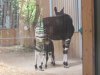
Today, I'll be covering my visit to FOTA Wildlife, Cobh and Cahir.
The day began pretty early for us.
R had to pickup the car she'd rented at the aiport before we headed to County Cork. A few of us were still sleeping, but as hours passed, everyone eventually woke up and had breakfast. Unfortunately, as expected for a big group, we left pretty late in the morning.
The nine of us were divided into two cars. My cousin's family and our grandmother went in the car she had picked up that morning (a Nissan Juke). My parents, O and I went in ours while listening to his playlist during the trip.
We had our sole bathroom break at a Supermac's in Tipperary. A few of us (not me) had coffee as well. There, I saw my first (of many) ever rooks.
Despite knowing I somehow had to visit FOTA, we were not sure on what to do: leave me by myself in Carrigtwohill then go somewhere else or stop at Cork and take me to the zoo afterwards? It was decided we'd do the former and, after a few wrong turns here and there, I was finally at Ireland's biggest zoo.
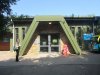
The entrance plaza at Fota Wildlife is somewhat similar to Dublin's in size. A key difference, however, is that FW has two giraffe statues in front of the main gates, while DZ does not.

(One of the last pictures I took before leaving to Cobh)
The first thing one will see after entering Fota Wildlife is a mixed exhibit for Kikuyu guerezas and meerkats (yes, you read it right). While the monkeys stayed in their indoor quarters, the meerkats were pretty active, with a few babies on sight!

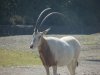
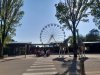
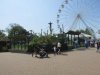
Different from the Dublin zoo, the recommended route in on the right path. After going past the Ferris wheel [which I did not ride because I thought I was running low on time (my parents had said they would pick we up an hour before closing time)], I saw the savanna (home to Rothschild's giraffes, scimitar-horned oryx, Grant's zebras and ostriches), which, despite the boring species mix, is pretty good due to its sheer size.
Opposite to the giraffes are two (or three, if you count an off-display paddock containing even more oryx) exhibits, one for cheetahs (I believe this one is used for cheetah runs) and the other for lechwe and wisent. In the latter, I saw my first ever (wild) European rabbit!
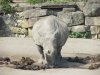
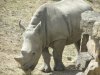
After walking a lot (make sure you can walk for big distance, the park is massive and if you have sensitive feet, be prepared for blisters!), I finally saw the gates to the Asian Sanctuary. The first exhibit I came across held Asian lions, all of which were lying down, but instead of following the path, I went the opposite way and headed to the rhinoceros exhibit, which looks fabulous! Besides the male, I saw a female with her calf (a first for me).
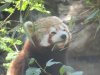
Along the way to the next enclosure, I saw a free-roaming red-necked wallaby. Then, I came across four enclosures: one for lion-tailed macaques, two for red pandas (both of which were sleeping on the trees) and one for Visayan ungulates (spotted deer and warty pigs).
After seeing all of them, I made my dumbest decision of the trip: instead of the taking the left path at the fork near the red pandas, I took the right one. I only realized my mistake after seeing an island for black-and-white-ruffed lemurs and the waterfowl lake (I was not offered a map near the entrance, so I had to be guided by my own intuition). This meant I had to backtrack, which I did (however, I went the wrong way).
I photographed the primates (mostly their exhibits because very few showed their faces on the isles), the waterfowl [including a few firsts (a little grebe, a red-crested pochard, an emperor goose and wild greylag geese)] and took a path which led me to the drill enclosure. I saw a male in the indoor quarters, but couldn't really get a good picture (nor a good glimpse) of it. Then, some more walking made me come across flamingos. That was when I realized I was going the wrong way
again.
I backtracked (this time the right way) as fast as I could [I ran (and when I say I ran, I mean I dashed like a greyhound) a lot during my visit] and finally found myself in Asia again. I saw the Visayan spotted deer (this time a male) and the lion-tailed macaques again and came across two very friendly peafowl. After walking some more, I finally came across a new animal, which I had not seen in years: the white-handed gibbon. I saw two of them, but I only got good pictures of one.
Besides coming across my first bar-headed goose, I saw the agile gibbons (another first for me), which were swinging among the trees like crazy. I didn't even try to photograph them, so I recorded a thirty-second video instead. Next were the langurs, which were resting up on the trees. However, they came inside their indoor quarters, so I saw them up close. Both primate species mentioned in this paragraph had infants on sight.
Then, I finally began following the path correctly, which led me to the howler monkey island, where I photographed a female. Right next to the enclosure is the tropical house, home to most of the zoo's tropical herptiles, fish and invertebrates. I'll be honest, I didn't really care about the fish, but I still recorded myself telling future me which taxa I saw and which I didn't.

Species list for the Tropical House:
1.
Acrantophis dumerili
2.
Epipedobates tricolor
3.
Polypedates otilophus
4.
Eurycantha calcarata*
5.
Python regius
6.
Dendrobates tinctorius
7.
Acanthurus fowleri
Heniochus diphreutes
Siganus vulpinus
8.
Acanthuridae sp. (unsigned species of tang)
Amphiprion percula
Chelmon rostratus
Chrysiptera cyanea (didn't see)
Chrysiptera parasema
Paracanthurus hepatus (unsigned)
9.
Ariopsis seemani
Monodactylus argenteus
Monodactylus sebae
Scatophagus argus
Toxotes jaculatrix
10.
Ancistrus sp.
Chromobotia macracanthus
Glossolepis incisus
Melanotaenia bosemani
Melanotaenia trifasciata
Psalidodon anisitsi
Schistura denisonii
11.
Ameca splendens
Ancistrus chirrosus
Actinopterygii sp. (a few unsigned species of fish)
12.
Neocaridina davidi
13.
Hypocampus abdominalis
14.
Brachylophus fasciatus
Leptodactylus fallax
15.
Epicrates subflavus
16.
Chelonoidis carbonaria
17.
Indotestudo elongata
+ Free-roaming green iguana and Linne's two-toed sloth. There was also a guineafowl perched on an elongated tortoise.
*(They were wating for new stock at the time. Their old stick insects died without leaving any offspring).
I left the Tropical House knowing I'd come back later because I had not seen the mountain chicken or the Jamaican boa. On the way to the spider monkeys, I saw a pink-footed goose (another first for me) and the park's Humdbolt penguins. Across the penguin lake were my first ever Eastern gray kangaroos.
Since the maps sparsely scattered across the park were the only ones I could find, I thought the macaws were still near the Oasis Café, so I became desperate when I saw no enclosures there, but it turns out I was just a few months (or years) too late and the aviaries had been demolished. So, I went ahead and saw my first ever Colombian spider monkeys (I had missed them in Lisbon), one of which was carrying an infant.
Following path, I ended up in the Madagascan Village, where there are the indoor quarters for the zoo's two lemur species (ZTL lists three, but there were no signs of red-bellied lemurs around) and a house with four terraria and an aquarium for Malagasy fish.
Species list for the Madagascan Village:
1.
Phelsuma madagascariensis
2.
Paretroplus kieneri
Bedotia madagascariensis
Pachypanchax omalonotus
Ancistrus cirrhosus
3.
Mantella aurantiaca (didn't see)
4.
Gromphadorhina portentosa
5.
Achrioptera manga

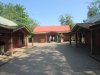
(To the left, the indoor quarters for black-and-white-ruffed lemurs; to the right, the indoor quarters for ring-tailed lemurs).
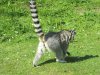
After leaving the house (and seeing the white-faced sakis in their indoor quarters), I walked out to my first ever walkthrough experience with (ring-tailed) lemurs, which was amazing! There were even two females with babies, one which had twins!

Then, I saw two more primates (Roloway monkey and gray-cheeked mangabeys) in their indoor quarters. That kind of sucked because I was not able to take any pictures and I couldn't even catch a good glimpse of the mangabeys (which were one of the main reasons why I chose to visit Carrigtwohill, by the way). These were followed by a long path stretching all the way to the white-tailed sea eagle aviary.

(Drill island)
On the way to the sea eagles, there was an exhibit on each side of the path, one for red-necked wallabies and another for Eastern gray kangaroos. Besides both marsupials, I saw an Eurasian chaffinch.

Taking a look at the map (by that point I had downloaded the newer map on the park's website) I realised the eagles and seals were far too close to each other in the map. "How come?" I wondered, as I only saw a single exhibit where there were supposed to be two, but the answer came with an unexpected smell of blubber and dead fish. The eagles were mixed in with the grey seal!

(Ignore my legs. You can see the grey seal on the foreground while the tree on the back had a white-tailed sea eagle perched on it).
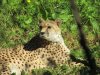
Then, I came across a row of five cheetah exhibits. FOTA Wildlife claims to be the zoo with the world's highest recorded number of cheetah births, something I find very plausible.

Then, another view of the savanna, followed by the zoo's nursery (which only had bobwhite chicks on show that day), the giraffe barn, an empty enclosure (formerly housed ASCOs) and two exhibits for South American animals [one was an aviary for blue-throated macaws, mandarin ducks (which I had also seen on the lake surrounding the agile gibbons) and red-breasted geese, while the other housed Brazilian tapirs, capybaras and a Darwin's rhea].

(Zoo nursery)
While I was near the drill exhibit, I received a phone call from my mother [who was with the others in Kinsale (they didn't go to Cork, since both O and R said there was nothing interesting in the city proper)], in which she told me they'd arrive in Carrigtwohill at 18 o'clock (an hour later than expected), so I was reliefed knowing I could see everything again if I went on a faster pace.
So, I headed back to the entrance and decided to the tour the whole thing again. As time went by, however, I noticed I'd likely not be able to reach the Tropical House in time before it closed (it closes an hour before FOTA does), so I dashed (again) through the savanna (not without noticing the bison calves I had nearly missed) and Asia (though not withouth photographing the tiger I had not seen earlier) and reached the TH as a keeper (who proved to be both clever and very helpful) was leaving the backstage area and preparing to close the greenhouse. Before initiating a conversation with him, I realized I had almost missed the "blue" poison dart frog terrarium, which was right next to the royal python.
I told him I was leaving as soon as I spotted the mountain chicken and the Jamaican boa. While he tried helping me find one of the four Dominican frogs in the terrarium, I spotted one hiding very well in a hole dug under a tree trunk. As for the boa, the keeper noticed I had no chance at spotting it since it was hiding behind another tree. So he went in the exhibit and repositioned the trunk as I photographed the elusive snake. I thanked the friendly man and left the place, as I had promised.
After walking for a few minutes, I had arrived in the South American enclosure (my final stop of the visit, since I had quit trying to spot the
Mantella frogs in the Madagascan village and no Old World monkeys showed up outside their indoor quarters), where I tried (and managed to) spot the park's sole Darwin's rhea.
As I reached the entrance plaza, I noticed the guerezas were outdoors, so I got a few pictures of them. Then, I went into the gift shop and bought a few souvenirs [including six plastic animals (two genets, two puffins and two red pandas)] plus a can of coke and a can of Pringles chips (or, as the Irish like to call them,
crisps) and munched on them as I waited for my parents to pick me up.
So, what is my opinion on FOTA Wildlife?
Second best zoo I have ever visited. The enclosures are amazing, none were average (dare I saw below average) and a few were even the better than their counterparts in Dublin. Thanks to the multiple species of free-roaming animals around the park, I felt like Adam in the Garden of Eden at times. On the other hand, it does not really top Dublin because a few key species are missing and the (scarce) maps scattered across the zoo are very outdated. However, this issue can be adressed by downloading the map on their website or asking for one at the ticket booth. My only other problem was having to walk way too much there (got a few blisters afterwards), but if you can't take a walk this long, you can take a few rides which will make your experience way more enjoyable. I'd give the zoo an overall 8.75/10, meaning excellent (anything above a 9 would be near perfect and 10s don't really exist to me).
I really liked this zoo and I hope I can visit it again. I will be covering Cobh and Cahirs on my next posts.