European (Tea)Cup - HEAD-TO-HEAD: Chester vs Prague (Birds)

Chester vs Prague - BIRDS

  • Chester 5/0 Prague

    Votes: 0 0.0%
  • Chester 4/1 Prague

    Votes: 0 0.0%
  • Chester 3/2 Prague

    Votes: 0 0.0%
  • Prague 5/0 Chester

    Votes: 0 0.0%

  • Total voters
    21
  • Poll closed .
I believe birds are Prague's biggest strenght and the main reason I keep coming back to this zoo. The collection is great in many ways and many of the exhibits are very nice, even amazing. I say this as someone rather critical. But I believe the welfare of the animals should be considered when voting. Some people here keep claiming there are only perfect bird exhibits in Prague but that’s unfortunately not true.

I will start with the good stuff. Owls! Prague zoo keeps 8 species on show, most of them in nice aviaries. What I aprecciate those aviaries is that you can usually find them at quieter and darker places where not as many visitors come.
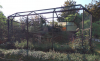
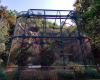
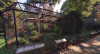
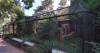
In the upper part of the zoo there's a row of aviaries for owls. There you can see Ural owls, barn owls and Oriental bay owls (my beloved). The birds in those aviaries switch places from time to time. In this part of the zoo is another aviary, but this one is not occupied by owls, but disabled European honey buzzards.
full

credits to @/Maguari

upload_2025-8-26_1-0-40.png
screenshot from mapy.cz

full

credits to @/Maguari

The Philippine scops owls are hidden in a small cage at the old Pheasantry.
upload_2025-8-26_1-2-29.png
screenshot from mapy.cz

Then there are two quite small and not very nice looking aviaries for barn owls and little owls that take place in a small exhibit complex called The nature around us. Those guys deserve better.
full

credits to @/Kalaw

The two aviaries behind the seal exhibit and those are home to Pel's fishing owls and buffy fishing owls. In bright sun it can be a little bit hard to spot the birds, but trust me - they are always sitting there, watching you. Though!
Pel's Fishing-owl (I know @merlin told us that the young owl died earlier this year, but there were also two born last year which I believe survived?).
The young one from last year has died at the age of 11 months. Another one has hatched in January this year. One, not two.

full

credits to @/vogelcommando

full

credits to @/Chapman'szebra

Close to those two aviaries is a row of aviaries that mostly house raptors and vultures. Also another owl species - the spectacled owl. All those exhibits are very similiar, the main differences between them being the sizes.
full

credits to @/Chapman'szebra

Some of the birds would benefit from a bigger space, especially the king vultures and the pair of Steller’s sea eagles. Bald eagles too.
upload_2025-8-26_1-7-30.png
screenshot from mapy.cz

full

credits to @/Zebraduiker

full

credits to @/Balgur

There’s a mixed aviary for European honey buzzards, hooded vultures and Egyptian vultures. Then there are more Egyptian vultures and more Egyptian vultures… Next to the Steller’s sea eagles is an aviary for lesser yellow-headed vultures and red-legged seriemas. And another exhibit with Egyptian vultures. I’d rather see another owl species there…
upload_2025-8-26_1-14-30.png
upload_2025-8-26_1-15-17.png
screenshots from mapy.cz

Speaking of vultures and raptors, probably the most amazing aviary in the whole zoo is the Great aviary. Many would disagree, as there are not many species, neither rarities. But I don't care, because watching the red kites, booted eagles, Egyptian vultures and cinnereous vultures circle above your head is an amazing experience. Meanwhile black storks are carefully watching you from behind. This aviary was built 50 years ago, but there was a big aviary before that too. I believe that this is much more creative way of using the cliff, also as it required more effort to build in comparison to the ungulate enclosures (of course, they are amazing, but I would aprecciate a little bit more creativity). The birds are allowed to nest on the cliff. The wild magpies seem to be fond of this aviary too by the way.
full

full

credits to @/lintworm

There is one similiar, but smaller aviary for bearded vultures.
upload_2025-8-26_1-19-34.png
screenshot from mapy.cz

Another aviary attached to the cliff is the African rock walkthrough aviary. It’s also another favorite of mine, one of the best places in the whole zoo where you can just sit down and watch the animals surrounding you. Little owls (okay, I admit I’ve never seen a single one, but who cares), lesser kestrels, hamerkops, northern bald ibises, demoiselle cranes, ferruginous ducks, white-headed ducks, rock pigeons, marbled ducks and wild sparrows, all of them can move freely in this very nice aviary. Again, the birds are able to use the cliff for nesting.
full

credits to @/lintworm
XbdBjgM.jpeg

credits to the nice guy who uploaded this to the mapy.cz gallery

The last big walkthrough aviary is called the Asian lagoon. There you can see purple herons, Asian wooly necked storks, Abdim’s storks, yellow-billed storks, smews, Eurasian spoonbills, black-crowned night herons, rufous night herons, red-breasted mergansers, spot-billed pelicans, milky storks, magpie geese, … Let’s move elsewhere though, because I don’t have much to say about the Asian aviary. There are some amazing and rare species, but the exhibit itself is not that special. Don’t get me wrong – I still think it’s nice, but not as neat as the previous two! It just lacks something.
full

full

credits to @/lintworm
 

Attachments

  • upload_2025-8-26_1-0-40.png
    upload_2025-8-26_1-0-40.png
    1 MB · Views: 23
  • upload_2025-8-26_1-2-19.png
    upload_2025-8-26_1-2-19.png
    1.3 MB · Views: 1
  • upload_2025-8-26_1-2-29.png
    upload_2025-8-26_1-2-29.png
    1.3 MB · Views: 26
  • upload_2025-8-26_1-7-30.png
    upload_2025-8-26_1-7-30.png
    1.3 MB · Views: 25
  • upload_2025-8-26_1-8-8.png
    upload_2025-8-26_1-8-8.png
    1.5 MB · Views: 1
  • upload_2025-8-26_1-14-30.png
    upload_2025-8-26_1-14-30.png
    1 MB · Views: 23
  • upload_2025-8-26_1-15-17.png
    upload_2025-8-26_1-15-17.png
    1.3 MB · Views: 26
  • upload_2025-8-26_1-19-34.png
    upload_2025-8-26_1-19-34.png
    1.6 MB · Views: 24
Last edited:
I don't think I've seen enough of the other great bird collections (Zoo Berlin or San Diego spring to mind from what I've heard) to comment, nor, for that matter, enough of Chester's bird collection with walkthrough aviaries closed on my visit. I think that for it's various excellent greenhouses, very large collection and best-of-its-kind bird show, Beauval would also be in with a shout for second place, but then again there are a lot of really poor aviaries there, and pinioned birds. I'd be interested to hear from you about how you think Chester compares to Zoo Berlin from a bird standpoint, seeing as I know you're very familiar with both collections.

It's definitely a fairly tricky question - which is why I said I feel Chester has a "reasonable shout" at being second-place behind Prague rather than being a lock-in for the title!

The main issue with direct comparison is that the "nature" of the bird collections at Chester and Zoo Berlin are quite different in a way that isn't quite the case when comparing Chester and Prague; although Zoo Berlin does have a few nice stand-alone bird exhibits dotted around the collection, the bulk of the collection is contained within two large dedicated bird houses - the Welt der Vogel and Fasanerie. Conversely, the bird collections at Prague and Chester are scattered throughout the respective zoos, and those exhibits which technically *could* be called bird houses (for instance the Rakos Pavilion) don't exactly fit into the same "genre" as the Berlin pair and can't readily be compared to them.

Generally speaking, when comparing Prague, Chester and Berlin where birds are concerned, I think that Zoo Berlin possibly falls in second place (ahead of Chester but behind Prague) when it comes to the scope of the bird collection, but definitely takes third place when it comes to exhibit quality and design aesthetics - it has nothing that approaches the best exhibits at either Chester or Prague in quality or design, but like Prague contains exhibits which fall short of the *worst* exhibits at Chester. As such, the overall ranking probably comes down to personal taste - dedicated bird houses, or multiple bird-focused exhibits?

The last big walkthrough aviary is called the Asian lagoon. There you can see purple herons, Asian wooly necked storks, Abdim’s storks, yellow-billed storks, smews, Eurasian spoonbills, black-crowned night herons, rufous night herons, red-breasted mergansers, spot-billed pelicans, milky storks, magpie geese, … Let’s move elsewhere though, because I don’t have much to say about the Asian aviary. There are some amazing and rare species, but the exhibit itself not as much. Don’t get me wrong – I still think it’s nice, but not as neat as the previous two! It just lacks something.

This is also, IIRC, one of the more pinion-heavy exhibits!
 
The Bird wetlands. First, let’s face the harsh truth that many of the birds here are pinioned. Red-breasted geese, white storks, secretary birds, Siberian cranes, red-crowned cranes, common cranes, Bewick’s swans, blue cranes, … All of those are unable to fly.
full

credits to @/Jana

Thankfully, most of the smaller species are kept in normal aviaries, so at least those can move around freely. Take this with a grain of salt, because the greenhouse occupied by shoebills does not provide them much space to fly around. They are still trying though.
Shoebills are fed with live fish so you can watch their actual hunting behaviour.
The birds are fed live fish from a small bucket. It is not that phenomenal.

4afd.jpeg

credits to the nice guy who uploaded this to the mapy.cz gallery

full

credits to @/Kalaw

The exhibit next to it has to be one of the most beautiful exhibits in the whole zoo I suppose. This aviary houses the infamous Brazilian mergansers together with crested oropendolas and scarlet ibises. There used to be horned screamers until last year, but those were moved elsewhere. Anyway, you can watch the mergansers swim underwater – but only if you lay down, since the water is not very deep ;p
full

credits to @/Kalaw

The next aviary focuses on the Pantanal avifauna. You can see various waterfowl species there, but also three ibis species and more. White-cheeked pintails, roseate spoonbill, Guira cuckoos, striated herons, southern lapwings, white-throated piping guans, Brazilian zeals, white-faced ibises, black-faced ibises, white ibises, buffleheads, west Indian whistling-ducks, ringed teals, southern screamers, … The boat-billed herons were moved off-show.
full

credits to @/LaughingDove

The African aviary should currently hold squacco herons, red-winged starlings, Malagasy sacred ibises, Hadada ibises, garganeys, Hartlaub’s ducks, hamerkops, African openbills, … Purple swamphens are kept off show. This aviary looks pretty much the same as the Pantanal one.
full

credits to @/Jana

The last aviary is devoted to Lednice ponds, an area in South Moravia region, which is one of the several bird hotspots in the country. There you can see the black-winged stilt, northern shoveller, Eurasian oystercatcher, rosy starling, harlequin duck, ruff, European roller, European stone curlew and pied avocet. I can only recommend you visiting the actual place!
full

credits to @/Jana

Just so we stay near water, let’s move to the flamingo enclosures. The first one holds Caribbean flamingos together with Chilean flamingos. This is the enclosure where you can find the horned screamer now if you are lucky enough. There are also some waterfowl species, but it seems like the only one you can see for sure there is the American wood duck. Keep in mind all of those birds are pinioned.
full

credits to @/Baldur

The other flamingo enclosure has greater flamingos, ruddy shelducks and red crested pochards. There used to be black storks not so long ago too, but those moved elsewhere. And I know you are probably quite annoyed by me now, but I’m gonna remind you anyways – all those birds are pinioned.
full

credits to @/Jana

But guess what birds are not pinioned! Those small native ones living in the Nature around us walkthrough aviaries. Most people bypass those two exhibits, so it’s another pleasant place for resting. The aviaries are not big and look kind of faded nowadays. The list of kept species here is continuously getting shorter. One of them has stock doves, song thrushes, European greenfinches, common linnets. There are also Eurasian wrens, which are not listed anywhere, so I don’t know how they actually got in. The second aviary houses common chaffinches, grey partridges, common starlings, European rollers and European turtle-doves.
full

credits to @/lintworm

There is one random single aviary with Australian magpies near the Farm area. Not the best one, but I must admit I aprecciate the use of the tree.
upload_2025-8-26_1-57-16.png
screenshot from mapy.cz

I’ll end it here and will continue with Sichuan, the Pheasantry, Rákos’s pavilion and the lori aviaries tomorrow. Hopefully I don’t forget about penguins and the Fuegian steamer ducks, which are currently kept off-show.

Something that I should clarify here: when I visited Chester, it was in the winter, and the walkthrough aviaries were closed.
Sorry, but - are you telling me you would actually be capable of criticizing Prague zoo, if you went in winter? Because you should remember that the Prague walkthroughs are also empty and extremely ugly in winter.

This is a distinctly contrasting character to Prague, where cormorants, frogmouths, wombats and tassies can all be seen from the same boardwalk.
Of course, since Darwin's crater is not a very big complex...

This is also, IIRC, one of the more pinion-heavy exhibits!
Oh, is it really? I did not know that!
 

Attachments

  • upload_2025-8-26_1-57-16.png
    upload_2025-8-26_1-57-16.png
    1.1 MB · Views: 27
Last edited:
The Monsoon Forest free flight aviary has, among other things, Grosbeak Starlings, Black browed Barbet, Chestnut Backed Thrush, White Rumped Sharma, Cinammon Ground Dove, Roul roul partridge, Blue crowned hanging parrot, White naped pheasant pigeon, Superb fruit dove, Pink necked green pigeon, Asian fairy bluebird, Victoria crowned pigeon, Mindano bleeding heart dove, Black naped Oriole,

There are however no Brahminy Starlings or Indian Peafowl.
I’m not convinced Chester even holds Blue Peafowl
 
Sorry, but - are you telling me you would actually be capable of criticizing Prague zoo, if you went in winter? Because you should remember that the Prague walkthroughs are also empty and extremely ugly in winter.
I am fully capable of criticising Prague Zoo and have done in the past, including in this very thread where I mentioned the frustrating excess of pinioned birds at Prague to be a huge advantage for Chester. In previous threads, I've also brought up those cramped hornbill aviaries which are frankly miserable compared to Chester's, and will happily do so again if you wish.

And yes, if I visited Chester in early august and Prague around New Year's, my impressions of both zoos would be quite different, I'm sure. Though I wasn't talking about the aviaries themselves (the Chester aviaries that I could see were still fairly attractive in spite of the winter), but rather the surrounding portions of 'Islands' which didn't look remotely Southeast Asian and therefore made the placement of the 'Bali Temple' seem more bizarre. The same will of course be applicable at Prague, but it's less upsetting there, as they haven't spent millions on planting, cultural theming, a boat ride where I couldn't see a single animal, and even digging up a network of moats so that different portions of the exhibit are actual islands.
Of course, since Darwin's crater is not a very big complex...
Yes, and also because the aviaries in Darwin Crater aviaries are fully visible externally, which the ones in Islands aren't (or at least weren't when I went four years ago, though older images in the gallery indicate that at least the Bali one was at one point)
 
Let’s start with the Sichuan house today. For many, this is one of Prague’s highlights and so it is for me. Another place where I like to sit down on a bench, enjoying the environment. This pavilion opened in 2004 and replaced the old bird pavilion. The smaller species here get switched sometimes, so it can be hard to keep up with it. But there are also birds you just can’t miss – for example the great argus! Those guys can be really loud. Mandarin ducks seem to enjoy the little waterfall. I think those are the two species most aprecciated by general visitors, but there also many smaller birds, some of them quite rare! Emei Shan Liocihla, Pekin robin, common emerald dove, grey peacock-pheasant, little bittern (this species can be seen at the Lednice ponds aviary too, I just forgot about them), ashy woodpigeon, Eurasian hoopoe, scaly laughinthrush, white-rumped shama, golden-crested myna, blue-crowned laughinghturhs, orange-headed thrush, common emerald dove, barred laughingthrush, bar-backed partridge, Cabot’s tragopan, white wagtail,
The aviary attached to the pavilion opened just two years ago on the other hand. There you can see the tragopan too. And also the crested myna, Indonesian green magpie, scaly-sided merganser, white-shouldered starling, rufous-cheeked laughinthrush and spotted dove. It’s a lovely aviary, but some of the inhabitants are quite shy.
full

full

full

credits to @/lintworm

To create some contrast, let's talk about the Pheasantry. I don't mind pheasantries as much as some other people do - unless only small bird species are kept in those. That's not the case in Prague, as some of the cages are home to hornbills. There are two rows of cages which hold some truly wonderful birds, but sometimes it can be complicated to spot them behind the mesh. The row facing the lemur walkthrough is the one with the particularly small cage for northern rufous hornbills. Next to it is a cage with spotted imperial pigeons and Phillipine metallic pigeons. Then there are cages for Phillipine scops owls (which I've already talked about earlier), Visayan hornbills, Palawan hornbills. A cage for North Sumatran bronze-tailed peacock pheasant and pink-necked green pigeon. Then a cage for Luzon hornbills. In the rest of the cages are Javan magpies, Sumatran laughingthrushes, Malayan peacock-pheasants, pink-headed imperial pigeons, green imperial pigeons, Bali mynas, Salvadori's pheasants. The zoo no longer keeps Forsten's lorikeets.
The cages on the other side are slightly bigger and better looking. The one on the left holds Madagascar crested ibises with pink pigeons. Next to it is a cage for great hornbills. The cage for Nicobar pigeons, Asian glossy starlings and kagus is actually nicely planted. The last aviary is probably the smallest one and not very appropriate for the rhinoceros hornbills.
upload_2025-8-26_12-39-21.png
upload_2025-8-26_12-52-12.png
upload_2025-8-26_12-54-38.png
upload_2025-8-26_13-3-37.png
screenshots from mapy.cz

Under those aviaries is an enclosure housing a flock of pinioned marabou storks.
upload_2025-8-26_13-6-3.png
screenshot from mapy.cz

You can see marabou storks at two places actually. The second one would be the sitatunga exhibit.
full

credits to @/Robaque

Though, across the path from the first marabou enclosure there is the Humboldt penguin exhibit. The penguins share the exhibit with a pair of Fuegian steamer ducks. Those two have been off-show for several months now
full

credits to @/vogelcommando
full

credits to @/Swedish Zoo Fan

There are also two aviaries in the Darwin's crater. One of them is a walkthrough. I really like that one, since there are some amazing water birds! The visitors can also see the indoors which is not very pleasing, but it seems like the birds are happy with it. This aviary holds little pied cormorants, hardheads, rufous night herons, Australian shelducks, blue-winged kookaburras and straw-necked ibises.
On the other hand, the aviary housing red-tailed black cockatoos and tawny frogmouths is one of my least favorite ones in the zoo. I think it has something to do with it's placement. The best view is from the main path and so I can't search for the birds in peace. By the way, few years ago I spotted one of the frogmouths eat a budgerigar in there. To this day I don't know if they actually feed them those or if the bird had one of his aviarymates for dinner. Another species listed is the golden-shouldered parrot.
full

credits to @/vogelcommando
960px-Darwin%C5%AFv_kr%C3%A1ter_Zoo_Praha_6.jpg

from wikipedia

full

credits to @/vogelcommando
full

credits to @/lintworm
full

frogmouth enjoying the dinner
 

Attachments

  • upload_2025-8-26_12-39-21.png
    upload_2025-8-26_12-39-21.png
    831.9 KB · Views: 21
  • upload_2025-8-26_12-52-12.png
    upload_2025-8-26_12-52-12.png
    917 KB · Views: 21
  • upload_2025-8-26_12-54-38.png
    upload_2025-8-26_12-54-38.png
    1.2 MB · Views: 24
  • upload_2025-8-26_13-3-37.png
    upload_2025-8-26_13-3-37.png
    1.2 MB · Views: 21
  • upload_2025-8-26_13-6-3.png
    upload_2025-8-26_13-6-3.png
    854 KB · Views: 21
But I don't care, because watching the red kites, booted eagles, Egyptian vultures and cinnereous vultures circle above your head is an amazing experience.
I am not sure if I am confusing this aviary for another one but weren’t there also wild rock doves and Eurasian magpies kept at one if Prague’s aviaries as well?
 
I am not sure if I am confusing this aviary for another one but weren’t there also wild rock doves and Eurasian magpies kept at one if Prague’s aviaries as well?
Eurasian magpies certainly live inside the Great aviary, but those are all wild birds. The holes in the mesh are too big to keep them inside, they can go through.
The rock doves can be seen in the African rock aviary. I mentioned them, but accidentally called them "rock pigeons" :rolleyes:
 
Last edited:
I don't often go see the parrot trail and I blame the polar bears for that. I refuse to even look at their exhibit, but if I want to see the birds I need to go around. Most of the times I don't feel like doing that. Anyways, all the birds are occupying smaller aviaries above the cliff. All the exhibits look very similiar to each other. It is also possible to see inside the little houses, which comes in handy especially in winter. There are four double aviaries in total and one bigger walkthrough aviary at the very top. The smaller aviaries should currently house the following list of species: purple-naped lory, blue-fronted fig parrot, brown lory, large fig parrot, Edward's fig parrot, vernal hanging parrot, Mitchell's lorikeet, Mindanao lorikeet. I did not find any better pictures for the walkthrough aviary unfortunately. There should be bush stone-curlews, crested pigeons, superb parrots, scaly-breasted lorikeets and rainbow lorikeets.
full

credits to @/Maguari
full

full

credits to @/vogelcommando
upload_2025-8-26_14-17-48.png
screenshot from mapy.cz
full

full

credits to @/vogelcommando

Another place where you can see various parrot species is the Rákos's house. There are six indoor exhibits, one of them being walkthrough, and two outdoor aviaries attached to the house. One of them is home to keas. The other one is my least favorite walkthrough aviary in the whole zoo. The path is very narrow and the whole space feels kind of cramped. There are supposed to be four parrot species currently - Cordillean parakeet, Austral parakeet, rose-ringed parakeet and burrowing parrot. The first exhibit you see after entering the house is the New Guinea aviary with Pesquet's parrot, Raggiana bird-of-paradise, king bird-of-paradise and Cinnamon ground dove. It is not the only exhibit showing the New Guinean avifauna, because the indoor walkthrough does so too. But again, this walkthrough does not belong between my favorites. There's always an employee watching the visitors in case something bad happens, but it honestly fills me with anxiety. I don't want to be watched while observing the helmeted friarbirds hiding in the bushes! Or the palm cockatoo, or Salvadori's fig parrot, or western crowned pigeon, Sunda teal, green-naped pheasant-pigeon, superb fruit dove, New Guinea bronzewing. pink-necked green pigeon, ...
The highlight of the whole pavilion for me are the two aviaries with one thing in common -wattled jacanas. Those two are well planted. In the Pantanal aviary you can also see the hyacinth macaw, tataupa tinamu, scarlet-headed blackbird and red-tailed amazon. The Jamaica aviary is home to yellow-billed amazons, crested quail doves, Bahama pintails and scaly-naped pigeons. Phillipine aviary has blue-naped parrots, black-chinned fruit doves and spotted imperial pigeons (they really do love pigeons and doves in Prague). There are only two species in the Caatinga aviary - Lear's macaw and red-cowled cardinal.
full

full

full

full

full

full

full

full

full

credits to @/lintworm

In fact, Rákos's house replaced a complex of aviaries that used to be there for decades. This row of cages was called the Linear. You can still see the last two remaining aviaries right under the pavilion. In my opinion, there is no valid reason behind leaving those two cages there. And so I believe the whole Linear should have been removed entirely. I'm still waiting for the day when I come to the zoo and those are finally gone. The right cage holds slender-billed parakeets and the left one burrowing parakeets.upload_2025-8-26_15-46-2.png
screenshot from mapy.cz
 

Attachments

  • upload_2025-8-26_14-17-48.png
    upload_2025-8-26_14-17-48.png
    1.4 MB · Views: 19
  • upload_2025-8-26_14-23-3.png
    upload_2025-8-26_14-23-3.png
    1.4 MB · Views: 1
  • upload_2025-8-26_15-46-2.png
    upload_2025-8-26_15-46-2.png
    925.9 KB · Views: 21
I’m not convinced Chester even holds Blue Peafowl

No I don’t think they do - well they could be roaming but I’m sure someone would have seen one at some point.

Some excellent discussion and pictures and even though I’m at Chester today and having a genuinely wonderful bird day (posting this because holy heck I needed a sit down) I’m leaving it Prague 3.2 on the merits of what’s been reported about the collection.
 
et’s start with the Sichuan house today. For many, this is one of Prague’s highlights and so it is for me. Another place where I like to sit down on a bench, enjoying the environment. This pavilion opened in 2004 and replaced the old bird pavilion. The smaller species here get switched sometimes, so it can be hard to keep up with it. But there are also birds you just can’t miss – for example the great argus! Those guys can be really loud. Mandarin ducks seem to enjoy the little waterfall. I think those are the two species most aprecciated by general visitors, but there also many smaller birds, some of them quite rare! Emei Shan Liocihla, Pekin robin, common emerald dove, grey peacock-pheasant, little bittern (this species can be seen at the Lednice ponds aviary too, I just forgot about them), ashy woodpigeon, Eurasian hoopoe, scaly laughinthrush, white-rumped shama, golden-crested myna, blue-crowned laughinghturhs, orange-headed thrush, common emerald dove, barred laughingthrush, bar-backed partridge, Cabot’s tragopan, white wagtail,

I think that this list doesn't match the bold claims by @Paul.Haerle that the Sichuan Pavilion contains a "much better collection" than Monsoon Forest (or implicitly Tropical Realm as the other house which has been directly compared to the Pavilion) :D the vast majority of the species listed are either present within one or both of the Chester houses, present elsewhere at Chester, or have directly-equivalent species displayed within Monsoon and/or Tropical Realm.

The only species with no direct equivalents are the little bittern, Eurasian hoopoe and white wagtail.... hardly earth-shattering!

No I don’t think they do - well they could be roaming but I’m sure someone would have seen one at some point.

They do, actually - an aviary next to the Asiatic Lion exhibit.
 
I think that this list doesn't match the bold claims by @Paul.Haerle that the Sichuan Pavilion contains a "much better collection" than Monsoon Forest (or implicitly Tropical Realm as the other house which has been directly compared to the Pavilion) :D the vast majority of the species listed are either present within one or both of the Chester houses, present elsewhere at Chester, or have directly-equivalent species displayed within Monsoon and/or Tropical Realm.

The only species with no direct equivalents are the little bittern, Eurasian hoopoe and white wagtail.... hardly earth-shattering!


They do, actually - an aviary next to the Asiatic Lion exhibit.

Of course! I’d forgotten them.
 
I think that this list doesn't match the bold claims by @Paul.Haerle that the Sichuan Pavilion contains a "much better collection" than Monsoon Forest (or implicitly Tropical Realm as the other house which has been directly compared to the Pavilion) :D the vast majority of the species listed are either present within one or both of the Chester houses, present elsewhere at Chester, or have directly-equivalent species displayed within Monsoon and/or Tropical Realm.

The only species with no direct equivalents are the little bittern, Eurasian hoopoe and white wagtail.... hardly earth-shattering!
The Sichuan Pavilion and Monsoon Forest species lists in direct comparison, without including other greenhouses, leads me to the following conclusion
I would say Prague has more rare bird species than Chester; Chester has Black-browed Barbets and Black-naped Oriole, while Prague has Barred and Scaled Laughingthrush, Barred Cuckoo-dove, Ashy Wood Pigeon and Bar-backed Partridge.
I didn’t talk about other aviaries in Chester, only about the Sichuan Pavilion in comparison to the Monsoon Forest, in relation to big walkthrough aviaries.
And even if Chester keeps similar species, few of them are similarly rare (for examples Collared Hill Partridge and Bar-backed Partridge)
 
I think that this list doesn't match the bold claims by @Paul.Haerle that the Sichuan Pavilion contains a "much better collection" than Monsoon Forest (or implicitly Tropical Realm as the other house which has been directly compared to the Pavilion) :D the vast majority of the species listed are either present within one or both of the Chester houses, present elsewhere at Chester, or have directly-equivalent species displayed within Monsoon and/or Tropical Realm.
I think that you are being extremely disingenuous with this 'direct equivalent' stance.

Sichuan Pavilion has Barred and Scaly Laughingthrush. Yes, Chester has other laughingthrushes, but it doesn't have these two species and nor does any other collection in Europe. These are two very attractive and unique taxa that any bird lover (or even a more general zoo enthusiast) visiting Prague would appreciate as lifeticks, and likely commit some time in Sichuan to seeing them. I don't think it is remotely fair to discount their significance because Chester has 'direct equivalents,' by which I can only assume you mean different laughingthrush species. We routinely praise zoos for having taxa found at no other European collection, so why should this be any different?

On the topic of Sichuan, I should say how even though I didn't love the exhibit as much as some others did (I think the fact I was pressed for time and expected a slightly longer visitor pathway contributed there), I was very impressed by the amount of nesting birds in there. Watching Eurasian Hoopoes perform regular feeding flights across the hall to deliver food back to their chicks in a nest was a real treat.
There are supposed to be four parrot species currently - Cordillean parakeet, Austral parakeet, rose-ringed parakeet and burrowing parrot
Are there no more Monk Parakeets? There were loads last August, and I thought they're unique nesting behaviour made them a wonderful addition.
 
I think that you are being extremely disingenuous with this 'direct equivalent' stance.

Sichuan Pavilion has Barred and Scaly Laughingthrush. Yes, Chester has other laughingthrushes, but it doesn't have these two species and nor does any other collection in Europe. These are two very attractive and unique taxa that any bird lover (or even a more general zoo enthusiast) visiting Prague would appreciate as lifeticks, and likely commit some time in Sichuan to seeing them. I don't think it is remotely fair to discount their significance because Chester has 'direct equivalents,' by which I can only assume you mean different laughingthrush species. We routinely praise zoos for having taxa found at no other European collection, so why should this be any different?

My point is that Monsoon Forest contains plenty of species which are absent from Sichuan (and indeed Prague), as does Tropical Realm - this point does *not* mean that I am discounting the significance of any species held within the Czech exhibit, merely disagreeing that "contains two unique-to-Europe species rather than one unique-to-Europe species" is synonymous with "contains a much better collection". Given the complete lack of any barbet species in the Sichuan Pavilion, I think the single unique species within Monsoon (Black-browed Barbet) is pretty special in its own right!
 
Are there no more Monk Parakeets? There were loads last August, and I thought they're unique nesting behaviour made them a wonderful addition.
There are, thank you! None of my sources mentioned them as they used to be at a different place just a few years ago and thus I forgot about them. Truly not my favorite aviary :D
Given the complete lack of any barbet species in the Sichuan Pavilion, I think the single unique species within Monsoon (Black-browed Barbet) is pretty special in its own right!
So many pigeons, so many doves, so many lorikeets and lories, but not a single barbet species... And this is not about Sichuan, but rather the zoo as a whole.
 
Last edited:
Because I want to cover everything I can, I'm going to post about the last few remaining exhibits I have not covered yet. Hopefully I don't forget about any.

In the upper part of the zoo there are enclosures housing two flightless species - emu and Southern cassowary. The outdoor exhibits are not particularly special, but provide the birds enough space I suppose. Cannot say the same about the indoors though.
upload_2025-8-26_20-44-19.png
screenshot from mapy.cz
full

credits to @/JAMESTHEGREAT
full

credits to @/Robaque
upload_2025-8-26_20-45-24.png
screenshot from mapy.cz

You can find some birds at the Carnivore house too. There's a big exhibit in the middle of the pavilion occupied primarily by iguanas, but also housefinches. The saffron finches used to be here as well, but those are now gone from the zoo entirely.
full

credits to @/Jigeroflemuria

There are also free-ranging blue peafowls. One of them has been living in the South America area in the upper part for years.
upload_2025-8-26_20-54-38.png
screenshot from mapy.cz

I almost forgot about the pinioned Canada geese. These share exhibit with American bisons.
full

credits to @/vogelcommando

And the African savannah is home to common ostriches.
full

credits to @/Maguari
 

Attachments

  • upload_2025-8-26_20-44-19.png
    upload_2025-8-26_20-44-19.png
    1.3 MB · Views: 19
  • upload_2025-8-26_20-45-24.png
    upload_2025-8-26_20-45-24.png
    1 MB · Views: 17
  • upload_2025-8-26_20-54-38.png
    upload_2025-8-26_20-54-38.png
    1.3 MB · Views: 17
This aviary also being where the Brahminy Starlings are to be found, of course. ;)

Indeed, thanks you and @TeaLovingDave as I had forgotten them but was just around the corner so could pop by, good viewing and to the point on Prague's signage made in this thread I think Chester's actually is on point.

chesterbrahmin.jpg

chesterpea.jpg

When I said none of either the first time though I meant in Monsoon Forest as it had been commented these two species were the only ones in that exhibit. The second time I was actually foolish though!
 

Attachments

  • chesterbrahmin.jpg
    chesterbrahmin.jpg
    258.5 KB · Views: 19
  • chesterpea.jpg
    chesterpea.jpg
    345.8 KB · Views: 17
When I said none of either the first time though I meant in Monsoon Forest as it had been commented these two species were the only ones in that exhibit. The second time I was actually foolish though!
The cause, why I thought Brahminy Starling and Indian Peafowl are housed in the Monsoon Forest, is that they live in the wild in monsoon forests, unlike most of the actual residents.
 
Back
Top