I'd be interested to hear which category-relevant species you would cite as having been solely prevented from being lost from European collections by Prague!
As for conservation breeding relevant to the category, I see you cite the recent involvement of Prague with the breeding programme for Brazilian Merganser and raise you the following examples pertaining to both conservation breeding *
and* reintroduction, including one example of a species which would have been lost entirely (and not merely in captivity) were it not for Chester:
- Fen Raft Spider (Dolomedes plantarius) - this wetland species, which is critically-endangered within the UK and was believed to be on the brink of local extinction at the start of the 2010s, was the focus of a captive-breeding and reintroduction programme throughout the first half of said decade, with Chester breeding several hundred individuals for this purpose (further information)
- Large Heath Butterfly (Coenonympha tullia) - this species used to be commonplace throughout the lowland bogs and peatlands of Lancashire, Merseyside and Greater Manchester, but significant population decline and local extirpations took place throughout the 19th and 20th centuries; Chester Zoo has been involved throughout the 2010s and early 2020s in the collection of individuals from surviving populations, their captive breeding and reintroduction to former breeding sites (further information)
- Tequila Splitfin (Zoogoneticus tequila) - this goodeid is endemic to a single pool in the Ameca River basin of northwest Mexico, and was ultimately extirpated in the wild in the late 1990s; however it is now fairly commonplace in captivity as a result of stock imported by Chester Zoo in 1995 shortly before its extinction in the wild, and the subsequent successful captive breeding of the species. Reintroductions of the species have taken place in recent years, with the individuals in question being descended from the original Chester import (further information)
- Montseny Brook Newt (Calotriton arnoldi) - this Critically Endangered species is endemic to a small handful of mountain streams on the slopes of the Montseny Massif in northern Catalonia, with a wild population estimated at around 1000 individuals; Chester Zoo became involved in the captive-breeding programme for the species managed by Barcelona Zoo in 2017, and now regularly breeds the species and returns adults and larvae to Spain for reintroduction - with reintroductions of Chester-bred stock having taken place as recently as May 2024 (further information)
Moreover, Chester is currently the EEP/ESB coordinator for all endangered goodeid fishes, Mountain Chicken, Lake Patzcuaro Salamander and Palawan Forest Turtle.
And now for photographic evidence of exhibits - for some of these I have quoted and paraphrased prior posts:
Giant Otter
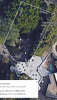
As previously stated upthread, in my opinion this is the best exhibit for giant otter - or indeed *any* species of otter - in any European zoological collection; the exhibit for North American River Otter at Prague which
@Kalaw suggests is of a similar standard pales in comparison as regards size, overall quality and design.
Moreover, although comments have been made within this thread suggesting that the lack of pinnipeds at Chester is a negative factor, I would actually argue that converting the old California Sealion exhibit into such a good exhibit for Giant Otter is a net positive factor.
View attachment 814273
Aquarium
Although relatively small, the aquarium at Chester Zoo is a very well-presented and high-quality exhibit complex - a wide range of species are displayed within, and the off-show tanks located within the aquarium represent a significant portion of the EEP population of critically-endangered goodeids:
Monsoon Forest
A surprisingly large amount of exhibits within this house are relevant to the category at hand, including the following:
- The "Tripa Research Station", located just beyond the entrance to Monsoon Forest, comprises a collection of tanks and terraria containing a wide range of invertebrates, fish, amphibians and reptiles intended to give the impression of a field research station in Indonesia, with a few being more permanent in design; around 20-25 taxa are displayed at any given time, of which perhaps three-quarters are category-relevant, including the following which give a decent picture of the whole:
- Several of the larger mixed terraria exhibits beyond here contain amphibians and other aquatic species, including Mao-Son Frog and Fea's Treefrog:
- The next major enclosure which should be highlighted is the large Sunda Gharial exhibit; something which these photographs struggle to convey is the depth of the pool, which extends for around two or three metres under the floor level of the visitor area. As can be seen, the Gharial are mixed with Bornean Batagur and several species of small fish, and have multiple hauling-out points. I would estimate that this exhibit is either equal in size to the Ganges Gharial exhibit at Prague or slightly larger, but it is *significantly* deeper at around 4 metres:
Latin American Wetland Walkthrough
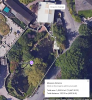
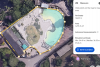
A very large (at almost 3,400 m²) and attractive walkthrough aviary for a wide range of species, including:
- Puna ibis
- Caribbean Flamingo
- Orinoco Goose
- Black-winged Whistling Duck
- Puna Teal
- Muscovy Duck
- Black-necked Stilt
- Argentine Lake Duck
- Scarlet Ibis
Notably, unlike the vast majority of the waterbird collection at Prague, none of these species are pinioned (barring a handful of the oldest flamingo individuals, which may have been pinioned in the past) and they breed prolifically within the aviary.
View attachment 814275
African Wetland Aviary
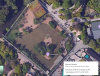
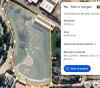
This recently-reopened aviary (which predates the Grasslands aka Heart of Africa development which it is now located within) contains Baer's Pochard, Cape Teal, East African Grey-Crowned Crane, Purple Swamphen, Red-billed Teal, Ruddy Shelduck, White-backed Duck, White-faced Whistling Duck, White-headed Duck and Greater Flamingo. The aviary is massive, at around 4,600 m², and other than the fact that the vegetation has yet to fully grow back in (having been partially cleared and the pool drained during the construction of the new exhibit complex) it is as excellent as ever. Again, unlike many of the similar aviaries at Prague the inhabitants are unpinioned - and in this case, this includes the entire flamingo flock, which are relatively young birds.
View attachment 814276
(continued below)


 I think I find myself in a similar position to you now and for that reason I will move down to 3-2 for now, but I still think it is closer to 4-1 Prague than 3-2 Chester, a similar stance to what I held in the previous match between the two.



 so I'm sorry.
 without checking my notes I certainly couldn't tell you offhand what species of fish Chester keeps, and the only group of fish I keep a lifelist for are cartilaginous.