Europe's 100 must see exhibits

I know you like to be pedantic just for the sake of it (...)
That makes three of us, since you're just as prone to that. ;) See Gospel of Matthew, chapter 7, verse 1 - 5 ...
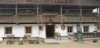
Regarding the Tirolerhof: a brother of back-then Austrian emperor Franz I. had an Tyrol-style farmhouse erected in that very area in 1802. To honor that (and given that back-then zoo director Helmut Pechlaner is also from Tyrol), the building we see now was bought by the zoo and relocated bit by bit from Tyrol to where it stands now. It is the only Tyrol-style building located within a Viennese zoo with such a history and hence unique(sic), but as pointed out by @jwer , it's not the only historic agricultural building relocated to a zoo. Some, like the windmill at Zoo Stralsund, are reconstructions, others, like the Hannover example, are true historic buildings. All in all, however, I think that the Tirolerhof deserves to be mentioned here, even though I wouldn't have listed it.
 
Last edited:
I know you like to be pedantic just for the sake of it, but setting does not necessarily equate to geographical location. A dictionary tells me that setting means "the surroundings or place in which something is put". So an authentic monumental farm building means an authentic setting to me, much more than holding some animals at a specific geographic location

On occasion, perhaps - although I think genuine difficulty parsing intent is more often the cause :P

However, in this case I genuinely disagree with your assessment of what makes a "setting" authentic and wasn't merely being difficult; quite apart from anything else, the dictionary definition you cite explicitly says "the surroundings or place in which something is put", which to me seems to apply more to the location (Innsbruck/Vienna) rather than the thing itself (the respective farm exhibits). But I don't want to go around in circles when I didn't intend to come across as pedantic or aggressive to begin with, so I shall happily drop the matter :)

I don't actually disagree with your selection of the Vienna exhibit, incidentally - from what I know of the Tirolerhof it is most certainly superior to the Innsbruck exhibit by some margin. I merely thought it was rather unfair to dismiss the latter entirely when the setting is pretty much the best thing it has going for it!

But given that information, it should certainly have been included as "similar exhibit". Especially given the focus on rare German breeds.

Which raises an interesting secondary question - which zoological collections have the most comprehensive or highest-quality rare breed displays? As I've noted in the past, I have a soft spot a mile wide for such exhibits :) the Hannover example was certainly one of the few areas I liked all that much at said collection!

I definitely recall liking the Chomutov one, too.
 
That makes three of us, since you're just as prone to that. ;) See Gospel of Matthew, chapter 7, verse 1 - 5 ...
Regarding the Tirolerhof: a brother of back-then Austrian emperor Franz I. had an Tyrol-style farmhouse erected in that very area in 1802. To honor that (and given that back-then zoo director Helmut Pechlaner is also from Tyrol), the building we see now was bought by the zoo and relocated bit by bit from Tyrol to where it stands now. It is the only Tyrol-style building located within a Viennese zoo with such a history and hence unique(sic), but as pointed out by @jwer , it's not the only historic agricultural building relocated to a zoo. Some, like the windmill at Zoo Stralsund, are reconstructions, others, like the Hannover example, are true historic buildings. All in all, however, I think that the Tirolerhof deserves to be mentioned here, even though I wouldn't have listed it.

It takes one to know one ;)
 
48. Tirolerhof
Tiergarten Schönbrunn, Vienna, Austria
Opened: 1994
Size: ±4500 square metres
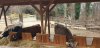
Inhabitants: Diverse array of endangered, mostly Austrian, domestic breeds


William Conway proposed that every animal species can be made interesting as a zoo exhibit and that would extend to domestic breeds. If well displayed they can be a great (educational) addition. The most logical way is to take the farm to the zoo, something that was taken quite literally in Vienna. An original Tiroler farm from 1722 was taken apart piece by piece and reconstructed at the highest point of the Tiergarten. It wasn’t even the first zoo farm to be erected here, but the 1802 original building at this spot was broken down in the 1980s. The current farm and its adjacent paddocks house a wide array of domestic breeds from Austria and some like the Turopolje pig from other parts in Central/Eastern Europe. While zoos have an important role in conserving wild species, in a setting like this, zoos also have a clear role in protecting local cultural heritage. If displayed well and when thought is given to the species collection, domestic species do have a role in zoos.

full

@Arizona Docent

Unfortunately there are no other proper pictures of this area, so none of the series of paddocks adjacent to the house.

Similar exhibits: From Ljubljana to Amsterdam, there are many zoos that have a children's zoo with local breeds, but none in such an authentic setting. It is also worth highlighting the German zoo Arche Warder, which focuses solely on (rare) domestic breeds.


I have few shots from my visit in 2019.

20191217_103445.jpg

20191217_103504.jpg 20191217_103508.jpg


20191217_103542.jpg

20191217_103534.jpg
20191217_103514.jpg
 

Attachments

  • 20191217_103504.jpg
    20191217_103504.jpg
    122.3 KB · Views: 289
  • 20191217_103508.jpg
    20191217_103508.jpg
    157 KB · Views: 288
  • 20191217_103514.jpg
    20191217_103514.jpg
    171.9 KB · Views: 306
  • 20191217_103542.jpg
    20191217_103542.jpg
    153 KB · Views: 294
  • 20191217_103534.jpg
    20191217_103534.jpg
    186 KB · Views: 297
  • 20191217_103445.jpg
    20191217_103445.jpg
    134.5 KB · Views: 297
Which raises an interesting secondary question - which zoological collections have the most comprehensive or highest-quality rare breed displays?

With my limited knowledge of western collection a not that high interest in domestics (I mean I like some...:rolleyes:), I would say somewhere in the UK could be good shout? Here, other than Chomutov (where I am not sure about the rare part, but I wasn’t there for some time now), Vyškov springs to mind in an instant, as domestics are their focus, but their exhibits aren't that good and the breeds aren't possibly that rare...

And then there is Plzen, with what I would say is very comprehensive collection in mostly good exhibits situated around original farmhouse too (I am kind of surprised @lintworm didn't mention it in the "similar exhibits" part :D), but with focus mainly on Czech/Central European breeds, rareness is questionable here too...
 
49. Grzimek house
Zoo Frankfurt, Germany
Opened: 1978
Size: 1400 square metres
Inhabitants: around 40 smaller mammal species, including aye aye, eastern quoll and black-and-rufous sengi, Komodo dragons and a few birds


This concrete behemoth with its misshapen giant bat above the entrance has been the destination of many a zoo nerd pilgrimage. A winding gently sloped path subtly covers multiple floors and ensures that most people lose any sense of direction. Along the path are over 40 separate glass-fronted enclosures, over half are nocturnal and the upperfloor contains day-time enclosures, the building is a simple, but stunningly effective, design. Most animals do not have any access to any outdoor enclosure though and some of the larger animals could clearly use more space. In recent years conditions have however improved significantly, with more focus on smaller species and connecting smaller enclosures with each other. What remains is one of the last of its kind and still the most species rich nocturnal house in Europe. Compared to the US, the design where mammals and birds live in glass-fronted dioramas is already quite rare in Europe and is clearly disappearing, just like nocturnal houses. But for now the Grzimek house is safe from a complete make-over and still worthy of a zoo nerd pilgrimage, if small mammals (and/or concrete :p) are your thing.

full

@nikola

full

lintworm

full

@lintworm

full

@lintworm

full

@Maguari


Similar exhibits: the only nocturnal houses that come close in scale are those in Faunia, Madrid, Spain and the Nocturama in Papiliorama, Kerzers, Switzerland. The latter was already presented as a similar exhibit in entry 13. As far as glass-fronted dioramas go, the bird houses in Frankfurt, Zoo Wuppertal, Germany and Zoo Barcelona, Spain, are probably the best examples. Though all suffer from their age.

Zoo Barcelona
full

@Maguari

Zoo Wuppertal
full

@Maguari

Zoo Frankfurt
full

@lintworm

Faunia Madrid
full

@Maguari
 
49. Grzimek house
Zoo Frankfurt, Germany
Opened: 1978
Size: 1400 square metres
Inhabitants: around 40 smaller mammal species, including aye aye, eastern quoll and black-and-rufous sengi, Komodo dragons and a few birds


This concrete behemoth with its misshapen giant bat above the entrance has been the destination of many a zoo nerd pilgrimage. A winding gently sloped path subtly covers multiple floors and ensures that most people lose any sense of direction. Along the path are over 40 separate glass-fronted enclosures, over half are nocturnal and the upperfloor contains day-time enclosures, the building is a simple, but stunningly effective, design. Most animals do not have any access to any outdoor enclosure though and some of the larger animals could clearly use more space. In recent years conditions have however improved significantly, with more focus on smaller species and connecting smaller enclosures with each other. What remains is one of the last of its kind and still the most species rich nocturnal house in Europe. Compared to the US, the design where mammals and birds live in glass-fronted dioramas is already quite rare in Europe and is clearly disappearing, just like nocturnal houses. But for now the Grzimek house is safe from a complete make-over and still worthy of a zoo nerd pilgrimage, if small mammals (and/or concrete :p) are your thing.

full

@nikola

full

lintworm

full

@lintworm

full

@lintworm

full

@Maguari


Similar exhibits: the only nocturnal houses that come close in scale are those in Faunia, Madrid, Spain and the Nocturama in Papiliorama, Kerzers, Switzerland. The latter was already presented as a similar exhibit in entry 13. As far as glass-fronted dioramas go, the bird houses in Frankfurt, Zoo Wuppertal, Germany and Zoo Barcelona, Spain, are probably the best examples. Though all suffer from their age.

Zoo Barcelona
full

@Maguari

Zoo Wuppertal
full

@Maguari

Zoo Frankfurt
full

@lintworm

Faunia Madrid
full

@Maguari

I can totally agree!
I remember this renowned house vividly from my first and last visit. I was stunned by those astonishing numerous exhibits and by how well they were structured. The amount of species, plus the selection, heavilly impressed me aswell. Another little detail I noticed during my visit was, that the exhibits were well lit, making it easier to observe the animals, since I seem to have some struggles with in other, not so well lit, nocturnal houses.
Admittedtly I got to agree that some exhibits are, though rather nice looking, lacking some space for the animals, as well as an outdoor exhibit. Still this nocturnal house is a really extraordinary, interesting and progressive complex, especially when considering its year of construction, 1978.
 
50 Voyage of the high seas
Nausicaa, Boulogne-sur-Mer, France
Opened: 2018
Size: 4700 square metres
Inhabitants: wide array of fish species, including giant manta, lesser devil ray and sandbar shark


Until recently Europe did not play in the Champions League of gigantic tanks with the US and Asia. But with a volume of around 10 million litres, there is at last such a tank in Europe. Though it is still far smaller than the biggest tanks in the world, it already has a bigger volume than all but three of the aquariums in Europe, and all but one (L’Oceanografic, Valencia) if one excludes (marine) mammal tanks. Size is one thing, design is another and that is where Nausicaa really excels. The visitor path slowly descends through several thematic areas, that are light on side-aquariums but heavy on education and visuals. Along the way there are several smaller windows into the main tank, including a tunnel. At the end of the walk lies the main viewing panel is 20x5 metres and it is designed in such a way that the other viewing windows are invisible and fish can disappear into the blue. Species-wise Nausicaa did have problems with displaying the real oceanic stars: scalloped hammerheads and ocean sunfish did not live long and only 1 giant manta is left of the imported pair. The remaining manta is the most impressive fish in the tank, which is somewhat light on large fish species. But at least most displayed species are typical of more open habitats. The real stars are the lesser devil rays, these pocket mantas have all the weirdness of their bigger cousin, but are incredibly agile and are a sheer joy to watch.

full

@lintworm

full

@lintworm

full

@lintworm

Similar exhibits: Europe’s second largest tank is in L’Oceanografic, Valencia, Spain, with a volume of 7 million litres and follows a completely different design with a tunnel connecting two circles. The tank that comes closest in lay-out is the 3 million litre shark tank in Burgers’ Zoo, Arnhem, the Netherlands, where the fish can also disappear into the blue. At the time of opening in 2000 their 20x5 metres acrylic panel was the largest in the world, how things have changed…


Burgers’ Zoo
full

@Mr Gharial

l’Oceanografic
full

@twilighter

full

@Maguari
 
Last edited:
Time for a small half-time break! Even more so than with zoos, what constitutes a "must-see" when it comes to exhibits seems quite hard to determine. There are off-course a few standouts from a modern or historical viewpoint that have to be there. But apart from that, it can get tricky.

As an example: in 2014 @snowleopard and others published a list of the world's 50 greatest zoo exhibits (The World's 50 Greatest Zoo Exhibits) which already then generated quite some discussion. Of those 50, 32 were European exhibits. And of those 32, exactly half made my list. Of those 16 only 6 have the list so far. So another 10 exhibits on this list will appear later on in the thread. Which means that 16 will miss out. Partly that has to do with time, as in the last 8 years a lot has happened, but it also boils down to personal preference...

The 2014 list already mentioned in the thread is underlined
The Aquarium - Zoo Berlin (Germany)

Hippo House - Zoo Berlin (Germany)
Antelope House - Zoo Berlin (Germany)
Alfred Brehm House - Tierpark Berlin (Germany)
Camel Meadows - Tierpark Berlin (Germany)
African Panorama - Tierpark Hagenbeck (Germany)
Eismeer (Arctic Panorama) - Tierpark Hagenbeck (Germany)
Colobus Walk-Through - Allwetterzoo Munster (Germany)
Elephant Exhibit - Heidelberg Zoo (Germany)
Chimpanzee Exhibit - Osnabruck Zoo (Germany)
Gondwanaland - Leipzig Zoo (Germany)
Kiwara Savannah - Leipzig Zoo (Germany)
Pongoland - Leipzig Zoo (Germany)
White Wagtail Exhibit (Exotarium) - Frankfurt Zoo (Germany)
Grzimek House - Frankfurt Zoo (Germany)
Ape House - Kolner Zoo (Germany)
Rio Negro - Zoo Duisburg (Germany)
Penguin Exhibit - Emmen Zoo (The Netherlands)
Dolphin Delta - Harderwijk (The Netherlands)
Burgers’ Desert - Burgers’ Zoo (The Netherlands)
Masoala Rainforest - Zurich Zoo (Switzerland)
The Arctic Ring - Copenhagen Zoo (Denmark)
Maria Theresia Pavilion - Tiergarten Schonbrunn (Austria)
Spotted Hyena Exhibit - Beauval Zoo (France)
Black Rhinos - Doue-la-Fontaine (France)
Siberian Aviary - Plzen Zoo (Czech. Rep.)
Children’s Zoo - Skansen Zoo (Sweden)
The Great Rock - Budapest Zoo (Hungary)
Rock Hyrax Exhibit - Edinburgh Zoo (UK - Scotland)
Drive-Through Section - Highland Wildlife Park (UK - Scotland)
Brown Bear Enclosure - Whipsnade Zoo (UK - England)
Giant Otter Exhibit - Chester Zoo (UK – England)
 
Time for a small half-time break! Even more so than with zoos, what constitutes a "must-see" when it comes to exhibits seems quite hard to determine. There are off-course a few standouts from a modern or historical viewpoint that have to be there. But apart from that, it can get tricky.

As an example: in 2014 @snowleopard and others published a list of the world's 50 greatest zoo exhibits (The World's 50 Greatest Zoo Exhibits) which already then generated quite some discussion. Of those 50, 32 were European exhibits. And of those 32, exactly half made my list. Of those 16 only 6 have the list so far. So another 10 exhibits on this list will appear later on in the thread. Which means that 16 will miss out. Partly that has to do with time, as in the last 8 years a lot has happened, but it also boils down to personal preference...

The 2014 list already mentioned in the thread is underlined
The Aquarium - Zoo Berlin (Germany)

Hippo House - Zoo Berlin (Germany)
Antelope House - Zoo Berlin (Germany)
Alfred Brehm House - Tierpark Berlin (Germany)
Camel Meadows - Tierpark Berlin (Germany)
African Panorama - Tierpark Hagenbeck (Germany)
Eismeer (Arctic Panorama) - Tierpark Hagenbeck (Germany)
Colobus Walk-Through - Allwetterzoo Munster (Germany)
Elephant Exhibit - Heidelberg Zoo (Germany)
Chimpanzee Exhibit - Osnabruck Zoo (Germany)
Gondwanaland - Leipzig Zoo (Germany)
Kiwara Savannah - Leipzig Zoo (Germany)
Pongoland - Leipzig Zoo (Germany)
White Wagtail Exhibit (Exotarium) - Frankfurt Zoo (Germany)
Grzimek House - Frankfurt Zoo (Germany)
Ape House - Kolner Zoo (Germany)
Rio Negro - Zoo Duisburg (Germany)
Penguin Exhibit - Emmen Zoo (The Netherlands)
Dolphin Delta - Harderwijk (The Netherlands)
Burgers’ Desert - Burgers’ Zoo (The Netherlands)
Masoala Rainforest - Zurich Zoo (Switzerland)
The Arctic Ring - Copenhagen Zoo (Denmark)
Maria Theresia Pavilion - Tiergarten Schonbrunn (Austria)
Spotted Hyena Exhibit - Beauval Zoo (France)
Black Rhinos - Doue-la-Fontaine (France)
Siberian Aviary - Plzen Zoo (Czech. Rep.)
Children’s Zoo - Skansen Zoo (Sweden)
The Great Rock - Budapest Zoo (Hungary)
Rock Hyrax Exhibit - Edinburgh Zoo (UK - Scotland)
Drive-Through Section - Highland Wildlife Park (UK - Scotland)
Brown Bear Enclosure - Whipsnade Zoo (UK - England)
Giant Otter Exhibit - Chester Zoo (UK – England)

At least one of these highlighted exhibits from 2014 is now an empty and desolate mess, left to rot other than occasionally being decorated with lawn flamingos dotted around the place..... :(
 
Must be hard to be an UK zoo fan these days...:(

Well, Edinburgh is really an outlier in this regard - with only London coming close to the same level of abject decline. Bristol too, although as this is for entirely different reasons it is an outlier of sorts.

Many other collections are as strong as ever, or steadily developing and consolidating after difficult patches.
 
Must be hard to be an UK zoo fan these days...:(
There are some big places with issues but there’s loads to like anyway and some places with lots of investment. And even in places that could do better there’s still remarkable animals to see every visit. So not hard - but in some places much room for improvement. Judging by the lovely things in this top 100 there’s so much possibility!
 
There are some big places with issues but there’s loads to like anyway and some places with lots of investment. And even in places that could do better there’s still remarkable animals to see every visit. So not hard - but in some places much room for improvement. Judging by the lovely things in this top 100 there’s so much possibility!

I would say very similar things could be said of zoos in most countries - I would definitely say the same largely goes for Belgium and the Netherlands.

I suspect Covid has something to do with this or has worsened previously existing issues, and I'm afraid the current energy prices and issues with availability and pricing of building supplies will not be helpful for investment in and renewal/recovery of zoos.
 
51. Afrykarium
Zoo Wroclaw, Poland
Opened: 2014
Size: 14.000 square metres
Inhabitants, Cape fur seal, common hippo, Antillean manatee, a large array of fish as well as an array of birds, reptiles and small mammals.


By total volume this would have been the second largest aquarium of the continent. At closer look the total volume of 13.6 million litres is to a large extent thanks to the non-fish displays. The Cape fur seal and African penguin tanks are 6 million litres when combined, which makes them the largest for their kind on the continent. Seeing penguins swim longer distances in a deep pool is wonderful and makes one wonder why so many zoos only provide shallow tanks. Unfortunately both outdoor enclosures suffer from the same disease as the main building: being impressive is more important than effective landscaping. The giant black shoe box that is the Afrykarium dominates a significant area of the zoo and inside the focus is on a few big exhibits, often with questionable landscaping, rather than on smaller tanks. The thematic focus is on saltwater and freshwater habitats of the African continent. The mix of “naturalistic” design, with modern architecture works pretty well in the rainforest section, where the greenery softens the concrete. But in the savannah section with its questionable all-indoors hippo enclosure the mock rock just reinforces the bareness of the naked concrete. This building was a massive step forward for Zoo Wroclaw and Polish zoos in general, but with a bit more love and attention to details and cross-viewing, it could have been more than just a massive piece of modern architecture with large enclosures.

full

@lintworm

full

@LaughingDove

full

@lintworm

full

@lintworm

full

@lintworm

full

@lintworm


Similar exhibits: There is nothing quite like it yet, though the future Orientarium in Lodz Zoo, Poland, might come close in certain regards.
 
52. Coldwater aquarium
Alpenzoo Innsbruck, Austria
Opened: 2012
Size: 210.000 litres
Inhabitants: Selection of larger Alpine fish


One of my fonder mountain memories is the crystal clear bright blue water of the Soca river in the Slovenian Alps. This exhibit has impressively managed to replicate exactly that colour and is a good showcase of a critical environment: local watersheds. Located on the site of a former aviary this tank is open to the elements and can be seen from above and below the surface. Temperature is controlled, but fluctuates around 15 degrees celsius during the year, replicating the natural environment. Together with the older adjacent aquarium building, it is the largest cold freshwater aquarium in the world and has the most comprehensive fish collection of the European Alps. This is a wonderful highlight of the natural beauty at our doorstep, that normally remains hidden just beneath the surface.


full

@TeaLovingDave


full

@TeaLovingDave


Similar exhibits: In terms of size there are two similar freshwater aquaria not focuses on the tropics. The main tank in the aquarium of the NaturaGart-Park, Ibbenbueren, Germany, is also open-topped and focuses mainly on sturgeons, but looks more homemade. Here one could discuss when an aquarium tank becomes a pond and vice versa. The main tank in Aquatis, Lausanne, Switzerland is another impressive temperate freshwater aquarium, two floors high and including a tunnel, it houses some larger European and N-American species with paddlefish as clear highlight.


Aquatis:
full

@lintworm


full

@lintworm
 
Back
Top