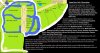
I'm going to break the mould here, and submit an Asian habitat. Animals with black are least concern, blue are near threatened, purple are vulnerable, orange names are endangered, green are data deficient, and red are critically endangered.
The Asian Forest Trail
The Asian Forest Trail starts off by entering the large indoor complex that illustrates the forest at both day and night. Interactive displays around each enclosure enable the visitors to find out about the animals they are watching and how they live. Upon entry there are two adjacent enclosures both housing animals that come out during daylight. On the right hand viewing area there is a pair of
yellow-throated martens that have a series of vines and branches to clamber around in, along with live vegetation and a small pool for the martens to drink from. Opposite this is another enclosure, of the same dimensions that house five
Javan langurs, six
Horsfield's tree shrews and a lone male
Java chevrotain. Between the two enclosures, there is live vegetation and tree trunks/lianas have been placed to allow visitors to feel like they have been transported to the Javan rainforest. Having observed these four species, visitors head into the area based upon the nocturnal forest. What strikes the visitors first as their eyes adjust to the gloom is that there are two enclosures decorated in exactly the same way as the previous habitats, to give visitors a sense that the two enclosures show the same patch of forest. The marten enclosure houses a pair of
banded linsangs that are part of a captive breeding and wild research programme, and a large interactive area near the linsang enclosure shows our conservation projects on Java, with the linsangs and many of the other animals. A further pair of banded linsangs live off show. The langur, tree shrew and chevrotain enclosure houses several new animals, namely a female
Java chevrotain, five
red giant flying squirrels and a pair of
Malayan pangolins. A further two pairs of Malayan pangolin are kept off show to be part of the zoo's important captive breeding programme.
The next area is made up of four large rainforest habitats, home to some of the zoo's most important breeding programmes. The first two enclosures are a pair of massive breeding aviaries, the left hand aviary housing a pair of
Javan rhinoceros hornbill and the right hand aviary home to a pair of stunning and highly endangered
Javan hawk-eagles. Both bird species have interactive displays showing both their threats in the wild, and how important they are to the rainforest ecosystem. The next two enclosures are the biggest in this area, and each are home to two species. The first is a large L-shaped enclosure that houses a pair of
binturong and a large pond fed by a stream is home to a breeding pair of
Oriental small-clawed otters and any of their offspring. Having passed the binturong and otter habitat, a much bigger enclosure is passed, with floor-to-ceiling viewing windows that enable visitors to view into the massive and well-planted enclosure. In the vines and lianas that hang from three large butress trees, a pair of loud and active
silvery gibbons can be observed. These primates are part of an important breeding programme, and information areas show the threats of hunting and deforestation on these apes. Also, living on the forest floor, there is a pair of extremely active
Javan mongooses along with any of their offspring.
The third exhibit area are four large outdoor enclosures. The first pair of exhibits house carnivores, and both have substantial amounts of live vegetation, a pool and areas where enrichment can be hidden (rock piles, burrows, hollow logs). This means that the pack of six
dhole can explore and forage for food in, making for an active display, while the second enclosure houses a pair of
Javan leopards. Bamboo viewing hides for both species contain films and interactive displays that show the animals in the wild, the threats that they both face and how the zoo is protecting them in the wild. Across from the carnivores are the two largest paddocks, each one a ten acre specially planted habitat that means that the centrepiece species, the
Javan rhinoceros can live and hopefully, eventually breed in relative piece. The first enclosure of the two houses a lone female that is rotated with a male kept off display with another female, and the second paddock is home to a male/female pair of these incredible animals. Two viewing hides for each enclosure are equipped not only with interactive displays, but with binoculars and even a live streaming webcam view focused at a small waterhole at the back of each enclosure, where the rhinos may head off to wallow. The solitary female is the only animal that can be viewed in her indoor enclosure, which is a loam substrate with a large pool. Tinted and soundproofed glass surrounding her viewing area means that she is not stressed out when the viewing area along her indoor enclosure is full of visitors. Opposite this, there are information areas, interactive displays showing the threats of poaching and habitat destruction, highlights the conservation projects with the rhinos, clips from camera traps in Ujung Kulon National Park in Java to enable visitors to see photographs of wild rhinos among other animals and finally, a viewing window into the conservation laboratory, that includes a rhinoceros sperm bank, an area where specially formulated diets for the rhinos can be made and also where overseas research is made on the species is collected.
Having passed through the indoor Javan rhino viewing area, visitors head towards the main aviary. Seperated from the main enclosure by a waist-high glass wall, visitors get the opportunity to see a diverse range of eight species of bird, namely twelve
Java sparrows, four
scarlet minivets, two
fulvous-breasted woodpeckers, four
pink-headed fruit-doves, five
red-breasted parakeets, fifteen
Javan white-eyes, a single male
Javan myna, a pair of
banded pittas and the focus birds of the aviary and the zoo's conservation purposes, the pair of
Javan trogons. The birds have dense vegetation to hide in, a large number of branches and vines for perching on, a pool for bathing in and nest boxes to help with the zoo's breeding efforts with many of the bird species in this aviary
The next area is a small part of the indoor complex based upon the wetlands of Java, and show the threats that forest clearence is having on the animals in the region. There is a total of three exhibits, each one housing fascinating animals from the endangered Javan mangrove forests that links in with the zoo's project to restore the forests along some sections of the coastline. The first enclosure is a large aviary, with a deep water pool, and plenty of live plants and even a couple of live mangrove trees to add to the enclosure's realism. Thin mesh means that visitors feel that they are sharing their space with the pair of
Javan kingfishers and two pairs of
Javan pond-heron that can come into the water extremely close to the viewing area. An interactive area enables young visitors to test their skills as both a heron and a kingfisher, challenging them to see if they can stand as still as a heron or catch a fish on a touch-screen. Opposite this is a large aquarium that allows visitors to physically stick their heads into the swirling shoal of thirty five
silver barb. In this area there is a small interactive area about fish in general, allowing visitors to find out about the lateral line of fish and its function, the use of camouflage in fish and finally some general information about the silver barb. The final enclosure is the largest of the three, and includes both above and below water viewing. A grove of live mangrove trees that moves up onto a forested riverbank houses a pair of
Javan reticulated pythons while in the water beneath the trees, there lives a pair of
Javan wart snakes that slither among the mangrove roots, and can only be seen through underwater viewing, as these snakes are wholly aquatic.
Following on from the wetlands area, visitors find themselves in what appears to be a volcanic vent in an area of rockwork overlooking the enclosure for the male/female Javan rhinoceros pair. This cave, as well as containing rhinoceros viewing, is also home to six vivariums, each one varying in size depensing on the species being kept. The first two exhibits are the largest, the first being home to a pair of
Indonesian spitting cobras and the second housing a group of twelve
Asiatic long-tailed lizards and four
flat-tailed house geckos. A small aquarium houses a pair of
Javanese fighting fish and a pair of similar vivariums house
Javan lichen stick insects and
Javan leaf insects. The final enclosure is a special one, as the zoo has started to coordinate the distribution of the
Indonesian yellow crab spider among collections, and so as well as the pair in their display enclosure, there is a view behind the scenes to a small breeding facility holding over thirty breeding pairs of this arachnid. Visitors then head outside and over to the nearby stand-alone building.
The seventh and final part of this exploration of Java is the Amphibian Conservation Building, which is stand-alone from the main complex building. On display are five amphibians, all of which are being conserved by the zoo. There are five display habitats, and then there is a view into the amphibian laboratory where several breeding colonies are kept, and research is performed on the chythridiomycosis fungus to try and find a cure for this disease that is wiping out many of the world's amphibians. The first terrarium houses a pair of
Javan flying frogs while the next enclosure is home to eight
Javan torrent frogs, with nearby interactive displays showing the calls of various frog species. The next enclosure houses six
fanged river frogs, the next habitat houses four
Javan caecilians and the final enclosure houses four critically endangered
bleeding toads that was almost wiped out due to the eruption of Mount Galunggung. The laboratory also displays the species in naturalistic enclosures, and there are also information boards about the zoo's amphibian conservation programmes overall. Having seen these animals, visitors can leave to overlook the viewing veranda for the lone female Javan rhinoceros.
Hope you enjoy reading it as much as I did writing it.