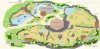
For this challenge I chose North America, specifically the American Southwest. Starting out in a typical desert setting pathways diverge and allow you to follow the Woodland Loop trail, the Desert Scrubplain trail, the Riparian Corridor trail, or enter a large building. After you’ve explored all of these areas sufficiently you will travel back out into the desert, this time into a rocky canyon area. The entire exhibit area forms a large loop, and the Scrubplain and Riparian trails line the sides of the main exhibit building (see map). There's approximately 360 individuals of 89 species in this whole exhibit area.
Starting your journey into the desert you see saguaro cactus and other plants native to the American Southwest. A mixed-species aviary for
Greater Roadrunner (1.0),
Gila Woodpecker (1.0), and
Cactus Wren (1.1) is the first exhibit that you see. Directly across the path is a spacious home for a trio of
Harris Hawk (3.0). A family of
coyote (1.1+offspring) lives in a spacious exhibit with plenty of space for them to run. Visitor views into the exhibit are placed carefully so that you will not see other guests. Rocky outcroppings can be seen in the background providing immersion into the desert landscape.
Turkey Vultures (0.3) and
Black Vultures (0.2) share an exhibit across from the coyote.
If you choose to do so you can enter the Desert Aviary. Inside you will find yourself in desert scrubland surrounding a small trickle of a stream. An active colony of
Cliff Swallows (5.5) dart around the aviary catching flying insects. Other insect-eating birds live here as well:
Brown-crested Flycatchers (3.2),
Black Phoebes (3.3),
Western Kingbirds (2.2),
Vermilion Flycatchers (3.1),
Yellow Warblers (2.2),
Wilson’s Warblers (2.2),
Curve-billed Thrashers (2.1), and a pair of
Ladder-backed Woodpeckers (1.1). For a small fee guests can purchase a cup of insects to feed these birds, some tame enough to take insects right out of your hand. Lizards also call the aviary home.
Southwestern Fence Lizards (4.4) and
Common Side-blotched Lizards (4.4) can be seen fighting over territories in the rock piles.
If you opt not to enter the aviary, the pathway to the right showcases some of the animals found in the forested areas of the Southwest. A small aviary for
Cooper’s Hawks (1.1) is the first exhibit that you see here. Accipiters are not generally held in zoo collections so seeing these here is a rare treat. Next you come upon an exhibit for
White-nosed Coati (0.4), always active and begging for food. An aviary for
Great Horned Owl (1.1) is next. Spotting these owls can be difficult as they often remain still, blending in with their surroundings. Many might not know that the range of the Jaguar extends into the Southwestern United States, so a pair of
Jaguar (1.1) exhibits informs zoo guests of that fact. Each exhibit can house a pair of cats, but for now there is only one pair on exhibit. The two habitats are slightly different from one another, one being rockier than the other. Glass viewing panels give guests close views of these elusive cats. Following the trail you encounter a pack of
Mexican Grey Wolves (0.6). The zoo participates in the recovery effort for this subspecies, serving as a holding institution by exhibiting an all-female group. The large exhibit provides varied terrain for the wolves, and even a small pool (viewed from the Riparian Corridor trail).
Choosing to follow the wolf exhibit around into the Riparian Corridor trail you are granted close viewing of the wolves through glass panels. Directly across from this viewing window is a mixed-species exhibit for
Tree Lizards (2.2) and
Sonoran Mud Turtles (1.1).
Raccoons (0.2) are found in an exhibit near a small pool, with an exhibit for
Desert Kingsnake (0.0.1) across the pathway. Next visitors see a large streamside exhibit with underwater viewing. This exhibit houses
Northern Leopard Frogs (4.4) and
Longfin Dace (0.0.65). A pair of
Hooded Orioles (1.1) also lives here, providing an unexpected splash of color.
Sonoran Chub (15.15) can be found in an adjoining exhibit which appears to continue the river from the previous exhibit although the species cannot intermingle.
Red-spotted Toads (1.1) and
Arizona Tiger Salamanders (1.1) share an exhibit across the pathway. Lastly an exhibit
Desert Pupfish (20.20) rounds out the area, educating visitors about adaptations fish have to survive live in the desert.
If you chose to instead follow the Desert Scrubplain trail you encounter an exhibit for
American Badger (1.0) and an adjacent exhibit for a trio of
Burrowing Owl (1.2). Underground burrows give visitors views into the hideouts of these species. The coyote exhibit extends behind these two exhibits, and occasionally visitors can view coyotes in the distance behind these exhibits. Across the path a mixed-species exhibit for lizards can be seen:
Common Collared Lizards (1.1),
Desert Whiptail Lizards (0.3), and
Greater Earless Lizards (3.3). Further down is an exhibit for
Kit Fox (1.1). Underground burrows let visitors peak into the wolves retreat.
Mohave Rattlesnakes (1.1) appear to live in a burrow under this exhibit but are actually in an exhibit of their own. Across the path
American Kestrels (1.1) share an exhibit with
Western Box Turtles (1.2). If you lift up a rock in front of this exhibit you will see a small exhibit for
Stripe-tailed Scorpions (0.0.3). A group of
Verdins (1.2), a
Killdeer (1.0), and
Couch’s Spadefoot Toads (2.2) share an exhibit, a
Western Hognose Snake (1.0) lives in a burrow habitat underneath. Raptors round out this area with a pair of
Northern Aplomado Falcons (1.1) and
Prairie Falcons (1.1) housed in adjacent exhibits.
If you entered the building you will find yourself plunged into darkness, exposing you to what goes on in the desert at night. Exhibits for
Western Screech Owls (1.1),
Canyon Treefrogs (0.0.5),
Rosy Boa (1.0), two mixed-species snake exhibits [
Black-tailed Rattlesnake (0.1) and
Arizona Ridge-nosed Rattlesnakes (0.2) and
Gray-banded Kingsnakes (1.1),
Arizona Coral Snake (1.0)],
Western Spotted Skunks (1.1),
Elf Owls (1.1), and
Giant Whip Scorpions (1.1) can all be found here. Central focal exhibits in this area include a pair of
Cacomistle (1.1) and a colony of
Pallid Bats (10.10) in an old mine shaft. If visitors continue around the corner they find themselves in a hallway looking at a cut-away of the ground. Peering into the underground world of the desert visitors find exhibits for
Southern Grasshopper Mice (2.2),
Bark Scorpions (0.0.3),
Western Banded Geckos (1.1),
Sonoran Gopher Snakes (0.2), and a
Desert Blond Tarantula (0.0.1). Passing through a rubber-strip curtain visitors find themselves reentering the light. Two side-by-side exhibits showcase animal’s adaptations to living in sand:
Sidewinders (1.1) and
Mojave Fringe-tailed Lizards (2.2). The opposite wall showcases animals from rockier habitats. A large exhibit for
Yarrow’s Spiny Lizards (3.3) and
Canyon Spotted Whiptails (1.1) is paired with an exhibit for an
Arizona Black Rattlesnake (1.0) and
Banded Rock Rattlesnakes (1.1). Under this exhibit is an exhibit for
Giant Desert Hairy Scorpions (0.0.3). Focal exhibits in this gallery include mixed species exhibits for
Gila Monster (1.1) and
Colorado River Toad (2.1) as well as
Western Diamondback Rattlesnake (1.1) and
Coachwhip (0.0.1). Located below is an exhibit for
Common Desert Centipede (0.0.1).
Exiting the building visitors find themselves in a rockier desert environment. An aviary for
Red-tailed Hawks (3.0) hugs a portion of the main exhibit building. A scrubby habitat for
Grey Fox (1.1) can be seen across the pathway. There are plenty of climbing opportunities here, showcasing the arboreal tendencies of this canid. Across the pathway an
Ocelot (1.1) exhibit showcases another rare cat of the American Southwest. A large cliffside habitat for
Golden Eagles (1.1) can be seen next. Visitors have the opportunity to climb a set of stairs and enter a cliffside viewing blind, giving them excellent views of the eagle habitat and the desert canyon. A pair of
Bobcats (1.1) can be seen next, across from
Chihuahuan Ravens (2.2). The final exhibit on this desert trail is a large habitat for
Mountain Lion (1.1). This pair occupies an exhibit which gives them tons of vertical space. The viewing area is approximately two stories tall and gives visitors amazing views into the cat’s canyon habitat.
Here’s the map, hopefully you can read it ok, I know some of the numbers are very small. The shaded areas are areas for plantings. The shading just kind of stops in many cases, that’s just since I didn’t feel like shading the entire paper. Also I realize that no animal holding spaces are shown and that the building would need to be larger to accommodate keeper space/animal holding, but just go with it for now.

Enjoy!
Map Key
1. Greater Roadrunner/Gila Woodpecker/Cactus Wren
2. Harris Hawk
3. Turkey Vulture/Black Vulture
4. Coyote
5. Desert Walkthrough Aviary: Cliff Swallow, Brown-crested Flycatcher, Black Phoebe, Western Kingbird, Vermilion Flycatcher, Yellow Warbler, Wilson’s Warbler, Curve-billed Thrasher, Ladder-backed Woodpecker, Southwestern Fence Lizard, Common Side-blotched Lizard
6. Cooper’s Hawk
7. White-nosed Coati
8. Great Horned Owl
9. Jaguar
10. Jaguar
11. Mexican Grey Wolf
12. North American Badger
13. Common Collared Lizard/Desert Whiptail Lizard/Greater Earless Lizard
14. Burrowing Owl
15. Kit Fox with Mohave Rattlesnake underground
16. American Kestrel/Western Box Turtle with Stripe-tailed Scorpion underground
17. Verdin/Killdeer/Couch’s Spadefoot with Western Hognose Snake underground
18. Northern Aplomado Falcon
19. Prairie Falcon
20. Tree Lizard/Sonoran Mud Turtle
21. Raccoon
22. Desert Kingsnake
23. Red-spotted Toad/Arizona Tiger Salamander
24. Northern Leopard Frog/Longfin Dace/Hooded Oriole
25. Sonoran Chub
26. Desert Pupfish
27. Western Screech Owl
28. Canyon Treefrog with Rosy Boa underground
29. Black-tailed Rattlesnake/Arizona Ridge-nosed Rattlesnake
30. Western Spotted Skunk
31. Elf Owl
32. Grey-banded Kingsnake/Arizona Coral Snake with Giant Whip Scorpion underground
33. Cacomistle
34. Pallid Bat
35. Burrow Network: Southern Grasshopper Mouse, Bark Scorpion, Western Banded Gecko, Sonoran Gopher Snake, Desert Blond Tarantula
36. Mojave Fringe-tailed Lizard
37. Sidewinder
38. Yarrow’s Spiny Lizard/Canyon Spotted Whiptail
39. Arizona Black Rattlesnake/Banded Rock Rattlesnake with Giant Desert Hairy Scorpion underground
40. Gila Monster/Colorado River Toad
41. Western Diamondback Rattlesnake/Coachwhip with Common Desert Centipede underground
42. Red-tailed Hawk
43. Grey Fox
44. Ocelot
45. Golden Eagle
46. Bobcat
47. Chihuahuan Raven
48. Mountain Lion