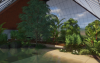
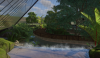
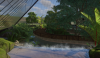
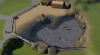
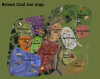
fantasy zoo (brown coal mine, Lignite mine)

location suitable for a zoo

  • not a suitable zoo location

    Votes: 13 65.0%
  • don't know

    Votes: 4 20.0%
  • suitable zoo location

    Votes: 3 15.0%

  • Total voters
    20
I have two ideas and the animal for the first idea is the golden wheel spider and the way they move is they move by flipping onto their side and do cartwheels and the animals for the second idea are the Jesus Christ lizard and the water strider and they move by using a unique form of locomotion called surface locomotion which is when animals move on the water surface utilizing surface tension to stay afloat, it is referred to as "animal locomotion on the water surface".
 
Another cool species you could add is the Trapjaw ant, which, in order to escape danger, uses it's titular trap jaws on the ground, launching itself in the air to escape from predators. Another addition could be the Sugar glider or Flying squirrel, for gliding.

The Sandfish skink would also be an interesting addition
 
Last edited:
I'm not sure if it's possible, but I think the idea would be to keep the sidewinder and the golden wheel spider together. The trap-jaw ant, however, would be housed in a separate terrarium.

For the water strider, it could be represented by a sign placed near a small puddle, as they'd naturally be present due to the environment.

As for the flying squirrel, I think the Japanese flying squirrel would be my pick if I had to choose one. But I am gonna read little but up more on this.

The Jesus Christ lizard is an interesting choice, but are there any examples of exhibits effectively showcasing its unique ability to walk on water?

Sandfish skins might be a good ambassador animal, for like keepers to show off
 
I'm not sure if it's possible, but I think the idea would be to keep the sidewinder and the golden wheel spider together. The trap-jaw ant, however, would be housed in a separate terrarium.

I think the snakes and spiders should best be kept separately

The Jesus Christ lizard is an interesting choice, but are there any examples of exhibits effectively showcasing its unique ability to walk on water?

Basilisks only run on water when in danger and if there's essentially no other places for it to run, so it's not really replicated in captivity
 
the goal of the world of motion is to display with variety of behaviour that have unique locomotive style. The outdoor area will have the species
1.lar gibbon
2.japanese flying squirl
3. red kangaro
4. the water strider

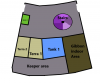
The indoor area would have
Tank1 would have the nautilus
Terra1 would have the sidewinder snake
Terra2 would have the golden wheel spider
Terra 3 would have the Trap-jaw ant

upload_2024-10-6_12-5-8.png
(Layout out motion center)

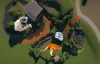
The upstairs are would lead you on a platform where you can see another indoor area for the gibbons


upload_2024-10-6_12-8-57.png

(Upstairs gibbon area)​
 

Attachments

  • upload_2024-10-6_12-5-8.png
    upload_2024-10-6_12-5-8.png
    96 KB · Views: 117
  • upload_2024-10-6_12-8-57.png
    upload_2024-10-6_12-8-57.png
    525.3 KB · Views: 113
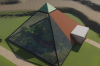
The next section I began developing was the Papua Pyramid, a tropical greenhouse designed to house native animals from the Papua New Guinea region.

It will feature:

  • Papua New Guinea crocodiles or saltwater crocodiles
  • As many species of birds of paradise as possible
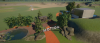
The structure will be a medium-sized greenhouse, carefully designed to replicate the natural environment of Papua New Guinea to the best of its ability.

upload_2024-10-9_16-19-52.png

( Outside Structure)

upload_2024-10-9_16-21-7.png

upload_2024-10-9_16-21-54.png
(inside of the structure)
 

Attachments

  • upload_2024-10-9_16-19-52.png
    upload_2024-10-9_16-19-52.png
    882.4 KB · Views: 107
  • upload_2024-10-9_16-21-7.png
    upload_2024-10-9_16-21-7.png
    1 MB · Views: 103
  • upload_2024-10-9_16-21-54.png
    upload_2024-10-9_16-21-54.png
    986.5 KB · Views: 105
  • upload_2024-10-9_16-21-54.png
    upload_2024-10-9_16-21-54.png
    986.5 KB · Views: 2
I’ve started working on a pinniped exhibit, originally designed for a Mediterranean monk seal. However, the more I review the exhibit's design, the more something feels off. The primary goal was to create a relatively inexpensive exhibit, but I’m not sure I’ve successfully achieved that. This is the current result.

Does anyone have suggestions for improvements? I'd appreciate your input!

upload_2024-11-22_18-12-32.png
 

Attachments

  • upload_2024-11-22_18-12-32.png
    upload_2024-11-22_18-12-32.png
    802.8 KB · Views: 85
Well, an inexpensive seal habitat is usually either a concrete bowl (seen in a lot of rescue centers, such as Ecomare. Example 1, Example 2) or by using a part of a pre-existing lake (such as in Aquazoo).

Making the lake look more natural, perhaps by giving it more shallow areas and a lot of reeds, will help with creating a more inexpensive look
 
I've made a few minor changes to the seal exhibit. I'm still focusing on the Mediterranean monk seal, but I'm planning to start varying the cost of the exhibits. I want the seal exhibit to serve as an introduction to the Pleistocene Europe section, which I’ll elaborate on shortly.

(the seal is not included in the Pleistocene part)
upload_2025-7-4_16-23-47.png
 

Attachments

  • upload_2025-7-4_16-23-47.png
    upload_2025-7-4_16-23-47.png
    718.1 KB · Views: 63
currently reworking the morrocan section, i beleive that the gazzele enclosure is little too small for this species and would be considerd out-dated by modern standards does anyone know if this the caseupload_2025-8-3_10-46-53.png

the enclosure design was inspired by the camel exhibit at artis
 

Attachments

  • upload_2025-8-3_10-46-53.png
    upload_2025-8-3_10-46-53.png
    743.3 KB · Views: 41
currently reworking the morrocan section, i beleive that the gazzele enclosure is little too small for this species and would be considerd out-dated by modern standards does anyone know if this the case

the enclosure design was inspired by the camel exhibit at artis

I wouldn't say it's too small for a small group, we're just used to seeing them on mixed savannas which are usually much larger. It's on the smaller side, sure. But fine for a modern zoo
 
Back
Top