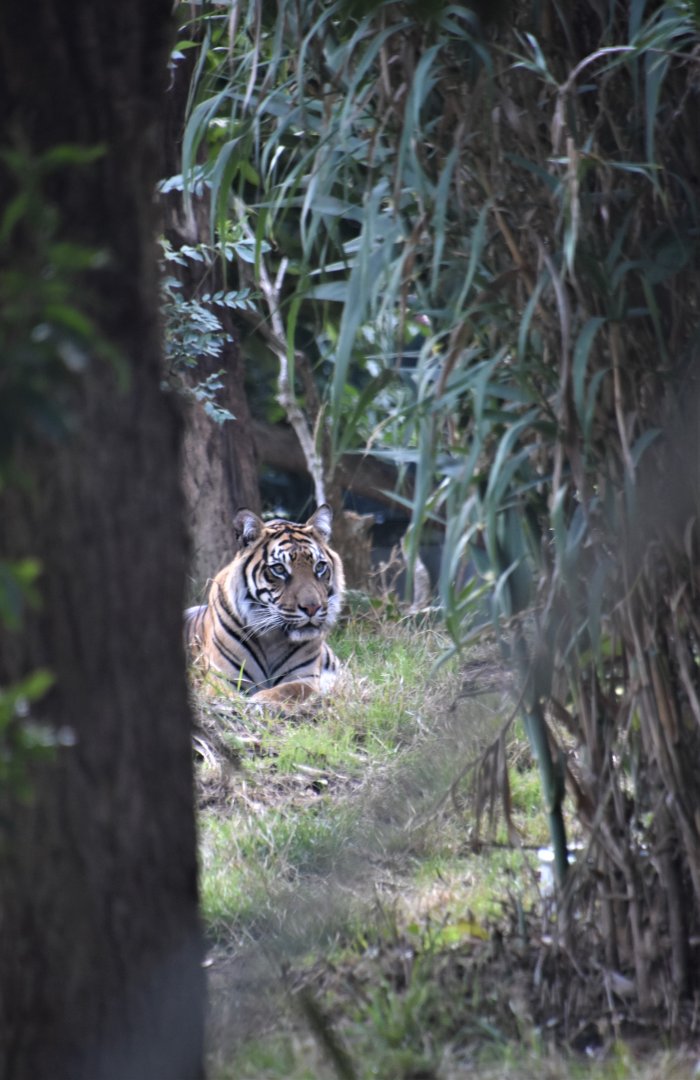
Not a particularly good photo, but this is my entry taken at Taronga Zoo, Sydney:
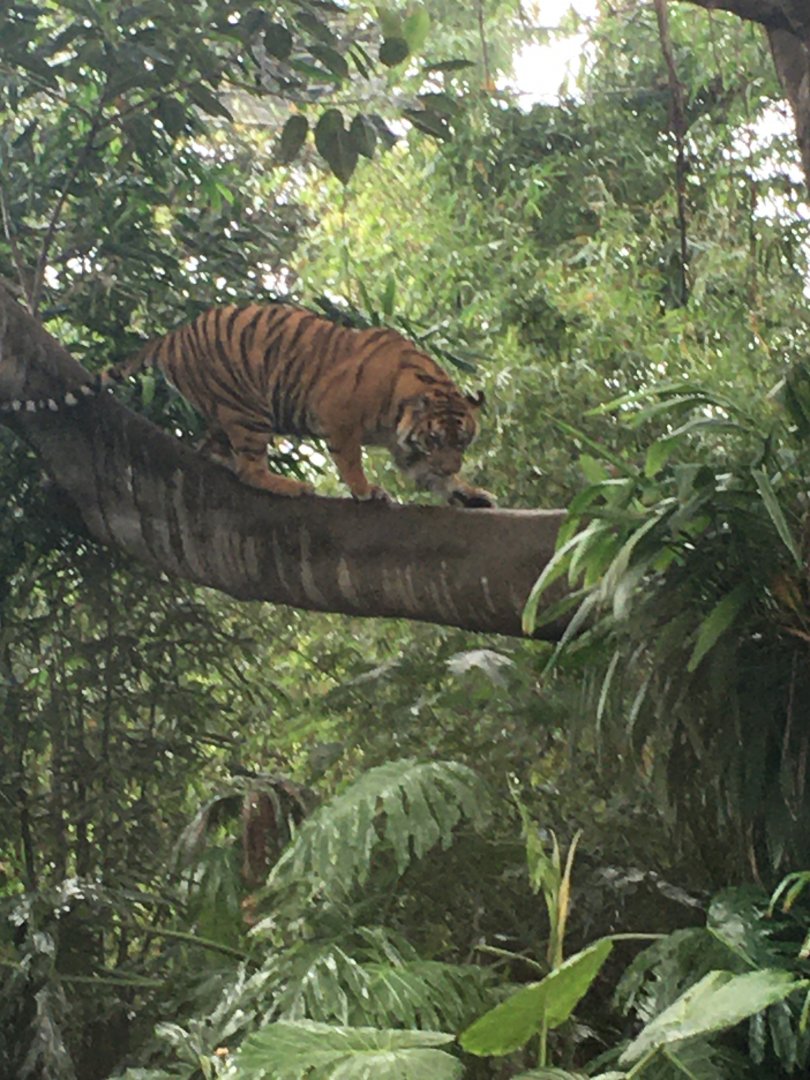
Great photo.
One of the very few zoos to allow their tigers to climb a tree!
Not a particularly good photo, but this is my entry taken at Taronga Zoo, Sydney:
Great photo.
One of the very few zoos to allow their tigers to climb a tree!

Thank you. The tree is a great feature in the exhibit.
For the benefit of those not familiar with Taronga, most of the walls of the exhibit are mesh (thick, although not rigid metal like a cage), with the wall facing the visitor path featuring a glass window and viewing area. When the tigers come up close to the glass, as they often do, it makes for fantastic viewing.

Indeed, that point I overlooked. @TeaLovingDave is correct that this is an Eurasian lynx, not the Iberian. The Brown bears are (as far as my knowledge goes) a mixture from different origins, not only the pyrenaicus type (not a different subspecies anymore).Some people overlooked that the animal cannot be native to the zoo area.Both the lynx and brown bear in Cabarceno, northern Spain or bighorn sheep in the Living Desert, California are native.
https://www.researchgate.net/public...eals_past_existence_of_Eurasian_lynx_in_Spain
 But in all honesty I didn't pay attention to that part of the description in the 1st post, so you are right @Jurek7

For the benefit of those not familiar with Taronga, most of the walls of the exhibit are mesh (thick, although not rigid metal like a cage), with the wall facing the visitor path featuring a glass window and viewing area. When the tigers come up close to the glass, as they often do, it makes for fantastic viewing.
It should be noted that both were designed by the same zoo design teamAuckland Zoo similarly have designed their complex so that the tigers are elevated above the humans watching them. They're more confident and more active as a result.
If you're quoting Pleistocene records


Extremely cool photo, but the gibbon is obviously on an artificial climbing frame.
By the way it’s a chimpanzee and also it could count as a dead tree?Extremely cool photo, but the gibbon is obviously on an artificial climbing frame.
I guess it is a chimp. Silhouetted in that pose it looked like a Siamang. But no, that looks nothing like a dead tree, it's obviously an artificial climbing frame.By the way it’s a chimpanzee and also it could count as a dead tree?
You are correct but it’s quite impressive getting such a photo when you see how unremarkable their enclosure is.I guess it is a chimp. Silhouetted in that pose it looked like a Siamang. But no, that looks nothing like a dead tree, it's obviously an artificial climbing frame.


It looks great but what on earth is that thing in the background?Forgive the awful focusing but think this one fits the bill pretty well:

That’s an amazing shot. Definitely fits the topic
Does this one fit the topic?
It looks great but what on earth is that thing in the background?