As many of you probably do, I design zoos in my spare time and I’ve decided to start a thread here on Zoochat to post layouts and walkthroughs of my finished zoo. For this zoo I’ve chosen to exhibit almost exclusively African and Asian species, and the zoo is set somewhere in a temperate area of the United States. The designs are my own, but the entry area of the zoo does reflect somewhat upon Hogle Zoo. The entire collection plan is done for the zoo but I do not have walkthroughs or layouts done for the entire zoo campus, so for right now I will be posting these as they are available. I started with the to-be-named-later Reptile House, even though it is not at the front of the zoo, because I am familiarizing myself with the drawing program SketchUp and I figured a building with more typical straight lines would be a good place for me to start. Hopefully you enjoy my work and I look forward to sharing my zoo with you.
Reptile House – 69 species, 500 individuals (300 are roaches)
The Reptile House is divided into three different galleries for guests to experience: Island Life, showcasing animals from islands throughout the eastern hemisphere; The Hot Spot, a walk-through desert immersion experience showcasing animals from deserts around the world; and Dangerous & Deadly, a gallery focusing on venomous and poisonous animals from around the globe.
Guests can explore the building by entering either the Island Life or Dangerous & Deadly galleries, but for this review I will start with the Island Life gallery. Exhibits are laid out in a typical reptile-house fashion, so some back-tracking may be required to see all of the animals.
The Island Life gallery focuses on animals from three major areas: Madagascar, Southeast Asia and New Guinea/Australia. One of the first exhibits encountered by guests in this gallery is a large dry forest exhibit, which is home to some of Madagascar’s largest snakes: Dumeril’s Boa (1.1) and Malagasy Giant Hognose Snake (1.0). Seeming to share a space with the snakes thanks to a shared glass panel, smaller inhabitants of Madagascar’s dry forest can be seen in an adjoining exhibit. Here Oustalet’s Chameleon (1.0), Standing’s Day Gecko (1.1), Striped Plated Lizard (1.1), and Spider Tortoise (1.1) all share an exhibit. Next up is another mixed-species display showcasing animals from Madagascar’s wet rainforests: Lined Leaf-tailed Gecko (1.1), Mossy Leaf-tailed Gecko (1.2), and Tomato Frogs (0.0.5). A feature guests will probably notice right when they enter the gallery is a large artificial baobab tree, which contains a habitat for Hissing Cockroaches (300+). Guests can walk around the entire tree and try to spot the cockroaches through small viewing windows at several different heights. Continuing past the baobab guests will encounter a wet mossy exhibit home to a trio of Crocodile Skinks (1.2), a strange lizard from New Guinea. Continuing along this wall guests will encounter a large mixed-species exhibit containing more species from New Guinea: Green Tree Python (1.1), Fly River Turtle (1.0), Siebenrock’s Snake-necked Turtle (2.2), and Red-bellied Short-necked Turtle (1.1). This exhibit features a large curved-glass viewing window with above and below water viewing opportunities. Next, a rocky desert habitat showcases Woma (1.1), a beautiful desert python species from Australia. The rear wall of this exhibit is a glass panel which offers a view into the Australian exhibit in the Hot Spot gallery (more on this later).
Along the opposite wall of this gallery, animals from Southeast Asia are displayed. A lushly planted cube exhibit is the first one guests will encounter. This exhibit is turned so that one corner juts into the visitor space. Here Reinwardt’s Flying Frog (1.1) share and exhibit with Asian Spiny Turtle (1.1). Next is a large exhibit for one of the largest snakes on the planet, the Reticulated Python (0.1). This exhibit features a pond with underwater viewing opportunities, and is fairly tall to accommodate Tokay Geckos (0.2). These species might encounter one another in the wild and the geckos are too quick to become a meal for the python. Next up, another lush exhibit, this time home to Vietnamese Mossy Frog (0.0.6) and Black-breasted Leaf Turtle (1.1). A tall exhibit with a curved viewing window that extends into the visitor space is next. This exhibit is home to animals from the Solomon Islands: Prehensile-tailed Skink (1.2) and Solomon Island Leaf Frog (0.0.8). The last exhibit in this gallery is home to the fully-aquatic Tentacled Snake (3.5). This species is housed in an aquarium set-up which has lots of aquatic plants and driftwood so the snakes can utilize their cryptic coloration for camouflage.
Next, visitors pass through a door and enter The Hot Spot, which is a walk-through desert immersion exhibit. This roof and sides of this wall are transparent, allowing in natural sunlight and trapping heat which helps the area feel like a real desert. Natural plantings can be explored by guests and certain plants will be identified and pointed out with plant labels. I don’t know much about plants but ideally there would be representative species from Australia, Africa, and North America. For North America I was thinking a cactus garden of some sort. Three rocky open-topped exhibits contain desert reptiles from three different continents, while birds are able to explore the entire area, and might even be found on the guest pathways. The first exhibit showcases animals from Australia: Frilled Lizard (1.1), Inland Bearded Dragon (2.0), Shingleback Skink (1.1), and Hosmer’s Skink (2.2). The largest exhibit in this area is centrally located in the gallery and is home to African species: Red-headed Agama (3.2), Sudan Plated Lizard (2.0), Sungazer (2.2), and Leopard Tortoise (2.2). Lastly, an exhibit featuring animals from the American Southwest is seen and houses: Chuckwalla (1.2), Desert Iguana (1.1), Collared Lizard (1.0), Blue Spiny Lizard (0.0.6), Desert Tortoise (1.0), and Ornate Box Turtle (1.1). As mentioned, free-flight birds have access to this entire area and potentially can be seen in any of the aforementioned exhibits as well as the visitor areas. Free-flight species include: White-winged Dove (1.1), Red-cheeked Cordon Bleu (4.0), Orange-cheeked Waxbill (3.3), Gouldian Finch (4.0), Double-barred Finch (2.2), Black-throated Sparrow (2.0), and Gambel’s Quail (3.0).
Next up, guests enter the Dangerous & Deadly gallery, which is similar in appearance to the Island Life gallery. All species here are either venomous or poisonous and graphics will be designed to educate guests about the differences between venomous/poisonous and also the severity of each species’ toxins. Continuing with the desert theme of the Hot Spot, the first several exhibits in this area house desert species from North and Central America. A large habitat for Western Diamondback Rattlesnake (1.1), Gila Monster (1.1), and Colorado River Toad (1.1) shares part of its rear wall with the American southwest in the Hot Spot gallery and has a glass panel to view into this area, similar to the Woma exhibit. Next, two small tanks placed one above the other contain desert invertebrates: Giant Whip Scorpion (0.1) and Mexican Red-knee Tarantula (0.0.1). The last desert exhibit is fairly large and contains a pair of Motagua Valley Beaded Lizard (1.1), a subspecies of Beaded Lizard which is critically endangered in Guatemala. Continuing along this wall, the next two exhibits feature species from Europe: Armenian Mountain Viper (1.1) and European Fire Salamander (0.0.3). The last three exhibits here feature temperate Asian species. Exhibited in a large rocky exhibit are a pair of Sharp-nosed Viper (1.1), also known as the “hundred pacer” due to folklore that says a person that is bitten by this species will only be able to make it 100 feet before dying. Next, a mixed-species exhibit for Emperor Newt (0.0.5) and Oriental Fire-bellied Toad (0.0.12) showcases some of the amphibian diversity of China. Lastly, a mossy rock-laden exhibit for a pair of Mangshan Pitviper (1.1), a species which has been known to spray venom.
Along the opposite wall in this gallery guests will encounter deadly species found from tropical regions of South American, Africa, and Asia. First are two small tanks place one above the other contain invertebrates from South America: Whiteknee Tarantula (0.0.1) and Amazonian Giant Centipede (0.0.1). The last South American exhibit here contains both venomous and poisonous species and is often the first exhibit guests will see as they leave the Hot Spot gallery. Graphics here will discuss these differences while guests admire Eyelash Viper (1.1), Strawberry Poison Dart Frog (0.0.8), and Golden Poison Dart Frog (0.0.5). Next is a large habitat for Western Green Mamba (1.1) and West African Gaboon Viper (1.1), with glass viewing panels extending into the visitor space. Smaller stacked tanks adjacent to this exhibit showcase African invertebrates: Emperor Scorpion (0.0.2) and Giant African Millipede (0.0.3). A tall exhibit next to these two showcases an Asian invertebrate, the Indian Ornamental Tree Spider (0.0.2). The last two exhibits in the gallery provide a home for one of the largest species of venomous snake in the world, the King Cobra (1.1). These adjacent enclosures have the ability to be connected or separated in order to accommodate the needs of a hopeful breeding pair of cobras.
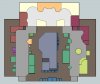
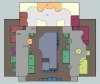
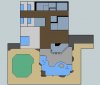
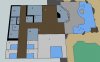
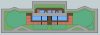
You may notice on the layout drawing that the central area of the building is designated as keeper space, with a food prep area, small office area, and bathroom. Lots of holding tanks are incorporated in the off-display areas to house any new additions, breeding pairs, or individuals undergoing observations.
Species List by Exhibit
1. Dumeril’s Boa/Malagasy Giant Hognose Snake
2. Oustalet’s Chameleon/Standing’s Day Gecko/Striped Plated Lizard/Spider Tortoise
3. Lined Leaf-tailed Gecko/Mossy Leaf-tailed Gecko/Tomato Frog
4. Hissing Cockroach
5. Crocodile Skink
6. Green Tree Python/Fly River Turtle/Siebenrock’s Snake-necked Turtle/Red-bellied Short-necked Turtle
7. Woma
8. Reinwardt’s Flying Frog/Asian Spiny Turtle
9. Reticulated Python/Tokay Gecko
10. Vietnamese Mossy Frog/Black-breasted Leaf Turtle
11. Prehensile-tailed Skink/Solomon Island Leaf Frog
12. Tentacled Snake
13. Frilled Lizard/Inland Bearded Dragon/Shingleback Skink/Hosmer’s Skink
14. Red-headed Agama/Sudan Plated Lizard/Sungazer/Leopard Tortoise
15. Chuckwalla/Desert Iguana/Collared Lizard/Blue Spiny Lizard/Desert Tortoise/Ornate Box Turtle
16. White-winged Dove/Red-cheeked Cordon Bleu/Orange-cheeked Waxbill/Gouldian Finch/Double-barred Finch/Black-throated Sparrow/Gambel’s Quail
17. Western Diamondback Rattlesnake/Banded Gila Monster/Colorado River Toad
18. Giant Whip Scorpion
19. Mexican Red-knee Tarantula
20. Motagua Valley Beaded Lizard
21. Armenian Mountain Viper
22. European Fire Salamander
23. Sharp-nosed Viper
24. Emperor Newt/Oriental Fire-bellied Toad
25. Mangshan Pitviper
26. Whiteknee Tarantula
27. Amazonian Giant Centipede
28. Eyelash Viper/Strawberry Poison Dart Frog/Golden Poison Dart Frog
29. Western Green Mamba/West African Gaboon Viper
30. Emperor Scorpion
31. Giant African Millipede
32. Indian Ornamental Tree Spider
33. King Cobra
Any comments/questions/concerns are welcomed and appreciated. Hopefully the next installment will be in the near future. Enjoy!
Reptile House – 69 species, 500 individuals (300 are roaches)
The Reptile House is divided into three different galleries for guests to experience: Island Life, showcasing animals from islands throughout the eastern hemisphere; The Hot Spot, a walk-through desert immersion experience showcasing animals from deserts around the world; and Dangerous & Deadly, a gallery focusing on venomous and poisonous animals from around the globe.
Guests can explore the building by entering either the Island Life or Dangerous & Deadly galleries, but for this review I will start with the Island Life gallery. Exhibits are laid out in a typical reptile-house fashion, so some back-tracking may be required to see all of the animals.
The Island Life gallery focuses on animals from three major areas: Madagascar, Southeast Asia and New Guinea/Australia. One of the first exhibits encountered by guests in this gallery is a large dry forest exhibit, which is home to some of Madagascar’s largest snakes: Dumeril’s Boa (1.1) and Malagasy Giant Hognose Snake (1.0). Seeming to share a space with the snakes thanks to a shared glass panel, smaller inhabitants of Madagascar’s dry forest can be seen in an adjoining exhibit. Here Oustalet’s Chameleon (1.0), Standing’s Day Gecko (1.1), Striped Plated Lizard (1.1), and Spider Tortoise (1.1) all share an exhibit. Next up is another mixed-species display showcasing animals from Madagascar’s wet rainforests: Lined Leaf-tailed Gecko (1.1), Mossy Leaf-tailed Gecko (1.2), and Tomato Frogs (0.0.5). A feature guests will probably notice right when they enter the gallery is a large artificial baobab tree, which contains a habitat for Hissing Cockroaches (300+). Guests can walk around the entire tree and try to spot the cockroaches through small viewing windows at several different heights. Continuing past the baobab guests will encounter a wet mossy exhibit home to a trio of Crocodile Skinks (1.2), a strange lizard from New Guinea. Continuing along this wall guests will encounter a large mixed-species exhibit containing more species from New Guinea: Green Tree Python (1.1), Fly River Turtle (1.0), Siebenrock’s Snake-necked Turtle (2.2), and Red-bellied Short-necked Turtle (1.1). This exhibit features a large curved-glass viewing window with above and below water viewing opportunities. Next, a rocky desert habitat showcases Woma (1.1), a beautiful desert python species from Australia. The rear wall of this exhibit is a glass panel which offers a view into the Australian exhibit in the Hot Spot gallery (more on this later).
Along the opposite wall of this gallery, animals from Southeast Asia are displayed. A lushly planted cube exhibit is the first one guests will encounter. This exhibit is turned so that one corner juts into the visitor space. Here Reinwardt’s Flying Frog (1.1) share and exhibit with Asian Spiny Turtle (1.1). Next is a large exhibit for one of the largest snakes on the planet, the Reticulated Python (0.1). This exhibit features a pond with underwater viewing opportunities, and is fairly tall to accommodate Tokay Geckos (0.2). These species might encounter one another in the wild and the geckos are too quick to become a meal for the python. Next up, another lush exhibit, this time home to Vietnamese Mossy Frog (0.0.6) and Black-breasted Leaf Turtle (1.1). A tall exhibit with a curved viewing window that extends into the visitor space is next. This exhibit is home to animals from the Solomon Islands: Prehensile-tailed Skink (1.2) and Solomon Island Leaf Frog (0.0.8). The last exhibit in this gallery is home to the fully-aquatic Tentacled Snake (3.5). This species is housed in an aquarium set-up which has lots of aquatic plants and driftwood so the snakes can utilize their cryptic coloration for camouflage.
Next, visitors pass through a door and enter The Hot Spot, which is a walk-through desert immersion exhibit. This roof and sides of this wall are transparent, allowing in natural sunlight and trapping heat which helps the area feel like a real desert. Natural plantings can be explored by guests and certain plants will be identified and pointed out with plant labels. I don’t know much about plants but ideally there would be representative species from Australia, Africa, and North America. For North America I was thinking a cactus garden of some sort. Three rocky open-topped exhibits contain desert reptiles from three different continents, while birds are able to explore the entire area, and might even be found on the guest pathways. The first exhibit showcases animals from Australia: Frilled Lizard (1.1), Inland Bearded Dragon (2.0), Shingleback Skink (1.1), and Hosmer’s Skink (2.2). The largest exhibit in this area is centrally located in the gallery and is home to African species: Red-headed Agama (3.2), Sudan Plated Lizard (2.0), Sungazer (2.2), and Leopard Tortoise (2.2). Lastly, an exhibit featuring animals from the American Southwest is seen and houses: Chuckwalla (1.2), Desert Iguana (1.1), Collared Lizard (1.0), Blue Spiny Lizard (0.0.6), Desert Tortoise (1.0), and Ornate Box Turtle (1.1). As mentioned, free-flight birds have access to this entire area and potentially can be seen in any of the aforementioned exhibits as well as the visitor areas. Free-flight species include: White-winged Dove (1.1), Red-cheeked Cordon Bleu (4.0), Orange-cheeked Waxbill (3.3), Gouldian Finch (4.0), Double-barred Finch (2.2), Black-throated Sparrow (2.0), and Gambel’s Quail (3.0).
Next up, guests enter the Dangerous & Deadly gallery, which is similar in appearance to the Island Life gallery. All species here are either venomous or poisonous and graphics will be designed to educate guests about the differences between venomous/poisonous and also the severity of each species’ toxins. Continuing with the desert theme of the Hot Spot, the first several exhibits in this area house desert species from North and Central America. A large habitat for Western Diamondback Rattlesnake (1.1), Gila Monster (1.1), and Colorado River Toad (1.1) shares part of its rear wall with the American southwest in the Hot Spot gallery and has a glass panel to view into this area, similar to the Woma exhibit. Next, two small tanks placed one above the other contain desert invertebrates: Giant Whip Scorpion (0.1) and Mexican Red-knee Tarantula (0.0.1). The last desert exhibit is fairly large and contains a pair of Motagua Valley Beaded Lizard (1.1), a subspecies of Beaded Lizard which is critically endangered in Guatemala. Continuing along this wall, the next two exhibits feature species from Europe: Armenian Mountain Viper (1.1) and European Fire Salamander (0.0.3). The last three exhibits here feature temperate Asian species. Exhibited in a large rocky exhibit are a pair of Sharp-nosed Viper (1.1), also known as the “hundred pacer” due to folklore that says a person that is bitten by this species will only be able to make it 100 feet before dying. Next, a mixed-species exhibit for Emperor Newt (0.0.5) and Oriental Fire-bellied Toad (0.0.12) showcases some of the amphibian diversity of China. Lastly, a mossy rock-laden exhibit for a pair of Mangshan Pitviper (1.1), a species which has been known to spray venom.
Along the opposite wall in this gallery guests will encounter deadly species found from tropical regions of South American, Africa, and Asia. First are two small tanks place one above the other contain invertebrates from South America: Whiteknee Tarantula (0.0.1) and Amazonian Giant Centipede (0.0.1). The last South American exhibit here contains both venomous and poisonous species and is often the first exhibit guests will see as they leave the Hot Spot gallery. Graphics here will discuss these differences while guests admire Eyelash Viper (1.1), Strawberry Poison Dart Frog (0.0.8), and Golden Poison Dart Frog (0.0.5). Next is a large habitat for Western Green Mamba (1.1) and West African Gaboon Viper (1.1), with glass viewing panels extending into the visitor space. Smaller stacked tanks adjacent to this exhibit showcase African invertebrates: Emperor Scorpion (0.0.2) and Giant African Millipede (0.0.3). A tall exhibit next to these two showcases an Asian invertebrate, the Indian Ornamental Tree Spider (0.0.2). The last two exhibits in the gallery provide a home for one of the largest species of venomous snake in the world, the King Cobra (1.1). These adjacent enclosures have the ability to be connected or separated in order to accommodate the needs of a hopeful breeding pair of cobras.
You may notice on the layout drawing that the central area of the building is designated as keeper space, with a food prep area, small office area, and bathroom. Lots of holding tanks are incorporated in the off-display areas to house any new additions, breeding pairs, or individuals undergoing observations.
Species List by Exhibit
1. Dumeril’s Boa/Malagasy Giant Hognose Snake
2. Oustalet’s Chameleon/Standing’s Day Gecko/Striped Plated Lizard/Spider Tortoise
3. Lined Leaf-tailed Gecko/Mossy Leaf-tailed Gecko/Tomato Frog
4. Hissing Cockroach
5. Crocodile Skink
6. Green Tree Python/Fly River Turtle/Siebenrock’s Snake-necked Turtle/Red-bellied Short-necked Turtle
7. Woma
8. Reinwardt’s Flying Frog/Asian Spiny Turtle
9. Reticulated Python/Tokay Gecko
10. Vietnamese Mossy Frog/Black-breasted Leaf Turtle
11. Prehensile-tailed Skink/Solomon Island Leaf Frog
12. Tentacled Snake
13. Frilled Lizard/Inland Bearded Dragon/Shingleback Skink/Hosmer’s Skink
14. Red-headed Agama/Sudan Plated Lizard/Sungazer/Leopard Tortoise
15. Chuckwalla/Desert Iguana/Collared Lizard/Blue Spiny Lizard/Desert Tortoise/Ornate Box Turtle
16. White-winged Dove/Red-cheeked Cordon Bleu/Orange-cheeked Waxbill/Gouldian Finch/Double-barred Finch/Black-throated Sparrow/Gambel’s Quail
17. Western Diamondback Rattlesnake/Banded Gila Monster/Colorado River Toad
18. Giant Whip Scorpion
19. Mexican Red-knee Tarantula
20. Motagua Valley Beaded Lizard
21. Armenian Mountain Viper
22. European Fire Salamander
23. Sharp-nosed Viper
24. Emperor Newt/Oriental Fire-bellied Toad
25. Mangshan Pitviper
26. Whiteknee Tarantula
27. Amazonian Giant Centipede
28. Eyelash Viper/Strawberry Poison Dart Frog/Golden Poison Dart Frog
29. Western Green Mamba/West African Gaboon Viper
30. Emperor Scorpion
31. Giant African Millipede
32. Indian Ornamental Tree Spider
33. King Cobra
Any comments/questions/concerns are welcomed and appreciated. Hopefully the next installment will be in the near future. Enjoy!