Dierenpark Wassenaar (Closed) Former zoo Wasenaar

Jurek7

Well-Known Member
15+ year member
Hi,

I read in an old zoo book about zoo Wasenaar, Holland. In 1970's it was described as having good animal collection, including huge bird house with 100m long walk-thru tropical aviary.

What happened to this institution? What happened to the bird house?
 
The very short version of the story is, that after several rescue attempts the zoo had to close in 1985 due to financial problems. The animals were sent to other collections, mostly Rotterdam Zoo. There's a large piece of information of this (in it's day, pretty large) Zoo on the dutch "Zoosite" website, but since it's in dutch i doubt it's very usefull to anyone...

If there's enough people wanting a read and i can find the time i'll translate it for you lot if you want to...
 
Here's my version of the history of Wassenaar Zoo on my website. Including some photos.

Wassenaar_geschiedenis_Eng

And on Wikimapia you can see the current state of the zoo:

Wikimapia - Let's describe the whole world!

And here you can see three sleeping cheetahs of the breeding center:

Wikimapia - Let's describe the whole world!

One of the last cheetahs of the zoo is still living in Amersfoort Zoo. He lived there together with his brother who died last year. Their names are Wiko and Waku (sorry don't know which one died)
The last elephants of the zoo were Zitta and Baba. Baba, bull, went to Amsterdam Zoo and later to Denmark and Spain where he died last year. Zitta, female, was send to Emmen and moved in 1996 to Budapest where she still lives.
 
Last edited:
Althrough closed now for more then 30 years Dierenpark Wassenaar was again ( quite ) big news the last days ! A sensation TV-program found it neccecery to visit ( unasked) the former site and discovered a monkey still living in the park !
The story behind this is that the formely owners of the Zoo - and still owners of the site - the family Louwman tried to place all the animals at good places - in most cases with succes - but 2 White-fronted spider monkeys which lived in the park since 1959 stayed at the park on a large well-planted island. After the Zoo had closed a breeding-station was founded on the site and this was well known for it's breeding with Cheetahs, tortoises, some domesticated animals ( donkeys, Llamas/Alpacas )and vultures. The Spider monkeys also stayed there - althrough they didn't breed. Even after the breeding-station closed also the monkeys stayed on their island and last year one of them died at an age of almost 60 years ! The other is still alive and taken well care of.
Because of the attention of the TV-programm the "animal-inspection" visited the place but only could conclude that averything was well and the monkey can stay on its island. At an age of more then 60 it must be one of the oldest spider monkeys in captivity.
 
Last edited:
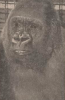
In the Dutch Zoo-history Dierenpark Wassenaar has played an important role in Gorilla keeping and breeding and therefor here some notes about the history of Gorilla's at Wassenaar :

In Sept. 1954 the first 2 Wassenaar-gorilla's arrived at Amsterdam Airport - Schiphol, 2 females.
Both were born in the wild in 1953 and named Mogambo and Bibi-sana ( mostly called just Bibi ).
Mogambo died at Wassenaar on Dec. 1967 and Bibi spend her life at Wassenaar until the zoo closed 1985 and a year later she was send with most other Wassenaars gorilla's to the USA to the Milwaukee Zoo. From there she was later send to the New England Zoo where she died May 19 1994.
wassenaar advertentie gorilla mogambo 1965 foto.png
Mogambo - 1965

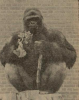
In 1960 a wild-caught male was obtained from Germany and this animal - Bobbie - was born 1959. He also was send after the zoo closed to Milwaukee and later to the New England Zoo where he died August 6 1998.
wassenaar 1973 gorilla bobby.png
Bobbie - 1973

1963 there were plans to sell Bibi to Artis - Amsterdam Zoo but after having a look at the animal Artis found her "to small and to thin" so Bibi stayed at Wassenaar.
From 1965 I found an advertisement in which Wassenaar says they had 5 Gorilla's in the collection but I'm not sure if these are already the 5 gorilla's which they had in the 1970s - 1980s until the closure of the zoo or if obtained others, had death ones, traded with some of them but if this was the case I don't have any knowledge of it.
Anyway, in 1973 Wassenaar had 5 gorilla's - 2 males and 3 females :
the already mentioned Bibi and Bobbie and
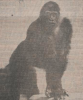
- Linda, a wildborn female from 1964 and as said, I don't know when she came to Wassenaar. In 1979 Linda became - after a "sex"-holyday at Artis - Amsterdam Zoo the first gorilla in the Netherlands to give birth to a male-baby on Jan. 26 which was named VIP. At the end of 1983 she gave birth to a second male-baby which was named Yaoende. Because of the breeding-loan-agreement this animal was owned by Artis and was the only animal of the Wassenaar group which stayed in Europe after the closure of the zoo.
1986 Linda and VIP were both send to Milwaukee were she died March 2010 and VIP died
March 2021 at the Woodland Park Zoo - Seattle.
wassenaar gorilla linda 1978.png
Linda - 1978

- Oscar was a male which was born approx. 1966 and also from him I don't know when he came to Wassenaar.
In 1978 he was send on breeding-loan to Apenheul and 2 years later ( 1980 ) he was send on breeding-loan to Wroclaw Zoo to mate with the 3 females at that zoo but I don't know if any of these loans had succes. In the meantime he had mated with the third female at Wassenaar - N'Gajji - and she gave birth on Feb. 25 1981 to a male baby ( N'Gambo ) which died however the same year on Jun. 15 :(.
He was also among the animals send to Milwaukee and he died Oct. 1995 at the Cleveland Zoo.
wassenaar 1978 oscar - op breeding-loan naar apenheul.png
Oscar - 1978

- Wassenaars last gorilla to be mentioned here was N'Gajji which was also a wild-born animal from approx 1966 and also from her I don't know when she came to Wassenaar.
As said, she had one baby at Wassenaar which lived only 4 months. N'Gajji was send with the other gorilla's in 1986 to Milwaukee and died at this zoo on July 20 2010.wassenaar 1981 NGajji with baby-boy NGambo.png
N'Gajji with baby N'Gambo - 1981

It's realy a pitty that most of these founder-gorilla's didn't contribute to the current captive-population and I know that only Linda's genes are still represented. Her son VIP had at the Woodland Park Zoo produced 7 daughters and already a grand-child has been born. Let's hope more will follow.

-
 

Attachments

  • wassenaar advertentie gorilla mogambo 1965 foto.png
    wassenaar advertentie gorilla mogambo 1965 foto.png
    114.4 KB · Views: 51
  • wassenaar 1973 gorilla bobby.png
    wassenaar 1973 gorilla bobby.png
    235.6 KB · Views: 47
  • wassenaar gorilla linda 1978.png
    wassenaar gorilla linda 1978.png
    226.2 KB · Views: 49
  • wassenaar 1978 oscar - op breeding-loan naar apenheul.png
    wassenaar 1978 oscar - op breeding-loan naar apenheul.png
    161.5 KB · Views: 46
  • wassenaar 1981 NGajji with baby-boy NGambo.png
    wassenaar 1981 NGajji with baby-boy NGambo.png
    209.2 KB · Views: 51
I visited Dierenpark Wasenaar on 20th July 1974. I have posted 9 photos from that visit in our Gallery, and I also have some of the gorillas that @vogelcommando mentioned above, which I have not posted here. At that time I had never seen an Asian golden cat, a sand cat or any of the tenrecs so it was a very satisfying visit.
 
A species-list from the Louise Hal in Dutch. It's from a guide-book from 1962 which @TeaLovingDave dealt with at his great thread A Guidebook Library: TLD's year-long randomised walkthrough of zoo guides !
I promised to try to translate all ( or most of ) the species into English which I will do the coming days ( weeks ? ). To start here is the list in Dutch :
Toko toekan
Ariel toekan
Vitellinus toekan
Groensnavel toekan
Citroen toekan
Swainsons toekan
Roodsnavel arassarie
Azara arassarie
Bailoni arassarie
Viekken arassarie
Halsband arassarie
Goudoor arassarie
Grasgroene arassarie
Dubbele halsband arassarie
Roodstult arassarie
---
Ekstergaaien
Borstelkop
---
Kleine schubbenlorie
Rode lorie
Lorie van de Blauwe Bergen
Forstens lorie
---
Hardwick's bladvogel
Goudvoorhoofdbladvogel
Zwartkeel tropiaal
Fluweel tangara
Jungle babbler
Tandsnavel baardvogel
---
Apostelvogel
Grijze boomeksters
Stellersgaaien
Blauwkop coucal
Bonte gaai
Roodschouder spreeuwen
Zwarte koekouk
Halsbandgaailijster
Neumans glansmerel
Blauwvleugel ekster
Sikkelsnavel
---
Roodteugel kakatoe
Grijze roodstaartpapegaai
Goudparkiet
Cuba amazone
Maracana
Inca kakatoe
Waaier papegaai
Kea
Grote geelkuifkakatoe
Naaktoogkakatoe
Panama amazone
Surinaamse amazone
Dwergara
Wijnborst amazone
---
Victoria kroonduiven
Imperial duif
Wonga wonga duif
Witborst duif
Groene vruchtenduif
Witkop Cuba duif
Blauwkop Cuba duif
Treurduif
Guinee duif
Roodmasker duif
Dolksteeduif
Bronsvieugelduiven
Kopernekduiven
Australische Kuifduiven
Nicobarduiven
Galapagos duif
Rode grondduif
Witte vruchtenduif
Wilde tortelduiven
Lachtortels
Diamantduifjes
Peruduifjes
Musduifjes
Grijze gronduif
Paelhalsduif
Tamboerijnduif
Pygmeeduif
Staalviekduif
Zwartmaskerduif
---
Jachtekster
---
Gruttos
Kemphanen
Australische kieviten
Afrikaanse kieviten
Argentijnse kieviten
Hollandse kieviten
Frankolin
Senegaltrapganzen
Zonnerallen
---
Geelsnavel hokkos
Urumutu of Bruine hokko
Roodsnavel toksvogel
Gekuifde toksvogel
Hartlaubs toksvogel
---
Jacutinga penelopen
Helmgierparelhoenders
---
Bahama eenden
Braziliaanse blauwvleugeltalingen
kleinste zaagbekjes
nonnetjes
Rode ibis
Geelsnavel kitta
Zwartsnavel tokvogel
Penelopen
Zwartkopgaaien
Boomeksters
Strepengaaien
Chucarpatrijzen
Krokodilwachters
Bosijsvogels
---
Oranjekop tropialen
Geelkopspreeuwen
Roodsnavelbulbuls
Chinese bulbuls
Shama lijsters
Soldatenspreeuwen
Kleine glansspreeuwen
Zijden glanzende koespreeuwen
Oever maina
Herder maina
---
Zwartmasker gaal
Bontkeelgaailijster
Witganggaailijster
Witkuifgaai
Blauwnekgaai
Witnekgaai
Witoorkatvogel
Princess of Wales parkiet
Browns rosella
---
Zilverbekje
Loodbekje
Spitsstaartamadine
Staalvink
Boliviaanse Kuifkardinaal
Tijgervink
Mexicanse nonpareil
Aymara parakieten
Dwergtimalie
Papegaaisnavelmees
Groene Katvogel
Witte merel
---
Oever maina
Ekster maina
Roodsnavelbulbul
Maskergaai
Jerdon spreeuw
Andamanen spreeuw
Mandarijnspreeuw
Zwavelgeie tyran
---
Grote Beo
---
Witrug trompetvogel
---
Bruinoor katvogel
---
Robijn kolibrie
---
Goud tangara
Masker tangara
Driekleur tangara
Veelkleuren tangara
Zwartblauwe tangara
Isabel tangara
Purpur kroonvinken
Blauwe honigzuigers
Vliegenvangers
Audobon's warblers
Brillenvogeltjes
Witnek Picathartes
---
Klokvogel
Regent prieel vogel
Grijsrug trompet vogel
Montezuma cassique
Chinese baardvogel
Reuzen baartvogel
Witte specht
Rode Rotshaan
---
Grote Paradijsvogels
---
Roulroul
Pygmee gansjes
Bronsnekduiven
Grijze toerakos
Quetzals
Zandhoen
Masker toerako
Steenpatrijs
Lappenkievit
Roodkuif toerako
Witkuif toerako
Witnek toerako
Violetkuif toerako
Grijze bananeneter
---
Witte vruchtenduif
Groene vruchtenduif
---
Toekanbaardvogel
Tandsnevelbaardvogel
Roodkop baardvogel
Goudoor
Grasgroene arassarie
Dubbele halsband arassarie
Treur tangara
Sayaca tangara
Roodstuit arassarie
Driekleur glansspreeuwen
Rose spreeuwen
Oranje tropiaal
Witkeel bulbul
Roodstuit bulbul
Transvaalse ooruilen
---
Regent prieelvogel
Satijnblauwe prieelvogel
---
Irene bulbul
Bergtangara
Rode tangara
Vlinderkwartel
Groene vliegenvanger
Witoor bulbul
Kaapse bulbul
Blauwwangbaardvogel
Roodoorbulbul
Argentijnse dwergral
Japanse nachtegalen
Zilveroor nachtealen
Dayal lijsters
Bengaalse pittas
Roodkeel kalliope
Dwergrallen
Bruinoor bulbul
Zomertangara
Donker rode tangara
Vuurrug tangara
 
A species-list from the Louise Hal in Dutch. It's from a guide-book from 1962 which @TeaLovingDave dealt with at his great thread A Guidebook Library: TLD's year-long randomised walkthrough of zoo guides !
I promised to try to translate all ( or most of ) the species into English which I will do the coming days ( weeks ? ). To start here is the list in Dutch :
Toko toekan
Ariel toekan
Vitellinus toekan
Groensnavel toekan
Citroen toekan
Swainsons toekan
Roodsnavel arassarie
Azara arassarie
Bailoni arassarie
Viekken arassarie
Halsband arassarie
Goudoor arassarie
Grasgroene arassarie
Dubbele halsband arassarie
Roodstult arassarie
---
Ekstergaaien
Borstelkop
---
Kleine schubbenlorie
Rode lorie
Lorie van de Blauwe Bergen
Forstens lorie
---
Hardwick's bladvogel
Goudvoorhoofdbladvogel
Zwartkeel tropiaal
Fluweel tangara
Jungle babbler
Tandsnavel baardvogel
---
Apostelvogel
Grijze boomeksters
Stellersgaaien
Blauwkop coucal
Bonte gaai
Roodschouder spreeuwen
Zwarte koekouk
Halsbandgaailijster
Neumans glansmerel
Blauwvleugel ekster
Sikkelsnavel
---
Roodteugel kakatoe
Grijze roodstaartpapegaai
Goudparkiet
Cuba amazone
Maracana
Inca kakatoe
Waaier papegaai
Kea
Grote geelkuifkakatoe
Naaktoogkakatoe
Panama amazone
Surinaamse amazone
Dwergara
Wijnborst amazone
---
Victoria kroonduiven
Imperial duif
Wonga wonga duif
Witborst duif
Groene vruchtenduif
Witkop Cuba duif
Blauwkop Cuba duif
Treurduif
Guinee duif
Roodmasker duif
Dolksteeduif
Bronsvieugelduiven
Kopernekduiven
Australische Kuifduiven
Nicobarduiven
Galapagos duif
Rode grondduif
Witte vruchtenduif
Wilde tortelduiven
Lachtortels
Diamantduifjes
Peruduifjes
Musduifjes
Grijze gronduif
Paelhalsduif
Tamboerijnduif
Pygmeeduif
Staalviekduif
Zwartmaskerduif
---
Jachtekster
---
Gruttos
Kemphanen
Australische kieviten
Afrikaanse kieviten
Argentijnse kieviten
Hollandse kieviten
Frankolin
Senegaltrapganzen
Zonnerallen
---
Geelsnavel hokkos
Urumutu of Bruine hokko
Roodsnavel toksvogel
Gekuifde toksvogel
Hartlaubs toksvogel
---
Jacutinga penelopen
Helmgierparelhoenders
---
Bahama eenden
Braziliaanse blauwvleugeltalingen
kleinste zaagbekjes
nonnetjes
Rode ibis
Geelsnavel kitta
Zwartsnavel tokvogel
Penelopen
Zwartkopgaaien
Boomeksters
Strepengaaien
Chucarpatrijzen
Krokodilwachters
Bosijsvogels
---
Oranjekop tropialen
Geelkopspreeuwen
Roodsnavelbulbuls
Chinese bulbuls
Shama lijsters
Soldatenspreeuwen
Kleine glansspreeuwen
Zijden glanzende koespreeuwen
Oever maina
Herder maina
---
Zwartmasker gaal
Bontkeelgaailijster
Witganggaailijster
Witkuifgaai
Blauwnekgaai
Witnekgaai
Witoorkatvogel
Princess of Wales parkiet
Browns rosella
---
Zilverbekje
Loodbekje
Spitsstaartamadine
Staalvink
Boliviaanse Kuifkardinaal
Tijgervink
Mexicanse nonpareil
Aymara parakieten
Dwergtimalie
Papegaaisnavelmees
Groene Katvogel
Witte merel
---
Oever maina
Ekster maina
Roodsnavelbulbul
Maskergaai
Jerdon spreeuw
Andamanen spreeuw
Mandarijnspreeuw
Zwavelgeie tyran
---
Grote Beo
---
Witrug trompetvogel
---
Bruinoor katvogel
---
Robijn kolibrie
---
Goud tangara
Masker tangara
Driekleur tangara
Veelkleuren tangara
Zwartblauwe tangara
Isabel tangara
Purpur kroonvinken
Blauwe honigzuigers
Vliegenvangers
Audobon's warblers
Brillenvogeltjes
Witnek Picathartes
---
Klokvogel
Regent prieel vogel
Grijsrug trompet vogel
Montezuma cassique
Chinese baardvogel
Reuzen baartvogel
Witte specht
Rode Rotshaan
---
Grote Paradijsvogels
---
Roulroul
Pygmee gansjes
Bronsnekduiven
Grijze toerakos
Quetzals
Zandhoen
Masker toerako
Steenpatrijs
Lappenkievit
Roodkuif toerako
Witkuif toerako
Witnek toerako
Violetkuif toerako
Grijze bananeneter
---
Witte vruchtenduif
Groene vruchtenduif
---
Toekanbaardvogel
Tandsnevelbaardvogel
Roodkop baardvogel
Goudoor
Grasgroene arassarie
Dubbele halsband arassarie
Treur tangara
Sayaca tangara
Roodstuit arassarie
Driekleur glansspreeuwen
Rose spreeuwen
Oranje tropiaal
Witkeel bulbul
Roodstuit bulbul
Transvaalse ooruilen
---
Regent prieelvogel
Satijnblauwe prieelvogel
---
Irene bulbul
Bergtangara
Rode tangara
Vlinderkwartel
Groene vliegenvanger
Witoor bulbul
Kaapse bulbul
Blauwwangbaardvogel
Roodoorbulbul
Argentijnse dwergral
Japanse nachtegalen
Zilveroor nachtealen
Dayal lijsters
Bengaalse pittas
Roodkeel kalliope
Dwergrallen
Bruinoor bulbul
Zomertangara
Donker rode tangara
Vuurrug tangara

That list rivals Walsrode’s Paradieshalle and Tropenhalle together on zoological rarities. Many of which must have been rare at the time as well. Insane list of rare and colourful species.
 
Lets start with the translation of the species-list of the Louise hal from 1962 :

- Toco toekan = Toco toucan - Ramphastos toco
- Ariel toecan = Ariel channel-billed toucan - Ramphastos vitellinus ariel
- Vitellinus toekan = Channel-billed toucan ( without subspecies level mentioned ) - Ramphastos vitellinus
- Groensnavel toekan = Green-billed toucan - Ramphastos dicolorus
- Citroen toekan = most prob. the Citron-throated toucan - Ramphastos citreolaemus. In dutch there isn't anything like a 'Cirtoen toekan' but most zoos obtained their animals still from dealers in that time and in many cases used the dealer-names of the animals - guide-books about exotic animals in the dutch language were rare at that time.
- Swainson's toekan = Chestnut-mandibled toucan - Ramphastos ambiguus swainsonii
- Roodsnavel arassari = most prob. the Fiery-billed aracari - Pteroglossus frantzii
- Azara arassari = Azara aracari - Pteroglossus azara
- Bailoni arassari = Saffron toucanet - Ballonius balloni
- Vlekken arassari - unsure about this one, could be the Spot-billed toucanet - Selenidera maculirostris
- Halsband arassari = Collared aracari - Pteroglossus torquatus
- Goudoor arassari = Tawny-tufted toucanet - Selenidera nattereri
- Grasgroene arassari = most prop. a member of the Aulacorhynchus-genus
- Dubbele halsband arassari = Many-banded aracari - Pteroglossus pluricinctus
- Roodstuit arassari = Crimson-rumped toucanet Aulacorhynchus haematopygus
- Ekstergaaien = either the White-throated or the Black-throated magpie-jay ( or both ) - Calocitta formosa or C. colliei
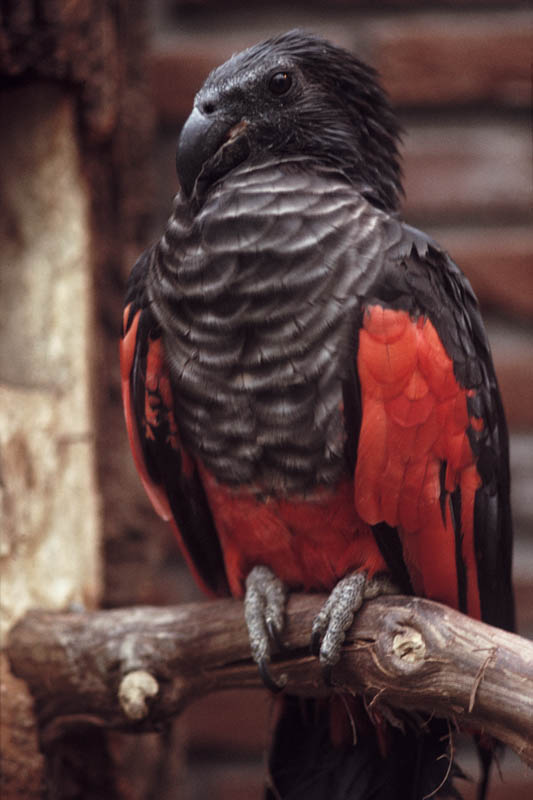
- Borstelkop = Pesquet's parrot - Psittrichas fulgidus - one of the highlights of the collection in those days and here the species was bred ( but not raised :( ) for the first time in captivity
- Kleine schubbenlorie = Scaly-breasted lorikeet - Trichoglossus chlorolepidotus
- Rode lorie = Red lory - Eos bornea
- Lorie van de Blauwe Bergen = Rainbow lorikeet - Trichoglossus moluccanus
- Forstens lorie = Forsten's lorikeet - Trichoglossus forsteni
Sofar for today, the rest will follow soon :).
 
Some more notes on the Pesquet's parrot :
The species was already kept at the zoo when in June 1953 the Louise hal was opened :
borstelkop dierenpark wassenaar 1954.png
Pesquet's parrot at Dierenpark Wassenaar 1954

In 1975 the park had a pair of the species which started to breed in Feb. of that year. 2 eggs were laid and at least one of them hatched March 1975 - a world first breeding ! Don't know if the second egg hatched but the young didn't survive :( :
borstelkop wassenaar maart 1975.png
Newspaper-article March 1975 about the hatching of a Pesquet,s parrot
 

Attachments

  • borstelkop dierenpark wassenaar 1954.png
    borstelkop dierenpark wassenaar 1954.png
    236.4 KB · Views: 45
  • borstelkop wassenaar maart 1975.png
    borstelkop wassenaar maart 1975.png
    349.1 KB · Views: 43
Some more notes on the Pesquet's parrot :
The species was already kept at the zoo when in June 1953 the Louise hal was opened :
Pesquet's parrot at Dierenpark Wassenaar 1954
In 1975 the park had a pair of the species which started to breed in Feb. of that year. 2 eggs were laid and at least one of them hatched March 1975 - a world first breeding ! Don't know if the second egg hatched but the young didn't survive :(
I visited Wassenaar in the summer of 1974, and I was impressed by the 2 long greenhouse style halls, although I didn't get many photos there (film was expensive). But I did photograph one of the Pesquet's.
I particularly wanted to see their collection of tenrecs, which were very unusual in zoos at that time, and I also saw my first desert cats and Asian golden cats there (photos in our Gallery).
 
@gentle lemur : great photo !
Here the second part of the translation of the bird-list kept at the Louise hal - 1962 :
- Hardwick's bladvogel = Orange-bellied leafbird - Chloropsis hardwickii
- Goudvoorhoofd bladvogel = Golden-fronted leafbird - Chloropsis aurifrons
- Zwartkeel troepiaal = most prob. the Hooded oriole - Icterus cucullatus
- Fluweel tangara ( better Dutch name currently Zilversnavel tangara ) = Silver-beaked tanager - Ramphocelus carbo
- Jungle babbler ( real dutch name Jungle babbelaar ) = Jungle babbler - Turdoides striata
- Tandsnavel baardvogel = most prob. Double-toothed barbet - Pogonornis bidentatus
- Apostelvogel = Apostlebird - Struthidea cinerea. Wassenaar had the European first breeding with this species and I should have some more information about this breeding somewhere. As soon as I find it I will report here about it.
- Grijze boomekster = Grey treepie - Dendrocitta formosae
- Stellers gaaien = Steller's jays - Cyanocitta stelleri
- Blauwkop coucal = Blue-headed coucal - Centropus monachus
- Bonte gaai = not sure about this one, could be the Eurasian jay - Garrulus glandarius
- Roodschouder spreeuw ( should be Roodschouder glansspreeuw ) = Cape glossy starling - Lamprotornis nitens
- Zwarte koekouk ( real dutch name Zwarte koekoek ) = Black cuckoo - Cuculus clamosus
- Halsband gaailijster = Greater necklaced laughing-thrush - Pterorhinus pectoralis
- Neumans glansmerel ( real dutch name Neumann's roodvleugel spreeuw ) = Neumann's red-winged starling, a very rarely kept species. ZTL only mentions Paignton as being the sole keeper of this species in Europe ( till 2011 ) and Wassenaar is not mentioned ( BTW like many, many other species from this list ). The dutch name 'Glansmerel' means translated Glossy blackbird and was commonly used in the dutch birdtrade for al kinds of Glossy starlings.
- Blauwvleugel ekster ( real dutch name Blauwe ekster ) = Azure-winged magpie - Cyanopica cyanus
- Sikkelsnavel = one of the Sicklebill-species - a genus of Birds of Paradise. Because all members of this genus ( Epimachus ) were always rarely kept at zoos, I want to try to find-out which species exactly was kept at Wassenaar
- Roodteugel kakatoe ( real dutch name should be Roodteugel kaketoe but even beter Naaktoog kaketoe ) = Little corella - Cacatua sanguinea
- Grijze roodstaart papegaai = Grey parrot - Psittacus erithacus
- Goud parkiet = Golden parakeet - Guaruba guarouba
- Cuba amazone = Cuban amazon - Amazona leucocephala
- Maracana ( better dutch names are Illiger's ara or Blauwvleugel ara ) = Blue-winged macaw - Primolius maracana
- Inca kakatoe ( should be Inca kaketoe ) = Major Mitchell's cockatoo - Lophochroa leadbeateri
- Waaier papegaai ( better dutch name is Kraag papegaai ) = Hawk-headed parrot - Deroptyus accipitrinus
- Kea = Kea ( :) ) - Nestor notabilis
- Grote geelkuif kakatoe ( here again should be kaketoe ) = Sulpher-crested cockatoo - Cacatua galerita
- Naaktoog kakatoe ( Kaketoe ) = the already mentioned Little corella - Cacatua sanguinea ( see Roodteugel kakatoe )
- Panama amazone = Panama amazon - Amazona ochrocephala panamensis
- Surinaamse amazone = Surinam yellow-fronted amazon - Amazona ochrochephala ochrocephala
- Dwerg ara = Chestnut-fronted macaw ( also known as Severe macaw ) - Ara severus
- Wijnborst amazone = Vinaceous-breasted amazon - Amazona vinacea
That should be enough for today, the rest will follow later...
 
As promised here some more information about the Apostlebird. I found the article about it at Avicultural Magazine Vol.77 (2) 1971 pp. 72-73.
The Apostlebird is not kept anymore in European zoos and has been always very rare. Only 7 zoos are listed as former keepers of the species and most of them pre-WWII. Only London Zoo and Wassenaar kept it after 1945.
I thought Dierenpark Wassenaar had the European first breeding but this is not true. Already the Berlin Zoo had some succes with the species in 1875 and 1876 but the young were not raised.
Dierenpark Wassenaar imported 11 Apostlebirds in 1953 and placed them in an aviary in the Louise hal. In 1955 the first breeding-activities were seen but this resulted in a lot of fights so 6 birds had to be removed for the aviary and were housed seperately. The 5 remaining birds which later proofed to be 2 males and 3 females build every spring the typical cup-shaped nest from mud with some grass to give the nest some more stability and laid eggs ( normaly 4 eggs in a clutch ).
The nest-building was done by 3 birds, incubation was done by only 2 birds and feeding the young was done by 4 birds ( also from the wild its known that breeding-pairs have extra helpers during the breeding-season ). 2 clutches were produced every year in the same nest and every year a new nest was build. Numberous young have hatched at Wassenaar but not a single young lived more then 4 days :(. After the death of one of the females, the 2 remaining pairs started to fight again and were seperated. Now both pairs nested every year but still without succesfull raising.
The article is from 1971 and I'm not sure if after that given year young were raised succesfully but 1982 the last bird died and with this also the species disappeared completely from Europe :(
 
Third part of the 1962-list :
- Victoria kroonduiven ( aka Waaierduif ) = Victoria crowned pigeon - Goura victoria
- Imperial duif = one of the Imperial pigeon-species ( Ducula species )
- Wonga Wonga duif ( better name just simple Wonga duif ) = Wonga pigeon - Leucosarcia melanoleuco
- Witborst duif = most prob. the White-breasted ground dove - Gallicolumba jobiensis
- Groene vruchtduif = most prob one of the Green fruit-dove species ( Treron species )
- Witkop Cuba duif = White-crowned pigeon - Columba leucocephala
- Blauwkop Cuba duif = Blue-headed quail-dove - Stanoenas cyanocephala
- Treurduif = Mourning dove - Zenaida macroura
- Guinee duif - Speckled pigeon - Columba guinea
- Roodmasker duif = "Red-masked pigeon" - not a clue which species this should be...
- Dolksteek duif = Luzon bleeding-heart - Gallicolumba luzonica
- Bronsvleugelduiven = Common bronzewings - Phaps chalcoptera
- Kopernekduiven = Bar-shouldered doves - Geopelia humeralis
- Australische kuifduiven = Crested pigeons - Ocyphaps lophotes
- Nicobarduiven ( should be Nicobaarduiven or aka Manenduif ) = Nicobar pigeons - Caloenas nicobarica
- Galapagos duif = Galapagos dove - Zenaida galapagoensis
- Rode grondduif = Ruddy quail-dove - Geotrygon montana
- Witte vruchtduif = most prob. Pied imperial pigeon - Ducula bicolor
- Wilde tortelduiven = most prob. Eurasian collared doves and/or European turtle doves - Steptopelia decaocto and/or Streptopelia turtur
- Lachtortels = Barbary doves - Streptopelia risoria
- Diamantduifjes = Diamond doves - Geopelia cuneata
- Peru duifjes = Croaking ground doves - Columbina cruziana
- Musduifjes = Common ground doves - Columbina passerina
- Grijze grond duif = Thick-billed ground dove - Trugon terrestris
- Parelhals duif = Spotted dove - Streptopelia chinensis
- Tamboerijnduif = Tambourine dove - Turtur tympanistria
- Pygmee duif = Plain-breasted ground dove - Columbina minuta
- Staalvlek duif = Blue-spotted wood dove - Turtusr afer
-Zwartmaskerduif = Namaqua dove - Oena capensis

to be continued...
 
Part 4 of the bird-list from the 1962-guidebook from the Louise hal :
- Jachtekster = either Blue or Green magpie-species -Cissa or Urocissa-species
- Gruttos = Black-tailed godwits - Limosa limosa
- Kemphanen = Ruffs - Calidris pugnax
- Australische kieviten = one ( or both ) of the Australian lapwings. At least the Banded lapwing - Vanellus tricolor - was kept and bred succesfully at Wassenaar at this time.
- Afrikaanse kieviten = one or several of the African lapwing-species
- Argentijnse kieviten = Southern lapwing - Vanellus chilensis
- Hollandse kieviten ( should be Europese kieviten ) = Northern lapwing - Vanellus vanellus
- Frankolin = one of the Francolin-species
- Senegal trapganzen = White-bellied bustards - Eupodontis senegalensis
- Zonnerallen = Sunbittern - Eurypyga helias
- Geelsnavel hokkos = Yellow-knobbed curassow - Crax daubentoni
- Urumutu of Bruine hokko = Great curassow - Crax rubra
- Roodsnavel tokvogel = Red-billed hornbill - Tockus erythrorhynchus
- Gekuifde tokvogel = Crowned hornbill - Lophoceros alboterminatus
- Hartlaubs tokvogel = Black dwarf hornbill - Tockus hartlaubi
- Jacutinga penelopen = Black-fronted piping guan - Pipile jacutinga
- Helm gierparelhoenders = a none-existing species. I guess it should be Helm en Gierparelhoenders = Helmeted and Vulturine guineafowl - Numida meleagris and Acryllium vulturinum
- Bahama eenden = White-cheeked pintails - Anas bahamensis
- Braziliaanse blauwvleugeltalingen = Cinnamon teals - Anas cyanoptera
- Kleinste zaagbekjes (better Nonnetjes ) = Smews - Mergellus albellus
- Nonnetjes = see Kleinste zaagbekjes ( Smews )
- Rode ibis = Scarlet ibis - Eudocimus ruber
- Geelsnavel kitta = Yellow-billed magpie - Urocissa flavirostris
- Zwartsnavel tokvogel = several posibilities but for sure a member of the Tockus-genus with a black bill
- Penelopen = a member of the Guan-genus Penelope
- Zwartkopgaaien = Black-headed jay - Garrulus lanceolatus
- Boomeksters = member(s) of the Treepie-genus Dendrocitta
- Strepengaai = another name for the Zwartkopgaai - Black-headed jay - Garrulus lanceolatus
- Chucar patrijzen = Chukar partridge - Alectornis chukar
- Krokodilwachters = Egyptian plovers - Pluvianus aegyptius
- Bosijsvogel = Laughing kookaburra - Ducelo novaeguineae

To be continued...
 
Back
Top