You are using an out of date browser. It may not display this or other websites correctly.
You should upgrade or use an alternative browser.
You should upgrade or use an alternative browser.
Fort Worth Zoo Fort Worth Zoo News
- Thread starter snowleopard
- Start date


King of Komodo Dragons
Well-Known Member
Are there any European zoos that they could of gotten African Leopards from? In any case I will trust the zoo for now and keep my dream of pure africans alive for now. Hopefully I or someone else here can ask a keeper when the exhibit opens and learn the origin of these catsUntil there's proof of import, I don't believe they have legit Africans and not generic mixes. A number of zoos will also say the same thing, when they aren't.

Didn’t know it had been so long since a confirmed sighting of an melanistic African Leopard, that’s certainly now making me wary of what they actually acquiredThey are so rare that a black leopard in Kenya a few years ago was the first confirmed black African leopard in 100 years. See the link below:
https://www.escapesafarico.com/post/the-discovery-of-the-africa-black-leopard
So unless the origin of these animals becomes clear, I remain doubtful....

King of Komodo Dragons
Well-Known Member
reading another article it is the first black african leopard photographed with a camera in 100 years, there have been others but they were only seen with camera trapsDidn’t know it had been so long since a confirmed sighting of an melanistic African Leopard, that’s certainly now making me wary of what they actually acquired

Heck, an import doesn’t even guarantee purity if these leopards are captive bred. I hate to say “let’s say, hypothetically” but I don’t think it would be far fetched for a breeder in Africa to import a melanistic leopard from another continent since they are probably difficult to source locally and that black leopard are a spectacle so there’s definitely a demand for them in zoos or farms. The moment such a leopard enters the gene pool, then the chances having of a pure leopard sounds tough.Until there's proof of import, I don't believe they have legit Africans and not generic mixes. A number of zoos will also say the same thing, when they aren't.


Visited today and here are a few observations:
- Both Brazos & Travis were on display in adjacent exhibits. They have not yet been put together, but this may happen soon.
- The swift fox exhibit is still empty in Texas Wild. The renovation on Mountains & Deserts is also ongoing, with the interior being largely gutted.
- The Predators exhibit is still blocked off. I could see some glimpses and it looks high-quality like the other recent additions.
- The zoo was working on the former parakeet walkthrough, which will likely reopen in some capacity soon.
- Lots of bird moves going on. The older bird exhibits have all been blocked off, except for the birds of prey. Some species are still in them, yet it looked like access would not be restored any time soon. Toco Toucan are now housed in the former primate exhibit in the outdoor area of MOLA. The bird of paradise exhibit was empty as they were slated to move to the new Predators exhibit.
- With all these moves and the closure of the stingray area I can only assume the new Jungle exhibit will break ground sometime this year. But we will see and wait for more details.
- Also I saw two wild armadillos around the zoo which was a delight.
King of Komodo Dragons
Well-Known Member
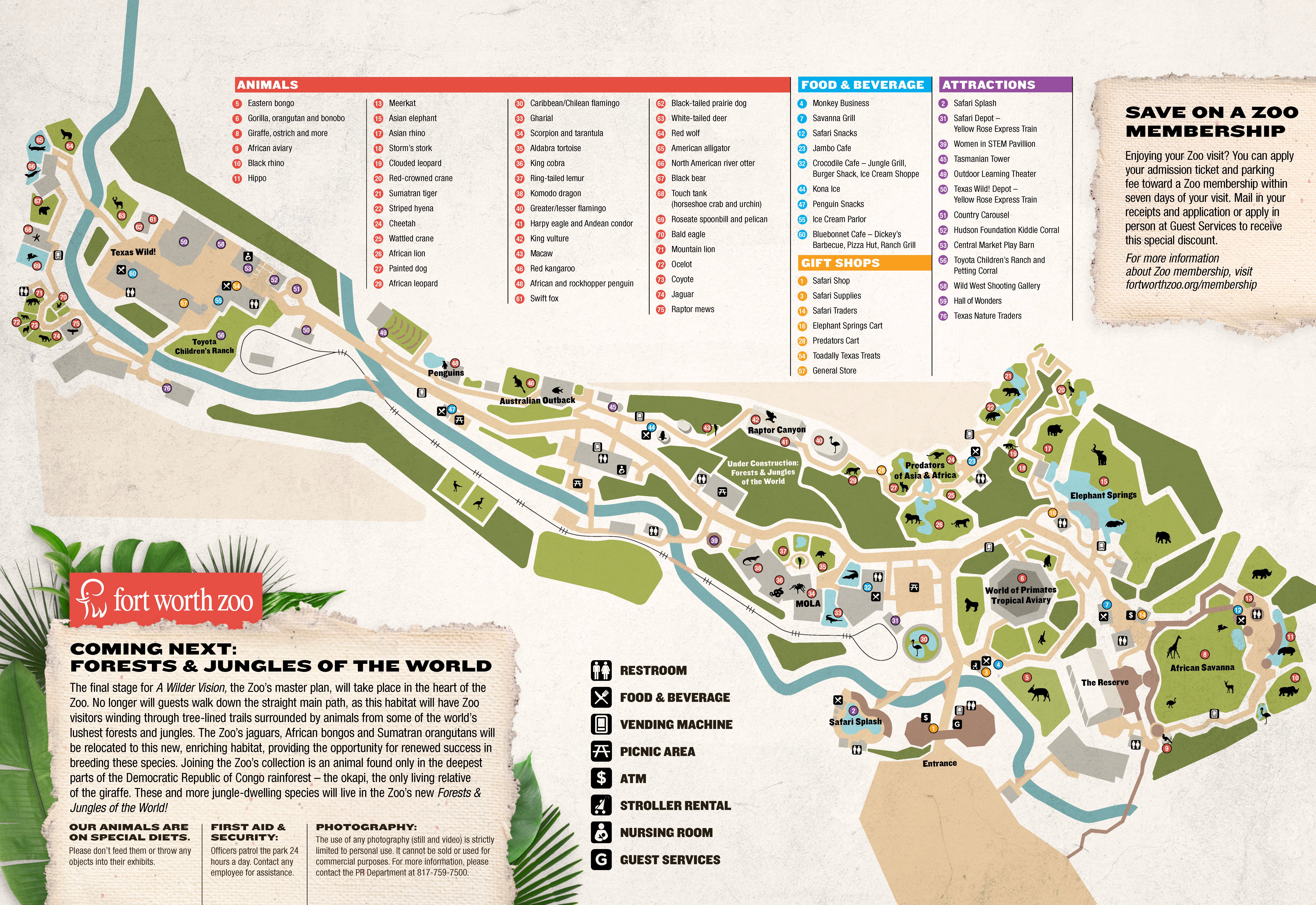
The new exhibit, Predators of Africa and Asia is now open. With this the zoo map has updated, the old rattlesnake/invert/bat building in Texas Wild which has been closed for a while is no longer listed so most likely isn't coming back. The zoos Greater and Lesser Flamingos have seemingly moved to where Parrot Paradise used to be. A section for the next Forests expansion has been placed on the map, with the additional information that besides orangutans and okapis, the zoos Jaguars will get a new habitat here and leaves their old and frankly small one in Texas Wild.
Attachments
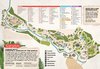
The new exhibit, Predators of Africa and Asia is now open. With this the zoo map has updated, the old rattlesnake/invert/bat building in Texas Wild which has been closed for a while is no longer listed so most likely isn't coming back. The zoos Greater and Lesser Flamingos have seemingly moved to where Parrot Paradise used to be. A section for the next Forests expansion has been placed on the map, with the additional information that besides orangutans and okapis, the zoos Jaguars will get a new habitat here and leaves their old and frankly small one in Texas Wild.
The building is simply being renovated. They were doing work inside it last week when I visited. It seems like a project they will work on between the predators and jungle exhibit. The jungle exhibit will be exciting though as the orangutans and Jaguar definitely need a new exhibit. Hopefully after the exhibits in Texas Wild can be combined into just two outdoor yards for mountain lions and another species (bobcat, ocelot, or coyote).
Some additional information on the exhibit can be found in this article. This includes the new exhibit features 25 species of bird and giant otters will join the zoo in the jungles exhibit.
New African Lions Habitat Puts Big Cats In Your Face at Roaring Fort Worth Zoo — Ramona Bass Shows Us What to Expect
New African Lions Habitat Puts Big Cats In Your Face at Roaring Fort Worth Zoo — Ramona Bass Shows Us What to Expect

"As for the old lion habitat? The zebras are now right at home there."Some additional information on the exhibit can be found in this article. This includes the new exhibit features 25 species of bird and giant otters will join the zoo in the jungles exhibit.
New African Lions Habitat Puts Big Cats In Your Face at Roaring Fort Worth Zoo — Ramona Bass Shows Us What to Expect
That doesn't make much sense - didn't the old lion grottoes get reused for the painted dogs and cheetahs?
https://www.star-telegram.com/news/local/fort-worth/article276660446.html
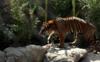
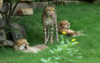
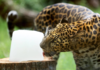
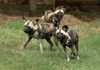
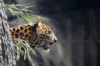
Another article with some photos of the exhibits and animals.


(Part 1)
Another article with some photos of the exhibits and animals.
(Part 1)
Attachments
-
 upload_2023-6-22_17-25-33.png1.3 MB · Views: 60
 -
 upload_2023-6-22_17-25-43.png1.2 MB · Views: 62
 -
 upload_2023-6-22_17-25-56.png984.6 KB · Views: 3
 -
 upload_2023-6-22_17-26-6.png976.5 KB · Views: 3
 -
 upload_2023-6-22_17-26-15.png1.5 MB · Views: 56
 -
 upload_2023-6-22_17-26-37.png800.9 KB · Views: 51
 -
 upload_2023-6-22_17-27-16.png1.5 MB · Views: 55
 -
 upload_2023-6-22_17-27-27.png1.5 MB · Views: 60
 -
 upload_2023-6-22_17-27-37.png1.5 MB · Views: 60
 -
 upload_2023-6-22_17-27-45.png693.8 KB · Views: 64
Last edited:
There seems to a repetition of the pictures.View attachment 629807
View attachment 629808 View attachment 629809 View attachment 629810 View attachment 629811 View attachment 629812 View attachment 629813 View attachment 629814 View attachment 629815 View attachment 629816 https://www.star-telegram.com/news/local/fort-worth/article276660446.html
Another article with some photos of the exhibits and animals.
View attachment 629807
View attachment 629808
View attachment 629811
View attachment 629812
View attachment 629813
View attachment 629814
View attachment 629815
View attachment 629816
(Part 1)
(Part 2)


Attachments
-
 upload_2023-6-22_17-31-3.png992 KB · Views: 57
 -
 upload_2023-6-22_17-31-13.png1.1 MB · Views: 56
 -
 upload_2023-6-22_17-31-20.png1.5 MB · Views: 60
 -
 upload_2023-6-22_17-31-30.png1.2 MB · Views: 57
 -
 upload_2023-6-22_17-31-39.png1.3 MB · Views: 62
 -
 upload_2023-6-22_17-31-51.png1.4 MB · Views: 61
 -
 upload_2023-6-22_17-32-1.png1.3 MB · Views: 58
King of Komodo Dragons
Well-Known Member
Now that we have a photo of the non-melanistic leopard, is their any way to tell if it's generic or a pure african just from photos, or would we need a DNA test?
DNA testing would be the best way to know what their make-up is. Just as a few other Zoochatters pointed out before, the likelihood of a pure melanistic African Leopard may be too good to be true. Unless the zoo is able to provide where they originated from, our best guess is they’re likely a hybrid. Perhaps it does have African leopard genetics but the melanistic phenotype brings up to question what it may be compromised.Now that we have a photo of the non-melanistic leopard, is their any way to tell if it's generic or a pure african just from photos, or would we need a DNA test?

PercideRolo
Well-Known Member
the lepards faces look "weird"
they dont look like amur
they look like something is rong with them like whit tiger

Bactrian Deer
Well-Known Member
What bird species inhabit the new exhibit?

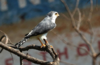
Red-crowned crane, wattled crane, Storm’s stork, wrinkled hornbill, Satyr tragopan, African pygmy falcon and lesser bird-of-paradise have all been mentioned in various articles so far.What bird species inhabit the new exhibit?
I also saw a merganser species in the exhibit next to the rhinos, probably scaly-sided. Most of the other species moved from the old bird yards which are now being removed.Red-crowned crane, wattled crane, Storm’s stork, wrinkled hornbill, Satyr tragopan, African pygmy falcon and lesser bird-of-paradise have all been mentioned in various articles so far.