Melbourne Zoo Future of Melbourne Zoo 2023 (Speculation / Fantasy)

Status
Not open for further replies.
If the potential of Okapi is several years away, and *if* MZ do intend to acquire a breeding pair, I guess it does make sense to maintain an active breeding pair of giraffe up until time comes to renovate for Okapi, as giraffe are still popular, and new borns particularly.
I am confident that within the next 10 years we won't have giraffe at MZ.

I do hope that they don't put giraffe at the waterhole precinct. I'm optimistic it will be occupied by its own unique (to the rest of the zoo) set of species. Might just be wishful thinking though...
I agree, Giraffes will likely be gone soon. I assume Klintun and Iris will be their last breeding pair. Iris should be ready to have her first calf within the next one or two years, so we could excitedly have Melbourne's first calf in 15 or so years.

Like you said, a giraffe calf would be extremely popular with the public and Melbourne would definitely want to have some other attractions with the elephants leaving soon.

The suggestion re. the waterhole precinct was just because Werribee already have a bachelor herd on savannah, so if they wanted a breeding herd, they'd need to be housed elsewhere. Possibly the new waterhole precinct, although the current waterhole drivethrough section is also another possibility for a small breeding group (1 bull, 2/3 females plus offspring).

I’d estimate we’re about 10 years away from importing Okapi. The Hippopotamus IRA could easily take another two years and then we’re probably looking at around another five years before the Giraffe/Okapi IRA is processed. Importation from the US can then begin, which is a two year process, with a year to negotiate with species coordinators from North America.

Iris is 2.5 years old. Giraffes reach reproductive age around three years, so factoring a 15 month gestation, it’s likely Melbourne Zoo will welcome a giraffe calf in 2025. Offspring from a single breeding pair can easily be accommodated within the region, so hopefully no bull calves will go to Werribee. I’m hopeful their ageing bachelor herd will be replaced instead by Melbourne’s breeding herd a decade from now.
 
I’d estimate we’re about 10 years away from importing Okapi. The Hippopotamus IRA could easily take another two years and then we’re probably looking at around another five years before the Giraffe/Okapi IRA is processed. Importation from the US can then begin, which is a two year process, with a year to negotiate with species coordinators from North America.

Iris is 2.5 years old. Giraffes reach reproductive age around three years, so factoring a 15 month gestation, it’s likely Melbourne Zoo will welcome a giraffe calf in 2025. Offspring from a single breeding pair can easily be accommodated within the region, so hopefully no bull calves will go to Werribee. I’m hopeful their ageing bachelor herd will be replaced instead by Melbourne’s breeding herd a decade from now.
Iris is very much still on the small side though, so I'd assume that might be a factor still especially taking into consideration her timid nature.

In saying that, I'm still confident a giraffe calf will eventually be here within the next two/three years.

To my knowledge, Werribee will continue with the bachelor group out at Werribee long term which may be one of the reasons why giraffe have still remained at Melbourne as, otherwise, Zoos Vic wouldn't be able to hold a breeding group. I'm hoping the new developments at Werribee will allow for an additional exhibit for Giraffe that could potentially hold a small breeding group, or even the current bachelor group, with a much larger breeding group occupying the lower savannah.
 
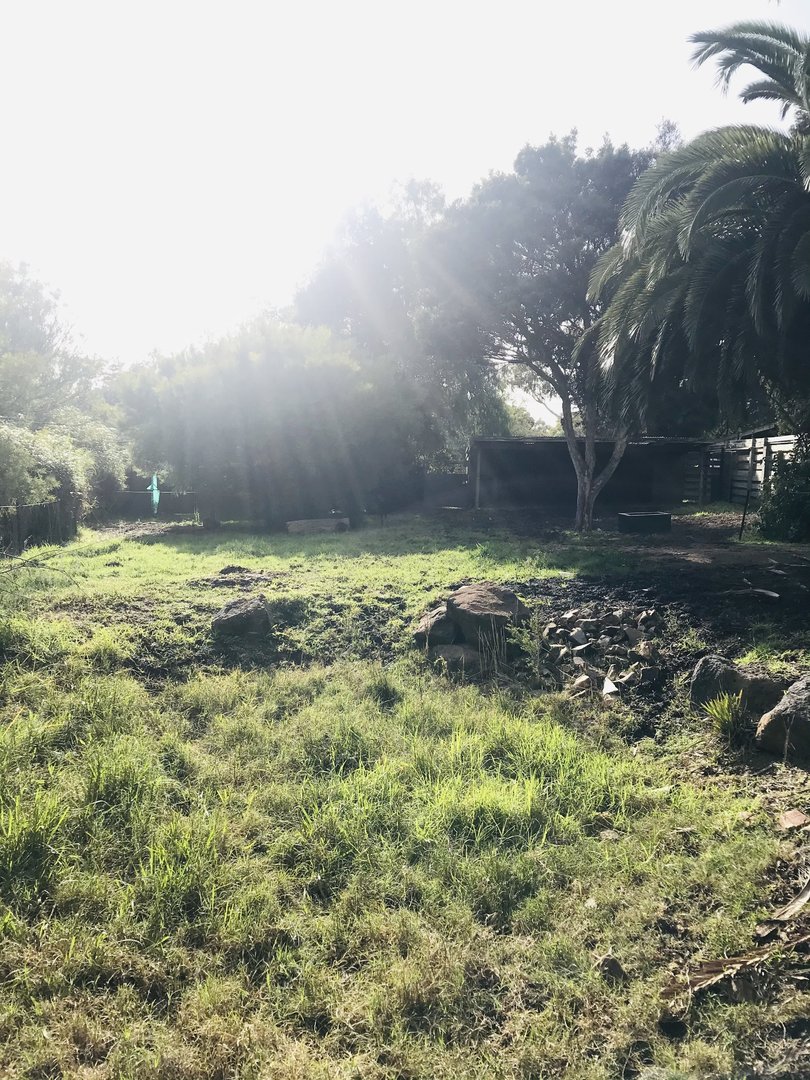
I took a photo of the former Bongo enclosure for you all to be able to see to get a grip of dimensions and size to see what can potentially go there.

I believe this was to be the enclosure for the Nyala, but this enclosure may now just sit empty until that whole area is to be redeveloped (once the giraffes are moved).

 
I took a photo of the former Bongo enclosure for you all to be able to see to get a grip of dimensions and size to see what can potentially go there.

I believe this was to be the enclosure for the Nyala, but this enclosure may now just sit empty until that whole area is to be redeveloped (once the giraffes are moved).


It’s a reasonable sized exhibit. It’d be suitable for a pair of Eastern bongo and I’d love to see this species return to the zoo.

I’m hopeful the giraffes will follow the zebras to Werribee, but for now there’s the risk Melbourne will seek to develop a larger Savannah. It would be easy to do so and align with Adelaide and Perth creating larger savannah exhibits; and Auckland’s prior threats to do so in place of the elephants.

Let’s hope Zoos Victoria have the foresight to envisage something more inspiring. Okapi and Eastern bongo remain the dream for most of us here.
 
Semangka the Malayan tapir has died:

A great loss for Melbourne Zoo and for the foreseeable, the loss of yet another exotic species. Hopefully they will return in the future.

Melbourne Zoo is sad to announce that we have said goodbye to our much-loved Malayan tapir, Semangka.

Despite ongoing supportive care and medications, Semangka’s health and age-related medical conditions had been in steady decline, and it was determined by the Zoo’s veterinarians and keepers that euthanasia was the kindest and most humane welfare decision.

Semangka was 23 years old and had lived most of her life at Melbourne Zoo after arriving as a young and very little tapir in 1999.

She was a special animal, winning the hearts of all who worked with her. Her favourite part of the day was having her back scratched. Like most tapirs, she was a great swimmer and could often be seen taking a dip in her private pool.

Semangka, whose name means ‘watermelon’ in Malay, will be greatly missed by our members, visitors and the staff at the zoo, especially those who were fortunate enough to work with her.

Rest in peace Semangka.

This isn’t unexpected news due to her age, but nonetheless opens up options for redevelopment in her end of the zoo, with the adjacent peccary exhibit also due to be phased out.

With the elephants leaving next year and others exhibits widely believed to be phased out (e.g. seals), we can expect to see a redevelopment of Melbourne Zoo on an unprecedented scale in the coming years.
 
Semangka the Malayan tapir has died:

A great loss for Melbourne Zoo and for the foreseeable, the loss of yet another exotic species. Hopefully they will return in the future.

Melbourne Zoo is sad to announce that we have said goodbye to our much-loved Malayan tapir, Semangka.

Despite ongoing supportive care and medications, Semangka’s health and age-related medical conditions had been in steady decline, and it was determined by the Zoo’s veterinarians and keepers that euthanasia was the kindest and most humane welfare decision.

Semangka was 23 years old and had lived most of her life at Melbourne Zoo after arriving as a young and very little tapir in 1999.

She was a special animal, winning the hearts of all who worked with her. Her favourite part of the day was having her back scratched. Like most tapirs, she was a great swimmer and could often be seen taking a dip in her private pool.

Semangka, whose name means ‘watermelon’ in Malay, will be greatly missed by our members, visitors and the staff at the zoo, especially those who were fortunate enough to work with her.

Rest in peace Semangka.

This isn’t unexpected news due to her age, but nonetheless opens up options for redevelopment in her end of the zoo, with the adjacent peccary exhibit also due to be phased out.

With the elephants leaving next year and others exhibits widely believed to be phased out (e.g. seals), we can expect to see a redevelopment of Melbourne Zoo on an unprecedented scale in the coming years.
I imagine this exhibit will probably sit empty until the Peccaries all die out. All three peccaries are still alive and well though and could still live another decade at the most.

Hopefully Melbourne reacquire Malayan Tapir going forward from overseas. In the long term, they could be one of the feasible replacements for the elephants.
 
I imagine this exhibit will probably sit empty until the Peccaries all die out. All three peccaries are still alive and well though and could still live another decade at the most.

Hopefully Melbourne reacquire Malayan Tapir going forward from overseas. In the long term, they could be one of the feasible replacements for the elephants.

That seems likely as Zoos Victoria have just received a significant amount of funding for projects including the Werribee expansion and the priority for future funding will be the redevelopment of the elephant exhibits at Melbourne.

The Collared peccary exhibit is something that could be allowed to tick along for another decade, with redevelopment planned for the whole row when other areas of the zoo are more settled.

In the meantime, I anticipate a low key replacement for the Malayan tapir. Perhaps Capybara.
 
Lowland nyala are not currently held at Melbourne Zoo. With the zebras phased out and the giraffes remaining (at least for the foreseeable), it wouldn’t surprise me to see some nyala transfer from Werribee to join the giraffes in the near future.

It was noted by @Jambo that the offspring of the Cotton-top tamarin pair have been dispersed to other zoos. It’s unclear at this stage whether the species will be phased out upon the death of the ageing pair. Though they’re a critically endangered species, they breed readily in zoos and it wouldn’t surprise me to see them switch to the less endangered, but more vibrant Golden lion tamarin.
I would love to see them hold multiple varieties of tamarin and build a network of skyways for them to run about in. Could be a great idea to implement throughout 'Growing Wild', and through to the vegetation that sits behind that precinct.
 
I would love to see them hold multiple varieties of tamarin and build a network of skyways for them to run about in. Could be a great idea to implement throughout 'Growing Wild', and through to the vegetation that sits behind that precinct.

I’ve always like the idea of a tamarin house - by all means connected to these overhead pathways. Auckland Zoo allowed their tamarins to free range back in the 1990’s and they would wander as far as Reptile Row.

In any case, holding multiple family groups of Golden lion tamarin and Emperor tamarin would greatly enhance breeding success in this species which has proven somewhat fickle in Australasian zoos.
 
I’ve always like the idea of a tamarin house - by all means connected to these overhead pathways. Auckland Zoo allowed their tamarins to free range back in the 1990’s and they would wander as far as Reptile Row.

In any case, holding multiple family groups of Golden lion tamarin and Emperor tamarin would greatly enhance breeding success in this species which has proven somewhat fickle in Australasian zoos.
Adelaide Zoo allowed their tamarin to free roam for a time, but realised they gravitated to the cafes to beg for food, and one or two were taken in people's bags "by accident" and then eventually returned.
 
Adelaide Zoo allowed their tamarin to free roam for a time, but realised they gravitated to the cafes to beg for food, and one or two were taken in people's bags "by accident" and then eventually returned.
I think tamarin enclosures with aerial paths to go through would fit in well with the Growing Wild concept if there were a few aerial paths that children could climb through adjacent to some paths, giving children a novel way to "interact" with the species

Tamarins would greatly enhance Growing Wild. I don’t doubt the addition of these and macaw species would be of greater interest to the children than what’s currently on offer and would be a partial compromise to widely shared aspirations on here for a South American precinct to take the place of Growing Wild.

Allowing humans access to anything small enough to fit in a backpack is never gonna end well. Everything from meerkats to penguins have been fair game.
 
Tamarins would greatly enhance Growing Wild. I don’t doubt the addition of these and macaw species would be of greater interest to the children than what’s currently on offer and would be a partial compromise to widely shared aspirations on here for a South American precinct to take the place of Growing Wild.

Allowing humans access to anything small enough to fit in a backpack is never gonna end well. Everything from meerkats to penguins have been fair game.
That would certainly be interesting to see. How much do tamarins go for?
 
That would certainly be interesting to see. How much do tamarins go for?

Fortunately as a critically endangered species, there’s no legal market for CTT or the endangered GLT, though sadly that hasn’t stopped people from stealing them before.

In 2010, a pair consisting of a heavily pregnant female, were stolen from Alma Park Zoo. The male was found dead shortly after; and the female recovered alive a few months later.
 
Fortunately as a critically endangered species, there’s no legal market for CTT or the endangered GLT, though sadly that hasn’t stopped people from stealing them before.

In 2010, a pair consisting of a heavily pregnant female, were stolen from Alma Park Zoo. The male was found dead shortly after; and the female recovered alive a few months later.
That’s very unfortunate. Also, I think you picked up on it but I certainly have no intention to kidnap any tamarins
Or do I?
 
Potentially Eastern Bongo are on The horizon with the zebra phase out?

The giraffes will be staying, at least for the short term, so I believe it’s more likely they’ll be joined by nyala to create a generic savannah (like every other zoo in the region seems to have :rolleyes:).

With the elephant phase out and several other areas of the zoo potentially being redeveloped, there’s no reason to discount Eastern bongo though.
 
Potentially Eastern Bongo are on The horizon with the zebra phase out?
The giraffes will be staying, at least for the short term, so I believe it’s more likely they’ll be joined by nyala to create a generic savannah (like every other zoo in the region seems to have :rolleyes:).

With the elephant phase out and several other areas of the zoo potentially being redeveloped, there’s no reason to discount Eastern bongo though.
I’m inclined to believe that the move is just to give the giraffes more space (without the risk of being occasionally separated from the zebra), or potentially to hold a medium sized group of Nyala like @Zoofan15 said. They would be much more attractive and engaging compared to a small group of zebra and would potentially also be more compatible with the giraffe.

Bongos probably won’t return to Melbourne. Werribee would be my bet if they were ever to return to Zoos Vic but further breeding and imports would be required for that.
 
From what I’ve seen, Tasmanian devils are more active when housed in small groups; and in any case, the more you have in one exhibit, the more likely you are to see something.

Melbourne certainly have a habit of filler species outstaying their welcome. It’s understandable they wanna put something in there while they take the time to figure out a replacement, but seven years on and we still have a Southern cassowary in the Mandrill exhibit.

It’d be great to see the Platypus relocate to the Australian precinct. They form a loose waterways link to the seals, which will be redundant if/when they phase out and by transferring to the native precinct, will allow for further redevelopment of the main trail into African species (either a continuation of Savannah species; or the much hoped for shift to Congo species).
I agree, and the size of the Tasmanian Devils in the Carnivores trail will definitely accomodate a larger, more active group.

The current platypus enclosure is definitely on the smaller side, and taking into consideration that it’s on the old side a larger upgrade should certainly be on the agenda. The space is there for a native nocturnal precinct where the Wombats currently are; especially as it would give the Wombats an improved home too (their complex is beginning to age as well).

I certainly believe a completely new precinct should and would be in plans if the Seals were to be phased out. Little Penguins could easily be accommodated elsewhere in the zoo (two suitable locations would be the current Peccary/Tapir habitats next to the north entrance, or even in Growing Wild).

An improved Congo precinct would be beneficial (especially if Melbourne were to look into Okapi); but this would be better suited for the current Giraffe enclosure.

A South American dome would be something that should be on the cards to replace Wild Sea, especially as such an attraction would be located right in the centre of the zoo.
 
Status
Not open for further replies.
Back
Top