Gembira Loka Zoo Gembira Loka Zoo

Do you know any reason why it got moved to Gembira Loka? I'm not sure of the reasoning from BKSDA to return that pair to Linggoasri if they have to sent them here (Implying no backroom deal involved).
 
Do you know any reason why it got moved to Gembira Loka? I'm not sure of the reasoning from BKSDA to return that pair to Linggoasri if they have to sent them here (Implying no backroom deal involved).

I would assume them being "loaned" is a nicer way of putting that they've been willingly surrendered, same as when Borobudur had to send their Elephants to "Conservation Bodies" (which includes zoos like Gembira Loka), so they may never return to Linggoasri at all.
 
Gembira Loka already should have a herd of at least 2.5 Asiatic elephants. This group is constituted from elephants collected from Way Kambas (2.3) and Seblat (Kerinci ECC - 0.2 both born in 2015).

The only cow that bred in the past is Khoriah ... She had a calf in 1998 born in Yogyakarta in 1998. Four animals have been named M Kilang (Way Kambas), F Khoriah (Way Kambas) as well as the youngster - Natasya and Shinta (Deli) born in 2015 in Kerinci Seblat NP.

It would welcome some more recent info on the elephants at Gembira Loka Zoo!
 
I uploaded approximately 160 photos of Gembira Loka Zoo into the gallery and this is a zoo with a variety of highs and lows. The section below the vast lake is essentially a boring domestic animal zone and the entrance. The section on the right-hand side is full of junky old exhibits except for a gorgeous Siamang island habitat. That leaves the vast bulk of the zoo in the top left-hand side, with a mixture of new and old enclosures. I enjoyed seeing some rare species and the Reptile Park zone is packed with a lot of interesting animals and exhibits.

full
 
I will probably visit Gembira Loka tomorrow (November 3, 2024) after a two months break due to college works. Seeing @snowleopard pictures after a couple of weeks definitely inspired me to also document some stuffs that who knows might turns out to be precious in the future, while further help ilustrating with my knowledge-sharing for foreign ZooChatters regarding Indonesian facilities.

I should be expecting these things;
  • Inhabitants for the planned mini walkthrough aviary in the Petting Zoo (I speculated to house cockatiel and budgerigar, among others)
  • The reopening of the zoo's museum
  • Nothing changing in the old herbivore complex (Most likely except the tapirs, though still unlikely)
  • Ring-tailed lemurs haven't arrived yet
  • Tufted capuchin in its new exhibit
  • New update on the construction of a building with unspecified purposes behind the great ape exhibits
  • Any updates regarding the inhabitants of the brand new terrariums at the Aquarium's entrance
  • Updates in the Aquarium and Reptile Park
  • New passerines that might been discovered in the walkthrough aviary
  • New update on the construction of the spotted hyena exhibit (Expected to be wrapped next December to early January and to be opened next year)
 
I will probably visit Gembira Loka tomorrow (November 3, 2024) after a two months break due to college works. Seeing @snowleopard pictures after a couple of weeks definitely inspired me to also document some stuffs that who knows might turns out to be precious in the future, while further help ilustrating with my knowledge-sharing for foreign ZooChatters regarding Indonesian facilities.

I should be expecting these things;
  • Inhabitants for the planned mini walkthrough aviary in the Petting Zoo (I speculated to house cockatiel and budgerigar, among others)
  • The reopening of the zoo's museum
  • Nothing changing in the old herbivore complex (Most likely except the tapirs, though still unlikely)
  • Ring-tailed lemurs haven't arrived yet
  • Tufted capuchin in its new exhibit
  • New update on the construction of a building with unspecified purposes behind the great ape exhibits
  • Any updates regarding the inhabitants of the brand new terrariums at the Aquarium's entrance
  • Updates in the Aquarium and Reptile Park
  • New passerines that might been discovered in the walkthrough aviary
  • New update on the construction of the spotted hyena exhibit (Expected to be wrapped next December to early January and to be opened next year)
After weeks of delay due to weather condition and personal reasons, I able to visit the Gembira Loka Zoo today (November 16, 2024).

Here's some little update
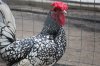
  • Several white/silver variant of the sebright chicken has been added in the poultry area of the Petting Zoo, accompying the original group of the classic variant
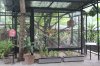
  • The small walkthrough aviary in the Petting Zoo, while still not fully finished yet, has now housed a group of budgerigar of various color morphs. Its likely that smaller parrots and birds migh be brough in and the aviary to be finished by the end of the year.
  • The dromedary camel exhibit has been planted with grasses, as the camel itself appears to be trimmed to look more younger.
  • The capuchin hasn't been yet to be displayed, while the ring-tailed lemurs (unsuprisingly) hasn't arrived yet.
  • There's appears to be an unannounced newborn in the form of an Celebes crested macaque, which is already on display alongside its mother.
  • The meerkat exhibit is empty and is under maintenance, no idea what they will be planning with the meerkats and the exhibit.
  • The newly-built off-display holdings for the great apes (Bornean orangutans and an male chimpanze) has almost finished, seemingly only needing paintment and some minor constructions.
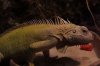
  • The empty terrariums in the Aquarium's entrance has been moved inside, still unsigned and incomplete. The only two inhabitants are an albino iguana and an common leopard gecko in separate terrariums.
  • Several baby Javan rusa deers can also be seen in their current exhibit.
  • A group of Javan muntjacs and an golden-necked cassowary who were usually able to be seen in their off-display holdings, are now nowhere to be seen.
  • In the Reptile and Amphibian Zone, several major updates are seen;
    • The terrarium housing a lone ahaetulla prasina has been maintenance, which the snake are taken off-display.
    • The lone green tree python are replaced by an trimeresurus insularis, in which the python are taken elsewhere (I will explain later).
    • The lone bronchochela jubata has been replaced by an female calotes versicolor. The individual previously kept in the now-Maluku Islands ground boa exhibit are taken off-display for a while.
    • It seems like there's been a success in the breeding of their pig-nosed turtles, with one baby seen in the elseya turtle exhibit.
    • Two inaccurate signages has been updates, which is the Roti Island snake-necked turtle (Corrected to northern snake-necked turtle) and varanus gouldii (Corrected to varanus panoptes)
    • The zoo's green anaconda has been moved to one of the larger terrarium (Former "tiger" reticulated python exhibit), where the previous anaconda exhibit is signed as for Asian water monitor. Both reptiles are nowhere to be seen in these exhibits, likely implying that these are a very new changes.
    • The former Papua-based tree monitor mixed exhibit only have an varanus prasinus.
    • The pair of ctenosaura pectinata has been taken off-display as their exhibit are under maintenance.
    • Major updates are going on in the former colubrid and insectarium corner. Only two invertebrates (And brachypelma auratum and a pair of unknown millipedes) are remaining. The former insectarium boxes are combined into one big terrarium housing an green tree python, while the tarantula boxes are combined into two terrariums with California kingsnake and common leopard gecko.
    • The water in the orlitia borneensis pond are almost completely drained. While plans for the Komodo dragons to make a return to this exhibit is not confirmed, this is still a very interesting observation.
  • In the Lory Kingdom, several dusky lory and cockatiels are under habituation period to be released into the walkthrough aviary. The previously lone Moluccan king parrot now have a mate and a group of wandering whistling ducks are now taken in the walkthrough aviary (Their former open-topped pond now houses lesser whistling ducks, which are still off-display).
  • Several eclectus parrots has been hatched, as seen in the parrot nursery.
  • The Javan leopard exhibit is demolished alongside a large swath of land that will be revitalized into the phase three of the Zona Cakar area or the Carnivora Zone. These new exhibits are already confirmed to house African lions and spotted hyenas (Moved from their previous exhibits), likely the Javan leopards, and hopefully jaguars that had been planned by the zoo since all the way in 2016.
I got caught in a very heavy and sudden rain as a rode back to my boarding house, so photos will be coming later.
 
  • Several white/silver variant of the sebright chicken has been added in the poultry area of the Petting Zoo, accompying the original group of the classic variant
One of the new silver sebright chicken.IMG_2788.JPG
  • The small walkthrough aviary in the Petting Zoo, while still not fully finished yet, has now housed a group of budgerigar of various color morphs. Its likely that smaller parrots and birds migh be brough in and the aviary to be finished by the end of the year.
IMG_2803.JPG

  • The dromedary camel exhibit has been planted with grasses, as the camel itself appears to be trimmed to look more younger.
IMG_2867.JPG

  • The capuchin hasn't been yet to be displayed, while the ring-tailed lemurs (unsuprisingly) hasn't arrived yet.
IMG_2967.JPG

  • The newly-built off-display holdings for the great apes (Bornean orangutans and an male chimpanze) has almost finished, seemingly only needing paintment and some minor constructions.
IMG_3004.JPG

  • The empty terrariums in the Aquarium's entrance has been moved inside, still unsigned and incomplete. The only two inhabitants are an albino iguana and an common leopard gecko in separate terrariums.
IMG_3041.JPG IMG_3045.JPG IMG_3049.JPG IMG_3053.JPG
 

Attachments

  • IMG_2788.JPG
    IMG_2788.JPG
    227.5 KB · Views: 92
  • IMG_2803.JPG
    IMG_2803.JPG
    273.2 KB · Views: 93
  • IMG_2867.JPG
    IMG_2867.JPG
    323.9 KB · Views: 90
  • IMG_2967.JPG
    IMG_2967.JPG
    347.3 KB · Views: 91
  • IMG_3004.JPG
    IMG_3004.JPG
    268.9 KB · Views: 89
  • IMG_3041.JPG
    IMG_3041.JPG
    241.9 KB · Views: 88
  • IMG_3045.JPG
    IMG_3045.JPG
    135.3 KB · Views: 91
  • IMG_3049.JPG
    IMG_3049.JPG
    198.5 KB · Views: 91
  • IMG_3053.JPG
    IMG_3053.JPG
    194.2 KB · Views: 94
  • The zoo's green anaconda has been moved to one of the larger terrarium (Former "tiger" reticulated python exhibit), where the previous anaconda exhibit is signed as for Asian water monitor. Both reptiles are nowhere to be seen in these exhibits, likely implying that these are a very new changes.
New green anaconda exhibit (First picture) and the former exhibit housing Asian water monitor (Second picture).
IMG_3139.JPG
IMG_3147.JPG

In the Lory Kingdom, several dusky lory and cockatiels are under habituation period to be released into the walkthrough aviary.
IMG_3211.JPG

  • The Javan leopard exhibit is demolished alongside a large swath of land that will be revitalized into the phase three of the Zona Cakar area or the Carnivora Zone. These new exhibits are already confirmed to house African lions and spotted hyenas (Moved from their previous exhibits), likely the Javan leopards, and hopefully jaguars that had been planned by the zoo since all the way in 2016.
IMG_3236.JPG IMG_3239.JPG
"Gembira Loka is committed to be a better zoo through new exhibits for our animals, convenience of the guests, and a fun visit."
IMG_3240.JPG
IMG_3243.JPG IMG_3244.JPG
One of the future inhabitant of the new Zona Cakar, currently sleeping in the glassed exhibit formerly housing Sumatran clouded leopard.
IMG_3232.JPG
 

Attachments

  • IMG_3139.JPG
    IMG_3139.JPG
    260.9 KB · Views: 92
  • IMG_3147.JPG
    IMG_3147.JPG
    271.1 KB · Views: 93
  • IMG_3211.JPG
    IMG_3211.JPG
    213.8 KB · Views: 90
  • IMG_3236.JPG
    IMG_3236.JPG
    301.8 KB · Views: 90
  • IMG_3239.JPG
    IMG_3239.JPG
    250.1 KB · Views: 94
  • IMG_3240.JPG
    IMG_3240.JPG
    277.5 KB · Views: 95
  • IMG_3243.JPG
    IMG_3243.JPG
    320.6 KB · Views: 89
  • IMG_3244.JPG
    IMG_3244.JPG
    261.2 KB · Views: 93
  • IMG_3232.JPG
    IMG_3232.JPG
    232.3 KB · Views: 90
Excuse me, will the zoo no longer exhibit that clouded leopard in the future?
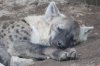
The single Sumatran clouded leopard on-display was taken off-display after the zoo's spotted hyenas arrived earlier this year and with one pair occupying the exhibit, as the zoo aimed to make the hyena as one of their main attractions. The hyenas are planned to have a new exhibit that will be finished in January of 2025, its likely that we'll see the Sumatran clouded leopard returned to this exhibit.
 
The single Sumatran clouded leopard on-display was taken off-display after the zoo's spotted hyenas arrived earlier this year and with one pair occupying the exhibit, as the zoo aimed to make the hyena as one of their main attractions. The hyenas are planned to have a new exhibit that will be finished in January of 2025, its likely that we'll see the Sumatran clouded leopard returned to this exhibit.
Thank you, I hope to see it again
 
Minor updates (16/12/2024)
  • In the large tank of the Petting Zoo, an pseudoplatystoma tigrinum has been added.
  • Additional budgerigars has been added in the new walkthrough aviary in the Petting Zoo, most likely opened next year.
  • Meerkats are back on-display after a month of unexplained absent.
  • Marmosets (Common and black-tufted) are off-display.
  • In a major new, the old South American coati and mitered langur exhibits in the edge of the Primate Zone has been demolished, as construction has occured in that area. I would love to see the langur returned in a new and better exhibit (Old exhibits: Mitered Surili + Coati Exhibits - ZooChat)
  • In the Reptile and Amphibian Zone, several species are taken off-display, likely for exhibit maintenance:
    • Axolotl
    • Gonyosoma oxycephalum
    • Ctenosaura pectinata
  • The group of cockatiel from last month that were in the process of habituation at the Lory Kingdom has been moved, with a pair of cockatiel seen in the parrot nursery.
  • Talking about the parrot nursery, an monk parakeet has been seen for the first time there this year, likely a new addition.
  • The zoo's Sumatran tigers has been taken off-display, likely for exhibit maintenance and not anything related to the phase three of the Carnivores Zone (Zona Cakar).
  • About the phase three construction, a complex of what appears to be off-display holdings are almost finished.
 
On early March, Gembira Loka received a number of animals from Cikananga Conservation Breeding Center for use in ex-situ conservation, specifically to maintain genetic diversity and establish satellite populations outside their native habitat, so these animals are likely species which are already present in Gembira Loka.

The post is vague on which species has been transported, seemingly intentionally, only showing images of a Sumatran Laughingthrush and a Black-Winged Myna in the post.

Cikananga Wildlife Center
 
Not to mention the elevated view for the Javan leopard exhibit, making it possible for guests to see the leopards (Named Shelly) up above as well as for the leopard to receive wider space and more climbing oppurtunity, though privacy is still a concern for me. I myself can't wait to go there again when I returned by early April.

Gembira Loka has done a very good job in modernizing themselves since 2010. There's a lot of things that still need to be improved on, but I'm certain that we'll see it eventually.
 
In another news, after being first announced in 2022 following the opening of the Primate Zone, Gembira Loka Zoo finally showcase their ring-tailed lemur in the walkthrough aviary, previously filled with assorted birds and reptiles. A bio/profile for the ring-tailed lemur had only been added recently on the Gembira Loka Zoo website.

Despite the large walkthrough exhibit, only two lemurs are mentioned to be added. Additionaly, no origin of the lemurs are given, only the fact they mentioned that the addition of the lemurs are thanks to "the collaboration with BKSDA Yogyakarta (Indonesian Natural Resource Protection Agency branch in Yogyakarta)" suggest that they likely came from private supplier (Them coming from a random confiscation seems unlikely, even "too good" to be a mere coincidence).

This isn't exactly the first time this species appears in Gembira Loka Zoo. Facebook post by the zoo in 2016 revealed that they had this species atleast in the 2010's. While possibility of one or both of the newly-displayed lemurs to be the same individuals are likely, training and habituation for direct-contact in a walkthrough exhibit take a long time, we can't confirm if that's the case with little informations.

Source
 
Not to mention the elevated view for the Javan leopard exhibit, making it possible for guests to see the leopards (Named Shelly) up above as well as for the leopard to receive wider space and more climbing oppurtunity, though privacy is still a concern for me. I myself can't wait to go there again when I returned by early April.

Gembira Loka has done a very good job in modernizing themselves since 2010. There's a lot of things that still need to be improved on, but I'm certain that we'll see it eventually.
Be good if Gembira Loka Zoo and other PKBSI zoos come together on a Javan leopard breeding program. A bit more pro-active work will not hurt the Republic's zoos!

I wonder how many individuals are maintained at PKBSI zoos and private facilities in the country and what age / sex-ratio the Javan leopard population in captivity looks like. Maybe, you @Rizz Carlton or one of our other Indonesian Zoochat posters have more information on this?!?
 
Be good if Gembira Loka Zoo and other PKBSI zoos come together on a Javan leopard breeding program. A bit more pro-active work will not hurt the Republic's zoos!

I wonder how many individuals are maintained at PKBSI zoos and private facilities in the country and what age / sex-ratio the Javan leopard population in captivity looks like. Maybe, you @Rizz Carlton or one of our other Indonesian Zoochat posters have more information on this?!?
That's a rather hard task, PKBSI and their zoos aren't known for being transparent on these kind of matters :D

But for Gembira Loka specifically, they maintain a pair; one young female leopard named Sely that are on-display, as well as one off-display individual that I'm not aware the sex, age, or name of. The two used to be housed together in 2023, meaning that it's likely an male leopard of roughly the same age.

Gembira Loka previously had another female leopard, named Rasi. She first arrived at the zoo in 2019 as a rescue and later on released back into the wild around the Mount Ciremai National Park in 2022.
 
Back
Top