German Zoo Worlds Zoo Animal Report

Noble Crayfish

full


Photo made by @KevinB

Seen at how many Zoos/Aquariums: 1

Sadly the native Noble Crayfish is endangered in many european Countrys because of water pollution and invasive Species of north american Crayfish. I have seen them at 1 Zoo and this is Alpine Zoo Innsbruck. They are kept at Innsbruck in a nice Aquarium tank in the Zoos Aqua Terrarium building. They are very good at hiding but they have a nice Tank with several branches and other hiding spots. It would be cool if the native Noble Crayfish is more common in Zoos but sadly they are not often kept in Zoos as they are overlooked by most Zoo Visitors.
 
Eurasian Beaver

full


Photo made by @German Zoo World Eurasian Beavers at Alpine Zoo Innsbruck

Seen at how many Zoos/Aquariums: 1

Beavers are Zoo Animals that are rarely seen by Zoo Visitors because of their nocturnal Lifestyle. Most Zoos that keep Beavers have a view in to the Beavers indoor Enclosure so that Zoo Visitors are able to see the Beavers even when they are asleep most of the Time. For some Reason most Zoos that i have been to that keep Beavers have the north american Species and i have seen the native eurasian Beaver at only 1 Zoo. At Alpine Zoo Innsbruck they are kept in the first Enclosure that you see when you enter the Zoo through the Zoo Entrance. The Enclosure at Innsbruck includes several pools and a natural Land area and it is a mixed Enclosure with the interesting European Goosander. On my last Visit in 2023 i first saw the Beaver family sleeping in their indoor Enclosure but later on that same Day i even saw some Beavers swimming arround very active in one of their Pools which was a fascinating Zoo Experience that shows if you have the Time to return to a Zoo Enclosure, do it as many Zoo Animals are more active towards the evening Time. Beavers are the Worlds second largest species of Rodent, most Zoo Visitors have heard of them but many of them have never seen a Beaver in reality and espacially if you are lucky to see active Beavers they can be entertaining even for standard Zoo Visitors.
 
Noble Crayfish

full


Photo made by @KevinB

Seen at how many Zoos/Aquariums: 1

Sadly the native Noble Crayfish is endangered in many european Countrys because of water pollution and invasive Species of north american Crayfish. I have seen them at 1 Zoo and this is Alpine Zoo Innsbruck. They are kept at Innsbruck in a nice Aquarium tank in the Zoos Aqua Terrarium building. They are very good at hiding but they have a nice Tank with several branches and other hiding spots. It would be cool if the native Noble Crayfish is more common in Zoos but sadly they are not often kept in Zoos as they are overlooked by most Zoo Visitors.

I had completely forgotten I actually had a picture this good of this species, as I did not pictures nearly this good at subsequent visits to GaiaZoo, so thank you for reminding me!
 
Eurasian river Otter

full


Photo made by @German Zoo World Eurasian river Otter at Tripsdrill Wildlife

Seen at how many Zoos/Aquariums: 4

River Otters are one of the most popular smaller Zoo Mammals with standard Zoo Visitors, if they see them as they tend to be active at Night but in many Zoos they are very active during the Day. I have seen the River Otter at 4 Zoos and one of them is of course Bad Mergentheim Wildlife Park where they keep a Pair in a nice Enclosure themed with some canoe boats both inside the actual Enclosure and in the Visitor viewing area. The Otters at Bad Mergentheim are best seen during the Zoos feeding presentation where you can see them diving and swimming arround after their Food. Outside of the Feeding Presentation you are not guaranted to see the Otters as they have a naturalistic Enclosure with several hiding spots. At Tripsdrill Wildlife they were a quite recent addition to the Zoo as their Enclosure was opened in 2018, the Enclosure at Tripsdrill is spacious and naturalistic and the Pair that is kept at the Zoo can even swim beneath the Visitor boardwalk to reach the other side of their Enclosure. Zurich Zoo stil keeps their River Otters in a bit outdated looking Enclosure yet the Enclosure also has a natural look with many hiding Spots. You can also view the River Otters indoor Enclosure this is where they are mostly sleeping during the Day but on my Visit in 2022, i have also seen an active Otter swimming past the underwater viewing window. In my Entry about the Eurasian Beaver i forgot to mention that at Alpine Zoo Innsbruck they even had a underwater viewing window for the Zoos Beavers and the same goes of course for the River Otters. On my last Visit to Innsbruck in 2023 i did not see any Otters at all after i arrived at the Zoo. Even the indoor Enclosure had no Otters inside, but later that Day i first saw an Otter getting fed in a smaller side Enclosure and then i even saw two River Otter swimming and playing with each other directly in front of the underwater viewing window which was a absolutley fascinating Zoo experience. River Otters are when they are active, crowd favourites which makes them popular in many Zoos and some Zoos also help with River Otter conservation.
 
Wels Catfish

full


Photo made by @Patrick87

Seen at how many Zoos/Aquariums: 3

Even when the native Wels catfish is one of Europes largest freshwater Fish it is a Master of camouflage and you have to be very lucky to catch a glimpse of this huge Fish. I have seen the Wels at 3 Zoos. Wilhelma Zoo keeps them in a simple Tank with some branches to hide in, of course in the Zoos Aquarium/Terrarium House temperate Zone. The Wels at Wilhelma are kept together with a small group of Gibel Carp which is a mix that seems to work well as the Mix already exists a long Time. One of the best and most natural/spacious Tanks for Wels catfish has to be the spectacular Danube tunnel at Ulm Zoo which allows allows Zoo visitors to see large native Fish up close including of course the Catfish. The Wels Catfish at Ulm are mixed with many other native freshwater Fish including some smaller Species but the Tank is large enough that Predation is hopefully not a big problem at the Zoo. The most impressive Wels catfish i have ever seen was at Alpine Zoo Innsbruck where they keep a absolutley huge Individual in the Zoos Aquarium Building. At Innsbruck the Wels is kept in Tank for predatory Fish which he shares with equally huge individuals of both Pike Perch and Northern Pike. At my first glance at the Tank i only noticed the two other Species but then i noticed something huge and dark in the Centre of the Tank and as the Catfish was moving arround a bit i noticed how large it actually was. Wels catfish can be very impressive to watch even for standard Zoo Visitors but you often have to find them first but if you are able to see them they are a spectacular Zoo Fish.
 
Brown Trout

full


Photo made by @vogelcommando

Seen at how many Zoos/Aquariums: 5

Brown Trout are one of the most popular freshwater Fish species and this means they are very common in Zoos, i have seen them at 5 Zoos. Augsburg Zoo only kept a large school of Trout for a short Period of Time from 2021 to 2022 in a simple Tank in the Zoos Lech river Building for native Fish and sadly for me invisible Beavers and Otters. For some Reason the Trout were phased out and replaced with other native Fish. Another very simple Tank that seems a bit small for a large Trout is found at Alpine Zoo Innsbrucks Aquarium building. At Hellabrunn Zoo Munich they even have a dedicated Trout breeding centre where they breed Trout to release them back in to the Isar rivet which flows through the Zoo. The Trout breeding centre is also Home to other small native Fish and Ambhibians and of course they are also Home to a adult Trout in a sadly way to small Tank. Outside of the Trout breeding season Munich showcases artoficial Eggs to the Zoo Visitors. Like with many other native Fish Ulm Zoo of course keeps some Brown Trout in the huge Danube Tunnel where you can see them swimming in the Current. My personal favorite Trout tank is the absolutley stunning Trout creek Tank at Wilhelma Zoos Aquarium/Terrarium temperate Zone which mimics a Black forest Creek. A few years ago the Land part was stil Home to Song Thrush and Grey Wagtail but the Thrush was moved to the european free flight Aviary and the Wagtail was either sadly phased out or the last Birds sadly passed away. Currently the Tank is shared with a large school of Huchen and some huge Russian Sturgeons. Sadly i noticed on my last view Visits to Wilhelma Zoo that there are less and less Brown Trout in the Trout creek Tank. Brown Trouts are known to be tasty by many Zoo Visitors but most of them have never seen one in Real life and so it is important that they are often kept in Zoos as the native Trout also struggles with the introduced Rainbow Trout.
 
Three spined Stickleback

full


Photo made by @KevinB

Seen at how many Zoos/Aquariums: 3

The Stickleback is a small yet popular Fish for Zoos because of his courtship ritual and because he lives in both Fresh and Saltwater. Wilhelma Zoo keeps a large school of Stickleback in 2 different Tanks in the Zoos Aquarium/Terrarium building temperate zone. The first school of Stickleback at Wilhelma is kept in a tank for smaller North sea and Atlantic fishes and they are mixed with Armed Bullhead, Eelpout, Corkwing Wrasse, fiveteen spined Stickleback and Common Pipefish but the three spined Stickleback are the most numerous Fish to be found in the Tank. The same Tank is also shared with various species of Marine intervertebrates including Mussels and Crustaceans. Wilhelma Zoos second Stickleback tank is a Tank for small freshwater Fish and this Time the Stickleback share their Tank with Belica and Stone Loach. At Hellabrunn Zoo Munich they are of course kept in the Trout breeding centre where they share a Tank with european Bitterling. A more unusual Palaudaurium enclosure for a school of Stickleback can be found in front of Alpine Zoo Innsbrucks Aqua/Terrarium building. The open topped Palaudarium looks very naturalistic and it is lush planted, this time the Stickleback share the Enclosure with a large group of Marsh Frog. The three spined Stickleback can be mixed with a lot of other small native Fish and even Amphibians but sadly this Fish with its interesting behauvior is often overlooked by the standard Zoo Visitor.
 
Northern Pike

full


Photo made by @German Zoo World Northern Pike at Alpine Zoo Innsbruck

Seen at how many Zoos/Aquariums: 3

The Pike is one of the most popular and well known native freshwater Fish. I have seen the "european freshwater shark" at 3 Zoos. Wilhelma Zoo keeps them of course in the Zoos Aquarium/Terrarium building temperate zone. At Wilhelma they are held in a Tank for native carnivorous Fish together with Pike Perch, European Perch and European Eel. The Individuals at Wilhelma are smaller sized as their Tank is not realy large but stil adequat for smaller Pikes. The largest Tank i have seen for Pike is of course the Danube Tunnel at Ulm Zoo where they keep a single Individual that can often be seen waiting for Prey. Like with the Wels Catfish and other large predatory Fish that are kept in the Tank it seems to work that the smaller Fish species in the Tank are not preyed upon to often. I have seen my largest individual Pike at Alpine Zoo Innsbruck and they are kept in the same Tank in the Aquarium building as the massive Pike Perch and the absolutley giant Wels catfish. The Pike at Innsbruck showed its dangerous theeth very well and i think a Individual as large as this could even kill small waterfowl if it was a wild Individual. Northern Pike are very impressive and most standard Zoo Visitors are fascinated when they see how large they get and because of their dangerous look, this all makes them very popular in Zoos.
 
European bee eater

full


Photo made by @KevinB

Seen at how many Zoos/Aquariums: 2

Bee eaters are so colourfull Zoo Birds that many Zoo Visitors dont believe that the European bee eater actually occurs in Europe. I have seen these fascinating Birds at 2 Zoos. Like with the Hoopoe, first the Bee eaters at Wilhelma Zoo were held in the African river Aviary of the Zoos small Mammal and Bird House. One or two years after the opening of the Building several Species were switched arround the Zoo and the Zoos small flock of Bee eaters is currently kept in the Zoos spacious and naturalistic european freeflight Aviary which is shared with several species of mostly native Waders and Waterfowl. Since 2023 there are also Bee eaters again in the small Mammal and Bird House but these are of the rare Red throated bee eater which is only kept in 3 Zoos. At Frankfurt Zoo they are also kept in a free flight Aviary for european species. Even when the Aviary at Frankfurt looks a bit old fashioned it is stil a nice Aviary for the Bee eaters which share this Aviary with Pied Avocet. I think it is good that Bee eaters are often kept in large free flight Aviarys instead of standard Zoo Aviarys as these Birds are very aerial and need some space to fly arround. Because of their colours they can also be popular by Zoo visitors but they are not often kept in Zoos.
 
European Bullhead

Sadly there are no Photos of this Species in the Zoo Chat gallery

Seen at how many Zoos/Aquariums: 1

The Bullhead is a true master of camouflage and maybee this is the Case i have only seen them at 1 Zoo. At Alpine Zoo Innsbruck they are of course kept in the Zoos Aquarium and they are kept in one of several smaller Tanks dedicated to small native Fish and Intervertebrates. Sometimes the european Bullhead looks like a large Pebbel when he is waiting to be fed. The Tank at Innsbruck is very simple but also naturalistic and good for the Bullhead. Sadly the european Bullhead is an interesting looking small freshwater Fish that is often overlooked by many Zoo Visitors.
 
Carp


Photo made by @KevinB

Seen at how many Zoos/Aquariums: 7
Seen Breeds/Species: Line Carp, Mirror Carp, Common wild type Carp


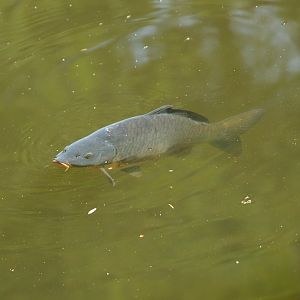
The Carp is one of the most common Fish kept in Zoos. At Federseeaquarium Bad Buchau which entierly exists of this one large Tank for native freshwater Fish which is located in the local Spa is both Home to the Mirror Carp and wild type common Carp. They keep some absolutley giant Individuals together with smaller schools of Tench, Bream, Roach, Rudd, Bleak and Gudgeon in a spacious Tank. Of course Wilhelma Zoo is also Home to Carp, in the Zoos Aquarium/Terrarium building temperate Zone you can find a simple Tank that could be a bit larger as it is Home to a Mirror Carp that is mixed with a Grass Carp. Carp can also be kept outside most of the time and so Wilhelma keeps their Line Carp in several moats arround the Zoo including the Moats for both the Enclosures of Asian Lion and Andean Bear, aswell as the whole complex for mountain Animals. At the famous Blumeninsel Mainau you can find some huge Mirror Carp in a simple open air Pond. Frankfurt Zoo has a single Mirror Carp in the large native freshwater Tank in the Zoos Exotarium building. The Tank was signed for several other Species but i saw only a huge school of Rudd in the Tank together with the Mirror Carp. Right in front of the Entrance to Tripsdrill Wildlife you can find a Fire pond that is home to a mixed school of both Koi and Common Carp and Zoo Visitors are allowed to feed the Fish with Pellets purchased at the Zoo. At Ulm Zoo they are of course kept in the Danube tunnel where they have a good amount of space to swim arround. A spectacular open air Aquarium which is actually viewed from inside of Alpine Zoo Innsbrucks Aqua/Terrarium building is the Home for Common Carp at Innsbruck. The massive Alpine Lake tank is shared with several other native freshwater Fish including a huge Adriatic Sturgeon and schools of smaller Fish. The common Carp is very popular with Zoo Visitors mainly because of his large Size and when they are allowed to feed them which makes them common even in small Zoos.
 
Yellow bellied Toad

full


Photo made by @KevinB

Seen at how many Zoos/Aquariums: 3

The yellow bellied Toad is one of the few native Amphibians which is for some reason more common in Zoos. I have seen them at 3 Zoos. At Hellabrunn Zoo Munich they are of course kept in the Zoos Trout breeding centre which is also Home to other native Fish and Amphibians including a simple yet naturalistic Tank for yellow bellied Toads. A nice very naturalistic Palaudarium at Alpine Zoo Innsbrucks Aqua/Terrarium building is shared with Alpine Newt. A huge spacious and naturalistic open air Terrarium keeps the Toads at Wilhelma Zoo and they share the Enclosure with Fiery Salamander, Slow Worm and Sand Lizard. Yellow bellied Toads are true Masters of camouflage sometimes they look like Pebbles but i think they are interesting Zoo Animals and they are endangered in many Countrys which makes them popular in Zoos.
 
Newt

full


Photo made by @German Zoo World Alpine Newt at Alpine Zoo Innsbruck

Seen at how many Zoos/Aquariums: 1
Seen Breeds/Species: Alpine Newt, Smooth Newt, Great crested Newt

Many Zoo Visitors have heard of a Newt before but not many have seen one in real life and so even when i have seen 3 species of native Newt i have seen all of them at 1 Zoo and this is of course at Alpine Zoo Innsbruck. One of the most colourfull Species is the Alpine Newt which is both kept in the already mentioned Palaudarium in the yellow bellied Toad entry but they also have a huge open topped Palaudarium in the Zoos Reptile House. Innsbrucks Smooth Newts are housed in the Enclosure already mentioned in the European tree Frog entry. One of the largest and most impressive species of native Amphibians is the Great crested Newt. At Innsbruck they are kept in a nice naturalistic Aquarium in the Zoos Aqua/Terrarium building which they share with the bizarre looking Weatherfish. As i have never before seen a crested Newt i was realy impressed how large they are and it is interesting that crested Newts are so aquatic instead of the other Newt species which also had a good ammount of Land in their Palaudariums. Newts are interesting and bizarre looking Zoo Animals, sadly they are often overlooked by the general Zoo Visitors but espacially colourfull species like the Alpine Newt or large Species like the crested Newt can be very impressive to look at and so i hope for more Zoos to keep these endangered Amphibians.
 
Sturgeon

full


Photo made by @German Zoo World Adriatic Sturgeon at Alpine Zoo Innsbruck

Seen at how many Zoos/Aquariums: 3
Seen Breeds/Species: European Sturgeon, Adriatic Sturgeon, Siberian Sturgeon, Sterlet, Russian Sturgeon

Sturgeons are impressive almost prehistoric looking and they are huge which makes them to very popular Fish in Zoos. I stil remember the first time very well walking through the Danube tunnel and being impressed by the absolutley giant European Sturgeons swimming above my Head at Ulm Zoo. Some Zoo Visitors at Ulm even call them Sharks maybee because of their Size?. These Sturgeons are easily the most popular species of Fish in the Danube tunnel. The Adriatic Sturgeon is sadly much rarer kept in Zoos and i have only seen the single Individual at Alpine Zoo Innsbrucks Alpine Lake tank which can first be seen from the Zoos Aqua/Terrarium building but you can also see it from above later. Innsbrucks Adriatic Sturgeon is yet another huge and impressive Individual. Siberian Sturgeons are yet another species of Sturgeon which is kept at Ulm Zoos Danube Tunnel. One of the smallest and most common Sturgeons in Zoos is the stil very impressive looking Sterlet. The Sterlet is even the third species of Sturgeon which can be found at Ulm Zoos Danube tunnel and it is very interesting to be able to compare three different Species of Sturgeon at one Zoo tank. Sterlets are also kept at Innsbruck and of course they are also kept in the big Alpine Lake tank. Wilhelma Zoo is home to two species of Sturgeon and one of them is of course the Sterlet and both Species are kept in the Zoos Aquarium/Terrarium building temperate Zone. The Sterlet at Wilhelma are kept in a simple Tank for native freshwater Fish and previously they where mixed with common Minnow and the very rare Coregonus wartmanni which sadly passed away as i did not see them anymore on my last Visit in 2025, currently the Sterlets are mixed with Round Goby. Wilhelmas second Sturgeon species are of course the giant Russian Sturgeons which are kept in the spectacularTrout Creek tank. Like already mentioned in the Brown Trout entry the Sturgeons share this naturalistic Tank with both Brown Trout and Huchen. Sturgeons are not only endangered in many Countrys and are often bred in Zoos to be released back in to the Wild they are also popular with Zoo Visitors as they can get huge and they are very impressive looking Fish.
 
Pond Mussel

Sadly there are no Photos of this species in the Zoo Chat gallery

Seen at how many Zoos/Aquariums: 2

Pond Mussels are often kept in Zoos together with the european Bitterling a small Fish that lays its Eggs in to the Mussel, this is why they are mainly kept in Zoos and i have seen them in 2 Zoos and every time they where mixed with the Bitterling. Alpine Zoo Innsbruck has some large Mussels in a simple yet naturalistic Tank in the Zoos Aqua/Terrarium building where they are also mixed with Belica and of course the Bitterling. At Wilhelma Zoo they are of course kept in the Zoos Aquarium/Terrarium building temperate Zone. The Mussels at Wilhelma are also kept in a simple yet lush planted Tank which is of course shared with Bitterling but also with Freshwater Blenny. Pond Mussels are espacialy kept by Zoos because of the Bitterling but i think they are also a nice species to fill the Bottom of small native freshwater Tanks.
 
Mandarin Duck

full


Photo made by @German Zoo World Mandarin Duck at Blühendes Barrock Ludwigsburg

Seen at how many Zoos/Aquariums: 5

The Mandarin Duck is one of the most common species of Waterfowl in Zoos, i have seen them in 5 Zoos. Escaped Mandarin Ducks from Zoos can today be found in many larger Citys. At Blühendes Barrock Ludwigsburg they are kept in a sepperate Aviary inside of the huge Mediterranean free flight Aviary but there is also a freeroaming Population of Mandarin Ducks at the Zoo which i have even seen in the Zoos Fairytale garden fountain display. At Zurich Zoo they are of course kept in the Selenga Wetlands walk through Enclosure which is both spacious and naturalistic but this also means the Ducks are sadly wing clipped. I prever to see the Mandarin Duck like most other Birds in a free flight Aviary rather than in an open topped Enclosure. Another open topped Enclosure is found at Göppingen Zoo which also sadly means the Birds need to be wing clipped. At Göppingen they are kept in a simple Waterfowl pond where they are mixed with Indian runner Duck, Carolina wood Duck, Bar headed Goose and east african crowned Crane. On my last Visit to Tripsdrill Wildlife in 2025 i noticed they added some new Bird species to the former White Stork Aviary including some stunning Mandarin Ducks. Tripsdrill mixes them in a simple yet spacious Aviary with Ringed Teal, Ring necked Pheasant, Black crowned night Heron and northern bald Ibis. Wilhelma Zoo has switched them arround the Zoo alot in recent Years. I remember them sharing a nice tropical lush planted Aviary with Edwards Pheasant and they where signed but not seen together in the Aviary with the Zoos rare oriental white Stork. Currently and since my last two Visits to Wilhelma they are kept in the naturalistic Asian free flight Aviary where they are mixed with a lot of other interesting species of south east asian Birds. Espacially the male Mandarin Ducks are popular even with the average Zoo Visitor and i think they are a nice species for wetland Aviarys.
 
Racoon

full


Photo made by @German Zoo World Racoon at Heidelberg Zoo

Seen at how many Zoos/Aquariums: 7

Racoons are one of the most popular small Carnivores in Zoos and for some reason many Zoo Viditors think that Racoons are a native Species but instead they were originaly only found in North America but they have been introduced and are now a highly invasive Species in many Countrys which i have seen at 7 Zoos. Tier und Spielpark Bichlbach keeps them in a simple mesh enclosed Aviary type Enclosure. Hellabrunn Zoo Munich also keeps them in a Aviary type Enclosure that was previously home to Mountain Lion but it is much better suited for 4 rescued Racoons that came from the Munich Reptile sheltre. Racoons can of course also be held in larger, naturalistic and open topped Enclosures like at Bavaria Zoo Lohberg. A simple outdoor Enclosure can even be found at Herpetarium Landau which is not huge but i stil think it is a okay Enclosure for rescued Individuals. Racoons can also be mixed with small Mustelids like at Tripsdrill Wildlife where they are mixed with Ferret in quite a simple Enclosure with some sleeping Huts for the Racoons. At Bad Mergentheim Wildlife Park they are also kept together with Ferret but in a large naturalistic Enclosure. During the Zoos Feeding Presentation you can see the Racoons foraging for their Food in the Water and during the Presentation you could also see the Ferrets which where mostly hiding during the Day but they where very active during feeding Time. Bad Mergentheim has some huge real Trees in the Racoon/Ferret Enclosure and sometimes you can spot the Racoons as small black blobs in the Tree tops. A spacious and naturalistic Enclosure for Racoons can also be found at Heidelberg Zoo. At Heidelberg you can even take a look in the indoor Racoon den but i think this is also used by the Domestic Racoon and the rare European Mink which both share this Enclosure with the Racoons. Even when Racoons are mostly nocturnal and they are on the Eu phase out list they are very popular with Zoo Visitors which also means you can even find them in many smaller Zoos.
 
Ruff

full


Photo made by @KevinB

Seen at how many Zoos/Aquariums: 1

The breeding display of the male Ruff is a spectacular nature event and i have seen them at 1 Zoo. Wilhelma Zoo only keeps them since 2025 but they were also previously kept at the Zoo until 2011. On my last Visit in 2025 i noticed some Females which are held in the spacious and naturalistic european free flight Aviary. I am not sure if Wilhelma Zoo does also keep male Ruffs but i think they are a nice new Species to the european free flight Aviary. A large flock of both male and female Ruffs can be very entertaining to watch for standard Zoo Visitors but sadly these fascinating Birds are often overlooked by the Zoo Visitors espacially when they are not in breeding plumage.
 
Racoon

full


Photo made by @German Zoo World Racoon at Heidelberg Zoo

Seen at how many Zoos/Aquariums: 7

Racoons are one of the most popular small Carnivores in Zoos and for some reason many Zoo Viditors think that Racoons are a native Species but instead they were originaly only found in North America but they have been introduced and are now a highly invasive Species in many Countrys which i have seen at 7 Zoos. Tier und Spielpark Bichlbach keeps them in a simple mesh enclosed Aviary type Enclosure. Hellabrunn Zoo Munich also keeps them in a Aviary type Enclosure that was previously home to Mountain Lion but it is much better suited for 4 rescued Racoons that came from the Munich Reptile sheltre. Racoons can of course also be held in larger, naturalistic and open topped Enclosures like at Bavaria Zoo Lohberg. A simple outdoor Enclosure can even be found at Herpetarium Landau which is not huge but i stil think it is a okay Enclosure for rescued Individuals. Racoons can also be mixed with small Mustelids like at Tripsdrill Wildlife where they are mixed with Ferret in quite a simple Enclosure with some sleeping Huts for the Racoons. At Bad Mergentheim Wildlife Park they are also kept together with Ferret but in a large naturalistic Enclosure. During the Zoos Feeding Presentation you can see the Racoons foraging for their Food in the Water and during the Presentation you could also see the Ferrets which where mostly hiding during the Day but they where very active during feeding Time. Bad Mergentheim has some huge real Trees in the Racoon/Ferret Enclosure and sometimes you can spot the Racoons as small black blobs in the Tree tops. A spacious and naturalistic Enclosure for Racoons can also be found at Heidelberg Zoo. At Heidelberg you can even take a look in the indoor Racoon den but i think this is also used by the Domestic Racoon and the rare European Mink which both share this Enclosure with the Racoons. Even when Racoons are mostly nocturnal and they are on the Eu phase out list they are very popular with Zoo Visitors which also means you can even find them in many smaller Zoos.

As an American, this is quite the surreal read for me! Raccoons are rarely displayed in North American zoos unless...

A.) The facility is devoted to native species.

B.) It’s a small, privately-owned facility. (So the Raccoons are being used as space fillers more than anything else. I've also noticed that these kinds of facilities tend to display captive-bred color morph Raccoons over the wild-type, at that.)

C.) The Raccoons do double duty as animal ambassadors.
 
As an American, this is quite the surreal read for me! Raccoons are rarely displayed in North American zoos unless...

A.) The facility is devoted to native species.

B.) It’s a small, privately-owned facility. (So the Raccoons are being used as space fillers more than anything else. I've also noticed that these kinds of facilities tend to display captive-bred color morph Raccoons over the wild-type, at that.)

C.) The Raccoons do double duty as animal ambassadors.


It is interesting to know that Racoons are rarely kept in North american Zoos.
 
Back
Top