Gorilla Enclosure Design - Opinions Wanted

That Aussie Guy

Well-Known Member
Hi everyone! For the past few months I've been working on an assignment where I chose to focus on designing the best gorilla enclosure for the gorillas, staff, and visitors. Some gorilla enclosures lean too far to one or two sides while neglecting the other, so I set out through research and seeking various perspectives to determine what an ideal and realistic enclosure looks like.

My final design will be sketched and brought to life in the Zoo Simulator, Planet Zoo, although I am building from a strictly realistic point of view, ignoring the advice given by the simulator.

As such, I'm seeking more opinions and advice on best design, especially from a visitor point of view. I would greatly appreciate the opinion and advice of any regular zoo visitors, especially those relatively familiar with seeing gorillas in captivity at various facilities. In particular:
- What defines an excellent gorilla enclosure, in your opinion?
- How do you believe gorilla enclosures maximise the guest experience, while ensuring comfort for the gorillas?
- Is there anything that instantly puts you off a gorilla enclosure, as a visitor?
- What is the best gorilla enclosure you've seen, and why is it so?
- Any other opinions, comments, advice, or feedback you may have regarding gorilla enclosure design

Thank you in advance, and I greatly appreciate all and any feedback and opinions you may have :)
 
Last edited:
For me, an excellent gorilla enclosure is large and complex, with climbing opportunities. What stands out most, though, is cover. Almost always, I see gorillas showing a strong preference for something over their head, be it a roof, caging, wooden shelter, or an actual canopy. The shade of trees is clearly the most aesthetically pleasing option, but where that isn’t possible, a mesh roof is far preferable to an open grassy field in my book.

The heavily planted enclosures at Woodland Park Zoo and Melbourne Zoo have been my favourites that I’ve seen in person. They look great, have plenty of space for gorillas to disappear into the bushes and trees, have trees and logs both for shade and for climbing, and in the case of WPZ, there are multiple enclosures to enable management of changing social groups should the need arise.

I’ll address the other questions later.
 
Hi everyone! For the past few months I've been working on an assignment where I chose to focus on designing the best gorilla enclosure for the gorillas, staff, and visitors. Some gorilla enclosures lean too far to one or two sides while neglecting the other, so I set out through research and seeking various perspectives to determine what an ideal and realistic enclosure looks like.

My final design will be sketched and brought to life in the Zoo Simulator, Planet Zoo, although I am building from a strictly realistic point of view, ignoring the advice given by the simulator.

As such, I'm seeking more opinions and advice on best design, especially from a visitor point of view. I would greatly appreciate the opinion and advice of any regular zoo visitors, especially those relatively familiar with seeing gorillas in captivity at various facilities. In particular:
- What defines an excellent gorilla enclosure, in your opinion?
- How do you believe gorilla enclosures maximise the guest experience, while ensuring comfort for the gorillas?
- Is there anything that instantly puts you off a gorilla enclosure, as a visitor?
- What is the best gorilla enclosure you've seen, and why is it so?
- Any other opinions, comments, advice, or feedback you may have regarding gorilla enclosure design

Thank you in advance, and I greatly appreciate all and any feedback and opinions you may have :)

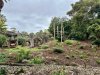
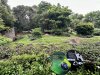
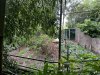
In my opinion, the gold standard of gorilla exhibits in the region is Melbourne Zoo’s Gorilla Rainforest. As a visitor, I appreciate the multiple viewing points, especially those of which cater to large numbers of visitors. From the gorilla’s perspective, the exhibit contains a range of naturalistic features including undulating terrain and rock caves, which enables the gorillas to take shelter during inclement weather (as opposed to retreating indoors/off display).

My only criticism of Melbourne’s exhibit is with the link to the old grotto exhibit closed off, it no longer enables the zoo to exhibit multiple troops (acknowledging the internal dens allow for separation of the troop). Considering the impetus on Australasian zoos to accomodate their only surplus (i.e. bachelor males), I would favour any complex that enables a zoo to manage a bachelor troop alongside a breeding troop, enabling the transition of adolescent males out of their natal troop.

upload_2025-8-12_18-23-0.jpeg

upload_2025-8-12_18-22-36.jpeg

upload_2025-8-12_18-23-38.jpeg
 

Attachments

  • upload_2025-8-12_18-22-36.jpeg
    upload_2025-8-12_18-22-36.jpeg
    298.8 KB · Views: 26
  • upload_2025-8-12_18-23-0.jpeg
    upload_2025-8-12_18-23-0.jpeg
    322.5 KB · Views: 28
  • upload_2025-8-12_18-23-38.jpeg
    upload_2025-8-12_18-23-38.jpeg
    335.4 KB · Views: 26
For me, an excellent gorilla enclosure is large and complex, with climbing opportunities. What stands out most, though, is cover. Almost always, I see gorillas showing a strong preference for something over their head, be it a roof, caging, wooden shelter, or an actual canopy. The shade of trees is clearly the most aesthetically pleasing option, but where that isn’t possible, a mesh roof is far preferable to an open grassy field in my book.

In my opinion, the gold standard of gorilla exhibits in the region is Melbourne Zoo’s Gorilla Rainforest. As a visitor, I appreciate the multiple viewing points, especially those of which cater to large numbers of visitors. From the gorilla’s perspective, the exhibit contains a range of naturalistic features including undulating terrain and rock caves, which enables the gorillas to take shelter during inclement weather (as opposed to retreating indoors/off display).

Thank you both for your input! I really appreciate it and agree with your points :)
 
Back
Top