
A day after visiting the Lee Richardson Zoo and from staying the night in Great Bend, on May 5th, I visited the Great Bend-Brit Spaugh Zoo before heading back to Omaha. This small zoo, opened in 1953, features a decent collection of animals for its size, and shockingly, as with a couple other small Kansas Zoos, is completely free to the public. This zoo is also run by the City of Great Bend.
I uploaded new photos of the zoo in the gallery: Great Bend-Brit Spaugh Zoo Gallery
I also posted a species list here: Great Bend-Brit Spaugh Zoo Species List
I was pleasantly surprised by this zoo, as zoos of this size can be a mixed bag. It seems that there has been some change for the better over the last decade, by getting out of some larger species that the exhibits may not have been right for, but also by expanding some other habitats. As of this time, this zoo is not AZA accredited, but honestly, in my opinion it easily could be comparing it to other zoos of its size.
I would normally start this review by someone entering the building that is the entrance to the zoo, but funnily enough, ones experience with zoo starts well before that. If you are coming from downtown Great Bend just to the south of here, as you approach Brit Spaugh Park, you begin to pass the chain link of the outer zoo fence. If you look over, you actually will see quite a bit of the zoo's inhabitants. The lions were easily visible from the road/sidewalk adjacent to the zoo, as were capybaras and others. There is really no vegetation blocking out sightlines, as you will see later on from one of my photos of the new lion exhibit expansion. In fact, at this time with the path blocked to the clouded leopard exhibit, the best place to get close to this exhibit (and the empty Sacred Ibis exhibit behind it) is to view it from outside the zoo.
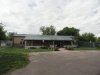
Alas, let's get to actually entering the zoo. You begin as you go into the entrance building that serves many purposes: a gift shop, educational displays are all around, small animal exhibits (which seem were put in not all that long ago), and the Raptor Recovery Center.

Got to say, I was impressed by the number of species in this building, many of which aren't noted on the zoo's updated map, nor on the website (which we all know to take what is listed on websites with a grain of salt). The first species surprised me, a small tank with a couple of Degu! It seems this is a species that isn't common in many Midwest zoos, if zoos at all in North America. The only time I've come across this species so far in my 50+ zoos is at Cheyenne Mountain Zoo in Colorado Springs but as an ambassador animal in a cage that was not conducive to photography. Had no problems getting great photos of this rodent here as you can see in the gallery!
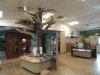
Sure there are some pretty common species in here, ones that are easily obtainable in the pet trade like Ball Python and Bearded Dragon, but there are a couple that I don't come across often. There is a Green Keel Bellied Lizard, Suriname Golden Eyed Toad, and Chacoan Horned Frog just to name a few. A lot of the tanks look similar, I put photos of them in the gallery. Some might be a tad small, but for the most part are decently furnished. In the photo below, you can see the room filled with the walls of tanks near all the educational displays to be found in the main part of the building.

As you leave the entrance building, there essentially are two parts to this zoo. To your left is what I would consider the older part of the zoo with many wire "box" enclosures and species from all over the world, and to your right is a lot of renovated exhibits featuring North American animals in what I will refer to as the North American loop later on.
Despite the two directions you can go, directly in front of you is a large pond that houses a pair of American Alligators. This may not seem like an exhibit, my wife and I missed it until we came back to this spot at the end and saw the gators getting some sun. There is a small building off to the side of this pond that features indoor viewing of the alligators during the chillier months of the year.
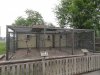
We will start by going left to the older style exhibits. The first thing you will come to is a small row of three exhibits each that have Orange Winged and Red Crowned Amazon, Blue & Yellow Macaw, and Sulphur Crested Cockatoo. While there isn't a ton of branches in each, I guess you could say that despite the couple of sticks in each of these, they are not open topped so they technically aren't parrot-on-a-stick exhibits! Seemingly a plus for this small zoo to at least allow its winged friends in here to fly around as they want.

Further down this line you will come to an exhibit for Capybara that appears to have been the former tiger exhibit. The exhibit itself is probably a better fit for the large rodents but looks a little funny with the tall chain link fence easily 15-20 feet high to house a big cat.
Next to the capybara exhibit is the "Ed Shed" and educational building it seems and former aquarium. It was closed on our visit and some of the eaves on the roof seemed a little damaged. We couldn't go any further past the Ed Shed toward the clouded leopard exhibit as the zoo is still trying to get their pair acclimated to each other. There is a small Sacred Ibis exhibit located on the back of the clouded leopard habitat, but the ibis itself was located in a back of house pen for an empty enclosure in the North American loop.
Heading back towards the rest of this half of the zoo, there is a small cage like structure for Mississippi Kite that was not on exhibit this day, definitely something to be found at zoos of similar size around the country. Then there are a couple of good sized wire box exhibits featuring Ring Tail Lemur and Red Legged Seriema.
Across the way from the lemur and seriema exhibits is what the zoo labels their "Reptile" Building. Outside features some signage discussing the fear of snakes.

What I find incredibly funny about this is, is that of the 2 exhibits on the other side of this wall, neither of them hold snakes! One is the indoor housing for the African Spurred Tortoises and the other is for the well-known reptile... the Three Banded Armadillo. There is an exhibit on the south side of this building, around the corner of the building in the photo above, that does hold Jamaican Boa, so 1 out of 3 isn't bad (could be a professional baseball player with that average).
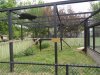
Continuing on, you will find a nice looking exhibit for African Crested Porcupine and then a newer seeming Serval exhibit. This exhibit features varied terrain, multiple climbing opportunities, and some tall grass, of which it seems the zoo's serval loves to hide out in. We were looking trying to find it for quite awhile before I was able to pick it out of the tall grass. See if you can find it in the photo below (hint: its in the farther back clump of grass). You would think a yellow cat would stand out in the lush green, but you'd be surprised!

Just next to here is the lion night quarters building with a Lar Gibbon exhibit on the backside of it. The gibbon enclosure has some verticality to it, but not as much internal climbing branches or ropes as one would like. It actually looks like it has more rocks on the ground than branches, making me think this was an exhibit intended for something else back in the day.
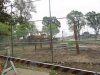
That brings us to the African Lion exhibits. The original yard has a small hill in the middle with plenty of shade and some actual live trees in it and is fine. While talking to the keeper here for a bit, he mentioned they desperately wanted a second yard so they could have all three lions outside at the same time. They were previously rotating their two females and one male out in the yard. So the zoo recently built and opened a second yard that is adjacent to the main yard. This new yard, obviously new, needs a little time for some vegetation to grow, but has a climbing structure and a scratching pole in it. With the two yards next to each other, it made for active male and females to which we got some great shots of the big cats. As noted before, you can see the lions from the outside world, so in the photo below, notice how you have an unobstructed view to the street behind this new second yard.

Next to these lion yards is a small aviary-like structure with a pair of Turkey Vultures in it that looks really nice. In the photo above, notice the barrier at the bottom. This barrier extends far enough that it blocks the path to the Binturong exhibit so the zoo can build a path around this new lion exhibit to connect to the path at the Lar Gibbon exhibit creating a loop around the lion exhibits. The binturong exhibit looked like it was decent size and had a bunch of climbing opportunities in it.
The curious thing that shows on the map is a tamandua exhibit, of which also holds Linne's two-toed sloth (from the temporarily closed Wright Park Zoo in Dodge City) per the zoo's social media, but I don't see any way to access this exhibit. It is currently within a staff only area of the zoo in back of house stuff. It seems that access would come near the binturong exhibit, but there is a fence that runs along side it that wouldn't allow access to the tamandua exhibit. I guess the zoo is trying to figure out a way to get guest access, so we will see what happens in the coming years.
This rounds out this half of the zoo and you then head between two large waterfowl ponds that attract lots of local waterfowl, but also has a Mute Swan and a couple of Muscovy ducks hanging around them.
This leads you to the start of the North American Loop as I would call it. It appears as there has been some investment in this part of the zoo over the last decade, and it shows in some places! It appears the first exhibit on this loop was empty, but was the former Bobcat exhibit which was recently moved to the Bald Eagle exhibit when the eagle recently passed away. It is currently open topped, so I would be curious if it was open topped when the bobcat was in there, or what they plan to bring in this space.
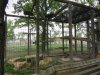
The next exhibit is a small box wire enclosure featuring a very active Arctic Fox, and honestly, I would move the fox into the bigger empty exhibit. After this small fox exhibit is the former Bald Eagle, now Bobcat exhibit. Got to say, seeing a bobcat exhibit with this much verticality and climbing is kind of neat. I know in @snowleopard's Mammal's he's seen thread, he points out how bobcats kind of get the short end in a lot of places, but moving a bobcat into this exhibit seems a welcome departure from the usual in this country. The bobcat in here was VERY active, and not in a stressed way.

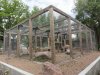
Just across the path from the bobcat enclosure is a renovated Cougar habitat that features a pair of the cats. It appears the zoo more than doubled the size of this exhibit in recent years, and it looks pretty good despite being another wire box.

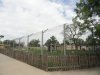
Next we come to best habitat in the zoo, the Grizzly Bear exhibit. Not going to lie, this could easily be found at an AZA zoo, and could be one that could be decently rated amongst the top in the country. It is a huge enclosure with some shaded areas, a small creek that runs down to a pool, and some areas of dirt substrate to encourage digging. The two bears in here were also very active, and sometimes in a very... ahem... intimate way.

This exhibit was renovated in 2018 and is pretty great for a zoo of this size. It is fantastic to see small zoos invest in renovations instead of expanding collections. In this case, it looks like the zoo downsized a little bit of its North American collection, but made a high caliber Grizzly exhibit and made a very good yard for a pair of American Bison they brought to the zoo in 2020 that is next to this Grizzly habitat. It appears the zoo got rid of a Barnyard area, Timberwolf, and Black Bears in this area over the last decade.
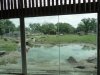
Here is a view of the Grizzly Bear pool with adjacent glass viewing.

The last couple of exhibits in this zoo, the aforementioned Bison yard, another waterfowl pond, this time fenced around and has a signed pair of Trumpeter swan, and a yard that has domestic pig and chickens. One note about the Bison yard, just outside of the zoo outer fence is a little league baseball diamond. Just looking from the sidewalk between the bison yard and outer fence and looking back to home plate, it appears that if a kid got a hold of a pitch and hit it down the right field line, the ball could be in danger of landing IN the bison yard! It isn't that far away by the looks of it, I will have to measure it in Google Earth or something to see how far it is.
All in all, this is a fairly pleasant little zoo that seems to be investing in its future, and it definitely shows in some areas. Yes, there are some warts, but that is expected at a small zoo in a town of almost 15,000 people. But with some of the improvements highlighted in here, I don't think accreditation is something that isn't out of the realm of possibility in time, or even the near future. It appears the zoo is at least open to it per their website in their History section:
"2008 - With a long deliberation there was a vote to add the name Great Bend to the zoo title. If the zoo was to become accredited in the future, having the city name in the title would place the zoo on the map. People would know where the zoo is located by the title. So the name of the zoo officially changed to Great Bend-Brit Spaugh Zoo."
I uploaded new photos of the zoo in the gallery: Great Bend-Brit Spaugh Zoo Gallery
I also posted a species list here: Great Bend-Brit Spaugh Zoo Species List
I was pleasantly surprised by this zoo, as zoos of this size can be a mixed bag. It seems that there has been some change for the better over the last decade, by getting out of some larger species that the exhibits may not have been right for, but also by expanding some other habitats. As of this time, this zoo is not AZA accredited, but honestly, in my opinion it easily could be comparing it to other zoos of its size.
I would normally start this review by someone entering the building that is the entrance to the zoo, but funnily enough, ones experience with zoo starts well before that. If you are coming from downtown Great Bend just to the south of here, as you approach Brit Spaugh Park, you begin to pass the chain link of the outer zoo fence. If you look over, you actually will see quite a bit of the zoo's inhabitants. The lions were easily visible from the road/sidewalk adjacent to the zoo, as were capybaras and others. There is really no vegetation blocking out sightlines, as you will see later on from one of my photos of the new lion exhibit expansion. In fact, at this time with the path blocked to the clouded leopard exhibit, the best place to get close to this exhibit (and the empty Sacred Ibis exhibit behind it) is to view it from outside the zoo.
Alas, let's get to actually entering the zoo. You begin as you go into the entrance building that serves many purposes: a gift shop, educational displays are all around, small animal exhibits (which seem were put in not all that long ago), and the Raptor Recovery Center.
Got to say, I was impressed by the number of species in this building, many of which aren't noted on the zoo's updated map, nor on the website (which we all know to take what is listed on websites with a grain of salt). The first species surprised me, a small tank with a couple of Degu! It seems this is a species that isn't common in many Midwest zoos, if zoos at all in North America. The only time I've come across this species so far in my 50+ zoos is at Cheyenne Mountain Zoo in Colorado Springs but as an ambassador animal in a cage that was not conducive to photography. Had no problems getting great photos of this rodent here as you can see in the gallery!
Sure there are some pretty common species in here, ones that are easily obtainable in the pet trade like Ball Python and Bearded Dragon, but there are a couple that I don't come across often. There is a Green Keel Bellied Lizard, Suriname Golden Eyed Toad, and Chacoan Horned Frog just to name a few. A lot of the tanks look similar, I put photos of them in the gallery. Some might be a tad small, but for the most part are decently furnished. In the photo below, you can see the room filled with the walls of tanks near all the educational displays to be found in the main part of the building.
As you leave the entrance building, there essentially are two parts to this zoo. To your left is what I would consider the older part of the zoo with many wire "box" enclosures and species from all over the world, and to your right is a lot of renovated exhibits featuring North American animals in what I will refer to as the North American loop later on.
Despite the two directions you can go, directly in front of you is a large pond that houses a pair of American Alligators. This may not seem like an exhibit, my wife and I missed it until we came back to this spot at the end and saw the gators getting some sun. There is a small building off to the side of this pond that features indoor viewing of the alligators during the chillier months of the year.
We will start by going left to the older style exhibits. The first thing you will come to is a small row of three exhibits each that have Orange Winged and Red Crowned Amazon, Blue & Yellow Macaw, and Sulphur Crested Cockatoo. While there isn't a ton of branches in each, I guess you could say that despite the couple of sticks in each of these, they are not open topped so they technically aren't parrot-on-a-stick exhibits! Seemingly a plus for this small zoo to at least allow its winged friends in here to fly around as they want.
Further down this line you will come to an exhibit for Capybara that appears to have been the former tiger exhibit. The exhibit itself is probably a better fit for the large rodents but looks a little funny with the tall chain link fence easily 15-20 feet high to house a big cat.
Next to the capybara exhibit is the "Ed Shed" and educational building it seems and former aquarium. It was closed on our visit and some of the eaves on the roof seemed a little damaged. We couldn't go any further past the Ed Shed toward the clouded leopard exhibit as the zoo is still trying to get their pair acclimated to each other. There is a small Sacred Ibis exhibit located on the back of the clouded leopard habitat, but the ibis itself was located in a back of house pen for an empty enclosure in the North American loop.
Heading back towards the rest of this half of the zoo, there is a small cage like structure for Mississippi Kite that was not on exhibit this day, definitely something to be found at zoos of similar size around the country. Then there are a couple of good sized wire box exhibits featuring Ring Tail Lemur and Red Legged Seriema.
Across the way from the lemur and seriema exhibits is what the zoo labels their "Reptile" Building. Outside features some signage discussing the fear of snakes.
What I find incredibly funny about this is, is that of the 2 exhibits on the other side of this wall, neither of them hold snakes! One is the indoor housing for the African Spurred Tortoises and the other is for the well-known reptile... the Three Banded Armadillo. There is an exhibit on the south side of this building, around the corner of the building in the photo above, that does hold Jamaican Boa, so 1 out of 3 isn't bad (could be a professional baseball player with that average).
Continuing on, you will find a nice looking exhibit for African Crested Porcupine and then a newer seeming Serval exhibit. This exhibit features varied terrain, multiple climbing opportunities, and some tall grass, of which it seems the zoo's serval loves to hide out in. We were looking trying to find it for quite awhile before I was able to pick it out of the tall grass. See if you can find it in the photo below (hint: its in the farther back clump of grass). You would think a yellow cat would stand out in the lush green, but you'd be surprised!
Just next to here is the lion night quarters building with a Lar Gibbon exhibit on the backside of it. The gibbon enclosure has some verticality to it, but not as much internal climbing branches or ropes as one would like. It actually looks like it has more rocks on the ground than branches, making me think this was an exhibit intended for something else back in the day.
That brings us to the African Lion exhibits. The original yard has a small hill in the middle with plenty of shade and some actual live trees in it and is fine. While talking to the keeper here for a bit, he mentioned they desperately wanted a second yard so they could have all three lions outside at the same time. They were previously rotating their two females and one male out in the yard. So the zoo recently built and opened a second yard that is adjacent to the main yard. This new yard, obviously new, needs a little time for some vegetation to grow, but has a climbing structure and a scratching pole in it. With the two yards next to each other, it made for active male and females to which we got some great shots of the big cats. As noted before, you can see the lions from the outside world, so in the photo below, notice how you have an unobstructed view to the street behind this new second yard.
Next to these lion yards is a small aviary-like structure with a pair of Turkey Vultures in it that looks really nice. In the photo above, notice the barrier at the bottom. This barrier extends far enough that it blocks the path to the Binturong exhibit so the zoo can build a path around this new lion exhibit to connect to the path at the Lar Gibbon exhibit creating a loop around the lion exhibits. The binturong exhibit looked like it was decent size and had a bunch of climbing opportunities in it.
The curious thing that shows on the map is a tamandua exhibit, of which also holds Linne's two-toed sloth (from the temporarily closed Wright Park Zoo in Dodge City) per the zoo's social media, but I don't see any way to access this exhibit. It is currently within a staff only area of the zoo in back of house stuff. It seems that access would come near the binturong exhibit, but there is a fence that runs along side it that wouldn't allow access to the tamandua exhibit. I guess the zoo is trying to figure out a way to get guest access, so we will see what happens in the coming years.
This rounds out this half of the zoo and you then head between two large waterfowl ponds that attract lots of local waterfowl, but also has a Mute Swan and a couple of Muscovy ducks hanging around them.
This leads you to the start of the North American Loop as I would call it. It appears as there has been some investment in this part of the zoo over the last decade, and it shows in some places! It appears the first exhibit on this loop was empty, but was the former Bobcat exhibit which was recently moved to the Bald Eagle exhibit when the eagle recently passed away. It is currently open topped, so I would be curious if it was open topped when the bobcat was in there, or what they plan to bring in this space.
The next exhibit is a small box wire enclosure featuring a very active Arctic Fox, and honestly, I would move the fox into the bigger empty exhibit. After this small fox exhibit is the former Bald Eagle, now Bobcat exhibit. Got to say, seeing a bobcat exhibit with this much verticality and climbing is kind of neat. I know in @snowleopard's Mammal's he's seen thread, he points out how bobcats kind of get the short end in a lot of places, but moving a bobcat into this exhibit seems a welcome departure from the usual in this country. The bobcat in here was VERY active, and not in a stressed way.
Just across the path from the bobcat enclosure is a renovated Cougar habitat that features a pair of the cats. It appears the zoo more than doubled the size of this exhibit in recent years, and it looks pretty good despite being another wire box.
Next we come to best habitat in the zoo, the Grizzly Bear exhibit. Not going to lie, this could easily be found at an AZA zoo, and could be one that could be decently rated amongst the top in the country. It is a huge enclosure with some shaded areas, a small creek that runs down to a pool, and some areas of dirt substrate to encourage digging. The two bears in here were also very active, and sometimes in a very... ahem... intimate way.
This exhibit was renovated in 2018 and is pretty great for a zoo of this size. It is fantastic to see small zoos invest in renovations instead of expanding collections. In this case, it looks like the zoo downsized a little bit of its North American collection, but made a high caliber Grizzly exhibit and made a very good yard for a pair of American Bison they brought to the zoo in 2020 that is next to this Grizzly habitat. It appears the zoo got rid of a Barnyard area, Timberwolf, and Black Bears in this area over the last decade.
Here is a view of the Grizzly Bear pool with adjacent glass viewing.
The last couple of exhibits in this zoo, the aforementioned Bison yard, another waterfowl pond, this time fenced around and has a signed pair of Trumpeter swan, and a yard that has domestic pig and chickens. One note about the Bison yard, just outside of the zoo outer fence is a little league baseball diamond. Just looking from the sidewalk between the bison yard and outer fence and looking back to home plate, it appears that if a kid got a hold of a pitch and hit it down the right field line, the ball could be in danger of landing IN the bison yard! It isn't that far away by the looks of it, I will have to measure it in Google Earth or something to see how far it is.
All in all, this is a fairly pleasant little zoo that seems to be investing in its future, and it definitely shows in some areas. Yes, there are some warts, but that is expected at a small zoo in a town of almost 15,000 people. But with some of the improvements highlighted in here, I don't think accreditation is something that isn't out of the realm of possibility in time, or even the near future. It appears the zoo is at least open to it per their website in their History section:
"2008 - With a long deliberation there was a vote to add the name Great Bend to the zoo title. If the zoo was to become accredited in the future, having the city name in the title would place the zoo on the map. People would know where the zoo is located by the title. So the name of the zoo officially changed to Great Bend-Brit Spaugh Zoo."
Attachments
-
 02 Zoo Entrance.JPG119.7 KB · Views: 25
 -
 03 Inside Entrance Building.JPG107.4 KB · Views: 24
 -
 77 Bird Rookery.JPG204.2 KB · Views: 25
 -
 113 Fear of Snakes Sign.JPG172.2 KB · Views: 25
 -
 126 Serval Exhibit.JPG277.1 KB · Views: 28
 -
 138 African Lion Exhibit 2.JPG280.4 KB · Views: 27
 -
 174 Bobcat Exhibit.JPG268.1 KB · Views: 29
 -
 164 Cougar Exhibit.JPG265.9 KB · Views: 27
 -
 189 Grizzly Bear Exhibit.JPG170.3 KB · Views: 26
 -
 190 Grizzly Bear Exhibit.JPG161.7 KB · Views: 25
