
Explains the title of the news “Long Distance Travelers…”Sorry to disappoint, but...
Those expecting Sphenodon should check the logo used in Hamerton's piece on their website
https://tuataraatv.com
Explains the title of the news “Long Distance Travelers…”Sorry to disappoint, but...
Those expecting Sphenodon should check the logo used in Hamerton's piece on their website
https://tuataraatv.com

Weird behaviour from the zoo. It's not April Fools!Sorry to disappoint, but...
Those expecting Sphenodon should check the logo used in Hamerton's piece on their website
https://tuataraatv.com

I mean, it was the zoo itself that was the cause of the misinformation.Which further reinforces the point I made previously about the reliability of ZTL...
...given the fact that this has all directly resulted in misinformation and assumptions being posted to the site in question
Surely April fools jokes are untrue?Weird behaviour from the zoo. It's not April Fools!

Surely April fools jokes are untrue?
I happened to be there last week and saw one of these being unloaded - it looked very real to me!
Also not sure about 'miss-information' as it looks as though the words were accurate and carefully chosen.
My guess would be from looking at the NZ web-site, that these are electric powered and fit very well with Hamerton's power generation from their wind-turbines and solar panels?
A coincidence I'm sure...I happened to be there last week and saw one of these being unloaded - it looked very real to me!


Accurate and carefully chosen, but with the aim to mislead... That can't be denied.Also not sure about 'miss-information' as it looks as though the words were accurate and carefully chosen.
What is 'that interesting' would probably vary depending on who is reading it, and zoos often put non-animal stories on their news pages.It’s one way to get your (not that interesting in terms of non-animal) news spoken about…

When going through old Chester annual reports and newsletters recently - as part of my task cataloguing the Bartlett Society archive - I seem to recall reading an item relating to the importation of the first individual in *1963* as an official gift from the New Zealand government marking the 10th anniversary of the coronation of Elizabeth II. A pair was also sent to Jersey Zoo by New Zealand at the same time, and for the same reason.

It’s one way to get your (not that interesting in terms of non-animal) news spoken about…

I think you mean the little brick box beside the loop at the end of the canal, where the waterbus turned round. That eventually held a pair and a lot of ivy. The house is still there.I remember the Tuatara at Chester in the 1960's. A single individual, it was held in its own little display 'case' somewhere out in the main zoo i.e. not displayed with other reptiles.
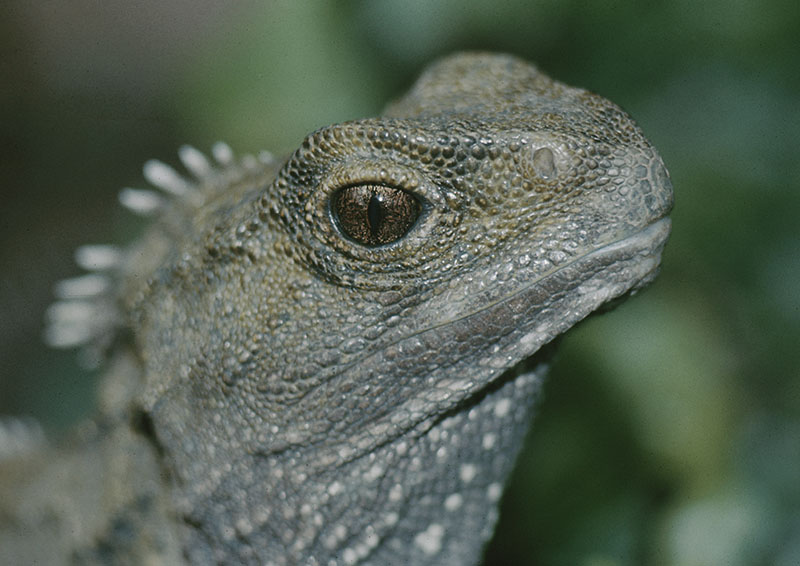
I remember seeing a tuatara in the old Reptile House when I was a boy, probably around 1964. It was in a vivarium near the middle of the left hand row, which had a fan installed above the window to keep it cooler than the others. The entrance to that house was situated where the kiosk between the penguins and the giant otters is now. It was demolished after the reptiles were moved when the Tropical House was completed.According to an article on the zoo’s website from July 2024, the zoo first held tuatara in 1962.
The thing is, taken in isolation without the added context/connotations of the word "Tuatara" this is actually pretty positive news and worth highlighting I reckon, given the fact it demonstrates further commitment by Hamerton to the use of green energy as much as possible.


@MikeG, thanks for highlighting and it got a few Zoochat posters flustered and off-road here!Sorry to disappoint, but...
Those expecting Sphenodon should check the logo used in Hamerton's piece on their website
https://tuataraatv.com

It is a female: Log in or sign up to viewAnother wombat has been born at the zoo - the third successful breeding at Hamerton
What are the stats like for the Tassie wombats at Hamerton and where the program is at in Europe now?It is a female: Log in or sign up to view

They've bred three times successfully, the first offspring is now at Zoo Duisburg, the other two are still at Hamerton.What are the stats like for the Tassie wombats at Hamerton and where the program is at in Europe now?
(Both their breeding animals as well as their offspring and where these are now.)!

