Hamilton Zoo Hamilton Zoo News 2024

Zoofan15

Well-Known Member
10+ year member
Sumatran Tiger Cubs

What a great start to 2024!

From socials:

Hamilton Zoo is delighted to announce the birth of two Sumatran Tiger cubs. Born to Kirana (mother) and Scout (father) in the early hours of 3 January 2024, the cubs are healthy and strong.

They are the first cubs born at Hamilton Zoo since the birth of Kirana and her brother Kembali in 2008.
 
Sumatran tiger cubs update:

Kirana’s cubs have been sexed as two females:

0.1 Unnamed (03/01/2024) Scout x Kirana

From socials:

Richard Sim, Head Veterinarian, reports that both cubs are healthy and doing well. The larger cub has a feisty personality and likes to vocalize, while the smaller one is quieter and observant.

Kirana and the girls currently have access to both their enclosure and an off-display den. When they are ready, Kirana and the cubs will venture out for people to see.
 
Hamilton Zoo News

Update from my visit (31/12/2024):

A Plains zebra foal was born January 15 to Zalika. The sex is unknown.

The Southern white rhinoceros were housed in the following paddocks: upper paddock (Samburu), lower paddock (Moesha, Kito, Imani and Zahra). Kruger was off-exhibit.

Three tanks have been installed next to ferret exhibit (no occupants as of yet).
 
Sad news from Hamilton Zoo that elderly and much beloved male giraffe Ndale has passed away.

(13) Hamilton Zoo - We are heartbroken to share that today we said... | Facebook

That’s very sad news. I first visited him as a calf at Auckland Zoo and have enjoyed visiting him and his brothers at Hamilton Zoo over the years. Viewing of the giraffe yard was closed yesterday to undertake the procedure referenced in the announcement of his death.

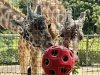
I took this photo of him and his brother, Dume, in November last year:

upload_2024-2-1_15-43-22.jpeg

Hamilton Zoo now holds two elderly bull giraffes:

1.0 Masamba (2002) Zabulu x Kiri
1.0 Dume (2006) Zabulu x Kay
 

Attachments

  • upload_2024-2-1_15-43-22.jpeg
    upload_2024-2-1_15-43-22.jpeg
    264.4 KB · Views: 135
That’s very sad news. I first visited him as a calf at Auckland Zoo and have enjoyed visiting him and his brothers at Hamilton Zoo over the years. Viewing of the giraffe yard was closed yesterday to undertake the procedure referenced in the announcement of his death.

I took this photo of him and his brother, Dume, in November last year:

View attachment 682995

Hamilton Zoo now holds two elderly bull giraffes:

1.0 Masamba (2002) Zabulu x Kiri
1.0 Dume (2006) Zabulu x Kay

It is indeed very sad news, and that is an amazing photo! So this would mean all three bulls were born at Auckland Zoo? I remember you mentioning Masamba in the recent Auckland giraffe thread.
 
It is indeed very sad news, and that is an amazing photo! So this would mean all three bulls were born at Auckland Zoo? I remember you mentioning Masamba in the recent Auckland giraffe thread.

Thank you.

Yes they were. Auckland Zoo sourced a young bull named Zabulu (1998) from Orana Wildlife Park in 1998, who became their new breeding bull. With Kiri (1984), he sired Masamba (2002); and with Kay (1986), he sired Jabari (2002), Ndale (2004), Dume (2006) and Ntombi (2007).

Masamba, Jabari, Ndale and Dume (all males) were transferred to Hamilton Zoo to join their bachelor herd (Jabari died 2020); while the female calf (Ntombi) was sent to Dubbo, where she’s one of their breeding cows. They all descend from John, a regional founder imported by Auckland Zoo in 1960 from London Zoo. His son Kahiroa was the sire of Kiri and Kay.
 
Thank you.

Yes they were. Auckland Zoo sourced a young bull named Zabulu (1998) from Orana Wildlife Park in 1998, who became their new breeding bull. With Kiri (1984), he sired Masamba (2002); and with Kay (1986), he sired Jabari (2002), Ndale (2004), Dume (2006) and Ntombi (2007).

Masamba, Jabari, Ndale and Dume (all males) were transferred to Hamilton Zoo to join their bachelor herd (Jabari died 2020); while the female calf (Ntombi) was sent to Dubbo, where she’s one of their breeding cows. They all descend from John, a regional founder imported by Auckland Zoo in 1960 from London Zoo. His son Kahiroa was the sire of Kiri and Kay.

Thanks for this! I remember reading about John and his journey to New Zealand in A Tiger by the Tail. It's encouraging to see that his line was successfully established. Did Kiri have any other offspring besides Masamba?
 
Thanks for this! I remember reading about John and his journey to New Zealand in A Tiger by the Tail. It's encouraging to see that his line was successfully established. Did Kiri have any other offspring besides Masamba?

Kiri and Kay had a combined total of five offspring prior to Zabulu arriving, all sired by Tsavo (imported from Honolulu Zoo in 1981):

Kiri gave birth to:

1.0 Kenjo (06/05/1989) - died at Auckland Zoo 29/09/1989
1.0 Kahn (22/12/1990) - sent to Hamilton Zoo 02/10/1991
0.1 Kendall (26/11/1992) - died at Auckland Zoo 23/07/1994

Kay gave birth to:

1.0 Kampala (26/04/1991) - sent to Hamilton Zoo 02/10/1991
1.0 Oskar (23/03/1994) - sent to Werribee Zoo 06/12/1994

I believe had Kendall survived, they would have kept her as their fifth female. The eldest two females in Auckland’s herd were Kinshasa and Manyara, who both died soon after Zabulu arrived; but Kendall could have potentially lived until the early 2010’s.
 
Kiri and Kay had a combined total of five offspring prior to Zabulu arriving, all sired by Tsavo (imported from Honolulu Zoo in 1981):

Kiri gave birth to:

1.0 Kenjo (06/05/1989) - died at Auckland Zoo 29/09/1989
1.0 Kahn (22/12/1990) - sent to Hamilton Zoo 02/10/1991
0.1 Kendall (26/11/1992) - died at Auckland Zoo 23/07/1994

Kay gave birth to:

1.0 Kampala (26/04/1991) - sent to Hamilton Zoo 02/10/1991
1.0 Oskar (23/03/1994) - sent to Werribee Zoo 06/12/1994

I believe had Kendall survived, they would have kept her as their fifth female. The eldest two females in Auckland’s herd were Kinshasa and Manyara, who both died soon after Zabulu arrived; but Kendall could have potentially lived until the early 2010’s.

Thanks for this - fascinating information. The history of giraffes in NZ is very interesting! I remember when I was a child there was one female called Willoughby at Auckland Zoo, and the sad story of what happened to young male Lo Cecil some years later.
 
Thanks for this - fascinating information. The history of giraffes in NZ is very interesting! I remember when I was a child there was one female called Willoughby at Auckland Zoo, and the sad story of what happened to young male Lo Cecil some years later.

Willoughby was imported November 19, 1973 from Taronga Zoo. She was 13 years old at the time, so getting on in years.

Willoughby produced four calves at Auckland Zoo:

1.0 Unnamed (14/06/1974) - stillborn
1.0 Kahiroa (12/12/1975) - died 22/06/1986
1.0 Kris (30/07/1977) - died 03/02/1978

The fourth calf was an unborn calf noted to be near full term when Willoughby died on 05/05/1980.

Willoughby was notable for producing the first giraffe calf in New Zealand to survive to adulthood (Kahiroa). Kahiroa sired the calf she was pregnant with upon her death. With the zoo’s herd reduced to just Kahiroa, they undertook the imports from Honolulu Zoo.
 
New breeding male lemur:

After siring 14 offspring at Wellington Zoo, Zeus the Ring-tailed lemur is returning to Hamilton Zoo. He’s currently on a contraceptive implant, which will be removed once he transfers to Hamilton Zoo.

Wellington lemur Zeus moving to Hamilton Zoo after fathering 14

Hamilton Zoo’s lemurs:

Females:

Amara - 7/11/15
Maizina - 7/11/15
Harena - 10/10/15
Noelle - 25/12/11
Kintana - 17/10/12
Tiana - 10/9/17
Masika - 13/11/19
Peverell - 10/9/20
Nagini - 26/09/20
Anita - 12/9/21
Willow - 20/9/21
Charmaine - 18/9/21
Damayanthi - 11/11/21
Ronell - 11/12/21

Male:

Mahaleo - 21/11/19
 
Wow, that is certainly an impressive amount of offspring!

Yes, Zeus had four females who produced eight infants between them (four sets of twins) in 2022; followed by a further six infants in 2023.

Hamilton Zoo clearly had at least four females breed in 2021 (as evidenced by the four different dates of birth in the offspring born that year); but most of these were single offspring.

Auckland Zoo founded their troop with a male named Don (1983) and a mother and daughter named Shona (1992) and Sheba (1994). They produced many infants (including several sets of twins) between 1997 and 2001. A new male named Maarten (1991) arrived from Hamilton Zoo in 1983, replacing Don. I don’t know if the offspring born 2004 was as a result of vasectomy failure of Maarten; or if one of Don’s sons remained in the troop and sired offspring to one of his female relatives.
 
Yes, Zeus had four females who produced eight infants between them (four sets of twins) in 2022; followed by a further six infants in 2023.

Hamilton Zoo clearly had at least four females breed in 2021 (as evidenced by the four different dates of birth in the offspring born that year); but most of these were single offspring.

Auckland Zoo founded their troop with a male named Don (1983) and a mother and daughter named Shona (1992) and Sheba (1994). They produced many infants (including several sets of twins) between 1997 and 2001. A new male named Maarten (1991) arrived from Hamilton Zoo in 1983, replacing Don. I don’t know if the offspring born 2004 was as a result of vasectomy failure of Maarten; or if one of Don’s sons remained in the troop and sired offspring to one of his female relatives.

It looks like NZ has done well with lemur breeding, at least with ring-tailed lemurs. Auckland's current troop, as far as I know, are an all-female non-breeding group, and I'm not sure what Auckland intends to do with lemurs going forward. Since Zeus will have his implant removed at Hamilton, is he likely to be a breeding male going forward? On my last visit to Hamilton, I'm pretty sure there were juveniles in the group, but I know very little about Hamilton's lemurs.
 
It looks like NZ has done well with lemur breeding, at least with ring-tailed lemurs.

Since Zeus will have his implant removed at Hamilton, is he likely to be a breeding male going forward? On my last visit to Hamilton, I'm pretty sure there were juveniles in the group, but I know very little about Hamilton's lemurs.

Hamilton Zoo has also been one of the region’s most successful breeders of Black and white ruffed lemur. A plaque in the rainforest commentates the arrival of a male ruffed lemur in 1994, which appears to have been one of the founders of their breeding programme. They haven’t bred in seven years and I’m hopeful this indicates an intention to import Red ruffed lemur.

Yes, it appears Zeus will now sire offspring within Hamilton’s troop. He was born in the US and is a genetically valuable male.
 
Hamilton Zoo has also been one of the region’s most successful breeders of Black and white ruffed lemur. A plaque in the rainforest commentates the arrival of a male ruffed lemur in 1994, which appears to have been one of the founders of their breeding programme. They haven’t bred in seven years and I’m hopeful this indicates an intention to import Red ruffed lemur.

Yes, it appears Zeus will now sire offspring within Hamilton’s troop. He was born in the US and is a genetically valuable male.

When I talked to a keeper last year about the lemurs they had no plans for Red ruffed lemur and I think they were holding only males black and whites, with the females transferred to one of the New Plymouth facilities. Apparently the rainforest walk is high on the priority list for redevelopment so perhaps we will see refreshed species if that work occurs.
 
I’m not sure what timeframe Hamilton have in mind, but they haven’t started building an exhibit yet versus Caracal, which have an exhibit nearing completion and a male on the way soon.

Where is the caracal exhibit going to be located at Hamilton Zoo? Is it around where the golden cats used to be held, in the rainforest area? I'm never been to the zoo myself, but I have been looking at maps recently trying to work out where it's supposed to be. Also, is it completely a new build?
 
Back
Top