Hamilton Zoo Hamilton Zoo News 2025

Zoofan15

Well-Known Member
10+ year member
New female Slender-tailed meerkat arrives:

From Butterfly Creek’s socials:

A female meerkat named Suki has been transferred in from Butterfly Creek.

Suki is a long-awaited companion for Hamilton Zoo’s elderly male meerka, Pemba; following the death of his male companion, Faiion, in March 2024.
 
Dume the giraffe has died:

Dume’s death leaves the zoo with two bull giraffes - Masamba (2002) and Jabali (2022).

From socials:

Today is a sad day. With deep sadness, we share the news that our beloved giraffe, Dume, has passed away during a routine health check. He captured the hearts of everyone with his gentle and majestic presence.

Our team is heartbroken by this loss. We are committed to providing the highest standard of care for all our animals, and this incident is a profound reminder of the delicate nature of wildlife care.

Our head veterinarian, Richard Sim, said: “At 19 years old, Dume was one of our oldest giraffes. We’ve loved him at Hamilton Zoo for many years and are gutted by his passing. We did the exam because we needed to correct some hoof disease, and we suspected his teeth were bad too. Getting them corrected was important to set him up for great health in his twenties. With huge, tall animals, there is always a risk with anesthesia. We did everything we could to prepare and be ready to deal with any eventuality, but his complications during the anesthetic were too severe, and we lost him while we were treating his problems. We will miss him greatly.”

We extend our heartfelt condolences to our staff, volunteers, and the community who shared a special bond with Dume. We are conducting a thorough review to understand the circumstances and ensure the continued well-being of all our animals.

Hamilton Zoo remains dedicated to our mission of conservation, education, and animal welfare. We deeply value the empathy and support from our community as we mourn this loss.
 
Hamilton Zoo News

Update from my visit (02/05/2025):

Hamilton Zoo plan to continue as bachelor facility for giraffe long term and have signed up to receive any available young bulls from within the region. They currently have one elderly bull (Masamba, born 2002) and one young bull (Jabali, born 2022), who the keeper referred to as ‘the first of the next bachelor herd’. Looking at the regional population, I’d assess Dubbo as a likely source. They welcomed four male calves last year (Miguu, Asani, Chacha and Msumeno).

Hamilton Zoo’s new female meerkat is not expected to breed. She’s nine years old (considered elderly) and has previously been on contraception for many years, which is known to decrease the chances of future breeding. Instead, she’s intended as a companion to Hamilton Zoo’s elderly male.

All seven Cape porcupine are still on site (parents plus 2.3 offspring). The two male offspring are going to be relocated to a different area within the zoo in the near future.

The African wild dog exhibit near the tigers which has housed Fallow deer since last year has now been signed for this species. It appears this species will inhabit this exhibit long term as building new rhino and giraffe facilities are the zoo’s priority.

The Caracal appears to have settled in well and was exploring the whole exhibit. On my visits following his arrival last year, he usually remained at the far end of the exhibit - either resting or pacing.

The Black-handed spider monkeys have new climbing ropes in their exhibit and were making good use of them.

The visitor fence/barrier outside the lower rhino paddock was being replaced.

New species ID signage has been attached to every exhibit.

All eight Plains zebra (non-breeding herd) are still on site. I also counted four Ostrich and five Indian antelope in the Savannah exhibit.

Photos from my visit:

Hamilton Zoo - ZooChat
 
Last edited:
Hamilton Zoo News

Update from my visit (02/05/2025):

Hamilton Zoo plan to continue as bachelor facility for giraffe long term and have signed up to receive any available young bulls from within the region. They currently have one elderly bull (Masamba, born 2002) and one young bull (Jabali, born 2022), who the keeper referred to as ‘the first of the next bachelor herd’. Looking at the regional population, I’d assess Dubbo as a likely source. They welcomed four male calves last year (Miguu, Asani, Chacha and Msumeno).

Hamilton Zoo’s new female meerkat is not expected to breed. She’s nine years old (considered elderly) and has previously been on contraception for many years, which is known to decrease the chances of future breeding. Instead, she’s intended as a companion to Hamilton Zoo’s elderly male.

All seven Cape porcupine are still on site (parents plus 2.3 offspring). The two male offspring are going to be relocated to a different area within the zoo in the near future.

The African wild dog exhibit near the tigers which has housed Fallow deer since last year has now been signed for this species. It appears this species will inhabit this exhibit long term as building new rhino and giraffe facilities are the zoo’s priority.

The Caracal appears to have settled in well and was exploring the whole exhibit. On my visits following his arrival last year, he usually remained at the far end of the exhibit - either resting or pacing.

The Black-handed spider monkeys have new climbing ropes in their exhibit and were making good use of them.

The visitor fence/barrier outside the lower rhino paddock was being replaced.

New species ID signage has been attached to every exhibit.

All eight Plains zebra (non-breeding herd) are still on site. I also counted four Ostrich and five Indian antelope in the Savannah exhibit.

Photos from my visit:

Hamilton Zoo - ZooChat
Another African savannah with Indian Blackbuck running around but hey who's going to know! ;) (even tough they could import African antelope)
 
Another African savannah with Indian Blackbuck running around but hey who's going to know! ;) (even tough they could import African antelope)

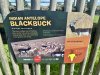
It always annoyed me how Hamilton Zoo used to sign them as ‘Blackbuck’, leading to the public assuming they were an African species. Credit to Hamilton Zoo, the new signage they’ve recently put up now signs them as ‘Indian antelope/Blackbuck’ which is good to see:

upload_2025-5-6_11-11-58.jpeg

Considering the entire New Zealand population of Indian antelope is comprised of a handful of elderly males at Hamilton Zoo (I counted five), it wouldn’t surprise me if they were designated as phase out.

I believe the current plan is to landscape the Savannah so the terrain is suitable for giraffes (they’ve been confined to what was once the night yards for several years now); otherwise the Savannah is going to be just one massive zebra (and ostrich) exhibit when the Indian antelope inevitably die.
 

Attachments

  • upload_2025-5-6_11-11-58.jpeg
    upload_2025-5-6_11-11-58.jpeg
    198 KB · Views: 156
Hamilton Zoo News

Update from my visit (31/05/2025):

Sanda the chimpanzee is pregnant! Her infant is due June/July 2025.

African grey parrots are now on exhibit in the Parrot Court, sharing an exhibit with Leopard tortoise.

The old Tuatara exhibit that adjoined the old reptile house is still vacant, but a fake snake has been placed in there.

The zoo had a female Caracal lined up to import from an Australian zoo; but upon investigation, it was deemed she was unsuitable due to her genetics and so the import did not proceed. Hamilton Zoo still plan to import a female long term.

Both male zebra (Pebbles and Nguvu) have now been castrated. The herd numbers eight zebra again after the reintroduction of Zalika and her foal Bem (Bem was previously recovering from a hoof abscess).

Plains zebra herd:

0.1 Marbles (2003) Shane x Maria
0.1 Zalika (2011) Bwana x Marbles
1.0 Pebbles (2021) Malawi x Marbles
0.1 Wednesday (2021) Malawi x Zalika
1.0 Nguvu (2022) Malawi x Marbles
0.1 Nyika (2022) Malawi x Zalika
0.1 Tula (2023) Malawi x Marbles
0.1 Bem (2024) Malawi x Zalika

Photos from my visit:

Hamilton Zoo - ZooChat
Ass
 
Upgrade to spider monkey exhibit:

From socials:

We are thrilled to announce the significant improvements made to the spider monkey habitat at Hamilton Zoo.

This intricate setup required meticulous planning and precision. Creating a dynamic and enriching environment for our spider monkeys. Working around the existing habitat and considering the needs of our animals made this an incredible project – and we’re absolutely stoked with the result.

These enhancements provide our spider monkeys with more opportunities for climbing and exploration, ensuring they have a stimulating and enjoyable home.


Photos from my May visit:

upload_2025-6-3_16-8-13.jpeg

upload_2025-6-3_16-7-55.jpeg
 

Attachments

  • upload_2025-6-3_16-7-55.jpeg
    upload_2025-6-3_16-7-55.jpeg
    324.6 KB · Views: 151
  • upload_2025-6-3_16-8-13.jpeg
    upload_2025-6-3_16-8-13.jpeg
    315.7 KB · Views: 139
Hamilton Zoo have now announced the chimpanzee pregnancy:

From socials:

Big love is on the way! Our zoo family is growing, and here’s the very first glimpse of our baby chimp.

Nurtured with expert care and surrounded by kindness, this little one is due to arrive any day now—and we can’t wait to welcome the newest member of our troop!
 
Chimpanzee birth:

From socials:

Baby chimp is here!!!

We’re thrilled to share that a healthy baby chimpanzee was born to Sanda and Luka —Sanda's third time becoming a mom.

In a tender moment, Sanda holds her newborn close, while big sisters Chiku and Kendi watch with curiosity.
 
Hamilton Zoo News

Update from my visit (27/06/2025):

I had an enjoyable visit to Hamilton Zoo yesterday, despite the rain. My intention was to take advantage of today being the last quiet day before the school holidays; but by a happy coincidence, I arrived just hours after the birth of the new chimpanzee infant. Needless to say, this was the highlight of the visit (I’ve posted a more detailed update in the chimpanzee thread).

Maroon-bellied conure are now in the South American aviary, along with Scarlett macaw, Blue and gold macaw and Salmon-crested cockatoo. Red-rumped agouti have moved out of this aviary and are now housed in the old Indian peafowl exhibit in the Rainforest.

The two young male Cape porcupines have been seperated from their parents and three sisters and now live in an off display exhibit.

A new viewing shelter has been constructed on the boardwalk surrounding the spider monkey exhibit.

There’s a new climbing platform in the red panda exhibit. Not sure if it’s because it’s breeding season, but on both this visit and my previous visit, the red pandas were energetically running laps of the exhibit.

A barrier has been put up in front of the viewing window in the first Brown capuchin exhibit. Signage has been in place for some time asking people not to bang the glass as it incites one of the males to do the same.

An interesting collection of 3-D printed ape skulls (Western lowland gorilla, Bornean orangutan, Common chimpanzee, Bonobo and Siamang) are now on display in the viewing gallery of the chimpanzee’s night house.

Photos from my visit:

Hamilton Zoo - ZooChat

Future developments post to follow….
 
Hamilton Zoo News

Update from my visit (17/07/2025):

I had a very enjoyable visit to Hamilton Zoo yesterday. Every time I visit, there’s been improvements and additions to the exhibits and visitor areas.

The female chimpanzee infant has been named Zuri (as also reported on socials). There’s signage for the birth in the night house, where Sanda has spent most of her time since the birth three weeks ago, irregardless of the weather. See the Australasian Chimpanzee Population thread for a more detailed update.

A large shelter has been built in the African Savannah, suitable in size for zebra or smaller.

The zoo has no plans to breed Siamang at this point in time. As we know, Itam and Peggy are father and daughter (and Peggy has had a tubal ligation). Kasih (paired with Lima) is on a contraceptive implant.

The old oryx exhibit is empty once again. It previously held male Fallow deer, all of which have now graduated to the old African wild dog exhibit (opposite the tigers). Fallow deer are also held in the bison exhibit (breeding herd) and the goat exhibit opposite the Cheetah (a handraised deer).

Future developments:

Spotted hyena:

The zoo is no longer planning to build a third Sumatran tiger exhibit, which was originally planned to be built on the site of the old African wild dog exhibit. Instead, a Spotted hyena exhibit is planned to be built in this location. It was previously planned to house Spotted hyena opposite the African Savannah. Spotted hyena are 5+ years away as the zoo has other priorities at this point in time.

My personal preference would have been to see more African wild dog imported to fill this exhibit (currently inhabited by Fallow deer), though I acknowledge a regional surplus currently isn’t there (with Werribee also now without the species; and the region reduced to one breeding pair).

Savannah expansion:

The zoo has no plans to breed Southern white rhinoceros (or acquire more) until the new facility is built. Utilising the vacant plots of land purchased in recent years, Hamilton Zoo’s main focus is on an extension to the Savannah. The current Savannah exhibit will be the first exhibit, with multiple new exhibits adjoining this exhibit. The species held in this precinct will be Giraffe (bachelor herd), Southern white rhinoceros, Plains zebra, Waterbuck (a returning species), Indian antelope, kangaroo (a new species) and ostrich.

I’m really excited for this expansion and applaud Hamilton Zoo/Hamilton City Council on taking the initiative to purchase land for the expansion of the zoo. The return of Waterbuck would be exciting. Given New Zealand’s dwindling (and ageing) population, I assume these would come from Australia, with calves produced at Altina Wildlife Park and Monarto Safari Park this year. I was also surprised to hear kangaroo are in the plans - presumably these would be derived from Auckland’s recently imported mob of Forester kangaroo.

Photos from my visit:

Hamilton Zoo - ZooChat
A
 
New Giraffe for Hamilton Zoo

Kevin (2022) from Orana Wildlife Park is planned to transfer to Hamilton Zoo in October/November 2025:

The Waikato Times

Kevin will help fill the gap left after the recent deaths of two elderly giraffes. He is currently being trained to enter a trailer, with the journey north expected in October or November this year.

Work is also starting in November on a new giraffe barn, described as “a horse barn on steroids”, which will include expanded pens and paddocks and connect to a larger savannah enclosure.

————————

Kevin’s arrival will take Hamilton’s giraffe population to 3.0:

1.0 Masamba (November 2002)
1.0 Jabali (August 2022)
1.0 Kevin (December 2022)

Considering Hamilton Zoo stated earlier this year that their intention is to remain a bachelor facility and acquire any available bull giraffes within the region, this transfer makes a lot of sense. It’s nonsensical to spend the quoted $50,000/$60,000 importing surplus bulls from Australia when four surviving calves, including two males, have been born across New Zealand zoos in the last three years - with the same two bulls both soon to be held at Hamilton Zoo.

The article refers to two New Zealand zoos being breeding holders (clearly a reference to Auckland and Wellington). I was advised on recent visits to these zoos that their respective breeding cows are on contraception due to being at capacity; but it will be interesting to see with Hamilton Zoo now having concrete plans for a new barn whether they will resume breeding. In the meantime, Kevin’s acquisition will ensure Jabali is not alone following the nearly 23 year old Masamba’s inevitable demise.

It will be equally interesting to see what the future holds for Orana Wildlife Park given this transfer will reduce their herd to four females. Giraffes reach sexual maturity at around three years of age and while Billy at Auckland Zoo sired his first calf at 2 years 10 months (the age Kevin will be when he leaves Orana), that’s clearly not something Orana are relying on/planning on. Kevin was stated to have been a genetic match for two of their females (presumably Shira and Mdomo, though he was related to all four); so whether they plan to acquire a new bull that’s a match for all four females or remain a non-breeding facility remains to be seen. The latter appears more likely due to their financial situation; but could potentially see them acquire more females down the line (as mentioned, Auckland and Wellington are at capacity).
 
Called in to Hamilton zoo today. The zoo is looking good with several gardens being refreshed/built. I managed to see both a Bellbird and saddleback in the large freeflight aviary which was a first for me.

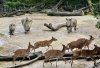
There also appeared to be thirteen female Indian antelope in the savannah area with none of the bucks. They were down the back, hard to view, and I initially mistook them for the fallow deer.
 
Called in to Hamilton zoo today. The zoo is looking good with several gardens being refreshed/built. I managed to see both a Bellbird and saddleback in the large freeflight aviary which was a first for me.

There also appeared to be thirteen female Indian antelope in the savannah area with none of the bucks. They were down the back, hard to view, and I initially mistook them for the fallow deer.

As much as I hate to see Indian antelope on the African Savannah, I’m glad to hear a large number of females are now on site. Hamilton has only had bulls for a while and are the only holder in New Zealand (implying they were imported). I wouldn’t like to lose any antelope species from New Zealand zoos, but clearly Hamilton plan to continue with them.

I was advised by a keeper that they’re one of the species Hamilton plans to include in the expansion and I wondered at the time if this was a throwaway comment. Clearly not!
 
As much as I hate to see Indian antelope on the African Savannah, I’m glad to hear a large number of females are now on site. Hamilton has only had bulls for a while and are the only holder in New Zealand (implying they were imported). I wouldn’t like to lose any antelope species from New Zealand zoos, but clearly Hamilton plan to continue with them.

I was advised by a keeper that they’re one of the species Hamilton plans to include in the expansion and I wondered at the time if this was a throwaway comment. Clearly not!

It was the first time i had ever seen them. I am still not 100% sure and it would be good to have someone with better eyes ID them. They weren't fallow deer, and at a distance they matched a google of female Blackbuck.

A keeper also told me there were no saddlebacks in the aviary about 2min after I had taken photos of one, im wondering if there isnt a huge amount of communication between teams.
 
It was the first time i had ever seen them. I am still not 100% sure and it would be good to have someone with better eyes ID them. They weren't fallow deer, and at a distance they matched a google of female Blackbuck.

I’ll have a look next time I visit the zoo.

Is it possible they were female Lowland nyala? They have stripes, but these would be less visible if you saw them from a distance. Auckland and Wellington have large herds, with the latter breeding a number of calves in recent years. Despite housing three bulls on site, Hamilton has yet to acquire females, which surprises me given their suitability to mixed species African exhibits. Nyala cohabit with giraffe at Wellington; and white rhinoceros at Auckland.

Lowland nyala at Auckland Zoo (photo from my visit):

upload_2025-9-7_20-45-4.jpeg
 

Attachments

  • upload_2025-9-7_20-45-4.jpeg
    upload_2025-9-7_20-45-4.jpeg
    246.2 KB · Views: 38
As much as I hate to see Indian antelope on the African Savannah, I’m glad to hear a large number of females are now on site. Hamilton has only had bulls for a while and are the only holder in New Zealand (implying they were imported). I wouldn’t like to lose any antelope species from New Zealand zoos, but clearly Hamilton plan to continue with them.

I was advised by a keeper that they’re one of the species Hamilton plans to include in the expansion and I wondered at the time if this was a throwaway comment. Clearly not!
Altina Zoo sent several female Blackbuck to NZ only a few years ago, what happened to them? Could they have been housed behind the scenes?
 
Back
Top