Hipporex's Guide to Interesting and Unique Prehistoric Fauna

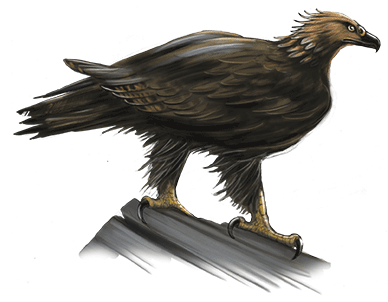
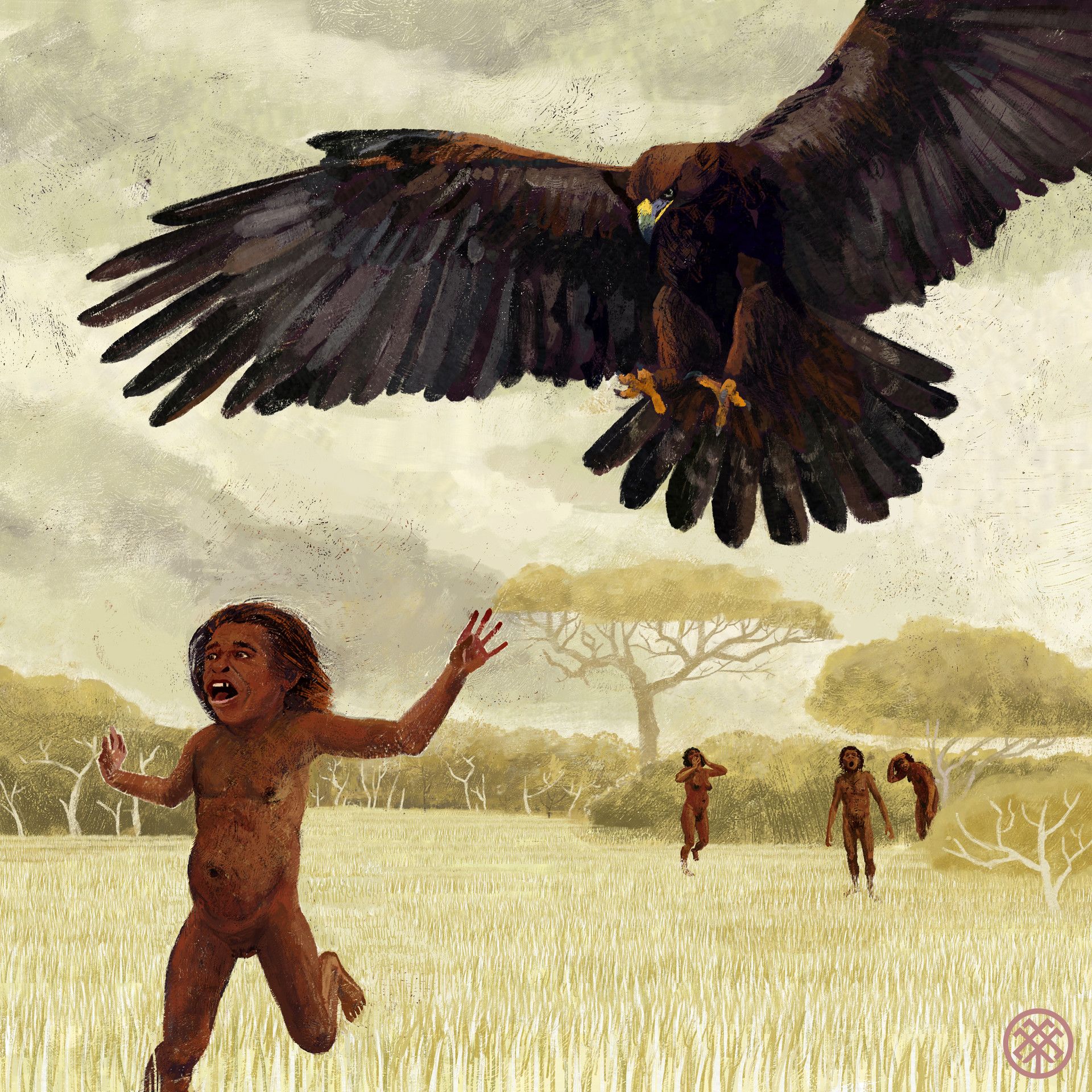
NUMBER FIFTY-SIX: It's a bird, it's a plane, oh wait it is a bird and...it's coming right towards me. Oh crude! Oh crude! Oh crude! Ahhhhhhh! *sound of talons piercing through flesh*
101651f8f8851e96e6b4af6af9abfc5d.jpg

  • Animal: Haast's eagle (Hieraaetus moorei) (formerly Harpagornis moorei)
  • Named By: Julius von Haast - 1872
  • Classification: Life, Eukaryota, Animalia, Chordata, Vertebrata, Gnathostomata, Osteichthyes, Sarcopterygii, Tetrapodomorpha, Tetrapoda, Reptiliomorpha, Amniota, Sauropsida, Eureptilia, Sauria, Archosauromorpha, Archosauriformes, Archosauria, Dinosauria,‭ ‬Saurischia,‭ ‬Theropoda,‭ Paraves, Avialae, Aves, Neognathae, Accipitriformes, Accipitridae
  • When: 1,800,000 B.C.E. to around 1,400 C.E.
  • Where: Oceania (New Zealand (South Island))
  • Size: *See below*
  • Diet: Carnivore
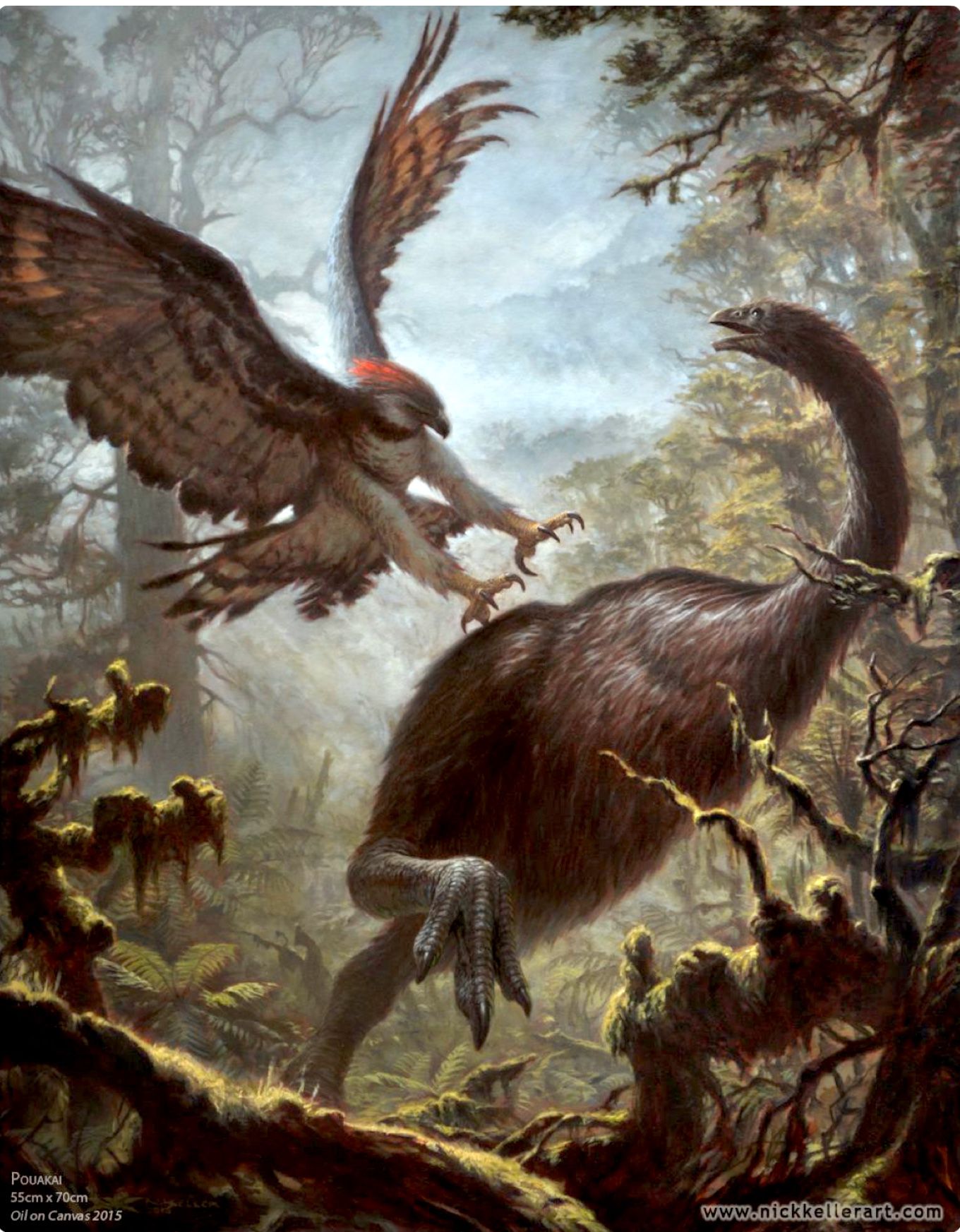
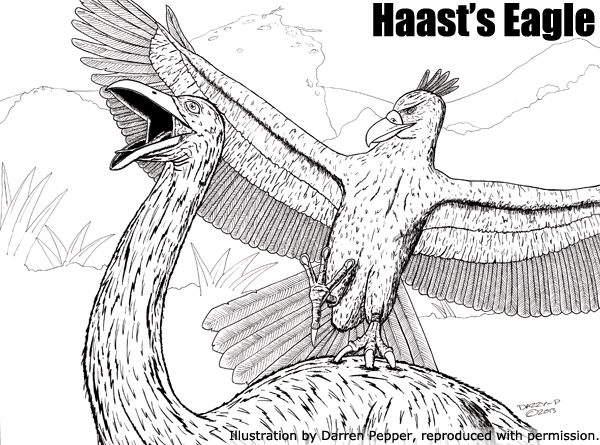
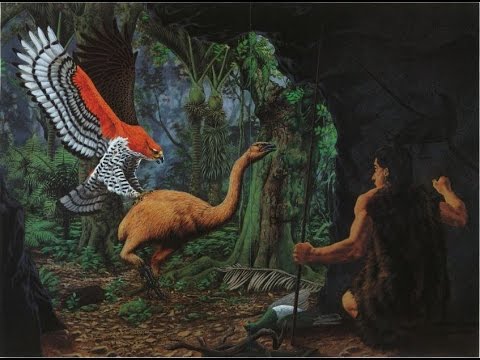
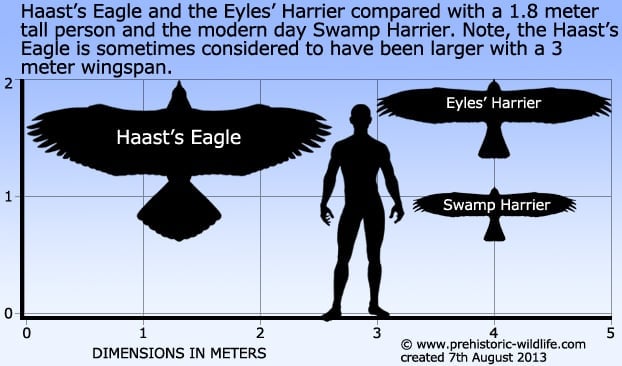
This giant eagle was, as a far as current science is aware, the largest true raptor ever. Female eagles were larger than males. Most estimates place the female Haast's eagles at 22 to 33 pounds (10 to 15 kilograms) and males around 20 to 26 pounds (9 to 12 kilograms). The wingspan was short compared to the size of the body, but was still a respectable 8.5 to 10 feet (2.6 to 3 meters). Although this wingspan is matched or exceeded by several modern birds including several eagles and vultures, it should be noted that their bodies are proportionally much smaller with longer wings, making them much less massive. The Haast’s eagle likely flew in a manner similar to modern large, forest eagles such as the crowned eagle (Stephanoaetus coronatus), the harpy eagle (Harpia harpyja), and the Philippine eagle (Pithecophaga jefferyi): utilizing constant flapping with occasional spurts of gliding. The shortness of its wings made the energy-conserving soaring flight employed by most large birds impossible, but instead enabled greater speed and agility at the cost of higher rates of energy expenditure. Based on its body proportions, the Haast’s eagle has been interpreted as an ambush predator capable of short bursts of very rapid and agile flight, enabling it to maneuver through closed environments and chase terrestrial prey animals which were equally agile. Haast's eagles preyed on large, flightless bird species, including the moas, which was up to fifteen times the weight of the eagle. It is estimated to have attacked at speeds up to 50 mph (80 kph). Its size and weight indicate a bodily striking force equivalent to a concrete block falling from the top of an eight-story building (aka it came down hard). Its large beak also could be used to rip into the internal organs of its prey and death then would have been caused by blood loss. In the absence of other large predators or scavengers, a Haast's eagle could easily have monopolized a single large kill over a number of days, with its only competition being other eagles. Until the recent human colonization, the only placental mammals found on the islands of New Zealand were three species of bat: the New Zealand greater short-tailed bat (Mystacina robusta), the New Zealand lesser short-tailed bat (Mystacina tuberculata), and the New Zealand long-tailed bat (Chalinolobus tuberculatus). Birds occupied all major niches in the New Zealand environment. The moas were grazers, functionally similar to deer or gazelle in other habitats, and Haast's eagles were the hunters who filled the same niche as top-niche mammalian predators, such as tigers or bears. One study estimated the total population at 3,000 to 4,500 breeding pairs, so the Haast's eagle would have been very vulnerable to changes in the number of moa. Early human settlers in New Zealand preyed heavily on large flightless birds, including all moa species, eventually hunting them to extinction by around 1400. The loss of its primary prey caused the Haast's eagle to become extinct at about the same time.

haast%27s-eagle-and-eyles-harrier-size.jpg

hkgtiddnlsg21.jpg

MA_I043829.jpg

800px-Giant_Haasts_eagle_attacking_New_Zealand_moa.jpg

814f4b5fd39cbe34a2fcae53fe145e63.jpg

haast%27s-eagle.jpg

hqdefault.jpg

Haast-eagle.png


Picture and Information Sources:
 
Last edited:
(Make sure to read the bottom of this post to get an update about this thread.)

NUMBER FIFTY-SEVEN:
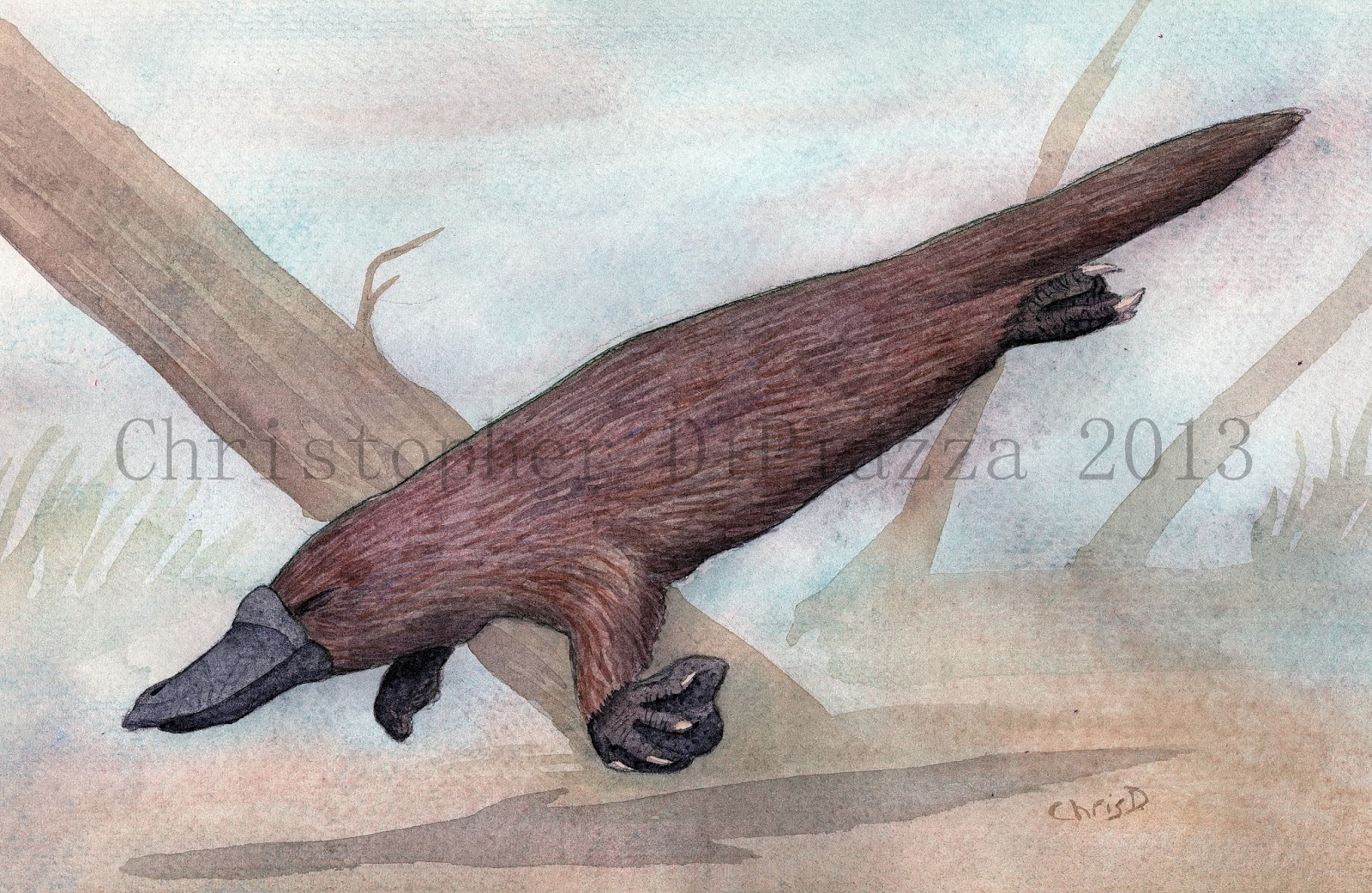
Perry the platypus's meaner, crankier older uncle

DbhOuHnVAAEoYNJ.jpg

  • Animal: Giant platypus (Obdurodon tharalkooschild)
  • Name Meaning: "Lasting tooth of Tharalkoo's child;" the species name honors the Aboriginal creation story for how the platypus was made: that a duck named Tharalkoo (or sometimes named Daroo) was ravished by a rakali, and because of her encounter, gave birth to a chimeric creature, the first platypus
  • Named By: Pian et al. - 2013
  • Classification: Life, Eukaryota, Animalia, Chordata, Vertebrata, Gnathostomata, Osteichthyes, Sarcopterygii, Tetrapodomorpha, Tetrapoda, Reptiliomorpha, Amniota, Synapsida, Therapsida, Mammalia, Monotremata, Ornithorhynchidae
  • When: 15,000,000 B.C.E. to 5,000,000 B.C.E.
  • Where: Oceania (Australia (Queensland))
  • Size: 3.3 feet (1 meter) long
  • Diet: Carnivore
The giant platypus was the largest ornithorhynchid ever. It was similar to the modern platypus (Ornithorhynchus anatinus) in many ways: for example it laid eggs, was semi-aquatic, had electroreceptors, and had venomous spurs (or at least the males did). However it was also dissimilar in some ways: for one it was much larger, but also it had teeth. (In fact a single tooth is literally all this species is known from.) The modern platypus completely lacks teeth as an adult and instead bears horny pads in its mouth; thus this species is unlikely to have been its immediate ancestor. Wear on the tooth suggests this animal feed on hard shelled prey like turtle or freshwater crustaceans.

obdurodonAM-56a253ab5f9b58b7d0c91674.jpg

001+-+Copy.jpg


Picture and Information Sources:

F.Y.I.: This thread will go into a dormant state for the next week as I'm going on vacation to visit family, tour a college, and visit two zoos I've never been to before. (i.e. Sequoia Park Zoo and Wildlife Safari, so expect to see pictures uploaded to the gallery when I get back.)
 
(Turns out I was able to gain access to a computer)

FIFTY-EIGHT:
Welcome to the U.S. state of Oregon. We're known for rain, not allowing you to pump your own gas, and apparently extinct dragons.

tumblr_inline_peajs6LaLw1s2ump0_500.png

  • Animal: Bennettazhia oregonensis
  • Name Pronunciation: Ben-net-a-zee-ah or-ih-gun-en-sis
  • Name Meaning: "Bennett's dragon from Oregon"
  • Named By: Charles Gilmore - 1928
  • Classification: Life, Eukaryota, Animalia, Chordata, Vertebrata, Gnathostomata, Osteichthyes, Sarcopterygii, Tetrapodomorpha, Tetrapoda, Reptiliomorpha, Amniota, Sauropsida, Eureptilia, Sauria, Archosauromorpha, Archosauriformes, Archosauria, Avemetatarsalia, Pterosauria, Rhamphorhynchoidea, Pterodactyloidea, Azhdarchoidea
  • When: 101,000,000 B.C.E. (Albian stage of the Early Cretaceous epoch)
  • Where: North America (United States (Oregon (Hudspeth Formation)))
  • Size: 13 foot (4 meter) wingspan
  • Diet: Carnivore
Charles Gilmore originally described Bennettazhia as a species Pteranodon: P. oregonensis. It was not until 1989 when Christopher Bennett found that the remains were not those of a Pteranodon but of an unknown azhdarchid pterosaur. Thus in 1991, Russian paleontologist Lev Nesov placed the species under a new genus: Bennettazhia, which combines Bennett's name with the Persian azhdarha (meaning "dragon"), a reference to the fact that the species was place in Azhdarchidae. Since then it has been assigned to Dsungaripteridae, then reassigned to Azhdarchidae, and then assigned to Tapejaridae. Currently we don't know what family should be placed in. Bennettazhia was a rare find in that the humerus was uncrushed, something that does not happen very often due to the lightweight construction of pterosaur bones. When subjected to a CAT-scan, the inner construction of the bone was revealed to spongy cancellous bone that inherently reinforced the bone from within. This means that rather than being completely solid, the bones had a network of support struts to increase the bones ability to cope with stresses imposed upon it by supporting the body weight and flight. How pterosaurs got into the air has often been a subject of confusion and controversy. Modern interpretation has pterosaurs vaulting themselves into the air by pushing themselves off the ground with their wings. Many people have had problems accepting this launch method, especially for the large pterosaurs like Quetzalcoatlus. However the bone structure of Bennettazhia helps reinforce the theory on the grounds that pterosaur bones were potentially strong enough to cope with the stress. Since Bennettazhia is only known from a humerus and vertebrae, it’s impossible to say anything about its diet with certainty. Most azhdarchids were terrestrial predators, tapejarids are thought to have also eaten fruit and nuts, and dsungaripterids probably ate shellfishes. Being found in marine sediments suggests that Bennettazhia may have eaten fishes.
wingspan-bennettazhia.png


Pictures and Information:
 
Last edited:
NUMBER FIFTY-NINE: Meet the platypus's and the echinda's great ×1,000 grandparent

_very__speculative_teinolophos_by_paleozoografica-dc7k37s.png

*speculative reconstruction
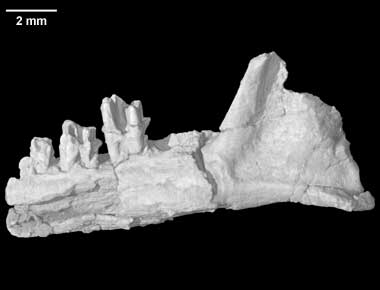
  • Animal: Teinolophos trusleri
  • Name Pronunciation: Tie-na-low-fos trus-ler-ee
  • Name Meaning: "Trusler's extended ridge"
  • Named By: Rich et al.‭ ‬-‭ ‬1999
  • Classification: Life, Eukaryota, Animalia, Chordata, Vertebrata, Gnathostomata, Osteichthyes, Sarcopterygii, Tetrapodomorpha, Tetrapoda, Reptiliomorpha, Amniota, Synapsida, Therapsida, Mammalia, Monotremata,‭ ‬Steropodontidae (?)
  • When: ∼123,000,000 B.C.E. to 112,000,000 B.C.E. (Aptian stage of the Early Cretaceous epoch)
  • Where: Oceania (Australia (Victoria))
  • Size: 4 inches (10 centimeters) long
  • Diet: Carnivore
Although biochemical and anatomical evidence suggests that the monotremes diverged from the mammalian lineage before the marsupials and placental mammals arose (it is thought the first monotremes lived 210 million years ago), only a handful of monotreme fossils are known from the Mesozoic era. As in literally only three species: Kryoryctes cadburyi, Steropodon galmani and Teinolophos trusleri. Teinolophos, being the oldest of the three, currently stands as the earliest named monotreme. It is currently only known from a left dentary‭ (lower jawbone). It lacked a beak and is believed to of had a stronger bite than modern monotremes. Unlike modern monotremes, which have suspended ear bones much like placentals and marsupials, Teinolophos still had them connected to the jaw via the Meckel's cartilage. This reinforces the idea that the modern ear condition evolved independently among monotremes and therians. This guy was likely an insectivore.

specimen.jpg


Picture and Information Sources:
 
Last edited:
NUMBER SIXTY: They named a dinosaur after Thanos? This does put a smile on my face.

Thanos_simonattoi.png

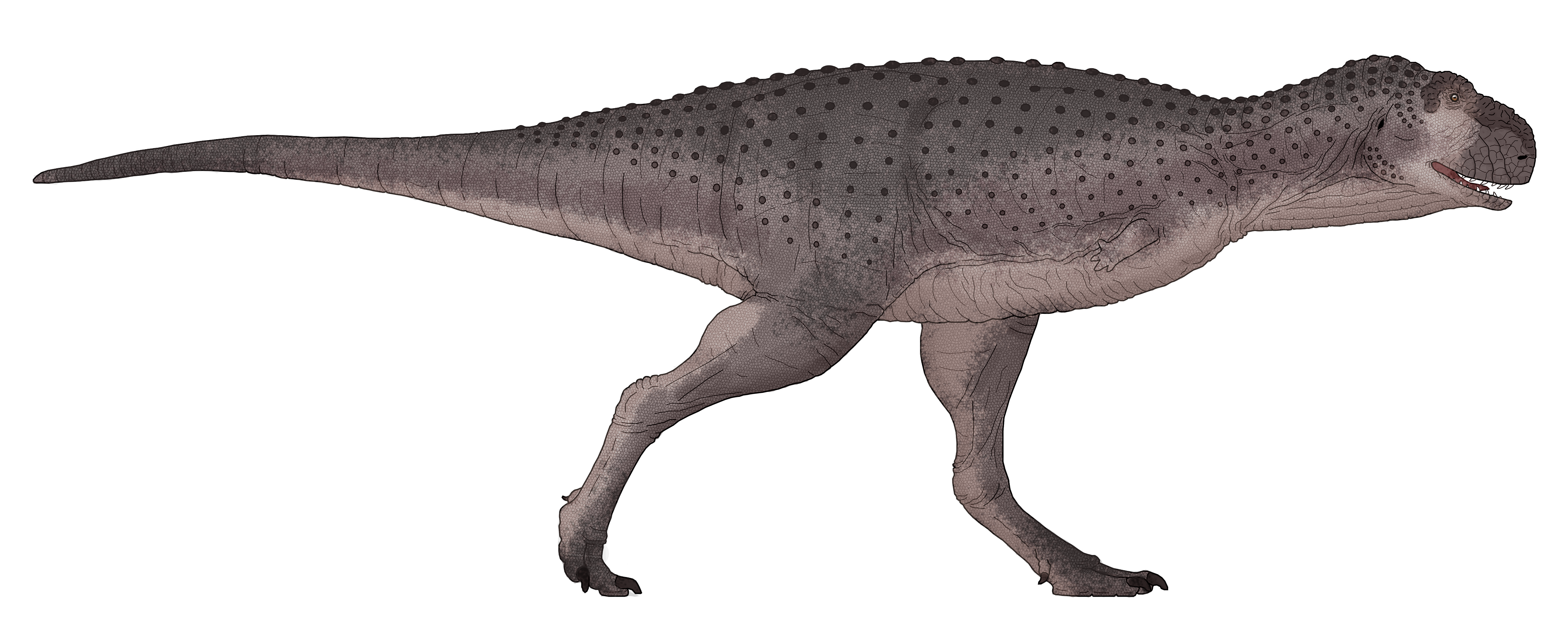
  • Animal: Thanos simonattoi
  • Name Pronunciation: Than-oss see-moe-nat-oui
  • Name Meaning: "Immortal Simonatto;" Thanos was named for the purple Grimace-lookalike Marvel character of the same name, and Thanos's name is short for the Greek male name Athanasios (which means "immortal"); simonattoi honors Sérgio Luis Simonatto who first reported what would eventually become the holotype specimen
  • Named By: Rafael Delcourt and Fabiano Vidoi Iori - 2018
  • Classification: Life, Eukaryota, Animalia, Chordata, Vertebrata, Gnathostomata, Osteichthyes, Sarcopterygii, Tetrapodomorpha, Tetrapoda, Reptiliomorpha, Amniota, Sauropsida, Eureptilia, Sauria, Archosauromorpha, Archosauriformes, Archosauria, Dinosauria,‭ ‬Saurischia,‭ ‬Theropoda, Abelisauridae
  • When: ∼ 85,000,000 B.C.E. (Santonian age of the Late Cretaceous epoch)
  • Where: South America - Brazil - São José do Rio Preto Formation
  • Size: 18 to 21 feet (5.5 to 6.5 meters) long
  • Diet: Carnivore
Thanos is known from a single bone: an almost complete neck vertebrae. You might be wondering how an entirely new genus and species could be named from a single bone? Well apparently the vertebrae had a number of diagnostic features that suggested it was more derived than other abelisaurid at the time. Despite this, several scientists were upset with the idea of naming an entirely new animal off of a sole bone. (Personally I think this genus will almost certainly eventually be considered dubious, which is rather unfortunate.) Despite its intimidating name, it appears Thanos was not the apex predator of its environment: fossil evidence suggests it lived alongside a large unnamed megaraptoran predator. Its also worth noting that, although we don't yet have any direct evidence of what its arms looked like, we do know that in general abelisaurids had small, possibly vestigial forelimbs. What does this mean? Thanos couldn't snap. We're safe!

(Below: Thanos compared to Thanos)
thanos_simonattoi_by_bricksmashtv_dcs5ezz-pre.jpg

(Below: Thanos compared to a human)
the_mad_titan__thanos_simonattoi_by_paleonerd01_dcu8rjm-pre.jpg

maxresdefault.jpg

8950a36a6e0e397c5b3db828ad44f8d3.jpg

46595686_366528367441755_948770926528331088_n.jpg

dcs5lbo-db4ab276-8ee9-4ca8-9335-59909ce16489.jpg


Picture and Information Sources:
 
NUMBER SIXTY-ONE: I haven't posted on here in a while as I've spent the last week or so emotionally recovering from Endgame. I'm better but I don't I'll ever be mentally stable again.

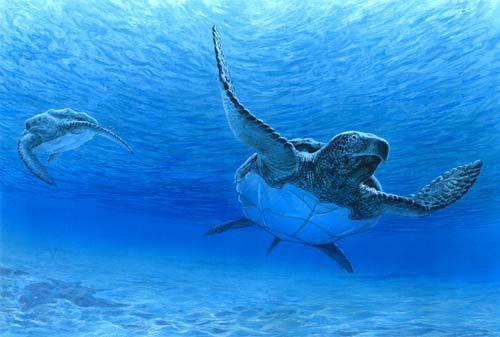
diving_with_archelon_by_hodarinundu_dd2bdfg-pre.jpg

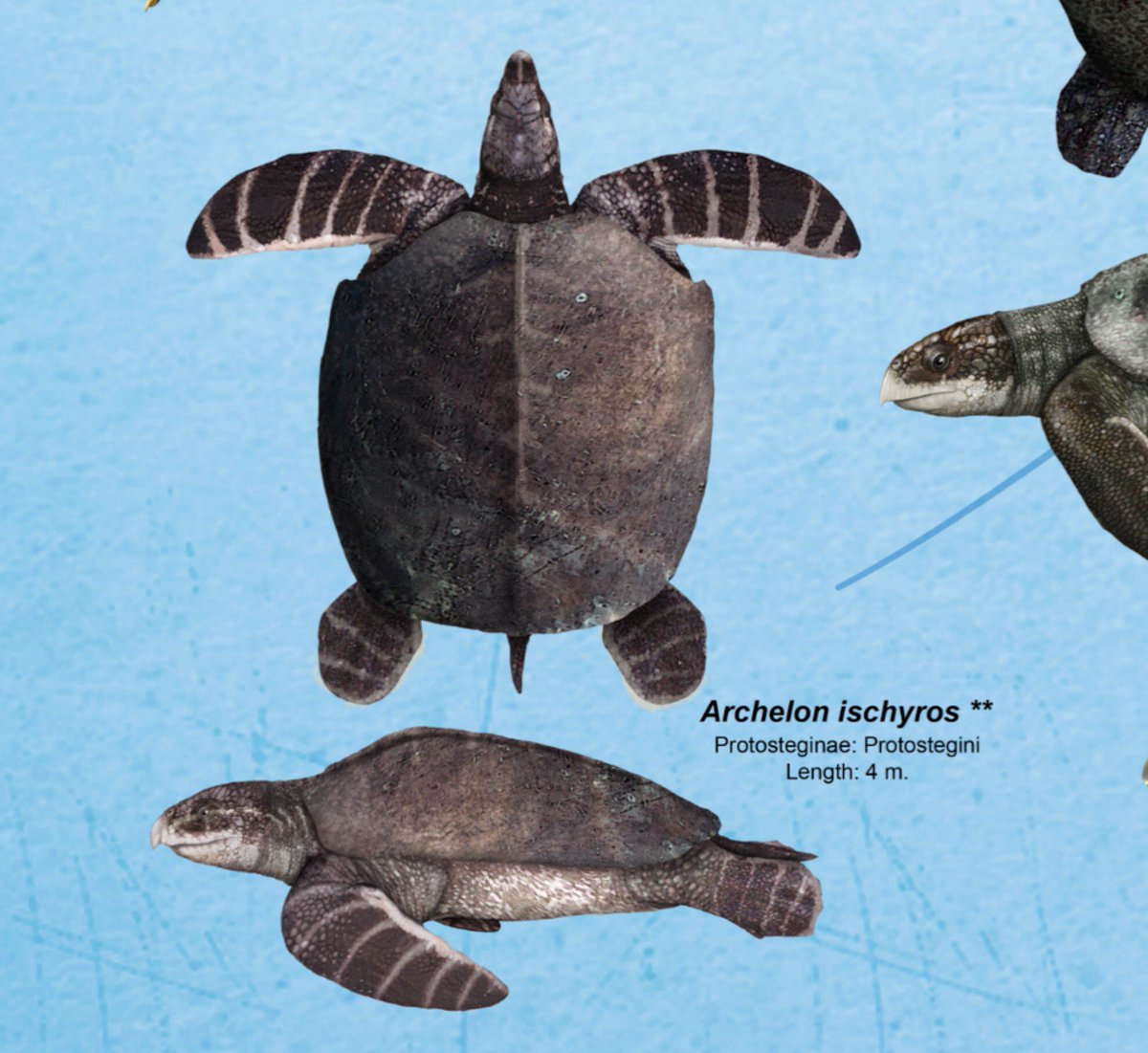
  • Animal: Archelon ischyros
  • Name Pronunciation: Are-kell-on
  • Name Meaning: "Mighty early turtle;" Greek arkhe- (meaning "first/early") + Greek chelone (meaning "turtle") + Greek ischyros (meaning "mighty" or "powerful")
  • Named By: George Reber Wieland -1896
  • Classification: Life, Eukaryota, Animalia, Chordata, Vertebrata, Gnathostomata, Osteichthyes, Sarcopterygii, Tetrapodomorpha, Tetrapoda, Reptiliomorpha, Amniota, Sauropsida, Eureptilia, Sauria, Archosauromorpha, Pantestudines, Testudines, Cryptodira, Protostegidae
  • When: ∼ 73,000,000 B.C.E. (Campanian stage of the Late Cretaceous epoch)
  • Where: North America - U.S.A. - South Dakota and Wyoming
  • Size: 15 feet (4.57 meters) from head to tail; 13 feet (3.96 meters) from flipper-tip to flipper-tip; 4,900 pounds (2,222.60 kilograms)
  • Diet: Carnivore
Archelon may to have been the largest turtle ever. The leatherback sea turtle (Dermochelys coriacea) was once thought to be Archelon's closest living relative, but now, Protostegidae is thought to be a completely separate lineage from any living sea turtle. Archelon had a leathery carapace instead of the hard shell seen in most modern sea turtles. It had an especially hooked beak and it jaws were adept at crushing, so its diet probably consisted of hard-shelled crustaceans and mollusks while slowly moving over the seafloor. However, its beak may have also been adapted for shearing flesh. Archelon probably had weaker arms, and thus less swimming power, than the leatherback sea turtle, and so did not frequent the open ocean as much, preferring shallower, calmer waters. It inhabited the northern Western Interior Seaway, a mild to cool area dominated by plesiosaurs, hesperornithiform seabirds, and mosasaurs. It may have gone extinct due to the shrinking of the seaway, increased egg and hatchling predation, and cooling climate.

800px-Archelon_skeleton.jpg

archelon_720x@2x.jpg

1024px-Archelon1DB.jpg

pc_tylosaurus.jpg

latest

a38f53982a4459ff342058f58837ee37.jpg

C7nIQjuWkAEpBTo.jpg

C7nIQjrW0AAXT_7.jpg


Picture and Information Sources:
 
Last edited:
but there are others that still claim Archelon was the largest.
Let me just quote this statement by Cameron McCormick from the link I provided:
"There is no longer any excuse to claim Archelon as the record-holder.":D:D

Sure, there's always the possibility of a yet undiscovered larger Archelon or a yet to be discovered even larger turtle species ;)
 
I've come to this thread late but I'm really enjoying playing catch up. Keep up the good work! :)
 
SIXTY-TWO: In 2017 scientists made a rather egg-citing discovery of some blue-tiful fossils

1280px-Heyuannia_and_eggs_nest.jpg

  • Animal: Heyuannia huangi
  • Name Pronunciation: Hey-u-an-ne-ah wang
  • Name Meaning: "Huang from Heyuan;‭" Heyuannia refers the Chinese city of Heyuan + huangi honors Huang Dong, the director of the Heyuan Museum.
  • Named By: Lu Junchang - 2002
  • Classification: Life, Eukaryota, Animalia, Chordata, Vertebrata, Gnathostomata, Osteichthyes, Sarcopterygii, Tetrapodomorpha, Tetrapoda, Reptiliomorpha, Amniota, Sauropsida, Eureptilia, Sauria, Archosauromorpha, Archosauriformes, Archosauria, Dinosauria,‭ ‬Saurischia,‭ ‬Theropoda, Caenagnathoidea, Oviraptoridae, Ingeniinae
  • When: ~ 70,000,000 B.C.E. to 65,500,000 B.C.E. (Maastrichtian of the Late Cretaceous epoch)
  • Where: Asia - China - Dalangshan Formation
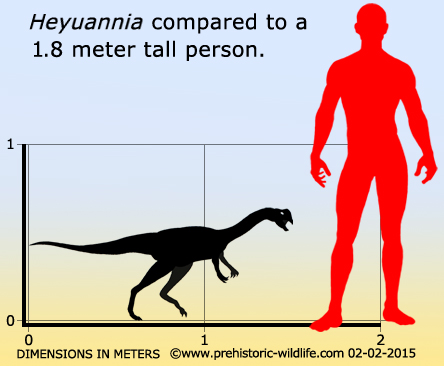
  • Size: 4.9 feet (1.5 meters) long
  • Diet: Uncertain (Omnivore or Herbivore)
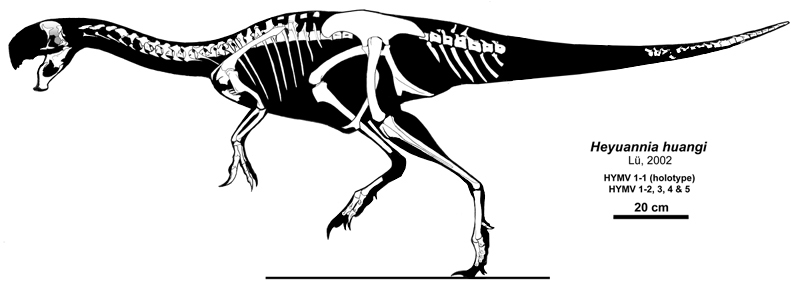
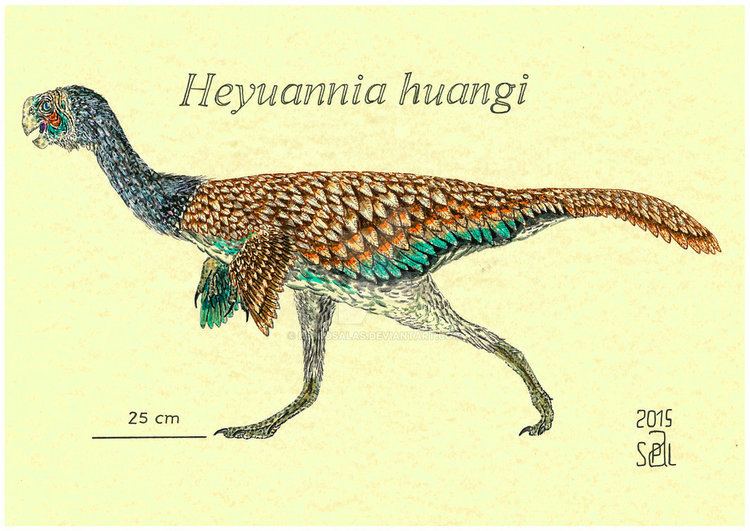
‬Heyuannia was the first oviraptorid to be discovered within the borders of mainland China. ‬Up until its description all known Asian oviraptorids came from Mongolia.‭ Its toothless skull (or at least their was no teeth on the lower jaw) was relatively short with a steep snout. We don't know what shape its crest was or if it even had one (although it most likely did). It had very short arms and digits, and its first digit was reduced. Preservation of the pigments biliverdin and protoporphyrin in eggshells belonging to Heyuannia indicate that they were blue-green in color. This was the first time the color had been found in non-avian dinosaur eggs. This coloration allowed for both camouflage and sexual signalling, as seen in some modern birds such as robbins and cassowaries. The arrangement of the eggshells suggests a partially open nest arrangement for Heyuannia, and also indicates that it engaged in increased parental care.

heyuannia-size.jpg

(Below: All known skeletal material from this species.)
Heyuannia.jpg

Heyuannia_11.png

heyuannia_huangi_by_kana_hebi-daen2v7.jpg

heyuannia-4c19b7d1-72ca-49bb-9319-6cfbaa4deaf-resize-750.jpeg

1024px-Ajancingenia_reconstruction.png


Picture and Information Sources:
 
Back
Top