Hipporex's Guide to Interesting and Unique Prehistoric Fauna

As you may of noticed, posts on this thread have significantly slowed down. It's not that I'm trying to ignore the thread, I've just been busy. Although it'll likely never get as frequent as it used to be, I'll try to post at least 1 to 3 profiles a week. As long as people continue enjoying this thread I'll try to keep going.

NUMBER EIGHTY-SEVEN:
There is always a bigger fish

latest

  • Animal: Megapiranha
  • Name Pronunciation: Meg-ah-pee-raan-ha
  • Name Meaning: "Big piranha"
  • Named By: Alberto Cione,‭ ‬Wasila‭ ‬Dahdul,‭ ‬John‭ ‬Lundberg‭, and ‬Antonio Machado-Allison‭ ‬-‭ ‬2009
  • Species: M.‭ ‬paranensis‭ (‬type‭)
  • Classification: Life, Eukaryota, Animalia, Chordata, Vertebrata, Gnathostomata, Osteichthyes, Actinopterygii,‭ ‬Characiformes,‭ ‬Characidae,‭ ‬Serrasalminae, Piranha
  • When: ~ 9,000,000 B.C.E. to 6,800,000 B.C.E. (Tortonian stage of the Miocene epoch)
  • Where: South American - Argentina
  • Size: Big
  • Diet: Uncertain
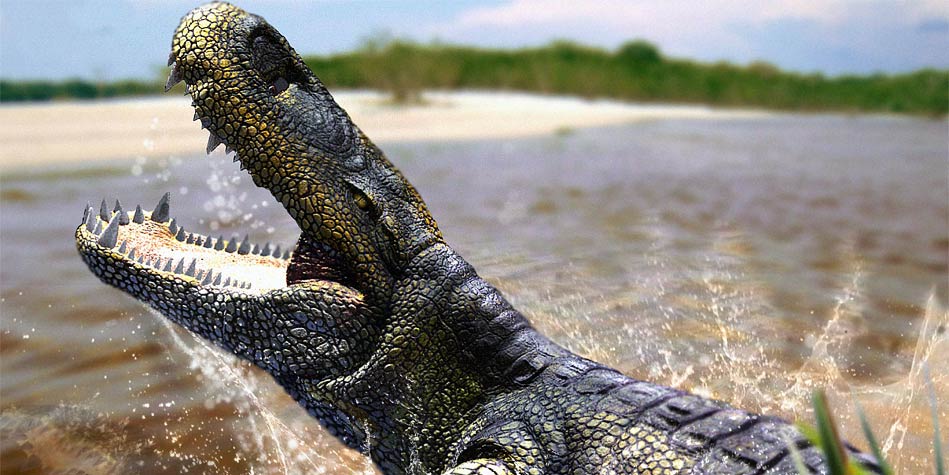
  • 2 Contemporaries: Argentavis (vulture-like bird of prey) and Purussaurus (caiman)
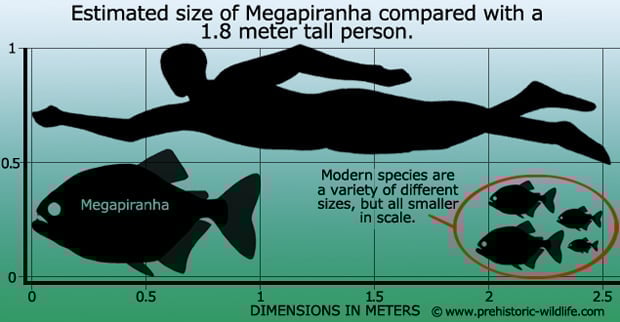
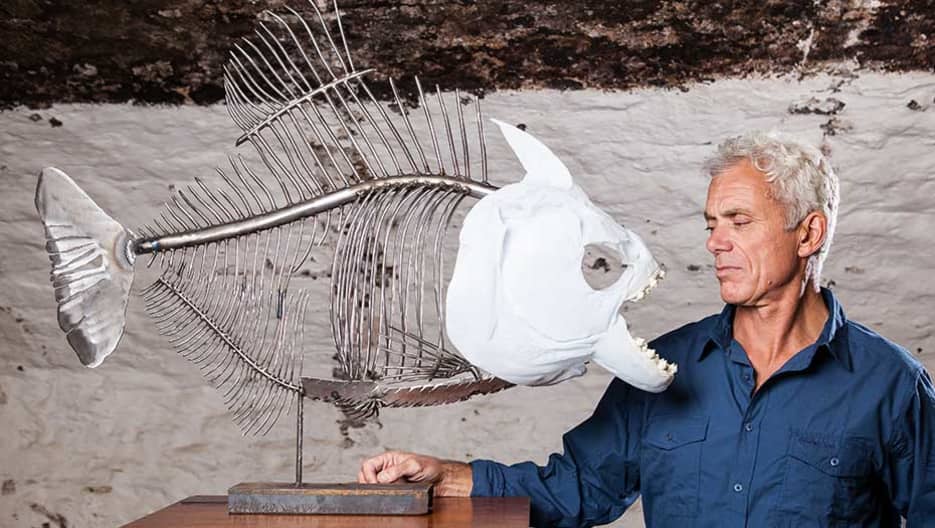
The only currently known remains of Megapiranha premaxilla teeth.‭ ‬Comparison of these teeth to living piranha species has shown ‬that, assuming it had a similar body form‭ (‬and not just an oversized mouth‭), ‬it was up to 3.3 feet (1 m) long,‭ ‬much bigger than any modern piranha. So was Megapiranha the scariest creature to ever swim Argentine waters? We don't know. While the teeth could point towards a carnivorous diet,‭ ‬they are not exactly like those of carnivorous piranha,‭ ‬and are in fact more intermediate between carnivorous piranha and pacu,‭ ‬herbivorous fish that are related to piranha.‭ ‬There are further complications coming from the fact that the river systems of South America could have supported either lifestyle. We also don't know how social (or not) this fish was. It may have lived socially like a piranha or solitary like a pacu. Regardless of how "scary" (or not) Megapiranha was, it would have been one awesome fish. Oh and one more thing, whatever this fish was eating, it was biting down hard: A 2012 study found this species had a bite force of 279 and 1,067 pound-force (1,240 and 4,749 newtons).

megapiranha-size.jpg

h5dlunhmysiyk5niwdbu.jpg

aHR0cDovL3d3dy5saXZlc2NpZW5jZS5jb20vaW1hZ2VzL2kvMDAwLzAwNy83NTgvb3JpZ2luYWwvMDkwNjI1LW1lZ2FwaXJhbmhhLTAyLmpwZw==

diving_with_megapiranha_by_hodarinundu_dd55rv1-350t.jpg

2000

Purussaurus.jpg


Picture and Information Resources:
 
NUMBER EIGHTY-EIGHT: Where the buffalo roam. Correction: Where the oversized bison once roamed

e5b2961a399e992c4661af05eb6bc81d.jpg

  • Animal: Giant bison (Bison latifrons)
  • Named By: Richard Harlan - 1825
  • Classification: Life, Eukaryota, Animalia, Chordata, Vertebrata, Gnathostomata, Osteichthyes, Sarcopterygii, Tetrapodomorpha, Tetrapoda, Reptiliomorpha, Amniota, Synapsida, Therapsida, Mammalia, Placentilia, Boreoeutheria, ‬Ungulata, Artiodactyla, Bovidae, Bovinae
  • When: 224,000 B.C.E. to 21,000 years ago (Pleistocene epoch)
  • Where: North America - United States and Mexico
  • Size: *see below*
  • Diet: Herbivore
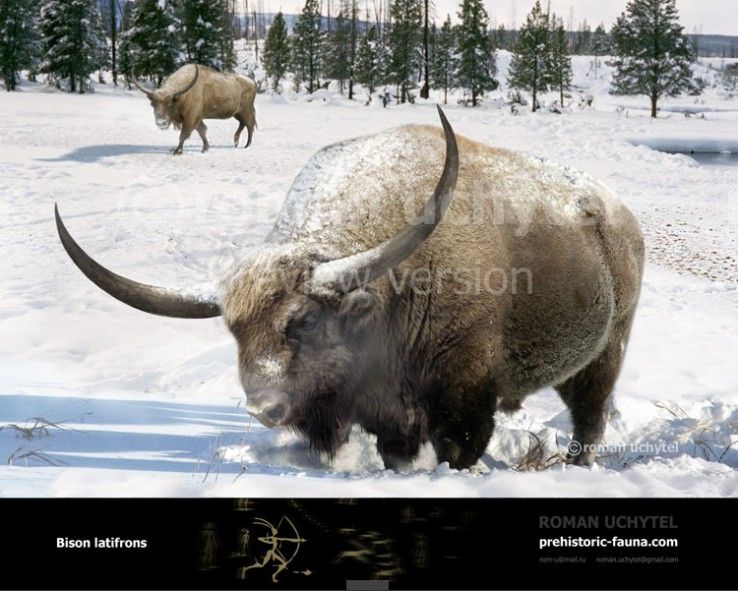
The giant bison measured 15.6 feet (4.76 m) long, stood up to 8 feet (2.44 m) tall at the shoulders, and potentially tipped the scales at up to 2.2 tons (2 metric tons). In fact, it competes with the giant buffalo (genus Pelorovis) for the title of largest bovid to have ever lived. The horns spanned 7 feet (2.13 m) from tip to tip (compared to 26, 66.04 cm, inches in modern American bison, Bison bison). The giant bison is thought to have evolved in midcontinent North America from a population of steppe bison (Bison priscus) that migrated across the Bering Land Bridge between 240,000 and 220,000 years ago. Sequentially it is thought to have disappeared some 30,000 to 21,000 years ago when it evolved into the ancient bison (Bison antiquus), which in turn evolved into the yet smaller American bison some 10,000 years ago. Evidence suggests the giant bison predominately inhabited woodland which suggests that it would of lived in smaller herds. Paleontologists believe it preferred the warmer climes of what is now the United States, and fossils of the species have been found as far south and west as modern-day San Diego, California.

Bizons-of-NA-size-738x591.jpg

Bison-latifrons-2015-738x591.jpg

Bison-latifrons-2016-738x591.jpg

Bison+latifrons+(wm).jpg

Bison_latifrons_fossil_buffalo_%28Pleistocene%3B_North_America%29_1_%2815257877377%29.jpg

maxresdefault.jpg


Picture and Information Resources:
 
NUMBER EIGHTY-NINE: Mike Archer dubbed this species "squakzilla." Need I say more?

meet-heracles-inexpectatus-the-giant-prehistoric-parrot-that-lived-19-million-years-ago__849781_.jpg

  • Animal: Hercules parrot (Heracles inexpectatus)
  • Named By: Trevor Worthy, Suzanne Hand, and Mike Archer - 2019
  • Classification: Life, Eukaryota, Animalia, Chordata, Vertebrata, Gnathostomata, Osteichthyes, Tetrapodomorpha, Tetrapoda, Reptiliomorpha, Amniota, Sauropsida, Eureptilia, Sauria, Archosauromorpha, Archosauriformes, Archosauria, Dinosauria,‭ ‬Saurischia,‭ ‬Theropoda,‭ Paraves, Avialae, Aves, Neognathae, Psittaciformes, Strigopoidea
  • When: ~ 19,000,000 B.C.E. to 16,000,000 B.C.E. (Miocene)
  • Where: Ocean - New Zealand - South Island
  • Size: *see below*
  • Diet: (Probably a) herbivore
At 4.4 to 8.8 pounds (2 to 4 kg), the extant kakapo (Strigops habroptilus) was largely considered the largest parrot ever. However it has recently been revealed this title actually belongs to a supersized extinct species. Like the kakapo, the Hercules parrot was a New Zealand endemic and it was (probably) flightless, however unlike the kakapo, it was 3.3 feet (1 m) tall and potentially up to 15.4 pounds (7 kg). Its robust beak would have been more than capable of feeding on the conventional parrot foods of fruit, nuts, and berries. Like the modern kea, yet another New Zealand native, the Hercules parrot may of also feed on insects, eggs, other birds, and mammals. The animal's remain were found in sediments that suggest it lived in forests. It was also likely a result of insular gigantism.

16952058-0-image-a-74_1565106013106.jpg


Picture and Information Resources:
 
I really enjoy looking at this thread because I start to remember the stuff I knew like 8 years ago.
Please keep going you are doing a great job! :)

I only found one mistake in the whole thing and it was a typo:

(Below: Melanistic Megantereon taking down a Megantereon)
 
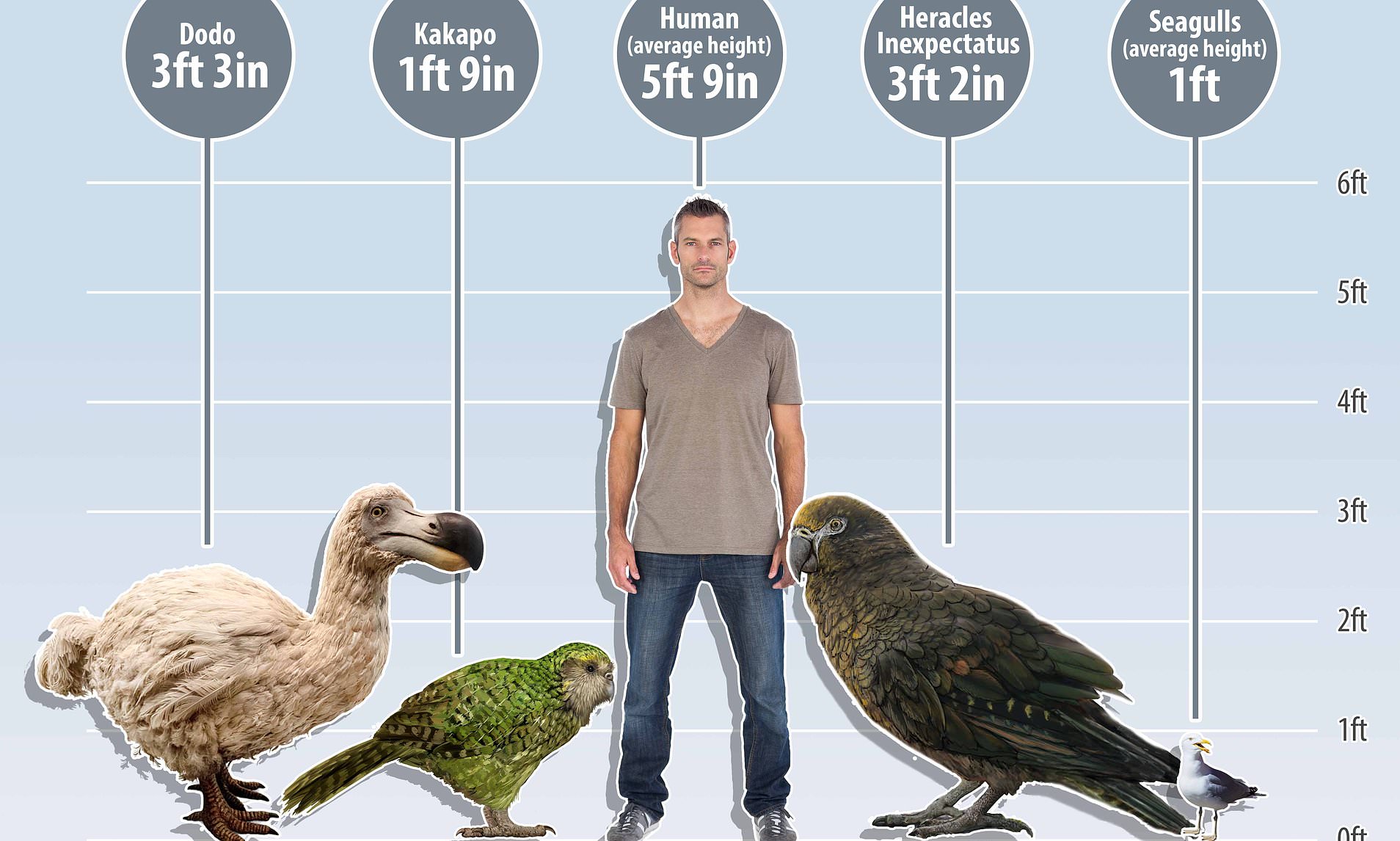
I don't know how was made this diagram. But kakapo and dodo are waaaay oversized compared to human, and seagull was very reduced instead. Kakapo and an average (f. e. herring) gull should have roughly the same size. And a dodo is the size of a turkey, its head is not at the level of the human belly like in this image.

Yh gotta say the dodo and the kakapo do look quite oversized
I wasn't sure about the dodo but I was thinking the kakapo seemed a little big, even as far a kakapos go. I should of double checked before posting
 
NUMBER NINETY: Another weird kiwi

image_5620e-Vulcanops-jennyworthyae.jpg


  • Animal: Vulcan burrowing bat (Vulcanops jennyworthyae)
  • Name Pronunciation: Vole-can-ops jenny-worthy-a
  • Name Meaning: Vulcan was chosen in homage to the tectonic nature of New Zealand, as well as the historic Vulcan Hotel, which is in the mining town of Saint Bathans, where the bat was found; jennyworthyae honors Jennifer Worthy, "in recognition of her pivotal role in revealing the diversity of the St. Bathans Fauna"
  • Named By: Suzanne Hand et al. - 2018
  • Classification: Life, Eukaryota, Animalia, Chordata, Vertebrata, Gnathostomata, Osteichthyes, Tetrapodomorpha, Tetrapoda, Reptiliomorpha, Amniota, Synapsida, Therapsida, Mammalia, Placentilia, Boreoeutheria, Chiroptera, Mystacinidae
  • When: ~ 19,000,000 B.C.E. to 16,000,000 B.C.E. (Miocene)
  • Where: Ocean - New Zealand - South Island
  • Size: 1.4 ounces (40 g)
  • Diet: Omnivore
Today New Zealand is home to only two (maybe three) species of bat: the long-tailed bat (Chalinolobus tuberculatus), the lesser short-tailed bat (Mystacina tuberculata), and possibly the greater short-tailed bat (M. robusta). (I saw possibly because there have been no confirmed sightings of M. robusta since 1965.) The two latter species are members of the family Mystacinidae. Mystacinids are considered the most "un-batlike" of all bats. They spend a large majority of their time on the ground, instead of flying, and are unique in having the ability to fold their wings into a leathery membrane when not in use. Another distinctive feature of the group is an additional projection on some of the claws, which may aid in digging or climbing. Many older sources refer to the terrestriality of these bats as a trait acquired due to island endemism, assumed to have evolved due to the absence of terrestrial mammals in New Zealand. However, species of the extinct Icarops, a genus from Australia, shows adaptations that suggests a terrestrial lifestyle, hinting that this way of life evolved prior to the colonization of New Zealand. Living mystacinids are omnivorous, eating fruit, pollen, nectar and, carrion in addition to ground-dwelling arthropods. The same is thought to of been true from the Vulcan burrowing bat. The Vulcan burrowing bat lived alongside species such as the giant moa birds and the Hercules parrot, who was the subject of the last profile.

26804372_1864452696930491_1056455949969507788_n.jpg

(Below: Lesser short-tailed bat)
1434580895218.jpg


Picture and Information Resources:
 
NUMBER NINETY-ONE: This hyena was no laughing matter

crocuta-spelaea_lucas-lima.jpg

  • Animal: Eurasian cave hyena (Crocuta crocuta spelaea)
  • Named By: Georges Cuvier - 1812
  • Classification: Life, Eukaryota, Animalia, Chordata, Vertebrata, Gnathostomata, Osteichthyes, Tetrapodomorpha, Tetrapoda, Reptiliomorpha, Amniota, Synapsida, Therapsida, Mammalia, Placentilia, Boreoeutheria, Carnivora, Feliformia, Hyaenidae
  • When: 500,000 B.C.E. to 11,000 B.C.E.
  • Where: Eurasia (Iberian Peninsula to eastern Siberia)
  • Size: *see below*
  • Diet: Carnivore
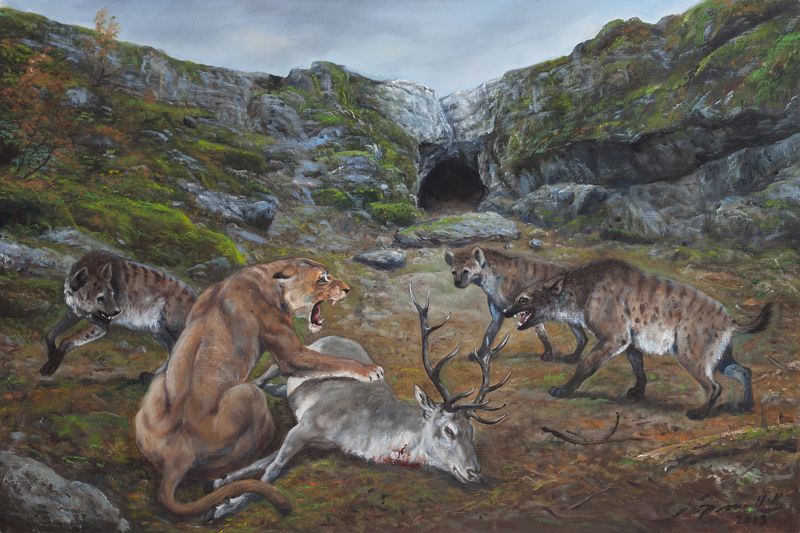
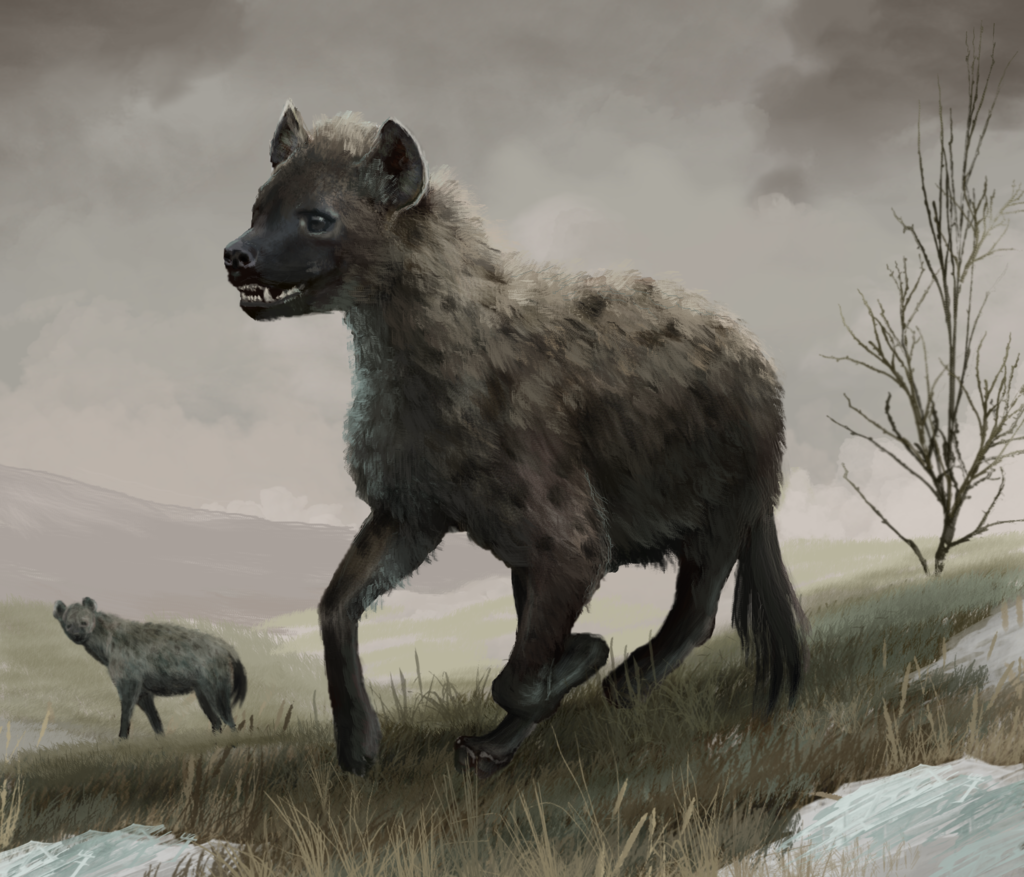
At up to 225 pounds (102 kg), the Eurasian cave hyena appears to of been one of the largest hyenas in Earth's history. (Although not the absolute largest as that title is held by Pachycrocuta brevirostris.) Several European den sites indicate that this subspecies targeted larger prey, with wild horses predominating, followed by steppe bison and woolly rhinoceros. The cave hyena's favoring of horses is consistent with the behavior of the modern African spotted hyena, which mostly hunts zebras. Secondary prey species included reindeer, red deer, giant deer, European ass, chamois, and ibex. A small number of wolf remains have also been discovered in hyena den sites. The Eurasian cave hyena likely killed the wolves due to intraguild competition (intraguild predation is the killing of potential competitors), though their presence in the cave site indicates that they were also fed upon, which is unusual among carnivorans. Similarly, cave lion and cave bear remains have been discovered in hyena den sites, thus indicating that hyenas may have scavenged on or killed them. Kills partially processed by Neanderthals and then by cave hyenas indicate that hyenas would occasionally steal Neanderthal kills; and Eurasian cave hyenas and Neanderthals competed for cave sites. Many caves show alternating occupations by hyenas and Neanderthals. The presence of large hyena populations in the Russian Far East may have delayed the human colonization of North America. There is fossil evidence of humans in Middle Pleistocene Europe butchering and presumably consuming hyenas. The cause of the Eurasian cave hyena's extinction is not fully understood, though it could have been due to a combination of factors, including natural climate change and competition with other predators.

Pachycrocuta-size-738x591.jpg

f86ec622dde498e2b74912891509ab38.jpg

Stamps_of_Moldova_2016_Crocuta_crocuta_spelaea_%28mod%29.jpg

Crocuta-crocuta-spelaea-2016-738x591.jpg

dd65ebcc2d06431bf72fcac2afe469cd.png


Picture and Information Resources:
 
NUMBER NINETY-TWO: Birds of a feather flock together, but Longisquama wasn't a bird so flock off

45521189_361498051091789_8443313079302761551_n.jpg

  • Animal: Longisquama insignis
  • Name Pronunciation: Lon-ge-skwar-mah
  • Name Meaning: "Long scale"
  • Named By: Aleksandr Grigorevich Sharov - 1970
  • Classification: Life, Eukaryota, Animalia, Chordata, Vertebrata, Gnathostomata, Osteichthyes, Tetrapodomorpha, Tetrapoda, Reptiliomorpha, Amniota, Sauropsida, Eureptilia, Sauria, Archosauromorpha, Diapsida
  • When: ~ 230,000,000 B.C.E. (Late Triassic epoch)
  • Where: Asia (Kyrgyzstan‭ (‬Madygen Formation))
  • Size: 6 inches (15.24 cm)
  • Diet: Insectivore
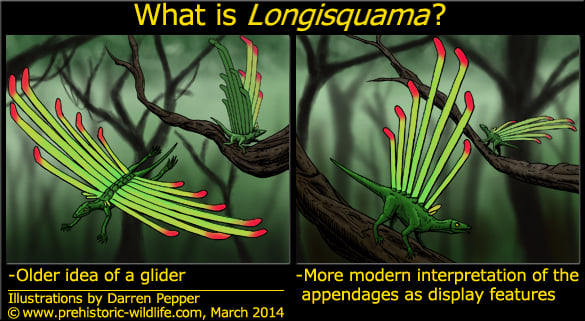
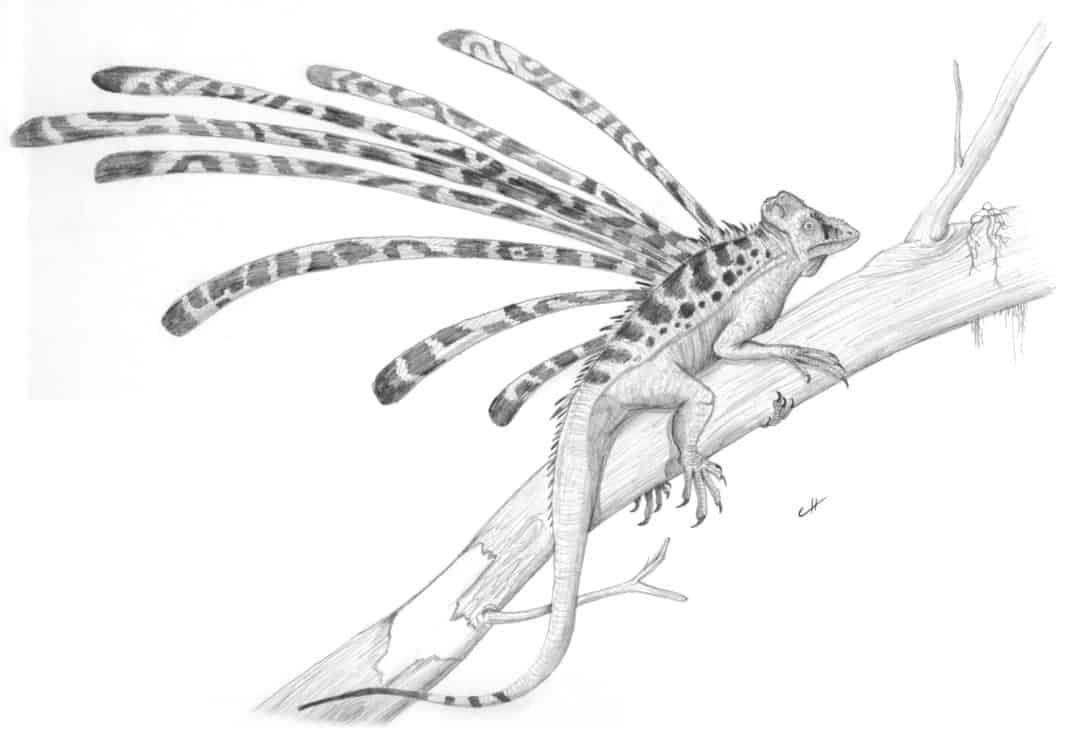
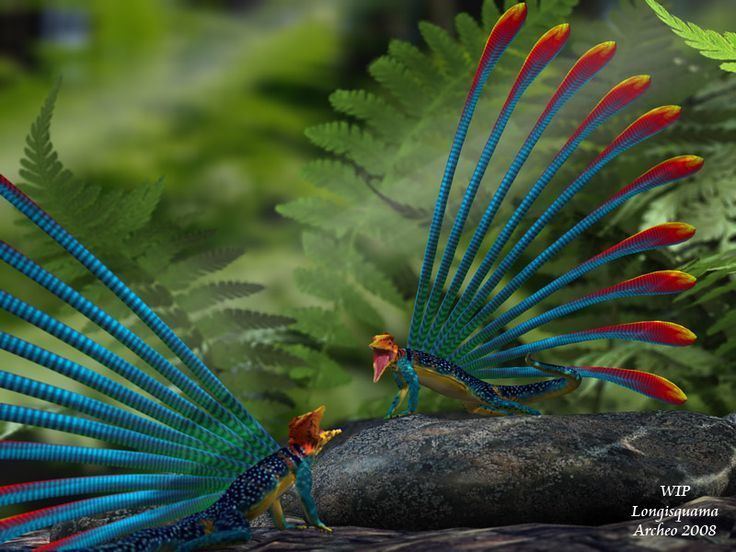
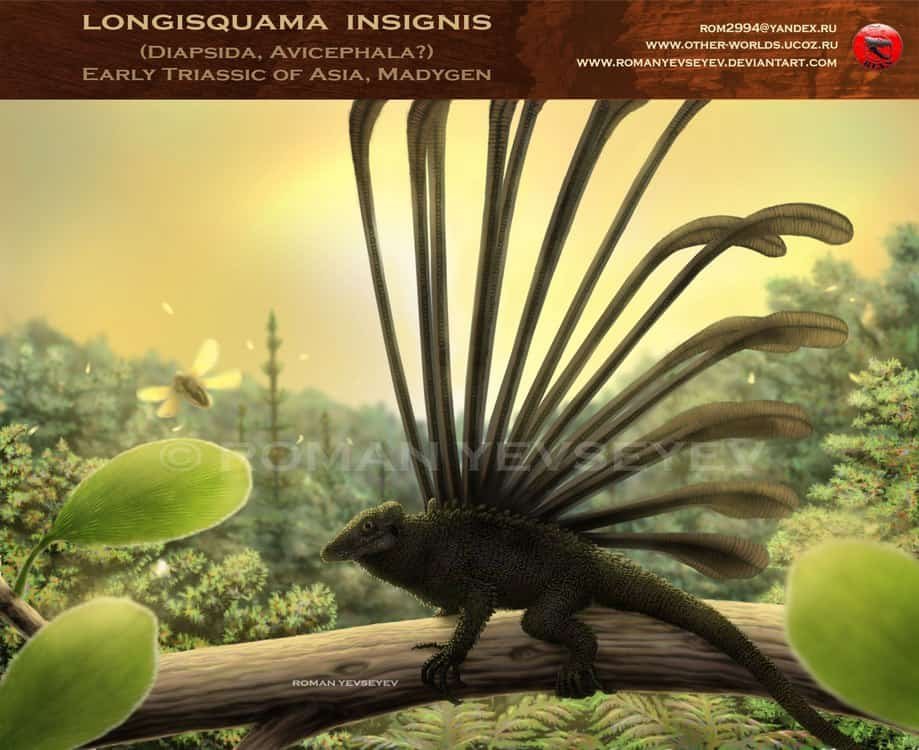
Longisquama would of looked like a small lizard (despite having no relation to Squamata) with one noticeable difference, the long appendages that seemed to of attached to the neural spines of the ‬dorsal vertebrae.‭ ‬The nature of these appendages has been debated ever since the creature was first described in‭ ‬1970,‭ ‬with some considering them to be elongated scales,‭ ‬and others thinking them to represent one of the first‭ ‬known appearances of feathers.‭ ‬These interpretations in turn have not only led to various theories as to how Longisquama lived,‭ ‬but how it fits in to wider evolutionary theory. Since the early 1900s a popular idea for the first birds was that of‭ "‬Proaves‭," ‬a fictional creature that was essentially a lizard with long flight feathers of birds growing from its arms which it used to glide amongst trees.‭ ‬That creature never actually existed,‭ ‬it was simply an idea given visual form so that a wider range of people could understand it.‭ ‬There was no malicious intent,‭ ‬scientists just wanted to show what they expected the ancestors to birds look like. The large appendages of Longisquama were once interpreted as a double row of either scales or feathers that extended out to the side to form a series of‭ "‬wings‬."‭ ‬The idea was that Longisquama used these appendages to glide amongst the trees,‭ ‬and in turn may represent an actual‭ ‘‬Proaves‭’ ‬that was ancestral to birds.‭ ‬However since last two decades of the twentieth century the idea that birds originated from some point within the theropod dinosaurs has become accepted fact within the wider scientific community.‭ ‬This means that if the appendages of Longisquama are indeed feathers,‭ ‬then it is likely that they are a product of a separate evolution. More modern analysis of Longisquama has yielded the conclusion that there was just one row of appendages that ran vertical down the back of Longisquama.‭ ‬If this‭ ‬is indeed true then immediately the idea that this species was a glider figuratively flies out of the window (ba dum tss).‭ ‬Therefore an alternative function for these appendages would perhaps most obviously be as a display feature,‭ ‬something that may have helped Longisquama set up territories and signal to one another at range,‭ ‬a definitive advantage given the apparent small size of the body.‭ ‬Another interpretation could be that the appendages were a scare device that was flashed at the moment that predators attacked. There has been just as much debate over exactly how these appendages where formed to even if they were actually part of the animal.‭ ‬As briefly mentioned above,‭ ‬the appendages seem to have attached to the neural spines of vertebrae‭.‭ ‬These appendages then seem to have been rooted inside follicles in the same way that hairs and feathers are known to.‭ ‬These appendages have been and continue to be described as elongated scales or feathers,‭ ‬depending upon the author.‭ ‬The longest of these appendages seem to have been over 11.8 inches (30 cm)‭ ‬long,‭ ‬much longer than the perceived full length of the actual body.‭ ‬The more complete of these seem to curve around at the end so that many authors describe them as shaped like hockey sticks. However not all researchers are convinced that the appendages on the back actually belonged to the animal,‭ ‬instead suggesting that they may actually be fronds of a plant and that a lizard may have simply died on top of them.‭ ‬Indeed,‭ ‬only the holotype specimen is known to have had both skeleton and appendages preserved together.‭ ‬Further specimens of the appendages have been found completely separate from further skeletons.‭ ‬There are two problems with the idea that these appendages are parts of plants.‭ ‬The first is that when plants are preserved it is usually as a carbon film,‭ ‬and the appendages of Longisquama are not preserved in this way.‭ ‬The second is that there is so far only one plant preserved in rocks of the Madygen Formation‭‬,‭ ‬that has fronds that are similar to the appendages of Longisquama,‭ ‬but these do not have the distinctive hockey stick shape.

what-is-longisquama.jpg

1523_longisquama_martin_chavez.jpg

EGR-2SKXUAEhUkN

longisquama-a9eb40f6-c4de-4a02-af3f-068411b721a-resize-750.jpeg

1521_longisquama_roman_yevseyev.jpg


Picture and Information Resources:
 
I'm in need of suggestions. So if you got any, spill the beans. So many choices and I'm becoming indecisive.
 
My mind immediately goes to Kronosaurus, a personal favorite of mine. Ooh, or Livyatan Melvillei, that's another really fun one. And also my brain is screaming at me to suggest giganotasaurus as a counterpoint to the tyrannosaurids that have already been covered. Get some more of that mesozoic South America weirdness in here.
 
If you take suggestions, I would like to see the wonderful Longisquama insignis treated here. Oh, and Nyctosaurus too.

NUMBER NINETY-TWO: Birds of a feather flock together, but Longisquama wasn't a bird so flock off

45521189_361498051091789_8443313079302761551_n.jpg

  • Animal: Longisquama insignis
  • Name Pronunciation: Lon-ge-skwar-mah
  • Name Meaning: "Long scale"
  • Named By: Aleksandr Grigorevich Sharov - 1970
  • Classification: Life, Eukaryota, Animalia, Chordata, Vertebrata, Gnathostomata, Osteichthyes, Tetrapodomorpha, Tetrapoda, Reptiliomorpha, Amniota, Sauropsida, Eureptilia, Sauria, Archosauromorpha, Diapsida
  • When: ~ 230,000,000 B.C.E. (Late Triassic epoch)
  • Where: Asia (Kyrgyzstan‭ (‬Madygen Formation))
  • Size: 6 inches (15.24 cm)
  • Diet: Insectivore
Longisquama would of looked like a small lizard (despite having no relation to Squamata) with one noticeable difference, the long appendages that seemed to of attached to the neural spines of the ‬dorsal vertebrae.‭ ‬The nature of these appendages has been debated ever since the creature was first described in‭ ‬1970,‭ ‬with some considering them to be elongated scales,‭ ‬and others thinking them to represent one of the first‭ ‬known appearances of feathers.‭ ‬These interpretations in turn have not only led to various theories as to how Longisquama lived,‭ ‬but how it fits in to wider evolutionary theory. Since the early 1900s a popular idea for the first birds was that of‭ "‬Proaves‭," ‬a fictional creature that was essentially a lizard with long flight feathers of birds growing from its arms which it used to glide amongst trees.‭ ‬That creature never actually existed,‭ ‬it was simply an idea given visual form so that a wider range of people could understand it.‭ ‬There was no malicious intent,‭ ‬scientists just wanted to show what they expected the ancestors to birds look like. The large appendages of Longisquama were once interpreted as a double row of either scales or feathers that extended out to the side to form a series of‭ "‬wings‬."‭ ‬The idea was that Longisquama used these appendages to glide amongst the trees,‭ ‬and in turn may represent an actual‭ ‘‬Proaves‭’ ‬that was ancestral to birds.‭ ‬However since last two decades of the twentieth century the idea that birds originated from some point within the theropod dinosaurs has become accepted fact within the wider scientific community.‭ ‬This means that if the appendages of Longisquama are indeed feathers,‭ ‬then it is likely that they are a product of a separate evolution. More modern analysis of Longisquama has yielded the conclusion that there was just one row of appendages that ran vertical down the back of Longisquama.‭ ‬If this‭ ‬is indeed true then immediately the idea that this species was a glider figuratively flies out of the window (ba dum tss).‭ ‬Therefore an alternative function for these appendages would perhaps most obviously be as a display feature,‭ ‬something that may have helped Longisquama set up territories and signal to one another at range,‭ ‬a definitive advantage given the apparent small size of the body.‭ ‬Another interpretation could be that the appendages were a scare device that was flashed at the moment that predators attacked. There has been just as much debate over exactly how these appendages where formed to even if they were actually part of the animal.‭ ‬As briefly mentioned above,‭ ‬the appendages seem to have attached to the neural spines of vertebrae‭.‭ ‬These appendages then seem to have been rooted inside follicles in the same way that hairs and feathers are known to.‭ ‬These appendages have been and continue to be described as elongated scales or feathers,‭ ‬depending upon the author.‭ ‬The longest of these appendages seem to have been over 11.8 inches (30 cm)‭ ‬long,‭ ‬much longer than the perceived full length of the actual body.‭ ‬The more complete of these seem to curve around at the end so that many authors describe them as shaped like hockey sticks. However not all researchers are convinced that the appendages on the back actually belonged to the animal,‭ ‬instead suggesting that they may actually be fronds of a plant and that a lizard may have simply died on top of them.‭ ‬Indeed,‭ ‬only the holotype specimen is known to have had both skeleton and appendages preserved together.‭ ‬Further specimens of the appendages have been found completely separate from further skeletons.‭ ‬There are two problems with the idea that these appendages are parts of plants.‭ ‬The first is that when plants are preserved it is usually as a carbon film,‭ ‬and the appendages of Longisquama are not preserved in this way.‭ ‬The second is that there is so far only one plant preserved in rocks of the Madygen Formation‭‬,‭ ‬that has fronds that are similar to the appendages of Longisquama,‭ ‬but these do not have the distinctive hockey stick shape.

what-is-longisquama.jpg

1523_longisquama_martin_chavez.jpg

EGR-2SKXUAEhUkN

longisquama-a9eb40f6-c4de-4a02-af3f-068411b721a-resize-750.jpeg

1521_longisquama_roman_yevseyev.jpg


Picture and Information Resources:

Finally, after eight months my suggestion has been taken into consideration. Thanks
 
I have a suggestion for your, Hipporex.

Borealopelta markmitchelli, the famous well-preserved Ankylosaurid fossil from the Alberta oil sands mines.
 
Why don't you do the animals that were suggested first but never got profiles?
What an excellent idea good sir. This list shows the order in which I'll do profiles for all the species which have been suggested and who suggested them. (note they aren't in the order in which they were suggested)
  1. Kronosaurus (@Hammy)
  2. Cygnus falconeri (@Batto)
  3. Geosaurus (@Ebirah766)
  4. Borealopelta (@KevinB)
  5. Myotragus (@TeaLovingDave)
  6. Livyatan (@Hammy)
  7. Sylviornis (@Batto)
  8. Laophis (@Batto)
  9. Patagotitan (@birdsandbats)
  10. Nyctosaurus (@Kakapo)
  11. Meiolania (@Batto)
  12. Medusaceratops (@Yi Qi)
  13. Giganotosaurus (@Hammy)
  14. Xenicibis (@Batto)
  15. Hendous (@Ebirah766)
  16. Desmodus draculae (@Batto)
  17. Doedicurus (@TheGerenuk)
  18. Deinocheirus (@TeaLovingDave)
  19. Stupendemys (@Batto)
  20. Nasutoceratops (@Yi Qi)
  21. Quetzalcoatlus (@birdsandbats)
  22. Lophopsittacus (@Batto)
  23. Megalochelys (@Batto)
Looks like I got my work cut out for me.
 
Last edited:
Thanks Batto. I have indeed used Quora threads to help come up with species to talk about in the past, however considering the current animal profile roster will likely keep me busy until the end of the year I think I'm good for now. Speaking of which, since I get off work early today, expect the Kronosaurus profile sometime this afternoon (well it'll be the afternoon for me.)
 
Back
Top