Hipporex's Guide to Interesting and Unique Prehistoric Fauna

NUMBER ONE HUNDRED TWENTY-EIGHT: Reptilian tamandua.

EjzGxD5U0AI0P0R

EjzG0jRU4AAUfVm

Above: Drepanosaurus unguicaudatus by me.
  • Animal: Drepanosaurus
  • Name Pronunciation: Dre-pan-oh-sore-us
  • Name Meaning: "Sickle lizard"
  • Named By: Giovanni Pinna - 1979
  • Classification: Life, Eukaryota, Chordata, Vertebrata, Gnathostomata, Osteichthyes, Sarcopterygii, Tetrapodomorpha, Tetrapoda, Reptiliomorpha, Amniota, Sauropsida, Diapsida, Drepanosauromorpha, Drepanosauridae, Megalancosaurinae
  • When: ~ 212,000,000 B.C.E. to 205,000,000 B.C.E. (Norian and Rhaetian stages of the Late Triassic epoch)
  • Where: Northern Italy and New Mexico (Chinle Formation)
  • Size: 17.7 to 19.6 inches (45 to 50 cm) long
  • Diet: Insectivore
Drepanosaurus was arboreal and had several adaptations for such a lifestyle. For example, its tail was prehensile like many modern arboreal monkeys. In addition to this there was a claw at the end of the tail that provided even greater grip. Its limbs could be described as chameleon-like with grasping hands and feet. In addition to the notable tail claw, this animal also had huge claws on its index fingers. It has been hypothesized this guy was an insectivore, using those large claws to lift bark and dig into crevices and grooves on trees while in search of prey. Above its shoulders was a specialized “hump” formed from the fusion of vertebrae. The skull of this reptile has never been found and is still unknown, however, the skulls of closely related genera, like Megalancosaurus, show us it probably had a triangular, bird-like skull. This genus contained two known species, D. unguicadatus from Italy and an described species from New Mexico. Drepanosaurs have been described as "monkey lizards" but I chose to call this fella a "reptilian tamandua" because I felt it better reflected its lifestyle. For the small fraction of you that don’t know, the tamandua is a type of anteater that spends its days (well actually nights because it’s nocturnal) in trees using its large claws to forage for insects, kind of like Drepanosaurus. For the making of these drawings I highly referenced a piece by the amazing paleoartist Gabriel N. U. (https://twitter.com/SerpenIllus/status/874270070742110208). The colors of the first drawing were loosely based off of the southern tamandua (Tamandua tamandua) (this idea came from a video about Drepanosaurus by "Trey the Explainer" on YouTube). The second drawing was based off of modern lizards. I should note that the dewlap (the neck thingy) is completely speculative and is based on modern male green anoles (Anolis carolinensis) which use their dewlaps to intimidate rival anoles and communicate territory.

AA5Cw9K3-_484faEFgEAS6oQW2S1YMvXGY2nrpXq_JoRmfa8bGSUduK_dgigfUO3TnddrtTHkNRVxLfzmlIC9wcy3NChyFEAOknrAC4eQMtBRX5fHCTS0OK6WgF3i48

f69616dfab3a28cb22f357effb4b81d21bc37db5.png

latest

800px-Drepanosaurus_unguicaudatus_Zogno.JPG


Picture and Information Resources:
 
NUMBER ONE HUNDRED TWENTY-NINE: 110-million-year-old praying mantis.

120962270_2720046294876358_2064918474477560867_n.jpg

Above: Santanmantis axelrodi by me.
  • Animal: Santanmantis
  • Name Pronunciation: San-tan-man-tis
  • Name Meaning: "Santana prophet"
  • Named By: David Grimaldi - 2003
  • Classification: Life, Eukaryota, Arthropoda, Insecta, Mantodea, Santanmantidae
  • When: ~ 110,000,000 B.C.E. (Albian stage of the Early Cretaceous epoch)
  • Where: Northeastern Brazil
  • Size: I could not find information on its overall length
  • Diet: Insectivore/Carnivore
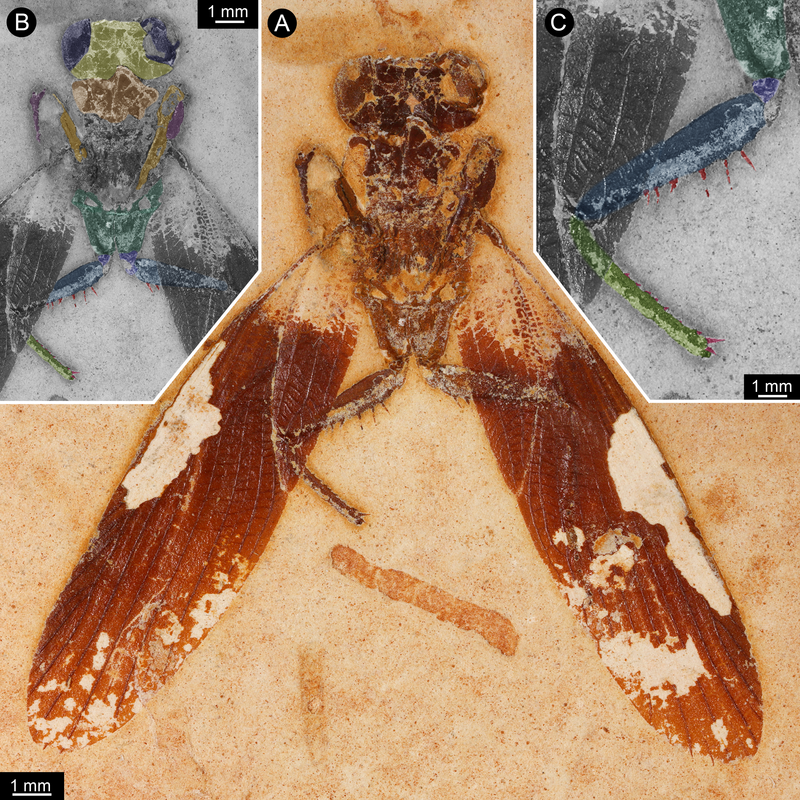
In 2017, an exceptionally well preserved Santanmantis fossil from the Crato Formation of the Santana Group was described. This fossil includes much of the animal's head, thorax, and wings. The head measures 0.2 inches (4 mm) wide, while the wings measure 0.6 inches (16 mm) long and retain remarkably detailed vein patterns. The two front pair of legs are also present in the fossil. Both of which were covered in spines. The longest of these erect spines measure 0.2 inches (0.4 mm) in length. This is significantly different from modern mantises, which typically only bear spines on their first pair of limbs. According to the researchers who described the 2017 specimen, this "strongly indicate(s) that these appendages were involved in the prey-catching process," suggesting that predatory behavior in ancient insects may have been more diverse that previously thought. Santanmantis fed on other insects and perhaps small vertebrates. Praying mantises have been around for approximately 145 million years, since the Late Jurassic epoch, but they really started to diversify during the Cretaceous period. Their closest relatives are cockroaches and termites. Santanmantis only included one species, S. axelrodi. For the making of this drawing I highly referenced a piece published by the authors of the 2017 study (Marie Hornig et al.) (Santanmantis). The colors are based off of the European praying mantis (Mantis religiosa).

image.jpg

EACUeS0WwAA9Fgy

Egvj8jrUcAAuYWy


Picture and Information Resources:
 
Last edited:
NUMBER ONE HUNDRED THIRTY: The giant short-faced hyena.

Ej_0VQDVoAE691q


Above: Giant short-faced hyena by me.
  • Animal: Giant short-faced hyena (Pachycrocuta brevirostris)
  • Name Pronunciation: Pack-ee-crow-coot-ah
  • Name Meaning: "Thicc hyena"
  • Named By: Kretzoi - 1938
  • Classification: Life, Eukaryota, Animalia, Chordata, Vertebrata, Gnathostomata, Osteichthyes, Tetrapodomorpha, Tetrapoda, Reptiliomorpha, Amniota, Synapsida, Therapsida, Mammalia, Placentilia, Boreoeutheria, Carnivora, Feliformia, Hyaenidae
  • When: ~ 3,000,000 B.C.E. to 500,000 B.C.E. (Pliocene and Pleistocene epoch)
  • Where: Africa and Eurasia
  • Size: Big, for a hyena
  • Diet: Carnivore
The giant short-faced hyena lived 3 million to 500,000 years ago (during the Pliocene and Pleistocene epochs) in Eurasia and southern and eastern Africa. This was the largest hyena of all time. It stood about 3.2 feet (1 meter) at the shoulder, which isn’t much taller than the modern spotted hyena (Crocuta crocuta), and weighed between 242.5 and 330.7 pounds (110 and 150 kg), about as heavy as a lioness (Panthera leo). It had extremely powerful jaws with robust, well developed teeth. Thick, strong molars allowed it to crush and crack opens bones with ease. But there was a downside to this hyena’s immense bone cracking capability. The structure of the jaws meant it wasn’t capable of using its longer, sharper canine teeth to bite down with much force. Add on the fact its large body mass and short, thick front legs made it a bad runner and you’ll see that the giant short-faced hyena was likely a less effective predator than modern hyenas. Thus it is thought this species was a kleptoparasitic scavenger, stealing kills from other carnivores. Its large body mass meant fewer animals would have the ability to resist a hostile hyena takeover. Interestingly, Pachycrocuta fossils have been discovered in the same Chinese caves as the human ancestor Homo erectus; however, it’s unknown if H. erectus were hunting hyenas, if hyenas were hunting H. erectus, or if both species merely occupied the same cave at different times. We do not currently know whether this species was a pack or solo hunter. Several other species of Pachycrocuta have been proposed but the giant short-faced hyena is by far the best studied and most widely recognized species. It has been proposed that the giant short-faced hyena was outcompeted and driven to extinction by the spotted hyena, which was formerly present in Eurasia as Africa. Perhaps other large predators, such as lions, cave lions (Panthera spelaea), tigers (Panthera tigris), and grey wolves (Canis lupus) also put pressure on it. For the making of this drawing I referenced a photograph of a spotted hyena by Ben Coley (https://ecotraining.co.za/hyenas-not-underdogs-wild).

Pachycrocuta-size-738x591.jpg

mauricioanton.jpg

pachycrocuta-life.jpg

800wm

800px-Pachycrocuta_brevirostris_1.JPG


Picture and Information Resources:
 
NUMBER ONE HUNDRED THIRTY-ONE: Tough-toothed ratfish cousin.

EkEurJeVcAA2imb

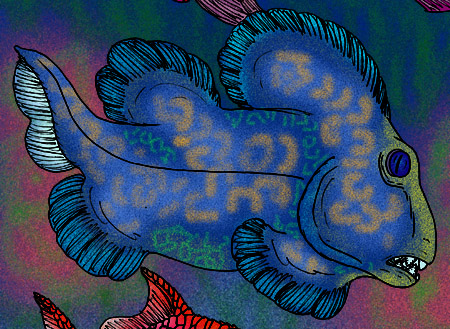
Above: Belantsea montana by me.
  • Animal: Belantsea
  • Name Pronunciation: Be-lant-se-ah
  • Name Meaning: Named after a legendary ancestor of the Crow Nation
  • Named By: Richard Lund - 1989
  • Classification: Life, Eukaryota, Animalia, Chordata, Vertebrata, Gnathostomata, Chondrichthyes, Holocephali, Petalodontiformes, Petalodontidae
  • When: ~ 350,000,000 B.C.E. (Tournaisian stage of the Carboniferous period)
  • Where: Bear Gulch Limestone (Montana, U.S.A.)
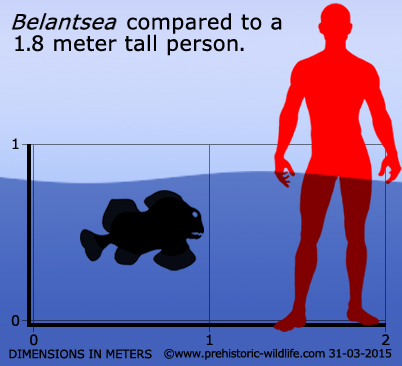
  • Size: 27.5 inches (70 cm) long
  • Diet: Carnivore
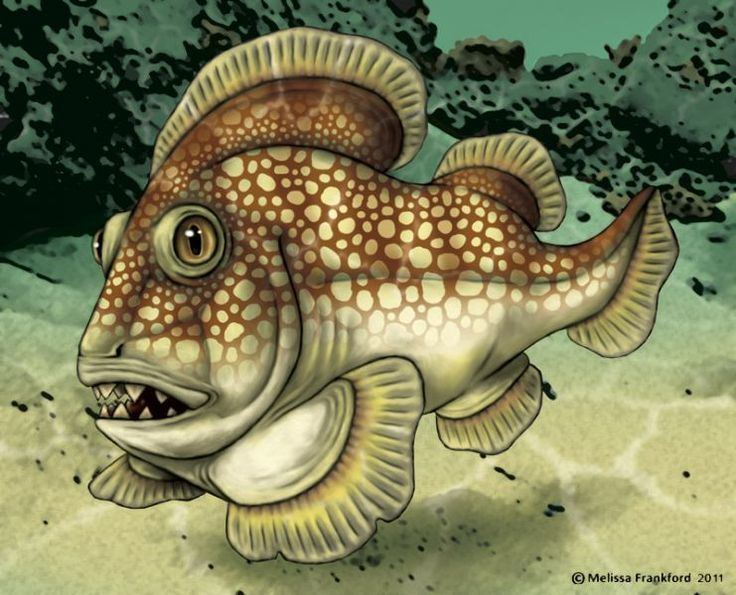
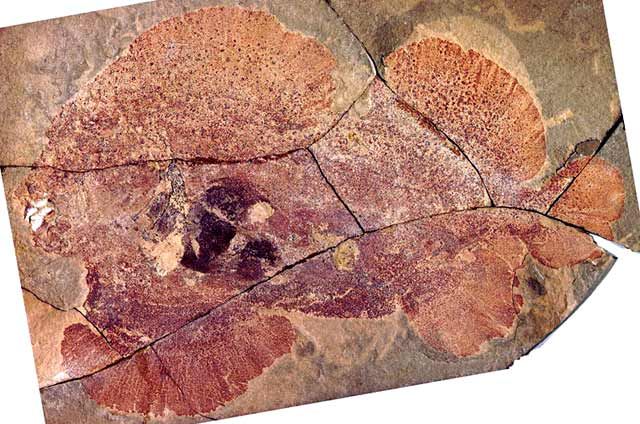
Belantsea was a petalodontiform fish. Petalodontiformes was an order of cartilaginous fishes (meaning their skeletons were made of cartilage instead of bone) related to modern ratfishes. They lived during the Carboniferous and Permian periods are are presumed to have died out during the Permian-Triassic extinction event (which is colloquially called the Great Dying). Belantsea lived approximately 350 million years ago in coral reefs in shallow ocean waters in what is now the U.S. state of Montana. This 27.5 inch (70 cm) long fish had a leaf-shaped body, muscular fins, and a short tail. Such a body plan would of allowed for great maneuverability, but at the cost of speed. Its teeth were triangular and tightly packed and thus formed a dental arrangement similar to a beak which would have easily broken the hard exteriors of bryozoans, sponges, crinoids, and other encrusting animals. Most petalodontiforms are known from only known incomplete remains, however two species, Belantsea montana and Janassa bituminosa (from the Permian of Europe) are known from whole specimens. This genus contained two species, B. montana and B. occidentalis. For the making of this drawing I highly referenced a piece published by Richard Lund in a 1989 study (https://jstor.org/stable/4523270?seq=4#metadata_info_tab_contents).

belantsea-size.jpg

Belantsea_montana.JPG

petalodontiformes-5ded1d78-2f4b-46f3-b066-5112fc5a71b-resize-750.jpeg

a0587f8d6ce1c4c39340dd1a66aa3245.jpg


Picture and Information Resources:
 
NUMBER ONE HUNDRED THIRTY-TWO: Giant fowl of New Caledonia.

EkLV1dvVcAA93Cx

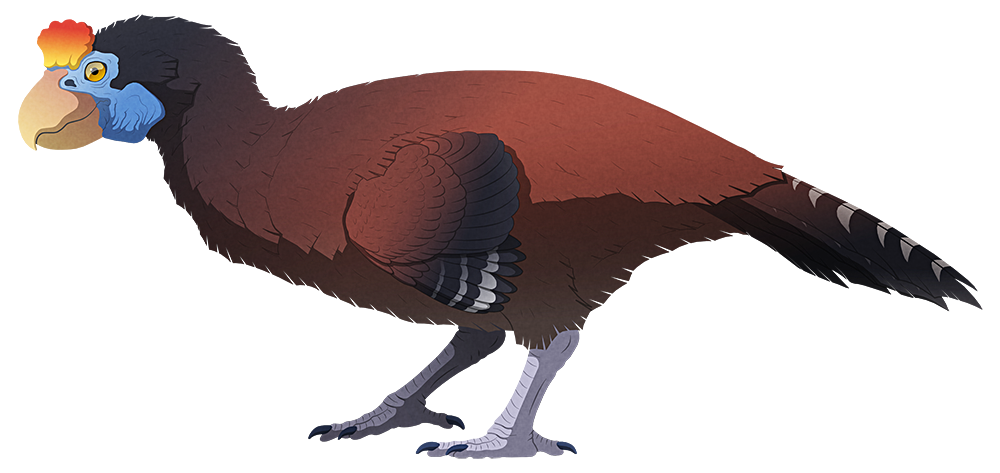
Above: Sylviornis neocaledoniae by me.
  • Animal: Sylviornis
  • Name Pronunciation: Sill-vie-orn-is
  • Name Meaning: "Forest bird"
  • Named By: Poplin - 1980
  • Classification: Life, Eukaryota, Animalia, Chordata, Vertebrata, Gnathostomata, Osteichthyes, Sarcopterygii, Tetrapodomorpha, Tetrapoda, Reptiliomorpha, Amniota, Sauropsida, Eureptilia, Sauria, Archosauromorpha, Archosauriformes, Archosauria, Dinosauria,‭ ‬Saurischia,‭ ‬Theropoda,‭ Paraves, Avialae, Aves, Neognathae, Pangalliformes, Sylviornithidae
  • When: Went extinct around 2,500 years ago (Holocene epoch of the Quaternary period)
  • Where: New Caledonia
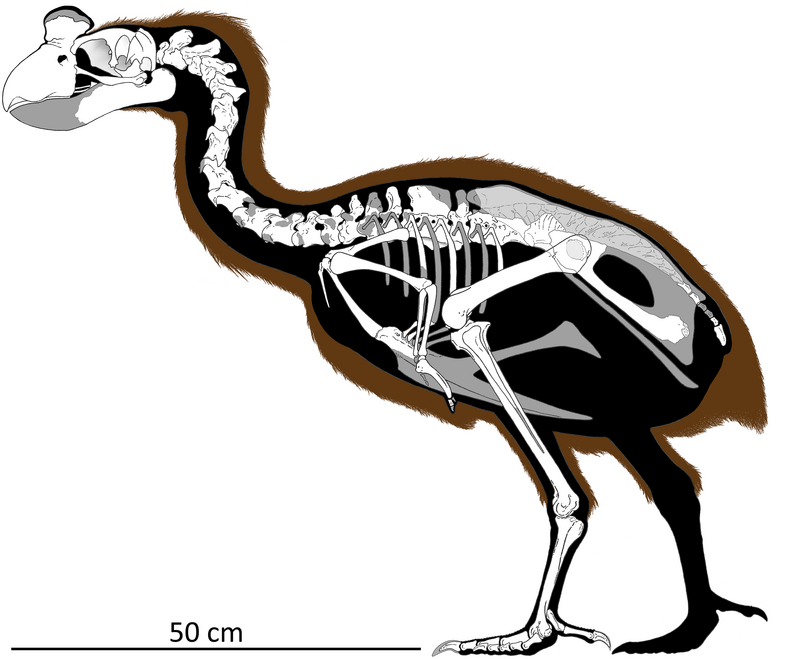
  • Size: 2.5 feet (0.75 m) tall, 5.6 feet (1.7 m) long, and 66 pounds (30 kg)
  • Diet: Herbivore
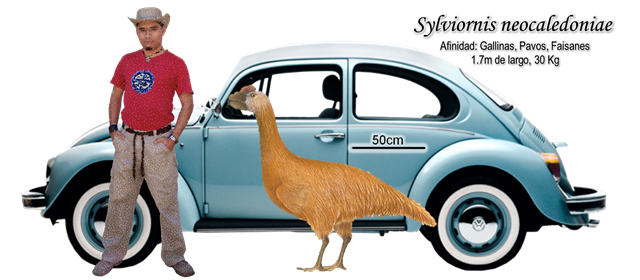
Where exactly Sylviornis sits on the bird family tree has been debated since its discovery. It was initially mistaken for a ratite (a group of mostly large flightless birds that includes ostriches and cassowaries), then it was considered a megapode (a group Australasian chicken-sized birds), now it is considered a stem-galliform, distantly related to chickens. It lived up until around 2,500 years ago (Holocene epoch) on New Caledonia (an archipelago near Australia). Sylviornis is an example of what island life does to many birds. Not only was this avian much bigger than most of its relatives but it was also flightless. Bird evolution on islands has repeatedly created flightless giants. Examples include the dodo (Raphus cucullatus) of Mauritius, the moas of New Zealand, and the elephant birds of Madagascar. Sylviornis is weird in other aspects too. It had a massive skull with a deep beak topped with a bony crest (which was probably used for display within the species). It also had no wishbone (a bone found in almost all other birds), tiny wings, extra tail vertebrae, and a rib cage and pelvis that looked more akin to a non-avian dinosaur’s. In terms of lifestyle, it was probably a slow-moving herbivore which browsed on plants and used its beak and feet to dig up roots and tubers. Thousands of fossil remains have been found of this bird, with a large proportion of them being juveniles, suggesting the species’ reproductive strategy was to have a large number of young at a time and hope some survived. It probably sat on its nests to incubate the eggs. For such a large bird it appears to have had an extremely short lifespan, just 5 to 7 years. Unfortunately, Sylviornis appears to have been hunted to extinction by humans. Predation by rats and feral dogs and pigs, which were brought to the islands by humans, probably also played a part. The folklore of the Kanak people features stories of a large flightless, crested bird called the “du.” This possibly suggests Sylviornis persisted for sometime alongside humans before finally going to the big bird cage in the sky. This genus contained one species, S. neocaledoniae. For the making of this drawing I highly referenced a piece by “9Weegee” on DeviantArt (Sylviornis by 9Weegee on DeviantArt).

DYCC2rHXkAAm-Ab.png

800px-Sylviornis.PNG

07-sylviornis-neocaledoniae.png

340


Picture and Information Resources:
 
NUMBER ONE HUNDRED THIRTY-TWO: Giant fowl of New Caledonia.

EkLV1dvVcAA93Cx

Above: Sylviornis neocaledoniae by me.
  • Animal: Sylviornis
  • Name Pronunciation: Sill-vie-orn-is
  • Name Meaning: "Forest bird"
  • Named By: Poplin - 1980
  • Classification: Life, Eukaryota, Animalia, Chordata, Vertebrata, Gnathostomata, Osteichthyes, Sarcopterygii, Tetrapodomorpha, Tetrapoda, Reptiliomorpha, Amniota, Sauropsida, Eureptilia, Sauria, Archosauromorpha, Archosauriformes, Archosauria, Dinosauria,‭ ‬Saurischia,‭ ‬Theropoda,‭ Paraves, Avialae, Aves, Neognathae, Pangalliformes, Sylviornithidae
  • When: Went extinct around 2,500 years ago (Holocene epoch of the Quaternary period)
  • Where: New Caledonia
  • Size: 2.5 feet (0.75 m) tall, 5.6 feet (1.7 m) long, and 66 pounds (30 kg)
  • Diet: Herbivore
Where exactly Sylviornis sits on the bird family tree has been debated since its discovery. It was initially mistaken for a ratite (a group of mostly large flightless birds that includes ostriches and cassowaries), then it was considered a megapode (a group Australasian chicken-sized birds), now it is considered a stem-galliform, distantly related to chickens. It lived up until around 2,500 years ago (Holocene epoch) on New Caledonia (an archipelago near Australia). Sylviornis is an example of what island life does to many birds. Not only was this avian much bigger than most of its relatives but it was also flightless. Bird evolution on islands has repeatedly created flightless giants. Examples include the dodo (Raphus cucullatus) of Mauritius, the moas of New Zealand, and the elephant birds of Madagascar. Sylviornis is weird in other aspects too. It had a massive skull with a deep beak topped with a bony crest (which was probably used for display within the species). It also had no wishbone (a bone found in almost all other birds), tiny wings, extra tail vertebrae, and a rib cage and pelvis that looked more akin to a non-avian dinosaur’s. In terms of lifestyle, it was probably a slow-moving herbivore which browsed on plants and used its beak and feet to dig up roots and tubers. Thousands of fossil remains have been found of this bird, with a large proportion of them being juveniles, suggesting the species’ reproductive strategy was to have a large number of young at a time and hope some survived. It probably sat on its nests to incubate the eggs. For such a large bird it appears to have had an extremely short lifespan, just 5 to 7 years. Unfortunately, Sylviornis appears to have been hunted to extinction by humans. Predation by rats and feral dogs and pigs, which were brought to the islands by humans, probably also played a part. The folklore of the Kanak people features stories of a large flightless, crested bird called the “du.” This possibly suggests Sylviornis persisted for sometime alongside humans before finally going to the big bird cage in the sky. This genus contained one species, S. neocaledoniae. For the making of this drawing I highly referenced a piece by “9Weegee” on DeviantArt (Sylviornis by 9Weegee on DeviantArt).

DYCC2rHXkAAm-Ab.png

800px-Sylviornis.PNG

07-sylviornis-neocaledoniae.png

340


Picture and Information Resources:
If people have stories of this bird than it may have persisted for quite a while longer than the fossils suggest.
 
Just wanted to say that I have been reading this thread and I find it very interesting! Is it still going? I see the last post was 9 days ago so I was just wondering.
 
I will eventually come back to this thread (and ZooChat in general, which I've been largely absent from lately) but as of late I've been focusing on school work, as mentioned above, and in the free time I do have I've been either socializing or working on YT videos. So to tide guys over for a little bit, here is a video I just posted about the mammal relative Lystrosaurus. (Pardon my horrendous narration.)
 
NUMBER ONE HUNDRED THIRTY-THREE: "Bucky is alive." - Captain America

full

Above: Bucky the Tyrannotitan chubutensis by me.
  • Animal: Tyrannotitan
  • Name Pronunciation: Tie-ran-oh-tie-tan
  • Name Meaning: "Tyrant titan"
  • Named By: Fernando Novas et al., 2005
  • Classification: Life, Eukaryota, Animalia, Chordata, Vertebrata, Gnathostomata, Osteichthyes, Sarcopterygii, Tetrapodomorpha, Tetrapoda, Reptiliomorpha, Amniota, Sauropsida, Eureptilia, Sauria, Archosauromorpha, Archosauriformes, Archosauria, Dinosauria,‭ ‬Saurischia,‭ ‬Theropoda,‭ Carcharodontosauridae, Carcharodontosaurinae, Giganotosaurini
  • When: 118,000,000 B.C.E. (Aptian stage of the Late Cretaceous epoch)
  • Where: Argentina (Cerro Barcino Formation)
  • Size: 37 to 43 feet (11.3 to 13.1 m) long
  • Diet: Carnivore
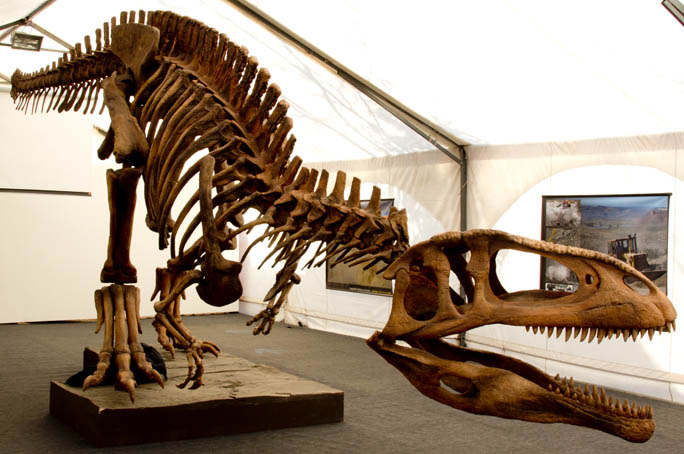
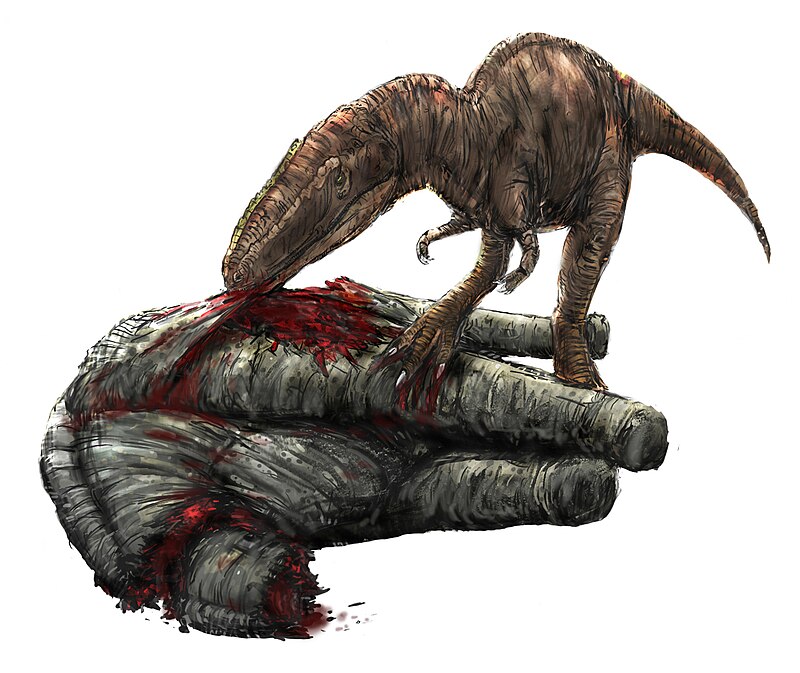
This drawing depicts Bucky the Tyrannotitan. Bucky is the the main dinosaur “antagonist” in the novel I am writing. I named him Bucky because he is missing an arm, like Bucky Barnes of the Marvel Comics (please note in the novel it is says he’s missing his left arm, like the Marvel character, but I accidentally gave him a left arm and took away his right in the drawing). Tyrannotitan was a carcharodontosaurid. Carcharodontosauridae was a family of mostly large bipedal carnivoreous dinosaurs that lived during the Cretaceous period. Tyrannotitan was, along with the more basal Acrocanthosaurus of North America, the oldest carcharodontosaurid. It had a massive elongated skull counterbalanced by a long, heavy tail. Its arms and three-fingered hands were proportionally small compared its large, powerful hindlimbs. In this reconstruction I chose to depict Bucky as having lips like a lizard instead of with exposed teeth like a crocodile. Most paleontologists now believe most meat-eating dinosaurs had lips. I also chose to give him quill-like proto-feathers. This is because another carcharodontosaurid, Concavenator, was found to have had structures resembling quill knobs on one of its arm bones. In modern birds, quill knobs indicate the presence of feathers. Thus it is possible Concavenator, and other carcharodontosaurids, had some type of primitive feathering. I should note the spikes on Bucky’s back are completely speculative.

1920px-Tyrannotitan_Scale.svg.png

Above: Estimated size, compared to a human.
Dinosaurios_los_gigantes_argentinos.jpg

Above: Mounted skeleton.
800px-Tyrannotitan.jpg

Above: Reconstruction of a Tyrannotitan feeding on a Chubutisaurus.

Picture and Information Resources:
 
Last edited:
NUMBER ONE HUNDRED THIRTY-FOUR: "Our greatest glory is not in never falling, but in rising every time we fall." - Confucius (the person, not the dinosaur)

g2sipd7an0861.jpg

Above: Confucius the Changchengornis hengdaoziensis by me.
  • Animal: Changchengornis
  • Name Pronunciation: Chang-cheng-orn-iss
  • Name Meaning: "Great Wall bird"
  • Named By: Ji Q., Chiappe, L. and Ji S. - 1999
  • Classification: Life, Eukaryota, Animalia, Chordata, Vertebrata, Gnathostomata, Osteichthyes, Sarcopterygii, Tetrapodomorpha, Tetrapoda, Reptiliomorpha, Amniota, Sauropsida, Eureptilia, Sauria, Archosauromorpha, Archosauriformes, Archosauria, Dinosauria,‭ ‬Saurischia,‭ ‬Theropoda,‭ Paraves, Avialae, Confuciusornithiformes, Confuciusornithidae
  • When: 124,600,000 B.C.E. (Barriemian stage of the Late Cretaceous epoch)
  • Where: Liaoning, China (Yixian Formation)
  • Size: "Rather small, smaller than the smallest known specimens of Confuciusornis" according to one source
  • Diet: Uncertain, possibly piscivore
This drawing depicts Confucius the Changchengornis. Confucius was a “character” in the novel I am writing. However I decided to trade him out for another “bird” which I’ll post about soon. I named him Confucius because his genus belonged to the family Confuciusornithidae. This group included several bird-like theropod dinosaurs that lived during the Early Cretaceous in what is now northern China. Changchengornis lived 124.6 million years ago (during the Barriemian stage of the Late Cretaceous epoch). Confuciusornithids were first thought to be herbivores due to the lack of teeth. However their anatomy was not adapted for plant consumption, as gastroliths haven’t ever been found, nor did the relatively weak toothless beaks allow for grinding. Since many confuciusornithids have been found near freshwater it is now thought that they perhaps fed on small fishes. While we know that confuciusornithids were capable of flight, how well they could fly is up for debate. It is thought that although they were capable of flapping flight, they specialized in soaring. They may have not been very maneuverable in air. (This is why in switched “birds.” I wanted a species that was a more capable flier because of how I’ve described it in the book.) Confuciusornithids are thought to have been gregarious as they are often fossilized in large flocks. For the making of this drawing, I highly referenced a piece on the “DK find out!” website. (DK Find Out! | Fun Facts for Kids on Animals, Earth, History and more!).

Confuciusornithidae_sizes.png

Above: Estimated size, compared to a human. (Changchengornis is green).
800px-Changchengornis-Geological_Museum_of_China.jpg

Above: Holotype specimen.
800px-Changchengornis_550_CER.JPG

Above: Changchengornis reconstruction.

Picture and Information Resources:
 
Paleoctober 2021: Day 01 - Didymoceras

lir68w8vnxq71.jpg

Animal:
Didymoceras
Scientific Name: Didymoceras nebrascense
What: Ammonite cephalopod
Where: United States and possibly Israel
Diet: Disputed
Population Status: Extinct
Bio: Ammonites were a group of shelled cephalopods that lived during the age of the dinosaurs, the Mesozoic Era. Didymoceras lived during the Late Cretaceous, 76 million years ago. It lived in an shallow inland sea that cut North America in two. It was sexually dimorphic in size, with males measuring 7.1 inches (180 mm) long and females measuring 11 inches (270 mm) long. The peculiar shell shape of Didymoceras tells paleontologists it was a poor swimmer. It is believe it either drifted in the currents, collecting plankton and other small animals with its tentacles like jellyfishes, or crawled along the seabed and fed on slow-moving bottom dwellers.
 
Back
Top