Artis Royal Zoo Historical notes from Artis

Artis Zoo Amsterdam is the only ZTL collection to have had and bred
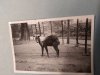
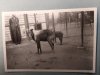
Sechuran fox ( Lycalopex sechurae ) 1932 - 1942
World first breeding at Amsterdam 1940

Here one of the very few photo's made of captive specimens of this species. This is one of the Sechuran foxes at Artis. This one was recieved 1938 from Peru ( photo from a newspaper article ) :

Naamloos sechuan fox artis 1940.png
 

Attachments

  • Naamloos sechuan fox artis 1940.png
    Naamloos sechuan fox artis 1940.png
    395 KB · Views: 128
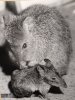
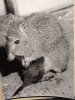
Tasmanian long-nosed potoroo (Potorous tridactylus apicalis) were kept and bred several times at Artis Zoo Amsterdam.
The young on the photo was born probably in the 1950s / 1960s
In 1894 the first(?) young was born at Artis Zoo. This might be a European / World first.
Currently only Opole Zoo (Poland) breeds this (sub)species..
 

Attachments

  • Amsterdam Artis Zoo Potorous tridactylus apicalis IMG_20240326_104924790.jpg
    Amsterdam Artis Zoo Potorous tridactylus apicalis IMG_20240326_104924790.jpg
    90 KB · Views: 6
  • Amsterdam Artis Zoo Potorous tridactylus apicalis fok IMG_20240326_104808230.jpg
    Amsterdam Artis Zoo Potorous tridactylus apicalis fok IMG_20240326_104808230.jpg
    107 KB · Views: 5
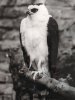
Artis Zoo Amsterdam kept a Tyrant hawk-eagle (Spizaetus melanoleucus) from 1962 - 1985
 

Attachments

  • Amsterdam Artis Zoo Spizaetus melanoleucus IMG_20240402_150106650.jpg
    Amsterdam Artis Zoo Spizaetus melanoleucus IMG_20240402_150106650.jpg
    59.8 KB · Views: 6
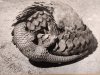
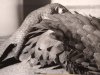
According to ZTL Artis Zoo Amsterdam kept 4 pangolin species in the 20th century and bred 2 of them:
- Manis tetradactyla 1969 - ? (breeding - see photo attached)
- Manis gigantea 1968 - ? (breeding)
- Manis javanica 1960s at least
- Manis tricuspis (unclear identification)

The young were probably conceived in the wild and born in Artis Zoo.

The only true breeding succes of pangolin (Manis pentadactyla) in Europe was achieved by Zoo Praha (Prague, Czech Republic) in 2023


Attachments

  • Amsterdam Artis Zoo Manis tetradactyla met jong IMG_20240109_124651614.jpg
    Amsterdam Artis Zoo Manis tetradactyla met jong IMG_20240109_124651614.jpg
    175.5 KB · Views: 7
  • Amsterdam Artis Zoo Manis tetradactyla met jong IMG_20240109_124714677.jpg
    Amsterdam Artis Zoo Manis tetradactyla met jong IMG_20240109_124714677.jpg
    120.7 KB · Views: 7
Aardvark (Orycteropus afer) 1969

Not realy a world first breeding - alone at Artis already 1966 and 1968 Aardvarks were born - but the first time an Aardvark was raised sussesfully at a zoo.
The young from 1966 was born to a female which was gravid at arrival and the young died shorthly after birth.
The same pair produced a second baby 1968 and this one did much better but evenso died at an age of 2 1/2 month :
aardvark artis 1968.png
Mother and young 1968

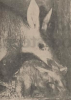
August 1969 again a young was born and this young was raised succesfully, being the world first zoo-born and raised Aardvark. This male-young was send a year later to Burger's Zoo - Arnhem.
aardvarkens aug 1969 artis raised.png
Mother and young 1969

Zootierliste mentions 3 succesful births at Artis ( 1969, 1975 and 1977 ) but an employee of Artis mention another succesful birth between 1969 and 1975 and the total number of births mentioned at ZTL is 7 ( unsuccesful births 1966, 1968, 1971 and 1973 ) wereas other sources speaks of 9 births during this period.

The first Aardvark arrived already 1869 at Artis and 1876 another one was recieved.
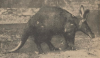
1927 an Ethiopian aardvark was donated to the Zoo and this animal lived untill 1936 :
Ethiopian aardvark Artis donated 1927 photo made 1934.png
Ethiopian aardvark photo from 1934

After this Artis recieved their next Aardvark 1963 and 1966 the pair arrived with which the breeding-results were archieved. From 1984 on Artis doesn't keep Aardvarks anymore.
 

Attachments

  • aardvark artis 1968.png
    aardvark artis 1968.png
    284.6 KB · Views: 89
  • aardvarkens aug 1969 artis raised.png
    aardvarkens aug 1969 artis raised.png
    206.1 KB · Views: 84
  • Ethiopian aardvark Artis donated 1927 photo made 1934.png
    Ethiopian aardvark Artis donated 1927 photo made 1934.png
    712.8 KB · Views: 82
Sumatran Serow ( Capricornis sumatraensis) is a rare sight in zoos.
Artis Zoo Amsterdam kept 3 Sumatran Serow:
0,1 : 1894 - 1897
0,1 : 1931 (died same year)
1,0 : 1931 - 1941
The last 2 were the only known pure Sumatran serow .

(On the photo in the background former Artis Zoo director Dr. A. Sunier)
 

Attachments

  • Amsterdam Artis Zoo Capricornis sumatraensis IMG_20231114_155100834.jpg
    Amsterdam Artis Zoo Capricornis sumatraensis IMG_20231114_155100834.jpg
    122.2 KB · Views: 12
  • Amsterdam Artis Zoo Capricornis sumatraensis (kambing oetan) Sunier IMG_20231114_154852592.jpg
    Amsterdam Artis Zoo Capricornis sumatraensis (kambing oetan) Sunier IMG_20231114_154852592.jpg
    99.1 KB · Views: 12
Thanks for your interest, all-seeing Chli.
Only the 1,1 imported by Amsterdam Zoo in 1931 can be traced back to Sumatra as their origin according to the Artis Zoo archives. The very few other specimens that reached Europe lack information on their origin according to ZTL.
The nomenclature and status of Capricornis taxa are not completely resolved. Therefore i don´t know if one may attribute to these 2 specimens the status of Capricornis sumatraensis sumatraensis. The difference between mainland and island specimens might be negligible. In this case the subspecies probably does not exist any more. While ZTL diffentiates.
I don´t know ;)
 
Artis was the first zoo outside Japan to keep Japanese giant spider crab (Macrocheira kaempferi) in 1982.
The animals were a gift of the International Sunshine Aquarium, Tokyo, to celebrate the 100th anniversary of Artis Aquarium in 1982.
 
Fascinating history! Artis has certainly been a pioneer in the zoo world, especially with achievements like the first breeding of the Mountain anoa. It’s incredible to think about how many rare species have thrived there over the years. The story of the Mountain anoa is particularly interesting—it's rare to hear about these animals' early years in zoos, and it’s wonderful that Artis played a significant role in their conservation history. Thanks for sharing these lesser-known stories!
 
Back
Top