Note: This post contains no images, as I took no photos that day. The reasons for this will become evident as you read on.
Day 20 / 5th October, 2014
After having what was arguably the best day of my safari to date I thought maybe things were beginning to look up, but Day 20 actually turned out to be the worst day of the entire holiday (and that includes the day I fell on Kilimanjaro).
The south rim of Ngorongoro Crater has a lot of rainforest-type vegetation, the result of loads of rain, and there was plenty of rain overnight. I got up early for breakfast and took my cameras with me to photograph the sunrise, but visibility was down to only a few hundred metres due to the clouds/fog that had enveloped the crater rim. The only thing of interest was a pair of Red-winged Starlings that had come in from the outdoor deck through an open door and were happily wandering around under the restaurant tables looking for scraps. This species was a Lifer, and seeing them was the only good thing that happened that day.
Innocent picked me up and drove me through the fog to the Parks HQ not far away for my early morning bird walk at 8:00am. This modern building was in a small town/village comprised of a few buildings – mainly government offices – and a petrol station. At 8:20 somebody arrived to open up the office, and after a few phone calls we learnt there wouldn’t be anyone available for a couple of hours. As it was still raining, foggy, and the ground was quite muddy, and visibility was sometimes as little as 5 metres, I reluctantly decided to cancel the walk. Before leaving the office I picked up a few brochures and purchased a foldout map of the Ngorongoro Conservation Area, with a focus on the Crater which makes up only about 3% of the Conservation Area. The brochures were free, but the map was around $20. I had seen maps for the Serengeti at similar prices and it appears that maps are an expensive commodity as they are not as popular as books and brochures, so they have a smaller print run. I was also able to buy a couple of bottles of Coke, and a couple of bottles of Stoney (the locally produced Ginger Beer).
So we left the Crater Highlands and headed westward again.
Our destination was Lake Natron, famed for its flamingos, and not on 90% of the standard Tanzanian safaris. I had specifically asked for Lake Natron because I wanted to ensure seeing flamingos, and this is the only regular breeding site in East Africa for more than 2.5 million Lesser Flamingos. Although in hindsight I needn’t have bothered as I saw over 500 in the crater, and more than 5,000 a week later.
Natron is directly north of Ngorongoro and the northern part of the lake borders Kenya. Because of the steep Highlands, there are only two main ways to access the Lake, from the Serengeti in the west (we had originally planned to go there from Lobo), and from Mto wa Mbu in the east. However, Innocent knew another way from Ngorongoro, by heading westwards down to the plains, and then heading north along the base of the highlands to the join the road from Lobo.
So we headed westwards towards the Serengeti again, and within a few minutes of starting down the mountains we came out of the clouds and then the sun came out. We could still see the clouds, hanging around the mountain tops.
At about 9:00am, only 30 minutes after leaving, the Landrover made a loud noise and Innocent pulled off the road, driving onto some level grassland where a Masai boy was grazing his goats, and stopped under a small acacia tree. He jumped out and lifted the bonnet, then came back with the bad news – “Alternator broken”.
So he went back to work under the bonnet (or hood, as it’s also known) and I went for a quick walk to see if there were any birds around – there weren’t. When I came back I saw lots of pieces of the engine on the ground, and one shiny silver sphere (that looked strangely like a nuclear device I’d seen in a movie at some point) had not just been removed but also been taken apart. That’s when I realised the gravity of our situation.
Unfortunately, although I’m a fairly good driver, I don’t know the first thing about what goes on under the bonnet so I was unable to offer Innocent any help whatsoever. So I left him to it and sat in the car reading a book, glad that I had bought something to drink as it was now getting rather hot. Luckily, there was a light breeze which blew through the car’s open door.
Half-an-hour later the engine was put back together again. Innocent started her up and we travelled about 50 metres before the engine just stopped. We hadn’t even made it back to the road.
Innocent looked over his shoulder at me: “That’s it. We’re not going anywhere without a new alternator.”
“So what do we do now?” I asked, genuinely curious as I’m sure there’s no AA, RACQ, NRMA or any other type of Roadside Assistance in Tanzania. “Is there a mechanic or tow-truck that could come and get us?”
“Maybe” he answered “but today’s Sunday”.
So he pulled out his mobile phone and started making some calls. Despite being in the middle of nowhere there was excellent reception in most parts of Tanzania – in fact I had reception on top of Kilimanjaro!
After a short time he came and told me that some friends were coming to tow us to Karatu, on the other side of the highlands, but they would be a while. So I sat in the car drinking my Coke and Stoney, doing sudokus, and occasionally going for a quick walk to see if there was any wildlife of interest about.
At 2:00pm – five hours after arriving at this spot - Innocent’s friends turned up, two old guys in a Landcruiser that looked even more ancient than Innocent’s. They hitched a tow-rope between the vehicles and then I was invited to ride in the back of the lead vehicle while Innocent would ride in his. And so we headed back up into the mountains.
Despite it being hot and sunny halfway down the mountains, the crater rim was still shrouded by a dense fog/cloud that was heavy with moisture and necessitated the use of the windscreen wipers periodically. The driver must have gone to the same driving school as Innocent, because he liked to drive as fast as he could, but on top of the mountain he had to slow down due to the low visibility and the dirt (=muddy) roads.
Five minutes after we drove past the Wildlife Lodge I saw a stone pyramidal monument by the side of the road, and as we went past I could make out two plaques set in the stone, one above the other. On the top one I could just make out the name Michael Grzimek and realised this was where he and his father Bernhard were buried.
The road on this side of the mountain was not as wide or safe as it was on the western side. It was little more than one lane wide, and muddy, and was windy (thats ‘windy’ as in the road winds around). We were driving at about 60kmh which was a little fast in my view, especially considering we were towing another 4WD. Looking out the window to my left I realised we were right on the edge of the crater rim and the ground dropped away very steeply. So I moved over to the right, to add my weight to that side of the vehicle and I noticed on our right was an escarpment with a rather precipitous drop. The road was on a narrow ridge probably less than 10 metres in width.
Despite some sliding around in the mud, we eventually drove intact through some large gates that welcomed you to Ngorongoro (if you were driving up the hill into the reserve). We had to stop there to let the rangers know what we were doing, and I visited the little shop to replenish my supply of soft drinks.
A few kilometres further down the road was the township of Karatu which, despite being a Sunday, was busy with people. We were dropped off at a spare parts shop – which was open – and a new alternator was given to Innocent to install while I paid his friends a 20,000 shillings tip. During this time a 14 year old boy demanded i goive him $10. When I asked why he said he wanted it. A short while later the car started up and before leaving we stopped at a guy with an air compressor who preceded to blow a snowstorm of white dust from out of the engine and the underside of the car.
At 4:30 we were ready to go on. I knew Lake Manyara was very close, about an hour away to the campsite, and I discussed this with Innocent. Lake Natron was two and a half hours away.
“Will we be there by dark?” I asked. There seems to be some belief that tourists like to arrive at their accommodation when it’s dark, and I had a hard time convincing them otherwise (I like to do some wildlife watching in the late afternoon). But Innocent indicated we would arrive just as it would be getting dark. So we left Karatu, and the 14 year old who was convinced being rude would garner him $10.
As I said, Natron is not on the main tourist trail, and if I didn’t go then they probably wouldn’t get paid. And as I think the best way I can help the local economy is with money Paying for a service, not because you think you’re entitled to it), I chose to go on to Natron. Which turned out to be the wrong choice.
Firstly, thinking this day couldn’t get worse I discovered soon after that it could. The road to Lake Natron is, quite simply, the worst road I have even been on in my life. It was full of holes and large rocks and was quite abysmal. Bouncing around in the Landcruiser with crappy suspension I was hanging on with both hands, and there were a few times when I almost hit my head on the roof. It got worse after dark. And it got dark when we were only halfway there.
At dusk we came upon a village. The road went through the village, but there was a large white boom across the road at the village entrance. Apparently this was a toll gate. Nearby are some footprints in mud which were made by early hominids, so the village charges tourists 10,000 shillings to pass through. While Innocent was paying a couple of Masai women sitting on the ground got up and wandered over to my window, waving gourds covered in plastic coloured beads at me. I shook my head but they wouldn’t leave until the boom was lifted and we drove on. One of the women made a circle of her thumb and finger and put it over her eye, then put her finger on her cheek just below her eye and pulled the skin down. I think this was some kind of curse, and apparently it worked because the road got even worse.
About an hour later we came to another boom, in the middle of nowhere, but the terrain was such we couldn’t go around it. Innocent was a little puzzled by this one as it shouldn’t have been there. He hit the horn and a guy appeared.
Apparently the guy had bought the rights from the Tanzanian Parks authority to have a toll gate. As this is the only road to Lake Natron, and Parks can’t afford to put in their own tollgates and staff them, this guy pays Parks something like USD$100 a month. He mans the toll gate and collects 15,000 shillings (around USD$6.00) each way, although he can charge whatever he likes. He keeps whatever he collects. So Innocent paid 30,000 shillings for our trip in and our trip out. He was not happy about this as he recognised it would kill tourism, and suspected someone in Parks was lining his pockets with USD$100 a month.
Innocent was even more pissed off when we came across yet another one 10 kilometres down the road!
Eventually, around 8:30pm we arrived at Halisi Tented Camp, situated about a kilometre from the lake’s shoreline. I collected my bags and followed a camp worker while another directed Innocent and his Landcruiser to the guide’s accommodation. But I was not taken to my tent; instead I ended up at another large tent where I was met by the camp manager and the chef, who had a refreshing glass of cold apple juice for me. Very refreshing as it was quite hot here.
The manager welcomed me to the camp and then started waffling an introduction to the camp and Lake Natron. I interrupted him:
“Thank you, umm, but I’d like to go to my tent and freshen up before dinner.”
“Yes, but I will give you the briefing first” he replied, and then started again.
“How long will the briefing take?”
“About 20 minutes. The camp was built in 2012 ...”
I was standing there, wearing a backpack, binoculars and camera, and carrying a suitcase in one hand an empty glass in the other, and I was expected to wait like this for the next 20 minutes?
“No”, I interrupted again, ever so politely “I would like to go to my tent. I will hear the briefing when I return”
“No” he replied “I give you the briefing now. On arrival.” He paused and started again with his spiel.
“Listen” I interrupted again, keeping my voice quite, my tone calm and friendly “I’ve been on the road for 13 hours, the last four of which have been on the worst road I have ever been on. I’m tired, hot, sweaty, dusty, and a desperately need to use a bathroom. I promise you I will be back here in ten minutes and you can give me your briefing then, but right now I would really like to go to my tent.”
I immediately started considering my next option if he still resisted. I wasn’t going to raise my voice, or change the tone of my voice to something sterner – I just wasn’t in the mood for something along those lines. So two options quickly popped into my head: If he said no and started waffling again I could either say “Ok, I’ll find it myself” and wander off into the dark, or I could put down my bags, walk over to a nearby bush and relieve myself, because I really was in need of a toilet.
Luckily, the manager relented when I said I needed a bathroom and he instructed one of the camp workers to escort me to my tent. The tent was similar to the one in the Serengeti, except it had lights (which were powered by small solar panels on the roof. So I quickly used the facilities, splashed some water on my face, and went back to the larger tent which turned out to be the dining room.
The manager was not there, but the chef said he would be back soon, and my dinner was brought out for me. During dinner the manager arrived and gave me the briefing. Which only went for five minutes. I apologised for my earlier behaviour, and as this camp tries to leave as minimal an environmental footprint as possible I asked him some questions regarding their protocols and technology (which is mostly solar), which he seemed to appreciate as he said the other patrons don’t usually ask such questions.
After dinner he escorted me to my room where I unpacked and then fell into bed, completely exhausted. During the night the wind picked up and was quite loud, waking me at one point, but I soon fell asleep again.
The worst day of the safari so far, but things could only get better from here.
New Bird Species: Red-winged Starling

Hix
As mentioned initially, this post has no images, and no discussion of animals. Hopefully it was still of interest.
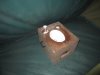
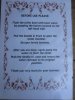
For those of you who like looking at pictures, no matter what they are of, attached is a photo of the toilet in my tent (that I was so desperate to visit), and the instructions on how to use it.
Day 20 / 5th October, 2014
After having what was arguably the best day of my safari to date I thought maybe things were beginning to look up, but Day 20 actually turned out to be the worst day of the entire holiday (and that includes the day I fell on Kilimanjaro).
The south rim of Ngorongoro Crater has a lot of rainforest-type vegetation, the result of loads of rain, and there was plenty of rain overnight. I got up early for breakfast and took my cameras with me to photograph the sunrise, but visibility was down to only a few hundred metres due to the clouds/fog that had enveloped the crater rim. The only thing of interest was a pair of Red-winged Starlings that had come in from the outdoor deck through an open door and were happily wandering around under the restaurant tables looking for scraps. This species was a Lifer, and seeing them was the only good thing that happened that day.
Innocent picked me up and drove me through the fog to the Parks HQ not far away for my early morning bird walk at 8:00am. This modern building was in a small town/village comprised of a few buildings – mainly government offices – and a petrol station. At 8:20 somebody arrived to open up the office, and after a few phone calls we learnt there wouldn’t be anyone available for a couple of hours. As it was still raining, foggy, and the ground was quite muddy, and visibility was sometimes as little as 5 metres, I reluctantly decided to cancel the walk. Before leaving the office I picked up a few brochures and purchased a foldout map of the Ngorongoro Conservation Area, with a focus on the Crater which makes up only about 3% of the Conservation Area. The brochures were free, but the map was around $20. I had seen maps for the Serengeti at similar prices and it appears that maps are an expensive commodity as they are not as popular as books and brochures, so they have a smaller print run. I was also able to buy a couple of bottles of Coke, and a couple of bottles of Stoney (the locally produced Ginger Beer).
So we left the Crater Highlands and headed westward again.
Our destination was Lake Natron, famed for its flamingos, and not on 90% of the standard Tanzanian safaris. I had specifically asked for Lake Natron because I wanted to ensure seeing flamingos, and this is the only regular breeding site in East Africa for more than 2.5 million Lesser Flamingos. Although in hindsight I needn’t have bothered as I saw over 500 in the crater, and more than 5,000 a week later.
Natron is directly north of Ngorongoro and the northern part of the lake borders Kenya. Because of the steep Highlands, there are only two main ways to access the Lake, from the Serengeti in the west (we had originally planned to go there from Lobo), and from Mto wa Mbu in the east. However, Innocent knew another way from Ngorongoro, by heading westwards down to the plains, and then heading north along the base of the highlands to the join the road from Lobo.
So we headed westwards towards the Serengeti again, and within a few minutes of starting down the mountains we came out of the clouds and then the sun came out. We could still see the clouds, hanging around the mountain tops.
At about 9:00am, only 30 minutes after leaving, the Landrover made a loud noise and Innocent pulled off the road, driving onto some level grassland where a Masai boy was grazing his goats, and stopped under a small acacia tree. He jumped out and lifted the bonnet, then came back with the bad news – “Alternator broken”.
So he went back to work under the bonnet (or hood, as it’s also known) and I went for a quick walk to see if there were any birds around – there weren’t. When I came back I saw lots of pieces of the engine on the ground, and one shiny silver sphere (that looked strangely like a nuclear device I’d seen in a movie at some point) had not just been removed but also been taken apart. That’s when I realised the gravity of our situation.
Unfortunately, although I’m a fairly good driver, I don’t know the first thing about what goes on under the bonnet so I was unable to offer Innocent any help whatsoever. So I left him to it and sat in the car reading a book, glad that I had bought something to drink as it was now getting rather hot. Luckily, there was a light breeze which blew through the car’s open door.
Half-an-hour later the engine was put back together again. Innocent started her up and we travelled about 50 metres before the engine just stopped. We hadn’t even made it back to the road.
Innocent looked over his shoulder at me: “That’s it. We’re not going anywhere without a new alternator.”
“So what do we do now?” I asked, genuinely curious as I’m sure there’s no AA, RACQ, NRMA or any other type of Roadside Assistance in Tanzania. “Is there a mechanic or tow-truck that could come and get us?”
“Maybe” he answered “but today’s Sunday”.
So he pulled out his mobile phone and started making some calls. Despite being in the middle of nowhere there was excellent reception in most parts of Tanzania – in fact I had reception on top of Kilimanjaro!
After a short time he came and told me that some friends were coming to tow us to Karatu, on the other side of the highlands, but they would be a while. So I sat in the car drinking my Coke and Stoney, doing sudokus, and occasionally going for a quick walk to see if there was any wildlife of interest about.
At 2:00pm – five hours after arriving at this spot - Innocent’s friends turned up, two old guys in a Landcruiser that looked even more ancient than Innocent’s. They hitched a tow-rope between the vehicles and then I was invited to ride in the back of the lead vehicle while Innocent would ride in his. And so we headed back up into the mountains.
Despite it being hot and sunny halfway down the mountains, the crater rim was still shrouded by a dense fog/cloud that was heavy with moisture and necessitated the use of the windscreen wipers periodically. The driver must have gone to the same driving school as Innocent, because he liked to drive as fast as he could, but on top of the mountain he had to slow down due to the low visibility and the dirt (=muddy) roads.
Five minutes after we drove past the Wildlife Lodge I saw a stone pyramidal monument by the side of the road, and as we went past I could make out two plaques set in the stone, one above the other. On the top one I could just make out the name Michael Grzimek and realised this was where he and his father Bernhard were buried.
The road on this side of the mountain was not as wide or safe as it was on the western side. It was little more than one lane wide, and muddy, and was windy (thats ‘windy’ as in the road winds around). We were driving at about 60kmh which was a little fast in my view, especially considering we were towing another 4WD. Looking out the window to my left I realised we were right on the edge of the crater rim and the ground dropped away very steeply. So I moved over to the right, to add my weight to that side of the vehicle and I noticed on our right was an escarpment with a rather precipitous drop. The road was on a narrow ridge probably less than 10 metres in width.
Despite some sliding around in the mud, we eventually drove intact through some large gates that welcomed you to Ngorongoro (if you were driving up the hill into the reserve). We had to stop there to let the rangers know what we were doing, and I visited the little shop to replenish my supply of soft drinks.
A few kilometres further down the road was the township of Karatu which, despite being a Sunday, was busy with people. We were dropped off at a spare parts shop – which was open – and a new alternator was given to Innocent to install while I paid his friends a 20,000 shillings tip. During this time a 14 year old boy demanded i goive him $10. When I asked why he said he wanted it. A short while later the car started up and before leaving we stopped at a guy with an air compressor who preceded to blow a snowstorm of white dust from out of the engine and the underside of the car.
At 4:30 we were ready to go on. I knew Lake Manyara was very close, about an hour away to the campsite, and I discussed this with Innocent. Lake Natron was two and a half hours away.
“Will we be there by dark?” I asked. There seems to be some belief that tourists like to arrive at their accommodation when it’s dark, and I had a hard time convincing them otherwise (I like to do some wildlife watching in the late afternoon). But Innocent indicated we would arrive just as it would be getting dark. So we left Karatu, and the 14 year old who was convinced being rude would garner him $10.
As I said, Natron is not on the main tourist trail, and if I didn’t go then they probably wouldn’t get paid. And as I think the best way I can help the local economy is with money Paying for a service, not because you think you’re entitled to it), I chose to go on to Natron. Which turned out to be the wrong choice.
Firstly, thinking this day couldn’t get worse I discovered soon after that it could. The road to Lake Natron is, quite simply, the worst road I have even been on in my life. It was full of holes and large rocks and was quite abysmal. Bouncing around in the Landcruiser with crappy suspension I was hanging on with both hands, and there were a few times when I almost hit my head on the roof. It got worse after dark. And it got dark when we were only halfway there.
At dusk we came upon a village. The road went through the village, but there was a large white boom across the road at the village entrance. Apparently this was a toll gate. Nearby are some footprints in mud which were made by early hominids, so the village charges tourists 10,000 shillings to pass through. While Innocent was paying a couple of Masai women sitting on the ground got up and wandered over to my window, waving gourds covered in plastic coloured beads at me. I shook my head but they wouldn’t leave until the boom was lifted and we drove on. One of the women made a circle of her thumb and finger and put it over her eye, then put her finger on her cheek just below her eye and pulled the skin down. I think this was some kind of curse, and apparently it worked because the road got even worse.
About an hour later we came to another boom, in the middle of nowhere, but the terrain was such we couldn’t go around it. Innocent was a little puzzled by this one as it shouldn’t have been there. He hit the horn and a guy appeared.
Apparently the guy had bought the rights from the Tanzanian Parks authority to have a toll gate. As this is the only road to Lake Natron, and Parks can’t afford to put in their own tollgates and staff them, this guy pays Parks something like USD$100 a month. He mans the toll gate and collects 15,000 shillings (around USD$6.00) each way, although he can charge whatever he likes. He keeps whatever he collects. So Innocent paid 30,000 shillings for our trip in and our trip out. He was not happy about this as he recognised it would kill tourism, and suspected someone in Parks was lining his pockets with USD$100 a month.
Innocent was even more pissed off when we came across yet another one 10 kilometres down the road!
Eventually, around 8:30pm we arrived at Halisi Tented Camp, situated about a kilometre from the lake’s shoreline. I collected my bags and followed a camp worker while another directed Innocent and his Landcruiser to the guide’s accommodation. But I was not taken to my tent; instead I ended up at another large tent where I was met by the camp manager and the chef, who had a refreshing glass of cold apple juice for me. Very refreshing as it was quite hot here.
The manager welcomed me to the camp and then started waffling an introduction to the camp and Lake Natron. I interrupted him:
“Thank you, umm, but I’d like to go to my tent and freshen up before dinner.”
“Yes, but I will give you the briefing first” he replied, and then started again.
“How long will the briefing take?”
“About 20 minutes. The camp was built in 2012 ...”
I was standing there, wearing a backpack, binoculars and camera, and carrying a suitcase in one hand an empty glass in the other, and I was expected to wait like this for the next 20 minutes?
“No”, I interrupted again, ever so politely “I would like to go to my tent. I will hear the briefing when I return”
“No” he replied “I give you the briefing now. On arrival.” He paused and started again with his spiel.
“Listen” I interrupted again, keeping my voice quite, my tone calm and friendly “I’ve been on the road for 13 hours, the last four of which have been on the worst road I have ever been on. I’m tired, hot, sweaty, dusty, and a desperately need to use a bathroom. I promise you I will be back here in ten minutes and you can give me your briefing then, but right now I would really like to go to my tent.”
I immediately started considering my next option if he still resisted. I wasn’t going to raise my voice, or change the tone of my voice to something sterner – I just wasn’t in the mood for something along those lines. So two options quickly popped into my head: If he said no and started waffling again I could either say “Ok, I’ll find it myself” and wander off into the dark, or I could put down my bags, walk over to a nearby bush and relieve myself, because I really was in need of a toilet.
Luckily, the manager relented when I said I needed a bathroom and he instructed one of the camp workers to escort me to my tent. The tent was similar to the one in the Serengeti, except it had lights (which were powered by small solar panels on the roof. So I quickly used the facilities, splashed some water on my face, and went back to the larger tent which turned out to be the dining room.
The manager was not there, but the chef said he would be back soon, and my dinner was brought out for me. During dinner the manager arrived and gave me the briefing. Which only went for five minutes. I apologised for my earlier behaviour, and as this camp tries to leave as minimal an environmental footprint as possible I asked him some questions regarding their protocols and technology (which is mostly solar), which he seemed to appreciate as he said the other patrons don’t usually ask such questions.
After dinner he escorted me to my room where I unpacked and then fell into bed, completely exhausted. During the night the wind picked up and was quite loud, waking me at one point, but I soon fell asleep again.
The worst day of the safari so far, but things could only get better from here.
New Bird Species: Red-winged Starling
Hix
As mentioned initially, this post has no images, and no discussion of animals. Hopefully it was still of interest.
For those of you who like looking at pictures, no matter what they are of, attached is a photo of the toilet in my tent (that I was so desperate to visit), and the instructions on how to use it.