You are using an out of date browser. It may not display this or other websites correctly.
You should upgrade or use an alternative browser.
You should upgrade or use an alternative browser.
Hix Does Tanzania - Sure As Kilimanjaro Rises Like Olympus Above The Serengeti
- Thread starter Hix
- Start date
-
- Tags
- travel wild animals wildlife

Also congratulations from me Hix ! I do like mountains but here in the Netherlands we don't have many placed to praxice mountain-climbing - the highest "mountain" being 322.7 meters !

Day 11 - 26th September
Day 7 on Kilimanjaro
After having a really good nights sleep - the first in several days - we prepared to depart Horombo Camp. My calves were still sore from all the walking the day before, but we still had about 20 kilometres to go today, all of it downhill. It was to be done in two legs, the first leg of 11 kms was to Mandara Huts, and the second from Mandara to Marangu Gate, where we registered a week ago.
I walked well on the first leg, keeping up with the others and walking at a solid pace without needing a rest or break until we reached Mandara Huts two-and-a-half hours later. A very picturesque place amongst the forest, Mandara Huts are the first stop up the mountain for people taking the Marangu Route. After a very brief rest here we continued onto the final leg down to the Gate.
Unfortunately, my energy was spent by this stage. My calves were quite painful from all the hiking the day before, something was wrong with my right big toe, and the descent here was steeper which meant a greater impact upon my knees. I stopped to rest periodically, and Ibrahim stayed with me. On the way we saw Tree Hyrax, Blue Monkeys and a Duiker (but it was dark and I'm not sure what species it was). I also heard Hartlaubs Turaco, but never saw one.
Eventually we rounded a corner in the path and there was Marangu Gate. We hurried to the registration desk to sign out, I went to the shop and bought a couple of bottles of Coke, and then we all piled into the bus which had come to collect us. It was about 1pm. In total, over the past week, we had walked a total of about 80 kilometres, or 50 miles.
We took off, not for our hotels, but for Moshi. Team Kilimanjaro know of a place that make good cheeseburgers, and lunch here was an inclusion, so we stopped and had something good to eat, and Leo presented us with our certificates. Then after visiting an ATM we got back in the bus and started back towards Arusha.
On the way I asked Jacob about his previous experiences, because he and the others coped very well with the altitude, much better than I had. Apparently, Jacob and Rob had been to Machu Picchu and the foothills of the Himalayas in the past, and all three had been working in Norway recently. But I also learnt that Rob regularly runs in Marathons and Half-marathons, Jacob ran in the GoldCoast Marathon earlier this year, as well as other fun runs, and runs three times a week with a friend, and Lisa runs too. So they were all much fitter than me, which made me feel a bit better.
Eventually we reached our first stop, Kigongoni Lodge, where I got off. My gear was removed from the roofrack and while the porters spent ten minutes re-tying everything down, Leo, Ibrahim, Lisa, Rob and Jacob all had a quick drink at the bar (on me), then we said our goodbyes. I went down to my cottage to have my first shower in a week, then to unpack and repack my luggage, and to connect my laptop to the Hotels wifi and upload my photos of Kilimanjaro to Facebook.
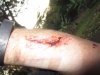
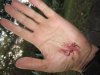
After dinner I removed the bandages from my bad graze on my right arm and hand, washed them thoroughly and photographed them. And then I took stock of all my injuries:
My left palm was very sore and was half-closed - to open it up (i.e. spread my fingers and thumb wide) was very painful. My thumb was still very sore at the base and I couldn't exert a lot of pressure with the thumb. The gash on my forearm was only painful when I rest on it, and a very nasty purple bruise was appearing on my wrist alongside it. My lower lip which had been dried out, was also badly sunburnt. There were sunburns on the backs of both hands, and my right thumb, index finger, and one knuckle were also badly burnt on days when I must have missed those areas with the sunblock. My right big toe was swollen and the toenail felt like it was coming off the toe. And every muscle from the waist down was very sore.
Otherwise, I was in good spirits when I went to bed that night.

Hix
Images:
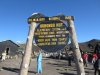
1. Sign at Horombo Huts
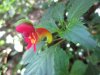
2. Impatiens kilimanjari, an endemic
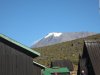
3. Last view of Kibo, from Horombo Huts
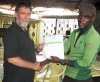
4. Leo presenting me with my certificate
5. Injury to my arm
6. Injury to my hand. Note that this is three days after the accident, and I had just washed the wounds.
Day 7 on Kilimanjaro
After having a really good nights sleep - the first in several days - we prepared to depart Horombo Camp. My calves were still sore from all the walking the day before, but we still had about 20 kilometres to go today, all of it downhill. It was to be done in two legs, the first leg of 11 kms was to Mandara Huts, and the second from Mandara to Marangu Gate, where we registered a week ago.
I walked well on the first leg, keeping up with the others and walking at a solid pace without needing a rest or break until we reached Mandara Huts two-and-a-half hours later. A very picturesque place amongst the forest, Mandara Huts are the first stop up the mountain for people taking the Marangu Route. After a very brief rest here we continued onto the final leg down to the Gate.
Unfortunately, my energy was spent by this stage. My calves were quite painful from all the hiking the day before, something was wrong with my right big toe, and the descent here was steeper which meant a greater impact upon my knees. I stopped to rest periodically, and Ibrahim stayed with me. On the way we saw Tree Hyrax, Blue Monkeys and a Duiker (but it was dark and I'm not sure what species it was). I also heard Hartlaubs Turaco, but never saw one.
Eventually we rounded a corner in the path and there was Marangu Gate. We hurried to the registration desk to sign out, I went to the shop and bought a couple of bottles of Coke, and then we all piled into the bus which had come to collect us. It was about 1pm. In total, over the past week, we had walked a total of about 80 kilometres, or 50 miles.
We took off, not for our hotels, but for Moshi. Team Kilimanjaro know of a place that make good cheeseburgers, and lunch here was an inclusion, so we stopped and had something good to eat, and Leo presented us with our certificates. Then after visiting an ATM we got back in the bus and started back towards Arusha.
On the way I asked Jacob about his previous experiences, because he and the others coped very well with the altitude, much better than I had. Apparently, Jacob and Rob had been to Machu Picchu and the foothills of the Himalayas in the past, and all three had been working in Norway recently. But I also learnt that Rob regularly runs in Marathons and Half-marathons, Jacob ran in the GoldCoast Marathon earlier this year, as well as other fun runs, and runs three times a week with a friend, and Lisa runs too. So they were all much fitter than me, which made me feel a bit better.
Eventually we reached our first stop, Kigongoni Lodge, where I got off. My gear was removed from the roofrack and while the porters spent ten minutes re-tying everything down, Leo, Ibrahim, Lisa, Rob and Jacob all had a quick drink at the bar (on me), then we said our goodbyes. I went down to my cottage to have my first shower in a week, then to unpack and repack my luggage, and to connect my laptop to the Hotels wifi and upload my photos of Kilimanjaro to Facebook.
After dinner I removed the bandages from my bad graze on my right arm and hand, washed them thoroughly and photographed them. And then I took stock of all my injuries:
My left palm was very sore and was half-closed - to open it up (i.e. spread my fingers and thumb wide) was very painful. My thumb was still very sore at the base and I couldn't exert a lot of pressure with the thumb. The gash on my forearm was only painful when I rest on it, and a very nasty purple bruise was appearing on my wrist alongside it. My lower lip which had been dried out, was also badly sunburnt. There were sunburns on the backs of both hands, and my right thumb, index finger, and one knuckle were also badly burnt on days when I must have missed those areas with the sunblock. My right big toe was swollen and the toenail felt like it was coming off the toe. And every muscle from the waist down was very sore.
Otherwise, I was in good spirits when I went to bed that night.
Hix
Images:
1. Sign at Horombo Huts
2. Impatiens kilimanjari, an endemic
3. Last view of Kibo, from Horombo Huts
4. Leo presenting me with my certificate
5. Injury to my arm
6. Injury to my hand. Note that this is three days after the accident, and I had just washed the wounds.
Attachments

A late congratulations from me on reaching the summit! Thanks for all the great photos! Hope those wounds have gotten better by now.
Yes, six weeks on and the hand has healed up nicely with just a pink area on the palm where the scab was, although it is still a little tender. The scar down my arm has shrunk as it starts healing, with just a purple line to indicate where it was. My big toenail is almost completely black, indicating some serious trauma, but the swelling has gone down and the nail appears secure. I also did something to my right thumb (I have no idea what) and it has a nice bruise on it too, but is otherwise fine.
Unfortunately my head expanded to almost double its size when I returned to work, the result of all my work mates telling me how impressed they were with me. It's returned to normal size now, but my ego is still inflated.
Hix
Unfortunately my head expanded to almost double its size when I returned to work, the result of all my work mates telling me how impressed they were with me. It's returned to normal size now, but my ego is still inflated.
Hix

nanoboy
Well-Known Member
Yes, six weeks on and the hand has healed up nicely with just a pink area on the palm where the scab was, although it is still a little tender. The scar down my arm has shrunk as it starts healing, with just a purple line to indicate where it was. My big toenail is almost completely black, indicating some serious trauma, but the swelling has gone down and the nail appears secure. I also did something to my right thumb (I have no idea what) and it has a nice bruise on it too, but is otherwise fine.
Unfortunately my head expanded to almost double its size when I returned to work, the result of all my work mates telling me how impressed they were with me. It's returned to normal size now, but my ego is still inflated.
Hix
You did real good on your trip. Well done!
It's about time I posted details of the rest of my Tanzanian holiday, the three week safari encompassing nine wildlife parks or reserves, plus a couple of reptile parks. We continue on with the day after I arrived back at Kigongoni Lodge from Kilimanjaro (a couple of posts above).
As a comment was made on LaughingDove's http://www.zoochat.com/808/trip-kenya-february-2016-a-435669/ thread regarding the formatting, which I agree with, I will attempt to follow a similar format.
Day 12 - 27th of September
I woke the following morning, rested and relaxed after a good night's sleep in a very comfortable four-poster bed. But when I got up every muscle from the waist down screamed at me in agony. On the previous afternoon my legs felt sore but at the time I thought it was because we had been cramped in the bus for so long. Obviously that wasn't the reason at all - it was due to all the excessive walking I had done in the previous two days.
I hobbled into the bathroom, and had another hot shower, washing my hand as best I could. It was still quite painful as were my sunburnt lips. I knew the pain would go in time but right now there wasn't much I could do except take it easy. Today was a rest day; I had figured I might need a day to relax after climbing the mountain but I had no idea how much I would really need it. And as it turns out, I had a lot of repacking to do, too.
Tomorrow I would fly to Mwanza and start my safari, but I wasn't too sure how I was meant to get there. I knew I would be flying, but I didn't have any flight details so I called Simon at Eastco, the safari company I was using. He told me that my bird guide, Bernard, would be meeting me this afternoon or this evening and would give me all the information I needed. Then I had a nasty thought:
"Is this a commercial or a chartered flight?" I asked.
"A commercial flight" he replied.
"What's the luggage limit?"
"23 kilos" he said.
"Oh," I replied, "I have about 40 kg".
"Good God" he said, and then there was a long pause.
"Don't worry, I'll work something out." I said. " I'm sure I can leave a bag or two here at the Lodge for a few weeks."
I spent the rest of the morning repacking all my mountain climbing equipment and warm clothing I obviously wouldn't need into another bag. I also left some books, batteries and anything else I considered not essential. I also left behind my rain gear. It was heavy, but very waterproof (and had cost about $400). It had not rained on Kili, and despite lots of cloud at lower elevations, I had seen no storm clouds since arriving in the country, nor had I seen any precipitation, so leaving the rain gear behind seemed sensible. After an hour or so of packing and repacking I had the weight down to just under the 23 kilo limit.
I also took the opportunity to get some laundry done - the lodge had a laundry service so all the clothes I had worn on the mountain were taken away and returned that afternoon, nice and clean.
The rest of the morning I spent on the laptop, downloading my photos from Kilimanjaro, sorting and labelling them. Then I took the laptop up to the restaurant to connect to the lodge's wi-fi and log on to ZooChat, check my emails, and most importantly, post the pics of me atop Kilimanjaro on Facebook so all my friends would know I'd been successful.
In the afternoon a couple of men came down to see me. The older one introduced himself as Bernard, my bird guide, and he introduced the younger one as he is associate, Innocent, who worked with him. We sat down and Bernard and I had a long discussion about the birds of Tanzania (and other wildlife) and I realised that he wasn't just a guide that knew a bit about birds but someone who knew the local avifauna quite well indeed.
He gave me an envelope, and inside was my plane ticket.
"Tomorrow morning" he said "a man named Twa will come and pick you up. He will drive you in his car to the airport. You will catch the flight to Mwanza at 10 o'clock and it will take about an hour to get there. On arrival you will be met by Melainya who will drive you to Speke's Bay Lodge. The drive will take about two hours. And the next day Innocent will meet you there in the morning and drive you into the Serengeti to your private tented camp."
"You won't be there?" I asked.
"No, unfortunately I have some urgent family business I must attend to. I will meet you in Ngorongoro."
I looked at Innocent - who appeared to be in his mid-to-late twenties - sitting at the bar and asked "Is he a bird guide too?"
"No, but he is a good guide."
This was not quite what I was hoping for, but I suppose it couldn't be helped; this is Africa after all. So after another half hour of chatting, he and Innocent went on their way. Innocent was driving into the Serengeti tonight, a drive that would take him all night, so tomorrow he could prepare the camp for my arrival the following day.
I had a nice dinner in the restaurant, stayed online using the lodges wi-fi until my laptop's battery was almost dead then went back to my room where I plugged it into a wall socket and worked some more before having an early night.
New Species: Nil
As a comment was made on LaughingDove's http://www.zoochat.com/808/trip-kenya-february-2016-a-435669/ thread regarding the formatting, which I agree with, I will attempt to follow a similar format.
~~~~~~~~~~~~~~~~~~~~~~~~~~~~~~~~~~~~~~~~~~~~~
Day 12 - 27th of September
I woke the following morning, rested and relaxed after a good night's sleep in a very comfortable four-poster bed. But when I got up every muscle from the waist down screamed at me in agony. On the previous afternoon my legs felt sore but at the time I thought it was because we had been cramped in the bus for so long. Obviously that wasn't the reason at all - it was due to all the excessive walking I had done in the previous two days.
I hobbled into the bathroom, and had another hot shower, washing my hand as best I could. It was still quite painful as were my sunburnt lips. I knew the pain would go in time but right now there wasn't much I could do except take it easy. Today was a rest day; I had figured I might need a day to relax after climbing the mountain but I had no idea how much I would really need it. And as it turns out, I had a lot of repacking to do, too.
Tomorrow I would fly to Mwanza and start my safari, but I wasn't too sure how I was meant to get there. I knew I would be flying, but I didn't have any flight details so I called Simon at Eastco, the safari company I was using. He told me that my bird guide, Bernard, would be meeting me this afternoon or this evening and would give me all the information I needed. Then I had a nasty thought:
"Is this a commercial or a chartered flight?" I asked.
"A commercial flight" he replied.
"What's the luggage limit?"
"23 kilos" he said.
"Oh," I replied, "I have about 40 kg".
"Good God" he said, and then there was a long pause.
"Don't worry, I'll work something out." I said. " I'm sure I can leave a bag or two here at the Lodge for a few weeks."
I spent the rest of the morning repacking all my mountain climbing equipment and warm clothing I obviously wouldn't need into another bag. I also left some books, batteries and anything else I considered not essential. I also left behind my rain gear. It was heavy, but very waterproof (and had cost about $400). It had not rained on Kili, and despite lots of cloud at lower elevations, I had seen no storm clouds since arriving in the country, nor had I seen any precipitation, so leaving the rain gear behind seemed sensible. After an hour or so of packing and repacking I had the weight down to just under the 23 kilo limit.
I also took the opportunity to get some laundry done - the lodge had a laundry service so all the clothes I had worn on the mountain were taken away and returned that afternoon, nice and clean.
The rest of the morning I spent on the laptop, downloading my photos from Kilimanjaro, sorting and labelling them. Then I took the laptop up to the restaurant to connect to the lodge's wi-fi and log on to ZooChat, check my emails, and most importantly, post the pics of me atop Kilimanjaro on Facebook so all my friends would know I'd been successful.
In the afternoon a couple of men came down to see me. The older one introduced himself as Bernard, my bird guide, and he introduced the younger one as he is associate, Innocent, who worked with him. We sat down and Bernard and I had a long discussion about the birds of Tanzania (and other wildlife) and I realised that he wasn't just a guide that knew a bit about birds but someone who knew the local avifauna quite well indeed.
He gave me an envelope, and inside was my plane ticket.
"Tomorrow morning" he said "a man named Twa will come and pick you up. He will drive you in his car to the airport. You will catch the flight to Mwanza at 10 o'clock and it will take about an hour to get there. On arrival you will be met by Melainya who will drive you to Speke's Bay Lodge. The drive will take about two hours. And the next day Innocent will meet you there in the morning and drive you into the Serengeti to your private tented camp."
"You won't be there?" I asked.
"No, unfortunately I have some urgent family business I must attend to. I will meet you in Ngorongoro."
I looked at Innocent - who appeared to be in his mid-to-late twenties - sitting at the bar and asked "Is he a bird guide too?"
"No, but he is a good guide."
This was not quite what I was hoping for, but I suppose it couldn't be helped; this is Africa after all. So after another half hour of chatting, he and Innocent went on their way. Innocent was driving into the Serengeti tonight, a drive that would take him all night, so tomorrow he could prepare the camp for my arrival the following day.
I had a nice dinner in the restaurant, stayed online using the lodges wi-fi until my laptop's battery was almost dead then went back to my room where I plugged it into a wall socket and worked some more before having an early night.
New Species: Nil

Great that you've started this thread again, looking forward to it! 
Day 13 - 28th September
I woke early the following morning. I was still sore from the day before but it wasn't quite as bad, and the pain lessened the more I moved around. I had a quick shower and soaked my hand and arm again and then finished repacking everything. By 8 o'clock I was up at reception with my bags, two of which were staying behind at the lodge. At 8:20 Twa arrived and drove me the half hour drive to the airport.
The flight left at 10 o'clock so I had some time to wander around the airport and look at some of the shops, most of them closed which was a shame as there was a bookshop and I would have liked to have seen what books they had on wildlife. The only shop that was open was one selling tanzanite which is a gem only found in Tanzania. There were no prices on the stones and settings (which generally means that they’re expensive). A guy came out and asked me if he could help and I asked him about a pair of ear-rings which turned out to be selling for US$1500. As this was way out of my price range I left and went to the small cafe to get a drink. While there I noticed another patron of the cafe, a young woman of around 20, but very large, wearing a dress that was a very gaudy purple and pink. I remember thinking (not very charitably) that someone that size doesn't need to wear something to draw attention to themselves. And it's not like the colours went well together - they clashed somewhat. Finally my flight was called to board. The flight took an hour to get to Mwanza, and Miss Purple&Pink was on the flight too.
When we arrived there was light rain falling and I cursed myself that I had packed away my rain gear and left it at the lodge – there hadn’t been any rain at all the previous week so I thought I wouldn’t need it, and it was very heavy. Murphy's Law, I guess. Thinking back I realise the reason there had been no rain the previous week was because we had been above the clouds virtually the whole time. After collecting my bags I found my driver who, surprisingly, was a guy and not a woman as I thought Melainya would be, and we started out for Speke's Bay.
Speke's Bay is about a two-hour drive away from Mwanza. The bay is on Speke's Gulf, a large southeastern arm of the giant Lake Victoria, and after an uneventful ride we arrived in a little over the predicted two hours.
Speke's Bay Lodge is on the shore of the bay in a beautiful location with fantastic views of the lake. On arrival I was met by the manager, Jan (pronounced 'yarn'), who is Dutch. Apparently a Dutch couple own place and they employ Dutch staff to run the lodge. Although we arrived around about 2:00 or 2:30 I was a little hungry and the cook agreed to cook some lunch for me. I had a look at the menu and was rather intrigued by the fish pizza so I ordered it. It took about half an hour for me to realise they actually had to start making the pizza from scratch, but by then it was too late and they had already started; had I known I would have ordered something simpler and faster to make (like sandwiches). Eventually it came and was quite tasty, better than it sounded. I sat on the restaurant balcony looking out across the water, and along the beach I saw a number of water birds and a Nile Monitor. I was told a Nile Crocodile calls the beach his home but I couldn’t see it.

The accommodation was first-rate: there are about eight bandas, and each is very well appointed with modern bathrooms, large beds, a loft, and glass doors leading to your own private veranda about 10 metres from the beach. After settling in and finishing lunch I grabbed my camera and went for a walk to see what wildlife I could find.
The lodge is set on several hundred acres and I was told I could wander over the whole range as there were no dangerous mammals, although I should always be aware of snakes. I started walking along the beach (which was about 200 metres in length, terminating with dense papyrus and reeds at each end) and saw Ringed Plovers, Little Egret’s, Blackwinged Stilts, Pied Wagtails, Common and Wood Sandpipers and Spurwing Plovers. Out on a small island 50 metres offshore were Longtail Cormorants, and wheeling around above the island were dozens of White-winged Terns and a few Whiskered Terns.

At the water’s edge some female weavers were having a drink while avoiding the small incoming waves. A pair of African Fishing Eagles perched in a tree overhanging the beach, a Grey-headed Kingfisher perched lower down while Pied Kingfishers hovered over the water, occasionally plunging in and emerging with a fish. On the rocks that formed a retaining wall separating the beach from the rest of the savannah I saw several Striped Skinks.

Moving away from the beach into the Savannah one of the first things I saw was a Side-striped Jackal come running out from behind a bush. I managed to get a couple of quick photos and noticed that it's back leg was bleeding, it obviously had an altercation with something which is probably why it was out during daylight hours. Jan had said I wouldn’t see any mammals, so I was glad to see this one - not only a lifer for me, but I didn’t see another Side-stripe on the safari. Birds however, were very visible here and included lots of the ubiquitous Superb Starling and http://www.zoochat.com/2258/grey-backed-fiscal-shrike-392424/, Red-billed Firefinches, http://www.zoochat.com/2258/water-dikkop-aka-thick-knee-stone-392421/, Hadada Ibis, Marabou Storks, African Mourning Dove, Blue-capped Cordons, African Paradise Flycatcher, Speckled Mousebird, the endemic Greybreasted Spurfowl, and some birds I later had identified as Pale Flycatcher, Spotted Flycatcher, Winding Cisticola, Sulfur-breasted Bush Shrike and Buff-bellied Warbler.

At one point the Grey-backed Fiscals were vocalising very loudly, objecting strongly to something on the ground near them. Suspecting a predator was nearby I hurried over and was in time to see a mongoose running low to the ground. I managed to snap a quick blurry shot of it before it glided into a hole, its dark tail-tip identifying it as a Slender Mongoose. Shortly afterwards I also saw a female Bushbuck and a small family of Dwarf Mongooses, but these were the only mammals I saw that day.
After a couple of hours birding I returned to my banda to prepare for dinner. Outside the accommodations were some Australian Bottlebrushes (Callistemon) the flowers of which had attracted some Red-chested Sunbirds and a pair of http://www.zoochat.com/2258/northern-brown-throated-weaver-392441/ , and nearby a http://www.zoochat.com/2258/swamp-flycatcher-392439/. That made a total of 38 bird species I'd seen that afternoon, of which 34 were new for the year and nine were lifeticks.

After dinner in the restaurant (another fish pizza) Jan came over and told me they had organised an activity for me the following morning: a boatride to the local fishing village a few kilometres away. I was aware that an activity was included in my visit, either the fishing village or a guided bird walk, and you can guess which I was hoping for. I mentioned this to Jan who was quite happy for me to do the bird walk instead, introducing me to the man behind the bar who had been serving me Mirinda Fruitys all night. As well as barman, George was also the bird guide. He told me to be at the bar at 7:00 the next morning for a two hour bird walk.
Back in my room I downloaded all the photos I had taken that day, sorting and labelling them as best I could before I called it a night. My hand and sunburnt lips were still quite sore, but my legs weren’t aching too much. I looked once more through the glass doors over the bay, moonlight reflected in the water, and thought about how beautiful this place was. After the bird walk in the morning Innocent would collect me and take me into the legendary Serengeti where I would spend the next few days in a private camp. And it was these thoughts that were rattling around in my skull when I finally fell asleep.
New Birds: Grey-breasted Spurfowl, Black-winged Stilt, Ringed Plover, Gull-billed Tern, Whiskered Tern, African Mourning Dove, Sulfur-breasted Bush-shrike, Buff-bellied Warbler, Pale Flycatcher, Spotted Flycatcher, Superb Starling, Blue-capped Cordonbleu.
New Mammals: Side-striped Jackal, Slender Mongoose
New Reptiles: Striped Skink
Hix
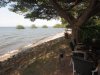
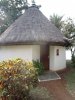
The below attachments are from the lodge:
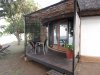
1. The beachside restaurant
2. Entrance to my banda
3. Back of my banda leading to the Bay
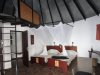
4. Interior of the banda
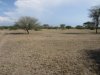
5. A very small part of the extensive grounds of the Speke's Bay Lodge
I woke early the following morning. I was still sore from the day before but it wasn't quite as bad, and the pain lessened the more I moved around. I had a quick shower and soaked my hand and arm again and then finished repacking everything. By 8 o'clock I was up at reception with my bags, two of which were staying behind at the lodge. At 8:20 Twa arrived and drove me the half hour drive to the airport.
The flight left at 10 o'clock so I had some time to wander around the airport and look at some of the shops, most of them closed which was a shame as there was a bookshop and I would have liked to have seen what books they had on wildlife. The only shop that was open was one selling tanzanite which is a gem only found in Tanzania. There were no prices on the stones and settings (which generally means that they’re expensive). A guy came out and asked me if he could help and I asked him about a pair of ear-rings which turned out to be selling for US$1500. As this was way out of my price range I left and went to the small cafe to get a drink. While there I noticed another patron of the cafe, a young woman of around 20, but very large, wearing a dress that was a very gaudy purple and pink. I remember thinking (not very charitably) that someone that size doesn't need to wear something to draw attention to themselves. And it's not like the colours went well together - they clashed somewhat. Finally my flight was called to board. The flight took an hour to get to Mwanza, and Miss Purple&Pink was on the flight too.
When we arrived there was light rain falling and I cursed myself that I had packed away my rain gear and left it at the lodge – there hadn’t been any rain at all the previous week so I thought I wouldn’t need it, and it was very heavy. Murphy's Law, I guess. Thinking back I realise the reason there had been no rain the previous week was because we had been above the clouds virtually the whole time. After collecting my bags I found my driver who, surprisingly, was a guy and not a woman as I thought Melainya would be, and we started out for Speke's Bay.
Speke's Bay is about a two-hour drive away from Mwanza. The bay is on Speke's Gulf, a large southeastern arm of the giant Lake Victoria, and after an uneventful ride we arrived in a little over the predicted two hours.
Speke's Bay Lodge is on the shore of the bay in a beautiful location with fantastic views of the lake. On arrival I was met by the manager, Jan (pronounced 'yarn'), who is Dutch. Apparently a Dutch couple own place and they employ Dutch staff to run the lodge. Although we arrived around about 2:00 or 2:30 I was a little hungry and the cook agreed to cook some lunch for me. I had a look at the menu and was rather intrigued by the fish pizza so I ordered it. It took about half an hour for me to realise they actually had to start making the pizza from scratch, but by then it was too late and they had already started; had I known I would have ordered something simpler and faster to make (like sandwiches). Eventually it came and was quite tasty, better than it sounded. I sat on the restaurant balcony looking out across the water, and along the beach I saw a number of water birds and a Nile Monitor. I was told a Nile Crocodile calls the beach his home but I couldn’t see it.
The accommodation was first-rate: there are about eight bandas, and each is very well appointed with modern bathrooms, large beds, a loft, and glass doors leading to your own private veranda about 10 metres from the beach. After settling in and finishing lunch I grabbed my camera and went for a walk to see what wildlife I could find.
The lodge is set on several hundred acres and I was told I could wander over the whole range as there were no dangerous mammals, although I should always be aware of snakes. I started walking along the beach (which was about 200 metres in length, terminating with dense papyrus and reeds at each end) and saw Ringed Plovers, Little Egret’s, Blackwinged Stilts, Pied Wagtails, Common and Wood Sandpipers and Spurwing Plovers. Out on a small island 50 metres offshore were Longtail Cormorants, and wheeling around above the island were dozens of White-winged Terns and a few Whiskered Terns.
At the water’s edge some female weavers were having a drink while avoiding the small incoming waves. A pair of African Fishing Eagles perched in a tree overhanging the beach, a Grey-headed Kingfisher perched lower down while Pied Kingfishers hovered over the water, occasionally plunging in and emerging with a fish. On the rocks that formed a retaining wall separating the beach from the rest of the savannah I saw several Striped Skinks.
Moving away from the beach into the Savannah one of the first things I saw was a Side-striped Jackal come running out from behind a bush. I managed to get a couple of quick photos and noticed that it's back leg was bleeding, it obviously had an altercation with something which is probably why it was out during daylight hours. Jan had said I wouldn’t see any mammals, so I was glad to see this one - not only a lifer for me, but I didn’t see another Side-stripe on the safari. Birds however, were very visible here and included lots of the ubiquitous Superb Starling and http://www.zoochat.com/2258/grey-backed-fiscal-shrike-392424/, Red-billed Firefinches, http://www.zoochat.com/2258/water-dikkop-aka-thick-knee-stone-392421/, Hadada Ibis, Marabou Storks, African Mourning Dove, Blue-capped Cordons, African Paradise Flycatcher, Speckled Mousebird, the endemic Greybreasted Spurfowl, and some birds I later had identified as Pale Flycatcher, Spotted Flycatcher, Winding Cisticola, Sulfur-breasted Bush Shrike and Buff-bellied Warbler.
At one point the Grey-backed Fiscals were vocalising very loudly, objecting strongly to something on the ground near them. Suspecting a predator was nearby I hurried over and was in time to see a mongoose running low to the ground. I managed to snap a quick blurry shot of it before it glided into a hole, its dark tail-tip identifying it as a Slender Mongoose. Shortly afterwards I also saw a female Bushbuck and a small family of Dwarf Mongooses, but these were the only mammals I saw that day.
After a couple of hours birding I returned to my banda to prepare for dinner. Outside the accommodations were some Australian Bottlebrushes (Callistemon) the flowers of which had attracted some Red-chested Sunbirds and a pair of http://www.zoochat.com/2258/northern-brown-throated-weaver-392441/ , and nearby a http://www.zoochat.com/2258/swamp-flycatcher-392439/. That made a total of 38 bird species I'd seen that afternoon, of which 34 were new for the year and nine were lifeticks.
After dinner in the restaurant (another fish pizza) Jan came over and told me they had organised an activity for me the following morning: a boatride to the local fishing village a few kilometres away. I was aware that an activity was included in my visit, either the fishing village or a guided bird walk, and you can guess which I was hoping for. I mentioned this to Jan who was quite happy for me to do the bird walk instead, introducing me to the man behind the bar who had been serving me Mirinda Fruitys all night. As well as barman, George was also the bird guide. He told me to be at the bar at 7:00 the next morning for a two hour bird walk.
Back in my room I downloaded all the photos I had taken that day, sorting and labelling them as best I could before I called it a night. My hand and sunburnt lips were still quite sore, but my legs weren’t aching too much. I looked once more through the glass doors over the bay, moonlight reflected in the water, and thought about how beautiful this place was. After the bird walk in the morning Innocent would collect me and take me into the legendary Serengeti where I would spend the next few days in a private camp. And it was these thoughts that were rattling around in my skull when I finally fell asleep.
New Birds: Grey-breasted Spurfowl, Black-winged Stilt, Ringed Plover, Gull-billed Tern, Whiskered Tern, African Mourning Dove, Sulfur-breasted Bush-shrike, Buff-bellied Warbler, Pale Flycatcher, Spotted Flycatcher, Superb Starling, Blue-capped Cordonbleu.
New Mammals: Side-striped Jackal, Slender Mongoose
New Reptiles: Striped Skink
Hix
The below attachments are from the lodge:
1. The beachside restaurant
2. Entrance to my banda
3. Back of my banda leading to the Bay
4. Interior of the banda
5. A very small part of the extensive grounds of the Speke's Bay Lodge
Attachments
Last edited:
If you copy the 'Forum code (medium)' from below where the EXIF Data of the pictures is displayed rather than using '

If you copy the 'Forum code (medium)' from below where the EXIF Data of the pictures is displayed rather than using '' for the images they should work fine.[/quote]
Thanks! I was wondering what I was doing wrong!
(It's still fiddly, though)
:p
Hix

Was just wondering; how many bushbuck do you think live up there and do you think they're relatively easy to see or not?
BTW- You're pictures are great!
What's your photography gear?
BTW- You're pictures are great!
What's your photography gear?
How many Bushbuck live in the property at Speke's Bay? I only saw the single female but I imagine there could be half-a-dozen resident, quite possibly more. There are thickets of scrub around the property (not illustrated in the photo attached above) and I only got to cover about 30% of the grounds.
My camera is Canon 70D, usually with a 70-300mm L-series lens. Wide shots (landscapes and buildings, like the attachments above) are taken with a Canon IXUS.
And thanks for the compliment!
Hix
My camera is Canon 70D, usually with a 70-300mm L-series lens. Wide shots (landscapes and buildings, like the attachments above) are taken with a Canon IXUS.
And thanks for the compliment!
Hix
Day 14 - 29th September
I was up at six the following morning and met George at the bar at 7am for the bird walk, and what a great bird walk it was! First off, perched on the edge of the restaurant roof was a pair of Angolan Swallows, and a couple of Slender-billed Weavers hopping around on the thatch. Heading down to the beach we saw the same birds as yesterday with the addition of a Ruff and a Hamerkop. Moving onto the savannah new birds I could see were Spotted Morning Thrush, Water Dikkops and Spotted Dikkops, beautiful Black-headed Gonoleks, and more Grey-breasted Spurfowl. I think I’ve mentioned I really enjoy seeing popular cage birds species in the wild – once again I saw the Bluecapped Cordons, but this time George pointed out Purple Grenadiers and http://www.zoochat.com/2258/green-winged-pytilia-392433/. A small tail-less bird was a Red-faced Crombec, and nearby was a species I was keen to see – a Silverbird. With a silvery back and orange breast and belly I thought they looked quite attractive. Under a shrub I saw the first of many pairs of D’Arnoud’s Barbets that I would see on safari; there are several subspecies and they change as you go further east – this subspecies is the Usambiro Barbet, found mainly on the Serengeti side of the Great Rift.
Away from the shrubs in more open habitat and spending a lot of time on the ground were Fischer’s Sparrowlarks with distinctly masked faces, and the more subtle Grey-capped Social Weaver. Spurwing and Blacksmith Plovers were also in this habitat, as were some Wattled Starlings. Flying above the grasses George pointed out some Banded Martins, and a number of Little Bee-eaters. And the Superb Starlings were everywhere.
“Would you like to see some http://www.zoochat.com/2258/heuglins-courser-392417/?” asked George. Of course I did, and he led me around some trees to a little clearing amongst the grasses where three of these birds were very well-camouflaged, one standing and two sitting. They allowed us to get quite close without moving, they were that confident of their plumage. But then George took me back to the lodge where he showed me a pair of Square-tailed Nightjars that were even better camouflaged than the coursers, almost invisible sitting on the dead leaves.
In a small tree nearby a flash of red gave away the location of an African Pygmy Kingfisher, deep within the foliage sitting quietly while a group of Mousebirds in the top of the tree vocalised loudly. George identified them as Blue-naped Mousebirds, a species I wanted to see, but because the sun was in my eyes I couldn’t really see them at all. Just some mousebird silhouettes jumping around in the top of the tree. Although a Lifer, I didn’t count them.
In the two and a half hours George and I had been out I had seen 53 species, 26 new for the year and 14 Lifers.
After breakfast I returned to my room to download photos and to finish packing. Innocent had arrived while George and I were out birding, so he went to visit some friends and said he would be back at 12:00. When I finished packing I looked out the back doors at the bay and beach – and saw the crocodile basking on the beach only 20 metres away! I tried to sneak up to within ten metres to get a photo (it was a juvenile about 2-and-a-half metres in length), but it saw me coming and bolted into the water. I did manage to get a few shots of it on the beach and in the water, so I was happy.

Innocent arrived at midday just as I was finishing an early lunch (another fish pizza) so I grabbed my luggage and put it in his Landcruiser. A very old Landcruiser. It looked about 40 years old, but was probably only 20 and had been driven extensively in inhospitable environments. It didn’t take long to reach the Serengeti as the park entrance is only about 15km from the Lodge, so at 12:30 we were at Ndabaka Gate. While Innocent went into the office to show his receipts and register, I looked around outside for anything to photograph, but all I saw was some empty swallow nests under the eaves of the office and a few vervets. In the bushes I saw some large squares of thick fabric about 2 metres square hanging vertically on the bushes, dark blue with a thick black band down the middle. I guessed they belonged to the park rangers and paid them little attention.

Innocent returned from registering and we entered the park. The first part was scrub and bush and it wasn’t long before we saw our first birds, some http://www.zoochat.com/2258/helmeted-guineafowl-392714/ – common in zoos, and in the wild, but it was still good to see them in their natural habitat.
Not long afterwards the road took us out of the scrub and onto the open plains, but they were not the plains I expected. To me, the Serengeti plains are flat grasslands of long yellow grass blowing rhythmically in the breeze, with a few flat-topped acacias dotting the landscape that extends right to the horizon. This is not what I saw, however. The plains here had very short grass with only a few trees and shrubs dotted across the expanse, flat and extending to the hills a few miles distant. Because of the early rains (known as the ‘short rains’), the whole plain was green. It just didn’t look like the iconic Serengeti vistas you see in documentaries. However, there are several different regions to this vast park and the Serengeti I was thinking of is probably in further north near the Kenyan border.
But the plains I was viewing did have something iconic of the Serengeti – Wildebeest. There were hundreds of them spread out over the plains, with quite a few Plains Zebra mixed in. One of those sights you really have to take in and absorb. And a few minutes later we’d come to another plain with just as many animals as the previous one. By the time we eventually reached our camp that evening I estimate I had seen at least 5,000 wildebeest and 1,000 zebra, which is only a very small percentage of the population.

This part of the Serengeti has the Grumeti River flowing through to Lake Victoria, and Innocent took a detour at one point to the river. Despite the short rains the river wasn’t flowing yet. At one point there is a concrete weir across the river with a road on top so safari vehicles can cross over, which we did. Behind the weir the water was deep and looked cool and inviting, apart from the two dozen or so Hippos that were resident. But the water level was not high enough to flow over the road.

Downstream of the weir there was virtually no water, just a few large fetid green puddles. One had a hippo that had half its body exposed to the sun the puddle was that shallow, and was full of hippo faeces. Another puddle had a smallish Nile Croc and nearby a Grey Heron was looking for prey. Such a stark contrast to the other side of the road, I joked that the hippo appeared to have been exiled to this stinking squalid hell by his peers. I don’t think Innocent understood my comment “The tribe has spoken”.
Along the course of the river there were trees and shrubs, and on the other side of the river it was quite dense. While I was photographing the hippos, Innocent saw a Colobus in one of the trees, deep within the foliage. Surprisingly, this was the only colobus I was to see for the next few weeks. Also in the bushes was a new bird species for me – a http://www.zoochat.com/2258/bare-faced-go-away-bird-392701/.
We recrossed back over the river again and continued on towards camp. Innocent had opened up the pop-top roof when we had entered the park, and I was standing up with my head out watching the wildlife. As well as wildebeest and zebras there were also Thomson’s and Grant’s Gazelles, Buffalo, Warthog, and a few Topi, http://www.zoochat.com/2258/masai-giraffes-392702/, Defassa Waterbuck and Elephants. My bird list was increasing with several lifers like Northern White-crowned Shrike, Rufous-tailed Weavers (another Tanzanian endemic), Kori Bustard, Senegal Plover, Von der Decken’s Hornbill, Magpie Shrike, plus more Bare-faced Go-away birds, Lilac-breasted Rollers, Silverbirds, a pair of Meyer’s Parrots and some Ostriches.

Innocent liked to drive at speed. How fast we travelled was hard to tell as the speedometer needled was continually bouncing between 80 and 120 km/h. Despite the speed, I noticed Innocent was distracted by something in the front of the vehicle, because he kept slapping things, waving his hand around, and throwing his bird book at the passenger door. It wasn’t until I was bitten I understood fully his behaviour – a Tsetse Fly. Quite painful, and they can bite through your clothes.

Around 4:00pm it started to rain. There had been clouds gathering for the past few hours and , disappointingly, the rains arrived before we got to camp. We stopped momentarily to bring down the pop-top, but continued on. The landcruiser I’d been in the previous year in Uganda dripped water from the pop-top during heavy rain, and one of the side windows leaked very badly, so much so that we needed towels to keep the water out. Innocent’s landcruiser didn’t leak, but one of the rear sliding windows kept sliding open with every bump, and then would get stuck in the open position, so I was continually holding it shut, which was annoying. Innocent said he would fix it when we got to camp.
There wasn’t much wildlife to look at in the rain, and it was beginning to get dark, so we hurtled on towards camp. All of a sudden Innocent stopped the car and pointed out the left window. I couldn’t see anything. “What am I looking at?”
“Jackal” he replied.
Even knowing what to look for, I still couldn’t see anything resembling a mammal. “Where?” I asked.
“Right in front of you, by the bush”.
The bush was less than 5 metres in front of me, and apart from the grass at its base and a small mound of black dirt, there was nothing there.
“You mean that mound of dirt?”, I asked, expecting him to say that was the entrance to the jackals bolt hole. But before he could answer the mound of dirt raised its head and looked around at me.
It was a Black-backed Jackal, curled up with its black-back facing me and the only part of it visible which is why it didn’t look like anything apart from a pile of dirt. After a brief glance at me the jackal went back into its repose and became a small black mound again. And then I spied another jackal a little further away in the grass and ahead of us, one that Innocent hadn’t seen until I pointed it out. This one was facing me and I managed to get a picture of it, despite the rain.
But what really impressed me was the fact Innocent had recognised a small black mound at the base of a bush while driving at breakneck speed in the rain and halflight. In the next few days I was to be further impressed with his spotting skills.
Eventually, a little before dusk, we turned onto a road that was signposted with several campsite names, and shortly thereafter we arrived at the private tented camp where I would spend the next few nights. It was not quite what I expected.
From the blurb I had received from the safari company I had imagined this would be a semi-permanent camp, but it wasn’t. The tents had only been put up that day, and would be taken down again when I left a few mornings later. I remember reading the words ‘deluxe’ in the itinerary, but I guess they were talking about the tent itself, not the camp.
The tent was pretty good and, I was to discover, typical of these types of camps. Made of heavy plastic and canvas with mesh screens, it consists of a small covered porch at the front, with the interior made up of four separate rooms. The first room, the largest, had a queen size bed and a couple of small tables. Behind this room, through a flap, was a narrow corridor that led to two small square rooms, one with a toilet and the other was the shower. On the porch was a wooden chair, with a mirror and a canvas bag on a frame full of fresh water.
As well as my tent there was another tent 20 metres away, the dining tent – just one single big room with a large table and chairs for meals. A further 50 metres away were the vehicles, another tent for cooking and where the meals were prepared, and some smaller two-man tents where the staff slept. There were three staff here – they had setup the camp and would prepare my meals.
I had thought there might be a small generator, but the camp was electricity free. I mentioned this to Innocent, as I would be staying here for three nights before we moved to Lobo Lodge in the northern part of the park, and I would need to charge the batteries for my laptop and cameras. Innocent told me his inverter was broken, and he had asked for another to be sent out by air, hopefully it would arrive the following morning. He was also waiting on a spare part for the car.
To make matters worse (for me, anyway), the only things they had to drink was coffee, tea or bottled water. I don’t drink coffee or tea, and never have as I just don’t like either, and I find water to be rather tasteless; unfortunately for me, I drink soft drink most of the time, although I’m happy to drink fruit juice if it’s available. It turns out there was some fruit juice, but just enough for meals, not enough for me to be guzzling all day. If I’d known beforehand, I’d have brought a dozen bottles from the Speke’s Bay Lodge.
But even though I had some minor disappointments about the camp itself, I was very happy with the location and environment. The camp was located about 100 metres back from the road (and we were one of the last campsites on the road so there was very little traffic going past anyway), in the bush – open woodland with some trees, shrubs, and grassy areas - and with plenty of wildlife. There were three http://www.zoochat.com/2258/african-buffalo-392765/ about 30 metres from my tent and I was warned on arrival to keep an eye on them if I was going to stray away from the tents. There were a few birds in the trees – http://www.zoochat.com/2258/magpie-shrike-392755/ and Von der Deckens Hornbills, with marabou and vultures further away, and impala mostly hidden by the vegetation. Just after dusk , in the dim light, back on the road I saw a shape moving with the loping gait of a hyena, but I was too far away and it was too dark to clearly see which species.
After dinner I returned to my tent, wearing a small but powerful headlamp. From the porch I shone it out into the bushes and debated whether I should do a bit of spotlighting, or whether I was too tired. My initial sweep of the beam from the torch showed nothing in the trees, but only picked out two pairs of buffalo eyes – not knowing where the third buffalo was meant going for a walk would be risky. Actually, even knowing where all three were would probably still be risky as they may never have encountered someone spotlighting before and might react badly. While still thinking about this the rain started again and so I went back inside to do some reading in bed.
After half an hour the rain had stopped and I heard a rustling in the grass outside the tent. A pair of Crested Francolins. Unzipping the door a little and pointing my camera through the gap I managed to get a half-decent photo before they scurried off into the dark. A little while later I heard Spotted Hyena, close enough to possibly be in camp. Shining my headlamp outside I could make out the eye-shine of them as they ran past the camp.
And an hour later, before falling asleep, lions roared from a few hundred metres away, and continued to roar for the next few hours. I truly was in the wilds of Africa, and it was worth every penny.
New Birds: Spotted Dikkop, Blacksmith Plover, Three-banded Plover, Heuglin’s Courser, Square-tailed Nightjar, D’Arnoud’s Barbet, Fischer’s Sparrowlark, Banded Martin, Angola Swallow, Red-faced Crombec, Willow Warbler, Silverbird, Grey-headed Social-Weaver, Purple Grenadier, Green-winged Pytilia, Kori Bustard, Senegal Lapwing, Bare-faced Go-Away Bird, Von der Decken’s Hornbill, Magpie Shrike, White-rumped Shrike, Rufous-tailed Weaver
New Mammals: Thomson’s Gazelle, Grant’s Gazelle
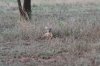
Attachments below: Me in front of my tent; the second Black-backed Jackal
Hix
I was up at six the following morning and met George at the bar at 7am for the bird walk, and what a great bird walk it was! First off, perched on the edge of the restaurant roof was a pair of Angolan Swallows, and a couple of Slender-billed Weavers hopping around on the thatch. Heading down to the beach we saw the same birds as yesterday with the addition of a Ruff and a Hamerkop. Moving onto the savannah new birds I could see were Spotted Morning Thrush, Water Dikkops and Spotted Dikkops, beautiful Black-headed Gonoleks, and more Grey-breasted Spurfowl. I think I’ve mentioned I really enjoy seeing popular cage birds species in the wild – once again I saw the Bluecapped Cordons, but this time George pointed out Purple Grenadiers and http://www.zoochat.com/2258/green-winged-pytilia-392433/. A small tail-less bird was a Red-faced Crombec, and nearby was a species I was keen to see – a Silverbird. With a silvery back and orange breast and belly I thought they looked quite attractive. Under a shrub I saw the first of many pairs of D’Arnoud’s Barbets that I would see on safari; there are several subspecies and they change as you go further east – this subspecies is the Usambiro Barbet, found mainly on the Serengeti side of the Great Rift.
Away from the shrubs in more open habitat and spending a lot of time on the ground were Fischer’s Sparrowlarks with distinctly masked faces, and the more subtle Grey-capped Social Weaver. Spurwing and Blacksmith Plovers were also in this habitat, as were some Wattled Starlings. Flying above the grasses George pointed out some Banded Martins, and a number of Little Bee-eaters. And the Superb Starlings were everywhere.
“Would you like to see some http://www.zoochat.com/2258/heuglins-courser-392417/?” asked George. Of course I did, and he led me around some trees to a little clearing amongst the grasses where three of these birds were very well-camouflaged, one standing and two sitting. They allowed us to get quite close without moving, they were that confident of their plumage. But then George took me back to the lodge where he showed me a pair of Square-tailed Nightjars that were even better camouflaged than the coursers, almost invisible sitting on the dead leaves.
In a small tree nearby a flash of red gave away the location of an African Pygmy Kingfisher, deep within the foliage sitting quietly while a group of Mousebirds in the top of the tree vocalised loudly. George identified them as Blue-naped Mousebirds, a species I wanted to see, but because the sun was in my eyes I couldn’t really see them at all. Just some mousebird silhouettes jumping around in the top of the tree. Although a Lifer, I didn’t count them.
In the two and a half hours George and I had been out I had seen 53 species, 26 new for the year and 14 Lifers.
After breakfast I returned to my room to download photos and to finish packing. Innocent had arrived while George and I were out birding, so he went to visit some friends and said he would be back at 12:00. When I finished packing I looked out the back doors at the bay and beach – and saw the crocodile basking on the beach only 20 metres away! I tried to sneak up to within ten metres to get a photo (it was a juvenile about 2-and-a-half metres in length), but it saw me coming and bolted into the water. I did manage to get a few shots of it on the beach and in the water, so I was happy.
~~~~~~~~~~~~~~~~~~~~~~~~~~~~~~~~~~~~~~~~~~~
Innocent arrived at midday just as I was finishing an early lunch (another fish pizza) so I grabbed my luggage and put it in his Landcruiser. A very old Landcruiser. It looked about 40 years old, but was probably only 20 and had been driven extensively in inhospitable environments. It didn’t take long to reach the Serengeti as the park entrance is only about 15km from the Lodge, so at 12:30 we were at Ndabaka Gate. While Innocent went into the office to show his receipts and register, I looked around outside for anything to photograph, but all I saw was some empty swallow nests under the eaves of the office and a few vervets. In the bushes I saw some large squares of thick fabric about 2 metres square hanging vertically on the bushes, dark blue with a thick black band down the middle. I guessed they belonged to the park rangers and paid them little attention.
Innocent returned from registering and we entered the park. The first part was scrub and bush and it wasn’t long before we saw our first birds, some http://www.zoochat.com/2258/helmeted-guineafowl-392714/ – common in zoos, and in the wild, but it was still good to see them in their natural habitat.
Not long afterwards the road took us out of the scrub and onto the open plains, but they were not the plains I expected. To me, the Serengeti plains are flat grasslands of long yellow grass blowing rhythmically in the breeze, with a few flat-topped acacias dotting the landscape that extends right to the horizon. This is not what I saw, however. The plains here had very short grass with only a few trees and shrubs dotted across the expanse, flat and extending to the hills a few miles distant. Because of the early rains (known as the ‘short rains’), the whole plain was green. It just didn’t look like the iconic Serengeti vistas you see in documentaries. However, there are several different regions to this vast park and the Serengeti I was thinking of is probably in further north near the Kenyan border.
But the plains I was viewing did have something iconic of the Serengeti – Wildebeest. There were hundreds of them spread out over the plains, with quite a few Plains Zebra mixed in. One of those sights you really have to take in and absorb. And a few minutes later we’d come to another plain with just as many animals as the previous one. By the time we eventually reached our camp that evening I estimate I had seen at least 5,000 wildebeest and 1,000 zebra, which is only a very small percentage of the population.
This part of the Serengeti has the Grumeti River flowing through to Lake Victoria, and Innocent took a detour at one point to the river. Despite the short rains the river wasn’t flowing yet. At one point there is a concrete weir across the river with a road on top so safari vehicles can cross over, which we did. Behind the weir the water was deep and looked cool and inviting, apart from the two dozen or so Hippos that were resident. But the water level was not high enough to flow over the road.
Downstream of the weir there was virtually no water, just a few large fetid green puddles. One had a hippo that had half its body exposed to the sun the puddle was that shallow, and was full of hippo faeces. Another puddle had a smallish Nile Croc and nearby a Grey Heron was looking for prey. Such a stark contrast to the other side of the road, I joked that the hippo appeared to have been exiled to this stinking squalid hell by his peers. I don’t think Innocent understood my comment “The tribe has spoken”.
Along the course of the river there were trees and shrubs, and on the other side of the river it was quite dense. While I was photographing the hippos, Innocent saw a Colobus in one of the trees, deep within the foliage. Surprisingly, this was the only colobus I was to see for the next few weeks. Also in the bushes was a new bird species for me – a http://www.zoochat.com/2258/bare-faced-go-away-bird-392701/.
We recrossed back over the river again and continued on towards camp. Innocent had opened up the pop-top roof when we had entered the park, and I was standing up with my head out watching the wildlife. As well as wildebeest and zebras there were also Thomson’s and Grant’s Gazelles, Buffalo, Warthog, and a few Topi, http://www.zoochat.com/2258/masai-giraffes-392702/, Defassa Waterbuck and Elephants. My bird list was increasing with several lifers like Northern White-crowned Shrike, Rufous-tailed Weavers (another Tanzanian endemic), Kori Bustard, Senegal Plover, Von der Decken’s Hornbill, Magpie Shrike, plus more Bare-faced Go-away birds, Lilac-breasted Rollers, Silverbirds, a pair of Meyer’s Parrots and some Ostriches.
Innocent liked to drive at speed. How fast we travelled was hard to tell as the speedometer needled was continually bouncing between 80 and 120 km/h. Despite the speed, I noticed Innocent was distracted by something in the front of the vehicle, because he kept slapping things, waving his hand around, and throwing his bird book at the passenger door. It wasn’t until I was bitten I understood fully his behaviour – a Tsetse Fly. Quite painful, and they can bite through your clothes.
Around 4:00pm it started to rain. There had been clouds gathering for the past few hours and , disappointingly, the rains arrived before we got to camp. We stopped momentarily to bring down the pop-top, but continued on. The landcruiser I’d been in the previous year in Uganda dripped water from the pop-top during heavy rain, and one of the side windows leaked very badly, so much so that we needed towels to keep the water out. Innocent’s landcruiser didn’t leak, but one of the rear sliding windows kept sliding open with every bump, and then would get stuck in the open position, so I was continually holding it shut, which was annoying. Innocent said he would fix it when we got to camp.
There wasn’t much wildlife to look at in the rain, and it was beginning to get dark, so we hurtled on towards camp. All of a sudden Innocent stopped the car and pointed out the left window. I couldn’t see anything. “What am I looking at?”
“Jackal” he replied.
Even knowing what to look for, I still couldn’t see anything resembling a mammal. “Where?” I asked.
“Right in front of you, by the bush”.
The bush was less than 5 metres in front of me, and apart from the grass at its base and a small mound of black dirt, there was nothing there.
“You mean that mound of dirt?”, I asked, expecting him to say that was the entrance to the jackals bolt hole. But before he could answer the mound of dirt raised its head and looked around at me.
It was a Black-backed Jackal, curled up with its black-back facing me and the only part of it visible which is why it didn’t look like anything apart from a pile of dirt. After a brief glance at me the jackal went back into its repose and became a small black mound again. And then I spied another jackal a little further away in the grass and ahead of us, one that Innocent hadn’t seen until I pointed it out. This one was facing me and I managed to get a picture of it, despite the rain.
But what really impressed me was the fact Innocent had recognised a small black mound at the base of a bush while driving at breakneck speed in the rain and halflight. In the next few days I was to be further impressed with his spotting skills.
Eventually, a little before dusk, we turned onto a road that was signposted with several campsite names, and shortly thereafter we arrived at the private tented camp where I would spend the next few nights. It was not quite what I expected.
From the blurb I had received from the safari company I had imagined this would be a semi-permanent camp, but it wasn’t. The tents had only been put up that day, and would be taken down again when I left a few mornings later. I remember reading the words ‘deluxe’ in the itinerary, but I guess they were talking about the tent itself, not the camp.
The tent was pretty good and, I was to discover, typical of these types of camps. Made of heavy plastic and canvas with mesh screens, it consists of a small covered porch at the front, with the interior made up of four separate rooms. The first room, the largest, had a queen size bed and a couple of small tables. Behind this room, through a flap, was a narrow corridor that led to two small square rooms, one with a toilet and the other was the shower. On the porch was a wooden chair, with a mirror and a canvas bag on a frame full of fresh water.
As well as my tent there was another tent 20 metres away, the dining tent – just one single big room with a large table and chairs for meals. A further 50 metres away were the vehicles, another tent for cooking and where the meals were prepared, and some smaller two-man tents where the staff slept. There were three staff here – they had setup the camp and would prepare my meals.
I had thought there might be a small generator, but the camp was electricity free. I mentioned this to Innocent, as I would be staying here for three nights before we moved to Lobo Lodge in the northern part of the park, and I would need to charge the batteries for my laptop and cameras. Innocent told me his inverter was broken, and he had asked for another to be sent out by air, hopefully it would arrive the following morning. He was also waiting on a spare part for the car.
To make matters worse (for me, anyway), the only things they had to drink was coffee, tea or bottled water. I don’t drink coffee or tea, and never have as I just don’t like either, and I find water to be rather tasteless; unfortunately for me, I drink soft drink most of the time, although I’m happy to drink fruit juice if it’s available. It turns out there was some fruit juice, but just enough for meals, not enough for me to be guzzling all day. If I’d known beforehand, I’d have brought a dozen bottles from the Speke’s Bay Lodge.
But even though I had some minor disappointments about the camp itself, I was very happy with the location and environment. The camp was located about 100 metres back from the road (and we were one of the last campsites on the road so there was very little traffic going past anyway), in the bush – open woodland with some trees, shrubs, and grassy areas - and with plenty of wildlife. There were three http://www.zoochat.com/2258/african-buffalo-392765/ about 30 metres from my tent and I was warned on arrival to keep an eye on them if I was going to stray away from the tents. There were a few birds in the trees – http://www.zoochat.com/2258/magpie-shrike-392755/ and Von der Deckens Hornbills, with marabou and vultures further away, and impala mostly hidden by the vegetation. Just after dusk , in the dim light, back on the road I saw a shape moving with the loping gait of a hyena, but I was too far away and it was too dark to clearly see which species.
After dinner I returned to my tent, wearing a small but powerful headlamp. From the porch I shone it out into the bushes and debated whether I should do a bit of spotlighting, or whether I was too tired. My initial sweep of the beam from the torch showed nothing in the trees, but only picked out two pairs of buffalo eyes – not knowing where the third buffalo was meant going for a walk would be risky. Actually, even knowing where all three were would probably still be risky as they may never have encountered someone spotlighting before and might react badly. While still thinking about this the rain started again and so I went back inside to do some reading in bed.
After half an hour the rain had stopped and I heard a rustling in the grass outside the tent. A pair of Crested Francolins. Unzipping the door a little and pointing my camera through the gap I managed to get a half-decent photo before they scurried off into the dark. A little while later I heard Spotted Hyena, close enough to possibly be in camp. Shining my headlamp outside I could make out the eye-shine of them as they ran past the camp.
And an hour later, before falling asleep, lions roared from a few hundred metres away, and continued to roar for the next few hours. I truly was in the wilds of Africa, and it was worth every penny.
New Birds: Spotted Dikkop, Blacksmith Plover, Three-banded Plover, Heuglin’s Courser, Square-tailed Nightjar, D’Arnoud’s Barbet, Fischer’s Sparrowlark, Banded Martin, Angola Swallow, Red-faced Crombec, Willow Warbler, Silverbird, Grey-headed Social-Weaver, Purple Grenadier, Green-winged Pytilia, Kori Bustard, Senegal Lapwing, Bare-faced Go-Away Bird, Von der Decken’s Hornbill, Magpie Shrike, White-rumped Shrike, Rufous-tailed Weaver
New Mammals: Thomson’s Gazelle, Grant’s Gazelle
Attachments below: Me in front of my tent; the second Black-backed Jackal
Hix
Attachments

Great post, I look forward to more!
Safari guides do seem to always have amazing abilities to spot wildlife when driving at speed.
I had a (very annoying) guide in Kruger for a day that drove everywhere ridiculously quickly and would slam on the brakes whenever he saw anything interesting. I don't know how he managed to spot leopards, twice, doing that!
Safari guides do seem to always have amazing abilities to spot wildlife when driving at speed.
I had a (very annoying) guide in Kruger for a day that drove everywhere ridiculously quickly and would slam on the brakes whenever he saw anything interesting. I don't know how he managed to spot leopards, twice, doing that!

zooboy28
Well-Known Member
That is a lot of birds Hix. This thread (and LaughingDove's) have made me very jealous. If I got to Africa I'd be able to get 50+ lifers a day by the sounds!
What sort of cost was your tour, with your own guide? What time of year did you go, and was there a particular reason for that?
What sort of cost was your tour, with your own guide? What time of year did you go, and was there a particular reason for that?

It certainly does sound amazing. Brilliant photos too! Embedding them in the posts makes it look even more impressive.
My first draft had 15 images, but it will only permit you to embed six per post (and that includes emoticons like the
in my signature). That last post probably should have been split into two.zooby28 said:That is a lot of birds Hix. This thread (and LaughingDove's) have made me very jealous. If I got to Africa I'd be able to get 50+ lifers a day by the sounds!
I replied to this, and the following comment, last night in a lengthy post which never got up because the internet on Christmas Island dropped out and I lost it all. So I'll keep this short and to the point.
If you've never been to Africa before, and you went to a good birding location with a variety of habitats on your first day in the country, you could even get 100 lifers on that first day.
I've read that it's possible to see 100 birds at the Entrance/Visitor area of Tarangire National Park (not sure over what time frame that is). The day I drove through the park I saw 76 species all up.
Towards the end of my three week safari, and having been in the country for about ten days prior to that and a few weeks in Uganda the previous year, I still had days where I saw up to 15 lifers. Over the four weeks I saw more than 300 species in Tanzania, and of those 180 were lifers.
zooby28 said:What sort of cost was your tour, with your own guide? What time of year did you go, and was there a particular reason for that?
The holiday had three objectives: see a shoebill in Uganda; climb Kilimanjaro; go on safari (which had it's own priorities). I had heard the best time of year for Kili was September, and once the climbing dates were confirmed the other priorities fell into place around it.
All up the holiday cost me around AUD$17,000. The safari alone was almost $10,000, Kilimanjaro another $3,000 plus a bit, around $3000 for airline tickets, then another thousand for a few nights accommodation not covered by the other packages, tips and sundry expenses.
Not cheap, but well worth it.
I could have cut a few thousand dollars by choosing budget options, but I'm in my 50's now and roughing it doesn't have the same appeal as it did 20 years ago. Plus I usually have a couple of thousand dollars worth of cameras and lenses so paying extra for the added security is more piece of mind.
Hix