Day 9 – Thursday, 5th September
Kyambura Gorge is another chimp trekking site, and it’s only a 15 minute drive from the lodge. We were there at 8:00am, at Fig Tree Camp, for the briefing where we met our ranger/guide Godfrey. As well as the four of us (and Godfrey) there were five other people – a young man from the UK, the Americans we had seen at Kibale, and another couple that were initially of indeterminate origin. I was a little disappointed to see the Americans again, because the husband had brought his tripod again (which was ungainly and in Kibale often got caught on vegetation), and because he had no bush etiquette – when he walked through the bush he would push a branch out of the way and let it fling back into the face of whoever was behind him. In Kibale, when I was behind him at one point, he gingerly moved a thorny branch out of the way of his face and remarked to himself “That’s a nasty one” before letting it fly back towards my face. And toward the end of the Kibale trek he wasn’t walking through the forest, he was literally plodding. His tripod was collapsible, but he carries it fully extended so it’s ready to use at a moment’s notice. And he had his video camera too.
The couple of indeterminate origin were Caucasian, but not British, American or Australian – I could tell that by looking at them. To me, they looked Continental European. The male was unshaven, had his shirt untucked and unbuttoned half-way down his chest, and overall looked bedraggled. He had the look of someone who wasn’t coping with the heat and humidity of Africa. This was in contrast to his wife who was quite presentable. Before the briefing they were both smoking, and I can’t remember seeing anybody else in Uganda smoking which is why it was noticeable to me at the time. During the briefing, they seemed distracted, like they knew it all and weren’t overly interested in what was being said. I know this is a stereotype but I got the impression they were French, and this was confirmed when they spoke.
Godfrey explained to us what we would be doing that morning, but also pointed out that the chimps in the Gorge were “like to be tricky” and might be hard to find. He also explained the meaning of the word
Kyambura (pronounced ‘Chambura’, and previously it was written this way as well). Originally there was the village of Kyambura, the river ran through the village, so they called it the Kyambura River. The river then flowed through the Gorge, so they called it the Kyambura Gorge. It flows right through the Gorge and empties into the Kazinga Channel (which presumably had already been named). The word “
kyambura” itself, in the local language, means something that had been lost, or taken, and cannot be found. The example Godfrey used:
“If you go down to the river to wash your clothes, and you get home and find you are missing a shirt, you go back to the river and look for the shirt. You look and you look but you can’t find it. Then you say ‘
kyambura !’ because you can’t find it.” And he shrugged his shoulders.
http://www.zoochat.com/1681/kyambura-gorge-339235/
After the briefing we drove about a kilometre down the road next to the Gorge to get to the path that would take us into the Gorge itself (the Gorge is sixteen kilometres long and there are several entry/exit points) . As you can see from the photos, the side of the Gorge are very steep, and our entry was down an almost vertical descent, carefully stepping down on rocks and well-worn ‘steps’ that had been made in the ground. It was slow going, but there were no accidents and we all reached the floor of the Gorge safely.
http://www.zoochat.com/1681/climbing-down-into-gorge-339232/
http://www.zoochat.com/1681/climbing-down-into-gorge-339233/
Unlike the rest of QENP up top, the vegetation in the Gorge was a magnificent and tall forest, similar to Kibale, but not as dense. I got the impression the rainfall here was different too as Kibale appeared to be more of a rainforest. However, it was overcast when I visited Kibale, and the sun was shining brightly (and hotly) in Kyambura, so that might have skewed my views slightly.
http://www.zoochat.com/1681/forest-bottom-gorge-339234/
Walking through this forest was a wonderful experience with the sun shining through the canopy here and there and although it had been hot up top, it was noticeably cooler at the bottom of the gorge. The floor of the gorge is probably only 200 metres wide, and in the middle of it flows the Kyambura River, twenty to thirty metres wide. We followed a path alongside the river heading south and although there wasn’t too much in the way of birdlife, there was other things to look at. The muddy waters of the river were scenic, there were tent spiders that had completely covered a large shrub in their communal web (which caught the attention of members of our group who hadn’t seen this sort of thing before), millipedes, dung beetles, and old chimp nests in the trees.
http://www.zoochat.com/1681/kyambura-river-339237/
http://www.zoochat.com/1682/millipede-339246/
For most of this trip I carried a sling – a bag made by Lowe for cameras and lenses that I found very comfortable to carry – and while climbing into the gorge I had put the camera away so it wouldn’t swing around and get in the way (or get damaged). When we reached the floor of the Gorge I took the camera out, the young British man did the same, as did the American, and the Frenchman who was carrying a rather large camerabag and removed a camera with a very large lens. Despite my Canon having a 70-300mm zoom, it was the compact camera that I used mostly here because I needed the wide angle to capture the beauty of the forest.
After walking for about 20 minutes (a kilometre or so) we came to the end of the trail. So we turned around and headed back the way we came. We were almost at our starting point when some of us heard chimps hooting. It wasn’t sustained, probably only half a dozen short hoots, muffled by the forest, by coming from behind us. We walked back a couple of hundred metres to where a long-dead tree had fallen across the river.
“The chimps use this as a bridge” said Godfrey “and they are on the other side. We will cross over it too.”
“Cool! “ I thought, a bit of adventure. I had done a similar thing more than 25 years ago in New Guinea and I was up for challenge. However, it appeared that Godfrey and I were the only ones who felt this way. The three ladies didn’t want to attempt it, and this didn’t surprise me, as there was a real risk that one of them would fall. The Americans weren’t keen on the idea either. The young Brit was quiet about it, but I think he would have given it a go. But it was the Frenchman’s reaction that decided what would happen. When Godfrey said we would cross over on the fallen tree, before anybody else had time to say anything the Frenchman blurted:
“NO!! NO!!
ABSOLUTELY NOT!!!”
He didn’t yell it, but he was loud and forceful, and clearly upset by the idea. There was no doubt in anyone’s mind that he would not be setting foot anywhere near the fallen tree. The rest of the group expressed their uncomfortableness with the idea, but in a much quieter and more polite fashion. “We have cameras” was the main argument, and a very valid one at that; the Frenchman’s camera and lens looked more expensive than mine and Orangeperson’s combined. Although he wasn’t as loud as his initial outburst, he was still adamant that he would not be crossing the tree, and seemed offended that anyone would suggest he do this. He wanted a real bridge. Godfrey offered to carry all camerabags and equipment over for everyone, and to help anyone who needed it, but this offer did little to alleviate the fear of falling in the river that I guess many of them had (again, a very valid concern). So Godfrey suggested we wait where we were while he went over and checked out the trail to see if he could find the chimps. This was agreed to by all and Godfrey climbed onto the tree. First he straddled it and moved forward by using his hands to lift himself and move forward. When he reached the middle he slowly stood up on the tree and carefully walked to the other side. It didn’t help his case that he was shaking a little when he stood up and walked over, because everybody saw this and it didn’t inspire confidence, although I was still happy to give it a go. But I didn’t like the idea of straddling the tree, because it would take too long to cross, and standing up in the middle is a tricky balancing act. I would have walked the whole way. However, there were two trunks at our end that would have made it difficult to walk initially, which is why Godfrey straddled to start with. And he had recommended that if we did cross, we all straddle the full length.
http://www.zoochat.com/1681/crossing-river-pt-1-a-339238/
Godfrey was gone for almost ten minutes. During that time the French couple muttered away softly to each other and although quiet, his tone was still the same. The rest of the group expressed their concerns for their cameras, or for their propensity to fall.
When Godfrey returned he waited until he was off the tree to tell us he hadn’t found the chimps.
“Godfrey returns .....no chimps” the American intoned. “Which makes almost everybody very happy” I added and, looking around, I saw he had his video camera out again and I had just contributed to his commentary.
Back at the entry point we started climbing the escarpment to the top. It was tough going, and the top part wasn’t shaded by the trees so we were in full sun. I reached the top before everybody else, hot and sweaty, and had a drink of water from the car while I waited for the others. Godfrey decided we would try another location so we drove a few more kilometres down the road. Climbing down into the gorge was just as steep as the previous one, and the bottom was about the same too. Looking around I noticed our group was smaller.
“Where are the French couple?” I asked.
“They didn’t want to do this, they went back to their hotel” I was told.
“They gave up” I thought, “how very French.”
In fairness, the Frenchman certainly did not appear to be coping with the heat; after climbing out of the gorge I noticed his shirt, open even further, was soaked in sweat. They may have also had other commitments, other places they had to be (like the swimming pool).
This second trek was much longer as we had a longer trail to follow and we spent about an hour and half in the gorge this time. We crossed the river to the other side on a bridge that consisted of two saplings across the river with wooden slats nailed crosswise on top of them providing a two-foot wide , flat surface to walk across (although it wasn’t level, the last part was at a steepish angle). There was no railing or handholds but everyone traversed it without incident. We later crossed back on a another bridge - this had a thin log across the river, with wooden slats nailed lengthways along it creating a footbridge about a foot wide, but there were uprights nailed to the side to support a rope railing/handhold.
http://www.zoochat.com/1681/crossing-river-pt-2-a-339239/
But we saw no chimps.
We did see, however, Red-tailed Monkeys, Ross’s Turaco, Black-and-White Casqued Hornbill, and a young African Fish Eagle perched over the river. In the river were some hippos (venturing up from the Kazinga Channel) and although we didn’t see any live ones, we found some elephant bones next to the river. We also found reasonably recent elephant and buffalo dung (by recent I mean a few days old).
http://www.zoochat.com/1682/hippo-kyambura-river-339245/
http://www.zoochat.com/1682/african-fish-eagle-immature-339244/
http://www.zoochat.com/1682/elephant-bones-339242/
http://www.zoochat.com/1682/elephant-skull-339243/
At one point we were walking along the trail, Godfrey in the lead and me behind him, when he suddenly stopped and walked backwards into me. He didn’t stop, think, and then walk backwards; he was walking forwards and just reversed suddenly almost without stopping, like you would if you suddenly felt a spiderweb on your face. I figured the only thing that would cause a guide to do this would be something very dangerous, so I looked down the path for an elephant, buffalo, lion or even hippo, but saw nothing in the distance. Then a saw a snake, couple of metres in front of my feet. It was about a metre long, very slender, and bright green with a black stripe through the eye. I made some onomatopoeic noise to express my delight, and may have even said “Cool!” as I pointed my camera at it. I wanted to get a photo before the others arrived in case they scared it off. It looked like a tree snake and could probably move like quicksilver.
While looking through the camera and not immediately recognising the species I asked Godfrey “What is it?”
“A snake” was the reply.
“Yes, I’d guessed that much” I laughed, “but do you know which species?”
“A Green Snake” he answered.
To me (and I imagine most ZooChatters), that’s like asking someone what kind of dog they have and being told ‘a black one’.
A number of the snakes in Uganda are a bright green, especially those that live in the trees, and although most of them are called ‘green snake’, I wasn’t convinced this was the actual species name, or a name Godfrey had just made up because it was appropriate. By this time the others had arrived, and asked the same question, and Godfrey again said ‘green snake’.
Looking through the lens I was certain it wasn’t a mamba as the head shape was wrong and it didn’t have the mamba’s ‘smile’. I was fairly certain it was a colubrid, and equally as certain that it was either non-venomous or not considered to be dangerous to man. BUT – I couldn’t rule out the small possibility that it might be a boomslang. Or another highly venomous species. We were in a National Park, so catching it was not permitted, but I photographed it with both my cameras and with my compact I can get very close using the macro function. The snake was alert, but not stressed and I held the camera close enough to be safe, even though I was within striking distance. However, this was too close for Godfrey’s comfort: “Too close! Too close!”. So I quickly took just one close-up and moved back.
The snake was on the side of the path, half in the bushes. When we had all taken our photos Godfrey wanted it well off the path before the others passed so he moved it along – by throwing a large stick on it. I was not too impressed for a number of reasons – Godfrey works for the Ugandan Wildlife Authority; the snake had shown no aggressive or unsociable behaviour; and it had graciously posed for our cameras. However, many people die from snakebite in Uganda every year as the country is home to several species of mambas, cobras, spitting cobras, vipers and adders and hospitals are few and far between, and not of the standard you get in the Western World. There are very few herpetologists in the country and most people grow up fearing snakes, and passing that fear onto their children. So I can’t really blame Godfrey for a small indiscretion; the stick didn’t harm the snake in anyway, it was the act of throwing something that did not impress. At least he didn’t kill it, which is what most Australians would try and do.
When I was photographing it I remember thinking the black eye stripe might be diagnostic; then again, it might just be a regional variation in the pattern of a diversely coloured species. However when I got back to the lodge and checked my book I found the eyestripe
is diagnostic – the species is the Emerald Snake (
Hapsidophrys smaragdina), a harmless colubrid.
http://www.zoochat.com/1682/emerald-snake-339248/
http://www.zoochat.com/1682/emerald-snake-339247/
The girls had been talking to the young British man, and it turns out he had already been trekking with the Mountain Gorillas, in Rwanda. As we were climbing back up the exhausting escarpment, I asked him if trekking for the gorillas was like this.
“Yes”, he answered, “except muddy and slippery”
We climbed out of the Gorge a few kilometres from where we went in so we had to radio the cars to come and get us. As I climbed out, on one of the last steps out of the escarpment, I saw what looked to be a very large white corn kernel. I picked it up, expecting it to be hard but found it only to be firm. It had some brown markings on the ends and on the sides. I thought it might have been a gorged tick (in Australia Paralysis ticks are the same whitish colour) but I didn’t have my glasses with me and it seemed way too big to be a tick. I showed it to Godfrey.
“Cattle Tick” he said.
So I took a photo of it because it was so big. It was the size of the first joint of my thumb. What puzzles me is how it got to where it was. There are no cattle around for miles (that I had seen), so it probably had been feeding on an antelope. But it was on the steepest part of the escarpment, and not even a duiker would have tried negotiating that incline. A klipspringer could, but they aren’t found in this part of Uganda. The mystery remains.
http://www.zoochat.com/1682/tick-339249/
http://www.zoochat.com/1682/tick-339250/
We thanked Godfrey and all gave him the standard tip, and he apologised because we hadn’t seen the chimps. I looked him square in the eye, shrugged my shoulders and said “
kyambura”. He looked at me with a blank look on his face for a split second before it sunk in, and then he had a good laugh.
http://www.zoochat.com/1681/kyambura-gorge-339236/
~~~~~~~~~~~~~~~~~~~~~~~~~~~~~~~~~~~~~~~~~~~~~
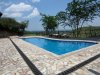
Back at the Lodge we had some time before lunch, so Orangeperson, Angela and I went for a swim in the pool. This was the first place we’d stayed that had a pool, and we’d brought out bathers so we figured we might as well use them. And we were all hot and sweaty too. Despite the temptation, we refrained from putting our heads beneath the surface, just in case there was some microscopic organism waiting to infect our ears, nose or eyes. This is probably a side-effect of the conditioning everyone receives about freshwater in Africa – don’t drink tap water anywhere, even from the best hotels in Kampala, because it’s not safe; don’t swim in the freshwater lakes and rivers because of bilharzia (or schistosomiasis, caused by a fluke). The pool was chlorinated so we should have been OK, but we didn’t chance it. While in the pool I noticed a lot of birds in the gardens around the pool, so after I’d had a shower I returned with my camera and photographed a Variable Sunbird male feeding on Lantana flowers, some Speckled Mousebirds and a pair of Red-billed Firefinches that were on one of the steps into the swimming pool, drinking the water. Nearby there were also some Blue-headed Tree Agamas, spectacular lizards sitting in some of the low trees and on the ground.
http://www.zoochat.com/1682/variable-sunbird-339969/
http://www.zoochat.com/1682/baglafecht-weaver-339971/
http://www.zoochat.com/1682/speckled-mousebird-339966/
http://www.zoochat.com/1682/red-billed-firefinch-339965/
http://www.zoochat.com/1682/blue-headed-tree-agama-339961/
http://www.zoochat.com/1682/blue-headed-tree-agama-339962/
~~~~~~~~~~~~~~~~~~~~~~~~~~~~~~~~~~~~~~~~~~~~~
After lunch we headed out again, this time for the Kazinga Channel, the 50 km long river-like body of water that connect Lake George to Lake Edward. The Channel supports a large amount of birdlife and there are daily 2 hour boat-trips leaving from just below Mweya. We arrived early and while Joseph organised our tickets we had a quick look around the Visitor’s Centre which wasn’t all that impressive. They had some stuffed animals that were pretty bad, and the lions looked awful. The mane of one appeared to have fallen out and had been replaced with string.
My idea of the Mweya Peninsula had been a small peninsula, maybe a kilometre long and half as wide, and a few metres above the water level. Fairly easy to walk around. In reality, the peninsula is much larger, about four kilometres long and 2 kilometres wide, and the neck of the peninsula is around 100 metres above the shoreline.
Joseph had found a friend, who happened to be the Captain of the boat, so we drove him down to the dock. Otherwise I think he would have been walking there and although it wasn’t too far, it was very hot and he was in full uniform (dark green, long pants, long-sleeved shirt etc).
On the boat we could see the wildlife on the other side of the channel – a herd of elephants walking along the shoreline, an even larger herd of buffalo lying down either on the hard ground or in mud, and black shapes poking out of the water which we knew to be hippos. The channel is around 500 metres wide for most of its length, and we crossed over immediately, then headed towards Lake Edward for around 4-5 kilometres before crossing back to the Mweya side and heading back to the dock.
http://www.zoochat.com/1682/elephants-339934/
Upon reaching the opposite side the elephants were in the water and were walking around a headland that was a few metres high, but as we got closer they panicked and started to rush back along the shallows to a point where they could get out of the water. It was quite amusing to see elephants inadvertently poking the elephant in front in the bum with their tusks in their hurry to get out. Over the cruise, which took about 2 hours, we saw many elephants, but didn’t get as close to any as we did to those.
http://www.zoochat.com/1682/elephant-339935/
http://www.zoochat.com/1682/elephant-339936/
As I mentioned, there were also a lot of buffalo both here and further along the channel, and they were accompanied by their usual birdlife – cattle egrets and yellow-billed oxpeckers. Other birds at this first site included Egyptian Geese, Yellow-billed Stork, Marabou, Sacred and Hadada Ibis, and Spurwing Plover (or Lapwing, if you prefer).
http://www.zoochat.com/1682/buffalo-calf-339924/
http://www.zoochat.com/1682/buffalo-339926/
http://www.zoochat.com/1682/yellow-billed-storks-339955/
Coming to some reeds we also saw African Jacana and plenty of hippos including calves, and a very pink adult hippo. And a dead hippo calf which was bloated and floating in the shallows with a Nile Crocodile keeping guard over it.
http://www.zoochat.com/1682/african-jacana-339944/
http://www.zoochat.com/1682/hippo-339943/
http://www.zoochat.com/1682/nile-crocodile-339929/
http://www.zoochat.com/1682/nile-crocodile-339930/
This first open area was full of elephants and buffalo, and although we did see some further along, it was mainly birds we saw afterwards. Perhaps the fact that a fishing village is found further towards Lake Edward had something to do with the absence of large mammals. But the shoreline was literally teaming with birdlife. There were spoonbills, herons (Goliath, Grey and Black-headed), egrets (Cattle, Intermediate and Little), Hamerkops, Sandpipers, Greenshanks, Black Crakes, Wattled Lapwings and Water Thick-knees. In the low bushes hanging over the water we saw hundreds of Pied Kingfishers and several spectacular Malachite Kingfishers, plus Black-headed Weavers and their nests. In the tall trees were African Fish Eagles, Palm-nut Vultures and a Tawny Eagle, White-throated and Madagascan Bee-eaters.
http://www.zoochat.com/1682/elephants-339937/
http://www.zoochat.com/1682/buffalo-339925/
http://www.zoochat.com/1682/goliath-heron-339941/
http://www.zoochat.com/1682/cattle-egret-dinner-339933/
http://www.zoochat.com/1682/little-egret-339932/
http://www.zoochat.com/1682/long-tailed-starlings-339954/
http://www.zoochat.com/1682/water-thick-knee-339958/
http://www.zoochat.com/1682/black-crake-339928/
http://www.zoochat.com/1682/madagascan-bee-eater-339923/
http://www.zoochat.com/1682/pied-kingfishers-339951/
http://www.zoochat.com/1682/malachite-kingfisher-339948/
http://www.zoochat.com/1682/african-fish-eagle-339931/
http://www.zoochat.com/1682/palmnut-vulture-339959/
http://www.zoochat.com/1682/tawny-eagle-339957/
And then we came to the rookery (or at least that’s what I called it). On a sandbank below the fishing village were a lot of African White Pelicans (around 100), with a few Marabou and a large number of Great Cormorants (possibly as many as 200). And sleeping on the bank beside them were a few hippos. A bit further up on another beach were several dozen Grey-headed Gulls and a lone Lesser Black-backed Gull in its first year plumage.
http://www.zoochat.com/1682/rookery-339952/
http://www.zoochat.com/1682/pelicans-marabou-cormorants-hippo-339950/
http://www.zoochat.com/1682/african-white-pelican-339949/
http://www.zoochat.com/1682/great-cormorant-339927/
http://www.zoochat.com/1682/grey-headed-gulls-339938/
http://www.zoochat.com/1682/grey-headed-gulls-339940/
http://www.zoochat.com/1682/lesser-black-backed-gull-339939/
http://www.zoochat.com/1682/grey-heron-339942/
After this point we crossed over to the Mweya side and headed back up the channel, but the only new birds species we saw were a Striated Heron and a Squacco Heron in the bushes, and White-winged Terns flying over the channel itself.
http://www.zoochat.com/1682/striated-heron-339956/
http://www.zoochat.com/1682/squacco-heron-339953/
http://www.zoochat.com/1681/fishermen-339978/
~~~~~~~~~~~~~~~~~~~~~~~~~~~~~~~~~~~~~~~~~~~~~
The boat returned to the dock at about 5:00pm and we started to drive back to the lodge. The roof was up and I was standing viewing the trees and bushes for birdlife (or anything else). After a few kilometres we came upon four other safari vehicles parked rakishly together along one side of the road. This usually means they’ve seen something interesting so Joseph pulled alongside. The other vehicles had their occupants either standing up or leaning out windows (and some were on the roof), all looking in the same direction. I couldn’t see anything so I asked someone what we were looking at and they answered “Leopard!”
I had thought maybe they’d seen a lion, but a leopard was very exciting! We asked where and they pointed at some grass and said it was lying down. The grass was only about two-foot tall and none of us could see anything. “Just wait a minute” the people in the other car said, and a few seconds later a striped tail flicked above the grass then vanished again. She was around 20 metres away from us and even though we were elevated above the road and the grass was only two-foot high, she was completely invisible. I even stood on the roof to get better elevation, and still saw nothing.
http://www.zoochat.com/1682/leopard-tail-339945/
Note: I’m calling it ‘she’ because at one point I mistakenly thought I saw a cub in the long grass, but we don’t really know what sex it was.
And so we waited. And waited. And waited. Every so often there would be a tail flick, and then nothing. Peering through my viewfinder I was sure I could see the pattern of rosettes in the grass, but then I’d realise it was just the grasses giving me that illusion. I wasn’t the only one that fell for this either.
Periodically one of the cars would start their engines or someone would open and slam a door, or honk their horn. It had no effect, the leopard remained invisible. Even motorcycles going past got no response. The fact of the matter is, the leopard had probably been sleeping there all day and was used to the sounds of vehicles. In fact, Mweya has very few large trees but a decent sized leopard population (and is one of the best places to see leopards), so she probably hears these loud noises everyday. I wondered if we could use the cars to block the road and force the motorcycles to go round us near the leopard, maybe that might make her sit up; but the others thought I was joking.
An hour passed. Other cars had joined us, and some had left. At one stage there were seven or eight vehicles, with a couple quite happily blocking the road to other cars (but motor-cycles could still slip by - damn). The door slamming and horn honking had failed, so one idiot started making goat bleating noises, also to no effect.
And then the leopard stretched her head up and scratched her chin for a few seconds, then lay down again. This prompted a flurry of clicks from cameras and renewed excitement from everyone.
We had been there just over an hour and a half when the leopard finally stood up and walked away from her bed in the long grass, walking parallel to the road, but this brought it closer to us. She stopped about eight metres away, had a stretch and sat down in the grass, but this time her head and shoulders were still visible because she was sitting, not lying. And she completely ignored all the cars and people gawking at her. She sat there for another ten minutes, with her eyes closed, dozing, occasionally looking behind her as if she had heard something of interest to her, and then would go back to dozing.
http://www.zoochat.com/1682/leopard-339947/
http://www.zoochat.com/1682/leopard-339946/
Eventually we decided to leave. We had been waiting there for around one hour and fifty minutes, but we saw our leopard and got some photos, it would soon be dark, so we all agreed it was time to head back. Arriving back at the lodge we were told that a herd of elephants had been on the plain below the lodge all afternoon, and although disappointed we had missed them, the thrill of seeing the leopard outweighed the elephants. One of the Lodge staff later told me the elephants had wandered around the base of the hill we were on and were nearing the village of Kyambura (probably to raid the plantations), and the local police were preparing to scare them away if that happened.
http://www.zoochat.com/1681/sunset-mweya-peninsula-339241/
~~~~~~~~~~~~~~~~~~~~~~~~~~~~~~~~~~~~~~~~~~~~~
Dinner was rather uneventful compared to the previous night, no giant beetles although I Ginat Water Bug did fly into the restaurant. I saw it on the floor and, thinking it was a Water Scorpion, picked it up gingerly. Water Scorpions and Giant Water Bugs are related and look similar, and both have a painful bite so I was careful handling it. Linda, who hates creepy crawlies, even got so brave as to point out a stick insect walking on a railing, putting her finger very close.
Even though the paths to the rooms were well-lit I still carried my headlamp and after dinner I shone it down on the plain below to see if I could see elephants or any other game. There was nothing on the plains but on a post just below the restaurant was an owl. I hurried back to my room and got my camera and returning I found another three owls nearby on the fence by the pool. They were all the same species (which I later identified as Scops Owls) and, despite the usual difficulty focusing, managed to get a couple of shots. I also saw a bat with very big ears – a Yellow-winged Bat. It made a nice finish to a very full and productive day.
http://www.zoochat.com/1682/african-scops-owl-339967/
http://www.zoochat.com/1682/african-scops-owl-339968/
http://www.zoochat.com/1682/yellow-winged-bat-339963/
~~~~~~~~~~~~~~~~~~~~~~~~~~~~~~~~~~~~~~~~~~~~~
New Birds seen: Variable Sunbird, Baglafecht Weaver, African Spoonbill, Wood Sandpiper, Malachite Kingfisher, Madagascan Bee-eater, Black Crake, Water Thick-knee, Marsh Sandpiper, Tawny Eagle, African White Pelican, Grey-headed Gull, Lesser Black-backed Gull, White-winged Tern, Squacco Heron, African Scops Owl
New Mammals seen: Leopard, Yellow-winged Bat
New Reptiles seen: Blue-headed Tree Agama

Hix