Hix's Road Trip to South Australia

Hix

Wildlife Enthusiast and Lover of Islands
15+ year member
Premium Member
I’m on leave at present, and so plan to drive from Sydney to Adelaide Zoo (to see the pandas) then continue to Kangaroo Island for a few days before returning home. And along the way I plan on visiting some of the smaller fauna parks I have never been to before. I’ll be taking lots of photos and reviewing the places I visit, and chasing wildlife in the wild, so I though I might post everything here for anyone who is interested.

:p

Hix
 
Day 1: Sydney to Cocoparra National Park, via Wagga Wagga Zoo.

Despite planning to leave Sydney at 6:00am, I awoke at 8:00am and left at 11:00. Beautiful warm sunny day. Just south of Gundagai that changed, with very heavy rain squalls. By the time I arrived at the zoo in Wagga Wagga (4 hours and 407kms later) the rain had stopped and the sun was making a brave effort to appear. This only lasted for 45 mins or so and then the rain came back again.

For a review of the Wagga Wagga Botanical Gardens Zoo see this thread http://www.zoochat.com/24/wagga-wagga-botanical-gardens-zoo-134228/.

Cocoparra National Park is about 30kms north-east of Griffith, and is supposed to be a good place for camping. Unfortunately, the road into the park is a dirt one and is not accessible to 2WD vehicles when wet. And with the threat of more rain to come, I decided it would be more prudent to stay in Wagga Wagga the night – a good choice as the rain came down quite heavily during the night.

Not a good start to the trip.
 
Day 2: Wagga Wagga to Mildura

Cloudy and overcast, with some rain, but nowhere near as much as the day before. Otherwise, a fairly uneventful drive .

:p

Hix
 
Every since my own road trip thread in 2008 I have loved to see fellow ZooChatters begin their own "zoo-cation" online diaries. Thanks Hix, and I for one will read all about your many adventures.:)
 
Day 3: Mildura to Murray Bridge, via Bredl’s Wonder World of Wildlife (Renmark)

Renmark is a little over 100kms from Mildura (and just inside the South Australian border), so I arrived at Bredl’s Wonder World of Wildlife in the late morning. It was still cloudy, and there was some very light rain while I was at the park. By chance I arrived at the same time as a tour group, and as Rob Bredl was taking them on a tour, I thought it best to wander the park myself (when I worked at Taronga and was giving specialised tours to groups I had to be vigilant for members of the public who would latch on and try to join the group). Plus, listening to Rob talk to the public about the basics of animal biology, keeping and husbandry would probably be boring for me.

After the group had left I discovered they were actually not a tour group at all, but WEASA (Wildlife Exhibitors Association of South Australia). Shame I didn’t find out earlier as I plan on visiting some of the fauna parks they represent in the coming days.

Here's my review of http://www.zoochat.com/24/bredls-wonder-world-wildlife-136738/.

After Bredl’s I drove down to Murray Bridge and found somewhere to stay the night. Murray Bridge is only 10kms from Monarto Zoo, so was a good place to stop. In the hotel brochure stand was a brochure for a place called Dundee’s Wildlife Park, a fauna park in Murray Bridge itself. I determined to visit it the following morning on my way to Monarto.

I just hoped the sun would finally come out.

:p

Hix
 
Day 4: Murray Bridge to Mt Barker, via Dundee's Wildlife Park and Monarto Zoo.

I woke at around 7am and, while getting something from the car, I noticed the skies were clear. Great! Maybe I'll have a sunny day day today!

Dundee's Wildlife Park didn't open until 10am, so I spent some time on the computer labeling the photos I'd taken at Bredl's. When I came to depart the hotel at 9:30 the sky had clouded over again, completely. Bugger.

I thought it would only take me 30-45 minutes to view Dundee's. I ended up spending around 2 hours there.

http://www.zoochat.com/24/dundees-wildlife-park-139033/ review.

Monarto Zoo was only 10kms away, so it only took a few minutes to get there. Arriving just after midday I spent almost four hours at the zoo.

http://www.zoochat.com/24/monarto-zoo-march-2010-a-142326/ review.

After being cloudy for most of the day the sun came out just as I was leaving Monarto. For anyone puzzled by my preoccupation with the weather, I should explain it is purely for photographic reasons. Obviously, a rainy day will spoil a day at the zoo, but it will also affect photos. When photographing wildlife I like to have the fastest shutter speed and greatest depth of field possible, with the lowest ISO I can get (preferably 100). Sunshine is best for acheiving this. And photographing birds in flight against a cloudy background tends to underexpose the subject. Admittedly, sunlight can be harsh, can cause shadows which make exposures difficult, and a cloudy day can remove those shadows giving a more even exposure overall. But I still prefer sun. And enclosures often look better in the sunshine - rainy day can make things look like crap.

I drove to a caravan park in Mt Barker and pitched my tent. The day I left Sydney the temperature was around 30ºC, and the subsequent days were in the low to mid 20's. But that night at Mt Barker it dropped down to 9ºC overnight. Very cold.

:p

Hix
 
Last edited:
Day 5: Adelaide Zoo

I packed up my tent in the morning, even though I was planning on coming back to the Caravan Park that night. The plan was to visit Adelaide Zoo and see the Giant Pandas today, then return to Mt Barker tonight, visit Cleland and Warrawong tomorrow, then Gorge and Humbug Scrub (if I can find it) the next day. After that (Sunday) I was going to head down to Kangaroo Island for a few days.

As I returned my key to the boomgate to reception, I told them I would see them that night. The girl asked me if I had a booking, to which I replied I didn't. She had a quick look at her books and told they were booked up solid.

"Even for a powered campsite?" I asked.
"Even for an unpowered campsite" she replied. "We're booked out for the next three nights. It's the Clipsal 500."

It turns out I had arrived in Adelaide just in time for a major motor race. Many of the streets in Adelaide had been blocked off for the race. For days of racing and today was the first.

As I drove down to Adelaide I wondered where I would stay the night. Mt Barker is about 40kms from Adelaide, so if a caravan park in Mt Barker is booked solid, there won't be much available in Adelaide. I decided to worry about it later and concentrate on negotiating the peak hour traffic to the zoo.

For the first time on my trip I had a sunny day. Despite the cold night in ended up being quite warm. Arriving before the zoo opened I saw metered parking in Botanic Park. So I drove around to Frome Rd where I had parked meter-free the last time I was here. But Frome Rd also had meters. I drove back into Botanic Park which was shaded and far less traffic than Frome Rd, arriving just before the zoo opened at 9:30am.

http://www.zoochat.com/24/adelaide-zoo-visit-march-2010-a-142713/ review.

Throughout most of the morning I could hear the engines of the cars in the Clipsal 500 revving quite loudly, even though the zoo was some distance from the racing circuit. It didn't seem to disturb the animals too much.

At 2:00pm I was back in my car, wondering where I would stay the night. The answer seemed obvious: drive to Kangaroo Island tonight, and see the fauna parks next week on my way back to Sydney. If I was lucky and could make good time, I might just get to Cape Jarvis in time for the 4pm ferry.

I arrived at Cape Jarvis at 3:45pm, but the ferry was full. So I bought a ticket for the 6pm ferry and made a few phonecalls to the Visitor's Centre in Penneshaw and to the Parks and Wildlife Office in Flinders Chase National Park. After getting some petrol and something to eat, I settled down to wait for the ferry.

The SeaLink ferries carry not only cars and passengers, but big semi-trailers. It always amazes me how many vehicles they can cram onto one of these vessels.

http://www.zoochat.com/673/cape-jarvis-kangaroo-island-142714/

By the time I drove off the ferry into Penneshaw it was almost 7:00pm, and I knew it would be getting dark very soon. My destination was D'Estrees Bay, a large bay on the southern side of the island. In the reserve were a few camping sites beside some deserted beaches. I had camped there before and seen plenty of wildlife so was looking forward to camping there again.

It was had just got dark when I got there, so I quickly pitched my tent, had something to eat and downloaded the photos from my cameras onto my laptop. As it was running on battery power, I quickly viewed the photos and then turned the computer off.

I fell asleep to the sound of the waves breaking on the beach.
 
Last edited:
Did you find Humbug Scrub? You just follow the signs to One Tree Hill or Para Wirra Rec Park, its right in the middle of Para Wirra,
 
Ummm... yep.

You'll have to wait until Day 13 to find out what happened there!

:p

Hix
 
Day 6: Kangaroo Island - D'Estrees Bay to Flinder's Chase National Park

D'Estrees Bay is a large bay on the south side of Kangaroo Island (known locally as KI). The southwestern side of the bay is part of the Cape Ganthaume Conservation Park, which is beside the much larger Cape Ganthaume Wilderness Protection Area. As a result, there are no private residences in this area and the area is almost pristine. This part of the bay has several beaches and a beside a few of them are a handful of camping sites. This is where I pitched my tent the night before just as it got dark.

When I awoke the next morning I could see from within my tent that the sun was out again. This was what I was hoping for. On my previous visit, in December 2007, it had rained every day, except for one morning (and then it showered in the afternoon and evening). I was planning on repeating much of my last trip, and seeing anything i missed the first time. In addition, the day I left in 2007 was the day the fires started (which burnt 92% of the parks and wildlife areas on the island and took a couple of weeks to fully extinguish), and I was keen to see the damage and recovery. The fires had been mainly at the western end of the island, in the enormous Flinder's Chase National Park, where I intended to spend the night.

I hoped to see a Sealion or two on the beach in the morning, but there was none. In fact, it was low tide and on these shallow beaches the ocean was a hundred metres or so from the beach. There were no pinnipeds, but there were a few pelicans soaking up the morning rays, and a small flock of Ruddy Turnstones foraging in some seaweed drying in the sun in the intertidal zone.

http://www.zoochat.com/674/australian-pelicans-142723/
http://www.zoochat.com/674/australian-pelicans-142722/
http://www.zoochat.com/674/australian-pelican-142724/
http://www.zoochat.com/674/australian-pelican-142721/
http://www.zoochat.com/674/ruddy-turnstones-142726/
http://www.zoochat.com/674/ruddy-turnstones-142725/

I walked up the beach a short distance to see if I could find anything else. Very common all over the island were Australian Ravens, Grey Currawongs and Whitebacked Magpies, and I saw all of these on my short walk. I also saw a Nankeen Kestrel near a small cliffface, floating on an updraft. And there were a bunch of wading birds - knots or stints or plovers or sandpipers or dotterels: from a distance they all look the same.

http://www.zoochat.com/674/grey-currawong-142715/
http://www.zoochat.com/674/nankeen-kestrel-142717/

I heard Eastern Silvereye and I glimpsed White-browed Scrubwren in the undergrowth. But the best sight was when I was trying to photograph a Grey Currawong. I heard a parrot in flight approaching, and seconds later a trio of Rock Parrots flew over my head and landed in some bushes not too far away.

Rock Parrots are a small Neophema parrot, unusual in that they like coastal areas and offshore islands whereas almost all the other Neophemas live inland. And surprisingly, they are not common in captivity in Australia, either in zoos or in the pet trade. I had last seen wild Rock Parrots at the aptly named Parakeet Bay on Rottnest Island, off the coast from Perth, Western Australia, back in 1986. Those were foraging on the beach and I was able to approach to within about 5 metres of them.

As soon as I saw the Rock Parrots land all thoughts of currawongs went out of my head. The parrots had landed in some bushes about 30 metres away. I started to approach the bushes but before I had gone ten paces the birds flew off again and disappeared in the distance, before I could get any photos. Sadly, that was my only sighting of Rock Parrots on this visit to the island. I turned back to try to get a pic of the Grey Currawong and found it had gone too.

After I had packed everything into my car I continued the drive down towards the Cape without seeing anything else of note. The road does not go to Cape Ganthaume, it ends at Wheatons Beach, 15 kms short of the Cape. There are several deserted beaches and I was looking for somewhere to have a swim, but with the tide so far out I decided against it.

Finding nothing zoological to catch my attention I drove back toward the main roads and another part of the conservation park at Murray's Lagoon, a popular site for birdos. Unfortunately, the lagoon was completely dry and again all I saw was currawongs and magpies, although I could hear Superb Blue Wrens in the brush. I drove on to Seal Bay.

Seal Bay is a small bay with a few beaches where Australian Sealions, an endangered species, live and breed. The whole area is protected and the public are only permitted to visit one beach, and that is only with a guide. The guided visits last for 45 minutes and you can get within a few metres of the sealions (but most of the time you are at least 10 metres away). On my visit, at the bottom of the steps leading from the viewing platform onto the beach was a large male with a radio transmitter attached to his back. He was lying beside the bottom step and was completely unphased by twenty-or-so people traipsing by him, although our guide stood between us and him in case he got grumpy.

http://www.zoochat.com/674/australian-sealion-tourists-142789/
http://www.zoochat.com/674/australian-sealion-radiotracking-device-142783/

Not as many sealions on the beach on this visit - when I visited previously in December there were lots more, although December is the pupping season. And not much activity from them either, mostly sleeping. The occassional pup suckled, one female was surfing, but that was about all.

http://www.zoochat.com/674/australian-sealion-pup-142778/
http://www.zoochat.com/674/australian-sealion-pup-142779/
http://www.zoochat.com/674/australian-sealion-pup-142780/
http://www.zoochat.com/674/australian-sealion-142781/
http://www.zoochat.com/674/australian-sealion-142782/
http://www.zoochat.com/674/australian-sealion-142785/
http://www.zoochat.com/674/australian-sealions-142786/
http://www.zoochat.com/674/australian-sealion-142784/
http://www.zoochat.com/674/australian-sealions-142787/
http://www.zoochat.com/674/australian-sealions-not-tonight-i-have-142788/
http://www.zoochat.com/674/australian-sealion-142790/
http://www.zoochat.com/674/australian-sealion-having-scratch-142792/
http://www.zoochat.com/674/australian-sealions-closeup-142793/
http://www.zoochat.com/674/australian-sealion-male-142794/
http://www.zoochat.com/674/australian-sealion-asleep-shade-142795/
http://www.zoochat.com/674/australian-sealion-142796/
http://www.zoochat.com/674/australian-sealions-seal-bay-beach-142798/

After the tour I walked along the public boardwalk to see if I could get some closeups of any other sealions, but there were none nearby. There is the skeleton of a humpback whale in the dunes by the boardwalk, but there were no seals there either. I did see some Silvereyes, and glimpsed some small skinks that disappeared before I could get any pics.

http://www.zoochat.com/674/australian-sealion-dunes-142777/
http://www.zoochat.com/674/australian-sealion-142797/
http://www.zoochat.com/674/eastern-silvereye-142799/
http://www.zoochat.com/674/eastern-silvereye-142800/
http://www.zoochat.com/674/whale-skeleton-boardwalk-142801/

Before leaving the Seal Bay Visitor's Centre I had a quick look at their souvenirs and was thrilled to see a book for sale that I had been looking for. "The Natural History of Kangaroo Island" is a publication by the Royal Society of South Australia and covers the geology, prehistory, vegetation and fauna of the island. I bought it for only $33, and saw it for sale nowhere else on KI, even in bigger bookshops and tourist centres.

After leaving Seal Bay I drove to nearby Bale's Beach and had a short swim in the ocean. Only a short swim because I had a bit to do before that evening, and also because Great White Sharks are known to frequent seal colonies and Seal Bay was only a couple of kilometres away.

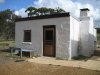
I then drove to Flinder's Chase National Park. The National Parks on KI have some heritage accomodation available at some of the sites, buildings used by lighthouse keepers and their guests (and in this case, the postman). I stayed in a small one room building used by the Postman when he made his fortnightly visit to the area in the early 1900's (Flinder's Chase is about 120 kms from Penneshaw). After paying and collecting a key from the Visitor's Centre I headed to the cottage and found a Black Tiger Snake just out the front! About four and half feet long, it completely ignored me and my camera as it crossed the road and crawled into some long grass under some bushes.

http://www.zoochat.com/674/black-tiger-snake-142763/
http://www.zoochat.com/674/black-tiger-snake-142764/
http://www.zoochat.com/674/black-tiger-snake-142765/
http://www.zoochat.com/674/black-tiger-snake-142762/

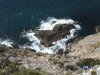
After unpacking my gear I jumped into the car and drove down to Cape du Couedic at the southwestern tip of KI. It was about 6:00pm when I arrived and there was no-one else there (the park closes at 5:00, but obviously that doesn't apply to people staying in the park). Cape du Couedic is the site of a New Zealand Fur Seal colony and, despite the evening sun, I still managed to get some nice pics of the seals and some pups. But there was a cold wind blowing and it felt like it was coming straight from McMurdo Sound in the Antarctic, so I left not long after I arrived and headed for West Bay, 43 kms away.

http://www.zoochat.com/674/new-zealand-fur-seal-142756/
http://www.zoochat.com/674/new-zealand-fur-seals-142754/
http://www.zoochat.com/674/new-zealand-fur-seal-pups-142755/
http://www.zoochat.com/674/new-zealand-fur-seal-pups-142747/
http://www.zoochat.com/674/new-zealand-fur-seal-pups-142753/
http://www.zoochat.com/674/new-zealand-fur-seal-pups-142759/
http://www.zoochat.com/674/new-zealand-fur-seal-pups-142758/
http://www.zoochat.com/674/new-zealand-fur-seal-pups-142757/

West Bay is at the westernmost point of KI and I wanted to catch the sunset, which I did. I arrived a little before the sun went down which gave me time to find a good position to set up my camera. I wanted to set it up on the beach, but I thought the sun hitting the horizon would be blocked by a headland, so I setup near the campsite at a vantage point above the beach. As it turned out, the beach would have worked but by the time I knew that it was too late. Once it hits the horizon, it is gone in about two minutes.

Once the sun had set I quickly left West Bay as I had almost 30kms to drive on a gravel road, in the dark. I saw no wildlife on the way back, which was at first surprising until I remembered this whole area had been burnt only a couple of years previously.

Arriving back at the Postman's Cottage my headlights picked out some Kangaroo Island kangaroos grazing nearby. And an hour later as I went to sleep I could here a small flock of Cape Barren Geese honking noisily not too far away in the dark.

:p

Hix

~~~~~~~~~~~~~~~~~~~~~~~~~~~~~~~~~~~~~~~~~~~~~~~~~~~~~

The below pics are not zoological and have not been uploaded to the galleries. They depict aspects of my trip mentioned in this post.

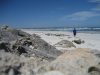
  • Hix walking along Bale's Beach
  • The Lighthouse at Cape du Couedic
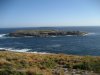
  • The Casuarina Islets at Cape du Couedic
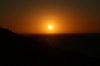
  • Sunset at West Bay
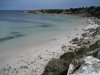
  • A beach on D'Estrees Bay (taken during high tide on my previous trip)
  • Postman's Cottage
 

Attachments

  • BB 33.jpg
    BB 33.jpg
    105.1 KB · Views: 6
  • CC 55.jpg
    CC 55.jpg
    55.8 KB · Views: 1
  • CC 54.jpg
    CC 54.jpg
    153 KB · Views: 1
  • WB 22.jpg
    WB 22.jpg
    25 KB · Views: 1
  • 64.jpg
    64.jpg
    164.3 KB · Views: 1
  • PC.jpg
    PC.jpg
    166.6 KB · Views: 2
Day 7: Kangaroo Island - Flinder's Chase National Park to Cape Borda

Early in the morning I awoke in Postman's Cottage feeling refreshed and recharged and, more importantly, my laptop, phone and camera batteries were also recharged. I packed the car early and headed back into the National Park towards Cape du Couedic, this time not going all the way to the Cape but turning off a few kilometres before to go to Remarkable Rocks.

Just before the turnoff is a lookout at Bunker Hill overlooking Yacca Flat and got a very rude shock. I realised I had been badly deceived by some very resilient plants.

As mentioned in an early post, Kangaroo Island caught fire in December 2007 and large tracts of wilderness were burnt. I tracked the news stories over the subsequent weeks, and one included a satellite photo of the island where the entire western end of the island was covered in smoke. It stated that some parts of the island had received low intensity burns and others quite high intensity. Apparently this was determined by infrared technology. Six rectangular areas were highlighted and described as "scorched earth" - areas where the fires were so intense nothing was left but ash, everything destroyed including charcoal. Five of those Scorched Earth areas were in Flinder's Chase.

On this visit I had been keen to see what damage had been done and how the environment was recovering. D'Estrees Bay appeared to have been unscathed, but in Flinder's Chase I had noticed all the burnt eucalypts had lots of regrowth from their epicormic buds. The trees had gone beyond the 'furry' look they first get and looked to be recovering well. The grass trees and smaller shrubs were also recovering well, and a lot of new plants, especially eucalypts, were growing and were sometimes a couple of metres high already. Obviously the vegatation was coping well - I hoped the wildlife was doing similarly.

Then I got to Bunker Hill and I looked at a large expanse of what was probably once heath but was now just a blackened vastness of charcoal. About a kilometre in front of me was a roughly oval oasis of green 10 or 20 mtres in diameter - either spared from the flames or some shrub that has recovered really well. But to my extreme right was what really stopped me in my tracks like an epiphany: a twin row of eucalypt greenery that I realised delineated the edges of the road I was driving on. All the lovely regrowth and new growth I had been marvelling at was masking the horrific devastation that lay on either side of the road. I continued on towards the Rocks.

I should point out that this area is close to the coast, but much of Flinder's Chase is Eucalypt forest and has recovered well; I was just surprised at this particular area.

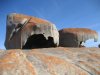
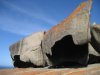
Remarkable Rocks is an odd group of giant boulders sitting on a granite dome by the ocean on the south coast. Some of the rocks have been eroded into weird shapes and are popular subjects for photographers (and appear in almost all advertising/promotional material for KI). Because the Rocks are on a dome you can't get to close to the domes edge as ocean spray can make the edges slippery. People have died from getting to close and slipping into the ocean. Freak large waves have also been known to claim lives.

Returning to my car in the carpark I could see the fire had burned through here but not too intensely. The area seemed dominanted by small eucalypts 2 or 3 metres high (judging by the dead sticks), and there was plenty of leafy regrowth.

I hurried back to the Visitor's Centre at the entrance to the park so I could return the key to Postman's Cottage. Along the way I came upon a roadkill of the other species of snake on KI, the Pygmy Copperhead. A few hundred yards down the road was another, still fresh - the ants hadn't found it yet.

After returning the key I walked back to my car in the carpark. The Visitor's Centre had been spared the fires and is surrounding by magnificent large gums and other trees. At my car I heard sounds from the leaf litter nearby. I determined the moises came from small items falling from the trees above and looked up to discover a trio of Gang Gang Cockatoos feeding.

I had only ever seen wild Gang Gangs once before - in Canberra on a rainy Winter's day a few years previous. I had been walking to work at the time and without a camera, quite surprised to find these magnificent birds in street-planted trees just 500 metres from Parliament House.

These three, a female and two males, were quite happy sitting a few metres above me, happily chewing away on gumnuts. I wasn't even aware Gang Gangs were on KI, so it was a very pleasant surprise. I spent about 20 minutes with them before heading off towards Vivonne Bay.

http://www.zoochat.com/674/gang-gang-cockatoo-male-142770/
http://www.zoochat.com/674/gang-gang-cockatoo-male-142769/
http://www.zoochat.com/674/gang-gang-cockatoo-female-142768/
http://www.zoochat.com/674/gang-gang-cockatoo-female-142767/
http://www.zoochat.com/674/superb-blue-wren-142775/
http://www.zoochat.com/674/scarlet-robin-142774/
http://www.zoochat.com/674/eastern-spinebill-142773/
http://www.zoochat.com/674/purple-gaped-honeyeater-142772/

Vivonne Bay is on the south coast, not far from Seal Bay. My reason for heading back that way was twofold: I needed petrol, and a new freeflight Bird Show had recently commenced called Raptor Domain. The girl in the SeaLink terminal at Cape Jarvis had descibed it as "fantastic", so I thought I might as well take a look.

At the Vivonne Bay General Store I filled up with petrol - $1.70 a litre for Unleaded. There's only half a dozen fuel outlets on the island and they're all quite distant from each other.

The Raptor Show was setup specifically for the tour buses that visit KI on a daily basis, but the general public are able to visit too. While I wouldn't use the word "fantastic" to describe the show, it's certainly not a bad show and non-zoo or wildlife people would certainly enjoy the experience.

The presenter - I think he said his name was Dave Irwin - has done raptor shows at Territory Wildlife Park and a couple of other places over the last decade, arriving on KI about 18 months ago.

Birds used in the show included a Sulphur-crested Cockatoo, Nankeen Kestrel, Tawny Frogmouth, Barn Owl, Kookaburras and Wedgetail Eagle. The show lasted about 45 minutes, which is fairly lengthy for a bird presentation. The Kestrel was flown with a lure, the Barn Owl was placed on the leg of a person in the front row and it then hopped from person to person right around the front of people, stopping aloong the way for photographs (I've not seen this before in any bird show). The two kookaburras were placed on visitors gloved hands and they could pose for photos. The public loved this.

http://www.zoochat.com/674/nankeen-kestrel-143723/
http://www.zoochat.com/674/nankeen-kestrel-143722/
http://www.zoochat.com/674/nankeen-kestrel-143724/
http://www.zoochat.com/674/tawny-frogmouth-143725/
http://www.zoochat.com/674/barn-owl-143720/
http://www.zoochat.com/674/barn-owl-143729/
http://www.zoochat.com/674/kookaburras-143721/
http://www.zoochat.com/674/kookaburra-143730/
http://www.zoochat.com/674/kookaburra-143731/
http://www.zoochat.com/674/wedgetail-eagle-143727/
http://www.zoochat.com/674/wedgetail-eagle-143726/

After the show finished I hung around and chatted to Dave (?) about the native birds and some mutual friends we knew. I asked him about the Glossy Black Cockatoos because I really wanted to see them (endangered subspecies) and he told me he had seen some the daay before and made suggestions of how and when to find them. Then he casually mentioned that he had heard someone had sighted a Gang Gang a few days previously in the National Park, and that he would dearly love to see one himself. "Oh" I said casually, "I was just watching three a couple of hours ago in the Visitor's Centre carpark". He looked at me disbelievingly and so I showed him the images on my camera.

It wasn't until I got back home a week later and I checked my books that I discovered just what a rare sight I had been priveleged to. A total of twelve pairs of Gang Gangs were introduced to FlindersChase National Park back in the 40's and 50's, and as a result a small group still persists. But, according to my book (printed in 1995) they were still a rare sight as they tended to favour Sugar Gums in more inaccessible parts of the park. It listed only three or four sightings in the 80's and early 90's. I may have been very lucky to see the three I saw that morning.

Leaving the Raptor Domain and Vivonne Bay (and sighting my first Heath Monitor for this trip) I drove to Cape Borda on the northwestern tip of the island, arriving around 4:30pm. Again, I was staying in Heritage accomodation, this time right beside the lighthouse, in another even smaller one room cottage.

http://www.zoochat.com/674/heath-monitor-143728/

The coastline at this cape is all steep cliffs for miles around and there's a walk which takes you to a viewing point on the edge of one of the cliffs, very spectacular. After unpacking the car and going for a walk I had time to sit down and do some reading, something I hadn't done yet on this trip (as it turns out, this was the only chance I got to do any reading, and even now I still haven't finished the chapter I was reading). The birds were becoming more active, particularly the crimson rosellas and the common bronzewing pigeons. At dusk the Kangaroo Island Kangaroos came out and started grazing.

http://www.zoochat.com/674/crimson-rosella-142740/
http://www.zoochat.com/674/crimson-rosella-142739/
http://www.zoochat.com/674/kangaroo-island-kangaroos-sunset-142741/

A little after the sun had set (and I'd taken more sunset photos) te ranger came over and took me into the lighthouse to show me the lightroom. The light had automatically come on when it got dark. The ranger and I chatted for a while, we discussed the fires, the birdlife and my plans for the following day. Then I bid him goodnight and went to work on my computer for an hour or so before calling it quits for the night.

:p

Hix

~~~~~~~~~~~~~~~~~~~~~~~~~~~~~~~~~~~~~~~~~~~~~~~~

Remarkable Rocks
View from Cape Borda cliff lookout (looking straight down)
Eucalypt regrowth and new growth in Flinder's Chase National Park
 

Attachments

  • 62.jpg
    62.jpg
    165.7 KB · Views: 0
  • 65.jpg
    65.jpg
    122.2 KB · Views: 0
  • 58.jpg
    58.jpg
    137.9 KB · Views: 0
  • CB 05.jpg
    CB 05.jpg
    247.7 KB · Views: 0
  • FCNP 64.jpg
    FCNP 64.jpg
    265.5 KB · Views: 0
Sunset at Cape Borda
The Lightroom in the Cape Borda Lighthouse
Woodward Hut accommodation at Cape Borda
Vivonne Bay
 

Attachments

  • CB 34.jpg
    CB 34.jpg
    80.2 KB · Views: 0
  • CB 44.jpg
    CB 44.jpg
    50 KB · Views: 0
  • lr.jpg
    lr.jpg
    159.6 KB · Views: 0
  • Woodward Hut, Cape Borda, Kangaroo Island, Dec 2007 - comp.jpg
    Woodward Hut, Cape Borda, Kangaroo Island, Dec 2007 - comp.jpg
    59 KB · Views: 0
  • 47.jpg
    47.jpg
    149.6 KB · Views: 0
Thanks! I had to wait a bit before I could get unobstructed views of them. And I was surprised how well camouflaged the males were when higher up in the trees, even with that beacon-like head colouring.

:p

Hix
 
Day 8: Cape Borda to Stokes Bay, via Parndana Wildlife Park

Despite the clear evening and cloudless sunset, the following morning was overcast, grey and cool. After a quick breakfast and then packing the car I set out east along the Playford Highway.

About 15kms down the highway (a dirt road at this point) I came to a cove called Harvey's Return. The cliffs are high around the coast, but there is a track leading several hundred metres down a steep incline to the cove at the bottom.

On my previous trip I had photographed Tawny Dragons at the bottom, but I wasn't happy with the shots and wanted to try again. This is one of the few coves where Tawny's exist on the island. Unfortunately, because it was so cloudy and the wind so cold, there were no lizards to be found. So I hiked all the way back up again, kicking myself for not visiting the afternoon before.

The Last time I had been there I noted that the north side of the road was either private property (of farmland or pine plantations) or parkland of predominantly eucalyptus forest. The south side was part of the National Park and was almost all Banksia scrub. For miles and miles along the road, and several hundred metres back, was one species - the Silver Banksia (B. marginata) - like a sea of Banksia punctuated by the odd Eucalypt and Grass Tree.

The fires had changed all that. The northside of the road was relativekly untouched (although some areas had been burnt), but the southern side of the road had been completely scorched. The grass trees were recovering and sprouting, and there were many new eucalypt saplings already the size of the few banksia skeletons that hadn't been completely destroyed, but not a single Banksia to be seen. The ground was covered in a carpet of green, but I was driving to fast to be able to tell what it was - either a grass, or a herb, bracken or some variety of heathland plant. I felt very disappointed because this was signalling a change in the ecosystem, from Banksia scrub to open Eucalypt woodland, and this would consequently change the wildlife assemblage that would repopulate the area.

Odd, I thought, as Banksia seeds need fire to germinate. But maybe these Banksias were differnt to the other 90 or so species, having evolved on the island in isolation. After all, their grass trees were gigantic monsters compared to what I was used to (see photo attachment below).

Some way down the road I spied a pair of wedgetail eagles circling on updrafts and brought my car to a quick halt so I could get out and photograph them. Against the grey sky they appeared as sillhouettes, just like the ones I had photographed at Monarto a few days earlier but closer.

http://www.zoochat.com/674/wedgetailed-eagle-142746/
http://www.zoochat.com/674/wedgetailed-eagle-142745/
http://www.zoochat.com/674/wedgetailed-eagle-142744/
http://www.zoochat.com/674/wedgetailed-eagle-142743/
http://www.zoochat.com/674/wedgetailed-eagle-142742/

Before getting back into the car I wandered over to look at the former banksia scrub, previously a great place to photograph birds as it was full of flowers, insects and cover for smaller species.

And then I kicked myself.

The green carpet was composed of thousands of Banksia seedlings, all about a foot tall. Banksias are very slow growers, and I know this, but I didn't think about it when I saw the Eucalypt saplings, two or three metres tall. So the ecosystem will recover, it may take several years, but it will be similar to the way it was.

Halfway along the island, just north of the middle, is the township of Parndana. An important little town as it has fuel and a pub and a general store. And just outside the town is the Parndana Wildlife Park.

See my review: http://www.zoochat.com/24/parndana-wildlife-park-march-2010-a-145972/

After leaving Parndana I headed down the Stokes Bay Rd to Stokes Bay. There were two places I wanted to go to - Paul's Place and the Stokes Bay Native Garden.

I had seen Paul's Place advertised on a brochure, lots of animals apparently. The name was familiar and I wondered why I hadn't visited there on my last trip.

Just as I was approaching I saw another Black Tiger Snake crossing the road, right opposite the driveway to Paul's Place. I stopped the car to take some more photos.

Unlike the one at Flinder's Chase, this snake was well aware of what was going on and very wary. It stopped when I stopped the car, and when I got close it tried to bolt for the undergrowth near the side of the road. I ran in front and it stopped, then turned around and went back across the road. Another car came up and stopped and some tourists got out to look at it. The snake stopped again, sized up the situation, then took the only escape route back into the undergrowth. I had my photos, the tourist had got some video of it, so I decided not to annoy it by heading it off again and let it go. I don't like to unduly stress animals.

http://www.zoochat.com/674/black-tiger-snake-146132/
http://www.zoochat.com/674/black-tiger-snake-146133/
http://www.zoochat.com/674/black-tiger-snake-146134/

I drove down the driveway to Paul's Place and then discovered why I hadn't visited before - a large sign said:

Paul's Place
Opens at 12:00 midday
Last tour at 1pm

Closed Monday, Wednesday, Friday​

It was now just after 2pm, on a Sunday. Looks like I won't be seeing it this time either.

Further down the road the Stokes Bay Native Gardens was open. I have found Botanical Gardens are great places to see and photograph birds (because of the high density and variety of flowering plants in a small area) so was keen to see what was on offer.

The Gardens are actually someone's backyard, but it's an enormous yard. I got a little lost following the paths and spent over an hour there. I got to see New Holland Honeyeater, Purple-crowned Lorikeet, Crimson Rosella, a striated pardalote that scrutinised me when I entered, the ubiquitous blue wren, and a koala. There were smaller birds in the dense shrubs but it was a bit cold for them to be out.

http://www.zoochat.com/674/striated-pardalote-146160/
http://www.zoochat.com/674/new-holland-honeyeater-146159/
http://www.zoochat.com/674/new-holland-honeyeater-146158/
http://www.zoochat.com/674/crimson-rosella-146156/
http://www.zoochat.com/674/immature-crimson-rosella-146161/
http://www.zoochat.com/674/koala-146157/

The New Holland Honeyeaters are interesting because they are almost identical to New Holland Honeyeaters on the mainland, except they have evolved a slightly longer tarsus, and a longer bill and forage differently.

And just as I left, the sun finally came out and shone strongly for the rest of the day.

There is a campsite right down next to a cafe at the 'beach' at Stokes Bay,and that was where I was planning on staying the night. I say 'beach' because there is no sand in the bay, it is all rock, pebbles and seaweed. There were a few other people at the campsite, with large tents and caravans and setup for an extended stay. I pitched my tent under a small mallee.

Although Stokes Bay has no beach there is a path through the nearest headland leading to the neighbouring cove which has quite a long beach. Although surfing is permitted, swimmimg is only allowed in a constructed rock pool because there are very strong rips present. So, as the sun was now out, once I had setup my tent I went for a much needed swim.

On the way back I passed some of the campers heading down to the rocks at the far end of the beach and we exchanged some pleasantries. I don't fish, so wasn't too interested in going with them, but the next morning I wished I had.

When I got back to my campsite it was just beginning to get dark and the kangaroos began to appear. As it got darker the Tammar Wallabies started to come out too - and there was lots of them!

http://www.zoochat.com/674/kangaroo-island-kangaroo-146147/
http://www.zoochat.com/674/tammar-wallaby-browsing-146152/

As I drifted of to sleep I heard the sound of light rain on the tent, although I was sure it wasn't rain. Must have been a possum in the malle, knocking little gumnuts out of the tree and they were bouncing of my tent.

:p

Hix

~~~~~~~~~~~~~~~~~~~~~~~~~~~~~~~~~~~~~~~~~~~~~~~~
Below attachments:
Banksia and Eucalypt regrowth, Playford Highway
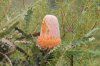
Banksia marginata, Stokes Bay Native Garden
Banksia prionotes, Stokes Bay Native Garden
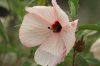
Hibiscus lutea, Stokes Bay Native Garden
 

Attachments

  • CB 14.jpg
    CB 14.jpg
    196.9 KB · Views: 2
  • CB 13.jpg
    CB 13.jpg
    150.7 KB · Views: 0
  • 69.jpg
    69.jpg
    172.5 KB · Views: 0
  • 72.jpg
    72.jpg
    157 KB · Views: 1
  • 75.jpg
    75.jpg
    254.1 KB · Views: 0
  • 81.jpg
    81.jpg
    73.9 KB · Views: 1
Back
Top