Day 9: Stokes Bay to Kingscote, via Duck Lagoon
The next morning was clear and sunny. I was up early to get down onto the rocks at the bay to photograph the birds. I knew a colony of Crested Terns would be there, and I also hoped to see Hooded Plovers and Pacific Gulls too. I wasn’t disappointed.
The terns allowed me to get reasonably close, and there appeared to be some juveniles in the group as well. I had wanted to photograph them in flight, but the birds returning from the morning's fishing flew in from the east – with the sun behind them – making photography impossible unless they circled the colony first. The Pacific Gulls, only a single pair, were much less trusting and took off before I could get close.
http://www.zoochat.com/674/crested-terns-146140/
http://www.zoochat.com/674/crested-terns-146135/
http://www.zoochat.com/674/crested-terns-146137/
http://www.zoochat.com/674/crested-terns-146138/
http://www.zoochat.com/674/crested-tern-146136/
http://www.zoochat.com/674/crested-terns-146139/
http://www.zoochat.com/674/pacific-gull-146150/
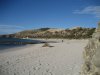
Hooded Plovers are an endangered species in South Australia, and I‘ve seen them before on the rocks at Stokes Bay. So I was pleased to see a pair and a juvenile again, but this time around they were on the little bit of sand that constitutes a beach and it was easy to see how well camouflaged they are, even when in flight.
http://www.zoochat.com/674/hooded-plover-146144/
http://www.zoochat.com/674/hooded-plover-146145/
http://www.zoochat.com/674/hooded-plover-immature-146146/
Also seen was a pair of Welcome Swallows resting on the rocks, a White-faced Heron, a Pied Cormorant and a lone Cape Barren Goose.
http://www.zoochat.com/674/welcome-swallow-146153/
http://www.zoochat.com/674/welcome-swallows-146154/
http://www.zoochat.com/674/white-faced-heron-146155/
http://www.zoochat.com/674/pied-cormorant-146151/
Back at the campsite I was talking to one of the fisherman from the night before and asked if they had caught much. He replied that none of them got a single bite, despite being out for several hours. They finally came back because the noise was giving them headaches.
I thought about this for a second – they were on a deserted beach at the base of a cliff, with no buildings or habitation around, the only noise they should have heard would have been the waves crashing on the shore and rocks.
“What noise?” I asked
“Those bloody penguins” he replied “They came ashore at dusk and for about an hour after it was dark. At first we thought that was great, but then they started that incessant calling and they didn’t stop calling all night. After a couple of hours we’d had enough.”
As he walked away he grumbled to himself “They probably ate all the fish, too”.
Suddenly I wished I was staying an extra night so I could see them. Little Penguins (a.k.a. Fairy or Blue Penguins) nest on Kangaroo Island, even in the two largest towns - Penneshaw and Kingscote – and both towns run tours for visitors to see the penguins coming ashore each night. But it would be cool to see wild ones which have not got used to people, and without twenty other tourists hanging around me.
While I was packing up my tent and belongings I suddenly noticed several hundred little brown pellets on the ground around the tent. Recognising them, I looked up into the tree above and saw a Koala looking down at me, watching my activities. So it hadn’t been a possum knocking gumnuts onto the tent the night before, it had been a koala pooping. Once I had packed everything away I took out my camera. Some kids came over to see what I was taking pictures of, and then their parents too. As I drove off I thought the koala would not be getting a lot of sleep that day.
http://www.zoochat.com/674/koala-146148/
http://www.zoochat.com/674/koala-146149/
My destination that day was the township of Kingscote. I hadn’t been there before but it was on the coast and supposed to be a pretty place. Plus they had a honey farm just outside town and my sister had specifically asked me to get her some Kangaroo Island Honey.
About halfway between Stokes Bay and Parndana is the Lathami Conservation Area, dedicated to protecting the endangered South Australian subspecies of Glossy Black Cockatoo. It’s virtually extinct on the mainland but around 300 now exist on Kangaroo Island. There is a recovery team that have been working tirelessly for 15 years now to build up the population and they have been very successful. I didn’t see any Glossy Blacks on my last visit and I hoped to remedy that this time round.
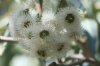
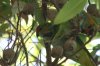
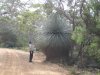
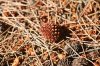
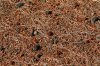
Glossy Blacks feed almost exclusively on the cones of the Drooping She-oak (Allocasuarina verticillata) and Lathami has dense stands of this species. I was told the best time to see them is in the early morning, and research indicates they spend 60% of their time feeding, but despite this I was unsuccessful again. I did see signs of recent feeding activity (cones on the ground and chewed up seeds – see attachments below), I heard black cockatoos and even glimpsed some flying through the trees on the other side of a valley, but these may have been the more common Yellow-tailed Black Cockatoos which have been increasing in number on the island due to the proliferation of Monterrey Pine plantations. All I managed to see was a Tammar Wallaby.
http://www.zoochat.com/674/tammar-wallaby-142776/
I continued on towards Kingscote. Some kilometres before Kingscote at a place called Cygnet River, I saw a sign pointing to “Duck Lagoon - 3kms”. As I had time I didn’t think 3kms was too far to go, although I wasn’t particularly interested if the ducks turned out to be domestic. It was along Kookaburra Rd, which I guess sounded promising.
It was a welcome diversion. Duck Lagoon was a large body of water that is part of a river/stream. Unfortunately, the river wasn’t flowing and parts of it had dried up. Indeed, despite there being a viewing platform and a hide, the water had receded in front of both leaving only the exposed mud. However the main part of the Lagoon still had lots of water and a few islands. There were lots of large dead trees around parts of the Lagoon. There was no-one else around, which suited me fine, and I spent nearly an hour there, taking photos and watching the birds.
http://www.zoochat.com/674/duck-lagoon-142761/
http://www.zoochat.com/674/duck-lagoon-142760/
http://www.zoochat.com/674/view-duck-lagoon-142803/
Most common were the Grey Teal, several dozen of them swimming around the islands on the other side of the pond. There were also a few Black Swans, White-faced Heron, Egret, White Ibis, Yellow-billed Spoonbill and Masked Plover. Running around the mudbanks and recently dried up parts of the lagoon were Black-fronted Dotterels.
http://www.zoochat.com/674/grey-teal-142807/
http://www.zoochat.com/674/grey-teal-142806/
http://www.zoochat.com/674/black-swan-142802/
http://www.zoochat.com/674/black-swan-grey-teal-142804/
After several days of camping and staying in little heritage buildings I finally decided a needed a treat. So when I arrived in Kingscote I checked into the Ozone Aurora Hotel, the best Hotel in Kingscote and probably the best on the island. Not only was it well appointed and luxurious, but it had internet access! A chance to upload some of my photos and catch-up on what was happening on ZooChat.
But first things first – it was the afternoon and I wanted to get to the honey farm and buy some honey for my sister. I also wanted to check out a couple of other tourist attractions I had seen in the brochures – Fergusons, which have crabs and lobsters and sell Lobster Oil, and Kangaroo Island Spirits (KIS) which distill their own liquers in the old style (whatever that may be).
The honey farm, called Island Beehive, runs tours but I got there too late in the day. I spent about half an hour there looking at the various souvenirs, eventually purchasing some as well as some honey for myself. Heading to KIS I discovered they were only open on weekends, so I went to Fergusons but found they were the same. So I went back to my hotel.
Back in my room sitting on the end of the bed I saw, sitting on the table, a small bottle of Jacob’s Creek red wine (250mls) and a pair of wine glasses. As I rarely ever drink wine I had ignored it, but then I noticed the glasses had an image of a pelican printed on them. I recognised the image as the logo of the Bay of Shoals Winery, and recalled they were located just outside of Kingscote (there are less than a dozen wineries on KI and they are heavily promoted in the literature).
Although I don’t drink wine, I have friends that do, so I had been thinking about buying wine glasses before I went on my holiday. If I was going to have wine glasses, they were damn well going to have animals on them!
So I drove up to the Cellar Door, on a hill overlooking the Bay of Shoals, where the winery gets it’s name. The guy asked me if I wanted to try any wine and I told him I don’t drink wine, he suggested I might like to taste their Rosé. So I did. I also tried a few others, both red and white. In the end I left with six bottles.
I got back to the hotel and looked at the wine, knowing I wouldn’t drink it myself. But it might make good birthday/Christmas presents, or just keep it for when friends come to visit. Then I looked at the small bottle of Jacob’s Creek and the two glasses again and thought “Damn, I knew I forgot something!”. So I drove back up to the cellars and bought half a dozen glasses with the pelican logo, what I had originally gone up to do in the first place.
By now it was almost 5:00pm. I had been hearing about a guy who feeds the pelicans at Kingscote wharf every evening at 5pm; I was not too enthused about this as I figured it was probably some character standing on the jetty throwing fish down to some pelicans swimming underneath while he told some stories and old wive’s tales to the public. I expected 5 or 6 pelicans and 20 or 30 tourists hanging off his every word.
I was quite wrong.
I didn’t count the tourists – there was probably about 50 or so – but I did count the pelicans: exactly 40. The tourists were sitting on rocks and concrete that slope down to the water and many of the pelicans were sitting and walking right amongst them!
http://www.zoochat.com/674/pelican-feeding-142826/
The talk went for about 10 or 15 minutes, and was very informative and entertaining. Although the presenter had a set patter, he knew what he was talking about and all the information was spot on. During the talk a seagull, or a pacific gull, or even a pelican would land on his head or try and still some squid from the bucket. When he did start feeding, he brought a double handful of squid and fish out and didn’t throw it to the pelicans, but offered it to them – about 40 beaks all went for his hands hoping to get a mouthful. He did this a few more times before throwing the remainder into the harbour behind him. The pelicans headed down to polish off what was left and chase a few gulls, and then paddled off into the harbour.
http://www.zoochat.com/674/pelican-feeding-142830/
http://www.zoochat.com/674/pelican-feeding-142845/
http://www.zoochat.com/674/pelican-feeding-142844/
http://www.zoochat.com/674/pelican-feeding-142843/
http://www.zoochat.com/674/pelican-feeding-142842/
http://www.zoochat.com/674/pelican-feeding-142840/
http://www.zoochat.com/674/pelican-feeding-142839/
http://www.zoochat.com/674/pelican-feeding-142841/
http://www.zoochat.com/674/pelican-feeding-142837/
http://www.zoochat.com/674/pelican-feeding-142827/
http://www.zoochat.com/674/pelican-feeding-142828/
http://www.zoochat.com/674/pelican-feeding-142829/
http://www.zoochat.com/674/pelican-feeding-142834/
http://www.zoochat.com/674/pelican-feeding-142833/
http://www.zoochat.com/674/pelican-feeding-142832/
http://www.zoochat.com/674/pelican-feeding-142835/
http://www.zoochat.com/674/pelican-feeding-142836/
http://www.zoochat.com/674/pelican-feeding-142838/
http://www.zoochat.com/674/pelican-feeding-142831/
A couple of hours later I was back again, this time it was quite dark. On the wharf is the Kangaroo Island Penguin Centre, a small building with a few marine aquaria displaying some local sealife. It had some local fish, a giant cuttlefish, a lobster and some seahorses. There was also meant to be an octopus but we couldn’t find him and he may have crawled out of his tank.
http://www.zoochat.com/674/aquaria-142811/
http://www.zoochat.com/674/aquaria-142810/
http://www.zoochat.com/674/giant-cuttlefish-closeup-142805/
http://www.zoochat.com/674/seahorses-142852/
http://www.zoochat.com/674/lobster-142813/
http://www.zoochat.com/674/lobster-142814/
The building opened at 8:00pm and at 8:30ish the same guy who fed the pelicans (his name was John) gave us an informal talk about the centre and the occupants of the tanks. He fed the lobster and the cuttlefish for us, although the cuttle for some reason ignored the fish. Then we went out looking for penguins, and they weren’t hard to find. WE saw them coming ashore, under bushes and behind builders. There was plenty of penguins, but no light for photography, and we had been told not to use a flash.
One penguin seemed content to sit motionless beside a bush. A distant streetlight provided a little bit of light on the bird, so I thought I might try for a photo. I set the ISO for 1600 (max on my camera) and braced the camera on a fence to try and keep it immobile. The autofocus couldn’t focus so I had to do that manually, which was difficult. The shutter speed was 6 seconds and in the last second the penguin decided to stretch its wings. Then it waddled off into a nearby burrow. Considering the effort I put into getting the shot, I decided to upload it here anyway despite the fuzzy image.
http://www.zoochat.com/674/little-penguin-aka-fairy-blue-penguin-142812/
I should also say that during the tour John included some astronomy in his talk. Kangaroo Island is a great place to look at the stars as the sky is so clear, and John pointed out many of the constellations. Stars don’t really hold much of a fascination for me, so I watched the beach and the undergrowth in case I could spot another subject for a six-second exposure.
The tour finished at about 9:30. I went back to my hotel, downloaded the photos from my camera onto my laptop, then had a good nights sleep in a nice bed (a pleasant change from my sleeping bag).

Hix
~~~~~~~~~~~~~~~~~~~~~~~~~~~~~~~~~~~~~~~~~~~~~~~~~~~~~~~
Cones of the Drooping She-oak, the primary food source for the Glossy Black Cockatoo. The cockatoos only eat seeds from these reddish brown coloured cones - once the cones are grey they ignore them.
Fresh chewings from the cockatoos. The chewings are the small red parts of cones, not the cones themselves. After a period of time the red chewings will go whitish, which gives an indication of how recent they are.