Hogle Zoo Hogle Zoo News

Update from Today's Visit:

African Savanna:
  • Bakari (1.0 giraffe Giraffa camelopardalis) the zoo's new castrated male from the Blank Park Zoo has been introduced to the rest of the herd. All five giraffes were out in their winter yard.
Great Apes:
  • Tuah (1.0 Bornean orangutan Pongo pygmaeus) was on exhibit by himself today in the outdoor orangutan yard. I believe this may be his first time alone without his big sister and surrogate mother, Acara (0.1). I observed him exhibiting some stereotypical behaviors (my first time seeing these kind of behaviors from him). Keepers seemed to be doing extra training sessions with him as well. Tuah turns 10-years-old on November 4, a typical age for when males of his species reach sexual maturity. Acara was on exhibit inside with Mia (1.0) and Kawan (0.1). This new change could be pointing towards Tuah receiving a breeding recommendation and leaving Hogle. Acara may also be taken off birth control to be given the chance to breed with Mia.
Asian Highlands:
  • Renovations have been completed in Habitat 5. Sasha (0.1 Amur tiger Panthera tigris altaica) was out in the exhibit.
Rocky Shores:
  • Neva (0.1 polar bear Ursus maritimus) was off exhibit seemingly having been separated from Nikita (1.0). Fingers crossed for cubs!!!
 
MowMow the red panda will be moving to the Smithsonian, leaving Hogle Zoo without the red critters temporarily. The plan is to switch species from Himalayan to Chinese red pandas.

Red Pandas are leaving Utah’s Hogle Zoo – for now
Certainly interesting move. I really did not know that the Chinese subspecies featured so strongly within the US captive zoo population and zoo community!

NOTA BENE: In Europe, the Himalayan subspecies is the focus of some good in situ conservation work in both India (supporting establishing a northern Indian zoo breeding population with a focus on reintroduction as also in Nepal in parts of their range) and some active reintroduction work and research in captivity and support for these efforts with both animals and technical expertise).
 
Update from Today's Visit:

African Savanna:
  • Male Hartmann's mountain zebra (Equus zebra hartmannae) Dakota has moved from the bachelor herd in High Desert Oasis to the savanna to breed with the zoo's females. Foals may be expected as early as late 2025/early 2026.
High Desert Oasis:
  • Male Hartmann's mountain zebras (Equus zebra hartmannae) 2-year-old Corkeey and 1-year-old Malcom have been transferred to an undisclosed facility in Georgia. My guess is they were transferred out of the AZA to Pettit Creek Farms (Scott Allen's collection). The bachelor herd at HDO now just consists of Scooby and his offspring Wallace.
Great Apes:
  • In my last post, you may recall I mentioned that Bornean orangutan (Pongo pygmaeus) 10-year-old male Tuah had been separated from his sister. The zoo is transitioning their group of orangutans into a fission-fusion society. This would allow the apes to decide who they spend their days with. 19-year-old female Acara and 35-year-old male Mia have been choosing to spend their time together. Zookeepers noticed that both females (Acara and 23-year-old Kawan) were not getting along too well while paired with Mia. The hope is that Kawan and Tuah will enjoy each others company, however, on my visit today they were separated.
Asian Highlands:
  • William, the zoo's new male Chinese red panda (Ailurus fulgens styani), had access to his on-display indoor habitat where I was able to see him. However, he does not have access to the guest facing outdoor habitat yet.
Master Planning:
  • From a keeper: It seems that the next project the zoo will undertake is a permanent solution to the former Elephant Encounter current High Desert Oasis exhibit. This new exhibit is set to be themed around South American wildlife. No species have been announced for this exhibit, however, the zoo's current South American species will find new permanent homes here.
  • So what will happen with the animals in High Desert Oasis? A new rhino barn would be built adjacent to the African Savanna presumably adding southern white rhinoceros to the existing mixed-species habitat. No plans have been announced for the zoo's Przewalski's horses, Bactrian camels, or bachelor herd of Hartmann's mountain zebra.
  • Other future projects still in the zoo's plans include a new Indonesian exhibit including orangutans and Siamese crocodiles on the site of the current Small Animal Building and an African Rainforest exhibit including gorillas and guerezas on the site of the current Great Apes exhibit.
  • IMPORTANT NOTE: This is just the most current hearsay around the zoo, and of course plans are subject to change. I think we should all still hold our breathes until a master plan under this current administration is released.
 
Master Planning:
  • From a keeper: It seems that the next project the zoo will undertake is a permanent solution to the former Elephant Encounter current High Desert Oasis exhibit. This new exhibit is set to be themed around South American wildlife. No species have been announced for this exhibit, however, the zoo's current South American species will find new permanent homes here.
  • So what will happen with the animals in High Desert Oasis? A new rhino barn would be built adjacent to the African Savanna presumably adding southern white rhinoceros to the existing mixed-species habitat. No plans have been announced for the zoo's Przewalski's horses, Bactrian camels, or bachelor herd of Hartmann's mountain zebra.
  • Other future projects still in the zoo's plans include a new Indonesian exhibit including orangutans and Siamese crocodiles on the site of the current Small Animal Building and an African Rainforest exhibit including gorillas and guerezas on the site of the current Great Apes exhibit.
  • IMPORTANT NOTE: This is just the most current hearsay around the zoo, and of course plans are subject to change. I think we should all still hold our breathes until a master plan under this current administration is released.

Did they say anything about a newer replacement for the Small Animal Building, or is that going to be the purpose of the South American Area? Because a master plan I have had two complexes for Small Animals. One called the Diversity of Life Building (Where the EdZoocation & RendeZoo buildings currently are), and the other called the Flex Exhibit Zone (Where the current SAB is). But considering that the Master Plan I have is from 2013, and didn't account for things like Wild Utah, Red Pandas, or Meerkat Manor, You should definitely take all of what I've said with a fist-full of salt.

But the plan also mentioned something about an expansion to Asian Highlands (Which I'm presuming will update those old Goat pens), So I think if that happens, that's where the horses & camels will most likely end up.
 
Did they say anything about a newer replacement for the Small Animal Building, or is that going to be the purpose of the South American Area? Because a master plan I have had two complexes for Small Animals. One called the Diversity of Life Building (Where the EdZoocation & RendeZoo buildings currently are), and the other called the Flex Exhibit Zone (Where the current SAB is). But considering that the Master Plan I have is from 2013, and didn't account for things like Wild Utah, Red Pandas, or Meerkat Manor, You should definitely take all of what I've said with a fist-full of salt.

But the plan also mentioned something about an expansion to Asian Highlands (Which I'm presuming will update those old Goat pens), So I think if that happens, that's where the horses & camels will most likely end up.
I think it is safe to assume that the master plan from a decade ago is not the best reference anymore. That plan was created under Craig Dinsmore, and since then the zoo has had two other zoo directors.

That being said, any new plan would have to account for a demolition of RendeZoo Room and EdZoocation Station. So it is quite likely we may get something similar to Diversity of Life. The Diversity of Life exhibit was going to become the new headquarters for the zoo's education department as well as exhibit space for smaller animals. In years past, I heard this exhibit as being themed around tropical rainforest animals or even Madagascan animals. I don't think anything was set in stone. It had even been talked about not including the education department in the Diversity of Life plans and instead giving them a new building on the site of the director's house and former cheetah exhibit.

From what I have heard, a new master plan is going to be quite different from what we were given a decade ago. But we will see.
 
Update from Today's Visit:

Small Animal Building:
  • The black-footed cat exhibit was empty (Felis nigripes) and the zoo's female black-footed cat, Gaia, was off-exhibit. I would honestly be surprised if the zoo has phased out this species given their significant cooperation with the Small Cat Alliance. I will try to confirm soon as to whether or not Gaia has left the zoo, and if the zoo plans on receiving new individuals of this species.
  • It looks as if the new female rock hyraxes (Procavia capensis) from the Stone Zoo have arrived. A barrier has been put up in front of their exhibit saying that "these are some animals adjusting to their new homes" (see photo). If these are the new females, they were born on August 2, 2021 at the Stone Zoo and are here on a breeding recommendation with the zoo's resident male. The zoo has not had a successful birth of this species since 2005.
 

Attachments

  • tempImage2wDDbG.png
    tempImage2wDDbG.png
    1.1 MB · Views: 15
Update from Today's Visit:

Small Animal Building:
  • Can confirm the zoo is no longer home to a black-footed cat. The young female striped skunk now lives in Gaia's former habitat in the Temperate Zone.
  • Can also confirm the arrival of the two female rock hyrax from the Stone Zoo. The zoo is now home to 1.3 of the species.
Asian Highlands:
  • Zeya, the zoo's female Amur leopard, has been on-exhibit in Habitat 3.
  • William, the new male Chinese red panda, now has access to the outdoor habitat.
Rocky Shores:
  • A sign on the tank in Tidewater Cove says "something new" is coming.
 
Last edited:
Update from Yesterday's Visit:

Small Animal Building:
  • The new 0.2 rock hyraxes (Procavia capensis) were introduced to the resident 1.1 pair yesterday morning. The group now has access to three habitats in the Temperate Zone. Despite the new females being interested in a possible new mate, the male was not receptive. Fingers crossed he figures out what to do, however, he has been paired with multiple females and has never sired any offspring.
Asian Highlands:
  • The new shift gate between habitats 4 and 5 was constructed to allow for a 360 degree loop between the two habitats for breeding introductions. This now allows for the zoo to have introductions take place on exhibit. The 360 degree loop ensures a cat has the opportunity to "get away" from a mate if they choose to. The zoo will focus on introducing their Amur tiger (Panthera tigris altaica) pair early next year. This means that Amur leopard introductions may be put on hold for the end of next year or even 2026 (especially if there are tiger cubs).
  • Many new animals are in quarantine which is exciting. Hopefully, the zoo will announce those arrivals soon.
Small Cat Breeding Center:
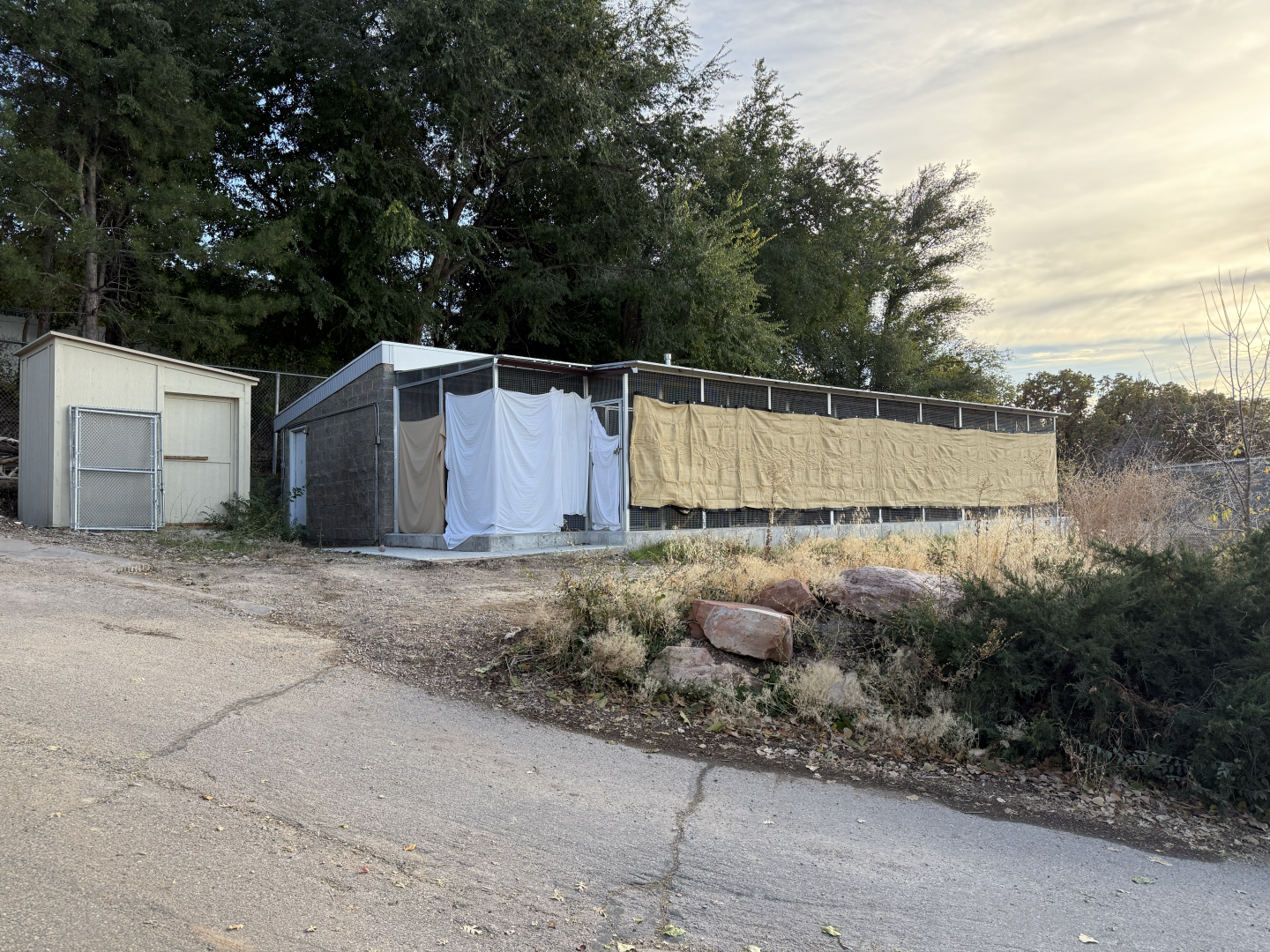
  • The zoo's commitment to the AZA's Small Cat Alliance is becoming more concrete. The plan for the former Cheetah Barn and current quarantine facility (see photo) is to transition it into a breeding center for small cats, specifically Pallas's cat (Otocolobus manul) and black-footed cat (Felis nigripes). This would allow the zoo to more easily manage these small species as well as provide a quiet and secluded area for the cats to breed. Offspring awaiting SSP placements as well as non-breeding adults will still be on public display in Asian Highlands and the Small Animal Building.
Rocky Shores:
  • Neva, the zoo's female polar bear (Ursus maritimus), has been sleeping around 23 hours a day recently! This is a promising sign, however, this doesn't mean she is confirmed pregnant. Most polar bears typically give birth in November through the first week of December. That window is closing soon, but you never know!
Great Apes:
  • Female Bornean orangutan (Pongo pygmaeus) Kawan will be off birth control for the next year. In the new fission-fusion set up, she will have access to both males and has recommendations to breed with either. Kawan gave birth to a female named Keju in 2015 at the Henry Vilas Zoo. Unfortunately, Kawan did not properly care for the infant and keepers needed to step in. At six-months-old, Keju was transferred to Zoo Atlanta, where she still resides, to be raised by a surrogate mother. Hogle Zoo already has plans in place in case this were to happen again. Acara, the zoo's other female, is a proven successful surrogate mother, having helped raise her younger brother Tuah.
 
Last edited:
Update from Today's Visit:

Primate Forest:
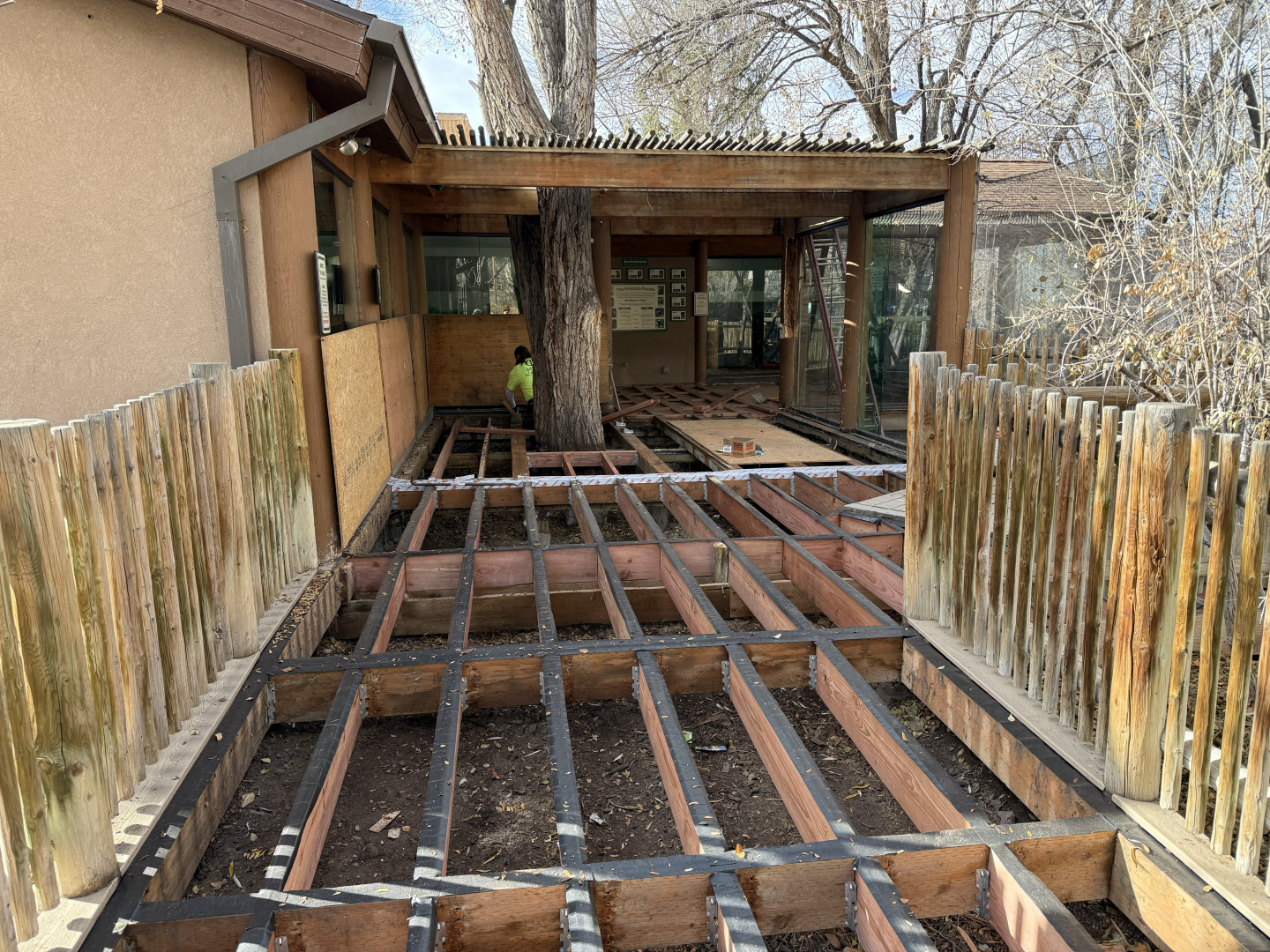
  • Primate Forest is currently closed while renovations occur. The boardwalk and guest walkway is being replaced (see photo).
Small Animal Building:
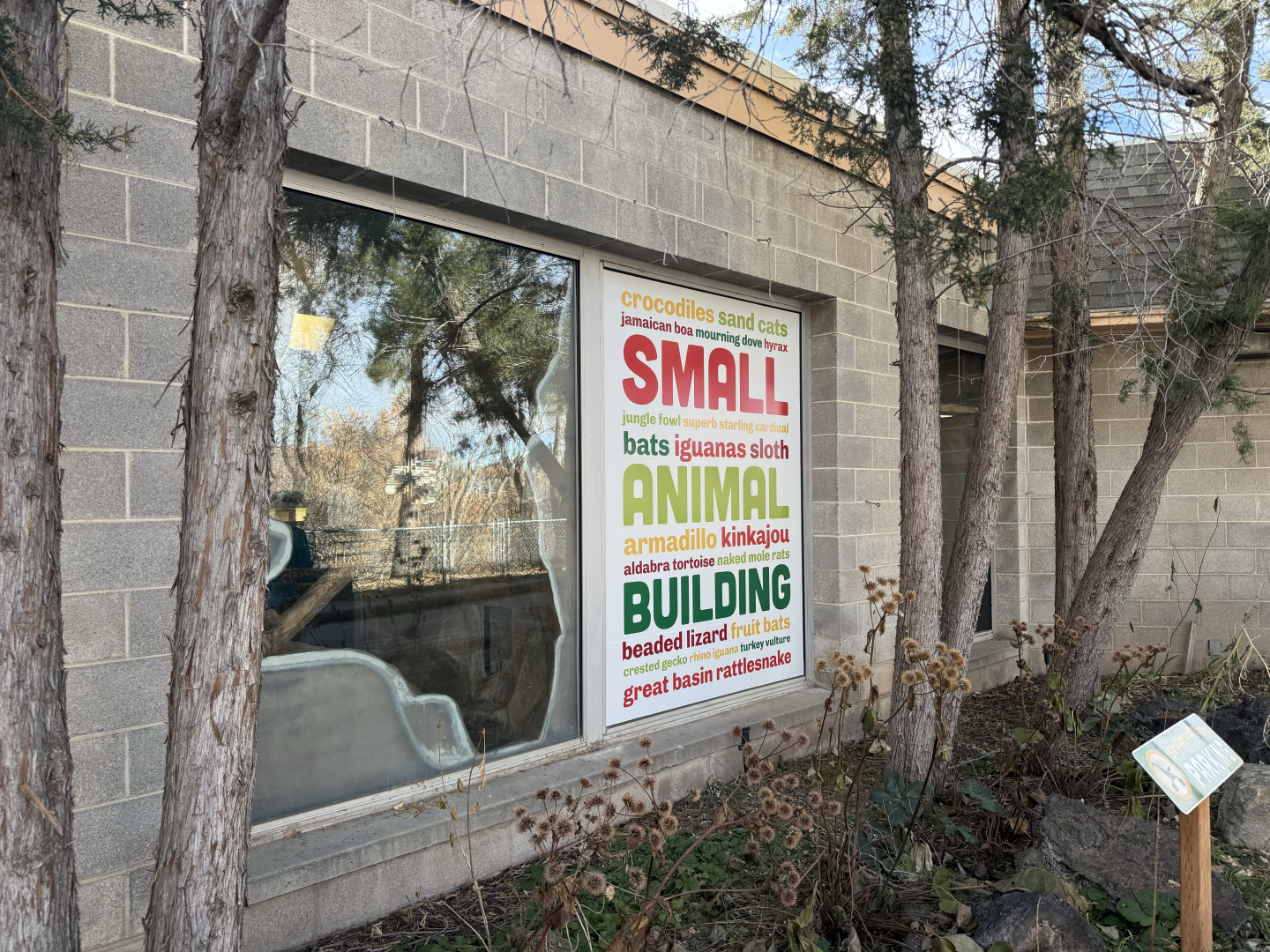
  • A new graphic covers one of the windows near the main entrance (see photo).
  • The birds from the main exhibit in the Tropics Zone have moved back to the Rainforest Atrium. Three helmeted guineafowl now occupy the exhibit in the Tropics Zone (see photo).
  • A habitat in the Temperate Zone has been set up for a new resident. This exhibit most recently held the zoo's young striped skunk (who now occupies the former black-footed cat habitat). Based on the structures in the habitat, it looks like an arboreal species will occupy the space. In years past, this habitat has been home to Prevost's squirrel (Callosciurus prevostii) and northern treeshrew (Tupaia belangeri).
  • A structure is being erected next to the west entrance of the building (adjacent to the red fox habitat). If I had to guess, it looks like it will be a small outdoor space for the zoo's Bolivian gray titi (Plecturocebus donacophilus) family group (3.1). This species has not had outdoor access since the titis moved from the now defunct Primate Building in 2014.
Wild Utah:
  • Two of the zoo's burros (Equus asinus) have been adopted through the zoo's partnership with the Bureau of Land Management. The zoo still has 4.0 burros.
 
Update from Today's Visit:

Small Animal Building:
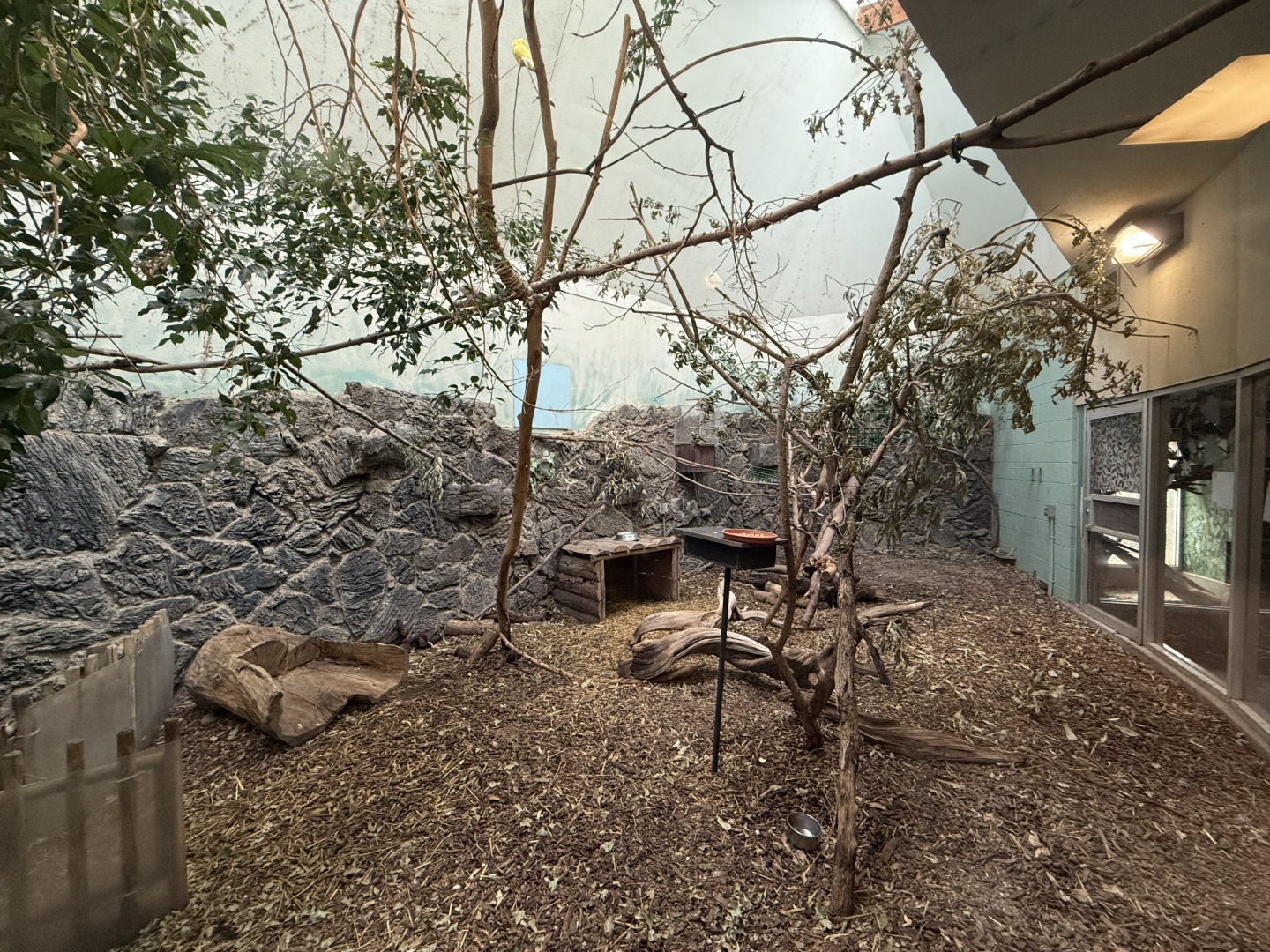
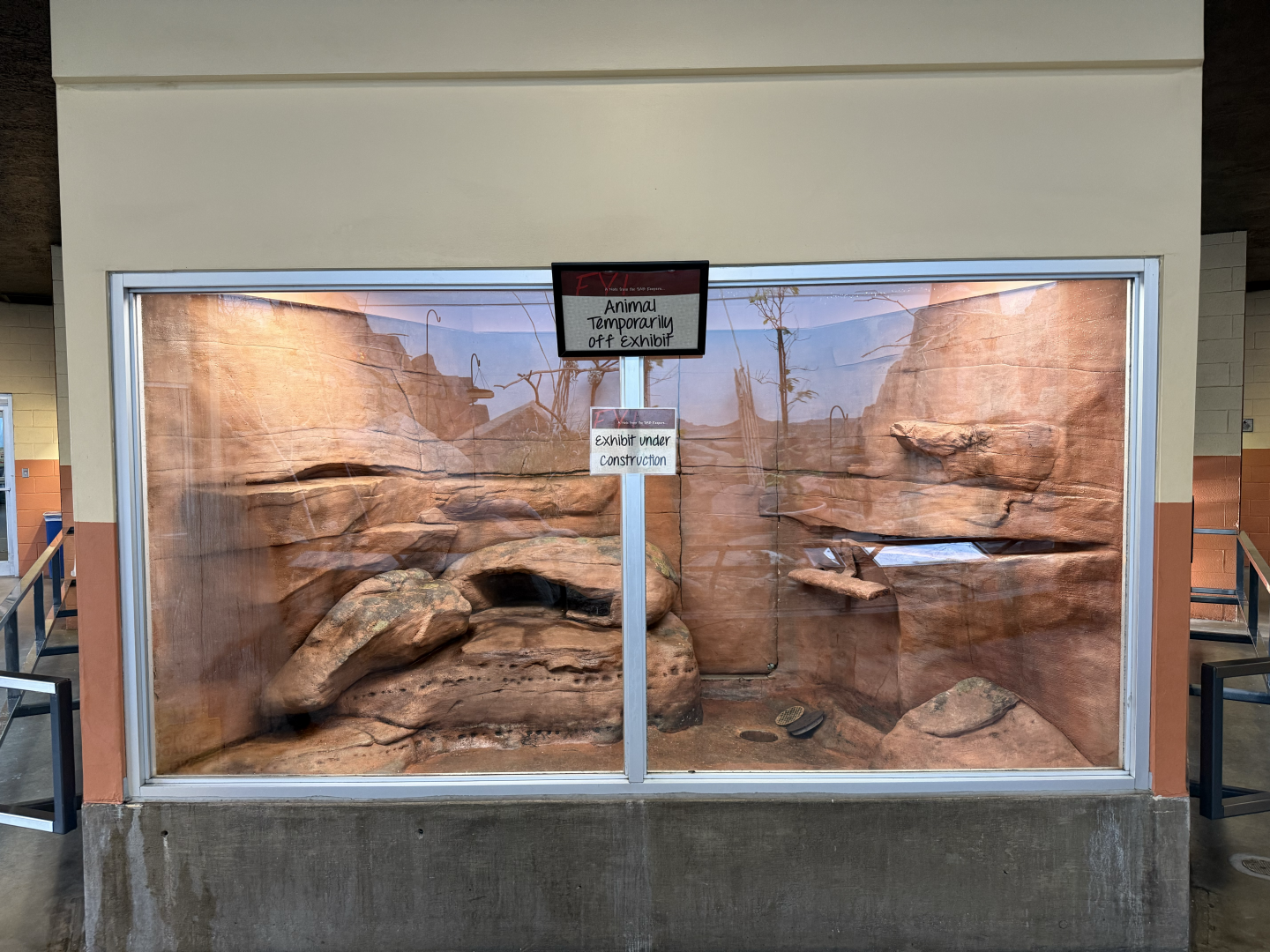
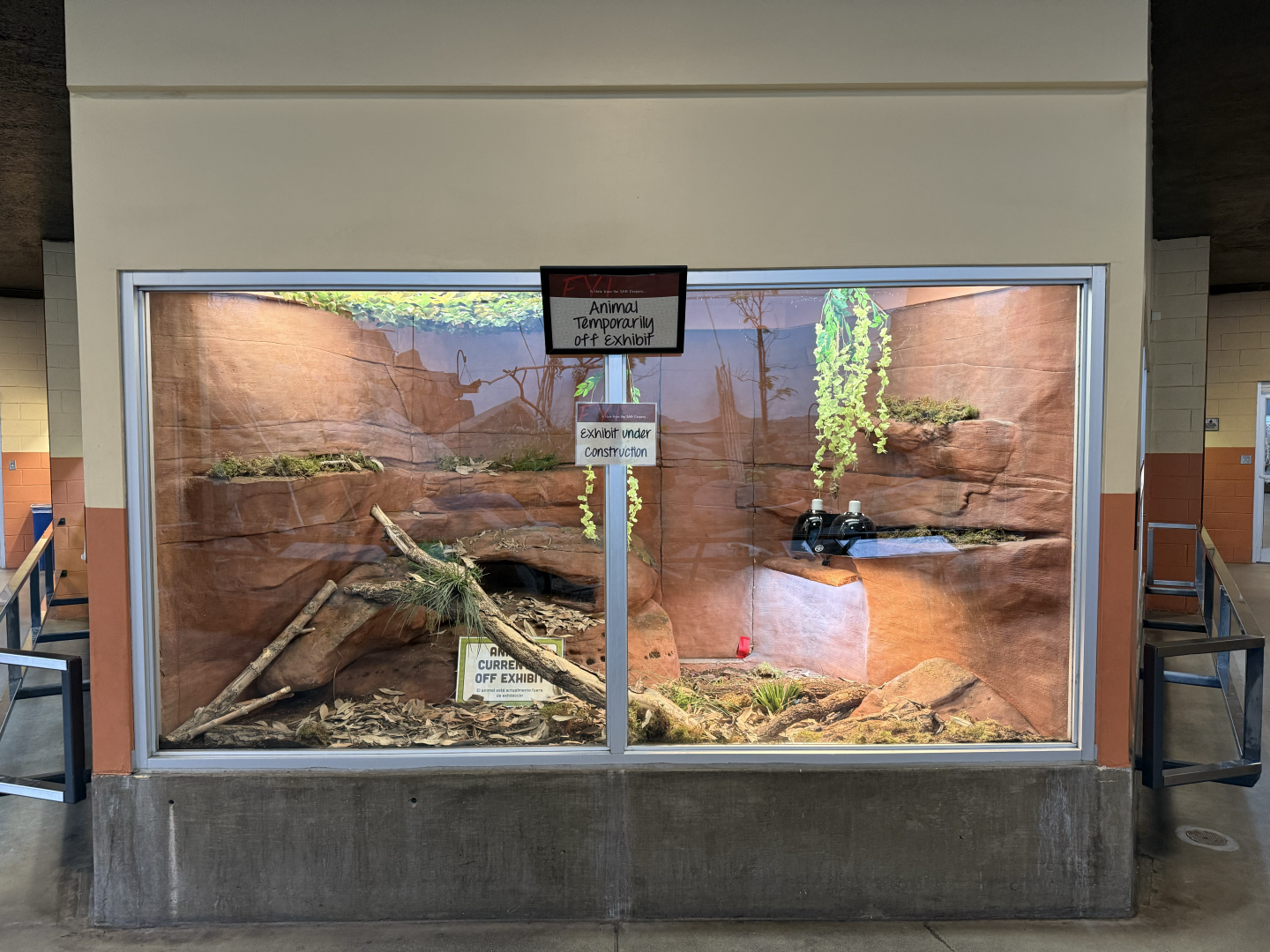
  • Buddy, the zoo's male black-and-white tegu (Salvator merianae), has moved from the main herp habitat in the Desert Zone (see photos) to the main herp habitat in the Temperate Zone. The Great Basin rattlesnakes (Crotalus lutosus) that Buddy replaced in the Temperate Zone have moved to other habitats in the Desert Zone. The main herp habitat in the Desert Zone remains empty, however, it has been set up for a new resident.
  • The zoo's lone female superb starling (Lamprotornis superbus) has moved into the former skunk habitat in the Temperate Zone.
  • My last post mentioned a new structure being built adjacent to the west entrance of Small Animal Building. It looks like this structure is not in fact an outdoor habitat for the titi family group, and instead it is just a covered structure for tools/storage.
Asian Highlands:
  • The "Off-Exhibit" sign in habitat 2 has been removed and the door to the holding building was open. While I did not see an animal in the habitat, signs for Pallas's cat were posted. It seems that the zoo's new female Pallas's cat (Otocolobus manul), Kaarina, has completed quarantine and now has outdoor access. Kaarina was born on 4/7/2022 at the Columbus Zoo and Aquarium where she was transferred from. The zoo is also set to receive two males from different facilities.
  • Dmitri, the zoo's male Amur leopard (Panthera pardus orientalis) is on-exhibit in habitat 3.
 
Last edited:
George, the zoo's male southern white rhinoceros (Ceratotherium simum simum), passed away at the age of 48 on December 18, 2024.
So sad to hear of his passing, he lived a long life. I also do want to point out that Hogle Zoo has had an exceptional number of pachyderms who lived very long lives, which include George and Princess (the female rhino who is now 45), African Elephant Dari (who lived to be 55 and was the oldest of her species in captivity), Princess Alice, the zoo's first Asian Elephant (69 when she passed in 1953), and Kali, another Asian Elephant (59 at her 2004 passing)! In addition, Moe, the zoo's former longtime resident Nile hippo is still alive in Albuquerque BioPark at age 51!
 
George, the zoo's male southern white rhinoceros (Ceratotherium simum simum), passed away at the age of 48 on December 18, 2024.
A ripe old age. It was to be expected at some point given his and also his companion cow Princess health issues. I presume that for the remaining 44-year old cow a similar scenario will sneue in due course.

The current pair never bred as they were near siblings (Princess is George's half-sister....) and hence their behaviour was by amicable association to one another.

I do wonder if they now grasp their chances with creating a new savannah and or white rhino habitat and already bring in younger individuals for breeding.
 
Update from Today's Visit:

African Savanna:
  • Male Hartmann's mountain zebra (Equus zebra hartmannae) Dakota has moved from the bachelor herd in High Desert Oasis to the savanna to breed with the zoo's females. Foals may be expected as early as late 2025/early 2026.
High Desert Oasis:
  • Male Hartmann's mountain zebras (Equus zebra hartmannae) 2-year-old Corkeey and 1-year-old Malcom have been transferred to an undisclosed facility in Georgia. My guess is they were transferred out of the AZA to Pettit Creek Farms (Scott Allen's collection). The bachelor herd at HDO now just consists of Scooby and his offspring Wallace.
Great Apes:
  • In my last post, you may recall I mentioned that Bornean orangutan (Pongo pygmaeus) 10-year-old male Tuah had been separated from his sister. The zoo is transitioning their group of orangutans into a fission-fusion society. This would allow the apes to decide who they spend their days with. 19-year-old female Acara and 35-year-old male Mia have been choosing to spend their time together. Zookeepers noticed that both females (Acara and 23-year-old Kawan) were not getting along too well while paired with Mia. The hope is that Kawan and Tuah will enjoy each others company, however, on my visit today they were separated.
Asian Highlands:
  • William, the zoo's new male Chinese red panda (Ailurus fulgens styani), had access to his on-display indoor habitat where I was able to see him. However, he does not have access to the guest facing outdoor habitat yet.
Master Planning:
  • From a keeper: It seems that the next project the zoo will undertake is a permanent solution to the former Elephant Encounter current High Desert Oasis exhibit. This new exhibit is set to be themed around South American wildlife. No species have been announced for this exhibit, however, the zoo's current South American species will find new permanent homes here.
  • So what will happen with the animals in High Desert Oasis? A new rhino barn would be built adjacent to the African Savanna presumably adding southern white rhinoceros to the existing mixed-species habitat. No plans have been announced for the zoo's Przewalski's horses, Bactrian camels, or bachelor herd of Hartmann's mountain zebra.
  • Other future projects still in the zoo's plans include a new Indonesian exhibit including orangutans and Siamese crocodiles on the site of the current Small Animal Building and an African Rainforest exhibit including gorillas and guerezas on the site of the current Great Apes exhibit.
  • IMPORTANT NOTE: This is just the most current hearsay around the zoo, and of course plans are subject to change. I think we should all still hold our breathes until a master plan under this current administration is released.
Really cannot wait too long for this new Master Plan! The plans for African Savannah with a more inclusive area complete with new white rhinos (!) and zebra (?) seem to signal this sis a more definite plan than most others. I assume they will need to look sternly at the current Desert Oasis (and ungulate species here) as well as the old Elephant House and yards...!?
 
Update from Today's Visit:

Small Animal Building:
  • The Malagasy giant hognose snake (Leioheterodon madagascariensis) has moved into the former tegu habitat in the Desert Zone (see photo), seemingly haven outgrown its space in the Temperate Zone. The snake's former habitat remains empty.
  • Two new male roseate spoonbills (Platalea ajaja) have been added to the Rainforest Atrium. One came from the Fort Worth Zoo and the other from the Cameron Park Zoo. The zoo now has 3.1 of the species. The zoo is set to receive more females in the future from the Caldwell Zoo once their juveniles have been sexed. The goal is to have a 3.3 breeding flock.
 
Back
Top