How feasible would it be to photograph the following birds?

For most of those single-name birds I assume they are just supposed to be the European species - eg Common Kingfisher, Barn Swallow, Common Swift, Great Cormorant, etc.
This for the most part.
[btw I was referring to the other vulturine parrot...]
 
Don’t know about anyone else but even though I do a fair amount of bird photography, this thread makes me want to take my camera out and shoot even more birds :)
 
For most of those single-name birds I assume they are just supposed to be the European species - eg Common Kingfisher, Barn Swallow, Common Swift, Great Cormorant, etc.
or whichever say albatross is easiest/most reasonable to photograph
 
or whichever say albatross is easiest/most reasonable to photograph

There was a black-browed albatross at RSPB Bempton Cliffs up until this year. The bird seemed not too hard to locate mor photograph to photograph but you might have to wait a good few years if it ever decides to return
 
Though I think with wood grouse/capercaillie I don't see why there couldn't be compromise...

like a visitor centre where visitors can observe capercaillies that have become relatively okay with existing in human company. Whether this would be an aviary or a reserve... I don't know. But just an idea of mine...
 
The thing with capercaillie is that the male birds get so fired up in the breeding season they will challenge anything. If the birds become accustomed to humans they will likely get fed by people, then will pester people for food and they aren't small birds. This counterbalanced with the testosterone levels of breeding males wouldn't make for a great plan.
 
"The Cheat Sheet"
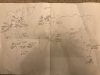
upload_2024-2-7_23-53-43.png
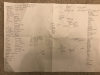
upload_2024-2-7_23-54-30.png
I doubt this will win any cartography awards... but I mapped out just about where everyone would be in theory.
And in conclusion?
In my opinion.... it doesn't actually look too bad.
You still have to go to 6 continents [7 if you want to see everyone in the wild] but most of them are concentrated in Europe and the Americas. So if everything goes as it should you would spend the majority of your time gallivanting those 3 continents and not have to spend too much, relatively speaking, on the 3 others.
I used mainly eBird and the Macaulay Library for reference, and RSPB for many of the British birds. The points are mainly generalisations. Of course there is no particular correct answer as to the question of where to see a blackbird... So I have just included a general list.
 

Attachments

  • upload_2024-2-7_23-53-43.png
    upload_2024-2-7_23-53-43.png
    846.4 KB · Views: 50
  • upload_2024-2-7_23-54-30.png
    upload_2024-2-7_23-54-30.png
    904.9 KB · Views: 49
Since your initial posting of the birds that you wished to see, are there any you have now successfully photographed with emphasis on the UK natives that I helped provide information for?
 
Since your initial posting of the birds that you wished to see, are there any you have now successfully photographed with emphasis on the UK natives that I helped provide information for?
I have not really got round to that. However I now have a 400mm f2.8 lens which should do good
 
Maybe we should have a shoot U.K. birds the nice way thread and encourage some shots!
 
Back
Top