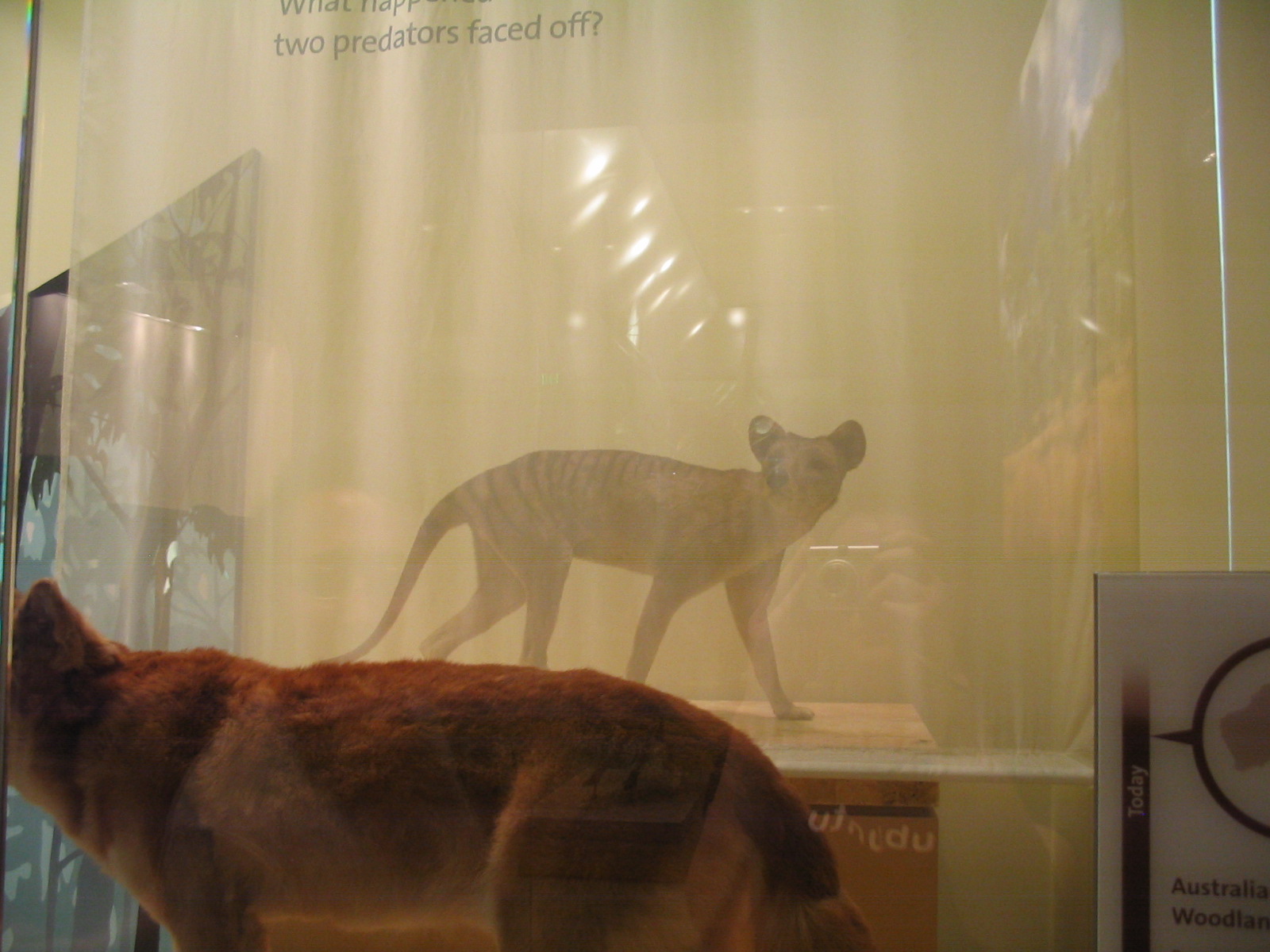
How many U.S zoos obtained the thylacine?

Newt

Well-Known Member
So, I've been doing alot of research on the history of zoos, and came across two pictures from 1902 featuring a pair of thylacines, held at the Bronx Zoo, NY. At the time, I wasn't aware thylacines were transported anywhere inside of the USA. It claims over 14 zoos obtained them worldwide, only 2 of which being found in the U.S, which includes:

1. The Bronx Zoo (New York)
Wildlife-Conservation-Society_00874_Tasmanian-Wolf_BZ_02-00-03.jpg

A male thylacine featured in the Bronx Zoo. He was purchased for around $125 by William Hornaday, the director of the zoo at the time. The male arrived on December 17, 1902. It was only the 2nd zoo to obtain them in the US behind the National Zoo (DC). It died on August 15, 1908.

A second male was obtained on January 16, 1912. Reports claim it either came from the Beamuris Zoo or London Zoo, it still remains unkown. It only lived a few months due to stress and anxiety from being held in captivity, and died on November 20, 1912.

The 3rd thylacine was unsexed, and arrived on November 7, 1916. The animal had arrived in poor health and died seven days later.

The last thylacine was a female, she arrived on July 14, 1917. She was bought by Ellis from the Beamuris Zoo and resold to the Bronx Zoo. Unfortunetly, she had died September 13, 1919, marking the last thylacine to ever be held in the Bronx Zoo.

Althought not important, I found another interesting fact. The director of the Melbourne Zoo, in Australia, had said to Hornaday while viewing a thylacine;

"I advise you to take excellent care of that specimen; for when it is gone, you never will get another. The species soon will be extinct."

Hornaday replied, "The extermination of the thylacine would be a zoological calamity; but it is impending."

This was all recorded by Hornaday in his "Our Vanishing Wildlife" (1913) under a section called "Species of Large Animals Almost Extinct".

------------------------------------------------------------------------------------------------------------------------------------

2. The National Zoo (Washington D.C)
deliveryService

These were a pair of thylacines photographed at the National Zoo in 1903. Although it's recorded that the National Zoo had obtained a pregnant female whom gave birth, I couldn't find much information on who these individuals were, or when they'd arrived. One source claims this was infact the pregnant female, but no ID was given for the one in the back. Only details that were provided were that they were obtained after the Bronx Zoo had rejected the pregnant female. She was then shipped to the National Zoo. Seeing as this happened in 1902, I'm gonna assume this was also the time they arrived. No death dates were provided.

------------------------------------------------------------------------------------------------------------------------------------

There was no information regarding any other U.S zoos having the species, besides these two. Do any of you know of any other zoo or facility that housed these in the U.S for even the shortest time? I'm very curious to see if they were found anywhere else within the USA, and no documents or recordings were found or kept.
 
To my knowledge, only the Bronx Zoo and the National Zoo held Thylacine within the United States.

According to this source, these were the 14 facilities:

The Thylacine Museum - The Thylacine in Captivity: Zoos, Circuses and Menageries: Tasmania (page 1)

Australia:

1. Beaumaris Zoo (Hobart)
2. City Park Zoo (Launceston)
3. Adelaide Zoo
4. Melbourne Zoo
5. Taronga Zoo
6. Moore Park Zoo (Sydney)

United States:

7. Bronx
8. National

Other:

9. London
10. Antwerp
11. Berlin
12. Cologne
13. Paris
14. Madras

Estimates of the numbers held at these facilities are in the link.
 
To my knowledge, only the Bronx Zoo and the National Zoo held Thylacine within the United States.

According to this source, these were the 14 facilities:

The Thylacine Museum - The Thylacine in Captivity: Zoos, Circuses and Menageries: Tasmania (page 1)

Australia:

1. Beaumaris Zoo (Hobart)
2. City Park Zoo (Launceston)
3. Adelaide Zoo
4. Melbourne Zoo
5. Taronga Zoo
6. Moore Park Zoo (Sydney)

United States:

7. Bronx
8. National

Other:

9. London
10. Antwerp
11. Berlin
12. Cologne
13. Paris
14. Madras

Estimates of the numbers held at these facilities are in the link.

Yes, most of these do have pictures and documentations aswell. Even though it's not in the US, it's still great to see how much history is really behind these guys in captivity
 
------------------------------------------------------------------------------------------------------------------------------------

2. The National Zoo (Washington D.C)
deliveryService

These were a pair of thylacines photographed at the National Zoo in 1903. Although it's recorded that the National Zoo had obtained a pregnant female whom gave birth, I couldn't find much information on who these individuals were, or when they'd arrived. One source claims this was infact the pregnant female, but no ID was given for the one in the back. Only details that were provided were that they were obtained after the Bronx Zoo had rejected the pregnant female. She was then shipped to the National Zoo. Seeing as this happened in 1902, I'm gonna assume this was also the time they arrived. No death dates were provided.

------------------------------------------------------------------------------------------------------------------------------------

I've never heard that the female that arrived at Washington in 1902 was destined for the Bronx Zoo originally. She arrived with three pups already in her pouch(rather than pregnant), they were just becoming semi-independent but one was evidently sick and died within ten days of their arrival, the other two reached maturity but died within 2/3 years. Their death dates are all well recorded e.g. if you check the online Thylacine Museum. The female pup outlived the mother and died in 1905. Another male was imported as a mate for it but they both died not long after. (dates also in TM).

The photo shows the adult female in the foreground and one of her pups, either part or fullgrown, in the background. They lived in one of the cages in the Large Carnivore House(note size of the door...)

No other US zoos are recorded as ever having them.
 
A second male was obtained on January 16, 1912. Reports claim it either came from the Beamuris Zoo or London Zoo, it still remains unkown. It only lived a few months due to stress and anxiety from being held in captivity, and died on November 20, 1912
New York Zoo purchased this thylacine from London Zoo for £80. (London Zoo had previously obtained this specimen, from Beaumaris Zoo, on 21st November 1911 and it was the nineteenth thylacine acquired by London Zoo.)
 
Last edited:
New York Zoo purchased this thylacine from London Zoo for £80. (London Zoo had previously obtained this specimen, from Beaumaris Zoo, on 21st November 1911 and it was the nineteenth thylacine acquired by London Zoo.)
This male was also one of the litter which appears with their mother in two well known photos taken in the Sandy Bay Zoo(Beaumaris) in 1909/10.
 
Althought not important, I found another interesting fact. The director of the Melbourne Zoo, in Australia, had said to Hornaday while viewing a thylacine;

"I advise you to take excellent care of that specimen; for when it is gone, you never will get another. The species soon will be extinct."

Hornaday replied, "The extermination of the thylacine would be a zoological calamity; but it is impending."
Although I’m not trying to get the thread off topic, I do wonder what other species were listed here…
 
The Our Vanishing Wildlife Series. Also, tysm for the smithsonian info btw

The book is actually online if you're curious, just google it! The book contains a wide variety of different species, and is truky interesting while kinda morbid. And ofc, there's way too much for me to put on that one thread but there's alot of sources and images if you look
 
Last edited:
The book is actually online if you're curious, just google it! The book contains a wide variety of different species, and is truky interesting while kinda morbid. And ofc, there's way too much for me to put on that one thread but there's alot of sources and images if you look
Awesome! Will read
 
I've never heard that the female that arrived at Washington in 1902 was destined for the Bronx Zoo originally. She arrived with three pups already in her pouch(rather than pregnant), they were just becoming semi-independent but one was evidently sick and died within ten days of their arrival, the other two reached maturity but died within 2/3 years. Their death dates are all well recorded e.g. if you check the online Thylacine Museum. The female pup outlived the mother and died in 1905. Another male was imported as a mate for it but they both died not long after. (dates also in TM).

The photo shows the adult female in the foreground and one of her pups, either part or fullgrown, in the background. They lived in one of the cages in the Large Carnivore House(note size of the door...)

No other US zoos are recorded as ever having them.

Branching off of this (because I love any excuse to talk about thylacines), the Smithsonian National Museum of Natural History has the remains of all four individuals within their collection, including the skull and pelt of the pup who died prematurely.
640

640

[ Photo source x ]

The mother's pelt is mounted and currently on display in the museum's Mammal Hall, alongside a dingo, while the remains of her offspring remain in storage.
thylacine.jpg

[ Photo source x ]
640

640

The adult female offspring.
640

640

The adult male offspring.

Regrettably, I can't link directly to the source for those last four images, but they are from the same archive as the first two, and can be found by doing a keyword search there for "Thylacinus".

Lastly, in another photo (courtesy of The Brain Scoop), one can see the male offspring's pelt alongside that of his aforementioned "little" sister, a great size comparison.
ffd3ec4310471617891b29636bfc8268c1c0b247.jpg

[ Photo source x ]
 
Branching off of this (because I love any excuse to talk about thylacines), the Smithsonian National Museum of Natural History has the remains of all four individuals within their collection, including the skull and pelt of the pup who died prematurely.
640

640

[ Photo source x ]

The mother's pelt is mounted and currently on display in the museum's Mammal Hall, alongside a dingo, while the remains of her offspring remain in storage.
thylacine.jpg

[ Photo source x ]
640

640

The adult female offspring.
640

640

The adult male offspring.

Regrettably, I can't link directly to the source for those last four images, but they are from the same archive as the first two, and can be found by doing a keyword search there for "Thylacinus".

Lastly, in another photo (courtesy of The Brain Scoop), one can see the male offspring's pelt alongside that of his aforementioned "little" sister, a great size comparison.
ffd3ec4310471617891b29636bfc8268c1c0b247.jpg

[ Photo source x ]
This is really interesting! I never knew that they were preserved like this
 
This is really interesting! I never knew that they were preserved like this

Happy to share! I was able to track down the remains of two other American thylacines, the original male and the female from the Bronx Zoo. Both of their mounted pelts sit within the collection of the American Museum of Natural History, the female pictured below:

shape%2Fcover%2Fsport%2Ftiger-2e436a98ced8126b99eec2a7885c9715.jpg

[ Photo source x ]

And you can find more photos on the blog Sixth Extinction on tumblr (The male, the female).

Given the museum has several other thylacine specimens in its collection, I wouldn't be surprised if the remains of the other 2 Bronx thylacines ended up there, too. Also! For some more information and photos, I recommend this blog post.
 
Last edited:
If Only people were more engaged we could have had a Prezwalski Horse (takhi) story for the Thylacine but well ..... You know what happened :(
 
Happy to share! I was able to track down the remains of two other American thylacines, the original male and the female from the Bronx Zoo. Both of their mounted pelts sit within the collection of the American Museum of Natural History, the female pictured below:

shape%2Fcover%2Fsport%2Ftiger-2e436a98ced8126b99eec2a7885c9715.jpg

[ Photo source x ]

And you can find more photos on the blog Sixth Extinction on tumblr (The male, the female).

Given the museum has several other thylacine specimens in its collection, I wouldn't be surprised if the remains of the other 2 Bronx thylacines ended up there, too. Also! For some more information and photos, I recommend this blog post.

This must be one of the highest quality mounts of a thylacine I have encountered.
 
Back
Top