A few weeks ago, I was travelling to Newcastle for work and had the opportunity to make my first visit to Hunter Valley Zoo. Unfortunately, I only had about 30-40 minutes to spare, so I didn't spend as much time at the zoo as I would have liked and mainly tried to zip between the species which aren't at Taronga or National Zoo (the facilities I visit most frequently).
Hunter Valley is a reasonably good collection of exotic and native animals, and, alongside with Featherdale and Mogo, sits under the Australian Wildlife Parks umbrella. I have a membership to these parks, which went a long way towards justifying the visit which was shorter than I would have liked.
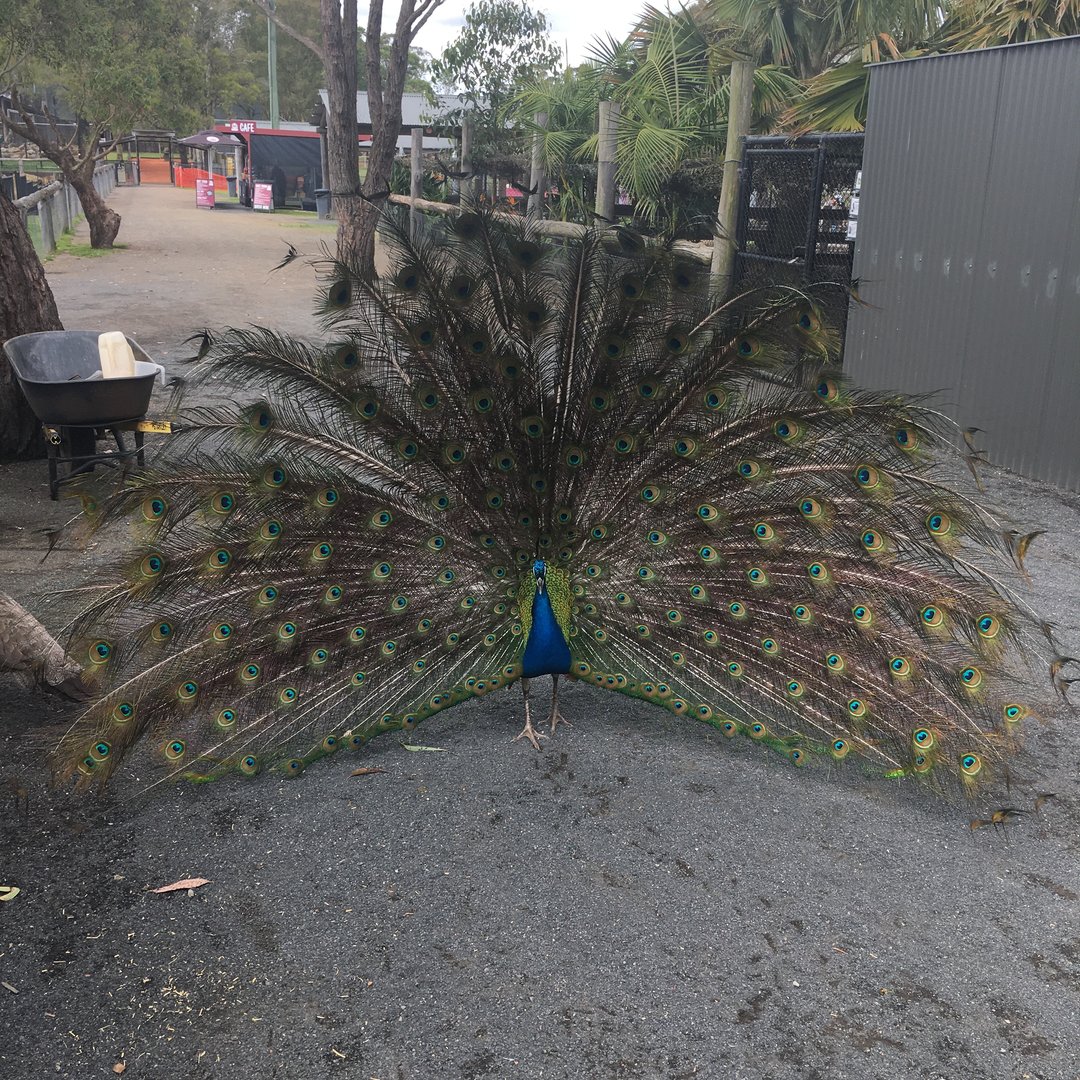
I would split the zoo into three sections - the right side, the left side and the back area (left and right based on your perspective as you come through from the entry). There were a number of free-ranging Peafowl in the zoo grounds, the males displaying their impressive plumage to attract both the females and the visitors alike.
I headed straight for the back section in order to track down the first species I was very keen to see at Hunter Valley - the Maned Wolf! I'd seen this species before at Melbourne and TWPZ, although that tells you how long ago it was. I saw a single animal in a grassy yard with tall mesh fencing. The wolf was bigger than I expected the species to be.
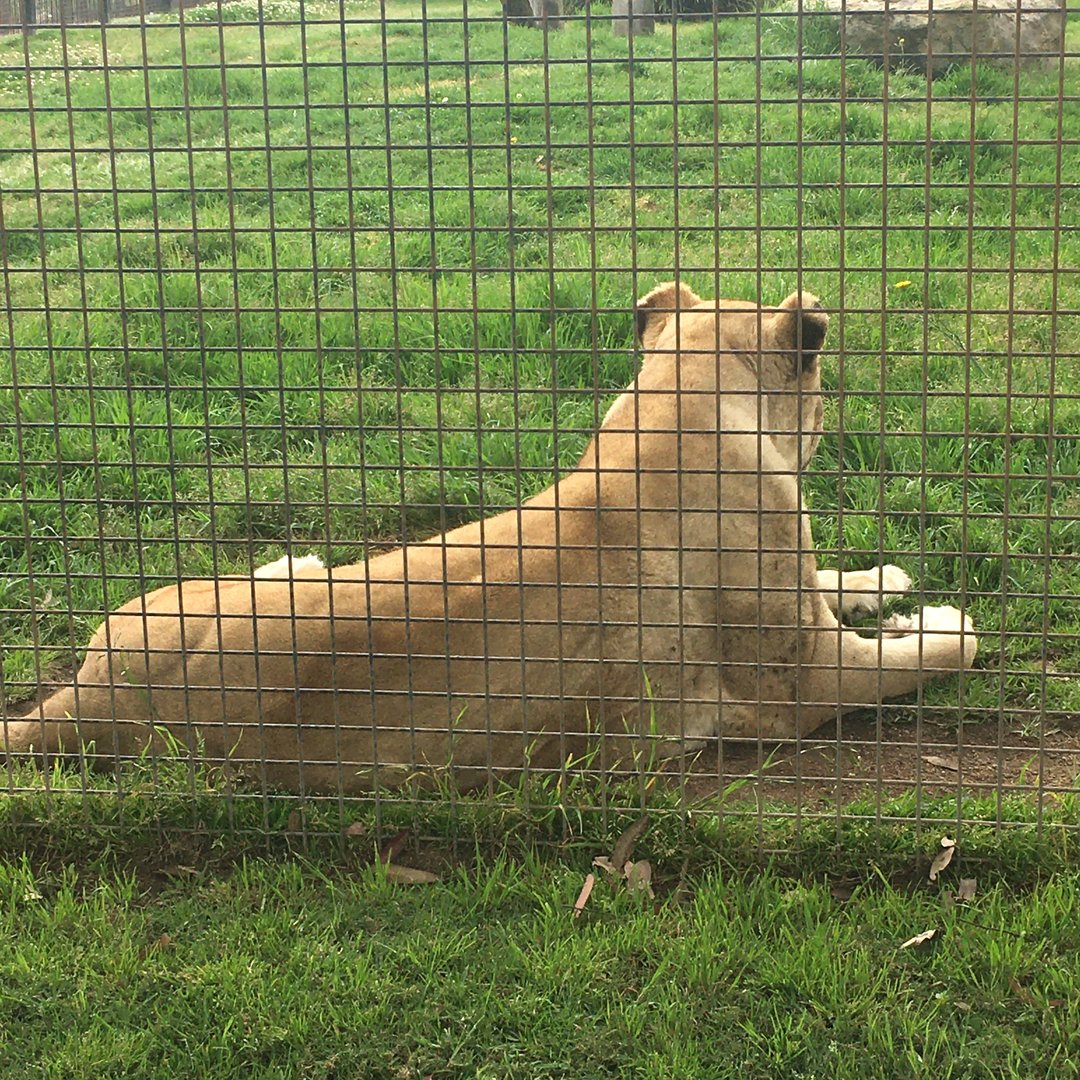
To the right of the Maned wolf exhibit were paddocks for Ostrich, Camel, and Barbary Sheep. Heading in the opposite direction to these enclosures, I reached the exhibit for African Lion. I saw two female tawny lions resting near the mesh wall. It was only upon reflection that I recalled that these lionesses are Kuchani, one of the oldest lions in Australasia, and Asali, whom I fondly remember as a cub at Taronga Zoo in 2003.
The following exhibit contained White Lions, although I did not see them as a keeper was tidying up their exhibit. She mentioned to me that the lions would be out in five minutes, but considering the necessitated brevity of my visit, I didn't hang around. Following the path I reached an exhibit for Giraffe and Zebra.
Whilst smaller than the animals for similar species at Mogo, I thought that they were more than adequate size for the relatively small number of inhabitants, and add an impressive megafauna component to Hunter Valley Zoo. I'd compare the place to Symbio, but having animals such as giraffe, zebra and more than one big cat species, means I'd rank it above Symbio.
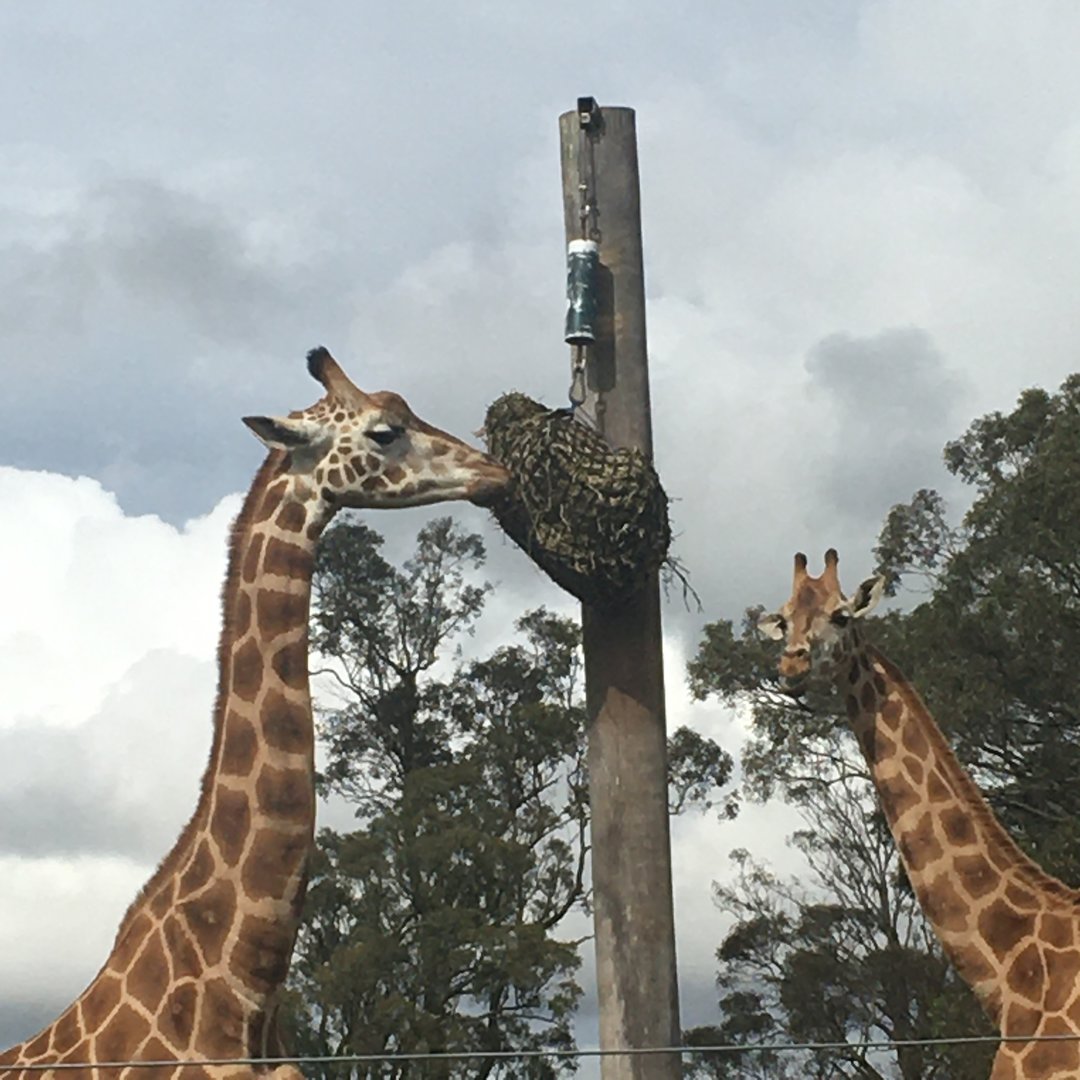
The giraffes were feeding relatively close to the fence, which allowed me to get a good look at the animals. From there, I backtracked past the lions (the path which leads to the back section is T-shaped, with the exhibits I've listed so far along the top of the T). Coming back towards the first part of the zoo, on the left is a picnic area and kiosk with barbecue.
Beyond that area is an island exhibit for Black and White Ruffed Lemur, one of two exhibits for that species within the wildlife park. I thought that this was a good exhibit, although it is set back a fair way from the fence. Nonetheless, it's nice to have the lemur island to look at if you were sitting and eating at the tables nearby.
Nearby is an enclosed mesh exhibit for Capybara, which is closer to the central path. My first instinct was that this exhibit was darker and more enclosed than I would usually expect for this species, which could have been slightly contributed to the overcast weather on the day, but the impression makes sense considering that (with some adjustments) this was the former home of Berani the Malayan Tapir.
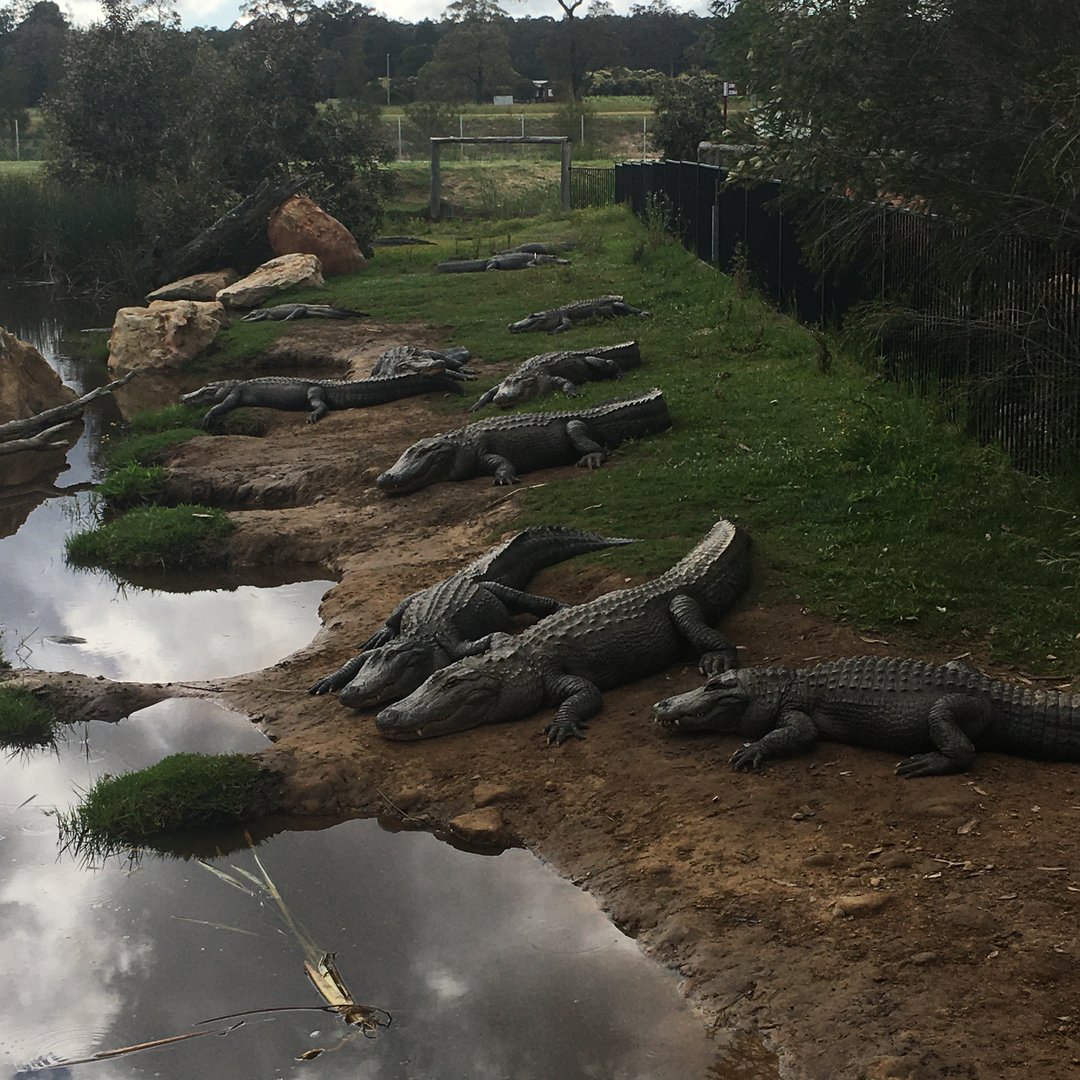
Opposite these exhibits (on the right hand side of the path) was a large lake holding quite a number of American Alligator. I thought this was a good exhibit and was made more impressive by the large number of inhabitants, many of which were on the shores of the water body. It's good to see a large, prominent exhibit for a reptile species.
From there I returned to the main part of the zoo, which contains most of the smaller species, including birds, primates and other small exotics. There are a number of paths which weave around these exhibits, most of which are planted-out cages of some form or another. I found it to be a little bit of a maze, but this perception was probably aided by the fact that I was in a hurry.
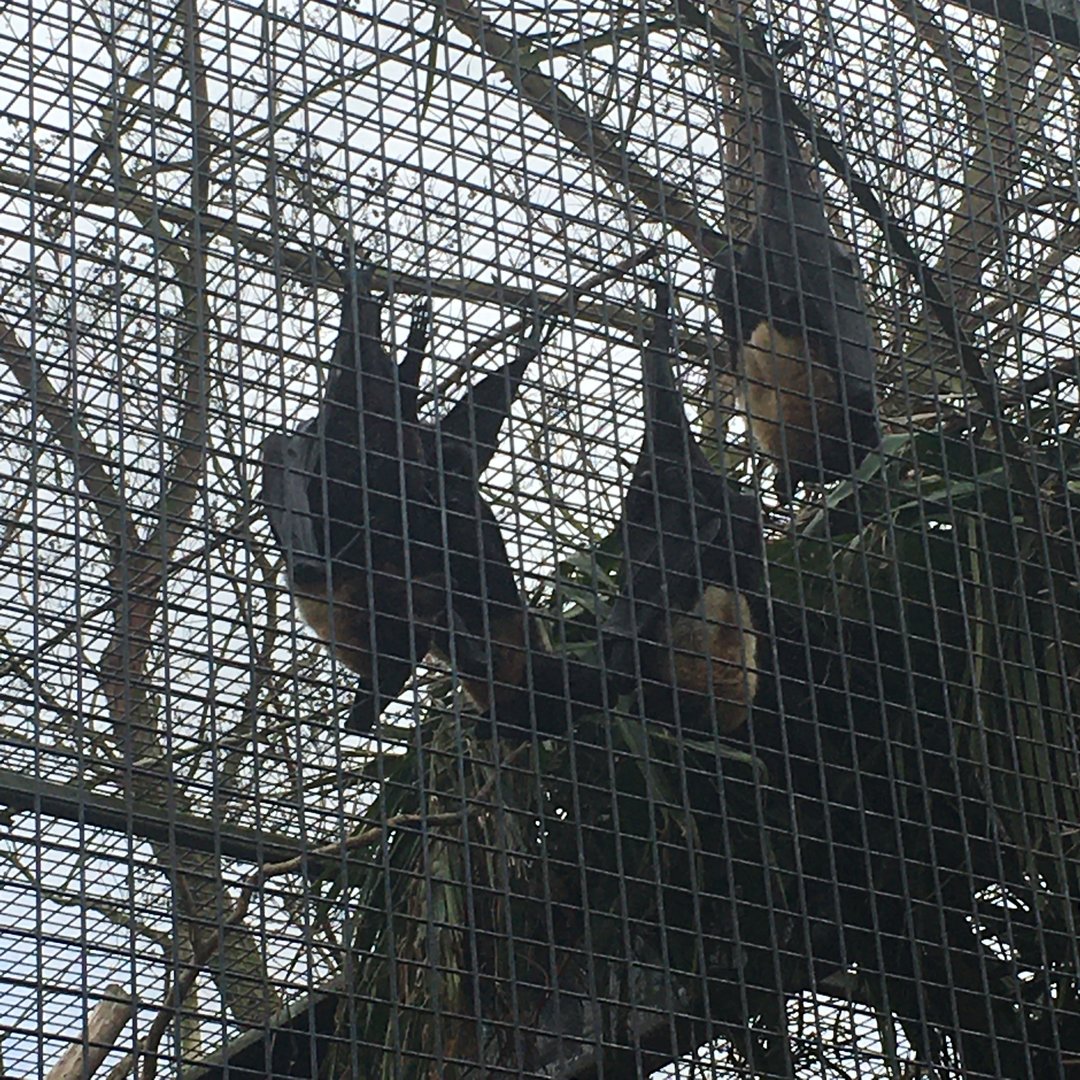
I headed to the right (we'll call this section the right hand side). My recollections of the species housed are based off my photos and looking at the map again, so take this with a grain of salt. A colony of Flying Fox were housed in a cage, I think with bird species. On the map there is a kookaburra symbol nearby, I can't recall if these are a mixed exhibit or there are two aviaries.
Beyond this (on the alligator exhibit side) is an island exhibit for Spider Monkey. This exhibit is closer to the path than the lemur island. Along the main path is a mesh exhibit for Binturong. I saw one animal in a shelter, which was relatively easy to view. I even think it was awake! Past the binturong exhibit were bird aviaries.
On the other side of the path to these exhibits was a partially-covered cage for Serval. The serval was up quite close to the mesh, so it was good to see this species up close - the servals at NZA have been asleep under their shelter on my recent visits there. I walked past the serval enclosure a few times and the cat consistently displayed well.
Heading around a loop, I thought that I would come across another Maned wolf exhibit, but it actually housed Dingo. Perhaps the map is just using the same symbol for both species. On the inside of the loop was a rocky exhibit for a rock wallaby species, although I can't recall exactly which one.
Opposite this was a tortoise exhibit (either Radiated or Elongated Tortoise I believe) which had a good crowd around it, so I didn't really get that close. It seemed like a fairly good, sandy exhibit with glass fronting, which is relatively rare (the vast majority of the exhibits are mesh) and an indoor area.
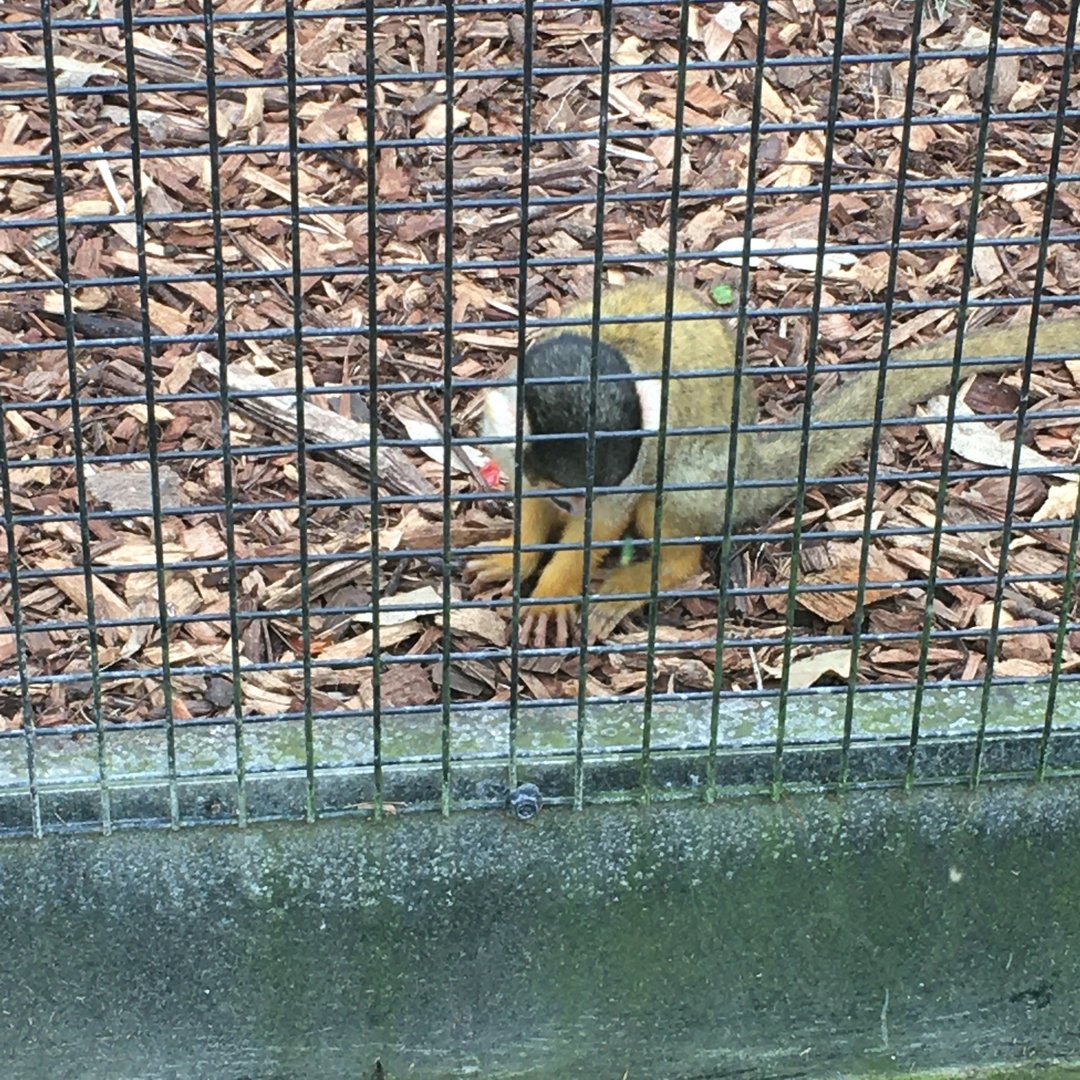
Next was the Bolivian Squirrel Monkey exhibit which was a quite large cage. Interestingly, there was a bench seat in the exhibit, so I wondered whether this is used for encounters? It didn't seem to be used by the animals and did take away from any hope of the exhibit being naturalistic, but it wasn't particularly naturalistic to begin with.
A couple of the squirrel monkeys were quite up close to the mesh, so that was nice to see them that close - something which isn't necessarily the case in the island exhibits which I'm more familiar with at both Taronga and the National Zoo. This is an exceptionally cute species and Hunter Valley had a good-sized group.
Opposite the squirrel monkey cage was a fairly good exhibit for Slender-Tailed Meerkat which was also glass-fronted and gave good views of the meerkats. It seems that Hunter Valley has invested in glass fronting for the smaller exhibits for the smaller species, which has paid off for them and made for engaging exhibits.
From there, this pretty much takes you back to the entrance. There is an exhibit for Koala near the entrance which is a fairly standard koala-in-a-tree exhibit, and opposite this is another long cage exhibit for Black-and-white Ruffed Lemur. I have a memory that a pair of sisters is housed in this exhibit, but that recollection's far from infallible.
On the other side of the lorikeet aviary is another aviary for Blue and Gold Macaw, although I can't remember whether or not there were multiple birds or not. This exhibit linked in nicely with the other exhibits nearby for small South American primates. There wasn't a strong sense of zoogeographical theming across the park, although that's not unexpected in a relatively small zoo.
Hunter Valley's Red-Handed Tamarin pair are the only ones of their species in New South Wales, so I was very keen to see these animals. Unfortunately their cage was a bit dark and they were not particularly easy to photograph; however, I was most fortunate to be able to see a tamarin, my first time seeing this species.
The exhibit also included at least one Pygmy Marmoset. To the right of this exhibit was another similar cage for Emperor Tamarin. To the left is a picnic area and set back from that is a larger cage for Capuchin. I didn't take a close look, considering that I've seen this species a number of times before.
On the map there is a symbol for Ring-Tailed Lemur as if this exhibit were next to the Red-handed tamarins, so this is a place where my memory is getting a little bit fuzzy. I feel like I did see Ring-tailed lemurs at the zoo, although I'm not immediately sure how every fits in terms of where that exhibit actually is.
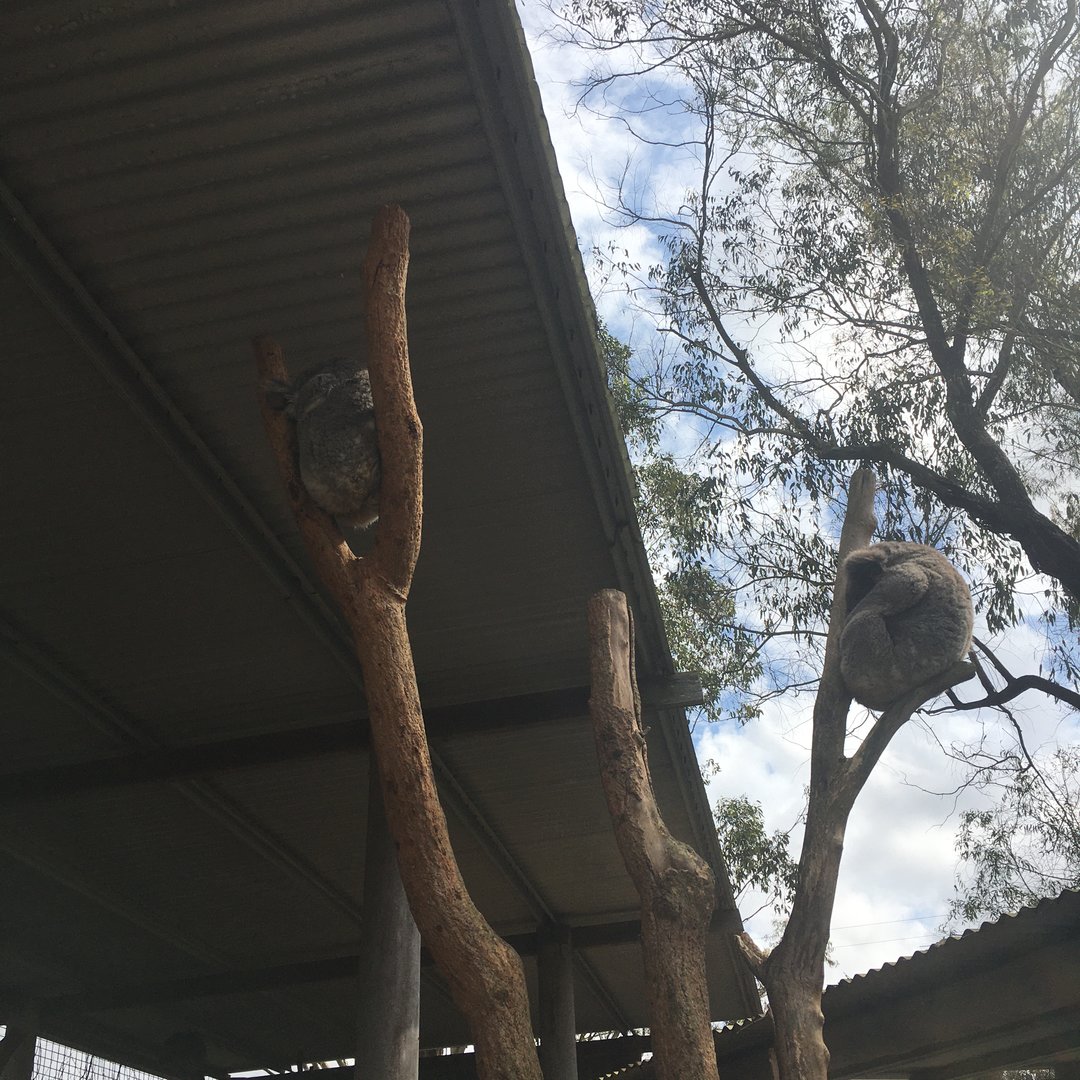
Heading on from there is another series of relatively standard Koala exhibits. These stalls had a seat in front of them, along with a wooden sign with 'Hunter Valley Zoo' etched into it. I still think of the place by the zoo moniker and have slipped into that terminology a fair bit, although since it's now called Hunter Valley Wildlife Park in line with Mogo and Featherdale.
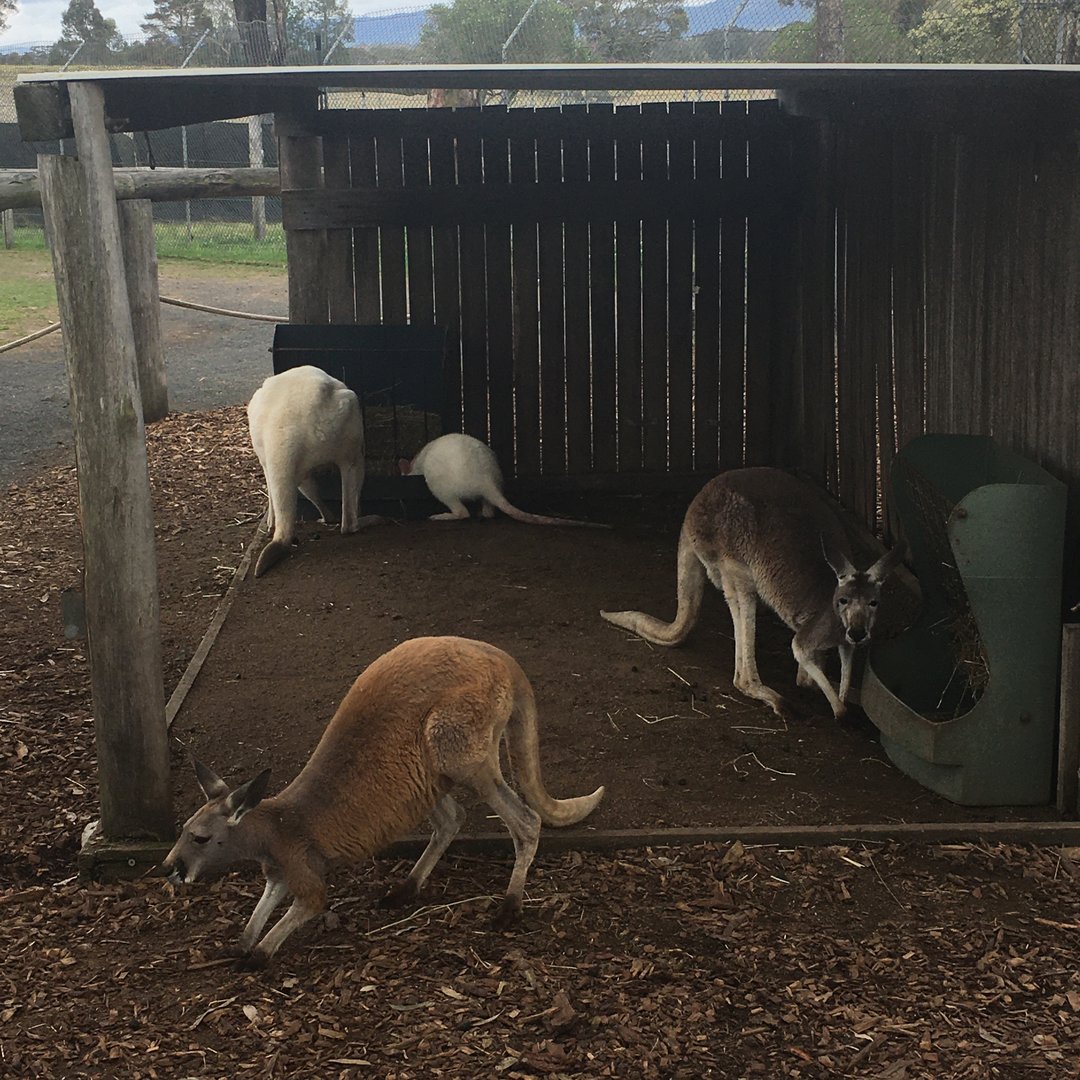
Beyond this was an expansive walk-through exhibit for various macropod species. This is probably one of the larger exhibits of its kind I've walked through. As I was only planning a very short visit to the zoo as I needed to keep going to my work meeting in Newcastle, I didn't purchase feed, although it was offered.
I took a particular liking to a mother and joey white kangaroo, who also seemed to take a particular liking to me (although unfortunately I didn't have any food to give them). There were also a decent number of non-white kangaroos (I think both Red and Eastern Greys) as well as a wallaby species. The macropods had an area where they could retreat to away from the walkthrough area if they wished.
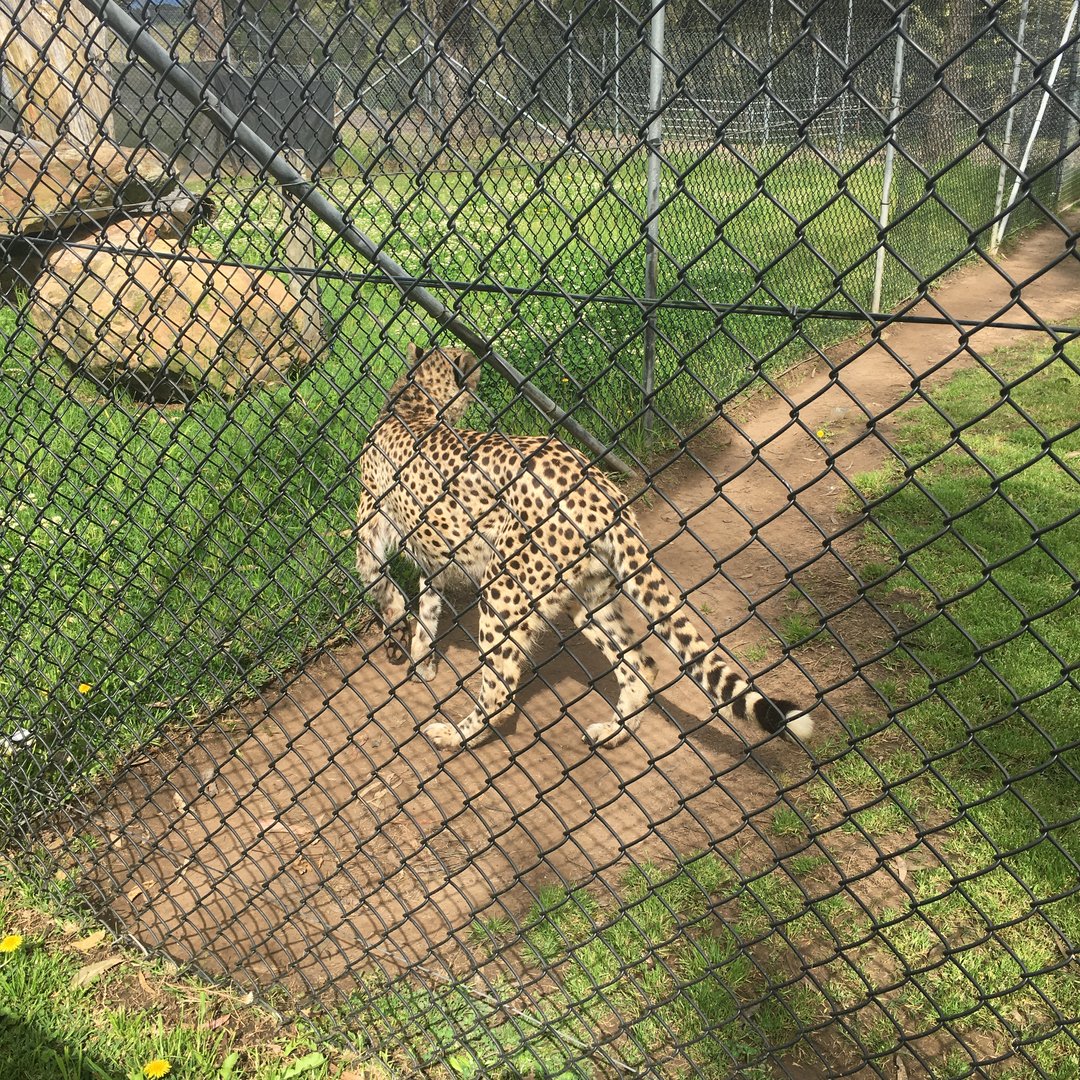
Closer to the carpark are more bird aviaries, a wombat exhibit and another koala exhibit. At the end of this path (which leads to one end of the kangaroo walk-through) is a reasonably standard grassy cheetah exhibit. Apparently this used to be a Maned wolf exhibit, according to other photos in the gallery.
I saw one cheetah, which seemed captivated by something on the other side of the mesh fence. The cheetah is a little disconnected from the other African and exotic animals here, but on the other hand it's good to have a larger species in this section of the zoo and having a second big cat species benefits the zoo's collection overall.
This review certainly isn't as extensive as some of the others. I would happily visit Hunter Valley Wildlife Park again and I think it's a good facilities for the people of Newcastle and the Hunter to have as their local zoo, with a good balance of a diversity of species, particularly for a zoo of its size.
Inevitably I will have missed things, so I welcome corrections and others' reflections on Hunter Valley Wildlife Park. It wasn't clear to what extent the zoo would have room to expand, although at the very least I think there is a little bit of room near the ruffed lemur island were the zoo be seeking to develop further.
Hunter Valley is a reasonably good collection of exotic and native animals, and, alongside with Featherdale and Mogo, sits under the Australian Wildlife Parks umbrella. I have a membership to these parks, which went a long way towards justifying the visit which was shorter than I would have liked.
I would split the zoo into three sections - the right side, the left side and the back area (left and right based on your perspective as you come through from the entry). There were a number of free-ranging Peafowl in the zoo grounds, the males displaying their impressive plumage to attract both the females and the visitors alike.
I headed straight for the back section in order to track down the first species I was very keen to see at Hunter Valley - the Maned Wolf! I'd seen this species before at Melbourne and TWPZ, although that tells you how long ago it was. I saw a single animal in a grassy yard with tall mesh fencing. The wolf was bigger than I expected the species to be.
To the right of the Maned wolf exhibit were paddocks for Ostrich, Camel, and Barbary Sheep. Heading in the opposite direction to these enclosures, I reached the exhibit for African Lion. I saw two female tawny lions resting near the mesh wall. It was only upon reflection that I recalled that these lionesses are Kuchani, one of the oldest lions in Australasia, and Asali, whom I fondly remember as a cub at Taronga Zoo in 2003.
The following exhibit contained White Lions, although I did not see them as a keeper was tidying up their exhibit. She mentioned to me that the lions would be out in five minutes, but considering the necessitated brevity of my visit, I didn't hang around. Following the path I reached an exhibit for Giraffe and Zebra.
Whilst smaller than the animals for similar species at Mogo, I thought that they were more than adequate size for the relatively small number of inhabitants, and add an impressive megafauna component to Hunter Valley Zoo. I'd compare the place to Symbio, but having animals such as giraffe, zebra and more than one big cat species, means I'd rank it above Symbio.
The giraffes were feeding relatively close to the fence, which allowed me to get a good look at the animals. From there, I backtracked past the lions (the path which leads to the back section is T-shaped, with the exhibits I've listed so far along the top of the T). Coming back towards the first part of the zoo, on the left is a picnic area and kiosk with barbecue.
Beyond that area is an island exhibit for Black and White Ruffed Lemur, one of two exhibits for that species within the wildlife park. I thought that this was a good exhibit, although it is set back a fair way from the fence. Nonetheless, it's nice to have the lemur island to look at if you were sitting and eating at the tables nearby.
Nearby is an enclosed mesh exhibit for Capybara, which is closer to the central path. My first instinct was that this exhibit was darker and more enclosed than I would usually expect for this species, which could have been slightly contributed to the overcast weather on the day, but the impression makes sense considering that (with some adjustments) this was the former home of Berani the Malayan Tapir.
Opposite these exhibits (on the right hand side of the path) was a large lake holding quite a number of American Alligator. I thought this was a good exhibit and was made more impressive by the large number of inhabitants, many of which were on the shores of the water body. It's good to see a large, prominent exhibit for a reptile species.
From there I returned to the main part of the zoo, which contains most of the smaller species, including birds, primates and other small exotics. There are a number of paths which weave around these exhibits, most of which are planted-out cages of some form or another. I found it to be a little bit of a maze, but this perception was probably aided by the fact that I was in a hurry.
I headed to the right (we'll call this section the right hand side). My recollections of the species housed are based off my photos and looking at the map again, so take this with a grain of salt. A colony of Flying Fox were housed in a cage, I think with bird species. On the map there is a kookaburra symbol nearby, I can't recall if these are a mixed exhibit or there are two aviaries.
Beyond this (on the alligator exhibit side) is an island exhibit for Spider Monkey. This exhibit is closer to the path than the lemur island. Along the main path is a mesh exhibit for Binturong. I saw one animal in a shelter, which was relatively easy to view. I even think it was awake! Past the binturong exhibit were bird aviaries.
On the other side of the path to these exhibits was a partially-covered cage for Serval. The serval was up quite close to the mesh, so it was good to see this species up close - the servals at NZA have been asleep under their shelter on my recent visits there. I walked past the serval enclosure a few times and the cat consistently displayed well.

Heading around a loop, I thought that I would come across another Maned wolf exhibit, but it actually housed Dingo. Perhaps the map is just using the same symbol for both species. On the inside of the loop was a rocky exhibit for a rock wallaby species, although I can't recall exactly which one.
Opposite this was a tortoise exhibit (either Radiated or Elongated Tortoise I believe) which had a good crowd around it, so I didn't really get that close. It seemed like a fairly good, sandy exhibit with glass fronting, which is relatively rare (the vast majority of the exhibits are mesh) and an indoor area.
Next was the Bolivian Squirrel Monkey exhibit which was a quite large cage. Interestingly, there was a bench seat in the exhibit, so I wondered whether this is used for encounters? It didn't seem to be used by the animals and did take away from any hope of the exhibit being naturalistic, but it wasn't particularly naturalistic to begin with.
A couple of the squirrel monkeys were quite up close to the mesh, so that was nice to see them that close - something which isn't necessarily the case in the island exhibits which I'm more familiar with at both Taronga and the National Zoo. This is an exceptionally cute species and Hunter Valley had a good-sized group.
Opposite the squirrel monkey cage was a fairly good exhibit for Slender-Tailed Meerkat which was also glass-fronted and gave good views of the meerkats. It seems that Hunter Valley has invested in glass fronting for the smaller exhibits for the smaller species, which has paid off for them and made for engaging exhibits.
From there, this pretty much takes you back to the entrance. There is an exhibit for Koala near the entrance which is a fairly standard koala-in-a-tree exhibit, and opposite this is another long cage exhibit for Black-and-white Ruffed Lemur. I have a memory that a pair of sisters is housed in this exhibit, but that recollection's far from infallible.
On the other side of the lorikeet aviary is another aviary for Blue and Gold Macaw, although I can't remember whether or not there were multiple birds or not. This exhibit linked in nicely with the other exhibits nearby for small South American primates. There wasn't a strong sense of zoogeographical theming across the park, although that's not unexpected in a relatively small zoo.
Hunter Valley's Red-Handed Tamarin pair are the only ones of their species in New South Wales, so I was very keen to see these animals. Unfortunately their cage was a bit dark and they were not particularly easy to photograph; however, I was most fortunate to be able to see a tamarin, my first time seeing this species.
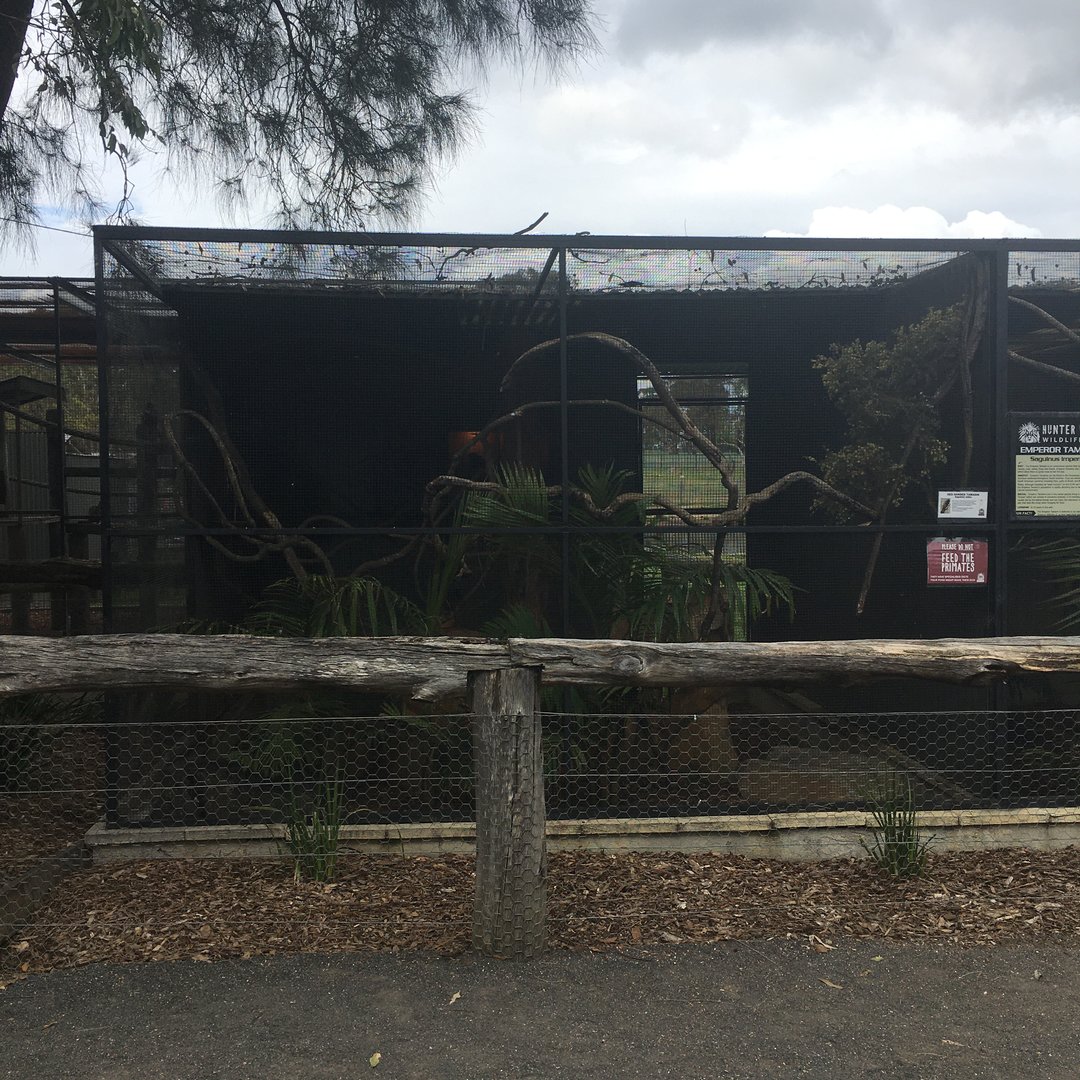
The exhibit also included at least one Pygmy Marmoset. To the right of this exhibit was another similar cage for Emperor Tamarin. To the left is a picnic area and set back from that is a larger cage for Capuchin. I didn't take a close look, considering that I've seen this species a number of times before.
On the map there is a symbol for Ring-Tailed Lemur as if this exhibit were next to the Red-handed tamarins, so this is a place where my memory is getting a little bit fuzzy. I feel like I did see Ring-tailed lemurs at the zoo, although I'm not immediately sure how every fits in terms of where that exhibit actually is.
Heading on from there is another series of relatively standard Koala exhibits. These stalls had a seat in front of them, along with a wooden sign with 'Hunter Valley Zoo' etched into it. I still think of the place by the zoo moniker and have slipped into that terminology a fair bit, although since it's now called Hunter Valley Wildlife Park in line with Mogo and Featherdale.
Beyond this was an expansive walk-through exhibit for various macropod species. This is probably one of the larger exhibits of its kind I've walked through. As I was only planning a very short visit to the zoo as I needed to keep going to my work meeting in Newcastle, I didn't purchase feed, although it was offered.
I took a particular liking to a mother and joey white kangaroo, who also seemed to take a particular liking to me (although unfortunately I didn't have any food to give them). There were also a decent number of non-white kangaroos (I think both Red and Eastern Greys) as well as a wallaby species. The macropods had an area where they could retreat to away from the walkthrough area if they wished.
Closer to the carpark are more bird aviaries, a wombat exhibit and another koala exhibit. At the end of this path (which leads to one end of the kangaroo walk-through) is a reasonably standard grassy cheetah exhibit. Apparently this used to be a Maned wolf exhibit, according to other photos in the gallery.
I saw one cheetah, which seemed captivated by something on the other side of the mesh fence. The cheetah is a little disconnected from the other African and exotic animals here, but on the other hand it's good to have a larger species in this section of the zoo and having a second big cat species benefits the zoo's collection overall.
This review certainly isn't as extensive as some of the others. I would happily visit Hunter Valley Wildlife Park again and I think it's a good facilities for the people of Newcastle and the Hunter to have as their local zoo, with a good balance of a diversity of species, particularly for a zoo of its size.
Inevitably I will have missed things, so I welcome corrections and others' reflections on Hunter Valley Wildlife Park. It wasn't clear to what extent the zoo would have room to expand, although at the very least I think there is a little bit of room near the ruffed lemur island were the zoo be seeking to develop further.


